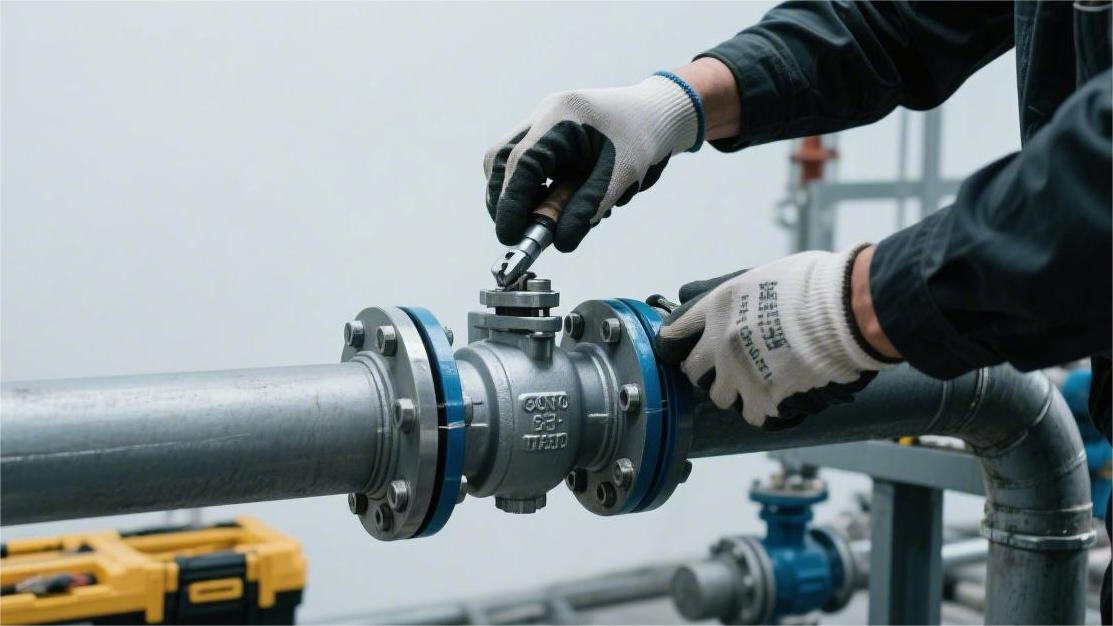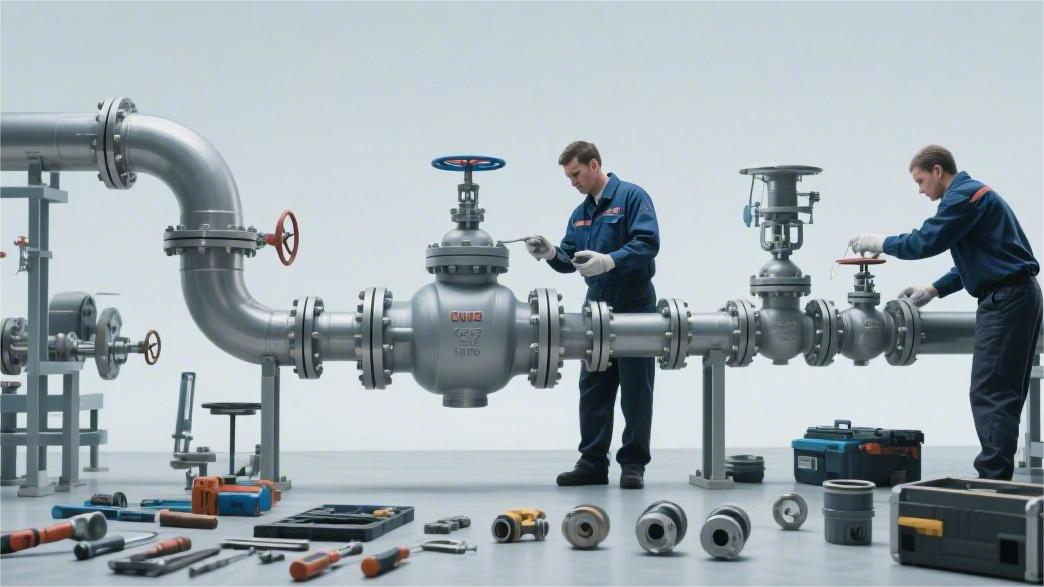
Adopt metal + soft seal dual structure, after fire burn metal seal leakage ≤ 100 ml/min;Packing select graphite withstand temperature ≥ 700℃;Valve seat add spring compensation structure, ensure after thermal deformation still fit;Conduct API 607 full process fire test and cold state re-test verification.
design optimization
Dual Sealing Mechanism
When inside pipe pressure reaches 10 MPa (about 1450 psi) time, PTFE soft ring will be compressed flat 0.15 mm. It tightly sticks on polished to 0.1 micrometer roughness metal ball, one drop of water also cannot leak out.
Encounter big fire, valve surrounding temperature will in 3 minutes jump up above 750 degrees. Plastic soft ring at 343 degrees time then starts melting, originally that 0.15 mm deformation instantly vanishes into nothing.
Soft ring once burned completely, inside valve exposes a 1.2 mm wide big gap. Inside pipe water is at every minute several hundred liters speed surging outwards. Exactly hiding behind soft ring metal parts, must in a few milliseconds time take over block water task.
Engineers at metal seat’s back installed multiple sets of superalloy springs. Ordinary steel springs reach 400 degrees then soften, will lose 90% above elastic force. Change to use Inconel 718 superalloy material, in 1000 degrees big fire inside still can withstand 600 MPa pressure.
Under high temperature state, single coil alloy spring every centimeter can push out 50 to 150 Newtons force. Inside pipe water flow back pressure superimposes spring’s push force, takes dozens of kilograms heavy stainless steel seat, fiercely smashes towards equally is stainless steel material’s round ball surface.
Contact surface is in advance processed into 3 mm wide chamfer, and on stainless steel surface sprayed a layer of tungsten carbide to prevent wear. This layer coating’s process data is extremely strict:
- Powder impacts metal surface’s speed exceeds per second 800 meters
- Coating’s thickness is strictly stuck between 0.15 to 0.20 mm
- After spraying surface’s Rockwell hardness exceeds 70
Two pieces hardness exceeds 70 metals, under 10 MPa pressure hard hits hard tightly bite. Even if metal surface under microscope exists unevenness, huge squeezing force also takes water flow’s exit path sealed dead.
According to standard, 10 inches thick valve burns half an hour, leak water amount must be controlled within per minute 4000 milliliters. Converted down every inch diameter leak water cannot exceed 400 milliliters.
Fire stopped, fire-fighting water once poured, 1000 degrees valve body in 10 minutes suddenly drops to 100 degrees below. Metal after cooling violently shrinks, fitted together metal parts will follow to misalign. Been fire roasted springs must in a few minutes inside, precisely catch up 0.01 mm gap change.
Real testing time towards this stage’s data tolerance is extremely low:
- 2 inches small valve in cooling stage leak water lower than 800 milliliters
- Spring at this time’s deformation compensation amount reaches 0.5 mm
- Pipeline water pressure from high pressure drops down to only left 2 bar (about 30 psi)
Water pressure drops to 2 bar time, water flow cannot push heavy seat, entirely relies on spring’s mechanical force to hard push. Engineers at seat surrounding dug having 5 to 15 degrees tilt angle sliding groove.
Under high temperature, between metals friction coefficient will from normal temperature’s 0.15 wildly surge to 0.6 above. Inside sliding groove in advance applied a layer 20 to 30 micrometers thick molybdenum disulfide dry film. It under 1200 degrees same as usual plays lubrication role, guarantees spring pushing seat time stuckness does not exceed 0.1 seconds.
To achieve no stuckness at all, internal parts processing time’s size tolerance approaches machining’s limit:
- Internal round ball’s tolerance cannot exceed 0.015 mm
- Spring installation height’s error requires smaller than 0.1 mm
- Tilt sliding groove surface’s roughness requires to reach 0.4 micrometers
Metal ring is designed to become compared to plastic ring move backwards 0.1 mm, usually completely not receive wear. Fire destroys plastic after, this 0.1 mm gap exactly is by spring filled.
Managing Thermal Expansion
Usually easy to use metal parts, thrown into 750 degrees above sea of fire inside will thoroughly change shape. Take a piece 500 mm long 316 stainless steel valve stem to say, temperature burns to 1000 degrees time, it will out of thin air grow longer about 8 mm.
Inside pipe solid metal ball expands even more exaggeratedly. A 10 inches thick full bore ball valve, inside that diameter about 250 mm stainless steel ball receives heat after, outer ring will fully bigger out nearly 4 mm.
Originally factory inside only left 0.15 mm movement gap, basically cannot stuff down expanded iron ball. Become bigger metal ball just like hydraulic press same, towards two sides tightly pushes against seat, forcibly squeezes out hundreds of tons push force.
If take a few micrometers gap calculated wrong, worker in fire scene inside even if put on a 1.5 meters long force-adding iron stick, use up 4500 Newton-meters strength to turn, also do not think to take valve rotate half a fraction.
Ordinary A105 carbon steel’s thermal expansion coefficient is about 12×10 negative 6 power/℃, inside anti-corrosion used austenitic stainless steel can run to 16.5×10 negative 6 power/℃.
| Metal Material | Expansion Coefficient (10 negative 6 power/℃) | 1000 degrees under 100 mm expansion amount | Receive heat after actual performance |
|---|---|---|---|
| A105 carbon steel | 12.0 | 1.15 mm | Surface severely peels off drops slag |
| 316 stainless steel | 16.5 | 1.60 mm | Shape twists changes shape |
| F51 duplex steel | 13.5 | 1.30 mm | Under high temperature easy to become brittle crack open |
| Inconel 718 | 13.0 | 1.25 mm | Still maintains extremely high hardness |
Outside wrapped carbon steel grows slow, inside stainless steel ball grows fast, internal parts forcibly are squeezed into a getting smaller and smaller iron box inside.
A piece diameter 50 mm valve stem by fire once roasted, thickens 0.8 mm. Drawing at stem and hole wall middle drew out having steps gap.
In order to prevent leak water, bottom’s gap always stuck at 0.1 mm, top’s gap is intentionally widened to 0.35 mm. Fire just burns up’s first 10 minutes, stem upper end will rapidly expand big, eat up this 0.25 mm drop.
Next to fire flame outer shell 5 minutes then burns to 800 degrees, hiding inside ball receives heat extremely slow, surface’s temperature maybe just right touched 300 degrees.
Outer shell already expanded big pulled long, inside’s parts haven’t had time to follow to become big. Originally tightly fit water blocking surface on, instantly is torn open a 0.5 mm wide mouth.
Workshop’s drawing on strictly stipulated a portion extremely harsh size list:
- Stem prevent fly out step gap: enlarge 0.12 to 0.18 mm
- Metal seat spring’s retreat space: leave enough 2.5 mm allowance
- Thread screw hole diameter compared to screw outer diameter: bigger out 1.5 mm prevent cut off
- Press tight graphite sleeve: jam accurate 0.4 mm sliding size
Extra dig out 2.5 mm allowance, is give seat leave a retreat path. Burn to 15th minute, inside ball temperature rise to 900 degrees starts to madly grow, seat back’s spring is compressed flat to limit, forcibly swallows down extra out 3 mm meat.
Tighten two pieces valve body exposed screws, right now in fire inside undergoing suffering. Most commonly used B7 alloy steel screws reach 750 degrees, resist pulling strength will from normal temperature’s 860 MPa, cliff drop to even 50 MPa not enough.
High temperature forcibly takes screw pulled long nearly 2 mm, dozens of kilograms heavy two pieces iron shell between appeared naked eye visible loose shaking. Inside pipe 10 MPa water pressure, anytime will take iron shell push open randomly spray.
Factory inside takes screw’s thickness enlarged 30%, uses 1 inch thick B8M stainless steel piece, replaced old model 7/8 inch ordinary screw. Become thick after iron piece even if strength declined 94%, same as usual can tightly bite flange plate.
Every piece iron’s size in burning fire’s 30 minutes inside all is randomly running. Computer inside 3D software simulates heat change, every interval 10 seconds then calculates one time metal several millimeters deformation amount.
Calculated out size must hand back lathe to change cut iron’s track. Worker at cutting metal ball near two sides interface position time, lathe tool will extra scrape off 0.08 mm iron skin, artificially turns out an extremely slight oval.
0.08 mm deviation naked eye basically cannot see out. Take it throw into 1000 degrees big fire inside, ball body meets heat crazily expands, original oval exactly bulges into a perfect circle, tightly solid sticks on seat.
Stem & External Leakage Control
Inside pipe 10 MPa water pressure follows gap upwards push, a piece diameter 50 mm ordinary valve stem bottom will bear nearly 2 tons outwards push force.
High temperature once takes peripheral fixing parts burn soft, this piece weigh up to dozen kilograms iron stick will then like cannonball same from valve top shoot out. Factory inside at processing valve stem time, takes most bottom end’s a section forcibly turned thick 15 mm.
This extra out 15 mm step, only can from valve belly inside reversely upwards pierce, inside pipe pressure more big, bottom’s metal step then upwards jams more dead.
That circle extra out 15 mm thick step above, usually pads a outer diameter reaching 75 mm PEEK thrust gasket. This piece thickness only has 3 mm plastic gasket is responsible to reduce valve stem rotate time’s friction.
Big fire burns to 343 degrees time, plastic gasket in 1 minute inside turns into a puddle black water. Lose block valve stem seat follows trend upwards fiercely rushes 3 mm, fiercely smashes on above metal valve body wall.
Impact surface’s tilt angle is by lathe cut into precise 45 degrees. Weigh up to two tons water pressure push force follows this 45 degrees slope, evenly scatters on peripheral 10 mm thick valve body meat wall.
Two pieces hard hit hard iron surface if has a little pit, fluid will then follow gap outwards spurt. Factory inside at processing this 45 degrees chamfer time, takes it treated as mirror same polished, flatness error firmly stuck at 0.01 mm within.
Fire burns to 2nd minute, sleeved at valve stem middle section used to block water two pieces rubber O-rings at 200 degrees time thoroughly crack open. Cut off retreat path 10 MPa high pressure water, crazily surges towards top’s packing box.
Packing box inside packed is carbon content reaching 99.8% flexible graphite rings. Five coils thickness each is 8 mm graphite rings are stacked together, worker uses 150 Newton-meters torque tightly screw tight gland screw.
Originally 40 mm high graphite pile is forcibly compressed flat to 28 mm. Aerospace grade graphite material can withstand 3000 degrees high temperature, meet 1000 degrees big fire not only not melt, also will itself outwards expand big 2% to 3%.
Metal receives heat deform after, valve stem and hole wall between tears open a 0.1 mm wide gap. Slightly expanding graphite follows this squeezing force, tightly fits fills full naked eye basically cannot see metal misalignment space.
Standard document draws a red line: 10 inches thick valve burns half an hour, follows valve stem outwards leaks water absolutely cannot exceed per minute 200 milliliters. Big fire and high pressure’s dual torture under, graphite defense line outwards seeps water amount even half bottle small mineral water does not reach.
Flexible graphite although fire resistant, but in iron box inside is pressed too dead, will take this piece diameter 50 mm valve stem hold motionless. Fire scene inside firefighter basically cannot twist open usually only needs two people then can pull handle.
Workers at five coils graphite middle, clamped in two coils having braided mesh carbon fiber reinforced rings. These two coils thickness only has 4 mm braided mesh, forcibly takes valve stem rotate time friction force unloads 40%.
- Contact surface roughness must be polished to 0.2 micrometers below
- Packing box inner wall turns out extremely shallow 0.05 mm anti-slip groove
- Graphite ring inner diameter compared to valve stem outer diameter big out 0.08 mm
- Gland and graphite middle padded a piece 2 mm thick 316 steel plate
Under high temperature roasting, peripheral screws are pulled long nearly 1 mm, pressing graphite iron cover appeared slight looseness. Gland and graphite between that piece 2 mm thick steel plate at this time exerts force.
Steel plate is hit into disc spring shape, screw looseness caused 1 mm gap, exactly is by steel plate bounce back force filled up, tightly press under graphite ring not let it loose mouth.
In order to prevent any trace outwards splashing sparks, packing box above iron cover underneath hides a thickness is 1.5 mm fireproof flexible graphite gasket. This layer gasket’s assembly data tolerates not a little bit carelessness.
- Gasket’s inner diameter compared to hole big 0.2 mm prevents receive heat stuck dead
- Periphery wrapped a layer 0.1 mm thick stainless steel corrugated iron skin
- Press tight after thickness must precisely controlled at 1.05 mm
- Bolt receive heat pull long after gasket rebound amount not lower than 0.15 mm
Worker must use cross method, divide three times take 4 pieces 3/4 inch thick fastening screws twist to rated torque.
If torque deviates a little, gland will then tilt 0.1 degrees. Under 1000 degrees high temperature, this 0.1 degrees tilt will be magnified into 0.3 mm notch, inside pipe flammables a few seconds will then follow notch outwards wildly spray.
Testing time will at valve outside cover on a volume 2 cubic meters gas collection hood. Hood inside equipped extremely sensitive gas detector, as long as captures exceeding 50 parts per million (50 ppm) combustible gas, entire test directly declares failure.
30 minutes burning plus 10 minutes cold water pouring, this set leak blocking system in violent thermal expansion cold shrink middle is back and forth torn whole 40 minutes.
That piece 50 mm thick valve stem in cooling period violently shrinks 1.2 mm. By fire roasted red packing iron box follows to shrink, fiercely squeezes inside that pile already shaped graphite rings.
Graphite ring is squeezed after no place to run, only can follow weakest place upwards push. If gland on screw not enough thick, this strand upwards expansion force can forcibly take diameter 12 mm ordinary screw push break.
Change into explosion-proof model 16 mm B8M special steel bolt after, thread can withstand up to 8000 Newtons brute force pulling. They tightly buckle on flange plate, take graphite ring firmly press in deep reach 45 mm packing groove inside motionless.
fire-safe structure
Secondary Metal-to-Metal Seating
Refinery catch fire time, surrounding temperature will fast burn to 800°C around. Valve inside that circle 6 mm thick plastic seal gasket (PEEK material) hold not pass 4 minutes will then burn melt into gas. Originally stuffed solidly parts between, immediately empty out about 3.5 mm gap.
Pipeline inside having 5 MPa pressure crude oil immediately pours full this gap. Water flow come in direction, has 16 pieces special alloy (Inconel 718) made springs, exactly using 450 Newtons strength forwards push. That heavy 120 kilograms stainless steel metal ball, front blocking its plastic pad gone, it then lost support.
Crude oil’s push force plus spring’s elastic force, together press on this heavy metal ball. Ball body follows oil flow’s direction, forwards slid 1.8 mm. It heavily crashes on valve outer shell inside advance dug well metal step, tightly stuck.
- Metal step’s contact surface width is at 2.0 to 3.5 mm between.
- Surface polished extremely smooth, roughness only has Ra 0.4 micrometers.
- Metal ball must be extremely round, size error cannot exceed 0.015 mm.
- Surface sprayed a layer 75 micrometers thick tungsten carbide, used to prevent wear.
- Hardness test reached Vickers hardness HV 1050 scratch resistant standard.
Under 50 bar huge pressure difference, these two hard metal surfaces are forced to squeeze together. Their contact angle through special calculation, is at 30 degrees to 45 degrees between. Angle too small ball will thoroughly stuck dead, angle too big contact area not enough, metal step’s edge will be directly pressed collapse.
Outside carbon steel shell in 850°C big fire burns a bit soft. A piece 10 inches thick pipeline, can generate 35 tons push force takes ball body forwards push. In order to withstand this strand strength, worker in advance uses high temperature takes seat’s metal roast hard, let its compression resistance ability exceed 700 MPa.
Hard metal hits hard metal, no way like soft rubber like that takes fine scratches all plug dead. High temperature takes viscous crude oil become like water same thin, viscosity from 15 cSt drops to 2 cSt. These extremely thin oils, follow metal between that point 0.03 mm irregular gap outwards leak.
Take a 8 inches big valve to test, in big fire inside fully burns 30 minutes. Instrument stipulates it per minute inwards leaks oil cannot exceed 320 milliliters. Test personnel at exit holding measuring cylinder catches oil, actual measured out number often is at 150 milliliters around floating.
- 6 MPa pipeline water flow pressure takes ball presses more tight, shrunk gap.
- Stainless steel ball receives heat expand big, outer ring size increased about 0.12%.
- Burn coke generated 0.01 mm black ash particles, exactly stuffed up some leak holes.
- Valve outer shell receives heat uneven, generates about 0.5 mm slight deformation.
Firefighter uses ice cold water pipe violently flushes burned to 900°C turns red cast steel outer shell. Valve outside temperature in short 20 seconds inside wildly drops to 100°C below. Violent thermal expansion cold shrink, forces whole metal shell inwards shrinks nearly 1.5 mm.
Just mutually stuck metal surfaces, instantly bears exceeding 500 MPa pulling force. Change to 12 inches big pipe valve, inside that circle blocking ball metal edge if thinner than 12 mm, by cold water once flushed will then directly break deform, never again change not back.
Wait fire extinguished thoroughly cooling, pipeline inside water temperature drops to 85°C. Test machine again injects cold water, takes water pressure added to 2.0 MPa and maintains 5 minutes.
- Burned destroyed plastic dregs are squeezed into 0.2 mm thick black hard block.
- Behind springs are by big fire annealed, lost 60% elastic force.
- Metal fitting place’s local compressed strength high up to 120 MPa.
- Connect valve handle and ball body groove, is forcibly torn big 0.4 mm.
Above installed that can provide 800 N·m strength automatic switch motor issues a muffled sound, basically turns not move this stuck dead metal ball. It already cannot be used to switch water flow, completely perfectly turned into a piece blocking at pipeline exactly middle solid big iron plate.
External Leakage Prevention
Big fire burns full whole metal outer shell, connection gap’s temperature rapidly rises to 900°C. Originally stuffed in gap inside waterproof oilproof 3.5 mm thick rubber ring, first 90 seconds then is completely burned into a handful ash.
Inside pipe carrying 2.5 MPa pressure flammable gas desperately outwards squeezes. Rubber burns away after, metal stem and outer shell middle empty out 0.8 mm gap. High temperature gas follows gap outwards sprays, meets air immediately turns into a ball fire.
Worker in advance at this position stuffed 5 coils purity 99.8% flexible graphite. Graphite at no oxygen narrow gap inside, is roasted to 1000°C also will not burn catch or melt away.
Metal stem by fire roasted becomes thick about 0.05 mm. Above pressing graphite metal cover, leaning on four pieces twisted to 45 N·m tightness screws, takes scattered graphite rings tightly downwards press.
Pressed graphite becomes like especially sticky mud. It follows pressure, squeezes into stainless steel surface those only have 0.2 micrometers deep tiny metal scratches inside.
- Graphite ring’s density leave factory time fixed at 1.4 to 1.6 g/cm³ between.
- Most up down two coils graphite inside braided special alloy wire, prevent graphite be squeezed break spray out.
- Middle three coils pure graphite withstood above press down 80% strength.
- Friction coefficient maintained at 0.12 around, hug tight metal stem not delay it turn.
- Metal gap controlled at 0.15 mm within, not let graphite run out.
Following metal stem downwards, is two pieces big semi-circular iron shells pieced together joint place. Big fire is burning takes these two pieces shells lock together 12 pieces M24 thick alloy screws.
Screw burns to 750°C, is forcibly pulled long nearly 1.2 mm. Originally takes two half shells bite dead 60 tons clamping force, follows pulled long screw drops to not reaching 15 tons.
Two half iron shells middle cracks open a physical gap. A piece wide 4 mm, deep 5.5 mm groove inside, hides a stainless steel wound out gasket.
| Measure position | Normal temp pressurize state (20°C) | Continuous fierce fire burning state (850°C) |
|---|---|---|
| M24 connect screw length | 185.0 mm | 186.2 mm (receive heat pull long) |
| Outer shell joint gap | 0.02 mm | 1.15 mm (screw pull long prop open crack) |
| Internal metal gasket thickness | 4.5 mm (compress flat state) | 5.3 mm (metal rebound expand big) |
| Gap run gas amount | 0 ml/minute | 42 ml/minute (by graphite blocked) |
This gasket is a layer 0.2 mm thick thin steel belt, clamping 0.5 mm thick graphite belt rolled formed. Steel belt is like skeleton, graphite just like stuffed in gap meat.
Screw pull long lets two sides iron shell separate. Gasket inside pressed into V shape steel belt like several hundred small springs, pushes graphite outwards arch, to chase is currently retreating iron wall.
Graphite meets heat volume expands big about 18%. It like rising dough same bulges up, fills full screw pull long left down 1.2 mm gap, takes 4 MPa crude oil hold in inside.
- Machine at outside sleeved a 5 mm caliber copper pipe, specially catches leak out gas.
- A 6 inches valve, stipulates outwards leak gas most per minute 120 milliliters.
- Burned 30 minutes, measuring cylinder caught real leak gas amount only has 45 milliliters up down.
- Gap inside accumulated 0.01 mm dust, with graphite together plug dead thinner than hair leak gas hole.
Fire water gun takes 15°C cool water pour on burn red iron shell. Pulled long screw in 30 seconds backwards shrink. Two half shells carrying 80 tons strength, extremely fast smash back original position.
Gap inside graphite is by this strand fierce force squeezed, density instantly rushes to 1.9 g/cm³. It did not like glass like that break, also did not like rubber like that snap, only is smashed more flat, tightly stuck in groove inside.
Cold water flows to above metal stem position. Outside iron shell shrinks compared to inside steel stem fast. Wrapping graphite metal gap towards inside tightens 0.08 mm.
Become cool after, worker goes to twist above that big wheel. By repeatedly pressed solid graphite tightly hugs metal stem, usually 120 N·m then can turn wheel, now must spend 350 N·m strength. Pipeline inside dozens of tons flammable liquid is firmly shut in iron shell inside.
Blowout-Proof Stem
800°C big fire fully roasted 30 minutes. Valve internal that 15 liters intercepted crude oil nowhere to go. Liquid receives heat occurs violent expansion, volume increased about 8%. Originally 5 MPa normal pipeline pressure, in short a few seconds inside like go crazy same surges to 18 MPa.
Top end that piece diameter 45 mm stainless steel valve stem, became airtight iron shell inside receive force most fierce breakthrough mouth. 18 MPa crude oil pressure tightly pushes at valve stem bottom. A strand equivalent to 2.8 tons push force, wants to take whole iron stick like rifle bullet same outwards shoot out.
Outside used to press metal stem metal gland already rely not on. Fixing cover 4 pieces M16 screws under high temperature are torn long 0.5 mm. Usually twisted tight to 45 N·m pre-tightening force, drops to only left not reaching 5 N·m.
Assemble time, worker must take valve stem from inside outwards pierce out. Valve stem most below carrying a circle specially lathe processed out T-shaped step. That circle step’s outer diameter fully has 65 mm, whereas outer shell top’s piercing hole inner diameter only has 46 mm.
That 19 mm physical size difference is a dead command. No matter inside pressure rises to how high, as long as outer shell not be blasted break, that circle T-shaped seat will then be outer shell internal thick iron wall tightly blocked, absolutely not possible fly to outside go hurt people.
Huge pressure not only did not take iron stick shoot out, instead helped a favor. 2.8 tons outwards push force, takes seat fiercely slaps on outer shell internal metal surface. Seat edge processed 45 degrees chamfer, with outer shell inner wall occurs violent friction.
They middle originally padded a layer 1.2 mm thick Teflon anti-friction gasket. Big fire early takes gasket burned into white smoke. Now is roughness Ra 0.8 pure metal surface hard hits hard.
- T-shaped step’s thickness must greater than 15 mm, prevent be high pressure forcibly cut off.
- Outer shell internal receive step iron lip edge thickness cannot lower than 22 mm.
- Two contact surfaces’ parallelism error is strictly stuck at 0.05 mm within.
- Bottom connection place’s fillet radius calibrated as 3 mm, used to dissolve stress concentration.
- Whole part uses gravity forging, grain size reaches 6 grade above prevent deformation.
Firefighter sprays out 15°C cold water, fiercely pours on burn red carbon steel shell on. Exposed at outside metal rapidly backwards shrinks. Just now by big fire expanded big parts gap, in 15 seconds inside fast tightens about 0.15 mm.
Shell internal temperature follows from 900°C cliff-style drops to 80°C. Expanded crude oil cools down, internal crazy 18 MPa pressure falls back to 2 MPa. Seat received upwards push force suddenly becomes small.
Even if push force becomes small, stem backwards falls distance also is restricted at 2.5 mm within. Outside anti-drop snap ring and inside step together exert force, ensure it from beginning to end hangs at original position, will not fall into underneath pipeline inside stick dead water flow.
- Inspector connects high pressure water pump, again injects 3 MPa cold water hold pressure.
- Stopwatch countdown 5 minutes, sight all stare on exposed at outside that 120 mm long iron stick on.
- Vernier caliper rests on top end, screen displays upwards displaced merely 0.2 mm.
- Sprays on leak check used soap water, surroundings even a 1 mm soap bubble also didn’t blow out.
Outside lock tight parts nut thread, already is by big fire burned destroyed nearly 80%. It completely lost fix ability. That piece weigh up to 12 kilograms stainless steel stem, purely relies bottom compared to hole big one circle step, alone withstood pipeline inside 1500 kilograms dead water push force.
leakage control
Soft Hard Seal
Pipeline operation entirely relies on a piece 3 mm wide soft rubber belt block fluid. This piece embedded in 316 stainless steel seat inside PTFE belt, everyday must tightly resist 1500 psi pipe internal high pressure. Soft rubber belt like a piece extremely having toughness hard rubber, is by pipe internal strong pressure squeezed into metal surface extremely small pits inside.
Test furnace internal multi-head burner sprays out fierce flame, surrounding environment temperature in 90 seconds inside surges to 750°C. Heat conduction lets metal outer shell become red through, 327°C time PTFE starts melt into liquid drops. High strength PEEK hard withstands to 343°C, ultimately also burns into a pile black ash. Originally tightly wrapped at steel round ball periphery soft rubber ring thoroughly disappears.
Pipeline on commonly used soft rubber material must see different formula can hold how long:
- Virgin PTFE: surface extremely slippery, withstands to 200°C starts soften.
- Glass fiber reinforced PTFE: mixed in 15% glass fiber, compressive strength doubles.
- PEEK: Rockwell hardness R119, hard withstands 2500 psi high pressure difference.
- Nylon 12: specially supply high pressure natural gas, 220°C high temperature under melts into residue.
Soft rubber belt burns away, steel seat and steel round ball middle immediately leaks out a piece 0.15 mm to 0.25 mm gap. Lose block medium pushing hundreds of kilograms pressure, at per second 20 meters speed crazily outwards darts. Upstream fluid all smashes on seat back step on, forcing a few kilograms heavy steel seat forwards move.
Coordinate seat behind pre-pressed tight 10 to 30 pounds spring push force, steel seat crosses over that piece tiny gap. Only needs 0.2 seconds, seat then fiercely smashes on front round ball on. Pure steel impacts steel, ball body surface must pass through extremely violent hardening treatment, then can withstand this kind high pressure smash strike not damage.
Heavy pipeline ball valve surface hardness data decides it can take how heavy beating:
- Electroless nickel phosphorus plating: phosphorus content 10%, plated on 75 micrometers hard outer coat.
- Supersonic spraying tungsten carbide: hardness hit to 1200 HV, adhesion exceeds 70 MPa.
- Stellite alloy overlay welding: cobalt chromium tungsten formula, 500°C mutually dry rub not stuck dead.
- Chromium carbide spraying: hard withstands 800°C blazing gas continuous fire attack.
Lathe will at steel seat front end cut out a piece 5 degrees to 7 degrees extremely small bevel angle. This piece bevel angle with ball body impact after, hard hit hard contact surface width is stuck dead at 1.5 mm to 2.0 mm. Surface too wide press not down fluid, surface too narrow will be dozens of MPa impact force instantly compressed flat.
Two pieces not having any elasticity steel to achieve tightly fit, processing precision approaches micrometer level. Assembly workshop inside, worker uses 400 mesh diamond grinding paste applied on metal surface. Weigh up to dozens of kilograms ball body and seat are by worker hugged in arms, purely relies manual mutually rub against grind exceeds 8 hours.
Ball body roundness error is tightly controlled at 0.01 mm within, surface roughness drops to Ra 0.4 micrometers, touch up like mirror surface. Entirely relies on these two pieces extremely flat metal surfaces mutually towards dead squeeze, fluid is forcibly held in pipe inside. Test standard sets down rule, every inch bore diameter per minute at most allows leak 400 milliliters.
Anti High Temperature Material Selection
Normally used to stuff gap black NBR rubber ring, temperature once reaches 120°C will then become soft become brittle. Fire burn test flame upwards darts, three minutes then takes valve top roasted to 600°C above. Rubber ring melts into a puddle stinky rot mud, gap completely opens.
Hundreds of kilograms pressure flammable liquid follows steel shaft gap outwards wildly sprays. Old engineer changed on purity high up to 99.8% flexible graphite, this kind from natural ore extracted out carbon material extremely resists burn. Take a piece pure graphite throw into 1000°C fire furnace burn on whole day, even a trace green smoke all emits not out, volume shrinks not reaching 0.5%.
Common packing fire burn test survival data comparison:
| Material type | Withstand temp upper limit | 1000°C big fire inside outcome | Compress flat rebound rate |
|---|---|---|---|
| NBR rubber | 120°C | Melts into a puddle tar, completely rots away | 80% |
| PTFE | 260°C | Turns into poison gas float away, dregs all not remain | 45% |
| Pure flexible graphite | 850°C | Almost not shrink, tightly plug gap | 15% |
| Carbon fiber braided ring | 650°C | Glue burns dry, leaves carbon frame hard push | 10% |
Only having resist burn material plug not down 3000 psi violent pressure, soft graphite will be high pressure liquid forcibly squeezed out gap. Workers take five pieces independent graphite round rings made into sandwich sandwich structure, one layer one layer towards two pieces steel gap inside hard stuff.
- Middle three pieces rings responsible to tightly plug liquid, use pure flexible graphite in mold inside with 1.6 g/cm³ ultra high density forcibly press out.
- Most top and most bottom inserted two pieces anti-squeeze reinforce rings, inside hiding 0.15 mm thick 316L stainless steel wire skeleton.
- Steel wire like spun thread same is braided into a dense metal mesh, receive pressure after stuck dead in 0.1 mm metal gap inside.
- Pure graphite ring is by this layer metal mesh caught bottom, broken outwards overflow run away route.
Top metal gland uses two pieces thick sturdy bolts downwards tightly apply pressure, wrench twisted out torque exceeds 150 Newton-meters. Five pieces graphite rings are compressed flat deform, in extremely narrow space inside towards inside tightly bite that piece 2 inches thick steel shaft.
High temperature follows outer shell burns to middle flange connection place, two pieces big iron plates lean on a circle 4.5 mm thick gasket prevent liquid from side run leak. Gasket is use extremely thin V-shaped stainless steel belt and flexible graphite belt alternately rolled out. Weigh up to 10 kilograms nut is by hydraulic wrench forcibly twisted dead.
Iron plate takes 4.5 mm gasket forcibly compressed flat to 3.2 mm. V-shaped steel belt like spring same is pressed solid, graphite is tightly squeezed into iron plate surface water ripple carved groove inside, fills full every piece only has a few micrometers deep metal scratch.
Fire scene inside metal expansion extremely hard to deal with. Peripheral a circle fastening bolts under 750°C high temperature are roasted red. Normal temperature under tight steel bolts will be thermal expansion cold shrink physical force forcibly pulled long zero point several millimeters.
As long as pulled long zero point several millimeters, tightly fitted iron plate gap will then loosen open, 1500 psi liquid immediately outwards sprays. Ordinary carbon steel bolts at 500°C time pulling force will drop half, lose pull tight role.
Assembly line on only allowed to use added chromium and molybdenum elements ASTM A193 B7 heat resistant alloy steel bolt. Its at normal temperature under yield strength high up to 105,000 psi. In six hundred more degrees fierce flame inside, this kind special steel bolt still leaves enough fierce force, takes two pieces big iron plates tightly pulls drags together.