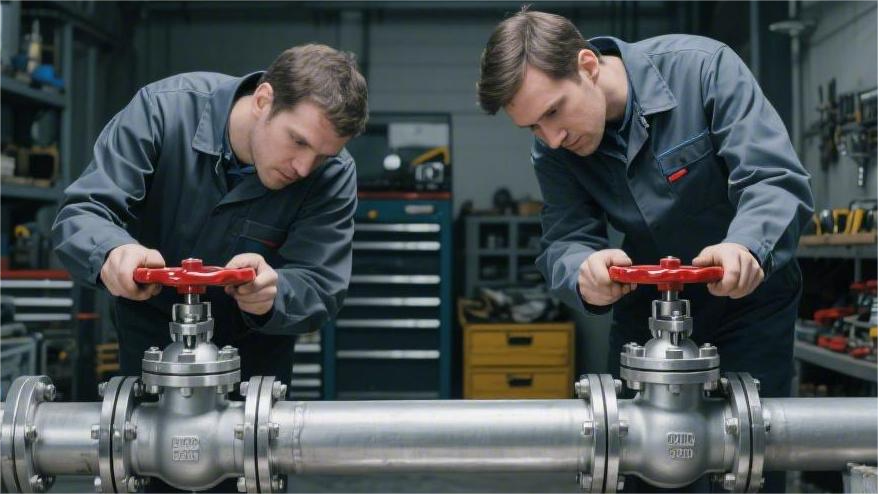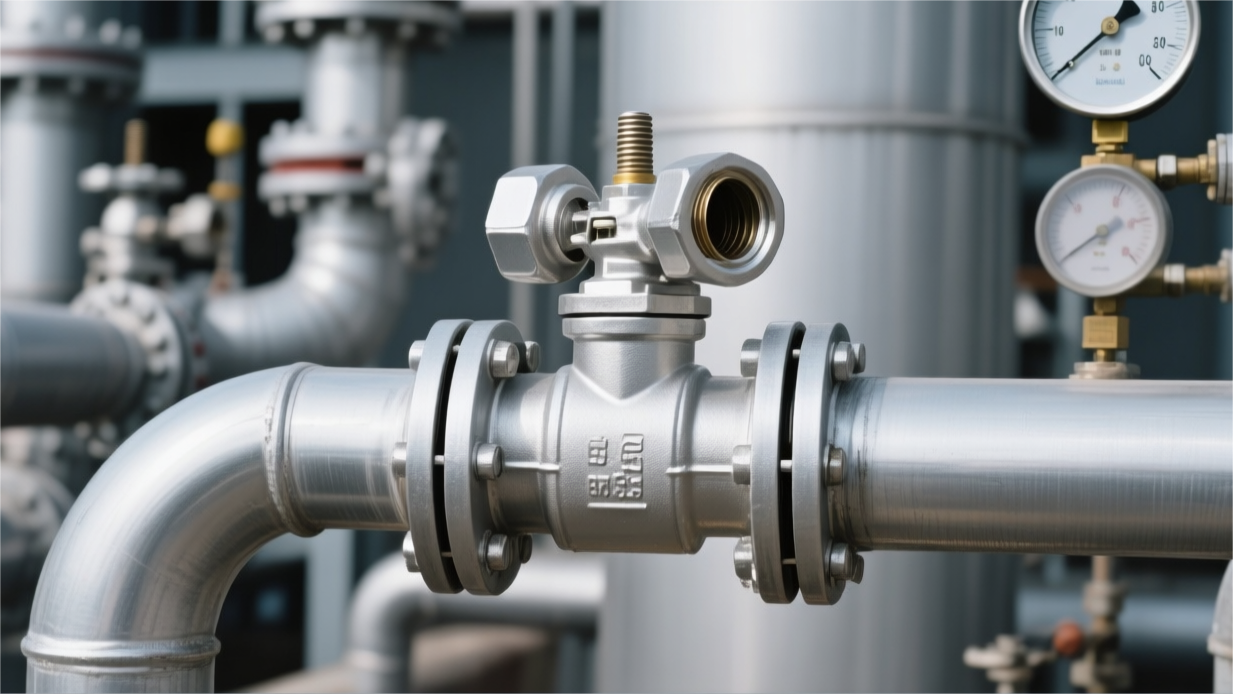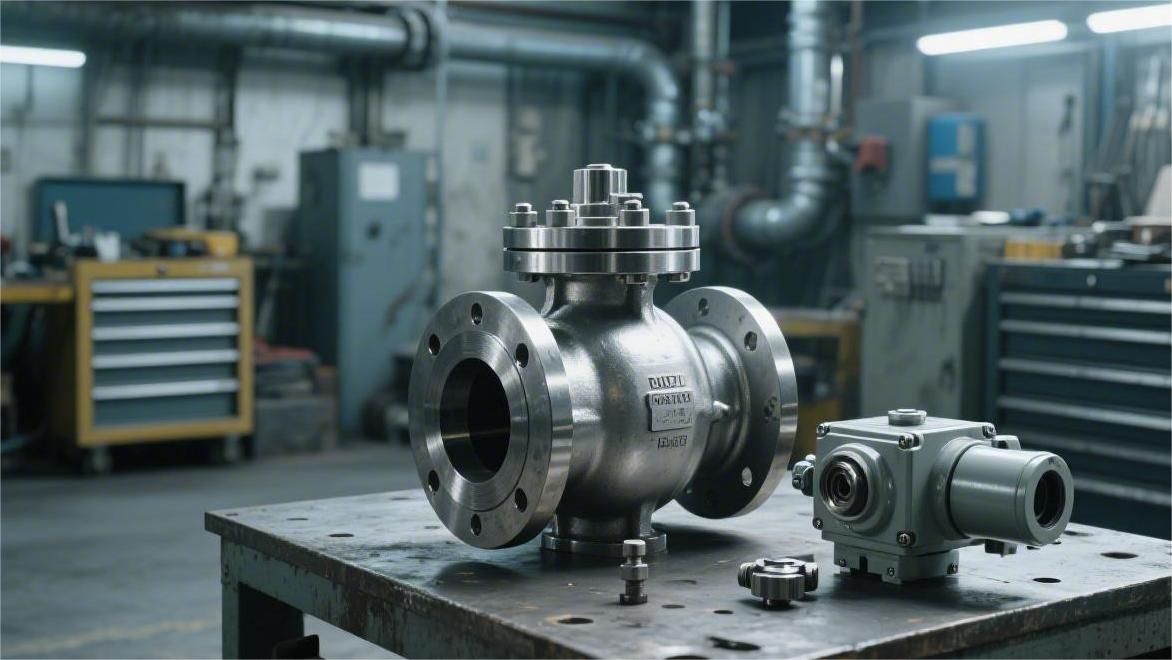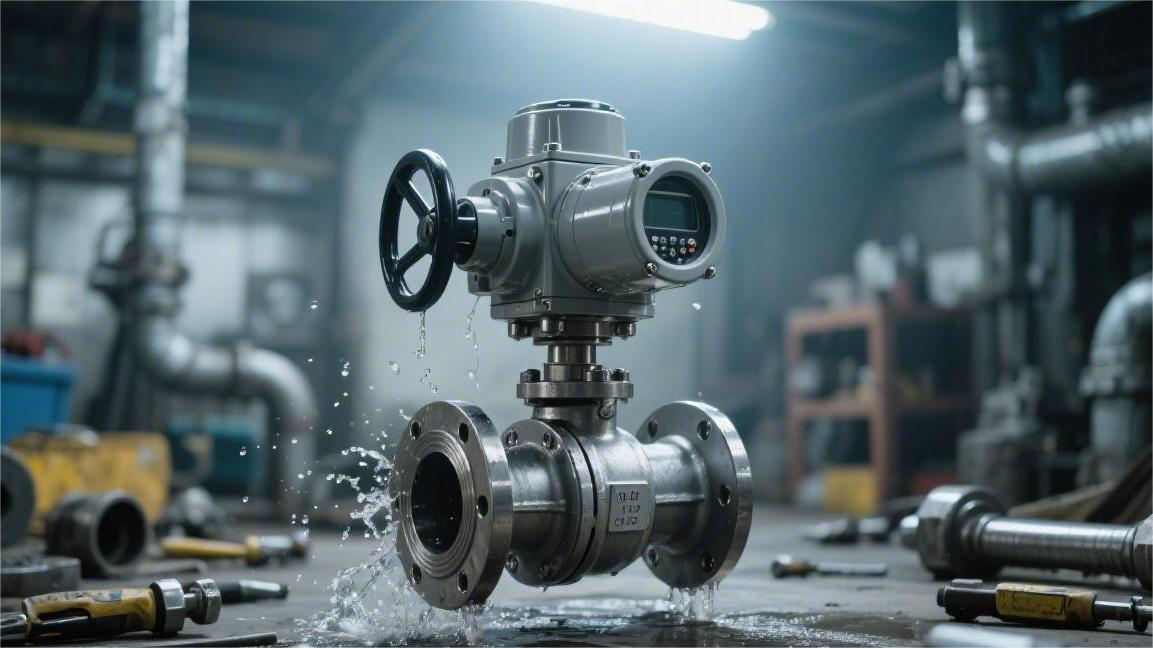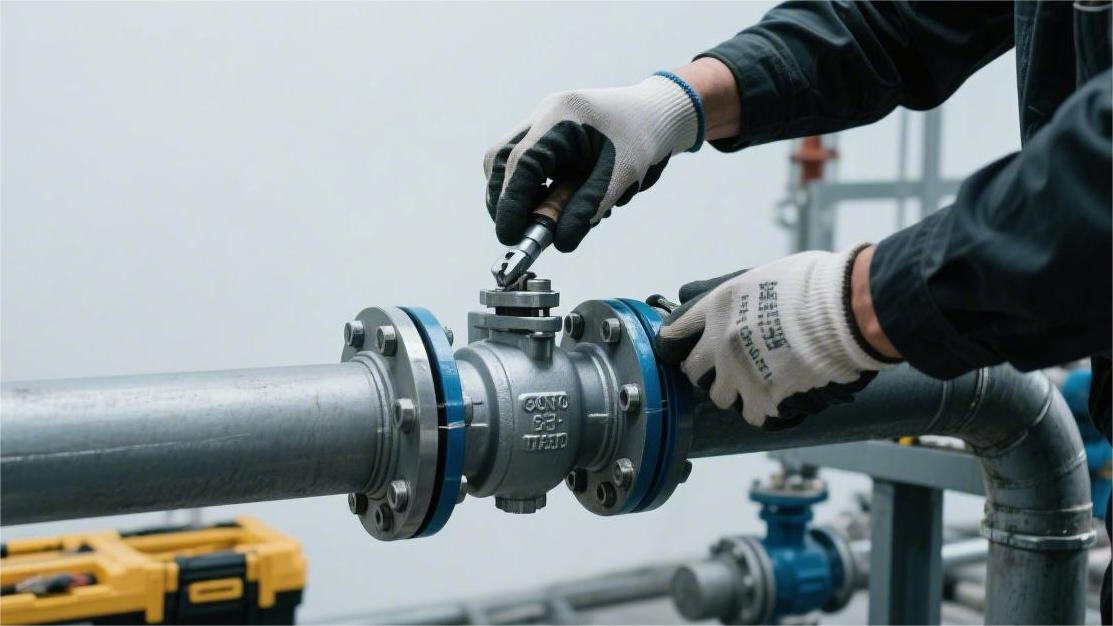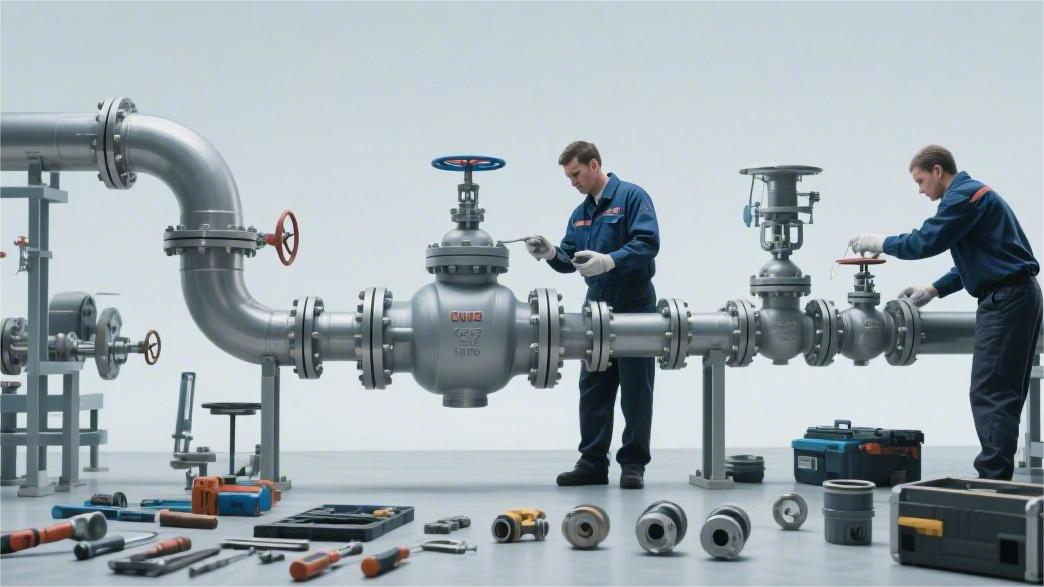
For conventional oil and gas, select carbon steel WCB, suitable for -29 to 425°C;
For corrosive media, select stainless steel 316;
For high-pressure sour offshore conditions, use duplex steel 2205 with a PREN value over 35 to resist pitting corrosion.
Carbon Steel
For operating conditions between -29°C and 425°C, ASTM A216 WCB (cast) or A105 (forged) are primarily selected, with a yield strength ≥ 250 MPa, meeting Class 150 to 2500 pressure ratings.
In environments as low as -46°C, low-temperature carbon steels such as ASTM A352 LCC or A350 LF2, which have passed the Charpy V-notch impact test, must be used.
Due to the relatively weak corrosion resistance of bare carbon steel, ball valve internals are often treated with a 75µm thick Electroless Nickel Plating (ENP), and in sour service conditions, the material hardness must be strictly controlled below 22 HRC to comply with the NACE MR0175 standard.
Grade Applicable Temperatures
In the engineering specifications for API 6D ball valves, ASTM A216 WCB is a highly prevalent cast body material. The ASME B16.34 standard explicitly sets its lower allowable working temperature limit at -29°C. When the ambient or fluid temperature remains above 425°C for prolonged periods, carbon elements within the WCB material will undergo graphitization precipitation.
Under continuous high temperatures, cementite (Fe3C) in carbon steel decomposes into pure iron and free graphite, leading to a significant decline in the valve body’s mechanical strength. Engineering contractors designing high-temperature thermal oil pipelines exceeding 400°C will abandon WCB and instead require WC1 or WC6 alloy cast steels containing 0.5% molybdenum.
The WCC grade, which also falls under the ASTM A216 specification, has higher upper limits for carbon content (0.25%) and manganese content (1.20%). The room-temperature tensile strength of WCC reaches the 485 MPa to 655 MPa range, which is about 35 MPa higher than WCB. In Class 600 and above high-pressure natural gas mainlines, WCC allows engineers to design pressure-bearing valve bodies with thinner walls.
For API 6D ball valves smaller than 12 inches or high-pressure internals, the forged ASTM A105 is standard. The applicable temperature range for A105 is similarly restricted to -29°C to 425°C. The forging process eliminates porosity and shrinkage defects within the material, making A105’s density and grain refinement superior to WCB, and it is often used to manufacture valve stems subjected to high shear forces.
When pipelines are laid in polar environments like Alaska, or when the medium itself is a liquefied gas such as propane, the operating temperature will break the -29°C physical boundary. Conventional carbon steel undergoes a noticeable ductile-to-brittle transition at this temperature. The material’s ability to absorb impact energy decays sharply, making it highly susceptible to instantaneous brittle fracture under pressure.
For impact toughness testing in low-temperature environments, international engineering projects follow rigorous data indicators:
- Testing standards follow ASTM A370 and verification specifications
- Use standard 10mm x 10mm V-notch specimens
- The test temperature must be set at the valve’s Minimum Design Metal Temperature (MDMT)
- The minimum absorbed energy for a single specimen must reach 15 Joules
- The average absorbed energy of three specimens must not be less than 20 Joules
To cope with severe cold conditions down to -46°C, cast steel valve bodies switch to LCB or LCC grades under the ASTM A352 standard. When smelting these two low-temperature carbon steels, metallurgical plants strictly keep sulfur (S) and phosphorus (P) impurity levels below 0.04%. Lower impurity content significantly reduces stress concentration points at the grain boundaries.
The lower limit of LCC’s tensile strength at -46°C is 485 MPa, providing a higher pressure-bearing margin compared to LCB’s 450 MPa. In winter oilfield pipeline expansion projects in Alberta, Canada, Class 900 low-temperature ball valves heavily specify LCC valve bodies to match the heavy pulse loads of high-pressure pump stations.
To match low-temperature cast steel valve bodies, forged components widely utilize the ASTM A350 LF2 grade in engineering. LF2 is subdivided into Class 1 and Class 2. Class 1 must undergo Charpy V-notch impact testing at -46°C. The testing temperature for Class 2 is relaxed to -18°C, used for transitional areas with broader low-temperature requirements.
Fine-tuning the chemical composition directly affects the low-temperature mechanical performance of LF2 forgings:
- Carbon (C) content does not exceed 0.30%
- Manganese (Mn) content is maintained between 0.60% and 1.35%
- Silicon (Si) as a deoxidizer is limited to 0.15% to 0.30%
- Residual chromium (Cr) and nickel (Ni) are individually controlled within 0.30%
Whether it is LCC or LF2, the manufacturing process to obtain excellent low-temperature toughness lies in Normalizing treatment. The steel is heated to the austenitizing temperature (around 850°C to 900°C) and then cooled in still air. Normalizing reconstructs the metal’s microstructure, forming a uniform and fine mixed grain of ferrite and pearlite.
In the ASME B31.3 process piping code, the calculation and verification of the Minimum Design Metal Temperature (MDMT) are extremely strict. The Joule-Thomson effect generated during pipeline depressurization can cause a sudden local temperature drop. For a high-pressure natural gas pipeline normally operating at 20°C, when a ball valve is opened for depressurization and venting, the instantaneous temperature around the valve seat can drop below -30°C.
When assembling API 6D ball valves, different grade combinations are allowed to optimize manufacturing costs. For a 48-inch Class 600 mainline ball valve, its main body shell can use three-piece welded ASTM A352 LCC castings. The internal sphere, weighing several tons and not directly bearing the pipeline’s tensile stress, can use ASTM A105 forgings paired with a 75-micron electroless nickel plating layer.
The coefficient of linear expansion of carbon steel in the 20°C to 200°C range is approximately 11.7 µm/(m·°C). The valve body, ball, and metal seats will experience synchronized thermal expansion and contraction during temperature changes. Design engineers must factor carbon steel’s physical expansion data into the 3D modeling system when calculating the installation groove dimensions for PTFE or Devlon non-metallic seals.
Pressure & Welding
The ASME B16.34 specification establishes the foundational model for the pressure-bearing capacity of API 6D pipeline ball valves. Cast carbon steel valve bodies made of ASTM A216 WCB material must provide a yield strength of no less than 250 MPa at room temperature. The wall thickness calculation formula strictly relies on this value when designing different pressure steps from Class 150 to Class 2500.
Engineers refer to the ASME B31.8 gas transmission and distribution piping systems standard to calculate the pressure-bearing stress of the pipe network. For a 48-inch Class 900 ball valve installed on a mainline, its design body wall thickness usually exceeds 100 millimeters. Heavy steel withstands continuous internal operating pressures of up to 15.3 MPa, preventing the pressure-bearing shell from undergoing plastic expansion.
During the factory hydrostatic testing phase, API 6D requires a test pressure of 1.5 times the rated cold working pressure to be applied to the shell. Taking a common Class 600 carbon steel ball valve as an example, the test water pressure needs to be pumped up to and stabilized at 22.5 MPa (about 3275 psig).
For ball valves of different sizes, there are strict lower limits for the hydrostatic test hold time:
- 4 inches and below: hold for 2 minutes
- 6 inches to 10 inches: hold for 5 minutes
- 12 inches to 18 inches: hold for 15 minutes
- 20 inches and above: hold for 30 minutes
In addition to bearing internal media pressure, buried pipelines must also cope with axial tensile loads caused by soil settlement. Long-distance transmission pipelines frequently select ASTM A105 forged steel, which has higher tensile strength. This material’s ultimate tensile strength of 485 MPa can resist physical pulling caused by environmental changes.
The closed middle cavity of a ball valve can experience abnormal pressure buildup when the fluid temperature rises. API 6D mandates that ball valves with Double Block and Bleed (DBB) functions have a self-relieving design. When the cavity pressure exceeds 1.33 times the pipeline pressure, the valve seat must automatically pop open to release the media to the pipeline side.
To reduce potential leak points at flange connections, long-distance natural gas pipelines widely use Butt Weld (BW) end ball valves. The ASME B16.25 standard defines the geometric dimensions of the welding bevel. Carbon steel valves delivered from the factory must be machined with a standard 37.5-degree V-bevel at both ends and retain a 1.6 mm root face.
The success of on-site butt welding highly depends on the Carbon Equivalent (CE) of the carbon steel material. The International Institute of Welding (IIW) formula calculates the CE value by proportioning carbon, manganese, chromium, molybdenum, and vanadium. Large engineering contractors will set the upper CE limit to 0.43 in their technical specifications when procuring WCB or A105 ball valves.
Controlling the Carbon Equivalent below 0.43 significantly reduces the probability of cold cracks in the weld seam. At construction sites in cold regions like Canada, even when the ambient temperature drops to 5°C, low-CE materials still maintain good weldability. When the CE value approaches 0.45, the construction crew must use a flame to preheat the area around the bevel to at least 100°C before striking the arc.
Common pipeline welding processes and parameter control requirements adopted in factories or on-site include the following categories:
- Gas Tungsten Arc Welding (GTAW) handles the root pass, current 90-130A
- Shielded Metal Arc Welding (SMAW) is used for filling, recommending E7018 low-hydrogen electrodes
- Submerged Arc Welding (SAW) performs thick-wall capping, deposition efficiency > 5 kg/h
- Interpass temperature is strictly monitored, not exceeding 250°C
Increased pressure-bearing wall thickness introduces complex welding residual stresses. The ASME B31.3 process piping code states that when the thickness of carbon steel components exceeds 19 millimeters, Post-Weld Heat Treatment (PWHT) must be performed after welding is complete. Wrapped in electric heating blankets, the joint area is slowly heated to a range of 600°C to 650°C.
The cooling rate is just as important as the heating temperature in PWHT. Following the rule of holding the temperature for 1 hour per 25 millimeters of wall thickness, the heat treatment process for heavy-wall carbon steel ball valves often lasts dozens of hours. The subsequent cooling rate is restricted to within 200°C per hour until the temperature drops to 400°C, at which point the insulation can be removed.
In sour gas pipelines containing hydrogen sulfide (H2S), unresolved residual stress will induce sulfide stress cracking. The NACE MR0175 specification imposes harsh physical requirements on the weld seam and Heat-Affected Zone (HAZ). Testing agencies use Rockwell hardness testers for spot checks, ensuring that the hardness value in all welded areas does not exceed 22 HRC (about 237 HBW).
To prevent on-site heat treatment from damaging non-metallic seals like PTFE or O-rings inside the ball valve, factories often adopt a pre-welded Pup Piece solution. API 5L seamless steel pipes measuring 800 mm to 1000 mm in length are automatically welded in the workshop before the valve is assembled.
The internal structural integrity of butt welds must be verified through Non-Destructive Testing (NDT):
- 100% Radiographic Testing (RT) to look for porosity and slag inclusion
- 100% Ultrasonic Testing (UT) to determine lack of fusion and cracks
- Magnetic Particle Testing (MT) for surface defect detection on bevels
- Liquid Penetrant Testing (PT) to evaluate non-magnetic weld surfaces
ASME BPVC Section VIII, Division 1 stipulates the acceptance criteria for radiographic testing. Any elongated slag inclusion over 6 mm in length, or densely clustered round porosity, will result in the weld being deemed unacceptable. Repaired welds must be ground out, re-welded, and then undergo the full suite of RT and UT again.
Carbon steel pipeline ball valves endure operational torques of tens of thousands of Newtons, making the connection between the stem and the ball an area of high stress concentration. Design software uses Finite Element Analysis (FEA) to simulate opening or closing actions under the maximum pressure differential. The diameter of the ASTM A105 forged steel valve stem is thickened based on the calculated shear stress, with the safety factor typically set to 1.5 times the allowable stress.
Stainless Steel
In the API 6D ball valve specifications, stainless steel materials primarily cover 304/304L (UNS S30400/S30403) and 316/316L (UNS S31600/S31603).
Their physical characteristics manifest as 18-20% chromium content and 8-12% nickel content, maintaining a stable austenitic metallographic structure within the temperature range of -196 degrees Celsius to 400 degrees Celsius. The 316L series has an additional 2.0-3.0% molybdenum, elevating its PREN (Pitting Resistance Equivalent Number) to over 23.
According to the NACE MR0175/ISO 15156 standard, when the H2S gas partial pressure in the pipeline system exceeds 0.05 psi and the operating temperature is below 60 degrees Celsius, the yield strength of austenitic stainless steel is maintained at 205 MPa (30,000 psi) and the tensile strength reaches 515 MPa, meeting the ASME B16.34 Class 150 to 900 pressure ratings.
Performance & Temperature
Within the ASME B16.34 specification system, the mechanical performance of austenitic stainless steel (like the 304/316 series) exhibits non-linear physical changes as the operating temperature rises and falls. Based on a standard room temperature of 38°C, the basic yield strength of the A351 CF8M cast valve body is fixed at 205 MPa, and the tensile strength reaches 515 MPa. When the pipeline fluid temperature deviates from the room temperature range, physical shifts in the lattice spacing occur within the material, altering the API 6D ball valve’s pressure limit.
Entering cryogenic conditions, such as Liquefied Natural Gas (LNG) pipelines on the Alaska North Slope, operating temperatures often drop as low as -162°C. Carbon steel materials cross the Ductile-to-Brittle Transition Temperature (DBTT) at -46°C and experience cleavage fracture. Austenitic stainless steel, due to its Face-Centered Cubic (FCC) crystal structure, does not embrittle even in a -196°C liquid nitrogen environment. In fact, its actual yield strength at extremely low temperatures increases inversely to 1.5 to 2 times that at room temperature.
Specific mechanical parameter changes in cryogenic environments are as follows:
- At -196°C, the Charpy V-notch impact absorbed energy of 316L stabilizes above 85 Joules.
- The Brinell hardness (HB) of the material climbs slightly from 140 at room temperature to around 180.
- The ultimate tensile strength at extremely low temperatures can rise to the 800 MPa level.
- Young’s Modulus increases from 193 GPa to 205 GPa, enhancing structural rigidity.
In high-temperature Enhanced Oil Recovery (EOR) gas injection projects in the Permian Basin of Texas, operating temperatures frequently hit 200°C. At this point, the yield strength curve of 316/316L materials begins to show a parabolic downward trend. According to the ASME B16.34 pressure-temperature rating table, the maximum allowable working pressure for a Class 150 CF8M valve at 38°C is 275 psi (about 1.9 MPa).
When the system temperature rises to 200°C, the allowable pressure of this Class 150 valve drops to 195 psi (about 1.34 MPa), a reduction in pressure-bearing capacity of about 29%. Continuing to heat up to 400°C, its allowable working pressure is only 140 psi, nearly half of its room-temperature state. In this high-temperature range, the expansion effect of stainless steel’s Coefficient of Thermal Expansion (CTE) becomes significant. The average linear expansion coefficient of 316 stainless steel from 20°C to 400°C is as high as 17.5 µm/m·°C.
The geometric deformation caused by thermal expansion requires physical compensation when machining and assembling API 6D ball valves:
- The seat clearance for floating ball valves requires an additional expansion allowance of 0.05-0.15 mm.
- Valve stem packing must use Flexible Graphite, which can withstand high temperatures up to 450°C, replacing PTFE.
- Pressure boundary flange bolts must be upgraded to B8M Class 2 (strain hardened) to maintain a constant preload.
- The Sensitization Range above 427°C must be avoided to prevent chromium carbide precipitation at the grain boundaries.
In Middle East desert oilfields where day and night temperature differences are massive, exposed pipeline surface temperatures can experience a thermal cycle from 5°C to 85°C within 24 hours. This medium-frequency thermal alternation creates micro-level frictional shear forces between the ball valve body and the seat sealing ring. Because 316 stainless steel has a relatively low thermal conductivity (16.3 W/m·K), there is a significant time lag in heat transfer within heavy-wall cast valve bodies (like Class 900 valves with a thickness exceeding 50 mm).
The thermal gradient difference between the inner and outer walls induces a secondary thermal stress of about 20-30 MPa. Although this stress value is far lower than the allowable yield strength of CF8M at 85°C (about 180 MPa), long-term thermal fatigue may still lead to minor leakage in the valve stem’s dynamic seal area. To counteract this type of physical wear, engineers typically apply a High-Velocity Oxygen Fuel (HVOF) tungsten carbide coating to the surface of the 316 stainless steel valve stem. The coating’s hardness reaches 70-74 HRC, with its thickness controlled between 0.15-0.25 mm, effectively extending the packing life under conditions of thermal expansion and contraction.
For large-diameter (e.g., 36-inch) high-pressure natural gas export pipelines, Class 600 forged 304L valve bodies (A182 F304L) are used. In a typical 100°C operating environment, its maximum working pressure is capped at 1200 psi (8.27 MPa). Should a compressor unit failure cause transient adiabatic compression heating of the gas, the fluid temperature could surge to 260°C in minutes. At this moment, the code-required maximum working pressure strictly drops to 990 psi (6.82 MPa).
To cope with severe transient changes in fluid temperature within the pipeline, API 6D ball valve systems must meet the following conditions:
- The valve body wall thickness calculation must be increased by introducing a high-temperature creep reduction factor according to ASME VIII Div.1.
- The transition pipe section of Fully Welded ball valves must withstand axial thermal expansion thrusts of up to 150 MPa.
- Must be equipped with Metal-to-Metal Seats featuring Inconel X-750 spring compensation designs.
- A Cavity Relief Valve must be installed to prevent abnormal pressure buildup caused by residual liquid in the body cavity heating up and vaporizing.
In tests under the dual physical boundaries of extreme cold and high heat, austenitic stainless steel demonstrates an extremely broad operating capability band. Its actual upper operating temperature limit is constrained by the grain boundary migration rate of carbon atoms, while the lower limit is determined by the mechanical stability of the face-centered cubic lattice. Combining data from the ASME B16.34 pressure-temperature matrix, 316L material exhibits an exceptionally smooth stress decay rate in the neutral section from -46°C to 200°C, with yield strength decreasing by only about 5-8% for every 50°C increase. Based on these quantified parameters, engineers strictly control the peak operating pressure of the pipeline to within 80% of the lower limit of the material’s allowable stress across different temperature zones.
Grades & Composition
In the manufacturing specifications for API 6D pipeline ball valves, material grades must strictly map to the Unified Numbering System (UNS) and ASTM material standards. Austenitic stainless steel is divided into the A351 standard for valve body casting and the A182 forging standard for machining balls and stems. For the commonly used UNS S30400 and S31600 series in the industrial sector, their basic physical form is smelted from iron, chromium, and nickel based on specific weight percentages.
| ASTM Cast Grade | ASTM Forged Grade | Carbon (C) Max | Chromium (Cr) | Nickel (Ni) | Molybdenum (Mo) | Nitrogen (N) Max |
|---|---|---|---|---|---|---|
| CF8 (304) | F304 | 0.08% | 18.0-20.0% | 8.0-10.5% | – | 0.10% |
| CF3 (304L) | F304L | 0.03% | 18.0-20.0% | 8.0-12.0% | – | 0.10% |
| CF8M (316) | F316 | 0.08% | 16.0-18.0% | 10.0-14.0% | 2.0-3.0% | 0.10% |
| CF3M (316L) | F316L | 0.03% | 16.0-18.0% | 10.0-14.0% | 2.0-3.0% | 0.10% |
Minor differences in Carbon (C) content determine the material’s tendency for intergranular corrosion during welding processes. The permitted carbon mass fraction for standard 304 and 316 grades has an upper limit of 0.08%. During TIG (Tungsten Inert Gas) welding, which reaches up to 1500 degrees Celsius, carbon atoms will combine with chromium in the heat-affected zone between 427 degrees Celsius and 816 degrees Celsius.
The precipitation of chromium carbide leads to the formation of a chromium-depleted zone at the grain boundaries, weakening local rust resistance. Low-carbon grades with an “L” suffix suppress these physical reactions by lowering the carbon upper limit:
- The upper limit for carbon content is strictly restricted to under 0.03%.
- The reaction time for Cr23C6 carbide precipitation at the grain boundaries is delayed to over 10 hours.
- The chromium concentration in localized chromium-depleted zones remains above the passivation threshold of 12%.
- Valve body Butt Weld Ends (BWE) do not require a 1050 degrees Celsius solution annealing treatment after welding.
Maintaining a stable face-centered cubic lattice depends on specific combinations of chromium (Cr) and nickel (Ni) elements. CF8 and F304 grades contain 18.0% to 20.0% chromium, which upon contact with oxygen generates a dense chromium oxide (Cr2O3) passive film approximately 1.5 nanometers thick on the surface. To maintain the austenitic metallographic phase at room and cryogenic temperatures, smelters add 8.0% to 10.5% nickel to the furnace charge.
When API 6D ball valves are deployed on highly salt-sprayed offshore platforms like those in the North Sea, the base chromium-nickel alloy cannot resist penetration by free chloride ions. Therefore, the 316 series grades introduce 2.0% to 3.0% Molybdenum (Mo) for lattice strengthening. The molybdenum atom is 30% larger than the iron atom, effectively plugging microscopic defects in the passive film.
| Material & Operating Parameters | Free Chloride Ion Concentration Limit | PREN (Pitting Resistance Equivalent Number) | Applicable Marine Environment |
|---|---|---|---|
| 304 / 304L | Below 200 ppm | 18.0 – 20.0 | Inland freshwater or mild salt spray only |
| 316 / 316L | Below 1000 ppm | 23.0 – 28.5 | Coastal facilities, standard seawater |
| 904L (Reference) | Below 3000 ppm | Over 34.0 | High-concentration brine, deep-sea immersion |
Sulfur (S) and phosphorus (P) remaining from the smelting process act as impurity elements, and their content is restricted by dual ASTM and NACE specifications. Manganese sulfide (MnS) inclusions, formed when sulfur combines with manganese, destroy the continuity of the passive film and become triggers for pitting. In F316L forgings used for sour gas fields, steel mills generally limit sulfur content to below 0.030% and phosphorus content to no more than 0.045%.
The precise control of non-metallic impurities has a substantial impact on the surface roughness (Ra < 0.1 microns) achieved by CNC machining of high-precision spheres:
- When sulfur content is reduced below 0.005%, the material’s machinability drops significantly, and tool wear rates increase by 40%.
- The segregation of phosphides at grain boundaries is minimized, preventing a decline in impact toughness in cryogenic environments.
- The volume fraction of inclusions is reduced, improving the first-pass yield of Ultrasonic Testing (UT).
- The transverse cross-sectional elongation of forged flanges remains stable above 35%, meeting tensile testing standards.
The nitrogen content upper limit for conventional CF3M and F316L is set at 0.10%. When steel mills blow high-purity nitrogen into the molten steel to produce the 316LN grade with a nitrogen content between 0.10% and 0.16%, the nitrogen atoms embed into the octahedral interstices of the austenitic lattice, generating strong lattice distortion stress.
Adding nitrogen brings several quantifiable indicators of physical performance improvement. The room-temperature yield strength of low-carbon 316L is only 170 MPa, lower than the 205 MPa of standard 316. The introduction of nitrogen compensates for the strength loss caused by low carbon. In the PREN calculation formula, nitrogen’s pitting resistance weight is 16 times that of chromium. For 316LN containing 0.15% nitrogen, its PREN value can increase by about 2.4.
The industrial valve market widely circulates Dual Certified 316/316L stainless steel raw materials. When purchasing pipeline block valves, chemical plants frequently require the valve body material to meet the dual physical indicators of both low carbon and high tensile strength simultaneously. Steel mills precisely control the pre-furnace composition through AOD (Argon Oxygen Decarburization) refining furnaces, allowing the same heat of molten steel to meet two independent standards at once.
The Material Test Report (MTR) for dual-certified materials must clearly reflect bilaterally compatible test data:
- Smelting carbon content is stably controlled at 0.025%, meeting the 316L upper limit requirement (≤0.03%).
- Through a controlled rolling and cooling process, the room-temperature yield strength reaches 210 MPa, meeting the 316 lower limit requirement (≥205 MPa).
- Ultimate tensile strength test values remain stable above 520 MPa.
- Provides a qualified intergranular corrosion test report complying with ASTM A262 Practice E.
During the sand casting process of CF8M valve bodies, engineers intentionally retain 3% to 8% of Delta Ferrite metallographic structure. Pure austenite has a high volume shrinkage rate upon solidification, making it extremely prone to Hot Tearing cracks at the flange neck where the wall thickness changes abruptly. An appropriate amount of body-centered cubic lattice ferrite evenly distributed in the austenitic matrix can effectively absorb the solidification shrinkage stress occurring during the cooling process from 1530 degrees Celsius down to room temperature.
Corrosion Resistance & Limitations
API 6D ball valves rely on a chromium-rich passive film on the austenitic stainless steel surface to block chemical oxidation reactions in fluid media. When the chromium mass fraction in the alloy composition exceeds 10.5%, the exposed metal matrix reacts with air or oxygenated fluids within a few extremely short milliseconds. In conventional 304 and 316 grades, a chromium content of 16% to 20% generates a dense chromium oxide (Cr2O3) protective layer with a thickness between 1.5 and 2.5 nanometers on the valve body surface.
The ionic radius of a chlorine atom is only 0.181 nanometers, allowing it to easily penetrate microscopic defects in the passive film and bond with underlying iron atoms to form soluble iron chloride (FeCl3). When the chloride ion concentration in the pipeline fluid exceeds 200 ppm, irreversible Pitting Corrosion occurs on the 304 stainless steel surface. To resist localized electrochemical weight loss long-term under API 6D specifications, steel mills add 2.0% to 3.0% Molybdenum (Mo) to the 316 stainless steel smelting charge.
ASTM G48 Critical Pitting Temperature (CPT) testing shows that for every 1% increase in molybdenum, the critical temperature for stainless steel to generate stable etch pits in a solution containing 6% ferric chloride rises by about 5 to 8 degrees Celsius.
Molybdenum atoms significantly slow down the migration rate of chloride ions inside and outside the passive film by increasing the electron cloud density in the lattice. In the PREN (Pitting Resistance Equivalent Number) formula “%Cr + 3.3×%Mo + 16×%N”, the baseline PREN value for 316L ranges from 23 to 28. In deepwater completion platforms like those in the Gulf of Mexico, where salinity reaches up to 35,000 ppm, a PREN of 24 is the fundamental threshold for 316 series materials to resist continuous seawater spraying.
To cope with Crevice Corrosion in specific microstructures, the thickness of the chromium-rich oxide film on 304/316 series surfaces is typically maintained at 1 to 3 nanometers. In oxygen-rich fluids, after this microscopic Cr2O3 film is damaged by media erosion, it can physically self-heal within 0.01 seconds by reabsorbing oxygen atoms from the water. When pipelines transport natural gas containing 0.1% to 5% carbon dioxide, carbon steel undergoes Sweet Corrosion at a rate of 0.5 millimeters per year. Austenitic stainless steel, with an electrochemical potential as high as +0.2 volts, is completely immune to free carbonic acid reactions.
According to API 571 specification test data, even if the carbon dioxide partial pressure (pCO2) inside the pipeline rises to 300 psi (2.07 MPa), the annual corrosion rate of 316L flanges and valve inner walls remains stably below 0.025 millimeters.
Free chloride ions (Cl-) associated with crude oil and produced water destroy the weak grain boundaries on stainless steel surfaces. With a physical radius of approximately 181 picometers, chloride ions easily penetrate the microscopic oxide layer pores of 304 stainless steel (which has a PREN in the 18 to 20 range). The local pH value inside the pores drops rapidly to between 1.5 and 2.0, forming microscopic Pitting that is invisible to the naked eye.
Smelters add 2.0% to 3.0% Molybdenum (Mo) into 316/316L to enhance the chemical impedance of the passive film. Molybdenum ions (Mo4+) hydrolyze inside the acidic pits to generate insoluble molybdate precipitates, physically plugging the downward penetration path of chloride ions. In seawater conditions like the Persian Gulf where salinity hits 42,000 ppm, corrosion resistance equivalents must be used to define the material’s applicable physical boundaries.
- When environmental chloride ion concentrations are between 200 ppm and 1000 ppm, the localized pitting rate of 316L (PREN ≥ 23) is controlled to under 0.05 millimeters per year.
- When chloride ion concentrations exceed 1000 ppm, the upper applicable temperature limit for 316L is strictly restricted to 60 degrees Celsius.
- If the operating temperature exceeds 60 degrees Celsius and continuously contacts high-salinity media, engineering standards require an upgrade to super duplex steel with a PREN greater than 40.
The superimposed effect of temperature and chloride ion concentration triggers destructive Chloride Stress Corrosion Cracking (SCC). In a neutral sodium chloride solution at 50 degrees Celsius, when a 316 valve body endures an external physical tensile stress of 200 MPa, microscopic cracks begin to initiate at the grain boundaries. When the pipeline temperature crosses the 60 degrees Celsius physical threshold, the speed at which cracks propagate along the crystal lattice climbs exponentially.
According to experimental data from the ASME B31.3 process piping code, cold-worked hardened 304/316 components that have not been stress-relief annealed can experience transgranular fracture within 1000 hours in aqueous solutions above 60 degrees Celsius with a chloride ion concentration of only 50 ppm.
Sour gas fields containing hydrogen sulfide (H2S) set extremely strict physical boundaries for the material’s Sulfide Stress Cracking (SSC) resistance. Sulfide ions (S2-) hinder hydrogen atoms from recombining into hydrogen gas molecules, forcing free hydrogen to diffuse into the material’s austenitic lattice at a rate of 0.05 millimeters/day. NACE MR0175/ISO 15156 Part 3 provides explicit operating limit data for solution-annealed 304/316 stainless steel.
- When the system’s H2S gas partial pressure ranges from 0.05 psi to 1.5 psi, the operating temperature must be maintained below 60 degrees Celsius.
- If the operating temperature unavoidably reaches or exceeds 60 degrees Celsius, the maximum allowable partial pressure of H2S is mandatorily lowered to 0.2 psi (1.38 kPa).
- At any operating temperature involving H2S, the maximum Rockwell hardness of austenitic stainless steel valve components must not exceed 22 HRC.
The local surface hardness of a 316L valve stem may surge from an initial 85 HRB to over 25 HRC. Areas crossing the 22 HRC red line become physical starting points for Hydrogen-Induced Cracking (HIC), extremely prone to causing internal valve stem breakage under a pipeline pressure differential of 15 MPa.
In produced water media with a conductivity greater than 5000 µS/cm, directly bolting a 316 stainless steel ball valve to low-carbon steel pipeline flanges creates a microscopic galvanic cell. The self-corrosion potential of 316 stainless steel in seawater is roughly -0.05 volts, while that of carbon steel is as low as -0.6 volts.
The carbon steel flange is forced to become a sacrificial anode, accelerating its dissolution at an abnormal rate of 0.15 millimeters per month. To cut off this physical electron flow, the installation team must insert a 3 mm thick G10 epoxy fiberglass insulating gasket between the two metal flange faces. The connection bolts must also be sleeved in 1.5 mm thick polytetrafluoroethylene (PTFE) insulating tubes, raising the contact resistance at both ends to over 1 megohm.
Crevice Corrosion is a physical shortcoming of stainless steel in static fluid environments. There is a minute physical gap of 0.02 to 0.05 millimeters between the seat seal ring and the body groove of an API 6D ball valve. When the pipeline shuts down for maintenance or the media flow velocity is below 1.5 meters/second, fluid containing trace chlorides stagnates inside the gap and cannot be displaced.
Oxygen inside the crevice is typically entirely consumed within 48 hours, and the passive film cannot self-heal due to hypoxia. At this point, the local concentration of free H+ ions rises sharply, triggering deep localized ulcerative corrosion reaching 2 to 3 millimeters.
To deal with the physical damage in stagnation zones, large-diameter (e.g., 24 inches and above) ball valves have dedicated Drain Ports machined internally. Engineering personnel regularly open a 1/2-inch or 3/4-inch blowdown valve located at the bottom of the body, sweeping the body cavity with a gas flow velocity of 30 meters/second. For minute crevices on flange connection faces, anti-seize compounds containing molybdenum disulfide (MoS2) are often applied for physical filling.
In high-temperature pipelines where the temperature exceeds 427 degrees Celsius, conventional 304/316 stainless steel encounters Sensitization reactions. The rate at which carbon atoms in the austenitic matrix migrate towards the grain boundaries peaks at 600 degrees Celsius. Carbon physically combines with chromium here to form Cr23C6 precipitates, causing the chromium concentration near the grain boundaries to plummet below the 10.5% rust-prevention baseline.
If the Fluid Catalytic Cracking (FCC) unit of a Refinery operates at 550 degrees Celsius, it is forced to abandon standard 316 grades. Engineers instead use 321 stainless steel, added with 0.5% Titanium (Ti), or 347 stainless steel, added with 0.8% Niobium (Nb). Titanium and Niobium have a greater physical affinity for carbon than chromium does; at a high temperature of 800 degrees Celsius, they preferentially bond with carbon, retaining chromium inside the crystal lattice to maintain the anti-oxidation film.
Duplex Steel
The microscopic phase diagram of duplex stainless steel (such as the 2205 series) consists of 50% ferrite and 50% austenite. Its measured yield strength (about 450 MPa) reaches twice that of conventional 316L, allowing API 6D ball valves to reduce wall thickness and overall valve weight in high-pressure pipelines like Class 1500.
Its PREN (Pitting Resistance Equivalent Number) stabilizes between 34 and 35, and its chemical composition contains 22% chromium, 3% molybdenum, and 0.14% nitrogen.
This ratio enables it to directly surpass conventional austenitic stainless steel in resistance to Chloride Stress Corrosion Cracking (SCC) when handling conditions where chloride ion concentrations exceed 1000 ppm or H2S partial pressure reaches 1.5 psi.
Applicable Temperature Range
The ASME B16.34 standard sets the maximum allowable design temperature for 2205 duplex stainless steel (UNS S32205) and 2507 super duplex steel (UNS S32750) at 315°C. Exceeding this temperature threshold will cause the material’s pressure-bearing capacity to decay exponentially according to the ASME pressure-temperature rating table.
In offshore platform pipeline systems, engineering contractors often restrict the actual maximum continuous operating temperature to within 250°C. If operated long-term in the 250°C to 315°C range, the ferrite phase will undergo spinodal decomposition, triggering irreversible alterations at the microstructural level.
A chromium-rich α’ (Alpha-prime) phase will precipitate in the ferrite matrix, increasing the material’s hardness while drastically reducing its fracture toughness. The industry refers to this phenomenon as “475°C embrittlement”, and the precipitation reaction begins around 250°C.
As the temperature increases, the α’ phase precipitation rate accelerates. Exposed to a 280°C environment for 10,000 hours, the room-temperature Charpy V-notch (CVN) impact energy of 2205 duplex steel will drop by more than 50%.
For high-pressure sour gas field conditions, the NACE MR0175/ISO 15156-3 standard sets stricter boundaries for the operating temperature of duplex steels. When the hydrogen sulfide (H2S) partial pressure in the environment exceeds 0.1 bar (1.5 psi), the maximum service temperature for 2205 material is restricted to 232°C.
For super duplex steels with a PREN greater than 40 (such as S32750), in severe wellhead produced fluids where H2S partial pressure reaches 0.2 bar and chloride ion concentration is 120,000 mg/L, the operating temperature ceiling is similarly barred from breaking 232°C.
The Body-Centered Cubic (BCC) crystal structure inherent in the ferrite phase means duplex steel is not suited for cryogenic conditions. When the pipeline temperature drops below -50°C, the material undergoes a noticeable Ductile-to-Brittle Transition (DBTT).
At a standard test temperature of -46°C, according to the ASTM A923 standard, 2205 forgings with a thickness not exceeding 50 mm must satisfy a requirement of minimum transverse impact energy of 45 Joules. Below -46°C, impact energy data drops off a cliff.
Compared to austenitic stainless steel (like 316L) which can maintain extremely high toughness in -196°C Liquefied Natural Gas (LNG) receiving terminals, the coldest applicable scenarios for duplex steel API 6D ball valves typically stop at propane refrigeration pipelines or polar surface gathering systems.
- Conventional Duplex Steel (S32205): Operating temperature bounded from -46°C to 250°C
- Super Duplex Steel (S32750): Operating temperature bounded from -46°C to 250°C
- Specialty Hyper Duplex Steel (S32707): Operating temperature bounded from -40°C to 260°C
In API 6D Class 1500 pressure rating ball valve designs, every 50°C shift in operating temperature corresponds to a change in the allowable stress value used in calculating the valve body wall thickness. By referencing the ASME B16.34 Material Group 2.8 data table, one can observe the trajectory of allowable pressure decay.
| Ambient Temperature (°C) | S32205 Allowable Working Pressure (bar) | S32750 Allowable Working Pressure (bar) | Ferrite Phase Embrittlement Risk Assessment |
|---|---|---|---|
| -46°C | 255.3 | 258.6 | Extremely Low (Must pass ASTM A923 impact test) |
| 38°C | 255.3 | 258.6 | No Risk |
| 100°C | 239.7 | 254.1 | No Risk |
| 200°C | 215.4 | 238.2 | Extremely Low |
| 250°C | 206.8 | 229.5 | Begins to show α’ phase precipitation tendency |
| 315°C | 199.5 | 221.4 | High embrittlement risk (reaches ASME max limit) |
To ensure stable mechanical performance within the aforementioned temperature ranges, duplex steel must undergo solution annealing treatment at 1040°C to 1120°C during the manufacturing stage. Post-annealing, a very high cooling rate via water quenching must be used to bypass the critical danger zone of 700°C to 900°C.
Dwelling in this intermediate temperature zone for more than 2 minutes will cause intermetallic compounds, specifically Sigma (σ) and Chi (χ) phases, to precipitate internally. A volume fraction of just 1% of the σ phase is enough to drop the material’s impact toughness at -46°C by 70% and strip it of its localized corrosion resistance.
During the butt welding of the valve body or the welding of end flanges on API 6D ball valves, the interpass temperature in the Heat-Affected Zone (HAZ) must be strictly controlled below 150°C. An excessively high interpass temperature leads to slow cooling in the HAZ, destroying the 50:50 ratio of ferrite to austenite phases.
The Welding Procedure Qualification (WPQ) frequently requires the use of filler metals with a nickel content 2% to 4% higher than the base metal. The extra nickel elements promote the rapid generation of sufficient austenite phase in the weld seam as it cools down.
Field operating data from the North Sea oilfields show that maintaining the internal medium temperature of duplex steel valves within a normal fluctuation range of 15°C to 120°C allows the average major overhaul cycle for valve internals to reach over 15 years.
When an upstream compressor failure causes adiabatic expansion in a local pipe segment, plunging the transient temperature to -60°C, the metal seal ring in the seat area faces a severe risk of brittle fracture. Operating manuals explicitly mandate that Radiographic Testing (RT) or Ultrasonic Testing (UT) must be performed after such low-temperature over-limit events occur.
For operations at depths below 2000 meters in the Gulf of Mexico, the external seawater temperature is constantly around 4°C year-round, which safely falls within duplex steel’s high-toughness zone.
When high-temperature crude oil produced from a subsea Christmas tree reaches 180°C, a temperature gradient as high as 176°C exists between the inside and outside of the pipeline. The linear expansion coefficient of duplex steel is 13.0×10^-6 /°C (tested between 20 to 100°C), which lies between carbon steel and austenitic stainless steel.
This lower thermal expansion rate mitigates flange stress concentration where the ball valve welds to the pipe. It makes it less prone to thermal fatigue cracking under alternating temperature conditions, ensuring the integrity of the valve body’s pressure boundary across its rated temperature range of -46°C to 250°C.
Strength & Lightweighting
The wall thickness calculation for API 6D pipeline ball valves strictly complies with Appendix B in the ASME B16.34 standard. Under a Class 1500 pressure rating, the working pressure of the fluid medium can reach 255.3 bar (3700 psi). The minimum yield strength of austenitic 316L stainless steel at room temperature is only 170 MPa, requiring immense wall thickness to maintain pressure boundary integrity.
The room-temperature minimum yield strength of 2205 duplex stainless steel (UNS S32205) reaches 450 MPa, and 2507 super duplex steel (UNS S32750) hits as high as 550 MPa. This high yield strength allows designers to proportionally reduce the metal thickness of the valve body flanges and the central pressure-bearing section, while still meeting ASME codes.
For a 24-inch full-bore Class 900 flanged end ball valve, manufacturing it from A105 carbon steel or F316L forgings typically yields a total weight between 8500 kg and 9200 kg. By employing F51 duplex steel forgings, the main pressure-bearing wall thickness of the valve body can be reduced from 78 mm to 54 mm.
This physical reduction in material volume brings about a roughly 25% weight reduction for the valve body, with the total weight of a same-spec duplex steel ball valve dropping to around 6500 kg. Floating Production Storage and Offloading (FPSO) units in the North Sea impose strict quotas on deck loads.
Every ton of deck equipment deadweight saved frees up nearly 3.5 tons of support structure and auxiliary pipeline counterweight space for the Topside modules. The reduction in flange size and outer diameter also lowers the required bolt preload during pipeline installation.
- 24-inch Class 900 Ball Valve Bolt Torque Baseline (316L): approx. 6800 N·m (5000 ft-lbs)
- 24-inch Class 900 Ball Valve Bolt Torque Baseline (2205): approx. 4500 N·m (3300 ft-lbs)
- Supporting Actuator Bracket Weight Reduction: saves 150 kg of structural steel per valve
Lifting operations for deepwater platforms in the Gulf of Mexico are often billed by the hour. A ball valve whose weight is lowered to under 7 tons can be hoisted independently by the platform’s conventional 10-ton offshore Pedestal Crane.
Heavy equipment weighing over 9 tons dictates calling in large Crane Vessels, whose rental fees run up to $150,000 per day. The lightweighting dividend brought by the high strength of duplex steel offsets the higher purchase premium of the material itself during the project construction phase.
High yield strength simultaneously bolsters the deformation resistance of ball valve Internals (Trim). In deep-sea high-pressure mud reinjection pipelines, the valve core (ball) in the closed position must withstand unilateral differential pressures up to 414 bar (6000 psi).
This pressure drop exerts millions of Newtons of thrust against the ball’s surface, forcing it against the fixed-end seat. Using materials with lower compressive strength causes the ball’s sealing surface to undergo microscopic plastic deformation easily, leading to a leaking Metal Seat.
The minimum tensile strength of F53 super duplex steel hits 795 MPa, and its Rockwell hardness (HRC) consistently stays in the 28 to 32 range year-round. Even under extreme backpressure conditions of Class 2500, the geometric roundness tolerance of the ball remains strictly controlled within 0.05 mm.
Actuator selection also benefits from the lightweighting of the valve internals. The reduced weight of the ball lowers the coefficient of static friction when the valve stem transmits torque.
Taking a Gas-Over-Oil Actuator as an example, duplex steel internals lower the valve’s Break to Open Torque by 15% to 20%. The cylinder diameter can be downgraded from 32 inches to 28 inches, and the volume of the accompanying air storage tank shrinks by about 120 liters.
| Material Grade | Minimum Yield Strength (MPa) | Minimum Tensile Strength (MPa) | 24″ Class 1500 Est. Body Weight (kg) | Break Torque Ref. Value (N·m) |
|---|---|---|---|---|
| F316L (Austenite) | 170 | 485 | 11,500 | 85,000 |
| F51 (Duplex Steel) | 450 | 655 | 8,200 | 72,000 |
| F53 (Super Duplex Steel) | 550 | 795 | 7,600 | 68,000 |
In pipe segments within 50 meters downstream of natural gas compressor outlets, fluid pulsation frequencies frequently hit 200 Hz.
High yield strength, paired with the material’s inherent fine-grain strengthening effect, boosts the Fatigue Limit at the root of the duplex steel valve flanges to above 260 MPa. The critical threshold for fatigue crack initiation in austenitic stainless steel at identical vibration frequencies typically sits below 120 MPa.
The thinning of the wall alters the valve’s heat conduction cross-sectional area. For extremely cold surface pipelines on the Alaska North Slope, the design thickness of the external Insulation Jacket is directly proportional to the valve body’s metal heat capacity.
A duplex steel valve with a 54 mm wall thickness loses heat from its outer surface much slower than a 78 mm thick carbon steel valve. The wrapping density of the Heat Tracing Cable can be reduced from 5 turns per meter to 3.5 turns per meter, cutting annual electrical energy consumption by roughly 400 kWh per valve.
The ASME BPVC Section VIII specification allows full utilization of the material’s high-temperature yield strength, provided the specified upper limit temperatures are not exceeded. In a 150°C operating environment, S32205’s allowable stress stays high at 137 MPa.
In contrast, the allowable stress for 316L at 150°C plummets to roughly 115 MPa. Engineers can continue using the room-temperature thinned valve body wall thickness dimensions in 150°C hot oil-gas mixed media conditions, eliminating the need to add weight back to account for high-temperature stress decay.
The highly hardened metallic surface of duplex steel possesses incredibly strong Erosion-Corrosion resistance. When pipeline media involves 1% quartz sand and flows at high velocities of 20 m/s, the metal loss rate on the seat flow channel surface becomes a selection criteria indicator.
Under long-term scouring from high-speed sandy fluids, the hardened layer on the surface of F53 forgings yields an annual Corrosion Rate below 0.05 mm/year. Ordinary WCB carbon steel at identical velocities often suffers a wall thinning rate of over 0.5 mm/year.
By shrinking the physical external dimensions of the valve body, duplex steel ball valves occupy less space in cramped Subsea Manifolds. A single blowout preventer (BOP) control pod frequently requires the dense installation of dozens of 2-inch to 4-inch small-bore ball valves.
A single 2-inch Class 2500 F55 super duplex steel ball valve can strictly constrain its Face-to-Face dimension to under 279 mm, with a total weight of around 85 kg. This smaller footprint gives Remotely Operated Vehicles (ROV) generous operating clearance for their torque tools via robotic arms.
Common Grade Comparisons
In API 6D ball valve manufacturing, duplex stainless steel grades are chiefly classified based on their Pitting Resistance Equivalent Number (PREN). The formula is Cr% + 3.3×(Mo%) + 16×(N%), which rigidly defines the upper limit of localized corrosion resistance for each grade in chloride-rich environments.
For standard offshore engineering pipe networks, engineers usually opt for 2205 duplex steel, corresponding to forging grades ASTM A182 F51 (UNS S31803) and F60 (UNS S32205). F60 builds upon F51 by raising the lower limit for chromium from 21% to 22% and the lower limit for nitrogen from 0.08% to 0.14%.
The accompanying casting standard is ASTM A890 Grade 4A (CD3MN), widely used to fabricate massive valve bodies for pipeline ball valves 24 inches and larger. The PREN value of the 2205 series consistently stabilizes between 34 and 36, capable of resisting chloride ion concentrations up to 1000 ppm in oxygenated seawater.
According to NACE MR0175/ISO 15156-3, 2205 grades operating in sour oil and gas conditions with H2S partial pressures not exceeding 0.1 bar (1.5 psi) and maximum service temperatures of 232°C are exempt from cracking susceptibility testing.
When chloride ion concentrations in offshore platform pipelines breach 10,000 ppm, 2205 hits its pitting resistance ceiling. Engineers pivot to the 2507 super duplex steel series, corresponding to forging grade ASTM A182 F53 (UNS S32750).
The chemical makeup of F53 boosts chromium to 25%, escalates molybdenum to 4%, and injects 0.24% to 0.32% nitrogen. The high nitrogen content substantially delays the precipitation time of detrimental intermetallic phases, placing its PREN value universally in the 41 to 43 range.
The super duplex steel grade F55 (UNS S32760) supplements the F53 recipe with an additional 0.5% to 1.0% copper and an equivalent proportion of tungsten. The addition of tungsten elevates the material’s resistance to crevice corrosion in strongly acidic chloride solutions without sacrificing fracture toughness.
The casting grades corresponding to F53 and F55 are ASTM A890 Grade 5A (CE3MN) and Grade 6A (CD3MWCuN), respectively. In the seawater injection pumps and high-pressure BOP manifolds of the North Sea oilfields, 6A castings are routinely fashioned into Class 2500 heavy-duty valve bodies.
Facing extreme sour gas fields, API 6D ball valves must satisfy stringent Sulfide Stress Cracking (SSC) requirements. A distinct divide exists between the two major series regarding maximum allowed H2S partial pressures and chloride ion concentrations.
| Forging Grade | UNS Number | Typical PREN Range | NACE Max Allowable H2S Partial Pressure | Max Chloride Ion Concentration Limit |
|---|---|---|---|---|
| F51 / F60 | S31803 / S32205 | 34 – 36 | 0.1 bar (1.5 psi) | Moderate (< 1,000 ppm) |
| F53 | S32750 | 41 – 43 | 0.2 bar (3.0 psi) | 120,000 mg/L (High Chloridation) |
| F55 | S32760 | 41 – 44 | 0.2 bar (3.0 psi) | 120,000 mg/L (Strong Acid / High Chloride) |
In ultra-deepwater tie-back projects at depths of 3,000 meters in the Gulf of Mexico, umbilicals and subsea manifolds contend with up to 60,000 psi bottom-hole pressure and ultra-high sour crude. Hyper Duplex steel (like UNS S32707) is brought in to manufacture high-pressure valve internals.
S32707 pushes chromium content to 27%, brings cobalt content up to 1.5%, and vaults its PREN value to over 49. In extremely acidic completion fluids where the pH is a mere 3.0, its Critical Crevice Temperature (CCT) surpasses 95°C, making it immune to carbonic acid erosion corrosion in deep-sea environments.
According to ASTM G48 Method A testing, after being exposed to a 6% ferric chloride (FeCl3) solution for 24 hours, the Critical Pitting Temperature (CPT) of 2507 super duplex steel stably registers above 80°C, with no microscopic corrosion pits observed.
Upgrading grades induces a linear surge in machining costs. The cutting resistance of F53 forgings runs roughly 30% higher than F51, doubling lathe tool wear rates and shrinking the replacement frequency of carbide inserts from every 400 kg of chips machined down to 180 kg.
Welding Procedure Qualification (WPQ) demands draw sharp lines for different grades. When welding F51 ball valve end flanges, interpass temperatures are restricted to 150°C; however, when welding F53 or F55, heat input must be strictly controlled between 0.5 and 1.5 kJ/mm.
Selecting matching welding consumables is fundamental to preserving the anti-corrosion properties of the weld zone, typically requiring filler metals enriched with nickel (2% to 4% higher) relative to the base metal:
- 2205 Base Metal: Utilizes ER2209 welding wire, keeping nickel content around 8.5%.
- 2507 Base Metal: Utilizes ER2594 welding wire, bumping nickel content to 9.5% to ensure swift generation of the austenite phase.
- S32760 Base Metal: Utilizes Zeron 100 specialized welding wire, adding extra copper and tungsten to maintain composition match.
Using a 12-inch Class 600 API 6D side-entry ball valve as an example, based on 2024 London Metal Exchange (LME) nickel and molybdenum futures benchmarks, bare valve manufacturing costs diverge significantly across different materials.
Opting for A105 carbon steel positions the single-unit ex-factory price around $8,500. Upgrading to F51 duplex steel climbs the price to $19,000. Utilizing F53 super duplex steel pushes the single-unit cost to $28,000, and quotes for F55 typically carry an extra 8% to 10% premium over F53.
Large European forging mills (such as Forgital in Italy) frequently post lead times of 24 to 28 weeks for heavy F53/F55 valve body forgings. High molybdenum and nitrogen contents lead to a cracking scrap rate of up to 15% during continuous casting and rough forging stages for the steel ingots.
Acceptance testing standards distinguish strictly based on grade. The ASTM A923 method is frequently deployed to test for the precipitation of detrimental intermetallic compounds in duplex steel materials to verify whether the pre-shipment solution annealing treatment is up to standard.
F51 conventional duplex steel must be soaked in a ferric chloride solution at 22°C for 24 hours to measure weight loss. For F53 and F55 super duplex steels, the test temperature gets raised to 40°C, and the corrosion weight loss rate must be less than 10 milligrams per square decimeter (10 mdd) to pass the ASTM A923 Method C standard.