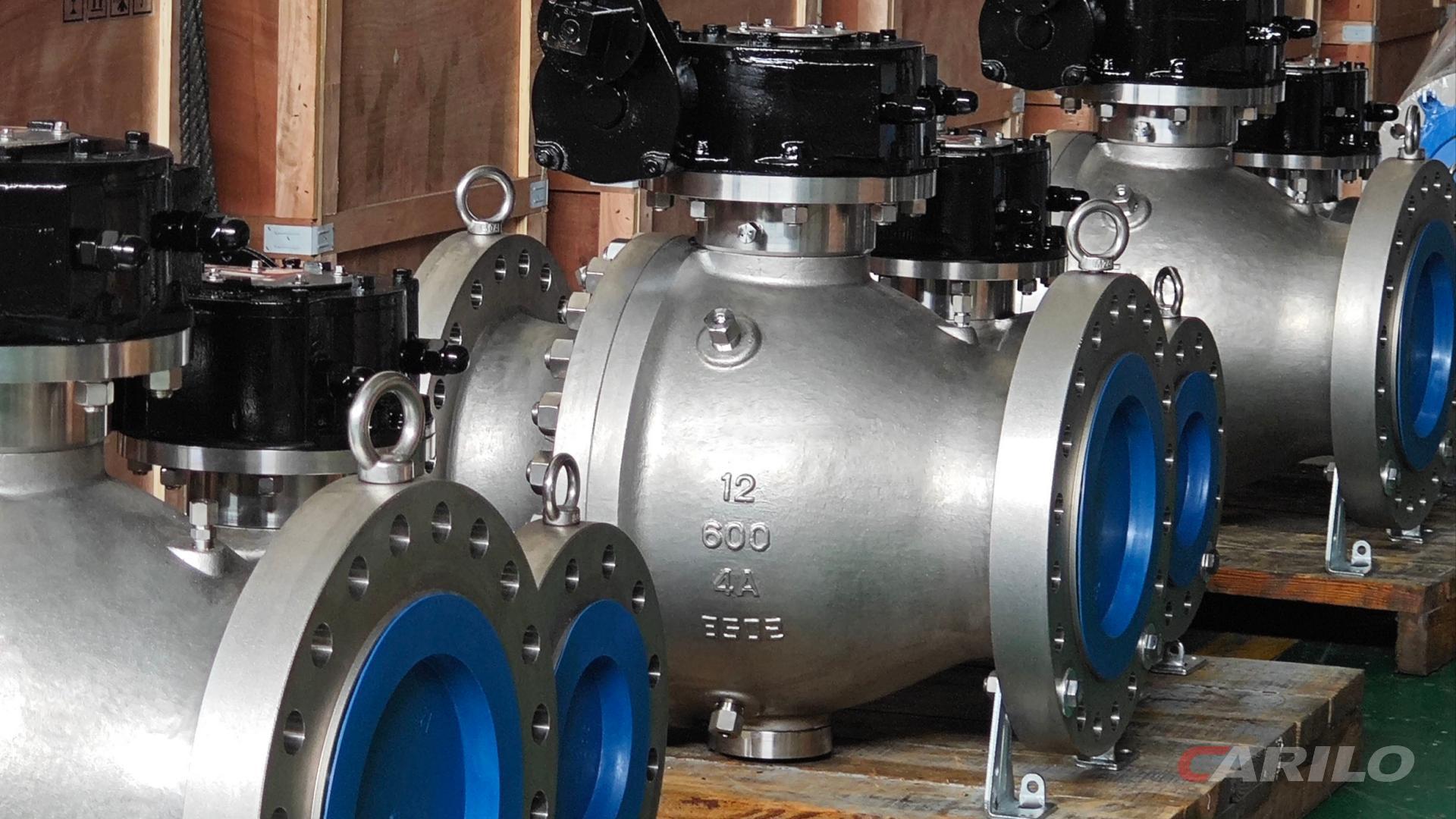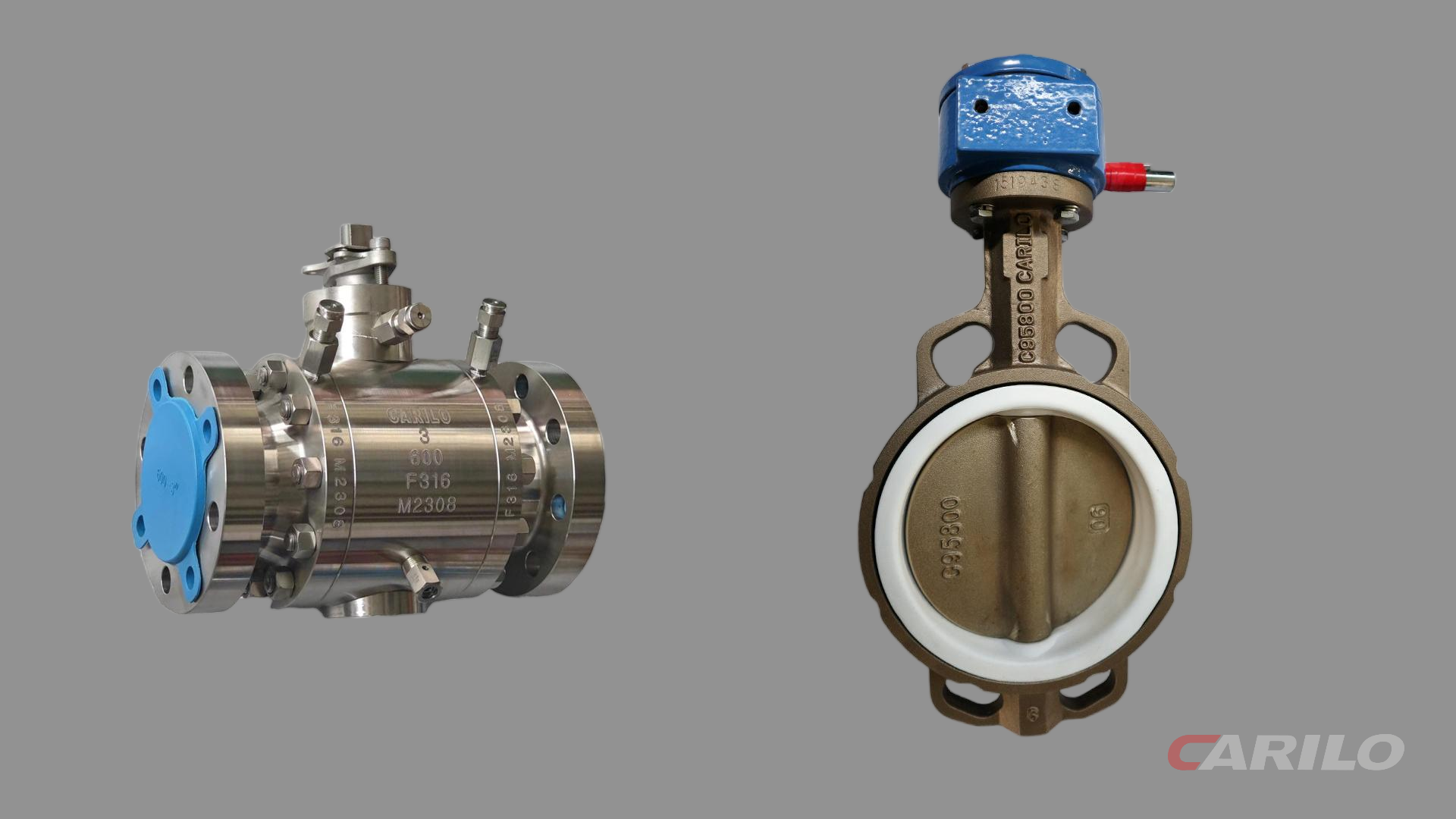
Internal leakage in ball valves and seat wear are often caused by improper operation. To prevent this, the valve must always be rotated the full 90 degrees to the fully open or fully closed position. It must never be left partially open for throttling, as high-velocity flow can erode and damage the valve body.
For routine maintenance, it is recommended to perform a pressure-retained leak test and inject grease every 3 to 6 months to reduce operating torque.
In addition, if the process medium exceeds 200°C or contains hard particles, the standard PTFE soft seat must be upgraded to a metal hard seat to prevent failure at the source.
Leakage Issues
According to testing under API 624, more than 75% of fugitive emissions in industrial piping systems originate from the stem packing area of ball valves.
In Class 1500 high-pressure systems, micron-level scratches on the sealing surface can push the leak rate above 100 ppm within 48 hours. Under 200°C service conditions, PTFE exhibits a cold flow rate of 0.05 mm per hour.
Internal leakage from valves can result in the loss of thousands of gallons of high-purity process media every quarter.
Stem Packing
Chevron V-type PTFE packing had been installed on a Class 300 pipeline for three months when the process temperature suddenly exceeded the material’s 204°C melting point. In this temperature range, the molecular structure of PTFE begins to change, causing the material volume to expand by 15% almost immediately. The stem and packing became too tightly compressed, and the coefficient of friction jumped from 0.04 to 0.12.
The pneumatic actuator could no longer turn the valve, so the output torque was forced up by 60 N·m. An operator then increased the air supply pressure to 80 psi to force the valve open. That brute mechanical force tore a 3 mm split in the bottom packing ring in less than half a second, allowing high-pressure fluid to escape through the gap.
At 600 psi, styrene monomer was carrying away 0.1 g of broken PTFE debris per hour. When checked with an API 624 test instrument, VOC emissions exceeded the legal 100 ppm limit in less than two days. Temperatures inside hydrocracking units in refineries run even higher, approaching 450°C.
Engineers replaced the packing with 99.8% pure flexible graphite rings. Five braided graphite packing rings, manufactured to API 622, were tightly compressed into a 3.5-inch-deep stuffing box. Graphite does handle heat well, but in oxygen-rich environments it oxidizes easily. Once even a small amount of oxygen enters the line, carbon atoms begin to be consumed above 400°C.
The carbon turns into carbon dioxide gas and dissipates into the air. A square graphite ring that originally measured 1/4 inch in cross-section lost 22% of its thickness after 6,000 hours of service. A stack of Belleville springs on the gland flange kept expanding to compensate for the physical gap left behind.
But even with a constant 1,500 lb spring load, oxidation removed too much volume. Tensile stress in the studs dropped to less than 40% of the rated value.
- Use a torque wrench to set the nut preload to 45 ft-lbs.
- Tighten in a diagonal sequence, advancing only 1/6 of a turn per pass.
- Control gland compression depth to 10% to 15% of the total packing depth.
- Check stem runout with a micrometer and keep it within 0.05 mm.
- Let the assembly sit for 24 hours, then retighten once to restore lost stress.
Live-loading systems offer virtually no tolerance for error. If the gland follower tilts by more than 0.5 degrees, the compressive load on one side of the packing spikes by 300%. If the metal stem surface roughness exceeds Ra 0.8 µm, the microscopic peaks act like a file.
Every 90-degree valve operation scrapes a 0.01 mm layer of powder off the inner wall of the graphite rings. That debris mixes with the process medium and hardens at the bottom of the packing set, reaching a hardness close to HRC 30. The stem then jams, and two grooves 0.15 mm deep are cut into the metal surface.
Replacing packing is an extremely cleanliness-sensitive job. Operators use a flexible-steel extraction tool to remove the old packing. If even a bean-sized hard particle is left behind, the newly installed five-ring V-packing set is effectively ruined.
- Cut the packing ends at a 45-degree skive cut.
- Stagger the joints of adjacent packing rings by 120 degrees.
- Replace the bottom anti-extrusion ring with a carbon-fiber ring.
- Keep the clearance between the stem and the stuffing box wall below 0.2 mm.
The compressive load on the packing is highly uneven from top to bottom. The top ring takes nearly 70% of the mechanical force transmitted by the gland. The bottom two rings receive less than 10% combined. Leakage control depends almost entirely on the high-contact-pressure zone at the top.
The lower packing rings mainly wipe the medium and support the stem. If too many rings are installed—more than eight, for example—the bottom three rings carry almost no load at all. Whether the valve is leaking is determined by VOC instrument readings, not by appearance alone.
With a TVA2020 flame ionization detector, the probe is held 1 cm from the stem for 5 seconds. A minor temperature difference can send the reading from 5 ppm to 500 ppm. On LNG lines operating at -162°C, PTFE lip seals shrink by 2%.
The adjacent metal stem contracts by only 0.5%. That mismatch in thermal expansion physically pulls apart what was once a tight sealing contact. For cryogenic service, Kel-F (PCTFE) combined with an extended stem is required.
A 24-inch extension keeps the stuffing box far away from the cryogenic zone. The -162°C methane traveling through the line transfers cold through the stainless steel, but by the time it reaches the stuffing box, ambient air has moderated the temperature to above -10°C.
This allows the elastomer to maintain a Shore A hardness of 75 instead of turning brittle like glass. API 622 testing places the packing assembly through thermal cycling: five cycles from room temperature to 260°C, along with 1,500 mechanical valve operations. Only graphite packing that survives this test is stamped and approved for use in chemical plants.
Seat
A desulfurization line at a Texas refinery ran for six months with fluid flowing at 12 m/s. The medium contained alumina catalyst powder, which continuously eroded the internals of a Class 600 ball valve. The original seat, made of virgin PTFE, was 5 mm thick. After four weeks at 150°C, the PTFE had undergone visible plastic creep. The originally flat sealing contact surface had been deformed into a groove 2.5 mm wide.
Pipeline pressure then surged to 1,200 psi. High-pressure fluid penetrated downstream through the deformed gap. An API 598 hydrostatic test showed that the valve, originally required to be bubble-tight, leaked 45 mL per minute. When maintenance technicians disassembled the valve, they found that the mirror-finished 316 stainless steel ball had been scored by alumina particles with a Mohs hardness above 8.
The deepest groove measured 0.15 mm with a caliper. Operators then increased actuator output torque by 80 N·m in an attempt to force the valve closed. That brute force drove catalyst particles trapped in the gap straight into the PTFE seat, leaving the white PTFE ring densely embedded with black hard debris.
To handle severe wear, engineers switched to PEEK, which has a tensile strength of 90 MPa. PEEK can withstand high-pressure fluid impact in 260°C service. But during shutdown line sweeping, 300°C superheated steam was introduced, and the PEEK surface crystallized and fractured within five minutes.
A PEEK fragment about the size of a fingernail was carried downstream into a flowmeter, where it jammed the rotor and shut the entire production line down for 14 hours. Under FCI 70-2, the valve’s internal leakage rating dropped to Class III, with 0.1% of rated flow leaking continuously every minute.
- Polish the ball surface to Ra 0.2 µm.
- Use a micrometer to control the PEEK seat inner diameter tolerance within 0.03 mm.
- Measure wall thickness with an ultrasonic thickness gauge every 500 cycles.
- Keep the differential pressure across the valve strictly below 500 psi.
Soft seats cannot survive harsh service. In slurry pumping systems, they were replaced with metal-to-metal seats. The 316 stainless steel ball was treated using HVOF spraying, which applied a 0.2 mm tungsten carbide coating across the surface.
Rockwell hardness jumped from a modest HRC 25 to HRC 70. With a hardness of HV 1200, the coating acted like armor against abrasive media. Coating porosity was tightly controlled below 1%, and bond strength reached 10,000 psi. In slurry pipelines carrying large quantities of silica at 25 m/s, the hard coating held up under extreme erosion.
After 12 months of operation, measured wear was less than 0.01 mm. The seat also had to be upgraded to a tungsten-carbide-coated metal ring. Belleville springs were installed behind the seat to provide a constant 600 lb thrust, holding the hard seat firmly against the equally hard ball.
The two contact surfaces were lapped until they fit together like glass. Bluing tests showed a contact band covering more than 80% of the total sealing width. During API 598 high-pressure gas sealing tests at 3,000 psi nitrogen pressure, the bubble counter showed zero bubbles in one minute.
| Seat Material | Maximum Service Temperature | Rockwell Hardness (Typical) | Maximum Allowable Leakage at Sealing Surface (FCI 70-2) |
|---|---|---|---|
| PTFE | 150°C | Below HRC 10 | Class VI (bubble-tight) |
| PEEK | 260°C | HRC 25 | Class VI |
| Tungsten Carbide Coating | 500°C+ | HRC 70 | Class V (0.0005 mL/min/psi/in) |
| Stellite 6 Hardfacing | 600°C+ | HRC 40 | Class IV (0.01% of rated flow) |
On delayed coking unit transfer lines in refineries operating at up to 500°C, even tungsten carbide begins to struggle. Sulfides in high-temperature process streams start attacking the cobalt binder phase in tungsten carbide above 450°C. Micron-scale honeycomb pitting begins to appear on the coating surface. At that point, engineers have to move up to cobalt-based alloy Stellite 6 for extreme heat service.
Using PTA welding, a welder overlays a 3 mm thick layer of Stellite 6 onto a 316 stainless steel seat. Under continuous exposure to 600°C, the chromium carbides remain tightly distributed, and hardness stays stable at HRC 40. The alloy resists sulfide attack and withstands thermal shock extremely well.
When 20°C cooling water is suddenly introduced into the line, creating a thermal shock of up to 580°C, the hardfaced layer holds steady without a single surface crack. Metal-seated sealing does, however, come with a hard physical limit. A metal-to-metal friction coefficient as high as 0.4 can triple the required actuator torque.
What originally required 1,000 N·m climbs to 3,500 N·m. That massive torque is transmitted through the stem to the ball. The stem-to-ball connection is then subjected to extreme shear stress. If the safety factor drops below 2.5, the stainless steel stem keyway can twist off in fewer than 300 cycles.
Flange Sealing Surface
At an ethylene chemical plant in Louisiana, a Class 1500 steam line was suspended overhead carrying 800 psi steam. A spiral wound gasket with inner and outer rings was installed between the valve and pipe flanges. The gasket was made from alternating layers of 316 stainless steel strip and flexible graphite.
Then a nighttime storm hit, and ambient temperature fell from 35°C to 15°C. Cold rain struck the exposed 500°C flange surfaces. In just ten minutes, severe thermal contraction transferred to the outer fastening bolts. The ASTM A193 B7 alloy steel studs underwent slight elastic shrinkage, and the compressive load between the flange faces instantly became unbalanced.
Initial preload torque of 600 ft-lbs, applied with a hydraulic wrench, collapsed to 380 ft-lbs after thermal shock. Gasket spring-back could not keep up with the rate of metal deformation. A microscopic gap of 0.08 mm opened between the upper and lower flanges, and 500°C steam began jetting out.
An infrared thermal imager, positioned 3 meters from the line, detected a leakage plume with a temperature of 210°C. Replacing the damaged gasket was purely heavy manual work. Four pipefitters used a hydraulic flange spreader to force open a 400 lb flange assembly by 30 mm. The old graphite gasket had already been crushed almost paper-thin.
Its original thickness of 4.5 mm had been compressed down to 2.8 mm. Three sections of the internal metal winding strip had fractured under overload. Broken stainless steel strands were embedded into the flange face serrations, and it took a full 45 minutes to clean the residue out with a brass brush.
ASME PCC-1 bolt assembly guidelines strictly limit flange sealing surface flatness tolerance to within 0.15 mm. Beyond that physical limit, gasket compression can no longer compensate for the unevenness of the metal surfaces.
- Flange sealing surface roughness Ra must be controlled between 3.2 and 6.3 µm.
- Check flange parallelism with a feeler gauge; top-to-bottom deviation must not exceed 0.25 mm.
- The thickness of molybdenum disulfide lubricant applied to the threads must not exceed 0.1 mm.
- Use an ultrasonic bolt elongation gauge to hold the axial stretch of each bolt at 0.12 mm.
For Class 2500 ultra-high-pressure lines, ordinary gaskets simply cannot cope. On gas injection lines at North Sea offshore platforms, RTJ flanges were used instead. Between the two flanges sat an octagonal pure iron ring joint. After heat treatment, the pure iron ring had a Brinell hardness of HB 90.
The flange groove hardness was HB 140. That 50-point Brinell hardness difference meant that when the nuts were tightened, the softer metal ring was forced into the flange groove and underwent irreversible plastic deformation. The metal-to-metal interface produced a virtually absolute vacuum-tight contact surface.
API 6A explicitly requires metal ring gaskets to be discarded after every disassembly. Once plastically compressed, the ring’s original 23-degree cross-section angle is flattened to 21.5 degrees, and its sealing capability is permanently lost.
Large 2-inch-diameter bolts cannot be tightened by feel. Workers bring in a hydraulic bolt tensioner, mount it over the stud, and pump in hydraulic oil at 15,000 psi. The enormous tensile force stretches the heavy steel stud by 0.15 mm.
The worker then lightly turns the nut into contact with the flange face. When hydraulic pressure is released, the stud’s restoring force clamps the metal ring gasket tightly in place. After 8,000 hours of continuous operation at 400°C, the bolt material begins to creep under temperature.
The crystal structure gradually relaxes, and ultrasonic measurement shows residual axial bolt stress dropping quietly by 18%. An operator then tries to stop a leak by hammering on one side of a box wrench. The severe side load forces the right flange face inward 0.4 mm more than the left.
- Use a torque multiplier wrench for four-stage cross-pattern retightening.
- Apply only 30% of target torque in the first pass.
- Raise preload evenly to 60% in the second pass.
- Monitor flange outer-edge tilt with a dial indicator and stop immediately if it reaches 0.05 mm.
The right side of the gasket now carries compressive stress up to 25,000 psi, while the left side drops to just 3,000 psi. The process medium begins to escape from the weak, under-compressed side. A portable gas detector samples air 5 cm below the flange. The probe draws in VOC-laden air.
Within seconds, the PID reading jumps to 800 ppm. In wind speeds above 3 m/s, leaked gas disperses rapidly. Under EPA Method 21, the probe must be moved directly along the flange edge gap at a speed no greater than 8 cm per second, centimeter by centimeter.
To fully eliminate microleakage, engineers switch to a Kammprofile gasket. A 3 mm thick solid stainless steel core is machined with 1 mm-spaced concentric serrations on both sides, then faced with 0.5 mm ultra-pure graphite. Once the bolts are tightened, the metal serrations bite directly into the soft graphite.
The graphite becomes mechanically locked inside the tiny metal grooves, leaving no room for outward cold flow. Kammprofile gaskets can withstand compressive loads up to 40,000 psi. Under high pressure, this reduces gas leakage across the joint to as low as 0.001 mg/s/m.
Seat Wear
Seat wear accounts for 65% of recorded sealing failures in industrial ball valves.
When fluid velocity exceeds 10 ft/s (3 m/s) or the pressure drop ratio exceeds 0.5, PTFE and PEEK soft seats are highly prone to physical stripping.
API 6D testing shows that media containing hard particles larger than 50 microns can reduce the expected life of soft seats by 70%.
When metal seats with hardness below HRC 35 are exposed to cavitation bubble collapse—where microjet impact reaches 10,000 bar—their surfaces can develop dense microscopic cracking in under 200 hours.
High-Velocity Erosion
In an 8-inch API 6D ball valve at full bore, natural gas velocity in the pipeline is 15 ft/s. Workers then throttle the valve down to a narrow opening of just 12° to 18°. Because the opening area shrinks dramatically, gas is squeezed through the restriction and local velocity surges past 180 ft/s.
Field testing on vent lines at a Gulf of Mexico offshore platform showed that fluid kinetic energy inside that narrow gap increased by a factor of 140. High-pressure gas carrying fine sand cut across the sealing ring like a blade. Standard PTFE lasted only 45 minutes before a U-shaped groove 0.8 mm deep was eroded into the surface.
As the fluid passes the edge of the ball, vena contracta forms. The original 600 psi pressure in the line falls to below 15 psi at the restriction.
When liquid pressure drops below saturation vapor pressure, water flashes into vapor bubbles even at room temperature. Those bubbles collapse downstream behind the seat, producing microjets at 400 km/h. This happened at the outlet of a North Sea oilfield water injection pump. A 316 stainless steel ball operating in 30 m/s saltwater saw its surface roughness degrade from Ra 0.4 to Ra 3.2 in 120 hours.
Different valve opening angles cause very different damage patterns:
- 5° opening: 90% of the damage is concentrated at the 6 o’clock position on the seat bottom, within a 2 mm-wide zone.
- 15° opening: the erosion band widens and crescent-shaped pits develop on both sides of the ball.
- 30° opening: flow begins to swirl behind the valve, triggering high-frequency pipeline vibration.
- 45° opening: the high-pressure stream strikes the downstream pipe wall directly, sparing the seat but shifting the damage elsewhere.
At a gas station in Alberta, operators routinely cracked open ball valves to 20° to vent trapped pipeline pressure. At 1,500 psi, the escaping gas reached Mach 1.2.
That supersonic gas expansion removed heat so quickly that the seat area dropped to -45°C within 3 seconds. Nylon seats became brittle, and the 80 m/s gas stream carrying ice particles and rust shattered the sealing surface on impact.
When the seat was replaced with a metal seat coated in HRC 70 tungsten carbide, it could withstand Mach 1.2 erosion. Annual wear was held below 0.05 mm. The coating thickness also had to be tightly controlled at 0.2 mm: too thin and it would be penetrated by high-speed sand; too thick and it would crack under thermal cycling.
In 50 m/s high-temperature high-pressure steam, different materials survive for very different lengths of time:
- Virgin PTFE: fails in under 15 minutes due to thermal softening and deformation.
- Carbon-filled PTFE: lasts about 4 hours before surface carbon is stripped away.
- PEEK: develops a network of fine edge cracks after 72 hours.
- Stellite 6 hardfacing: shows no visible scratches even after 8,000 hours.
Engineers also machine the bore inside the ball into a V shape, commonly at 30° or 60°. During the first 20% of travel, the V-notch allows flow area to increase gradually.
The highest-velocity jet is forced toward the center by the V-shaped tip, keeping it away from the vulnerable seat sealing band. At a Texas chemical plant handling slurry with 60% solids, switching to a 60° V-port ball valve reduced peak velocity to 8 m/s and extended seat life from 3 months to 22 months.
Surface finish on the ball directly affects hydraulic resistance. When a metal-seated ball is ultrasonically polished to Ra 0.1, turbulence intensity can be reduced by 40% as the fluid slips more smoothly across the surface.
Spring-loaded seat designs are used to absorb the impact of high-speed particulate flow. Belleville springs behind the seat provide 500 lb/in of thrust. Even under an 80 m/s lateral gas stream, the seat-to-ball clearance is held tightly to 0.02 mm.
Small design changes can produce major differences in line performance:
- Increase the downstream diffuser angle to 15°: recover 20% more flow energy.
- Add a 1 mm chamfer to the seat edge: reduce peak local velocity by 8%.
- Install a labyrinth pressure-reduction plate: limit pressure drop to 300 psi per stage.
At a hydrocracking unit in a North American refinery, one high differential pressure relief loop saw flow speeds above 60 m/s. The plant replaced the valve with a ball valve incorporating a multistage pressure-reduction cage. As the fluid passed through successive perforated metal sleeves, its velocity was reduced step by step, reaching a safe 5 m/s by the time it reached the final seat.
Temperature & Materials
PTFE has a linear expansion coefficient roughly 10 times that of ordinary carbon steel. On an exposed crude oil line in the Nevada desert, metal pipe surfaces under direct sun often reach 85°C.
Inside the valve cavity, the virgin PTFE seat expands with heat. In a 6-inch ball valve, the polymer seat will protrude toward the ball by 0.45 mm at 85°C.
That expanded soft material has nowhere to go and becomes trapped tightly between the stainless steel ball and the metal valve body. When the line is pressurized to 900 psi, the extra material is compressed and undergoes what engineers define as cold flow.
By early morning, desert temperatures can drop to 10°C, and the PTFE contracts sharply. The portion that was crushed during the day cannot fully recover, leaving a 0.12 mm gap between the seat and the ball.
Tests from a valve maintenance lab in Houston showed that after 30 day-night thermal cycles of this kind, sealing contact pressure in standard virgin PTFE seats drops by 65%.
Engineers modified the formulation by adding 15% glass fiber and 5% molybdenum disulfide. The resulting RPTFE increased compressive strength to 2,000 psi while cutting thermal expansion by half.
At cryogenic temperatures, soft materials face the exact opposite physical challenge. At LNG receiving terminals operating at -196°C, most standard rubbers and plastics become glass-brittle at about -40°C.
On LNG carriers shipping gas from Qatar to Europe, cryogenic ball valves are fitted almost exclusively with PCTFE (Kel-F). This hard fluoropolymer still retains 8% mechanical elongation at -196°C, so it does not shatter on contact.
Even so, PCTFE still shrinks significantly at around -160°C. Designers solve this by installing a lip seal spring made from Elgiloy cobalt-chromium-nickel alloy behind the polymer seat.
The spring provides 45 lb of thrust per inch of circumference, forcing the shrunken, stiffened polymer tightly against the metal ball and maintaining a seal against 2,500 psi cryogenic liquid service.
| Seat Polymer Material | Applicable Temperature Range | Compressive Yield Limit at 100°C | 24-Hour Water Absorption | Typical North American Application |
|---|---|---|---|---|
| Virgin PTFE | -50°C ~ 180°C | 900 psi | < 0.01% | Low-pressure water treatment plants in Michigan |
| Devlon V-API | -46°C ~ 150°C | 4,200 psi | 0.15% | Mainline sections of the Alaska oil pipeline |
| PEEK (unfilled) | -55°C ~ 260°C | 8,500 psi | 0.10% | High-pressure water injection wells in Oklahoma |
| PCTFE (Kel-F) | -240°C ~ 120°C | 3,800 psi | < 0.01% | LNG storage tanks on the UK National Grid |
Above 260°C, all polymer materials reach their physical limit. On superheated steam lines at a Louisiana chemical plant operating year-round at 320°C, PEEK carbonizes and cracks within 48 hours.
At those temperatures, metal hard sealing is mandatory. Bare 316 stainless steel has a surface hardness of only about HRC 20. After just 100 opening and closing cycles in 320°C steam, the ball and seat surfaces begin to gall and deform badly.
That leaves surface hardening as the only workable solution. The plant uses HVOF equipment to heat chromium carbide powder into a semi-molten state and blast it onto both the metal ball and the seat.
The resulting dense coating is controlled between 0.15 and 0.2 mm thick, with a bond strength of 10,000 psi and surface hardness of HRC 68. Even under high temperature, where the metal lattice expands, the coating remains tightly bonded.
To absorb thermal expansion, the seat spring pack is upgraded to Inconel 718 Belleville springs. Even after 6 months at 500°C, this nickel-based superalloy loses less than 2% of its spring force.
Pipelines are also exposed to extreme transient thermal shock. On a natural gas platform in Norwegian waters, 1,500 psi gas expands rapidly during line depressurization.
Inside the valve cavity, local temperature falls from 70°C to -45°C in 8 seconds. Under that thermal shock, ordinary carbon steel seats develop visible microcracks.
The platform therefore specifies Duplex 2205 stainless steel for internal components. Its dual austenitic-ferritic structure can absorb more than 50 joules of impact energy at the grain boundaries when exposed to temperature shocks exceeding 100°C.
API 607 fire testing subjects seat materials to an entirely different level of heat. An 8-inch test ball valve is exposed to direct flame at 760°C for a full 30 minutes.
The soft polymer primary seat burns away completely within minutes. Under upstream line pressure, the ball shifts backward by 0.5 mm and contacts a backup fire-safe lip machined into the metal valve body.
After fire exposure and cooling, the test requires that gas leakage not exceed 40 mL/min per inch of nominal bore through this metal backup sealing step. Meeting that requirement depends entirely on the 0.5 mm movement clearance machined in advance.
At a valve laboratory in Pennsylvania, thermography was used to monitor a high-cycle life test on a ball valve. Under 900 psi pressure, a motor drove the ball through 80 cycles per hour.
Polymers dissipate heat slowly, so dry friction caused heat to accumulate at the contact interface. The ball surface measured 45°C hotter than the water in the line. The adjacent PTFE seat gradually lost 15% of its hardness.
The solution was to switch to PEEK filled with 10% carbon fiber and 10% graphite powder. The graphite rapidly conducted heat away from the friction surface into the metal body behind it, reducing abnormal temperature rise at the contact interface to within 15°C.
Improper Operation
Maintenance data from North American petrochemical facilities shows that human operating errors account for 42% of unexpected ball valve repairs.
When PTFE soft-seated ball valves are left at 20° to 70° open and used as throttling valves, sealing surface wear exceeds 0.5 mm within 48 hours.
If operators use a cheater bar to force open a 6-inch ball valve on a line with more than 150 psi differential pressure, the 316 stainless steel stem can suffer more than 2 degrees of permanent torsional deformation.
Closing a full-port ball valve in under 0.5 seconds can generate transient water hammer pressure equal to 3.2 times the rated operating pressure, making fugitive leakage at flange joints highly likely.
Throttle Misuse
One maintenance record from a Texas refinery is a textbook example. During line adjustment, workers left an 8-inch Class 300 carbon steel floating ball valve at 35 degrees open and used it as a control valve. The line was carrying liquid propane at 420 psi. In less than 72 hours, irreversible physical damage had occurred inside the valve.
In a standard ball valve, the internal opening is circular. When the valve is half open, the flow path narrows into a crescent-shaped restriction. Large volumes of liquid propane are forced through this narrow opening, and local velocity immediately rises above 28 m/s. As velocity increases, static pressure at the restriction drops rapidly.
At 25°C ambient temperature, propane’s saturated vapor pressure is about 120 psi. Once line static pressure falls below that threshold, the liquid instantly begins to “boil” inside the pipe and generate large numbers of vapor bubbles. As soon as those bubbles pass through the restriction into the wider downstream section, pressure recovers and they implode.
- Bubble collapse produces microjets with impact pressures up to 10,000 psi.
- An ultrasonic instrument detected 85 kHz high-frequency vibration in the pipe wall.
- The vibration frequency happened to match the seat’s natural frequency, triggering mechanical resonance.
- The 316L stainless steel ball surface was hammered into a field of honeycomb-shaped pits.
The collapsing bubbles effectively turn the inside of the valve into a high-pressure sandblasting machine. They hammer continuously at the PTFE soft seat. PTFE has a yield strength of only about 2,000 psi and simply cannot withstand repeated 10,000 psi microjet impacts.
Under that assault, the previously smooth sealing edge quickly thins and develops burrs. Over time, tiny plastic fragments are stripped away and carried downstream with the liquid. Whenever workers clean the downstream Y-strainer, they pull out handfuls of white PTFE debris.
Partially open depressurization also causes violent temperature swings inside the line. Local temperature can plunge suddenly to -15°C. PTFE becomes brittle when chilled, and the microscopic cracks already created by the microjets spread much faster and deeper along the material structure.
When a ball valve is left partially open, it must also resist a massive one-sided hydraulic force from the pipeline. The upstream 420 psi pressure acts directly on the partially closed ball surface. For an 8-inch ball under a 400 psi differential pressure, the asymmetric load exceeds 18,000 lb.
That enormous force presses the ball hard against the downstream seat. Loading across the seat becomes severely uneven, and the pressure-loaded side of the plastic deforms permanently. By the time workers try to close the valve tightly again, the badly deformed seat can no longer conform to the ball, and internal leakage becomes inevitable.
- The stem connected to the handle is subjected to roughly 650 N·m of biased torque.
- The graphite sealing rings in the stuffing box become badly distorted under eccentric compression.
- Propane escapes through the stem clearance at a rate of 15 mL per minute.
- The square keyway at the drive end develops 0.2 mm of metal shear displacement.
The equal-diameter round bore of a standard ball valve causes flow to change far too abruptly. When an operator opens the handle by less than 20%, the line flow can already jump above 70% of maximum capacity. Trying to regulate flow manually by fine-adjusting the handle position is practically impossible.
According to ISA testing in North America, using a standard ball valve for flow control produces system fluctuation errors of up to ±15%. Whenever real flow control is required, field engineers replace it with a control ball valve using a 30° or 60° V-port.
The V-port provides a much more linear flow curve. From 10% to 90% opening, it can hold pressure drop in the pipeline far more steadily.
With a smart electro-pneumatic positioner, a V-port ball valve can hold the valve body at an exact position as precise as 0.1 degrees based on a 4–20 mA control signal. Valves built specifically for modulation also use hardfaced Stellite sealing components.
- An eccentric trim design reduces rotational friction significantly.
- A splined stem connection removes backlash from the gear engagement.
- Inconel 718 spring plates are installed to maintain constant sealing force.
- A streamlined guide ring reduces flow resistance to a minimum.
Metal sealing surfaces with hardness above HRC 45 can withstand abrasive liquid at 30 m/s carrying sand, and after 8,000 continuous operating hours, wear remains below 0.05 mm. In Alberta oil sands separation plants, workers removed all soft-seated ball valves that had previously been used for pressure control.
After switching to V-port hard-seated ball valves with pneumatic diaphragm actuators, the system ran for a full 24 months without requiring maintenance intervention, even at line differential pressures as high as 600 psi.
Torque Overload
On an MDI line at a Louisiana chemical plant, a 10-inch Class 300 flanged ball valve remained fully closed for 6 months. The stagnant medium cooled to the 22°C ambient temperature. At low temperature, MDI crystallizes easily into hard solids.
Inside the valve body, the 45 kg 316L stainless steel ball and the surrounding PEEK seat originally had less than 0.1 mm of assembly clearance. Over several months, that gap became packed with a 0.5 mm layer of hard crystal deposits, essentially bonding the ball to the seat.
The original factory test report listed a break-to-open torque (BTO) of 480 N·m. With the crystal buildup acting like industrial adhesive, engineers later measured the required starting torque at more than 1,600 N·m.
A night-shift operator found the line blocked and went out to open the valve. Even using his full body strength on the standard 1-meter handle, he could not move the ball at all. According to plant violation records, he then picked up a 1.5-meter-long seamless steel pipe from beside the scaffold and slipped it over the end of the handle as a cheater bar.
- The lever principle amplified the pull force at the handle end by 2.5 times.
- An 85 kg operator leaning on it generated more than 2,000 N·m of torque in an instant.
- That 2,000 N·m load was transmitted directly through the handle to the top of a stem only 45 mm in diameter.
- The double-flat stem connection was suddenly exposed to extreme metal shear stress.
- The anti-blowout shoulder at the bottom jammed against the packing gland, producing a harsh metal grinding sound.
The stem, made from 17-4 PH precipitation-hardening stainless steel, has a yield strength of about 1,000 MPa. The brute force from the cheater bar exceeded that physical limit in less than half a second. Permanent lattice slip occurred inside the metal, and irreversible plastic deformation began.
The operator felt the handle finally “give” and forced it down about 15 degrees. He assumed the line had opened slightly. In the DCS, the position indicator mounted on top of the stem faithfully sent a “15% open” signal back to the control room.
In reality, the 45 kg ball had not moved at all. The entire 15-degree movement came from the stem itself twisting like a torsion bar. The 850 psi liquid upstream remained fully blocked, and no material entered the downstream line.
Blind brute-force operation not only destroys the valve but also creates a major risk of material release. North American petrochemical maintenance records show that mechanical damage caused by violent forced opening accounts for 38% of manual valve scrap cases.
| Damaged Component | Failure Characteristics and Dimensional Data | Required Repair Action | Estimated Spare Replacement Cost |
|---|---|---|---|
| Stem | Permanent torsional deformation of 12 to 18 degrees at the neck | Cut out and replace; non-repairable | About 25% of total valve cost |
| Bearing | 2 mm PTFE coating crushed and stripped off instantly | Clean metal debris from valve cavity | About 5% of total valve cost |
| Keyway | 0.4 mm metal shear displacement on the side wall | Replace the ball with a new keyway | About 45% of total valve cost |
| Packing | V-type graphite rings distorted by eccentric load, creating a 0.3 mm gap | Repack and tighten with a calibrated force wrench | About 10% of total valve cost |
Section 10.4 of the API 6D pipeline valve standard is very clear: under no circumstances may the maximum force applied to a manual handwheel or lever exceed 360 N, which is roughly equivalent to 36 kgf. Anything beyond that is classified as overload misuse.
On a 16-inch natural gas pipeline operating at 1,200 psi, a full-port trunnion-mounted ball valve may require as much as 3,200 N·m of opening torque to overcome line thrust and sealing friction.
With a standard 0.8-meter handle and the allowed 360 N input force, the maximum achievable torque is less than 300 N·m. That is nowhere near enough for a 3,200 N·m requirement. If operators try to force it manually with an extension pipe, the weld at the base of the handle will fail first.
- The design must include a worm gear reducer with an 80:1 ratio.
- A friction-disc torque limiter must be installed on the handwheel shaft to prevent excessive input speed.
- The operator must turn the handwheel 120 full revolutions to rotate the internal ball by 90 degrees.
- This slow opening process also reduces water hammer risk in the pipeline by 95%.
On an offshore gas production platform in the Norwegian North Sea, engineers use another physical safeguard against torque growth caused by media deposition. All 14-inch pneumatic emergency shutdown valves on their lines are connected to a partial stroke test (PST) system.
Every 30 days, the pneumatic actuator automatically vents, allowing the ball to rotate very slowly by just 15 degrees before quickly returning to full-open position. That tiny mechanical movement, lasting only a few seconds, physically breaks up the calcium carbonate crystal network growing between the ball and the seat.
The fine mineral deposits are scraped away by the edge of the metal ball like a blade. Sensors in the PST system record the dynamic torque during that 15-degree motion in real time. Under normal conditions, baseline torque is 1,200 N·m. If this month’s reading suddenly rises to 1,450 N·m,
that 25% increase immediately triggers a yellow alarm in the control room. Two maintenance technicians arrive onsite with a high-pressure grease gun. They connect to the two grease fittings on the valve body and inject a special valve cleaning fluid at 3,000 psi.
Once the cleaner dissolves the hardened deposits in the gap, the technicians inject fully synthetic PTFE-based lubricating grease. A retest then confirms that the valve’s break-to-open torque has returned steadily to the 1,200 N·m baseline. No cheater bars or steel pipes are allowed anywhere onsite, and the mechanical service life of the valve structure is extended by a factor of three.
Uncontrolled Operating Speed
At a gas-fired power plant in Germany’s Ruhr region, a 12-inch Class 150 manual ball valve on a cooling water line once caused a serious incident. A new worker standing on the operating platform pulled down a 60 cm steel lever in just 0.4 seconds while the recirculating cooling water was flowing at 4.5 m/s. The pipeline, carrying 18,000 liters per minute, was shut off instantly.
The fast-moving mass of water slammed into the closed carbon steel ball like a solid wall. With nowhere to dissipate, the enormous fluid kinetic energy converted within milliseconds into a highly destructive pressure wave. System pressure, previously stable at 120 psi, spiked instantly to a staggering 1,650 psi.
This 1,650 psi liquid shock wave raced back toward the pump along the 304 stainless steel pipe wall at the speed of sound in water—1,480 m/s.
That invisible surge of energy behaved like a runaway train, slamming into a standard 90-degree elbow 50 meters away. The force tore apart the two 3/4-inch U-bolts holding the elbow in place. The 4-ton pipe, together with the water inside it, shifted violently by 6 mm.
- Sixteen 5/8-inch A193 B7 flange bolts were stretched by 0.8 mm.
- A 3 mm crack opened across the compressed face of the spiral wound graphite gasket.
- Cooling water blasted out through the flange gap at 80 gallons per minute.
- The main shaft of a centrifugal pump 60 meters away developed 0.02 inches of eccentric displacement.
A ball valve only needs 90 degrees of rotation to move from full-open to full-closed. A human arm can move a smooth lever through that travel in a very short time. On a nearby line, an 8-inch OS&Y gate valve required 25 turns of the handwheel to fully lower the gate, taking at least 45 seconds. That slow movement simply did not allow a damaging pressure wave to build in the line.
ASME B31.3 process piping design rules make this principle explicit. The shutoff action in a pipeline must leave enough time for the pressure wave to travel down the line and reflect back. In an 800-meter line with a wave speed of 1,400 m/s, a one-way travel time is 0.57 seconds.
Using the formula t = 2L/a, even the theoretical minimum safe closing time must exceed 1.14 seconds. The plant’s senior engineers removed the troublesome single-arm lever and threw it into the scrap bin. They fitted the stem with a 40:1 worm gear reducer.
- The operator could now only turn a 200 mm diameter handwheel.
- The internal bronze worm gear converted the rotation into extremely slow mechanical movement.
- It took 10 full turns of the handwheel to move the ball through its 90-degree travel.
- Total valve closing time was forcibly extended to a safe 15 seconds.
With the gear reducer installed, the line no longer produced even a hint of hydraulic shock. At an LNG terminal in Texas, the task of preventing water hammer was assigned to a pneumatic actuator. Mounted above a 16-inch cryogenic ball valve was a rack-and-pinion cylinder weighing 120 kg.
If fully vented, the actuator could slam the valve shut in 1.8 seconds. Instrument technicians took a tiny 2.5 mm drill bit and drilled a small restriction hole in the solenoid valve exhaust port.
The compressed air inside the cylinder, at 60 psi, could then only escape slowly through that 2.5 mm orifice. As the exhaust rate dropped, piston movement slowed accordingly. The travel that previously took under two seconds was stretched to 22 seconds.
The long hissing sound at the solenoid exhaust became the safety mechanism that dissipated tens of thousands of joules of destructive fluid energy.
The challenge on the Alaska crude oil pipeline was even more severe. Inside its 36-inch full-port ball valves, millions of barrels of crude flow each day. Crude oil is viscous, and when flow stops, the resulting inertial forces are enormous. Pipeline engineers abandoned standard pneumatic cylinders and brought in two-story-high hydraulic power units (HPUs).
Inside the HPU was a complex hydraulic manifold block fitted with multistage flow-control valves. When a shutdown signal was received, a large volume of high-pressure hydraulic oil entered the cylinder during the first 10 seconds, quickly driving the ball through the first 70% of travel.
During the final 30% of travel, the remaining flow area had already become very small. A miniature spool valve inside the manifold then reduced the hydraulic oil passage to almost needle size. At the last moment, the ball seemed to fall into mud, taking a full 45 seconds to move through the final few degrees. Flow velocity in the line dropped smoothly from 6 m/s to zero, and not a single flange gasket was blown out.