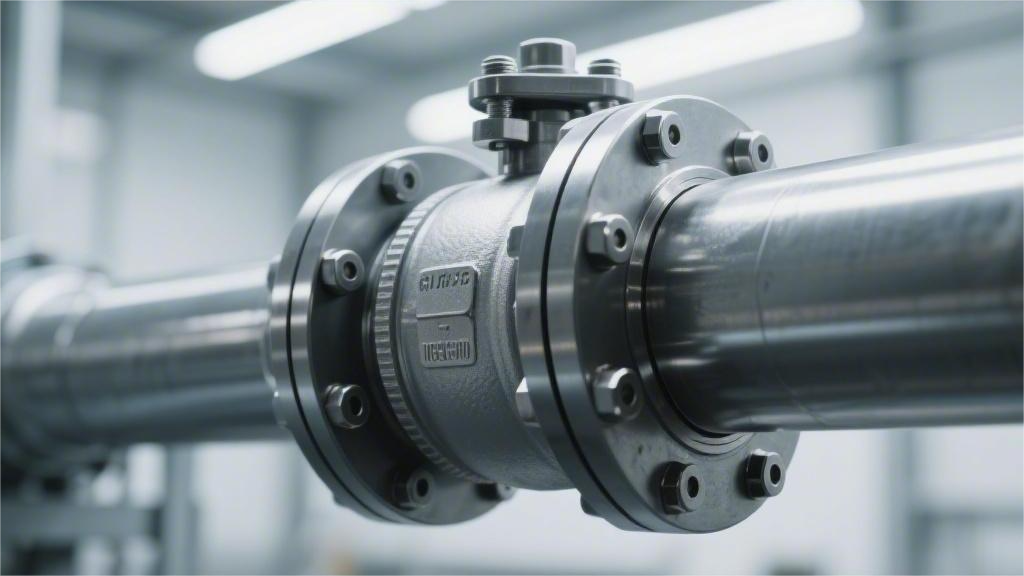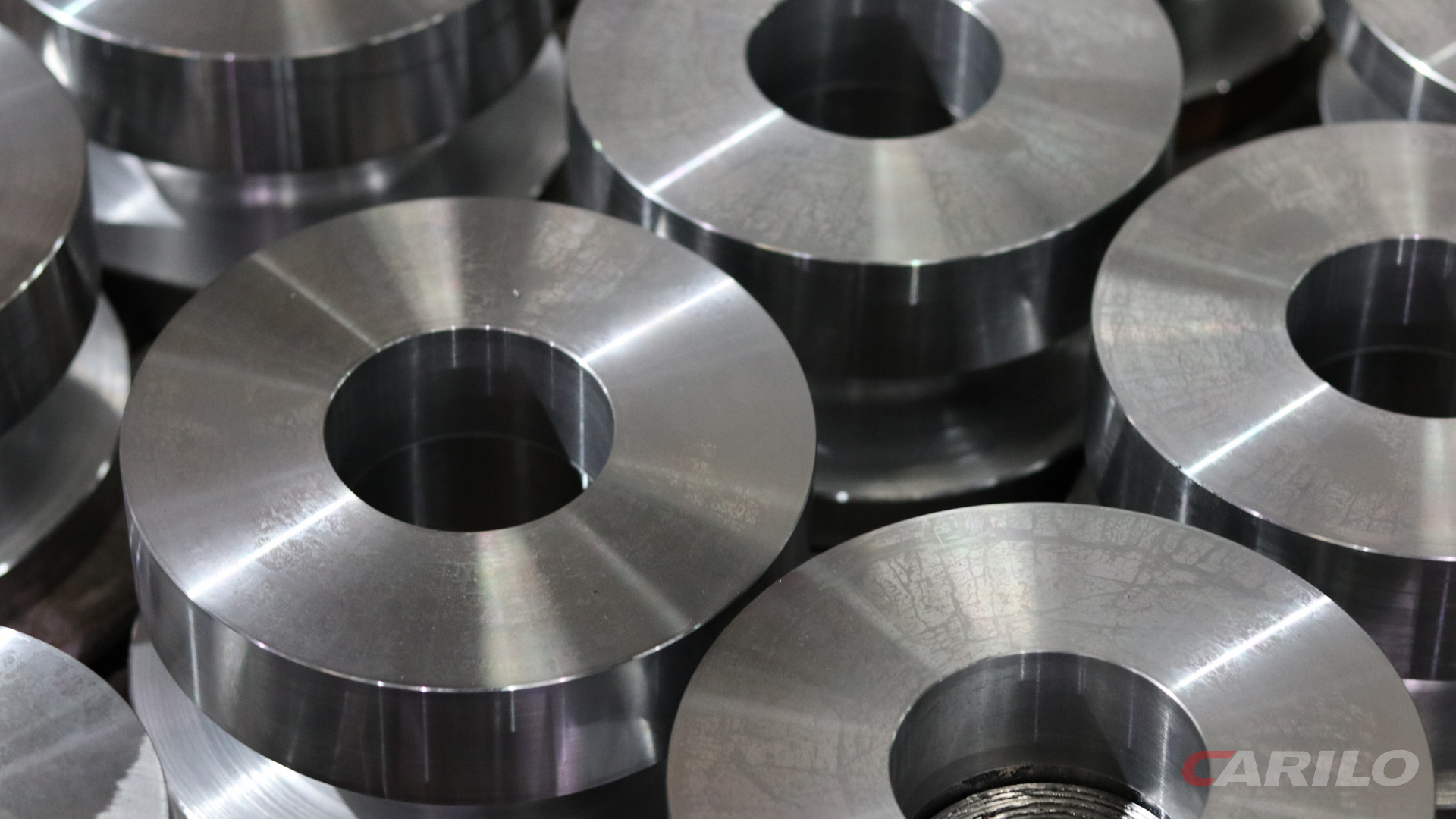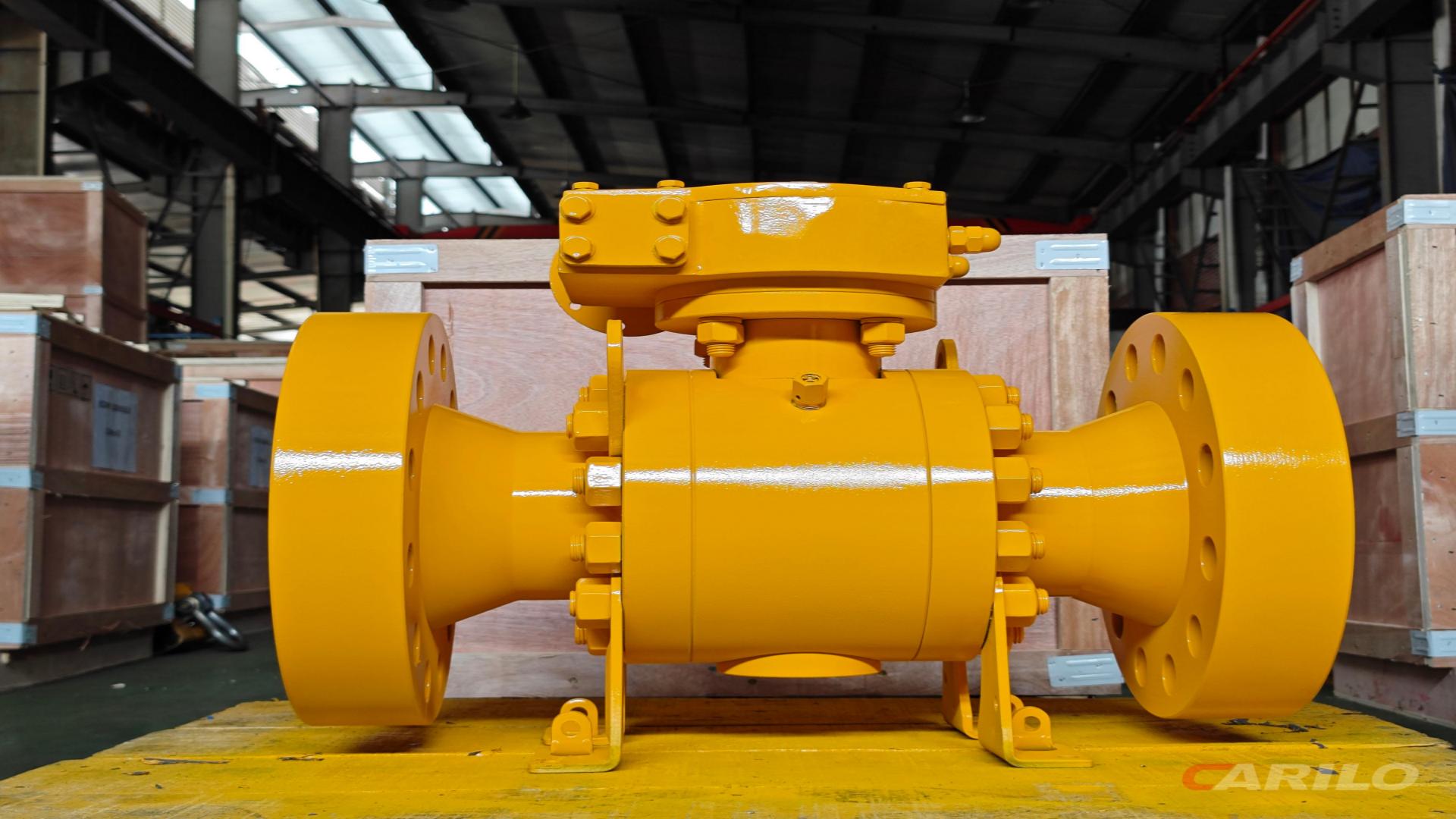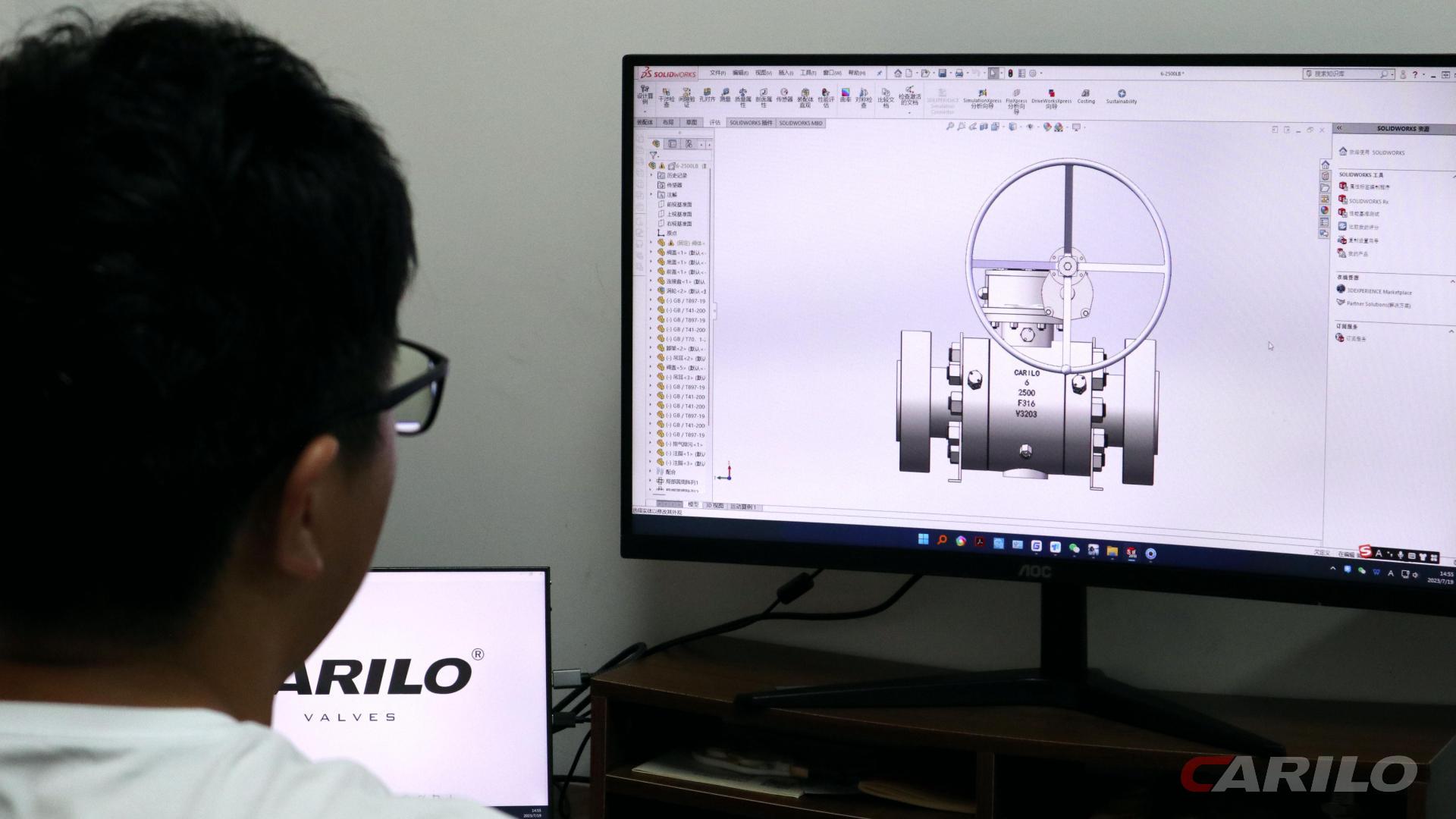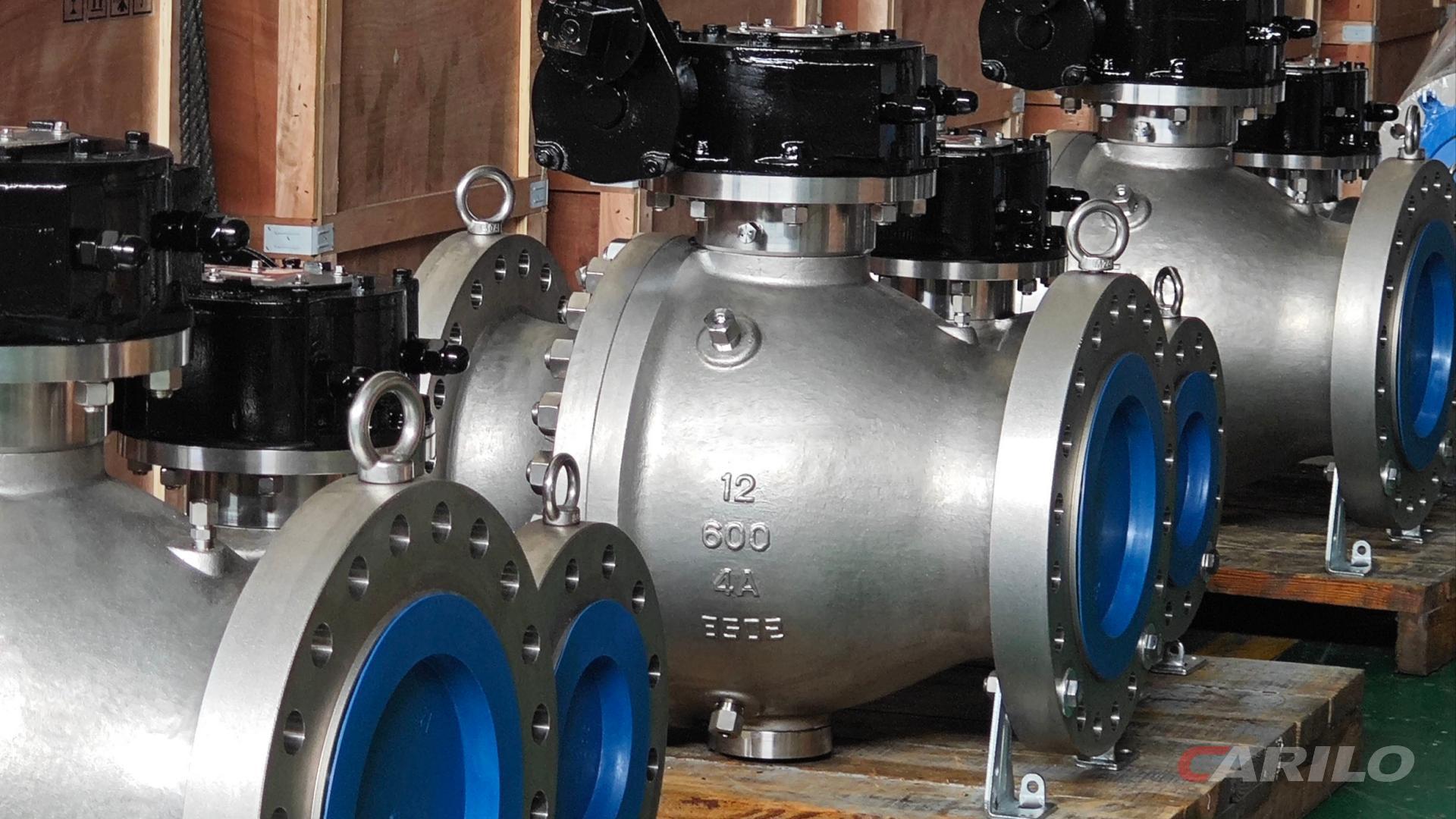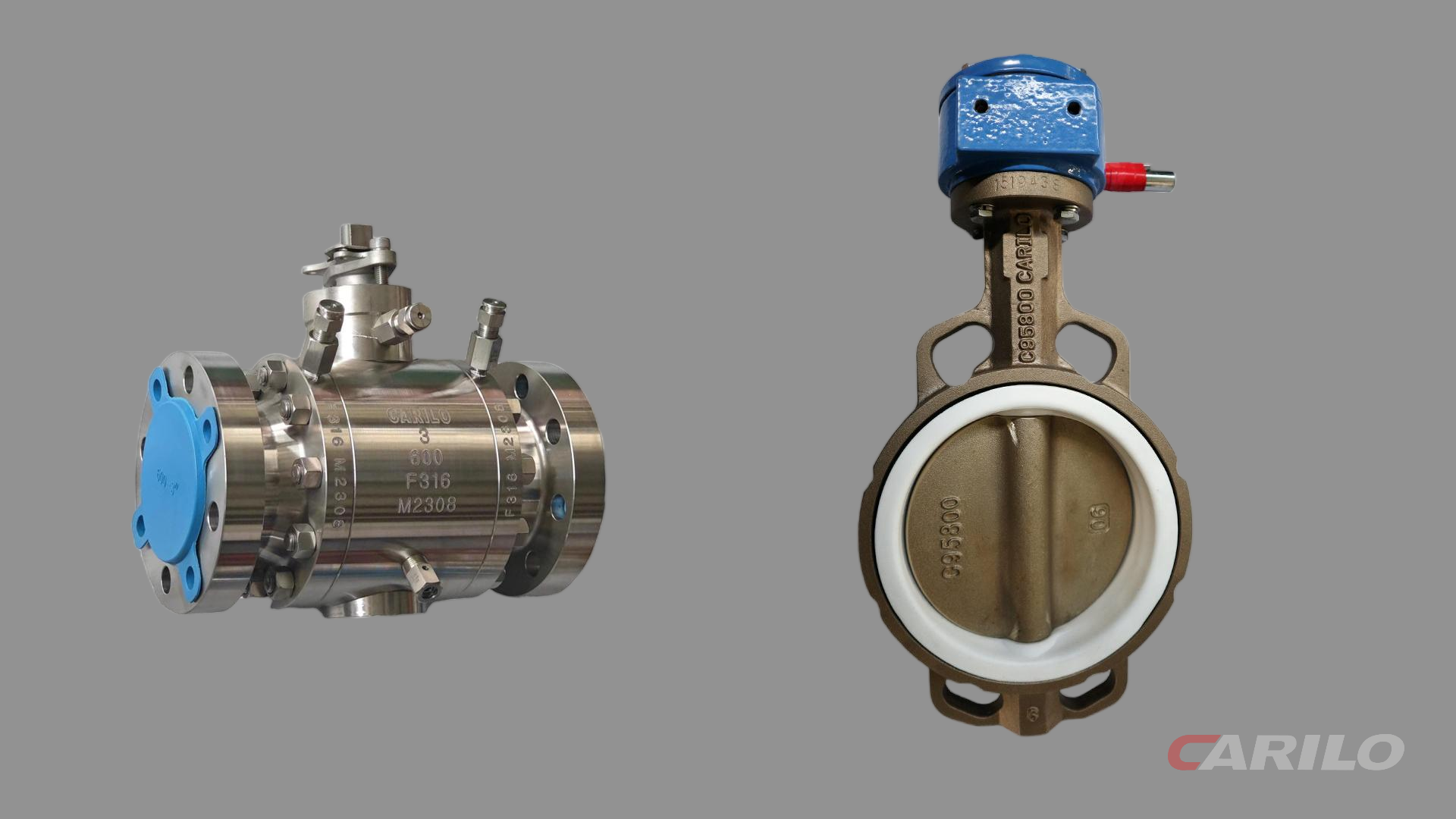
When selecting a high-pressure ball valve, prioritize Class 1500 to Class 2500 pressure ratings.
The body material should be forged F316L steel to withstand extreme mechanical stress, and the sealing system must use high-pressure-resistant PEEK or a metal hard seal with a tungsten carbide-coated surface to ensure zero leakage.
Before installation, a hydrostatic pressure test at 1.5 times the rated pressure must be carried out without exception.
pressure rating
Under ASME B16.34, pipeline pressure classes range from Class 150 to Class 4500.
For a Class 1500 ball valve made of A105 carbon steel, the allowable working pressure at 38°C is 3705 psi.
When the fluid temperature rises to 426°C, the maximum allowable working pressure drops to 2085 psi.
In engineering design, the matching basis is typically the maximum operating pressure plus a 10% design margin.
ASME Class & API
A pipeline drawing shows a working pressure of 5000 psi, and the buyer uses that number to purchase an ASME Class 2500 ball valve. When it arrives at the drilling site in Texas, the flanges do not even line up. The reason is simple: the engineer specified an API 6A rated pressure on the drawing, while the ASME B16.34 pressure classes used in midstream and downstream refineries are based on a completely different system.
API 6A is specifically written for upstream wellhead equipment and Christmas trees. If the nameplate reads API 5000, it means the valve can handle a cold working pressure (CWP) of 5000 psi within the standard temperature range of -29°C to 121°C.
ASME, by contrast, uses a pressure-temperature derating curve. An ASTM A105 Class 2500 ball valve can take 6170 psi at 38°C, but once the pipeline temperature reaches 426°C, the allowable pressure falls to 3470 psi.
What gives field crews headaches is flange incompatibility. Try mating an API 10000 flange to an ASME Class 2500 line, and the bolt circle diameter (BCD) will be off by nearly half an inch.
An API 6BX 10000 psi flange has an outside diameter of 10.75 inches and is drilled with eight 1.125-inch bolt holes. The matching ASME Class 2500 flange has a 10.5-inch outside diameter and uses 1-inch bolts.
You cannot force larger bolts into smaller holes, and the ring-type joint (RTJ) groove dimensions do not match either. API 10000 requires a BX 153 stainless steel sealing ring, while a Class 2500 flange is machined for an R-46 octagonal ring groove.
If you force the two systems together and then expose them to 70 MPa downhole fluid pressure, the metal gasket at the joint face will be blown out of the flange gap almost instantly.
| Pipeline Pressure | API 6A Nominal Standard (Ambient Limit) | Closest ASME B16.34 Class | Flange Metal Gasket Type |
|---|---|---|---|
| 2000 psi | API 2000 | Class 900 | R / RX |
| 3000 psi | API 3000 | Class 1500 | R / RX |
| 5000 psi | API 5000 | Close to Class 2500 | R / RX |
| 10000 psi | API 10000 | No ASME equivalent (beyond Class 2500) | BX high-pressure type only |
| 15000 psi | API 15000 | Custom ultra-high-pressure range | BX high-pressure type only |
When oil companies procure high-pressure ball valves for the North Sea, the contract will explicitly require an API 6A Product Specification Level (PSL). For ordinary water service, PSL 1 is usually sufficient. For high-pressure gas wells containing hydrogen sulfide, PSL 3 or PSL 4 is mandatory.
Once the PSL level goes up, inspection standards become far more demanding. For a PSL 3 ball valve body cast from ASTM A182 F51 duplex steel, a sample must be cut from every heat and sent to the lab for a Charpy V-notch impact test.
The test temperature is fixed at -46°C, and after three specimens are broken, the average absorbed impact energy must not be less than 20 joules. Miss that requirement by even one joule, and the entire batch of 50 forgings is rejected and sent back for remelting.
The pressure test safety margins under the two systems are also very different. Under API 598, the shell hydrostatic test for an ASME Class 1500 ball valve is performed at 1.5 times the rated pressure, which means 5575 psi.
API 6A is much more aggressive for wellhead equipment. A high-pressure ball valve marked API 10000 must be hydrotested to 15000 psi before it leaves the factory.
The pressure-hold time is extended to 15 minutes, and the inspector circles the 2-inch-thick metal body with a flashlight. If the gauge drops by even 50 psi, or if a single droplet seeps from a body weld, the valve cannot be packed for shipment.
- Low-pressure gas test: under API 6D within the ASME system, the low-pressure gas tightness test uses only 80 psi of compressed air.
- Full high-pressure load: under API 6A, a PSL 3G gas sealing test requires pure nitrogen at the full rated pressure of 10000 psi.
- Leak detection: the entire ball valve is submerged in a rust-inhibiting water tank while high-pressure nitrogen is trapped inside the cavity. Continuous bubbling at the water surface means the tungsten carbide hard seal has failed.
The two standards also draw very different red lines for material chemistry. ASTM A105 forging used for a Class 1500 carbon steel ball valve is allowed by ASME to contain up to 0.35% carbon.
For an API 5000 wellhead valve made of carbon steel, API 6A limits the carbon content to below 0.23% in order to preserve toughness in subzero service.
When the mill test report (MTR) arrives, inspectors focus on carbon, sulfur, and phosphorus. If sulfur exceeds 0.025%, the metal grain boundaries can develop cracks after just three months in 5000 psi sour gas service.
Even the wall-thickness formulas differ sharply. ASME B16.34 allows the allowable stress to approach about 60% of the material yield strength.
API 6A requires a much larger safety margin. When calculating the wall thickness for equipment rated at extreme pressures such as 15000 psi, the maximum allowable membrane stress is strictly limited to 50% of yield strength.
Using that method, a ball valve designed under API for a 4-inch bore line will have a pressure-containing body almost 0.25 inches thicker than an ASME product of the same size.
In heavy equipment shops machining API 6BX flanges, the required metal surface roughness (Ra) is held below 0.8 microns.
ASME flanges, by comparison, commonly retain a phonographic finish of 3.2 to 6.3 microns. If you force a 0.8-micron high-precision flange face against a rougher one, nitrogen will leak out along the surface grooves as soon as the pressure reaches 3000 psi.
Bolt torque requirements also differ dramatically. A 1-inch ASTM A193 B7 high-strength bolt in an ASME flange system is typically tightened to 450 N·m.
In an API 6A high-pressure ring-groove system, the hydraulic wrench setting climbs to 800 N·m in order to fully compress the stainless steel BX ring into the groove.
During maintenance, engineers look to the nominal bore size on the drawing when ordering spare parts. An ASME NPS 2 ball valve typically has an internal bore of 50.8 mm.
Under API 6A, a nominal 2-1/16 inch wellhead valve has an actual bore of 52.4 mm. If you run a 50.8 mm pig through a 52.4 mm bore, the gap between the pig and the pipe wall will leave mud and sand behind.
Pressure & Temperature
If you need to determine how much load a pipeline flange can handle, ASME B16.34 lays it out in black and white. For ASTM A105 forged steel, a Class 1500 ball valve can handle a maximum of 3705 psi at 38°C. Once the fluid temperature reaches 426°C, the allowable pressure falls to 2085 psi. As temperature rises, the metal structure relaxes and expands, and the yield strength drops accordingly. Any engineer preparing the design must fully account for this temperature-driven loss of pressure capacity.
If you check the material property tables, you will see that duplex stainless steel ASTM A890 4A can carry 22% less stress at 260°C than it can at room temperature.
Now look at extremely cold service. LNG pipelines operate at -162°C year-round. At that temperature, A105 carbon steel becomes as brittle as glass, and its Charpy absorbed energy drops below 15 joules.
In service at -46°C, crews switch to ASTM A350 LF2 low-alloy steel for the pressure boundary.
- -196°C cryogenic service: switch to ASTM A182 F316 austenitic stainless steel, which still maintains more than 30% elongation.
- -46°C to 38°C: LCC cast low-temperature carbon steel performs well, with a Class 900 pressure rating of 2220 psi.
- 38°C to 200°C: WCB cast carbon steel is the most widely used and does not lose pressure capacity as quickly.
- Above 426°C: switch to Inconel 625 nickel-based alloy, which can still carry 1845 psi at 537°C in Class 1500 service.
Even if the outer shell survives high temperature and pressure, internal sealing components have a much harder time. Polytetrafluoroethylene (PTFE) softens once it reaches 200°C and begins to undergo cold flow deformation.
When the pressure differential across the valve becomes large, the softened plastic is forced into the mechanical clearance between the ball and the seat. In high-differential-pressure service, engineers replace traditional PTFE with polyether ether ketone (PEEK).
PEEK has a glass transition temperature of 143°C and does not melt until 343°C. In a Class 2500 system, even at 260°C and under an extreme pressure differential of 6170 psi, a PEEK seat will not deform by even a millimeter.
When fluid temperature rises beyond the heat resistance limit of engineering plastics, the only option is a fully metallic hard seal. A tungsten carbide coating is sprayed onto the ball surface, raising the hardness to 70 HRC.
At that hardness level, even high-velocity fluid carrying sand at 500°C cannot scratch the metal surface.
- Surface roughness (Ra): after HVOF spraying, the ball is polished to 0.1 to 0.2 microns.
- Leakage standard: under ANSI/FCI 70-2 Class V, allowable water leakage is limited to 0.0005 ml/min per inch of valve diameter.
- Coating adhesion: scratch test reports require a bond strength above 10000 psi between the tungsten carbide coating and the substrate.
- Thermal expansion compatibility: the difference in linear expansion coefficient between the seat and the ball material must be kept within 10%.
Rapid temperature swings can change internal component dimensions by several microns. When a ball valve is fully closed, a small amount of liquid is always trapped in the cavity.
If 100 cubic centimeters of liquid propane is trapped inside and the external temperature rises by 50°C, thermal expansion can drive the internal static pressure to 3000 psi almost instantly. Excessive cavity pressure can burst the pressure-containing shell or shear off the heavy bolts on the cover.
API 6D therefore requires automatic cavity pressure relief. When cavity pressure exceeds line pressure by 133 psi, the spring-loaded seat lifts slightly and allows the trapped high-pressure fluid to discharge back into the pipeline.
When high temperature and high pressure act together, valve operation becomes much more difficult. Turning a 12-inch Class 1500 trunnion-mounted ball valve at 300°C can double the internal metal-on-metal friction coefficient.
When specifying a pneumatic actuator, the output torque must include a mandatory 30% safety margin. In the event of a refinery fire, the surrounding temperature can surge to 1000°C within minutes.
API 607 fire testing is designed to verify fire resistance. The ball valve is exposed to flames at 760°C to 980°C for 30 minutes while the line remains pressurized. After the burn, cold water is sprayed on it. If the body does not rupture or leak, the valve passes.
In sour gas fields containing hydrogen sulfide (H2S), the combined damage from high pressure and high temperature is multiplied. NACE MR0175 places extremely strict limits on material hardness.
Once the partial pressure of H2S exceeds 0.05 psi, the Rockwell hardness of ASTM A105 carbon steel must not exceed 22 HRC. If the hardness crosses that line, stress and corrosive fluid will trigger immediate cracking within the metal.
Engineers then switch to duplex stainless steel or Incoloy 825. Inside a 200°C high-temperature pipeline, chloride ions will aggressively attack the grain boundaries of 304 austenitic stainless steel.
When a line alternates between hot gas and cold water, the damage to sealing structures is easy to see. One moment the inside wall is being cleaned with 250°C steam, and the next it drops back to room temperature.
Once compressed between two flanges, a spiral wound gasket (SWG) must maintain a recovery rate of 20% to 30%. Assemblers place heavy-duty disc springs under the large nuts.
At 7200 psi, the flange faces shrink during cooling by an amount too small to see. The disc springs compensate with their own mechanical tension and seal the gap, even if it is only a few thousandths of an inch.
Metal becomes even more brittle in high-pressure hydrogen service, and inspection requirements become more stringent as the pressure class rises. At a 35 MPa hydrogen refueling station, the valve body must undergo complete non-destructive examination inside and out.
ASME Boiler and Pressure Vessel Code Section VIII makes it clear that all pressure-containing welds must undergo full radiographic testing (RT) to check for internal porosity. Before the documentation package is archived, quality inspectors verify the material chemistry all the way back to the test reports.
Hydrostatic & Pneumatic Testing
During factory shell hydrotesting, workers mount the valve on a hydraulic test stand in accordance with API 598. For an 8-inch carbon steel ball valve rated ASME Class 1500, the water pump drives the internal pressure all the way up to 5575 psi.
Once the pressure reaches 1.5 times the rated working pressure, the hold time must be at least 5 minutes. The inspector circles the body casting and the flange welds at both ends with a flashlight.
If the gauge drops by 50 psi, or if a single droplet seeps from a casting defect, the two-ton piece of equipment is rejected on the spot. The test stand cannot simply be connected to tap water, because austenitic stainless steel is extremely sensitive to water quality.
When filling an ASTM A182 F316 valve cavity with water, the chloride ion content must not exceed 50 ppm. If chlorinated water remains on the metal surface, microscopic cracks can form within days.
Once the shell has survived extreme hydrostatic loading, the next step is to torture the internal sealing system. Workers rotate the ball to the closed position, switch the pump connection, and force water into one side of the seat.
For the high-pressure seat sealing test, the pressure is set at 1.1 times the rated pressure. For a Class 1500 valve, one seat must withstand 4080 psi of hydraulic force, while the opposite end is left open to observe leakage.
Metal hard seals and soft seals are judged by completely different acceptance criteria. Under API 598, PTFE soft seats must achieve zero leakage, not a single drop.
For a metal hard seal with a tungsten carbide-coated surface, ISO 5208 defines a very different set of leakage classes.
- Class D allows a very small amount of leakage; an 8-inch valve may leak 24 ml of water per minute.
- The far more stringent Class V limits leakage to 0.004 ml/min.
- For sour gas service, customer contracts may require Class VI bubble-tight gas sealing.
Hydrotesting does not end the process. Low-pressure gas tightness testing is specifically intended to catch micro-leak paths. Pipelines may carry natural gas or other small-molecule media, and a valve that does not leak water can still leak gas.
The compressor charges the valve body with 80 to 100 psi of compressed air. The pressure is not high, but air molecules penetrate far more easily than water.
The assembler coats the exposed seat gap on the opposite side with foaming soap solution and watches for bubbles.
Under Rate A of ISO 5208, no bubble larger than 1 mm in diameter is allowed to appear on the soap film during a 2-minute hold.
For ball valves used in high-pressure hydrogen lines or offshore North Sea natural gas pipelines, a low-pressure gas test is not enough. API 6D includes an additional and much more dangerous requirement: the high-pressure gas sealing test.
Workers operate from behind a 2-inch-thick blast wall. The test medium is switched to high-purity nitrogen or 99% helium. For a Class 1500 ball valve, pure nitrogen is boosted all the way up to 4080 psi and forced into the cavity.
At that level of compression, the gas stores enormous explosive energy. To find leaks, a heavy crane lowers the entire ball valve into a large tank of rust-inhibiting water. Once the water surface settles, the inspector watches the underwater seat connections through blast-resistant glass.
- During the 10-minute hold, the nitrogen at 4080 psi tries relentlessly to escape.
- If even a fine stream of bubbles appears underwater, the $30,000 valve is sent back to the assembly line for rework.
- Helium testing is even more severe: workers use a mass spectrometer to sample the surrounding air, and the leakage rate is limited to 1×10^-5 cm³/s.
For trunnion-mounted ball valves used in midstream crude oil pipelines in Texas, the drawings will often require double block and bleed (DBB) capability. With high-pressure crude on both sides, the cavity between the seats must be fully depressurized after the valve is closed.
Workers apply 2000 psi water pressure from both ends simultaneously, then fully open the drain plug at the bottom of the cavity. The two PEEK seats must stay tightly pressed against the ball surface under 2000 psi.
The drain port must remain completely dry. A visible stream of water means the spring preload on one or both seats has failed. API 6D requires a 5-minute hold, during which not a single drop of high-pressure water may pass from either end into the center cavity.
If liquid propane is trapped in the closed cavity and heated by the sun, 100 cubic centimeters of liquid can drive the internal static pressure to 3000 psi almost instantly.
A seat with automatic pressure relief must mechanically move back. During testing, workers deliberately pressurize the closed cavity while both pipeline ends are held at a normal pressure of 1000 psi.
When cavity pressure rises to 1133 psi, the spring-loaded soft seat retreats, allowing the high-pressure water to discharge into the line side through a gap of just a few millimeters. The cavity pressure gauge then drops quickly.
If the gauge rises past 1330 psi and the seat still does not move, the cast steel shell may rupture at any time, and the entire spring assembly must be removed and recalculated.
Once all hydrostatic testing is complete, the valve cannot be shipped with moisture still inside. ASTM A350 LF2 low-alloy steel will develop a yellow rust film after three days in humid air.
Industrial blowers force a continuous stream of 60°C hot dry air through the valve body. Drying is not considered complete until the dew point of the exhaust air drops below -40°C.
The flange faces at both ends are then coated with 3 mm of anti-rust grease. Workers install wooden blind protectors with rubber liners, strap the unit with eight steel bands, and ship it to site.
valve material
Under ASME Class 1500 to 2500 service conditions, corresponding to working pressures of 3705 to 6170 psi at ambient temperature, the valve body must withstand enormous mechanical stress.
For conventional water or gas lines, ASTM A105 forged carbon steel is commonly used, with a yield strength of 250 MPa.
In sour service containing H2S, the material must comply with NACE MR0175. This requires ASTM A182 F316 stainless steel or Inconel 625 nickel-based alloy, with a pitting resistance equivalent number (PREN) above 40 to resist sulfide stress cracking (SSC).
Pressure-Bearing Metals
ASME B16.34 fixes the maximum ambient working pressure of a Class 2500 valve at 6170 psi. That means the fluid inside the line is exerting a huge outward force. The valve body wall thickness is strictly calculated in accordance with ASME Section VIII, Division 1.
For a 4-inch Class 1500 ball valve, the minimum body wall thickness is set at 28.5 mm. ASTM A105 forged carbon steel is widely used in standard water and natural gas service. Its yield strength is measured at 250 MPa.
When pipeline temperature falls below -29°C, the internal crystal lattice of A105 carbon steel loses toughness. In the gas transmission network on Alaska’s North Slope, where service temperatures reach -46°C, procurement specifications switch entirely to ASTM A350 LF2 low-temperature carbon steel.
LF2 must pass a Charpy V-notch impact test before shipment. A heavy pendulum strikes a 10 mm square metal specimen, and the sample must absorb at least 20 joules before fracture.
| Forging Grade | Common Industrial Name | Yield Strength (MPa) | Low-Temperature Test Point | Applicable Flange Standard |
|---|---|---|---|---|
| ASTM A105 | Standard carbon steel | 250 | -29°C | ASME B16.5 |
| ASTM A350 LF2 | Low-temperature carbon steel | 248 | -46°C | ASME B16.5 |
| ASTM A182 F316 | 316 stainless steel | 205 | -196°C | ASME B16.5 |
| ASTM A182 F51 | Duplex steel | 450 | -50°C | ASME B16.5 |
On paper, ASTM A182 F316 stainless steel has a lower yield strength than carbon steel at 205 MPa. But material selection for liquid nitrogen service follows an entirely different logic. The austenitic structure of F316 still maintains 40% elongation at -196°C.
Power plants can discharge superheated steam at 400°C. At elevated temperature, F316 loses roughly 30% of its yield strength, and the metal begins to creep microscopically under 3000 psi steam pressure.
- Class 900 pipelines use a wall-thickness allowance of 3.2 mm.
- Class 1500 pipelines increase that allowance to 4.8 mm.
- API 10K wellhead equipment uses a wall-thickness allowance of 6.4 mm.
Subsea tieback lines in the Gulf of Mexico face 10000 psi of external deepwater pressure. ASTM A182 F51 duplex stainless steel is brought into service because it offers a very high yield strength of 450 MPa.
The valve body wall can be reduced by 25% compared with standard F316. Total valve weight drops significantly, which in turn greatly reduces the bending moment imposed on subsea pipe flanges.
API 15K deepwater valves must withstand 15000 psi, which is equivalent to 1034 bar. Super duplex F53 pushes the yield strength threshold up to 550 MPa.
A 2-inch F53 valve body weighs about 85 kg. If the same 15000 psi duty were handled by F316 instead, the added metal mass would drive the weight of a single valve well past 140 kg.
Pressure containment is not just about the outer body. The two body halves are clamped together by a ring of bolts. ASTM A193 B7 high-strength bolting is the standard choice for Class 2500 pipelines.
B7 has a tensile strength of 860 MPa. A 6-inch valve may use twelve 2-inch B7 studs, each tightened to 3500 N·m with a hydraulic wrench.
When fluid above 6000 psi is trying to force its way out of the cavity, that bolt load is what keeps the two body halves locked together. On offshore platforms, however, the salty marine atmosphere can rust and fracture B7 studs.
- A193 B7 studs with A194 2H nuts for high-pressure service at ambient temperature
- A320 L7 studs with A194 Grade 4 nuts for high-pressure service at -46°C
- A453 Grade 660 studs with matching nuts for marine corrosion-resistant high-pressure service
A453 Grade 660 bolts are precipitation-hardened. Even at 540°C, they still deliver a yield strength of 585 MPa, and after five years offshore, the threads can still be disassembled without seizure.
API 6D pipeline ball valves contain a heavy trunnion shaft. When the ball closes, the full hydraulic thrust of the line is transferred to that shaft. In a 12-inch Class 1500 valve, the internal thrust exceeds 120 tons.
The trunnion must be machined from ASTM A564 Type 630 steel. This 17-4PH martensitic stainless steel is heat treated to H1150 condition, giving it a yield strength of 725 MPa.
If shaft deflection exceeds 0.5 mm, the ball shifts off center. The PEEK seat ring is compressed unevenly, and a 5000 psi leak path can open immediately.
In API 20K blowout preventers, the main sealing valve must withstand 20000 psi. Grade 5 titanium alloy becomes the final line of defense, providing a measured yield strength of 828 MPa while cutting overall weight by 40% compared with steel.
API 598 requires a hydrostatic test for the fully assembled metal pressure boundary. Test pressure is set at 1.5 times the ASME rated working pressure. Consider a valve rated for 6000 psi service.
The test pump fills the cavity with treated water containing rust inhibitor. The pressure gauge climbs all the way to 9000 psi. The operator starts the timer, and that pressure must be held steady for 5 minutes.
Not half a drop of water is allowed to appear on the outer body wall. At the microscopic level, the metal lattice undergoes elastic deformation under 9000 psi. Once pressure is released, the metal must return to its original dimensions exactly.
If a caliper detects permanent plastic deformation of even 0.01 mm, the entire batch of cast or forged shells is rejected. High-pressure fluid control leaves no room for dimensional error, however small.
Under H2S & CO2 Service
Once hydrogen sulfide enters the line, the real trouble begins. H2S penetrates the metal, accumulates as high-pressure gas pockets, and tears the steel apart from the inside. This is known in engineering as hydrogen-induced cracking (HIC).
Standard A105 carbon steel must pass a hardness test before release. API requirements fix the maximum Rockwell hardness at HRC 22. Once that limit is exceeded, the material is far more likely to crack under 3000 psi service.
If carbon dioxide is present, it forms carbonic acid in the presence of water and begins aggressively corroding the inner wall. At 5000 psi and 120°C, plain carbon steel can lose as much as 10 mm of wall thickness in a single year.
Add 16% chromium to the steel and a protective oxide film forms on the surface. That is why 316L stainless steel is widely purchased for acidic process streams. But when chloride concentration exceeds 50 mg/L and water temperature rises above 60°C, 316L becomes highly vulnerable to stress cracking.
For high-salinity lines, engineers switch to duplex stainless steel S31803. Its microstructure is roughly half austenite and half ferrite, and its yield strength rises to 450 MPa, essentially doubling pressure-bearing capacity.
Super duplex S32750 is widely used on deepwater oil and gas platforms. With 25% chromium and a PREN value above 40, it can easily withstand 10000 psi subsea service.
- Operating temperature must never exceed the 250°C limit.
- The metal undergoes severe embrittlement if exposed to 475°C.
- Ferrite content must be tightly controlled between 35% and 55% during production.
In some extreme drilling environments in North America, hydrogen sulfide concentration exceeds 20%. Ordinary duplex steel deteriorates rapidly under those conditions. Solid nickel-based alloys then take over the most critical sections of the pipeline.
Inconel 625 contains 58% nickel and 9% molybdenum. Even at 649°C, it still maintains a tensile strength of 414 MPa and remains fully resistant to cracking in high-concentration H2S. The cost, however, is remarkable, about eight times that of standard carbon steel.
Hastelloy C-276 contains 57% nickel and 16% molybdenum. At 15000 psi downhole pressure, even in wet chlorine gas and boiling concentrated sulfuric acid, the alloy itself shows no measurable degradation.
But under 5000 psi service, the metal ball is still rubbing at high speed day after day. Even the hardest alloy surface will eventually scratch. That is why the ball must be coated with a 0.15 mm layer of tungsten carbide.
The coating hardness reaches 70 HRC, and the surface is polished to a 0.1 micron mirror finish with diamond abrasives. Metal-to-metal contact becomes tight enough to lock toxic sour gas safely inside the line.
Forging & Casting Process
ASTM A216 WCB molten steel is poured into sand molds at around 1600°C. As it cools and solidifies, volume shrinkage makes microscopic shrinkage cavities almost impossible to avoid.
Once a natural gas main line reaches 3000 psi, free methane molecules move aggressively and penetrate any hidden porosity inside the casting.
ASME B16.34 sets a mandatory requirement: all cast valve shells for Class 900 and above must undergo 100% radiographic testing (RT).
If an X-ray film reveals a 0.5 mm sand inclusion, the workshop supervisor sends the entire 5-ton batch of WCB castings back to the furnace for remelting.
Low-pressure water systems can tolerate a small amount of internal porosity. But if the medium is switched to high-purity liquid ethylene at 5000 psi, high-pressure fluid can punch straight through a 2-inch-thick cast steel wall.
Because cast metal cools without external compressive force, the grains grow freely in a dendritic pattern. That non-directional crystal structure limits tensile strength to around 485 MPa.
For Class 1500 projects in Texas, pipeline buyers often strike all cast valves from the approved list. Orders then shift to large multi-directional closed-die forging shops.
A 4500-ton hydraulic press slowly comes down on a solid ASTM A105 round billet heated to 1150°C.
Inside the closed die cavity, the billet undergoes intense plastic deformation. Massive compressive force from all directions closes up virtually all internal voids.
An ultrasonic testing (UT) probe scans across the outer wall of a forged A105 valve body. The display remains exceptionally stable, and the measured internal porosity is 0%.
Under heavy pressure, the solid metal flows along the contour of the valve body. Under the microscope, the originally disordered grain structure is stretched into a continuous streamlined flow pattern.
The grains align tightly with the direction of load. When a tensile test specimen is cut from an A105 forging and pulled in a universal testing machine, the yield strength stabilizes at 250 MPa, about 15% higher than a typical casting.
Subsea tieback projects in the Gulf of Mexico use API 10K extreme-service requirements. Subsea manifold valves must withstand 10000 psi at a water depth of 3000 meters.
- The valve body is forged from ASTM A182 F51 duplex stainless steel.
- The forging temperature is strictly controlled between 1040°C and 1120°C.
- Solution quenching must be completed by immersion in water within 3 minutes after leaving the furnace.
- Ferrite content is tightly held at 45% using magnetic measurement.
F51 forged steel effectively eliminates intergranular corrosion paths caused by chloride ions. A 4-inch forged ball valve weighs 180 kg and completely isolates 10000 psi cold seawater from the high-pressure crude oil inside the line.
Conventional sand casting cannot reliably handle high-alloy materials. If molten duplex steel containing 22% chromium and 5% nickel is poured into a mold and cooled slowly, large amounts of brittle sigma phase will precipitate.
Sigma phase causes the test specimen to shatter under the hammer of a Charpy V-notch impact tester. At -46°C, the absorbed energy may drop to 15 joules, far below the 27-joule acceptance threshold.
That is why offshore high-pressure gas well projects overwhelmingly favor open-die forging. A 2-ton ASTM A182 F316 forged stainless steel block is lifted by robotic arm onto a five-axis CNC machine.
Carbide tools then cut away all unnecessary metal. After 40 hours of continuous machining, a one-piece Class 2500 valve body is fully carved from the solid block.
The chips beneath the machine account for 60% of the starting billet weight. The scrap cost is extraordinary, but ultra-high-pressure service accepts only the absolute density that solid forged steel can provide.
In North Sea drilling blowout preventers (BOPs), 15000 psi slab gate valves operate day and night in acidic sludge containing up to 20% hydrogen sulfide.
Inconel 625 nickel-based alloy billets are then placed on an 8000-ton hydraulic press. Furnace temperature approaches 1200°C, and the crystal lattice containing 58% nickel is compressed into an exceptionally dense structure.
For PSL 3G forgings, API 6A requires mandatory sampling. Inspectors cut an extension sample from the valve body blank that has undergone the same forging and heat treatment cycle.
The extension sample is sent to an independent third-party laboratory. A tensile test confirms a yield strength of 414 MPa, and a microhardness test measures HRC 30 on the polished section.
Every critical requirement falls squarely within the safe zone defined by NACE MR0175. Even with high-pressure sour natural gas rushing through the line at 15 m/s, the forged outer wall shows no sign of deformation.
- Procurement files must include the original ASTM material test certificate (MTR).
- The supplier must retain the electronic heat-treatment furnace temperature chart.
- The drawing package must include ASME B16.34 wall-thickness calculation records.
- The quality department must archive signed reports confirming 100% magnetic particle testing (MT) with no surface cracks.
Pipeline operators use calipers to measure the sealing face dimensions of forged valve flanges. The RTJ sealing surface finish is controlled at Ra 1.6 microns. Two deepwater lines rated for 15000 psi are then clamped together with high-strength bolting.
sealing performance
To evaluate the sealing condition of a pipeline ball valve rated ASME Class 1500 (working pressure 3705 psi), acceptance must be based on the quantified criteria in API 598.
Soft sealing must meet FCI 70-2 Class VI, with zero bubble release at the rated differential pressure. Metal hard sealing must meet Class V, where the maximum allowable water leakage is 0.0005 ml/min per inch of valve diameter.
API 6D also clearly specifies that high-pressure gas sealing tests must use high-purity nitrogen, with a pressure-hold time of no less than 5 minutes and an indicated pressure drop of 0 psi.
Leakage Rate Testing
When a chemical plant in Houston accepts an ASME Class 1500 ball valve, the engineers do not rely on brochures. If the nameplate says 3705 psi working pressure, the hydrostatic pump on the test stand must drive it all the way to 5575 psi. Under API 598, during the 2-minute hold period, not a single drop of water is allowed to seep from the valve surface.
After that brutal hydrotest, the gas tightness test is even more demanding. Water is denser, but gas can penetrate tiny leakage paths far more easily. In the low-pressure gas test, the line is charged with 80 psi of high-purity industrial nitrogen. Workers submerge the entire valve in a large tank and watch carefully for bubbles. For an NPS 2 valve, no more than three bubbles per minute are allowed.
On paper, leakage classes under ANSI/FCI 70-2 correspond to very different physical acceptance criteria:
- Class IV: tested with ordinary water, allowing leakage up to 0.01% of full rated capacity, suitable for normal water treatment pipelines.
- Class V: for high-temperature, high-pressure steam, leakage is limited to 0.0005 ml/min per inch of valve diameter.
- Class VI: tested with gas, where an NPS 8 valve is limited to 2.70 ml/min leakage at a 50 psi differential.
In extreme fire scenarios at shale gas wellheads in the Permian Basin, API 607 requires the valve body to be exposed directly to flames up to 1000°C. All plastic internals are burned away, and sealing depends entirely on the metal lip. At that point, external leakage must still be held below 20 ml/min. For VOC containment in the North Sea, ISO 15848-1 uses a mass spectrometer to sniff for helium, with the leakage limit fixed at 10^-4 mg/(s·m).
For cryogenic LNG valves, the specification must be checked against BS 6364. The entire valve is soaked in liquid nitrogen at -196°C and then pressurized with helium. Even after the metal components of an NPS 10 valve contract at cryogenic temperature, the helium leakage rate must still remain below 600 ml/min.
To assess how long stem packing can last, API 622 subjects it to mechanical cycling at 260°C:
- CO1: 205 continuous operating cycles at ambient temperature.
- CO2: a much harsher 1500 operating cycles.
- Methane probe reading: after the full test sequence with 600 psi pure methane, the leakage concentration must not exceed 500 ppmv.
Material Pressure Resistance
Under ASME B16.34, body wall thickness is not drawn by intuition. In a wellhead line rated at 10000 psi, the cast metal shell must perform like a safe packed with explosives. Standard A105 carbon steel has a yield strength of 36,000 psi (about 250 MPa). Used in Class 1500 service, it can easily develop microcracks that are nearly impossible to see.
At oil and gas sites around Odessa, Texas, procurement teams usually prefer forged materials. ASTM A182 F22 low-alloy steel reaches a tensile strength of 75,000 psi (515 MPa). The heavy forging hammer compresses the internal grains so tightly that the probability of shrinkage-related porosity falls below 0.2 per thousand.
When wall thickness is calculated using API 6D, corrosion allowance becomes a hard-number requirement. If the pipeline carries wet gas containing CO2, the engineering document may require an additional 0.125 inch (3.2 mm) of wall thickness. In practice, an NPS 12 Class 2500 ball valve can end up with a body wall approaching 3.5 inches thick, and the body alone can weigh more than two tons.
In sour environments with high H2S, high-strength carbon steel can be torn apart by hydrogen-induced cracking (HIC). NACE MR0175 sets the hardness ceiling for anti-hydrogen-embrittlement materials at 22 HRC. To maintain a 35,000 psi yield floor in sour service, Houston pipeline engineers often turn to duplex stainless steel.
2205 duplex steel (ASTM A182 F51) is known in the industry as a particularly tough material. Its microstructure is roughly 50% austenite and 50% ferrite. Yield strength doubles to 65,000 psi (450 MPa). In the salt-laden deepwater environment of the Gulf of Mexico, its PREN value exceeds 34, giving chloride ions little chance of penetrating the metal surface.
| ASTM Material Grade | Minimum Yield Strength (psi) | Minimum Tensile Strength (psi) | Minimum Service Temperature (°C) |
|---|---|---|---|
| A105 (forged carbon steel) | 36,000 | 70,000 | -29 |
| F316 (forged stainless steel) | 30,000 | 75,000 | -196 |
| F51 (duplex stainless steel) | 65,000 | 90,000 | -50 |
| F55 (super duplex steel) | 80,000 | 109,000 | -50 |
| Inconel 718 | 120,000 | 185,000 | -253 |
Once internal fluid pressure approaches 15000 psi in extreme subsea service, 2205 duplex steel is no longer enough. Engineers then upgrade to super duplex F53 or F55, which contain higher levels of chromium, molybdenum, and nitrogen. Their yield strength rises to 80,000 psi. Deepwater wellheads in the North Sea rely heavily on these materials to resist both external seawater pressure and internal process pressure.
When the pressure gauge climbs past 20000 psi, conventional steels are no longer sufficient. Inconel 718, a nickel-based alloy originally associated with aerospace-grade performance, comes into play. After a complex precipitation-hardening treatment, its yield strength surges to 120,000 psi (827 MPa), and its tensile strength exceeds 185,000 psi.
As temperature rises, the pressure-bearing ability of metal drops sharply. The later pages of ASME B16.34 include a long derating table. A Class 900 WCB carbon steel valve can carry 2220 psi at 38°C, but once the line fluid reaches 425°C, the allowable pressure falls to 1245 psi.
As temperature drops, cold brittleness becomes the bigger problem. On Alaska’s North Slope, winter nighttime temperatures can fall below -46°C. Standard carbon steel pipe components can shatter under hammer impact. The purchase order must specify ASTM A350 LF2 low-temperature carbon steel, with a Charpy V-notch impact energy above 20 joules at -46°C.
A strong outer shell is not enough. The internal ball and stem carry the highest mechanical shear loads. With fluid moving at 15 m/s, a trunnion ball in NPS 6 service can experience 40,000 lb of thrust. If the stem were made from ordinary A105, the opening torque could twist it apart like a rope.
- For standard non-corrosive service: A105 ball with 3 mil (75 micron) electroless nickel plating, and a 4140 alloy steel stem.
- For corrosive water-bearing media: F316 stainless steel ball with a 17-4PH precipitation-hardened stainless steel stem, yielding 105,000 psi.
- For sand-laden crude oil erosion: stainless steel ball with an HVOF tungsten carbide coating, with hardness well above 58 HRC.
The bolting set that clamps the two body halves together is easy to overlook, but it is one of the most critical barriers in the system. ASTM A193 B7 alloy steel bolting is the standard high-pressure choice. Paired with A194 2H nuts, B7 provides a yield strength of 105,000 psi. If the line carries highly corrosive sour gas, the bolting must be changed to B7M, with hardness reduced below 22 HRC to prevent hydrogen embrittlement.
Refineries on Saudi Arabia’s east coast impose even stricter flange bolting requirements. In high ambient temperatures with hot process media, B7 bolts can relax under thermal cycling. Engineering departments therefore require B16 bolting instead. Its vanadium content allows it to maintain gasket load even at 525°C.
When buying cast valves such as ASTM A216 WCB, engineers usually add several extra millimeters of wall thickness compared with forgings. Casting defects such as porosity and sand inclusion are difficult to avoid. To compensate for non-uniform density, designers add an extra 0.2 inch (5 mm) safety allowance after completing the ASME wall-thickness calculation.
Mechanical Structure
On pipeline construction drawings in Houston, all valves above ASME Class 1500 are shown with upper and lower trunnions. For an NPS 8 ball under 3705 psi line pressure, the resulting mechanical thrust approaches 180,000 lb. Without those two heavy solid shafts to support it, the PEEK seat would be crushed almost instantly.
The bearing surface is typically coated by HVOF spraying with a 0.003 inch (75 micron) layer of tungsten carbide.
Without lubrication, the friction coefficient of metal-on-metal dry sliding can reach 0.3, making the handwheel nearly impossible to turn. Assemblers therefore use self-lubricating bearings lined with a PTFE composite mesh on a 316 stainless steel substrate. This reduces the friction coefficient to around 0.04 and sharply lowers the required operating torque.
Blowout-proof stem construction is a mandatory safety feature under API 6D. The bottom of the stem is machined into a large T-shaped shoulder. When the pipeline is filled with 5000 psi natural gas, the outward thrust is trapped securely inside the bonnet by this metal shoulder. Even if every packing gland bolt fails, the stem cannot be blown out.
To control deformation under very high differential pressure, the spring arrangement behind the seat is carefully engineered:
- Belleville springs: used where space is limited, each disc provides 500 lb of initial preload.
- Cylindrical coil springs: made of Inconel X-750 for high fatigue resistance, commonly used on large deepwater flanged valves.
- Preload setting: compressed on a hydraulic press before shipment to ensure a minimum seat load of 200 psi even at 0 psi line pressure.
The single-piston effect (SPE) is driven entirely by pressure differential. In the Texas summer sun, fluid trapped in the body cavity expands under heat. When cavity pressure reaches 133% of normal line pressure, the Inconel spring behind the seat is compressed, opening a 0.5 mm relief gap.
Once relief is complete, 200 lb of spring force pushes the seat back against the ball to restore tight sealing.
The mechanical design of double isolation and bleed (DIB) is more complex. In a DIB-1 configuration, both upstream and downstream seats have a double-piston effect (DPE). Both line pressure and cavity pressure force the seats against the ball. API 6D records show that the seating load in this structure is roughly twice that of a standard SPE design.
To prevent soft seals from being pulled out during rapid valve operation under high pressure, engineers use anti-blowout O-ring retention geometry. A deep dovetail groove is machined into the metal seat ring. Even at a flow velocity of 20 m/s, a fluorocarbon O-ring with a 5.33 mm cross-section remains securely locked in place.
Operating torque calculation is highly complex. Engineers must take the 180,000 lb fluid thrust, multiply it by the 0.04 bearing friction coefficient, and add the 3000 lb resistance from the stem packing. On an NPS 10 Class 1500 valve, breakaway torque can easily exceed 15,000 N·m.
No operator can turn that manually, so a gearbox becomes standard:
- Worm gear reduction ratio: typically 50:1 to 80:1.
- Mechanical stop blocks: designed to absorb up to 30,000 N·m of impact load at end-of-travel.
- Top-mounted pneumatic actuator: output torque up to 25,000 N·m, powered by a 100 psi air supply.
The emergency sealant injection passage is carefully concealed. If hard particles in high-pressure crude scratch the seat face, field personnel can connect a high-pressure sealant gun to the injection fitting on the outside of the body. The sealant must overcome 8000 psi of back pressure and then travel through a 3 mm internal passage to coat the damaged ball surface.
This one-way mechanical passage uses dual check-ball protection and is rated up to 15000 psi.
The internal construction path of a top-entry valve is completely different from that of a side-entry design. Maintenance crews do not need to cut a two-ton valve out of the pipeline. By loosening the 16 B7 high-strength bonnet bolts, they can lift out the seat ring with its wedge-angle design. The internal parts lock back into place by gravity on a 15-degree mechanical taper.
This angled metal fit demands extremely high machining precision. The angular tolerance of the seat ring taper is limited to within 0.05 degrees. If even invisible metal debris is trapped during assembly, the surfaces cannot achieve micron-level contact, and high-pressure nitrogen will immediately jet out through the gap.
Anti-static contact devices are often overlooked on drawings. PTFE gaskets are highly insulating, and dry natural gas flowing at high speed can generate static sparks on the ball. Engineers drill a 4 mm blind hole inside the stem and insert a small 316 stainless steel spring with a solid 6 mm steel ball.
The spring forces the ball firmly between the stem and the ball element, ensuring the electrical resistance across the full metal path does not exceed 10 ohms.