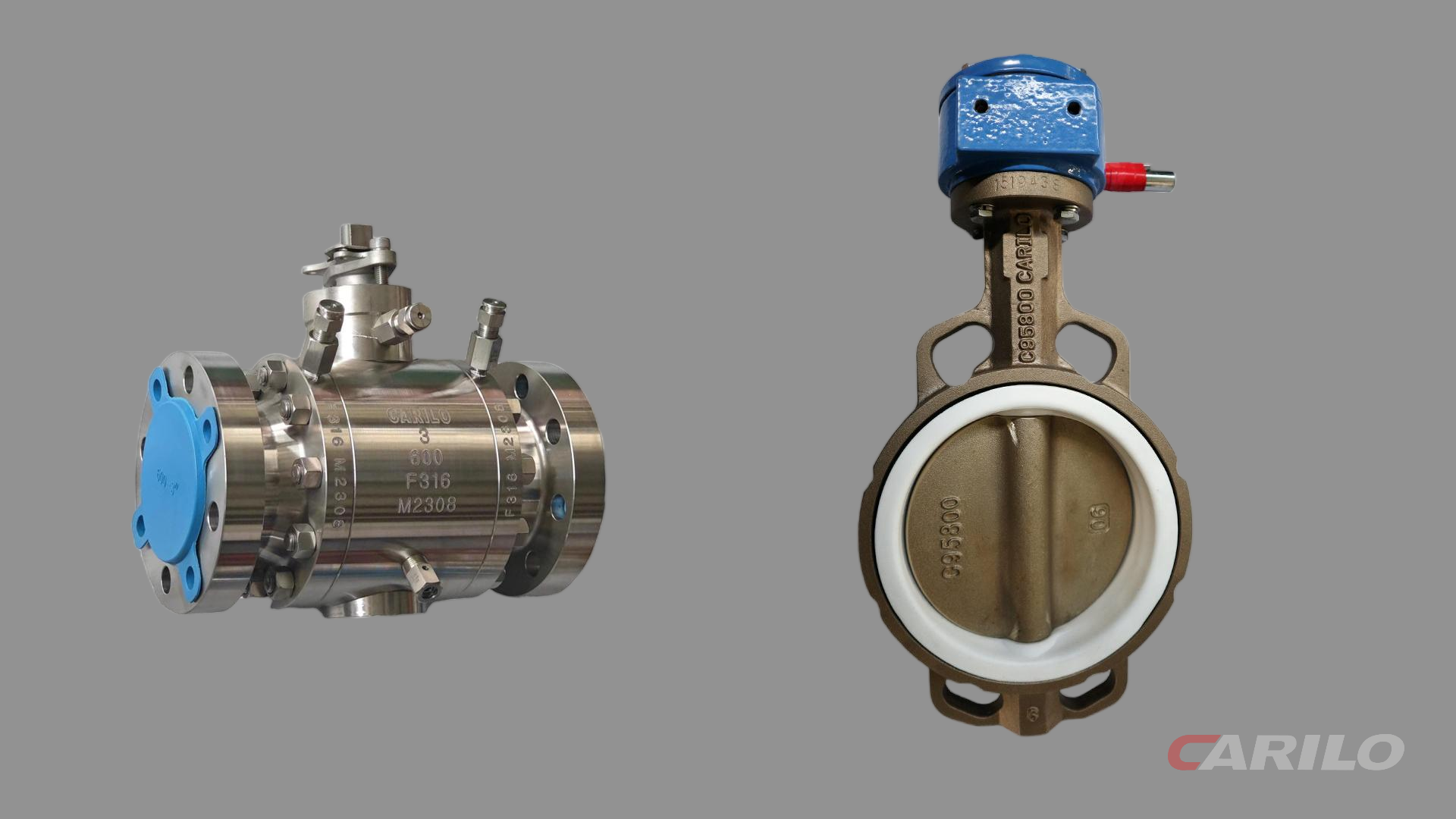
For highly corrosive media, 316L is recommended with a PTFE seat rated to 200°C.
Check the operating pressure carefully. If system pressure exceeds 10 MPa, threaded connections must be avoided and replaced with flanged connections to prevent leakage.
In actual operation, the handle must be turned a full 90 degrees in one motion to either the fully open or fully closed position. Never use the valve half-open for throttling, as this can cause erosion damage.
Connection Type
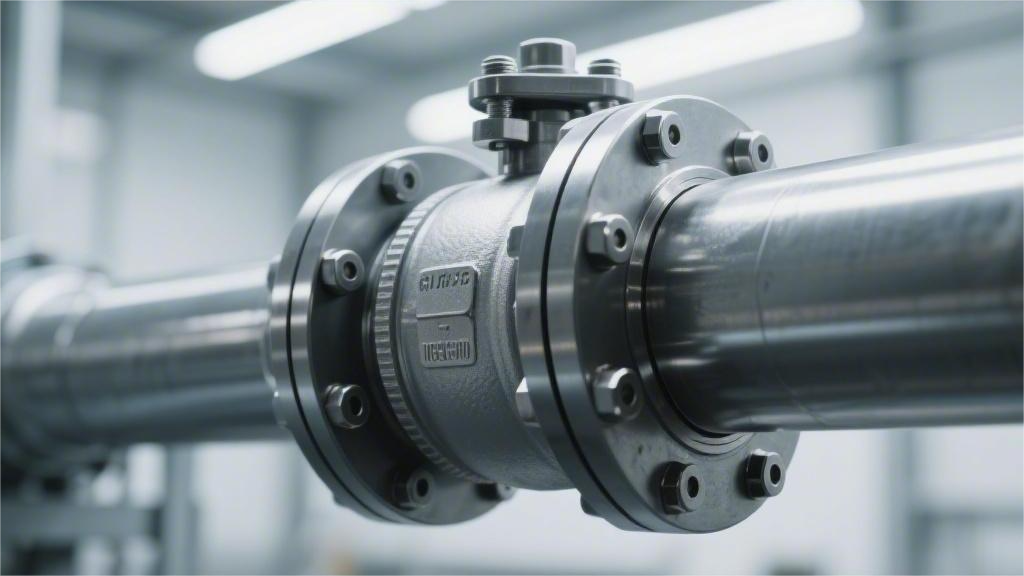
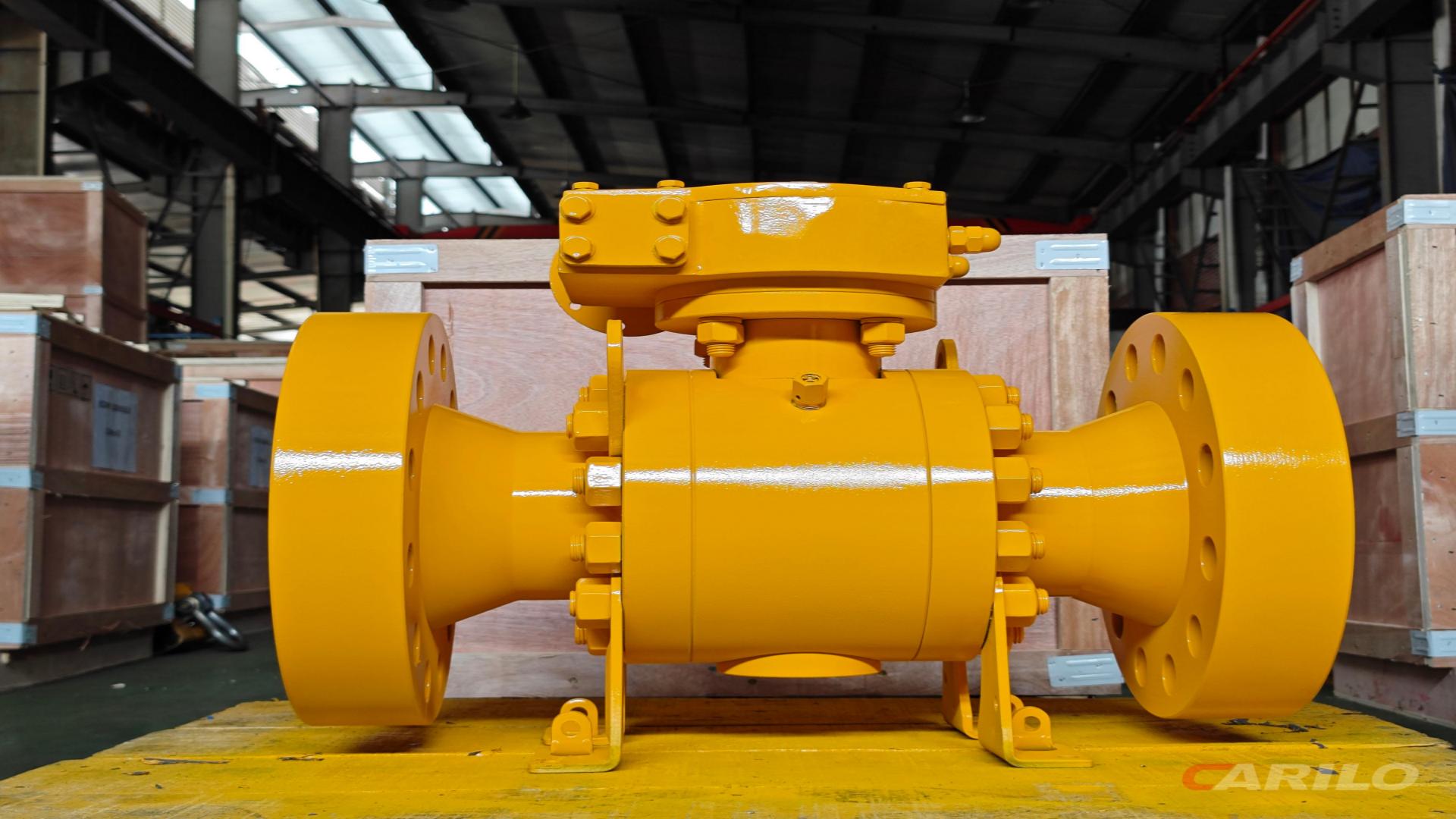
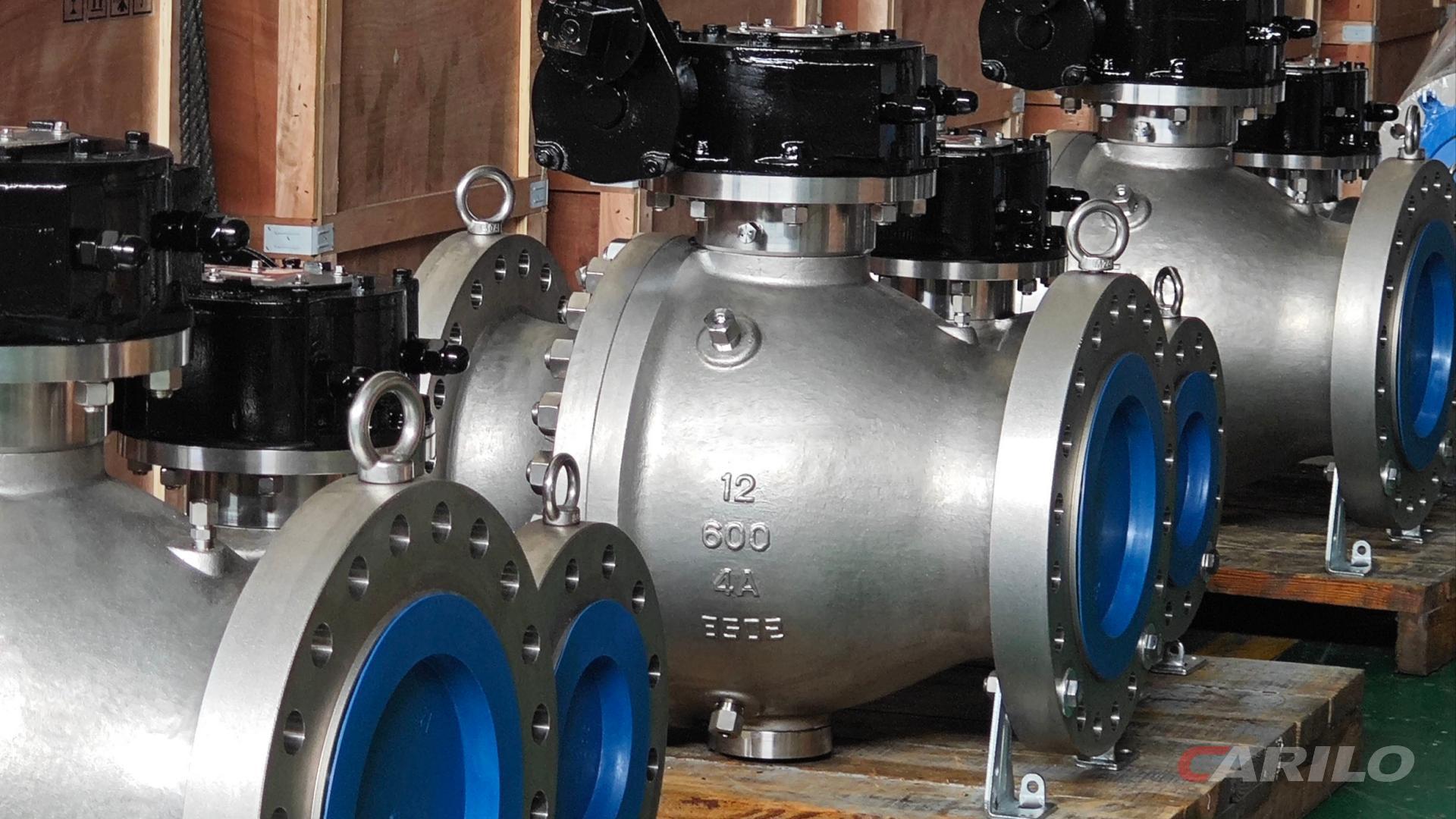
ASME B16.5 flanged connections cover pressure classes from Class 150 to Class 2500, suit pipe sizes above 2 inches, use bolted fastening, and allow the entire valve to be removed.
ASME B1.20.1 NPT tapered pipe threads are limited to piping 2 inches and below, with a maximum pressure rating of 1000 PSI.
ASME B16.25 butt-weld connections fuse the ends directly to the pipe wall, withstand service conditions up to 600°C, eliminate external leakage paths, and cannot be removed without damage once assembled.
Tri-Clamp connections meet 3A sanitary standards, with an internal polish of Ra below 0.4 μm. They are secured with clamps and are ideal for daily tool-free disassembly and CIP cleaning.
Flanged Connection
In North American chemical plants, the most common pipeline connection is the ASME B16.5 flange. Pipe sizes from 2 inches to 24 inches are joined using round metal flanges with a full ring of bolt holes. A gasket is sandwiched between the two flanges, and workers tighten the nuts with large wrenches. Any two flanges machined to the same North American standard will line up with exact bolt-hole alignment.
A valve marked Class 150 is completely different in size from one marked Class 300. A 4-inch Class 150 ball valve flange end has 8 bolt holes. At Class 300, the flange becomes 0.38 inches thicker and the bolt count jumps to 12. If the pressure class is wrong, the first bolt will not even go in on site.
RF (raised face) is the sealing-face type most commonly purchased by factories. On Class 150 and Class 300 RF flanges, the raised face is 1/16 inch high. At Class 600 and above, the raised face height is machined to 1/4 inch. The purpose of the raised face is to concentrate bolt load onto the narrow sealing area of the gasket.
The lathe machines concentric or spiral fine grooves into the sealing face of an RF flange. ASME specifications strictly control this phonograph-like surface finish to 125 to 250 microinch AARH. When you drag a fingernail across the face, it sounds like the rough friction of an old vinyl record. If the metal surface is too smooth, it cannot grip the rubber gasket in the middle.
Stainless steel pipelines are usually fitted with CGI spiral wound gaskets. Alternating layers of 304 stainless steel strip and flexible graphite are wound into a ring, with a solid carbon steel centering ring around the outside. Workers compress a 0.175-inch gasket down to 0.125 inches. The black graphite is forced into the grooves on the flange face to seal off every gap.
On old cast-iron piping in water plants, the removed valves are typically FF (flat face) flanges. If a new RF raised-face steel ball valve is forced onto an old FF cast-iron flange, the result is disastrous. At only 80 ft-lb of torque, the raised face loads the brittle cast iron unevenly and can crack the flange in half on the spot.
| Pressure Class Standard | Raised Face Height | Matching Gasket Type | Common Pipe Material |
|---|---|---|---|
| Class 150 | 1/16 in | 1/8 in non-asbestos sheet | A106 B carbon steel pipe |
| Class 300 | 1/16 in | PTFE envelope gasket | 316L stainless steel pipe |
| Class 600 | 1/4 in | CGI spiral wound gasket | Monel alloy pipe |
When pressure on long-distance natural gas transmission lines exceeds 1500 PSI, RF raised faces are no longer enough. The line switches to RTJ (ring-type joint) flanges. A trapezoidal groove 0.25 inches deep is machined into the flange face, and an octagonal soft iron ring is fitted into the groove. Once the bolts are tightened, the soft iron deforms plastically and fills the groove completely.
Flanges should be fastened with ASTM A193 B7 high-strength studs and matching A194 2H heavy hex nuts. B7 bolts have a yield strength of up to 105,000 PSI. Ordinary hardware-store steel bolts will stretch under 2000 PSI water pressure like pulled noodles.
Pipefitters use calibrated torque wrenches and never strike a standard wrench handle with a ten-pound hammer. On a 4-inch Class 150 flange with eight 5/8-inch bolts, the specified torque is 120 ft-lb. Tightening is done in a crisscross star pattern in three passes: 30, 60, then 120 ft-lb. Even slight uneven loading will cause leakage during hydrostatic testing.
ASME B16.10 fixes the Face-to-Face dimension of the valve. If an old 6-inch ball valve removed from the line measures 15.5 inches end to end, any new 6-inch ball valve from stock made to the same standard will also be exactly 15.5 inches long. A valve weighing hundreds of pounds can be installed between two pipe ends without any pipe modification or welding.
European plants use EN 1092-1 flange standards. If you try to fit an American Class 150 valve onto a European PN16 pipeline, it will not match. At 3 inches, the PN16 bolt circle diameter is 160 mm, while Class 150 is 152.4 mm. With a 7.6 mm offset, the bolts simply will not pass through the opposing flange holes.
Japanese packaged equipment often comes with JIS B2220 flanges. JIS 10K flanges have their own thickness and drilling dimensions. If workers force an American gasket into a JIS flange connection and tighten it, the pump may reach only 150 PSI before water sprays three meters from the side of the eccentrically crushed gasket.
When buying flanged valves, the load-bearing capacity of the pipe supports must be checked. An 8-inch threaded bronze valve weighs under 50 lb. Replace it with an 8-inch Class 600 cast steel flanged ball valve with two heavy flanges, and the scale jumps to 450 lb. Without heavy-duty spring hangers above the pipe, that mass can bend a seamless steel line.
Chemical plants often specify A182 F316 forged steel for flanged valve bodies. The forging process under massive hydraulic presses eliminates internal porosity and shrinkage cavities. By contrast, A351 CF8M castings often reveal fine internal sand holes under X-ray inspection. High-pressure corrosive liquids can penetrate through those flaws and eat through the flange neck in as little as three months.
Germany’s TA-Luft rules are extremely strict on fugitive emissions. Flanged joints are subjected to high-pressure helium leak testing, and VOC concentration in the surrounding air must stay below 100 ppmv. Even minute traces of isobutane escaping through capillary paths in the gasket can be clearly detected by an inspector’s infrared camera.
- Pipe alignment tolerance must stay within 1/16 inch.
- Never use a crane to pull the pipe into alignment with the flange faces.
- Flange parallelism deviation must not exceed 0.5 degrees.
- Bolts should project two to three threads beyond the nuts.
Once a flanged joint has been dismantled for cleaning, the old spiral wound metal gasket must be discarded. Compressed graphite loses its elasticity and cannot recover. Reusing a cheap old gasket may save a few dollars, but if a pressure test leaks and forces an hour-long emergency shutdown, the lost production can easily exceed USD 50,000.
For flanged valves, always look for API 607 fire-test certification. In a plant fire, the PTFE soft gasket between the flanges may burn away, but the flanges themselves can withstand 1200°F for a full 30 minutes. An internal graphite fire-safe ring expands upward and keeps leakage below 20 mL per minute.
Threaded Connection
NPT threaded piping is extremely common in North American plant construction. NPT threads have a fixed taper of 1:16. Workers use large pipe wrenches to screw the ball valve into the steel pipe. The male and female tapered threads deform against each other, and the metal-to-metal contact relies entirely on forceful friction. Factory machining tolerance for NPT threads is tightly controlled to ±1.5 threads. If that tolerance drifts, leakage from incomplete make-up is common.
With 304 stainless steel ball valves, thread galling is a frequent problem. The chromium oxide passive layer on stainless steel strips away under the friction of several hundred pounds of tightening force. The metal lattices bond together and cold welding occurs. Before assembly, the male thread should be fully coated with a nickel-based anti-seize compound. A 4-ounce can of copper-based anti-seize grease is enough for around fifty valve joints.
- Blow out fine metal chips left from tapping with compressed air.
- Wrap PTFE tape in the same direction as the thread engagement.
- Apply 2 to 3 tight wraps around the pipe, leaving the first two threads at the end exposed.
- Brush on a layer of anaerobic liquid sealant to fill microscopic pores in the metal.
PTFE thread seal tape comes in different densities. White tape at 0.4 g/cm³ is common for residential plumbing. Gas lines in chemical plants use 1.2 g/cm³ high-density pink tape. Thick UL-listed yellow tape can withstand 10,000 PSI of static liquid pressure. Leaving the first two threads uncovered is a strict industry rule. There have been countless cases where fragments of tape entered the pipeline and jammed in the gap around the ball.
European industrial piping commonly uses BSPT threads. Under ISO 7-1, BSPT has a 55-degree thread angle, while American NPT uses 60 degrees. If an NPT pipe is forced into a BSPT valve, it may only catch two threads, and the fluid will leak straight through the thread crests. If the wrong thread standard is purchased, the whole batch usually has to be returned.
Threaded ball valves above 2 inches (DN50) are rarely used on site. Large-diameter threaded piping requires two 48-inch heavy-duty pipe wrenches and extra leverage to tighten, and the required torque is extremely high. Threading a 4-inch seamless steel pipe removes nearly 3 mm of wall thickness, leaving the pipe too thin to handle water hammer during pump startup.
The pressure capability of a threaded ball valve ultimately depends on the original wall thickness of the pipe. A carbon steel ball valve marked 2000 WOG may be installed on thin-wall Schedule 40 pipe, but the burst limit of the system then drops to the pipe’s own pressure capacity. The gauge may stop at 600 PSI. Only Schedule 80 heavy-wall seamless pipe can match the valve’s original design rating.
- Use an 18-inch cast-iron straight pipe wrench to lock onto the pipe wall.
- Check the thread with a gauge: 1 inch should correspond to 11.5 TPI.
- Scrub off hardened old anaerobic sealant with a stainless steel wire brush.
- Clean the metal sealing surface with an isopropyl alcohol spray bottle.
Straight threads such as NPS or G threads do not seal by thread deformation. Instead, the valve body is machined with a flat shoulder, and an FKM O-ring is inserted inside. When the fitting is tightened fully, the O-ring is compressed to create the seal. Straight-thread hydraulic fittings can reliably withstand 5000 PSI, and even after thirty maintenance cycles they can still remain leak-free.
For piping that is frequently dismantled, straight threads with O-rings are far more economical. Every time a tapered thread is tightened, it expands the threaded port in the valve body slightly. After a few cleaning cycles, a new fitting may need three more turns before resistance is felt. An old valve can still leak even when fully tightened. Replacing an entire stainless steel ball valve costs hundreds of times more than replacing a rubber ring worth two cents.
Pneumatic ball valves installed on compressed-air lines are particularly prone to leakage. At 100 PSI, compressed air easily escapes through metallic thread gaps. Loctite 577 cures in the absence of oxygen into a hard plastic-like filler. The datasheet clearly states a full cure time of 24 hours. If workers rush and pressurize the line after only 1 hour, the semi-fluid sealant can be blown out and form tiny leak channels.
California AB1953 requires brass ball valves for drinking water systems to contain less than 0.25% lead. Lead-free brass C46500 uses bismuth instead of lead, but this newer environmentally compliant alloy is significantly more brittle. If workers over-tighten a lead-free brass valve into a pipe using a large wrench, torque above 85 ft-lb can crack the threaded end of the valve body on the spot. Two wrenches should be used to balance the force.
When the media temperature exceeds 200°C, ordinary PTFE thread tape can soften into a sticky mass. Steam lines should use graphite-based high-temperature anti-seize compounds together with 316L stainless steel fittings. Thermal expansion and contraction at elevated temperatures cause creep in the metal wall as day and night temperatures cycle. After six months, the thread contact force may drop sharply.
Before ordering a valve, measure the actual outer diameter of the pipe on site with a caliper. A pipe with an outside diameter of 1.315 inches corresponds to a nominal size of 1 inch (NPS 1). If the buyer orders based only on the measured OD, they may accidentally purchase a 1-1/4 inch valve, which will be too large. In North American standards, nominal size does not match actual outside diameter until 14 inches.
Welded Connection
ASME B16.11 socket-weld standards govern small-bore lines up to 2 inches. The valve body is machined with stepped deep sockets at both ends. Workers insert a 1-inch steel pipe with a 1.315-inch outside diameter directly into the socket until it bottoms against the internal shoulder, then pull it back out by 1/16 inch (about 1.6 mm) as required by the installation standard.
This tiny gap is left to absorb thermal expansion during GTAW welding. Without that 1.6 mm allowance, the rapid expansion and contraction caused by temperatures of several hundred degrees can tear the root of the weld as it cools. Socket welds rely entirely on the fillet weld around the outer wall of the pipe.
The welder runs a bead around the outside of the pipe, and ASME B31.3 requires the finished fillet weld throat to be 1.09 times the pipe wall thickness. The root area of a fillet weld is especially prone to hidden slag inclusions caused by incomplete fusion.
In sour-service piping carrying high-concentration H2S, NACE MR0175 explicitly prohibits socket welds on lines containing solid particles. The 1.6 mm crevice between the pipe and the internal shoulder traps corrosive debris for long periods. Local crevice corrosion can eat completely through a Schedule 80 carbon steel wall within six months.
For piping above 2 inches, the industry shifts to ASME B16.25 butt welds. Large-diameter valve ends are machined by CNC with a 37.5-degree V-bevel. Before welding, workers grind the mating pipe ends to the same 37.5-degree angle, align both walls precisely, leave a 3 mm root gap, and then start the root pass.
Butt welding creates a completely smooth transition between the pipe ID and the valve bore. High-pressure steam or catalyst-laden fluids encounter no internal obstruction. In refinery FCC units, where fluid temperature exceeds 1000°F, the root pass must be protected from the inside with 99.9% pure industrial argon back purging.
Without a full argon purge inside the pipe, the inner surface oxidizes into a black, spongy scale layer under high heat. Once high-speed fluid starts flowing, that scale is torn away and swept into the tiny clearance between the ball and seat, scratching the stainless steel ball surface.
Heavy-wall butt welds are often used with Schedule 160 or even XXS seamless pipe. Once the wall exceeds 19 mm, the simple V-bevel is replaced with a U- or J-groove compound bevel. Welders fill the joint layer by layer using ER70S-6 high-strength wire. An 8-inch butt weld may require more than ten passes, followed immediately by 100% radiographic testing.
The sealing elements surrounding the ball inside a ball valve are usually made of PTFE or PEEK. The welding arc produces local temperatures around 3000°C, and heat conducts inward through the metal shell. PTFE begins to soften at 260°C, and even high-temperature PEEK will melt through at 340°C. Soft-seated ball valves must never be welded in place as a complete assembled unit.
For this reason, welded ball valves on purchase orders are almost always specified as 3-piece designs. The center body section contains the ball and seats and is clamped between the end connectors by four long high-strength bolts. Before welding, the welder removes three of the bolts, leaves one as a pivot, and swings the center section containing the plastic components away from the heat zone.
- Swing the center section away to expose the two hollow stainless steel end connectors.
- Wrap the metal ends with a wet cloth or industrial cooling gel for forced cooling.
- Apply the GTAW torch only to the hollow end connectors, with no internal parts installed.
- Use an infrared thermometer to confirm the metal has cooled back to room temperature before reinstalling the center section.
Once the center section is rotated back into place, workers reinstall the four ASTM A193 B8M stainless steel long nuts and tighten them diagonally to 50 ft-lb with a torque wrench. This process keeps the soft internal components completely away from the welding heat. If the valve is welded without disassembly, it often turns into scrap and leaks internally like a fountain as soon as water is introduced.
Fillet weld quality on high-pressure piping is inspected very strictly. Because fillet welds cannot be radiographed easily, inspectors use red penetrant testing (PT), spraying the entire weld circumference, waiting 20 minutes, wiping off the excess, and then applying a white developer. Even pin-sized cracks show up as bright red spots on the white background.
If a single indication appears, the surface layer of the whole weld must be gouged out and redone. Once labor and downtime are included, a single repair often costs more than USD 3,000. For ultra-high-pressure hydraulic lines, forged steel socket-weld ball valves are preferred. ASTM A105 carbon steel blocks forged under hydraulic presses can easily reach pressure ratings of 6000 PSI.
Without the extra weight of flanges and bolts, a 6000 PSI forged steel welded ball valve is only half the size of an equivalent flanged valve. The U.S. EPA enforces strict fugitive emissions limits. Flanged and threaded joints always have microscopic leakage paths. Welding the valve directly into the line eliminates the physical path for gas to escape. On process drawings for highly toxic phosgene lines, flanges are almost never seen.
The downside is extremely high maintenance cost after the line is welded. A 3-piece ball valve allows replacement of the center section and seals while the end connectors remain welded to the pipe. But if the metal ball is deeply scratched by ore particles, pipefitters must use a portable band saw to cut the steel pipe on both sides, scrap the old valve, remeasure the line, and weld in a new one.
Operating Pressure
Ball valve selection for industrial service must strictly follow ASME B16.34, with careful review of both peak system pressure and operating temperature. At ambient conditions, a Class 150 A105 carbon steel valve body is rated for 285 psi, but at 204°C (400°F), the allowable pressure drops to 200 psi.
Water hammer from pump starts and stops can create transient shocks equal to 2 to 5 times the system’s nominal pressure.
API 6D pipeline ball valves must pass a shell hydrostatic test at 1.5 times the design pressure before leaving the factory.
Selection should be based on the P-T (pressure-temperature) rating curve, verifying that the chosen PTFE soft seat or Stellite hard-facing can withstand cold flow or deformation within the intended service range. In routine practice, a 15% to 20% pressure margin is recommended.
Pressure & Temperature
A carbon steel ball valve marked 1000 WOG may look acceptable on paper, but once installed on a 400°F steam line, the body can begin to deform slightly within a week. ASME B16.34 makes it very clear that as temperature rises, both the metal body and internal components lose pressure capability. Only by checking the P-T rating curve can the correct valve be selected.
Take common ASTM A105 forged steel and A216 WCB cast steel as examples. Both belong to Group 1.1 in ASME B16.34. A Class 150 A105 valve body can safely withstand 285 psi in the normal temperature range of -20°F to 100°F.
Once the temperature climbs past 200°F, the bonding forces within the metal lattice begin to relax. At 400°F, the allowable pressure drops to 200 psi, nearly one-third lower. At 800°F, graphitization begins inside carbon steel and the body becomes brittle.
Stainless steel performs somewhat better at elevated temperature. ASTM A351 CF8M (316 stainless steel) is widely used in chemical pipelines. A Class 600 CF8M ball valve can withstand 1,440 psi at room temperature.
When hot process fluid reaches 500°F, the allowable pressure for 316 stainless steel falls to 995 psi. For every 100°F increase in temperature, the yield strength of the metal typically drops by 4% to 6%.
The metal shell may still hold up, but the soft seat inside the ball valve is even more temperature-sensitive. Virgin PTFE seats that can handle 1,000 psi at room temperature may fall to just 250 psi at 300°F.
Under the combined effects of thermal expansion and fluid compression, the polymer undergoes visible cold flow deformation. The inner seat lip that originally fit tightly against the ball becomes flattened, and fluid begins to leak through a gap as small as 0.05 mm.
Adding 15% glass fiber or 25% carbon to PTFE creates R-PTFE, which increases the upper temperature capability by 50°F. At the same 400°F temperature, it can withstand about 150 psi more differential pressure than virgin PTFE.
For hot oil lines above 500°F in refineries, ordinary plastics are no longer usable. PEEK, a rigid engineering polymer, is inserted into the seat pocket and still retains tensile strength of 10,000 psi at 600°F.
| Seat Material | Minimum Service Temperature | Maximum Service Temperature | Pressure Retention at 500°F |
|---|---|---|---|
| Virgin PTFE | -50°F | 400°F | 0% (melted / failed) |
| R-PTFE (glass-filled) | -50°F | 450°F | 0% (failed) |
| PEEK | -70°F | 500°F+ | About 45% |
| Devlon V-API | -50°F | 300°F | 0% (not suitable for high temperature) |
In FCC units above 600°F, polymers are no longer an option. The plant applies HVOF thermal spray to the ball and seat surfaces, depositing a layer of Stellite 6 cobalt-based hard alloy. At a coating thickness of 0.2 mm, the hardness remains above Rockwell RC 40 even in a 1,000°F furnace.
Extreme low temperatures can be just as destructive to pipeline ball valves as high temperatures. LNG receiving terminals operate at -320°F (-196°C). In this deep cryogenic environment, ordinary carbon steel loses impact toughness almost completely and can fail by brittle fracture under even slight vibration.
Under API 608 material selection rules, once ambient temperature drops to -50°F, the valve body should be upgraded to ASTM A352 LCC low-carbon cast steel. At -320°F, the entire system must shift to austenitic stainless steel such as CF8M, relying on its face-centered cubic crystal structure to resist ultra-low-temperature contraction.
Cooling also creates a slight difference in contraction rates between the ball and the valve body. In an 8-inch ball valve at -300°F, internal metal components can shrink by 0.003 inch. To compensate for that gap, the stuffing box is packed with energised V-seals made from Kel-F (PCTFE).
Temperature cycling also affects flange bolting. An ASTM A193 B7 high-strength stud connecting two Class 300 flanges can elongate by 0.005 inch as operating temperature rises from room temperature to 600°F.
That small elongation reduces bolt preload by 20%. The SS316/graphite spiral wound gasket in the flange loses part of its compression load, allowing 300 psi steam to escape as invisible white vapor.
To maintain gasket stress as temperature changes, maintenance crews install Belleville spring washers on the studs. Stacked 2-inch disc springs release stored elastic deformation as the bolts expand under heat, keeping flange clamping force above 30,000 lb.
Temperature sensitivity also varies by valve size. A 24-inch full-port pipeline ball valve may have a wall thickness of 2.5 inches, which creates a delay in heat transfer. If fluid temperature rises by 200°F within 5 minutes, the inner wall expands first while the outer wall lags behind.
This temperature gradient can generate thermal stress up to 15,000 psi and force the metal toward yielding. Pipeline designers wrap large-diameter valves with 2-inch-thick aluminum silicate insulation to keep heating and cooling rates below 50°F per hour.
| Valve Body Material (Class 600) | Pressure Rating at -20°F to 100°F | Pressure Rating at 400°F | Pressure Rating at 800°F |
|---|---|---|---|
| ASTM A105 (forged carbon steel) | 1,480 psi | 1,265 psi | 825 psi |
| ASTM A351 CF8M (316 stainless steel) | 1,440 psi | 1,065 psi | 800 psi |
| ASTM A890 4A (duplex stainless steel) | 1,500 psi | 1,200 psi | Not permitted (embrittlement) |
Duplex stainless steel (Duplex 2205) offers excellent corrosion resistance in seawater desalination systems. A Class 600 4A duplex valve can easily withstand 1,500 psi at room temperature. But once water temperature exceeds 600°F, the metal’s 45% ferrite content is vulnerable to 475°C embrittlement and the valve may fracture directly in service.
API 6D test reports should always be reviewed to confirm the temperature performance of each valve before shipment. Manufacturers subject ball valves to 1,100 psi nitrogen pressure while soaking them in liquid nitrogen at -320°F for two hours. If the seat leakage rate exceeds 100 mL/min under helium leak detection, the valve is rejected and sent back for rework.
Soft Seat & Metal Seat
On ANSI 150 water lines at normal temperature, most valves are PTFE soft-seated ball valves. Virgin PTFE has a friction coefficient of only 0.04, so the ball turns very smoothly. A 2-inch valve of this type typically costs under USD 200.
But once the fluid contains 2% solid quartz sand, the situation changes completely. At flow velocities above 8 ft/s, abrasive particles strike the seat and can cut a visible groove 0.5 mm deep into the soft polymer surface in less than 72 hours.
When the line is pressurized to 300 psi, water begins leaking through that groove. The valve can no longer meet the leakage limits of FCI 70-2 Class VI. Maintenance crews then have to isolate and cut out 15 feet of pipeline on both sides of the valve to replace the soft seat.
Replacing virgin PTFE with modified PEEK improves scratch resistance to some extent. With a tensile strength of 14,000 psi, it can withstand small particles better. But on mining slurry lines with 15% solids, even PEEK seats may last less than three months.
At that point, engineers shift to a metal-seated design. The ball and both seat rings are made from ASTM A105 forged steel or F316 stainless steel, then covered with an ultra-hard coating.
Using an HVOF spray gun, the coating shop applies a 0.15 mm layer of tungsten carbide to the ball surface. This gray-black metallic skin raises the hardness to HRC 72.
These metal-to-metal sealing surfaces must then be precision lapped. A robotic arm uses diamond compound to match-lap the ball and seat thousands of times until the contact surfaces reach a roughness below Ra 0.2 μm.
If abrasive slurry containing 2 mm iron particles passes through the valve, the tungsten carbide surface will show only shallow marks. A metal-seated valve can handle Class 1500 pressure without the cold-flow extrusion problems associated with soft polymers.
- Leakage allowance: Under API 598, metal seats are typically tested to Class V leakage, allowing 0.005 mL of water per minute per inch of valve size.
- Higher cost: A 4-inch metal-seated ball valve with HVOF tungsten carbide coating can cost more than USD 3,500.
- Larger actuator: With a metal friction coefficient around 0.15, the required actuator torque may rise from 600 in-lb to 1,500 in-lb.
On chemical feed lines with very frequent cycling, wear on metal seats becomes a serious concern. If the valve opens and closes more than 200 times a day, frictional heat builds up on the hard-alloy surface. Local temperature may exceed 600°F, causing slight fatigue relaxation in the seat springs.
In that case, technicians often switch to Stellite 6 cobalt-based hardfacing on the ball surface. The welding wire melts under the arc and forms a dense 2.5 mm overlay. At 1,000°F, this material still holds hardness around HRC 38.
If the crude oil contains a high concentration of H2S, ordinary carbon steel seats are susceptible to hydrogen-induced cracking. Material selection manuals specify that metal-seated components must comply with NACE MR0175 and be limited to HRC 22 or below to reduce cracking risk, although coating hardness is considered separately.
Belleville springs placed behind the metal seats provide initial preload of several dozen pounds. Then the 400 psi line pressure acts on the seat in the flow direction, forcing the two metal sealing surfaces into even tighter contact.
For bi-directional pressure service, a double-piston-effect (DPE) metal-seated design is required. After the upstream 400 psi line is isolated, liquid propane trapped in the body cavity can expand under heat. In only 15 minutes, cavity pressure can rise to 800 psi.
That extra 400 psi differential forces the downstream piston seat tightly against the ball. Maintenance crews therefore drill and connect a 1/2-inch pressure-relief line on the valve body to vent the trapped high pressure into a flare or recovery tank.
Black liquor from paper mills is both highly corrosive and highly viscous. Metal-seated ball valves for this service often include a sharp scraper edge at the seat. Each time the valve closes, this metal edge strips off up to 0.5 mm of buildup from the ball surface.
In slurry lines, a PTFE soft seat allows particles to embed in the plastic surface. After only a few cycles, the ball surface can look like it has been abraded with 80-grit sandpaper. Replacing it with a hard seat coated in chromium carbide blocks corrosion across a pH range of 2 to 13 while resisting abrasion.
- Installation direction: A one-way metal-seated valve body is marked with a 2-inch arrow. If installed backwards, it may not even hold 100 psi water pressure.
- Blowdown requirement: Before start-up, the line should be blown through three times with 80 psi compressed air. A single 0.1 mm welding slag particle can scratch a leakage path across the ball.
- Graphite fire-safe ring: A flexible pure graphite ring is installed behind the seat. In a 1,500°F fire, the graphite expands and seals the remaining metal gap.
Soft seats do not require matched numbering during assembly. A standard 2-inch PTFE seat taken from the production line can be installed into any valve body of the same size and still pass a 100 psi air tightness test. Parts are fully interchangeable.
Hard-coated balls and metal seats are matched sets. A ball stamped “#145A” can only be reassembled with the corresponding left and right seat rings marked “#145A.” If mixed during overhaul, the valve may not even hold 50 psi water pressure after reassembly.
Application Media
pH value (0 to 14), kinematic viscosity, and solids content directly determine valve material selection.
When fluid viscosity exceeds 500 cP or sand content exceeds 2%, standard PTFE soft seats fail and must be replaced with HVOF-sprayed tungsten carbide metal seats with a Rockwell hardness of 70 to 74 HRC.
Temperature conditions range from -196°C for LNG to 538°C for superheated steam, and each range corresponds to different thermal expansion coefficients and creep limits.
ASME B16.34 should be consulted for media compatibility, with a target corrosion rate below 0.1 mm per year.
Phase State & Wear Rate
When mixed liquids containing sand or grit flow through a pipeline at more than 2.5 m/s, ordinary PTFE seats cannot survive. Sand and metal fragments act like countless tiny blades scraping the sealing surface. Virgin PTFE has a tensile strength of only 20 to 30 MPa, so any sharp-edged particle can quickly strip material from the surface. A standard 4-inch ball valve on a slurry line with 15% solids may begin leaking in less than 300 operating hours.
To handle high-friction service, mechanical engineers switch to metal-to-metal sealing components. Using HVOF technology, they spray a 0.2 to 0.4 mm layer of tungsten carbide (WC-Co) onto the ball and seat surfaces. The particles hit the surface at twice the speed of sound, reducing coating porosity to below 1% and driving surface hardness up to 72 HRC.
If hot oil and gas above 400°C also contain sand, tungsten carbide can chip and peel. In North Sea oilfield service, the industry often switches to Stellite 6 cobalt-based hardfacing. This alloy contains 27% to 32% chromium and 4% to 6% tungsten, and still maintains around 400 HV hardness at 500°C. It performs exceptionally well against abrasion in 10,000 psi BOP piping.
Hard requirements for valves handling abrasive fluids include:
- Surface roughness must be kept below Ra 0.2 μm.
- Ball roundness tolerance must not exceed 0.013 mm.
- Spring-loaded seats must provide constant preload of 15 to 20 N/mm.
- Scraper-lip seat designs should remove deposits from the ball surface.
When handling polymer liquids or heavy crude with viscosity above 1500 cP, the medium tends to harden in dead zones inside the valve cavity. A standard O-port ball squeezes the viscous material directly into the seat gap during closure. Replacing it with a V-port ball with a 30° or 60° sharp edge can generate cutting force up to 350 N·m, slicing through asphaltene buildup and preventing stem overload or seizure.
When liquid passes through a narrowed flow path, pressure drops sharply. If the static pressure inside the pipe falls below the vapor pressure of the medium at that temperature, the liquid flashes into countless tiny bubbles. When the fluid reaches the wider downstream pipe and pressure recovers, those bubbles implode inward at up to 1000 m/s. The resulting micro-jets can reach 1000 MPa and rapidly create honeycomb-like cavitation pits in 316 stainless steel.
To prevent cavitation damage, the pressure drop must be staged. Fluid engineers install labyrinth trim or perforated metal plates downstream of the valve. The flow is forced through hundreds of 2 to 4 mm holes, breaking a single 500 psi pressure drop into five or six smaller drops of around 80 psi each. The bubble collapse energy is then confined to the center of the pipe rather than hitting the wall.
Key mechanical parameters for cavitation control include:
- Maintain at least 15% pressure margin above the vaporization threshold.
- Keep perforated plate open area within 25% to 35%.
- Provide a downstream straight run of 5 to 8 times the valve diameter.
- Keep operating noise below 85 dB(A).
Natural gas from Texas wellheads often carries trace moisture. Under 15 MPa pressure and 5°C ambient air, gas hydrates form easily. These ice-like crystals clog the gaps around seat springs and immobilize the sealing components. For this reason, 1/2-inch NPT methanol injection ports on the valve body are standard on high-pressure gas wells to shift the hydrate formation threshold.
If a liquid line contains more than 5% gas by volume, flashing conditions can occur. Rapid gas expansion removes large amounts of heat, causing local temperature to drop by 20°C to 30°C within 0.5 seconds. These violent thermal cycles can distort the metal seat support ring at a micron scale and destroy the original contact fit. Belleville springs made from Inconel 718 are installed behind the seat to absorb vibration and thermal displacement.
High-velocity gas-liquid flashing is far more destructive than pure liquid flow. An angled drain-style body changes the impact path of the fluid. The flow hits the reinforced back wall of the valve body instead of the sealing surface. The cavity is also coated with 3 mm of polyurethane wear lining to absorb the impact energy of entrained solids.
In pneumatic conveying lines, alumina powder easily enters dead zones. Fine particles from 10 to 50 μm can fill the tiny cavities behind the seat and ball. Ordinary rear springs may seize within a week once packed with dust. Ball valves with purge ports can be connected to 0.6 MPa clean instrument air, which blasts accumulated dust out of the dead spaces during the 3-second opening or closing cycle.
Mandatory configuration points for gas-solid conveying service include:
- Use a one-way sealing design to prevent trapped cavity pressure.
- Protect rear springs with braided graphite barriers.
- Purge air pressure must be 20% higher than line operating pressure.
- Opening and closing time must be controlled within 3 to 5 seconds.
NBR swells when exposed to hydrocarbon liquids containing H2S. If the volume swell exceeds 15% after 48 hours of immersion, the O-ring can be forced out of its groove. In that case, fluid engineers shift to FFKM. This material can withstand temperatures up to 327°C and shows less than 2% volume change even in aggressive chemical solvents, ensuring static sealing remains tight under high pressure.
Type & Material
For ordinary water or treated instrument air, procurement lists usually point to ASTM A216 WCB cast carbon steel. This steel contains around 0.3% carbon and 1% manganese, and can withstand base pipeline pressure of 1480 psi at room temperature. On the bottom line of an atmospheric distillation tower in a Texas refinery carrying 350°C crude oil, WCB may remain in service for five years with less than 0.5 mm wall loss on ultrasonic thickness checks.
Once weakly acidic chloride-bearing media enters the line, WCB can develop rust blooms within a month. Engineers then switch to ASTM A351 CF8M stainless steel, commonly referred to as 316. With 2% to 3% molybdenum added, its pitting resistance equivalent number (PREN) exceeds 24.
Strong acids can still penetrate and destroy 316 stainless steel quickly. In piping carrying 98% concentrated sulfuric acid at around 1.5 m/s, the passive film on 316 breaks down almost immediately. Fertilizer plants in Florida therefore use Alloy 20 instead. With 32% to 38% nickel and 20% chromium, it can keep annual corrosion depth below 0.05 mm in room-temperature concentrated sulfuric acid.
But in boiling 50% caustic soda, Alloy 20 may fail from intergranular corrosion in less than three weeks. In that case, the flanged connection is upgraded to Monel 400. With a nickel-copper content close to 70%, Monel 400 offers near-zero corrosion in 150°C hot caustic and is widely used on ion-exchange membrane cell outlet piping in chlor-alkali plants in Ohio.
In desalination plants, concentrated brine has very aggressive chloride penetration. At the Jubail desalination project in Saudi Arabia, the high-pressure pump discharge is commonly equipped with Duplex 2205 components. With roughly 50% austenite and 50% ferrite, the alloy offers yield strength around 450 MPa, roughly double that of standard 316 stainless steel.
| Body Material (ASTM) | Suitable Severe Media | Maximum Temperature (°C) | Typical Tensile Strength (MPa) |
|---|---|---|---|
| A216 WCB (cast carbon steel) | Non-corrosive oil & gas, industrial water | 425 | 485 |
| A351 CF8M (316 stainless steel) | Weak acids, liquids containing organic solvents | 537 | 485 |
| A494 M35-1 (Monel 400) | Hot high-concentration caustic, hydrofluoric acid | 480 | 450 |
| A890 4A (Duplex 2205) | High-chloride concentrated seawater | 315 | 620 |
For highly toxic or highly permeating chemical solvents, even expensive special alloys may not be enough. In Texas chemical plants, PFA-lined components are standard. A 3 to 5 mm thick layer of PFA fluoropolymer is molded inside a WCB carbon steel shell, protecting against hydrofluoric acid and aqua regia while tolerating temperatures up to 260°C without softening.
Once the shell material is selected, the soft internal sealing components must also match the fluid carefully. Standard virgin PTFE seats have a friction coefficient of only 0.04. On 150 lb low-pressure water lines, a 2-inch ball can be turned easily with only modest torque.
Once system pressure rises to Class 900, or around 15 MPa, virgin PTFE is compressed flat by fluid pressure. By adding 15% to 25% glass fiber and sintering the material into RTFE, compressive deformation resistance increases by about 40%, allowing it to handle 260°C high-pressure steam in heated process lines in Canadian paper mills.
But on Class 1500 high-pressure gas transmission lines, even glass-filled PTFE cannot withstand the physical tearing force of 25 MPa. In such cases, piping designers specify Devlon V-API, a high-molecular-weight polyamide. Its tensile strength exceeds 80 MPa, and its water absorption is kept below 0.1%. After six months in crude oil, dimensional swell remains only fractions of a millimeter, with no risk of jamming the ball.
Hard requirements for non-metallic seats in high-pressure natural gas service include:
- Shore hardness between 80 and 85 Shore D.
- Dimensional shrinkage below 1% under a 15 MPa differential pressure.
- Operating temperature range from -46°C to 150°C.
- Izod impact resistance of 60 J/m at low temperature.
At the bottom of high-temperature refinery towers, hot oil often exceeds 260°C, which causes PTFE-based seals to char and embrittle. Engineers then switch to PEEK machined seats. With a melting point of 343°C, PEEK can remain immersed in 250°C heat-transfer oil for 5000 hours while still retaining tensile strength of 100 MPa.
Preventing external leakage depends not only on the seats. The O-rings hidden in the stem sealing area are also highly sensitive to media compatibility. Standard EPDM can swell by 30% within five hours when exposed to mineral oil. If the fluid contains organic solvents or petroleum hydrocarbons, the standard choice is Viton (FKM), which retains elasticity even at 200°C.
| Elastomer Material | Worst Incompatible Media | Safe Service Temperature Range | Compression Set |
|---|---|---|---|
| NBR | Ozone, strong oxidizing acids | -30°C to 100°C | About 15% (100°C, 22h) |
| EPDM | Mineral oil, hydrocarbons | -45°C to 150°C | About 20% (150°C, 22h) |
| FKM (Viton) | Hot water steam, low-molecular esters | -20°C to 200°C | About 10% (200°C, 22h) |
In Siberian oilfields in Russia, winter temperatures can fall below -50°C. Standard Viton becomes brittle like a wafer and can break into several pieces under a wrench blow. For extreme cold-service oil and gas lines, specially formulated low-temperature NBR is specified. With a glass transition temperature down to -60°C, it can still stretch and rebound under a 10 N pull.
At 3000 meters underwater on deepwater Christmas trees, the exterior is under 300 MPa seawater pressure while the internal flow is 130°C sour crude. In that extreme environment, rubber is abandoned entirely in favor of metal lip seals. Thin Elgiloy cobalt-chromium-nickel alloy is formed into a U-shape with a small PTFE assist, and the metal spring force locks tightly onto the stem gap.
Extreme Temperature
Once process temperature moves outside the normal range of -29°C to 200°C, ordinary carbon steel bodies and PTFE seals can fail completely. Engineers at natural gas processing plants in Texas consult ASME B16.34 and focus closely on the temperature-pressure rating curves of materials. Every 50°C rise in temperature causes a noticeable drop in the yield strength curve of the metal.
Residue oil at the bottom of refinery vacuum towers often approaches 400°C. WCB cast steel exposed to this temperature is subject to creep, and the originally round inner cavity can gradually deform into a slight oval. The line is then upgraded to ASTM A216 WC6 or WC9 chromium-molybdenum alloy steel. With 1.25% to 2.25% chromium, these alloys can still maintain tensile strength of 275 MPa at 537°C.
Plastic valve seats immediately soften under 260°C superheated steam. Hardened metal seats must then take over. But in a 400°C environment, the ball and seat do not expand at the same rate. If machining clearance is too tight, only a few millimeters of thermal growth can seize the stainless steel stem completely.
Mechanical engineers place three to four Inconel 718 disc springs behind the metal sealing ring. This nickel-based alloy still delivers excellent elastic recovery even at 600°C.
These high-strength springs absorb the micron-scale movement caused by thermal expansion. When the line cools during shutdown, the springs restore preload and push the metal sealing ring back against the ball. The 15 MPa fluid is then held at the shutoff point, with leakage limited to less than two drops per minute.
The packing area at the top of the bonnet is also exposed to high-temperature gas flow. Ordinary rubber O-rings carbonize into black debris at 200°C. Flexible graphite rings are packed into stuffing boxes as deep as 50 mm. With carbon content above 98%, pure graphite can resist oxidation up to 650°C and, when compressed by the gland bolts at 35 N·m, forms a dense barrier against high-pressure steam.
At the other extreme, LNG receiving terminals operate at -162°C. Carbon steel experiences severe brittle transition once the wall temperature falls below -46°C. Strike an ordinary carbon steel pipe at -100°C with a 10-pound hammer and the surface can shatter like glass.
At LNG unloading lines in Qatar, ASTM A351 CF8M (316 stainless steel) is standard. The face-centered cubic structure of austenitic stainless steel remains stable even in liquid nitrogen at -196°C. A 316 test bar soaked in liquid nitrogen for 24 hours can still show more than 40 J absorbed energy in a Charpy V-notch test.
Ultra-low-temperature fluid tends to creep upward along the stem, freezing the top packing into a thick layer of ice. To prevent this, the assembly shop welds on an extended bonnet 250 to 300 mm long above the valve body. This extension creates a temperature gradient between the cryogenic fluid and the outside environment, allowing the packing area at the top to stay above 0°C in ambient 20°C air.
A drip plate 150 mm in diameter is installed around the outside of the extended bonnet. When moisture in the air condenses into ice, the plate keeps it from advancing into the packing area.
The ice then drops from the edge of the plate instead of building up along the stem. If ice locks the gland nuts into a solid mass, the operator will not be able to turn a 500 N·m actuator handwheel with a wrench.
At temperatures below -100°C, rubber and standard PTFE become harder than stone. LNG pipelines therefore switch to PCTFE seats, commonly known as Kel-F. The chlorine atoms in the material break the symmetry of the polymer chains, allowing the seat to retain slight elastic deformation even in liquid media at -196°C so it can still seal against the ball.
In the closed position, a small volume of LNG may be trapped inside the ball cavity. If the ambient temperature rises by only 15°C after sunrise, the trapped liquid can expand by a factor of 600. This violent internal pressure can exceed 100 MPa and split a stainless steel valve body open from the middle.
Strict anti-overpressure measures for cryogenic liquid service include:
- Drill a 3 mm vent hole in the high-pressure side of the ball.
- Use a self-relieving one-way seat assembly.
- When cavity pressure exceeds 1.3 times line pressure, the spring retracts and releases the gas.
- Install an external safety bypass line with a 1/2-inch NPT connection.
On the Alaska pipeline, -40°C winter blizzards can coincide with 80°C hot oil inside the line. That 120°C temperature difference creates severe thermal shock. If the valve body has uneven wall thickness, the contraction rates of thin-wall and thick-flange sections differ by tens of microns. The alternating stress concentrates at the bonnet connection threads and can generate visible cracks within days.
Factory limits for alternating thermal shock service include:
- Body casting section thickness transition must be kept within a 15-degree gradient.
- Add 15% extra metal allowance at flange connections to absorb stress.
- Before assembly, carry out three deep-cold cycles from -196°C to 25°C.
- Eliminate 99% of retained austenite to prevent dimensional shrinkage and distortion.