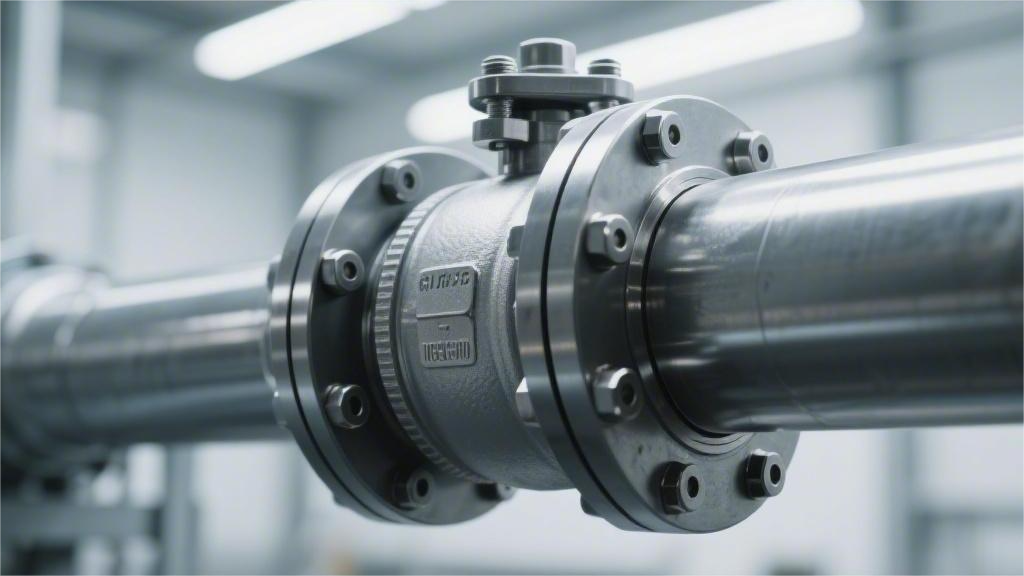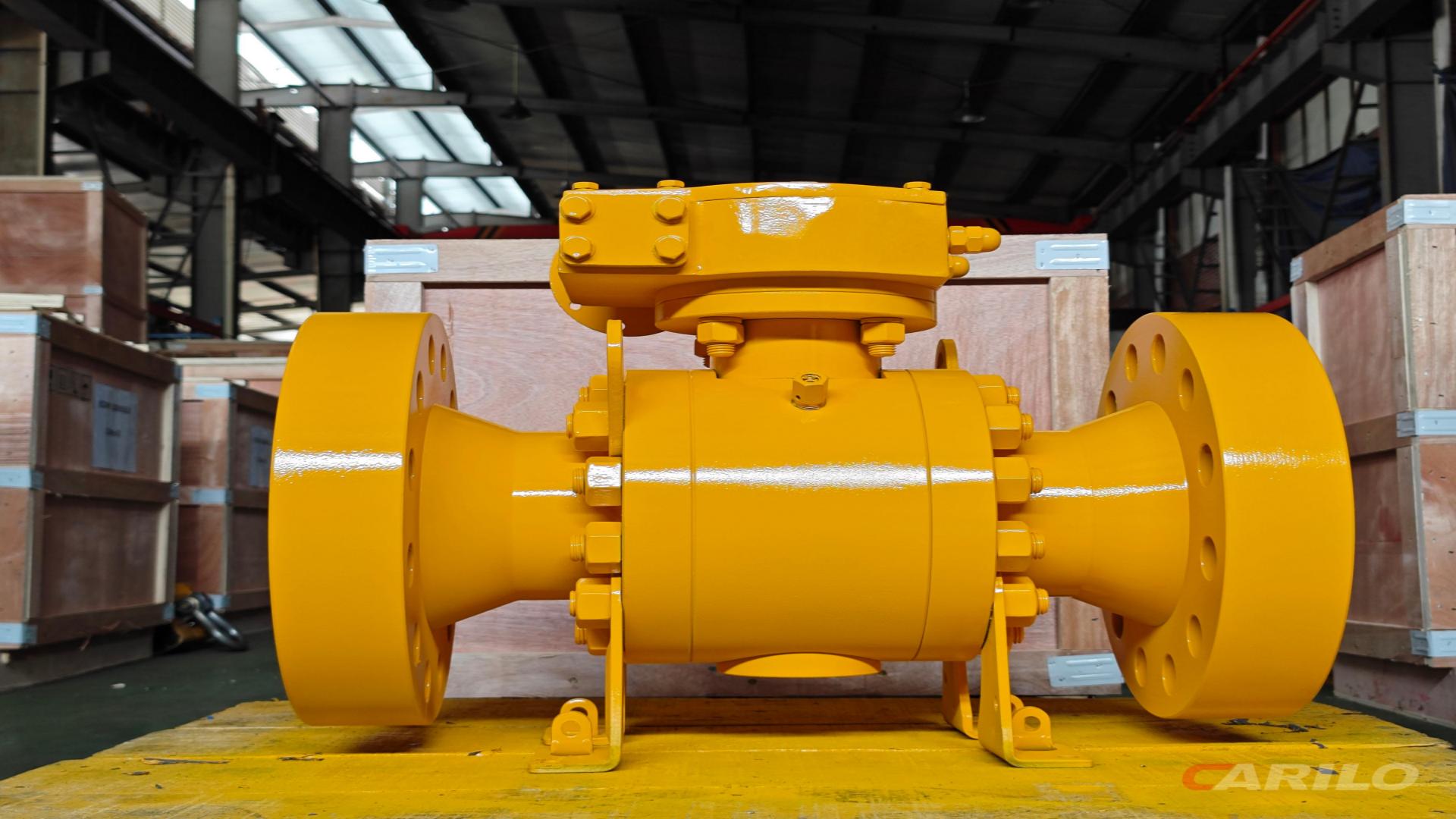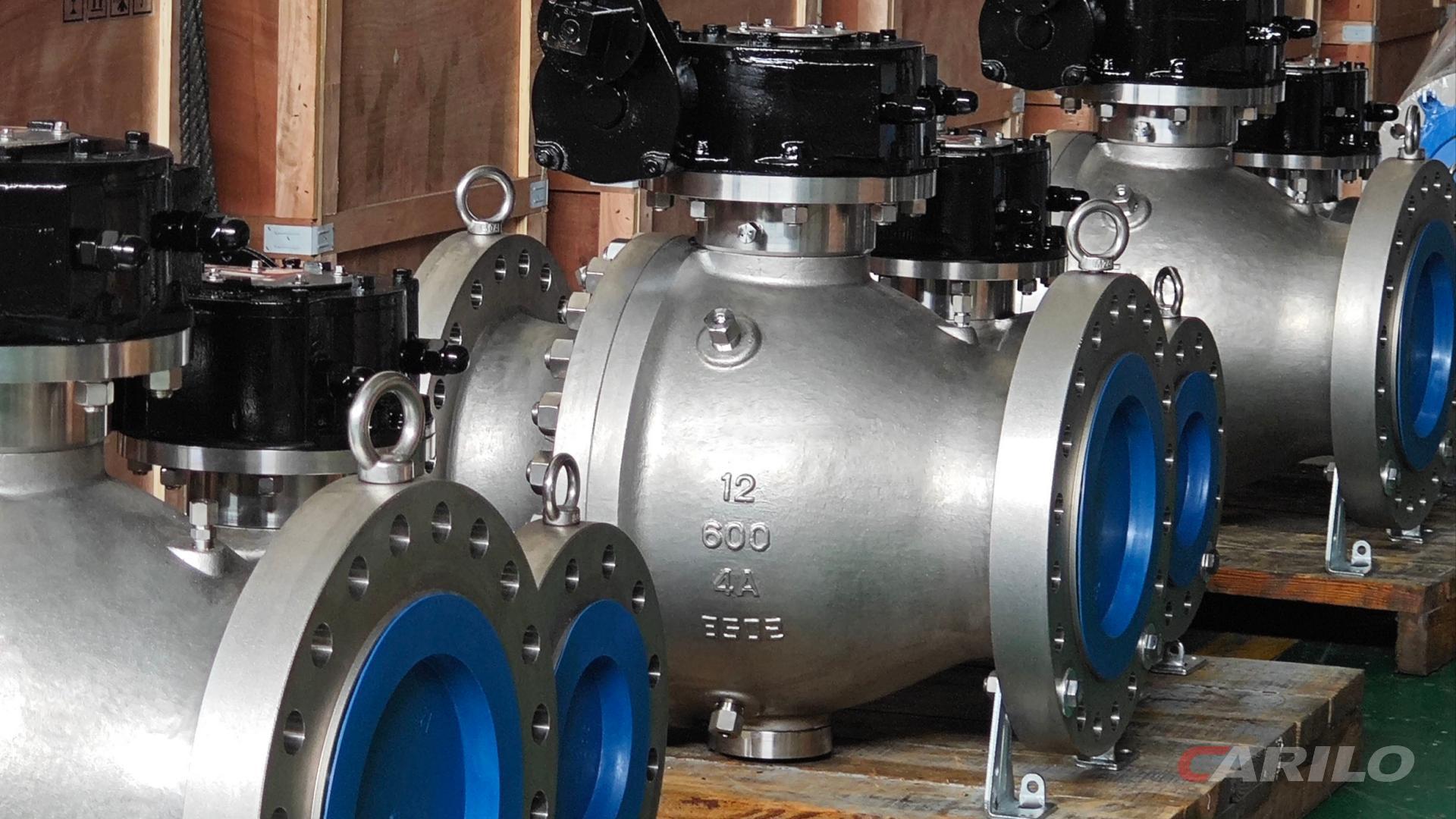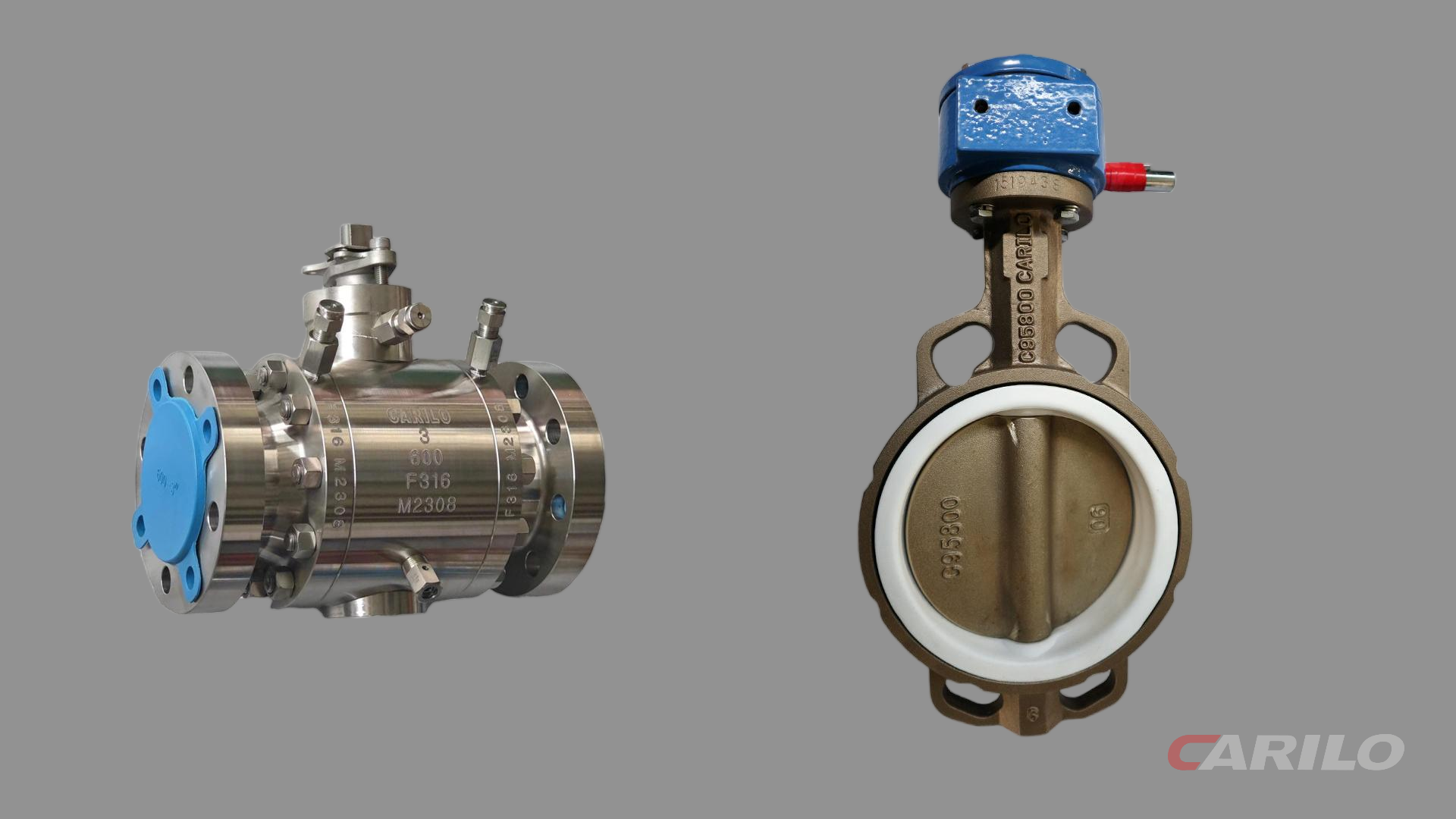
Full-port ball valves have a bore equal to the pipe I.D., delivering 100% flow capacity with extremely low pressure loss.
They are ideal for applications that require pigging or the transfer of high-viscosity fluids.
Reduced-port ball valves usually have a bore one size smaller than the pipe connection size—for example, a 2-inch valve with a 1.5-inch bore.
Flow capacity typically drops to around 70%, with a noticeable pressure drop, making them suitable for conventional clean water or gas systems where pressure loss is not critical.
Flow Capacity
Full-Port Ball Valve
Take a 4-inch valve as an example. Measure the diameter of its internal passage with a caliper, and it comes out to 102.26 mm—exactly the same as the inside diameter of the connected standard steel pipe. As water passes through this metal passage, the flow stream does not contract at all. It maintains the same velocity of 2.5 m/s it had before entering the valve. The friction factor between the pipe wall and the water remains at a very low 0.015.
When calculating resistance, the K value of this type of valve is only 0.05, whereas a traditional shutoff valve of the same size can have a K value as high as 5.5. As the water flows through this 150 mm-long metal cavity, it behaves almost as if it were passing through an ordinary straight pipe. That tiny difference in resistance is directly tied to the plant’s power bill. A 75 kW pump running 24 hours a day, transporting clean water with a density of 1000 kg/m³, will see less than 0.5 psi of total pressure loss across a network containing 10 of these equal-bore valves.
Over 365 days of continuous operation, the pump motor will consume around 650,000 kWh. Replace those valves with ordinary models whose internal passage is 20% narrower, and the pump must work against an additional 30 psi of resistance. To move the same volume of water, annual power consumption jumps to more than 720,000 kWh, wasting tens of thousands in electricity costs.
Because the inside of the passage is smooth and step-free, even fine sand particles suspended in the water have no reason to impact and abrade internal surfaces. When the pipe is carrying ore slurry containing 15% quartz sand, the internal geometry becomes a decisive factor in service life.
- Sand particles move straight through an equal-bore passage.
- The probability of impacting the central metal ball surface stays below 2%.
- Annual wear on the stainless-steel base is only 0.05 mm.
- Lateral pulling force on the adjacent sealing ring is reduced by 60%.
Oilfield maintenance crews keep detailed records of pigging cycles. A 50 km crude oil pipeline may require a 200 mm polyurethane pig every month. Driven forward by a 0.5 MPa pressure differential, the pig scrapes off wax deposits up to 3 mm thick from the pipe wall.
When the pig passes through a full-port valve, the contact between its outer rubber skin and the valve wall remains above 99%. With no internal steps or sudden restrictions, tens of kilograms of sticky wax and sludge can pass smoothly through the center. The rubber skin is not cut by metal edges, and the pig arrives intact at the receiving station 50 km away.
Highly viscous fluids are especially sensitive to passage diameter. At -10°C, heavy oil can reach a viscosity of 2000 cSt. Under these conditions, even a 1 mm reduction in internal diameter can force the downstream transfer pump to deliver an extra 1.5 kW of power.
- Heavy oil flows slowly through a 200 mm pipe at 0.8 m/s.
- Wall adhesion resistance remains at 50 Pa.
- Outlet flow stays stable at 150 m³/h.
- Severe pipe vibration caused by flow instability is avoided.
In dairy plants, CIP cleaning is carried out with 85°C, 2% caustic solution. Flowing through the valve at 2.5 m/s, the solution can remove 99.9% of milk fat residue in just 5 minutes. Any unreachable dead zone is less than 0.1 cm², and measured bacterial counts remain far below the national limit of 100 CFU/g.
The polymer seat seals tightly against the metal ball. In a Class 150 line, the assembly withstands a hydrostatic test pressure of 1.96 MPa. When the valve is fully open, the erosive force of the water on the plastic sealing face is reduced to a minimum. The plastic seat can reliably withstand 50,000 operating cycles.
At a coastal LNG terminal, cryogenic pipelines impose extremely strict dimensional requirements on metal components. Liquefied natural gas at -162°C flows through a 24-inch line at 5000 m³/h.
- Ultra-low temperature causes stainless steel to contract by about 0.3%.
- A full-port design leaves adequate room for thermal expansion and contraction.
- Daily gas boil-off is kept below 0.05%.
- The temperature difference across the valve remains within 0.2°C.
Buying an 8-inch carbon steel full-port valve may cost RMB 12,000 initially. But over three years of operation, it can save the trouble of two unplanned shutdown repairs. Each replacement requires 4 experienced technicians working for 6 hours.
In a chemical plant, one day of downtime can mean losing 30 tons of plastic pellets. At RMB 8,000 per ton, that is RMB 240,000 in lost output in a single day. A few extra millimeters of full bore on a drawing can turn into real money over hundreds of days of continuous operation.
Reduced-Port Ball Valve
Open up a reduced-port 2-inch valve connected to a 50 mm water pipe, and the opening through the stainless-steel ball is only 38 mm. Water that originally filled the entire pipe cross-section must suddenly squeeze through a narrow throat.
The flow area drops by nearly one-third, and velocity rises instantly from 1.5 m/s to 2.3 m/s. Water crowds through the 38 mm opening and then expands abruptly downstream, striking the pipe wall.
Manufacturers describe this with the Cv value. A full-port 2-inch valve can reach around 410, while a reduced-port design drops to about 130. The gauge tells the truth: the flow loses roughly 1.2 psi of pressure passing through the valve.
By making the passage smaller, the manufacturer saves roughly 25% of the carbon steel used to cast the body. On the scale, a Class 150 reduced-port valve weighs 1.8 kg less than the full-port version.
Procurement notices the difference immediately. A 2-inch carbon steel reduced-port valve costs about RMB 320, nearly RMB 100 less than the full-port model.
This is why reduced-port valves are common in cooling-water circulation lines for reactor vessels. A pump sends 20°C cooling water through a 100 m network, and the system already has 40 psi of excess pressure.
Losing that 1.2 psi is barely noticeable. Installers can thread 20 reduced-port valves into the line and save more than RMB 2,000 in hardware costs.
| Pipe Connection Size (inch) | Actual Valve Bore (mm) | Cv for Clean Water | Procurement Cost Saving | Overall Weight Reduction |
|---|---|---|---|---|
| 2 in (approx. 50 mm) | 38.1 | 130 | 22% | 20% |
| 3 in (approx. 80 mm) | 63.5 | 320 | 25% | 24% |
| 4 in (approx. 100 mm) | 82.5 | 580 | 28% | 27% |
| 6 in (approx. 150 mm) | 111.0 | 1020 | 31% | 30% |
An air compressor pushes 0.8 MPa air through the network to power pneumatic wrenches and robotic arms.
Unlike water, gas is compressible, so a local restriction is less of a problem. When 3 m³/min of compressed air passes through a reduced-port ball opening, the velocity may briefly spike to 12 m/s.
As the gas exits the restriction, it expands again in the downstream pipe, and the pressure drop stays below 0.05 MPa. On the production line, workers using pneumatic screwdrivers do not notice any loss of tool power.
Now consider installation on scaffolding 15 m above ground. The 27% weight reduction matters a great deal. A 6-inch full-port valve that once weighed 45 kg drops to 31 kg in reduced-port form.
What once required a small crane and three workers can now be aligned by two workers using a chain hoist. Over an 8-hour shift, one crew can install four more control points than usual.
A smaller ball also requires less operating torque. A standard worker can shut a 3-inch valve using a 300 mm handle with only about 45 N·m of torque.
In crowded underground pipe corridors, clearance between crossing lines can be less than 15 cm. Because the reduced-port body is slimmer, the overall height from handle to valve bottom drops by nearly 4 cm.
When maintenance workers enter with a 500 mm pipe wrench, that extra 4 cm is just enough to clear the turning angle of the wrench. On hot-water lines wrapped with 50 mm polyurethane insulation, the smaller body can also avoid interfering with nearby concrete columns.
Of course, increased internal velocity does make the metal ball work harder. In old heating pipelines carrying fine rust particles, when water velocity exceeds 3 m/s, the stressed surface of the stainless-steel ball experiences about 15% more erosive friction.
But maintenance teams have already done the cost calculation. If a component’s life drops from 10 years to 8 years, the 30% upfront procurement savings can still more than offset the earlier replacement.
Even the yellow low-pressure residential gas lines mounted on exterior walls carry gas that passes easily through a smaller opening. Natural gas at 0.02 MPa flowing through a 25 mm pipe can pass through a 20 mm restriction without difficulty.
Pressure Loss
Definition & Measurement
Fluid flows through a 4-inch stainless-steel main line at 1.5 m/s. Ahead lies a reduced-port ball valve with a 3-inch bore, instantly cutting the flow area by about 40%. The bulk of the water is forced to accelerate and converge toward the center.
Velocity rises to 2.5 m/s inside the narrowed section. Higher velocity rapidly consumes the original pump head. The gauge needle trembles slightly, and the downstream instrument reads 3 psi lower than upstream.
Once it exits the ball opening, the water rushes into the wider 4-inch downstream pipe. Instead of staying attached to the wall, it forms a high-speed central jet surrounded by strong swirling eddies and flow separation.
The energy imparted by the pump impeller is wasted through violent internal friction. Infrared imaging of a high-flow 6-inch line shows that the water temperature just downstream of the valve rises by about 0.5°C. Energy that should have been pushing the water forward has been converted into useless heat.
In industry, Cv value is used to measure flow efficiency. A standard 4-inch full-port ball valve, with a bore matching the pipe, typically measures around Cv 1100. A 4-inch reduced-port version of the same flange size tests at only about Cv 580.
A chemical plant’s cooling-water system may deliver 800 gallons per minute of clean water. Passing through a full-port valve causes only 0.5 psi of pressure drop. With a reduced-port version, the pressure loss on a single instrument can approach 2 psi, and end-of-line flow velocity becomes visibly weaker.
- 100 hp industrial centrifugal pump
- Electricity cost: RMB 0.85/kWh
- 8760 hours of continuous annual operation
- A cumulative 10 psi network pressure loss adds roughly RMB 25,000 in electricity cost per year
Heavy crude with a viscosity of 1000 cSt behaves like thick syrup. Forcing it through a narrowed passage creates enormous friction against the 316L stainless steel wall, and the crude nearly crawls through the pipeline.
A line that starts with 50 psi of driving pressure may drop to 40 psi after passing one narrowed chamber. Daily production falls from 500 barrels to 350 barrels. A full-port passage, by contrast, keeps flow smooth and uniform, holding line pressure at 49 psi.
As fluid accelerates through the contraction, local pressure drops sharply. At 20°C, water will boil violently if ambient pressure falls below 0.34 psi, generating large numbers of tiny but dangerous vapor bubbles.
As the fluid leaves the restriction and pressure recovers within a fraction of a millisecond, those bubbles collapse violently. At the microscopic level, the resulting shockwaves can reach 100,000 psi, attacking the metal surface like countless micro-explosions.
A cast CF8M stainless-steel ball can develop dense, crater-like pitting in just 6 months. Noise in the pipe can jump from a low hum to a harsh 90 dB metallic hammering sound, forcing workers to wear heavy hearing protection.
- Inlet absolute pressure above 60 psi
- Pressure drop across the valve exceeding 30% of inlet pressure
- Water temperature consistently above 60°C
- Measured shell vibration amplitude above 5 mm/s
Mounting the valve directly against a 90-degree elbow disrupts the internal flow path even further. Disordered flow combined with a reduced bore will frequently trigger pressure alarms.
Good piping practice requires at least 5 pipe diameters of straight run upstream and 2 diameters downstream. On a 2-inch line, that means leaving 10 inches of straight pipe upstream of the flange so the flow can settle and extra losses can be reduced.
Compressed air behaves very differently. A 100 psi plant air line passing through a 1-inch reduced-port opening sees only about 1 psi of pressure loss. The gas compresses slightly and passes through the restricted section smoothly.
A pneumatic wrench consuming 500 scfm is completely unaffected by a 1% drop in driving force. A reduced-port valve that costs RMB 40 less is therefore a very sensible choice for an air line.
Steam has its own behavior as well. 150 psi saturated steam passing through a mild area reduction can generate a 5 psi pressure drop. The tiny amount of frictional heating helps dry out entrained condensate.
In some heating coil systems, engineers intentionally select a smaller bore to create about a 10% pressure drop. Drier steam can increase heat-transfer efficiency in industrial reactors by around 5%, speeding up process heating.
- Plant compressed air systems generally allow 2 psi of loss
- Natural gas lines are typically controlled within 5% of inlet pressure
- Low-pressure saturated steam systems often allow up to 10% loss
- High-pressure gas mains may permit as much as 15% pressure decay
At partially open positions, the flow path changes completely. With the ball sitting at a 45-degree angle, the passage becomes an irregular crescent shape. As much as 70% of the flow area is blocked by the stainless-steel ball surface, and the fluid discharges as a jet.
A V-port ball valve, by contrast, has a precisely machined 60-degree or 90-degree notch. At 30% opening, the edge geometry helps maintain smooth flow, preventing high-frequency fluid noise above 100 dB and making pressure-drop readings more stable.
AFT Fathom fluid simulation software processes thousands of network nodes every day. In one 50-node model, replacing Cv values of 400 with 150 caused terminal pressure to collapse by 12 meters of head, leaving the rooftop tank unable to fill.
Selection and Application
Thick paper pulp containing 30% wood fiber moves slowly through an 8-inch stainless-steel pipe. Replace a full-port valve with a cheaper model whose bore is smaller by even 1 inch, and the long fibers begin catching on the internal step where the passage narrows.
In just 5 days, those trapped fibers can build up until half the flow area is blocked. Routine maintenance that was once needed every 20 days becomes impossible, and operators are forced to shut down the line, dismantle the pipe, and flush the cavity with a 150 psi high-pressure water jet.
A 120 km buried natural gas transmission line cannot tolerate even the slightest internal diameter change. Every six months, the operator launches a 36-inch polyurethane foam pig to remove accumulated condensate and oily deposits from the pipe wall.
If that pig encounters a valve whose internal diameter has been reduced to 34 inches, it can jam instantly 2 meters underground, causing a major service interruption across the entire trunk line.
Excavators, emergency crews, and field repairs can easily push a single intervention bill above USD 200,000. Choosing a full-port valve that allows the pig to pass unobstructed is the absolute minimum requirement for long-distance pipelines.
On offshore platforms, deck space is extremely limited. A 40-ton natural gas dehydration skid may be packed with more than 200 valves for line isolation and flow distribution, leaving workers with almost no room to move.
A 4-inch reduced-port valve may have a face-to-face length of only 6 inches, fully 2 inches shorter than the full-port version. Across a complete skid, that can save 3 m² of maintenance aisle space and reduce total equipment weight by nearly 1.5 tons.
| Specification (4 in, Class 150) | Actual Bore Size | Valve Weight | Reference Unit Price | Measured Cv | Suitable Media |
|---|---|---|---|---|---|
| Full-port model | 4.0 in | 35 kg | RMB 3,200 | 1150 | Coarse pulp, heavy crude oil, sandy wastewater |
| Reduced-port model | 3.0 in | 26 kg | RMB 2,400 | 580 | Filtered water, plant compressed air, saturated steam |
A newly built fine-chemicals plant may need to purchase around 500 ball valves of different sizes. Specifying full-port valves everywhere without thinking can add RMB 400,000 to the hardware budget for no real reason.
A 75 kW centrifugal water pump in the plant may have a rated head of 100 m. A branch line supplying wash stations on the second floor only needs about 30 m of head to function properly.
With 70 m of spare head available, a reduced-port section in the line becomes almost irrelevant. A pressure loss of 2 psi is easily covered by the pump’s available head, and the four wash outlets still deliver a strong stream.
Likewise, the polyurethane air hoses beside textile looms are fed by a 90 psi compressed-air header. A slightly narrowed reduced-port valve presents almost no real resistance to such a compressible medium.
Workers using air blow guns 15 times per minute still measure nozzle pressure above 88 psi. The tiny loss has no effect on the pace of cleaning lint out of textile-machine gear sets.
In hospital HVAC chilled-water circulation networks, flow distribution is often difficult. Water naturally takes the easiest path and rushes toward the lower floors closest to the basement pump.
As a result, first-floor clinics become uncomfortably cold while the eighth-floor patient rooms never cool down properly. HVAC installers intentionally use reduced-port valves on lower-floor branches to create artificial resistance.
That added 3 psi pressure loss forces more water upward through the riser. This engineered local restriction helps balance cooling throughout the 12-story building, keeping all floors at a stable 24°C.
Titanium-alloy specialty valves are astonishingly expensive. In a chemical plant handling boiling hydrochloric acid at 30% concentration, a 6-inch full-port titanium valve can cost close to RMB 80,000.
Replacing it with a same-material reduced-port model narrowed to 5 inches cuts 9 kg of rare metal from the design and lowers unit price by about RMB 15,000. In front of a waste-acid collection tank where a 5% flow deviation is acceptable, saving budget makes more sense than chasing maximum flow performance.
Application Fit
Special Operating Conditions
LNG transfer lines operating at -196°C are typically specified with full-port ball valves. Extreme cold makes ordinary metals brittle, so the valve body is often made from F316L ultra-low-carbon stainless steel. The tiny restriction step inside a reduced-port valve can trigger localized vaporization of LNG. One cubic meter of liquid natural gas expands roughly 600 times when gasified, and the resulting gas blockage can destroy the pump’s mechanical seal.
The pump impeller may be rotating at 2900 rpm. Even a trace of bubbles can strike the pump casing like bullets. A full-port passage gives the fluid a straight path and keeps velocity below 5 m/s, avoiding vibration.
At an alumina refinery, the outlet of the slurry pump is fitted with 10-inch Class 900 ball valves. The mixture of bauxite sand and caustic liquor behaves like sandpaper against the pipe wall. In a reduced-port valve, the area contraction can make slurry velocity rise by 30% at the restriction.
That high-speed abrasive flow can wear through the tungsten-carbide coating on a reduced-port seat in just 30 days, forcing maintenance shutdowns every month. Replacing it with a full-port valve with a complete 254 mm bore allows the slurry to pass at a steady 2.5 m/s, extending service life to 2 years.
Refineries processing 730°C catalyst powder present another extreme case. Standard PTFE seats fail at around 260°C. Field crews therefore upgrade the internal components of full-port valves with Stellite hard-facing.
The smooth, unrestricted passage gives ultra-fine catalyst particles nowhere to accumulate. Once powder buildup exceeds 2 mm, it can jam the ball trunnion bearing and lead to shutdown losses worth millions of dollars.
- F51 duplex steel with PREN above 35 resists pitting
- Inconel 625 withstands sulfur-bearing gas attack
- PEEK seats can handle 260°C steam
- Titanium-alloy bodies reduce platform load by 40%
In a Class 2500 water-injection line—roughly equivalent to 420 kg/cm²—reduced-port ball valves are often used heavily. A 12-inch full-port forged-steel ball valve in such a system can weigh 3.5 tons and cost over USD 80,000.
Switching to a 12 × 10-inch reduced-port valve cuts weight to 2.2 tons. More than 1300 kg of specialty steel is saved, and the unit cost drops below USD 50,000.
At a natural gas gathering station, the vent system handles pressure relief. An 8-inch vent line fitted with a reduced-port valve may pass 200,000 m³/h of gas.
As the high-speed gas passes through the 6-inch restriction, it can generate a 75 dB high-frequency whistle. The noise is so intense that workers within 50 meters must wear double hearing protection. To resist flow-induced vibration, the downstream pipe wall may be thickened by 12 mm, offsetting the tearing risk caused by gas noise with additional steel.
Electronic-grade hydrofluoric acid used in semiconductor production requires purity control down to parts per billion. The internal diameter transition inside a reduced-port valve can easily trap trace cleaning fluid. Even 5 ppm contamination may be enough to ruin a full batch of wafer-processing liquid worth USD 400,000.
A full-port design with an internal mechanical polish of 0.4 μm leaves no hygienic dead corners. A 5-minute nitrogen purge can achieve medical-grade cleanliness.
- Stem packing leakage below 50 ppm
- Ball roundness tolerance within 0.01 mm
- Operating torque unchanged after 5000 cycles
- 100% ultrasonic wall-thickness inspection coverage
Under API 607 fire-test requirements, a valve must withstand 760°C flame for 30 minutes. After the soft seal is destroyed, the full-port metal ball is pushed tightly against the seat by fluid force, limiting leakage to less than 400 mL/min.
In reduced-port valves, the smaller ball has 40% less pressure-receiving area. To compensate for the lower sealing force, a spring-loaded metal seat must add 800 N of preload.
Pneumatic actuators are used to drive large pipeline valves. Opening a 24-inch Class 600 full-port ball valve may require 15,000 N·m of torque. The actuator cylinder diameter can reach 800 mm, and each stroke consumes 1.5 m³ of compressed air.
Switching to a reduced-port valve of the same line size cuts required torque to 9500 N·m. The actuator can be downsized by two sizes, saving around 4000 kWh per month in compressor electricity.
Vacuum systems maintain absolute pressure at around -0.09 MPa by removing air. In a reduced-port valve, the smaller internal cavity causes gas molecules to collide and create micro-vortices at the diameter transition.
Fluid-dynamics models show that these vortices can make the vacuum pump spend an extra 15 seconds removing the same volume of air. A full-port straight-through passage allows molecules to travel directly, pulling a 50 m³ reactor down to vacuum in just 2 minutes.
In the extraction area of a pharmaceutical plant, alcohol-recovery lines often operate under negative pressure. A 50 mm reduced-port valve can generate a 0.01 MPa pressure fluctuation when gas flow reverses direction. Even that tiny fluctuation can shift the boiling point in the distillation column.
With a full-port ball valve perfectly aligned with the stainless-steel pipe I.D., the fluid passes smoothly through the valve cavity. The temperature in the distillation column can be held steadily at 78.3°C, and purified medical alcohol reaches 99.9% concentration.
Efficiency & Cost
A million-ton-per-year ethylene plant may need to install roughly 12,000 ball valves. A 10-inch, Class 150 carbon steel full-port ball valve can cost about USD 4,500 and weigh nearly 280 kg. A reduced-port valve of the same nominal size may weigh only 190 kg and cost around USD 3,100.
That 90 kg weight reduction directly affects shipping and lifting costs. In international sea freight, a standard 20-foot container can carry up to 17 tons. A container can hold only about 60 full-port valves, but nearly 90 reduced-port valves, cutting freight cost per unit by more than 30%.
At the jobsite, the installation crew may need to lift valves onto a pipe rack 30 m above ground. The heavier full-port valve forces civil engineers to specify larger H-beam supports, adding USD 200 per meter to rack construction. The slimmer reduced-port valve can be supported on standard channel steel, and workers can lift it into place with just two manual chain blocks.
The reason some engineers insist on full-port valves is concern that a smaller internal passage will reduce system pressure. But in many systems, the actual loss is minimal. A municipal water main may deliver 500,000 tons of treated water per day. As flow passes through an 8-inch reduced-port valve with a 6-inch bore, velocity may increase from 2 m/s to 2.8 m/s. After passing the seat area, the water expands again, and gauge pressure drops by only 0.3 psi.
The water station’s pump may be rated for 85 psi, so that tiny loss is barely enough to move the gauge needle. The 350 kW variable-frequency pump in the pump room does not need to increase speed, and monthly power usage is essentially unchanged compared with a full-port configuration.
Large valves are opened and closed by compressed air driving the actuator cylinder. The oversized metal ball inside a full-port valve increases the contact area with the seat by nearly 40%, so it may require a double-acting pneumatic actuator rated at 4000 N·m.
The ball in a reduced-port valve is significantly smaller. A matching actuator rated at 2500 N·m is enough. Cylinder volume decreases, and instrument air consumption per cycle drops from 80 L to 50 L. Compressor load is reduced, and the required size of the air receiver can be cut by 20%.
When engineers compare two equipment lists side by side, the budget difference becomes very clear:
| Parameter | 8-inch Full-Port Ball Valve | 8-inch Reduced-Port Ball Valve | Difference / Ratio |
|---|---|---|---|
| Valve Weight (Class 300) | 165 kg | 115 kg | 30% lighter |
| Internal Bore | 203 mm | 152 mm | 25% smaller |
| Rated Operating Torque | 2800 N·m | 1750 N·m | 37% lower |
| Unit Purchase Price | USD 3,800 | USD 2,650 | USD 1,150 saved |
| Cylinder Cost for 100 Units | USD 120,000 | USD 75,000 | USD 45,000 saved |
During major plant turnaround, all PTFE seat kits may need mandatory replacement. Full-port valves use larger repair kits costing about USD 350 per set. For 200 reduced-port valves, the warehouse can buy repair kits for only USD 220 per set.
Maintenance workers often have to squeeze into cramped underground valve pits. In a square concrete pit measuring only 1.5 m × 1.5 m, three heating pipes may run side by side. The face-to-face dimension of a full-port valve can reach 457 mm, leaving so little room that a wrench cannot rotate even 30 degrees, and removing the bolts can take 2 hours.
A reduced-port ball valve shortens that face-to-face dimension to 394 mm. The extra 6 cm of clearance gives a pneumatic wrench enough room to work. Two pipefitters can remove a valve body weighing dozens of kilograms in under 40 minutes. At a labor rate of USD 60 per hour, maintenance labor per valve drops by USD 120.
High-pressure steam lines impose extremely strict demands on metal density. Class 1500 pipelines do not allow castings with porosity risk, so only forged steel can be used. Forging the body of a full-port valve from a cylindrical steel billet at 1200°C requires an 8000-ton hydraulic press and dozens of forging cycles, making machining costs even higher than the cost of the raw material itself.