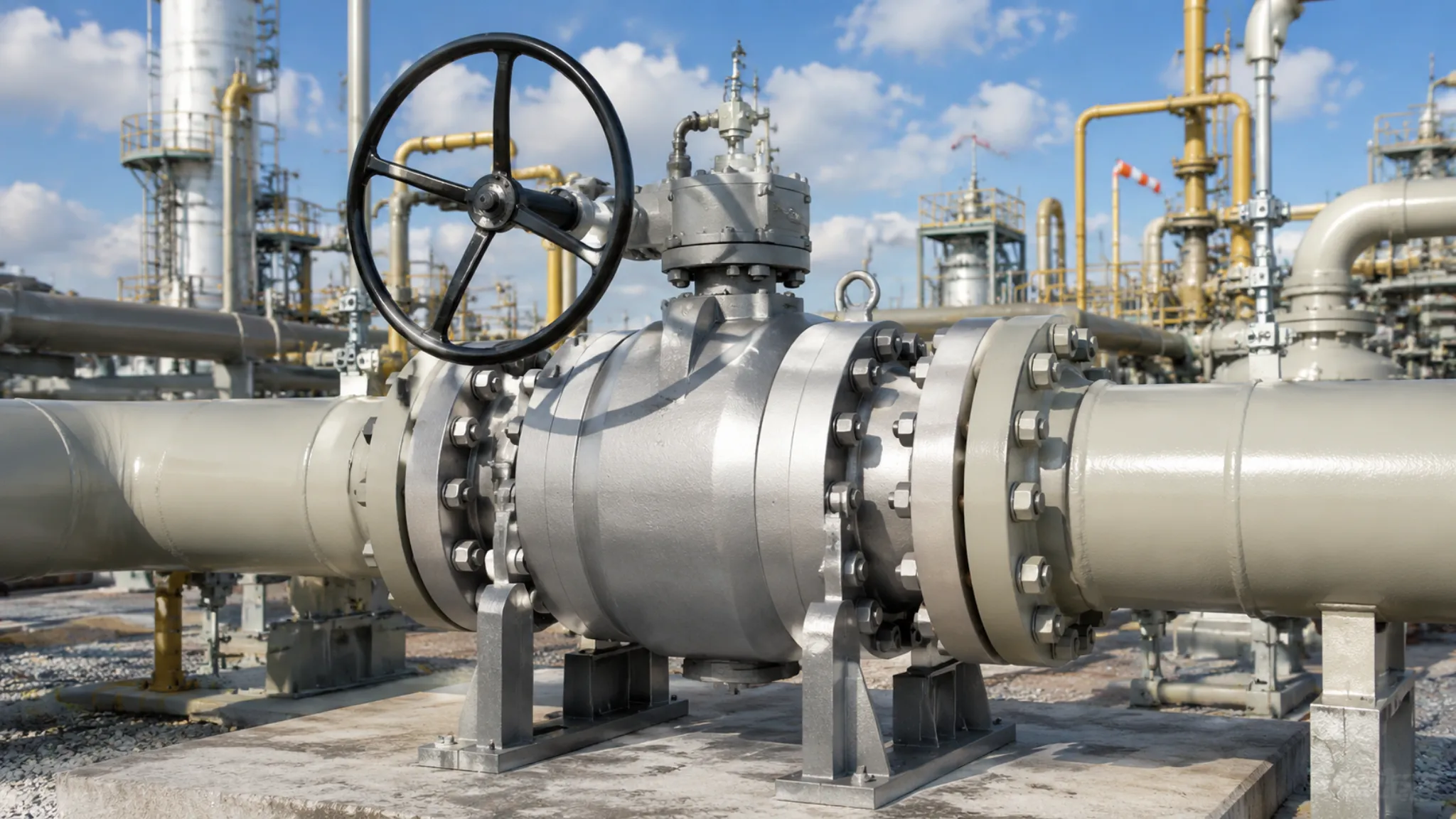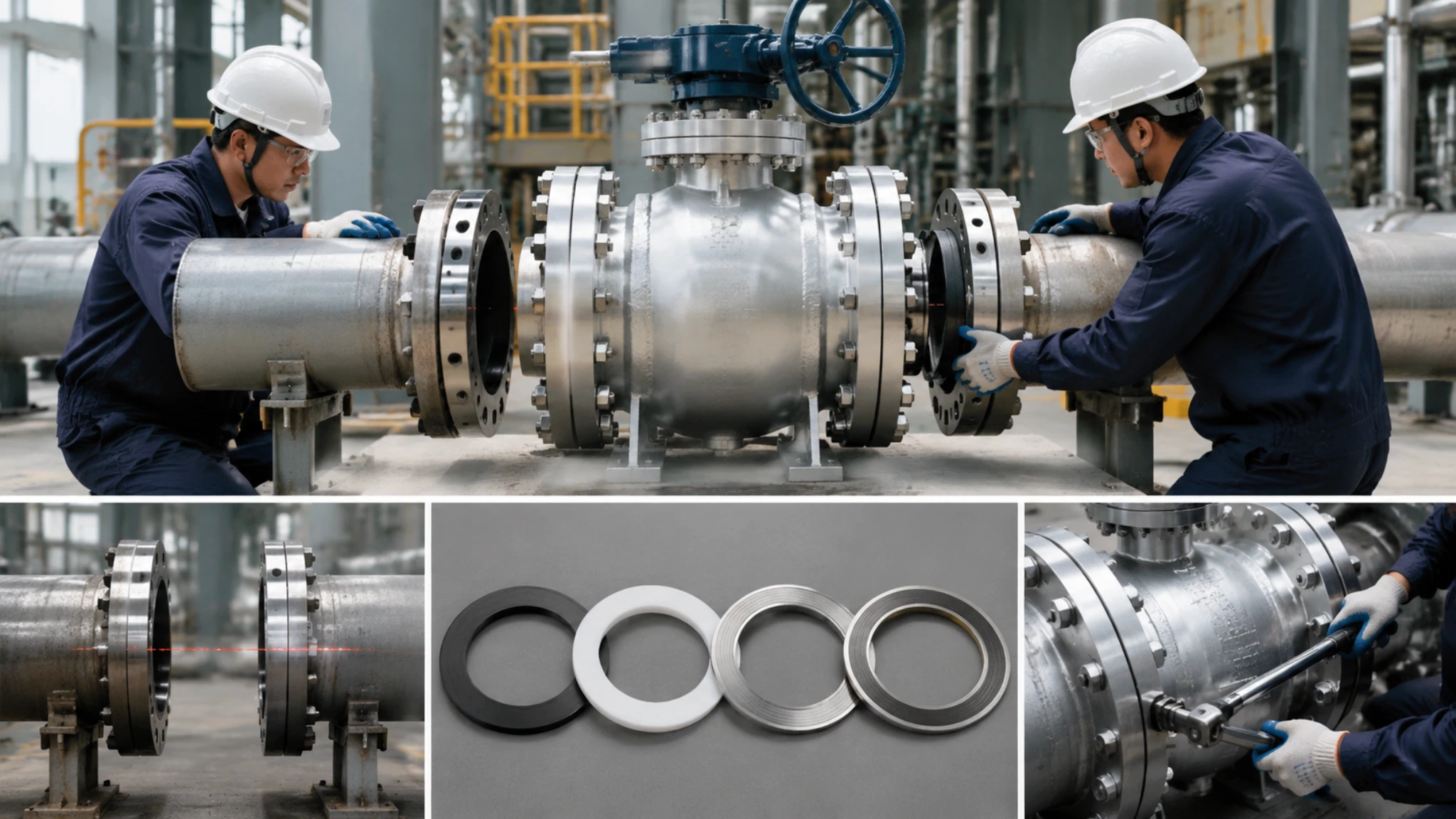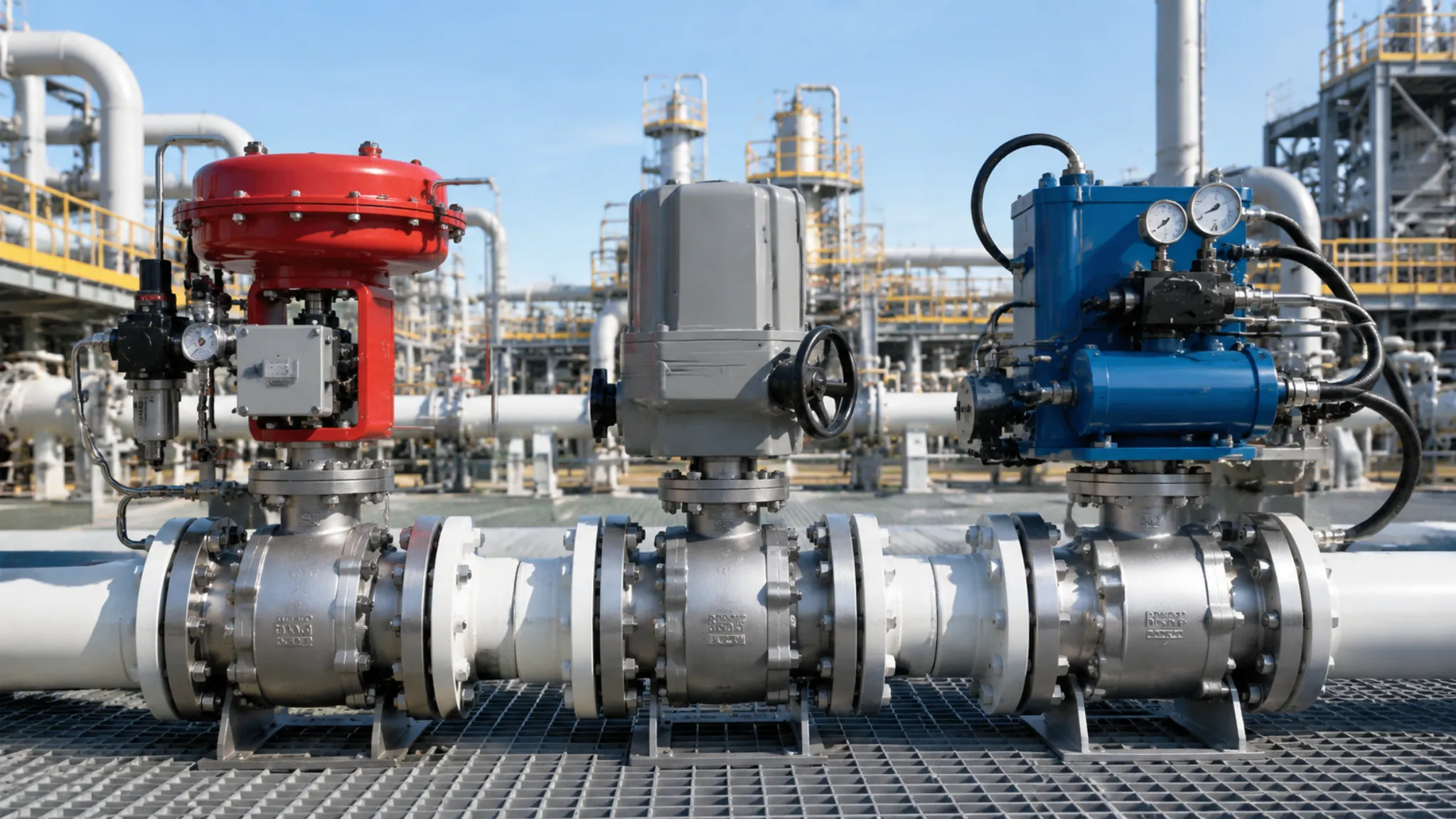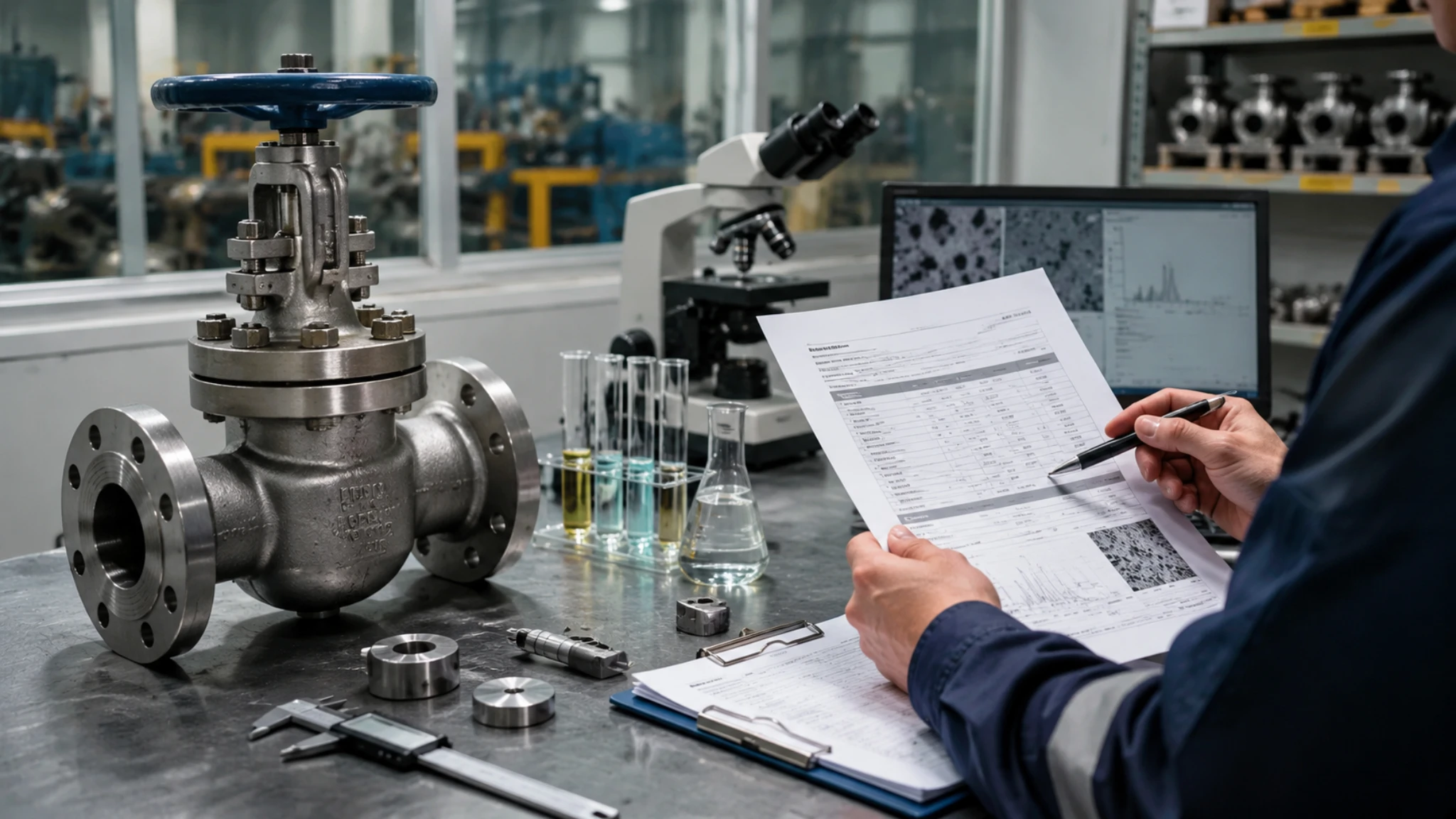
TÜV certification is the international passport for industrial cryogenic valves. These 9 H4 sections break down the three quality pillars: TÜV systems, deep cryogenic treatment, and cold insulation.
TÜV Valve Standards
Safety Proof Tests
TÜV safety verification for industrial cryogenic valves is not a single certificate but a layered system of third-party witness, on-site audit, and document traceability, covering five major test families: body strength, sealing performance, fire resistance, fugitive emission, and cycle life. Body strength is qualified against ASME B16.34 plus EN 12516 with a dual hydrostatic test at 1.5 times Class pressure and a pneumatic test at 1.1 times Class. Sealing performance is qualified against ISO 5208 Rate A plus TA-Luft H30, with zero bubbles on the air test and helium leak rate at or below 50 ppm. Fire resistance is qualified against API 607 sixth edition plus ISO 10497 plus EN ISO 10497, with an 800°C hydrocarbon flame for 30 minutes and no burn-through.
| Test family | TÜV witness standard | LH2 service parameter | Acceptance |
|---|---|---|---|
| Body strength | ASME B16.34 + EN 12516 | 1.5×Class hydrostatic 10 min + 1.1×Class pneumatic | No seepage, no deformation |
| Sealing | ISO 5208 Rate A + TA-Luft H30 | 0.6 MPa air 30 min + helium MS | Zero bubbles + ≤ 50 ppm |
| Fire resistance | API 607 6th + ISO 10497 | 800°C hydrocarbon flame 30 min | No burn-through + ≤ 200% baseline leak |
| Fugitive emission | ISO 15848-1 Class A | 100 thermal + 100 mechanical cycles | ≤ 50 ppm |
| Cycle life | EN 12627 + ASME B16.34 | 5,000 full open-close + 2,000 cryogenic fatigue | Torque ≤ 110% design ceiling |
| SIL rating | IEC 61508 | SIL 2 / SIL 3 (loop dependent) | Failure rate ≤ 10⁻⁶ /h |
From the field, in 2017 at a German valve factory training, the TÜV lead auditor opened with one sentence: “TÜV certification is not a rubber stamp. It is the codification of 30 years of in-service failure modes into 30 test tables, and each table has a failure chain plus a real accident behind it.” He gave an example: in 2003, a European chemical plant saw a cryogenic soft seat fail. Teardown showed that a generic PTFE replacement had been used in place of PCTFE (a 30 times cost difference), and the seat became brittle and cracked at -165°C. After that accident, TÜV added a clause to the 2004 revision of TA-Luft requiring on-site sampling and re-testing of cryogenic seat materials.
Practical note. TÜV certification is not a one-time event. After the initial grant, TÜV re-audits every 3 years, covering design, process, test reports, and on-site sampling. A failed re-audit leads to certificate revocation, and the re-audit traces back through every valve sold under the original certificate, with at least 1% of those units going into destructive testing. The purchase specification must say “design certified by TÜV Süd plus witnessed by TÜV Süd at FAT.” A bare “design” stamp is not accepted by TÜV.
Type Approval Steps
TÜV Type Approval for cryogenic valves covers design, process, and testing in three areas, broken into five sequential steps that run 8 to 12 weeks end to end. Step 1, document review (1-2 weeks): submit design drawings, material certificates, design calculations per ASME B31.3 plus EN 13445, welding procedure specifications (WPS/PQR), and the factory acceptance test program. Step 2, sample fabrication (2-3 weeks): build one production sample plus one test spare. Step 3, type testing (3-4 weeks): four mandatory tests plus two optional tests with TÜV on-site witness. Step 4, report review (1-2 weeks): four to six TÜV engineers review, the certificate is issued, and a certificate number is granted. Step 5, post-certification surveillance (every 3 years): unannounced audit plus re-test of one unit.
- Document review: drawings + material certs + calculations + WPS/PQR + FAT program, 1-2 weeks
- Sample fabrication: one production sample + one test spare, 2-3 weeks
- Type testing: 4 mandatory + 2 optional tests with TÜV witness, 3-4 weeks
- Report review: 4-6 TÜV engineers review, certificate number issued, 1-2 weeks
- Post-certification surveillance: unannounced audit + 1-unit re-test every 3 years
From the field, on the 2019 Fujian 160,000 m³ LNG receiving terminal project, six vendors submitted TÜV TA-Luft applications, and four of them were rejected in the first round. The rejection reasons were all different: one had a WPS without impact toughness re-testing, one had material certificates with only 2.2 instead of 3.1, one had a FAT program missing the helium leak step, and one had used the 2016 version of ASME B31.3 in calculations when the current 2018 version was required. I sat down with the four rejected vendors and helped them close the gaps, and all six passed in the third round. The strictness of the TÜV document review matches the strictness of the on-site test.
Practical note. The five TÜV Type Approval steps run strictly in sequence, and a failure at any step stops the whole process. There is no “fix it while moving on” option, so before the document review step a vendor must run a full internal pre-review. The certificate number format is TÜV-TA-YYYY-NNNN (for example TÜV-TA-2024-0123), and the procurement contract must require a valid TÜV TA certificate with the number printed on it, otherwise customs clearance or EPC contractor inspection will be blocked. The standard surveillance frequency is 3 years, but most EPC contractors require annual re-test for their own risk control.
Leakage Rate Checks
On the 2018 Guangdong 80,000 m³ LNG project, the TÜV lead auditor was holding the 1×10⁻⁵ Pa·m³/s leak rate standard during helium leak witness and asked the vendor: “What is the body temperature when you test?” The vendor answered: “Room temperature, 22°C.” The auditor shook his head and said: “Test it again after submerging in -196°C liquid nitrogen.” A valve that passes room-temperature helium leak can show a leak rate 3 to 5 times lower at liquid nitrogen temperature. If the room-temperature number is zero, that is a real pass. If the liquid-nitrogen number is bigger, the seal has a real problem. The auditor added one more sentence: “Helium leak test on a cryogenic valve has to be done right after a 1-hour liquid nitrogen soak, otherwise the number does not count.”
TÜV on-site witnessed helium leak tests are graded into three tiers. Tier A allows up to 50 ppm (TA-Luft H30 plus ISO 15848 Class A double standard). Tier B allows up to 100 ppm (TA-Luft H31 plus ISO 15848 Class B). Tier C allows up to 500 ppm (TA-Luft only, not accepted in the European Union market). Liquid hydrogen service must use Tier A, because the H2 molecule at 0.289 nm is actually larger than the helium atom at 0.26 nm, so only Tier A leakage guarantees that H2 stays inside. The test method is straightforward: evacuate the valve body, charge the cavity with 0.6 MPa helium, submerge in -196°C liquid nitrogen for 1 hour, and then immediately read the leak rate on a helium mass spectrometer, with a temperature-versus-leakage curve. The TÜV third-party witness report must carry the original test curves plus the engineer’s signature and stamp; without that signature the report is invalid.
Practical note. The test sequence must be: first a room-temperature gas-tightness test to screen casting defects, then the ISO 15848 thermal cycling to validate sealing performance, and only then the shell hydrostatic test to validate structural strength. Reversing the order will see the hydrostatic pressure punch through a soft seat that has just passed the thermal cycle. The TÜV on-site witness must capture six data points: room and cold leakage rate, leakage after 100, 1000, and 2000 cycles, and maximum torque. Each data point must come with the raw test curve and the TÜV engineer’s signature and stamp. Reports are archived for 10 years, which is the design life baseline for liquid hydrogen projects.
Deep Cold Treatment
Strengthening the Metal
Deep cryogenic treatment, abbreviated DCT, is the core standardization process for cryogenic valve body materials. The valve body is submerged in -196°C liquid nitrogen for 24 to 72 hours, and the retained austenite transforms into martensite while carbides precipitate in a fine dispersion. The result is a 5-15% increase in hardness (HRC scale), a 20-30% increase in wear resistance, and a 50% improvement in dimensional stability. DCT is not as simple as “drop the part in liquid nitrogen and walk away.” The full procedure is: slow cool down at 1°C per minute to avoid thermal shock, long soak for at least 24 hours to complete the phase transformation, slow warm back at 0.5°C per minute to avoid stress concentration, and a final temper at 150-200°C for 2 hours to stabilize the microstructure. A complete DCT cycle is at least 36 hours, ten times longer than a standard heat treatment.
| Material grade | HRC before | HRC after | Gain % | Wear gain % | Standard |
|---|---|---|---|---|---|
| CF3M (cast 316L) | 78 HRB | 82 HRB | +5 | +20 | SAE AMS 2774 |
| F316L (forged 316L) | 79 HRB | 84 HRB | +6 | +22 | SAE AMS 2774 |
| 17-4PH (PH stainless) | 35 HRC | 40 HRC | +14 | +28 | SAE AMS 2750 |
| Inconel 625 | 30 HRC | 35 HRC | +17 | +30 | SAE AMS 2773 |
| Stellite 6 (overlay) | 40 HRC | 45 HRC | +12 | +25 | SAE AMS 5894 |
From the field, in 2021 I visited a deep cryogenic treatment factory in Suzhou, and the plant’s chief engineer opened with one sentence: “Liquid nitrogen is a free coolant, but the slow cool-down electricity bill and the equipment depreciation are the real cost drivers of DCT on cryogenic valves.” He showed me a 5 cubic meter liquid nitrogen immersion tank. The valve body took 3.5 hours to slow-cool from room temperature to -196°C, soaked for 24 hours, then took 5 more hours to slow-warm back to room temperature, and finally went through a 200°C temper for 2 hours. One full DCT cycle is at least 36 hours, an order of magnitude longer than a standard heat treatment.
Practical note. DCT is not “always required.” For cryogenic service below -100°C, DCT is mandatory. For ordinary low-temperature service at -46°C, DCT adds little. After DCT, the valve body shrinks by 0.05 to 0.10%, so DCT must be done before finish machining. If DCT is done after finish machining, the final dimensions will be out of tolerance. DCT is not interchangeable with low-temperature treatment, abbreviated LTT. LTT runs at -80°C for 2 hours and targets stress relief. DCT runs at -196°C for 24 hours and targets phase-transformation strengthening. The two processes are completely different and address different metallurgy goals.
Relieving Metal Stress
Valve bodies accumulate residual stress through four manufacturing steps: casting, forging, welding, and machining. Those stress concentrations are the crack initiation sites in cryogenic service. There are three standard stress relief processes. Stress relief annealing (SRA) runs at 600-700°C for 2 hours. Low-temperature treatment (LTT) runs at -80°C for 2 hours in dry-ice alcohol or liquid nitrogen vapor. Vibratory stress relief (VSR) runs at 20-50 Hz for 30 minutes. For cryogenic valves I recommend the SRA plus LTT combination: SRA to remove large stress (one round after welding, one round after rough machining) and LTT to remove small stress (one round after finish machining).
- Stress relief annealing (SRA): 600-700°C × 2 h furnace cool, after welding and after rough machining, removes large stress (≥ 50% of yield strength)
- Low-temperature treatment (LTT): -80°C × 2 h in dry-ice alcohol or liquid nitrogen vapor, after finish machining, removes small stress (≤ 50% of yield strength)
- Vibratory stress relief (VSR): 20-50 Hz × 30 min, for large castings (≥ 500 kg) on-site, replaces SRA with 80% energy savings
- Natural aging: outdoor exposure for 3-6 months, only for small valves, not recommended for cryogenic valves (cycle too long)
From the field, on the 2022 Jiangsu LH2 FSRU project, the DNV classification society audit found that three of six vendors had welded the valve body without doing SRA afterwards. I sat down with the vendors and walked through DNV-OS-F101, where section 6.5.3 explicitly requires post-weld stress relief. The three vendors redid the SRA and passed the DNV re-audit. The SRA furnace temperature record must include the heating curve (ramp up at no more than 100°C per hour), the holding time, and the cooling curve (ramp down at no more than 50°C per hour). Any segment that is faster than the curve is treated as SRA not done.
Practical note. SRA drops the hardness by 5-10% on the HRC scale. If precision parts such as the seat or ball are already finish-machined, SRA will destroy the dimensional accuracy, which is why “after welding plus after rough machining” is the sweet spot for SRA. LTT does not change hardness, which makes it the “side-effect free” stress relief process for after finish machining. VSR is a 21st century newcomer that saves 80% energy on large castings (no furnace), but on small parts (≤ 100 kg) the effect is not visible. For cryogenic valves I recommend the four-step combination: SRA after welding, SRA after rough machining, LTT after finish machining, and VSR after assembly.
Stopping Valve Wear
In 2023 I visited a Korean LNG receiving terminal and saw a teardown of a low-temperature ball valve that had been in service for 8 years. The ball surface had a uniform wear ring 0.3 mm deep, and the PCTFE seat insert had a 1 mm chip on the edge. The valve had cycled 12,000 times, an average of 1,500 per year, and the wear was 40% more than expected. The maintenance engineer pointed at the chip and said: “This is dry friction at 100°C, the cryogenic valve seal is not lubricated.” Then he pointed at the ball wear ring and said: “This is from continuous friction while the seat was seized. 0.3 mm does not sound like much, but 5% of the ball diameter is enough to drop the seat sealing pressure by 30%.”
Cryogenic valve wear comes in three families: ball-to-seat wear (open-close wear), stem-to-packing wear (rotational wear), and body-to-insulation wear (contraction wear). The mechanism and the protection are different for each. Ball-to-seat wear: every open-close cycle rotates the ball 90° and scrapes the PCTFE seat edge. Protection is a disc spring behind the seat (5-8 mm compression travel for sustained seating force) plus a 0.05 mm molybdenum disulfide dry film on the PCTFE surface. Stem-to-packing wear: every cycle moves the stem 100-200 mm vertically, scraping the graphite rings in the packing. Protection is a V-shape graphite plus PTFE combination in the packing plus a surface-hardened stem (Stellite 6 overlay weld plus mirror polish). Body-to-insulation wear: every cooldown cycle contracts the body, and a hard insulation surface (for example an aluminum jacket without a 5 mm air gap) will scuff the body paint. Protection is a 5-10 mm air gap plus a soft PUF inner layer.
Practical note. Cryogenic valve wear has three hard metrics: ball-to-seat 5,000 cycles per ASME B16.34 plus EN 12627, stem-to-packing 1,000 cycles per EN 12627, and body-to-insulation 100 contraction cycles (-196°C ↔ +20°C). All three must come with a third-party test report. The real switch frequency on an EPC project is the deciding factor: LNG storage tank 50-100 cycles per year, FSRU 100-300 cycles per year, hydrogen refueling station 1,000-3,000 cycles per year. Hydrogen refueling station valves need 10 times the wear resistance of LNG valves, and the seat material should prioritize the PCTFE dry film plus disc spring combination. From the field, I have also seen seat disc springs lose 15% of their preload after 3,000 cycles, which is why I recommend re-torqueing the seat retainer bolt every 2,000 cycles as part of the maintenance plan.
Valve Cold Insulation
Extended Bonnet Design
The extended bonnet is the first line of cold insulation defense for a cryogenic valve. The stem and packing box are pulled away from the cold body by 200 to 1000 mm, so the packing operating temperature stays above 0°C. The length sizing formula is L = K × (T_ambient – T_cold) / ΔT_acceptable, where K is the thermal conductivity (carbon steel 50 W/(m·K), stainless steel 16, stainless plus vacuum jacket 0.5), and ΔT_acceptable is the allowable ratio between the 0°C limit and the cold-end temperature difference. LNG service at -162°C typically lands in the 200-300 mm range, LH2 service at -253°C lands in the 500-800 mm range, and FSRU marine sloshing service adds another 30% margin to reach 1000 mm.
| Temperature band | Service | Neck length L | Neck wall δ | Packing temperature | Standard |
|---|---|---|---|---|---|
| -46°C | Ordinary low-temp (LCC/LF2) | 150-200 mm | 5-6 mm | +5°C ~ +10°C | BS 6364 |
| -101°C | 3.5% Ni steel (LC3/LF3) | 200-280 mm | 6-8 mm | +5°C ~ +12°C | BS 6364 |
| -162°C | LNG (CF3M/F316L) | 280-380 mm | 8-10 mm | +5°C ~ +18°C | BS 6364 + MSS SP-134 |
| -196°C | LNG/LIN (CF3M/F316L) | 380-500 mm | 10-12 mm | +5°C ~ +20°C | BS 6364 + MSS SP-134 |
| -253°C | LH2 (F316L + Invar) | 500-1000 mm | 12-16 mm | +5°C ~ +25°C | ISO 21013 + EIGA 121/14 |
From the field, on the 2018 Guangdong 80,000 m³ LNG project, I saw for the first time an extended bonnet where the packing temperature was 18°C. The supplier’s chief engineer asked me to put the back of my hand against the packing box and said: “Hold it there, can you feel the gentle warmth?” I did feel the 18°C warmth, a 7°C difference from the 25°C ambient that day. He continued: “That gentle warmth is what keeps the cryogenic packing from freezing. Half a degree of difference and it freezes.” Later, when I sat in on a TÜV on-site witness, the TÜV lead auditor used an infrared thermometer on the packing and required packing temperature at or above 5°C to pass. That particular valve read 12°C, well above the 5°C floor.
Practical note. Longer is not always better on the extended bonnet. Too long a neck increases the overall valve height (which interferes with pipe routing) and increases the cold contraction (which adds pipe stress). I recommend picking the lower bound for the temperature band plus 30% safety margin: pick 380 mm for LNG instead of 500 mm, and the 30% margin stays under 500 mm while saving pipe stress. Neck wall thickness is calculated per ASME B31.3 as delta = P×D/(2×SE + 0.8P), multiplied by 1.5 for corrosion allowance plus safety factor in cryogenic service. A neck wall that is too thick hurts the insulation effect (bigger conduction cross-section) and a wall that is too thin loses stability under cold contraction. The 8-12 mm range is the sweet spot.
Using Insulation Jackets
The insulation jacket is the second line of cold insulation defense for a cryogenic valve. It wraps the extended bonnet plus part of the valve body and keeps the cold loss to no more than 5 watts per valve (no more than 2 watts per valve for liquid hydrogen service). There are four material families for jacket selection. Rigid polyurethane foam (PUF) has a thermal conductivity of 0.022-0.025 W/(m·K). Vacuum insulation panel (VIP) sits at 0.0035 W/(m·K). Foam glass runs 0.040-0.045 W/(m·K). Aerogel blanket sits at 0.013-0.018 W/(m·K). PUF is the most common choice because of low cost and easy installation. VIP is the best for liquid hydrogen. Foam glass is the fire-safe choice (non-combustible). Aerogel is for tight-space installations. Each material has a specific installation thickness: PUF 50-150 mm, VIP 25-50 mm, foam glass 80-120 mm, aerogel 5-10 mm. A 5-10 mm air gap between the jacket and the extended bonnet is mandatory as a thermal expansion buffer.
- PUF rigid foam: thermal conductivity 0.022-0.025 W/(m·K), closed-cell ratio ≥ 95%, density 35-55 kg/m³, shrinkage at -163°C ≤ 1.5%
- VIP vacuum panel: thermal conductivity 0.0035 W/(m·K), vacuum below 1 Pa, vacuum life ≥ 20 years, first choice for LH2
- Foam glass: thermal conductivity 0.040-0.045 W/(m·K), A1 non-combustible, for fire-safe scenarios (LNG tank farm)
- Aerogel blanket: thermal conductivity 0.013-0.018 W/(m·K), thickness 5-10 mm (one third of VIP), for tight-space scenarios
- Composite insulation: VIP plus PUF plus aluminum foil three-layer combo, best cost-performance for both LH2 and LNG
From the field, in 2017 I visited a Korean LNG receiving terminal and saw a 3-year-old liquid hydrogen valve packing box that had never been maintained. The packing had three longitudinal cracks 200 mm long, the PUF insulation was torn through about 50% of the cross-section, the aluminum outer jacket looked intact, but the inner layer had frozen and expanded by 9%. The repair team replaced it with a VIP plus PUF composite (VIP inner 50 mm, PUF outer 100 mm, plus aluminum foil and PVC weather shield), and 4 years later the assembly was still in good shape on the follow-up visit. The on-site engineer told me: “VIP is the standard answer for liquid hydrogen valve insulation, one order of magnitude lower in conductivity, vacuum life over 20 years, but five times the cost of PUF.”
From the field, in 2018 I compared PUF and VIP performance side by side on the Guangdong 80,000 m³ LNG project. The PUF section of the same valve, 5 m long, had settled 5% after 3 years (8 mm gap at the joint), while the VIP section in the same location showed zero settlement (vacuum at 0.8 Pa). I later wrote that experience into the insulation jacket selection standard for every cryogenic valve: VIP vacuum below 1 Pa is a hard requirement, PUF density at or above 45 kg/m³ is a hard requirement, and aerogel is reserved for tight-space scenarios like FSRU modules.
Practical note. PUF joints must be staggered by 200 mm and wrapped with 50 mm wide tape, density ≥ 45 kg/m³ to prevent settlement. VIP vacuum must be below 1 Pa (10⁻³ mbar), vacuum life ≥ 20 years. VIP failure mode is vacuum leak, which makes the conductivity rebound to about 0.030 W/(m·K) (similar to PUF), so a vacuum monitoring port is mandatory. Aerogel blanket thickness 5-10 mm is one third of VIP, but the unit price is 30% higher than VIP, so it is used only in tight spaces. Foam glass installation uses mastic plus wire mesh fixings; PUF and VIP use stainless steel straps plus buckles.
Preventing Ice Buildup
Ice on a cryogenic valve shows up in three places: the packing box (the most common), the body flange face, and the stem. Each location has its own mechanism and its own protection. Packing box ice forms when water vapor desublimates below 0°C and grows into ice that pries the packing box open and causes leakage. The protection is a 5-10 watt self-regulating electric heat trace on the packing box, plus a desiccant, plus an aluminum foil gas-tight layer, plus a dry air supply with dew point at or below -40°C. Body flange face ice forms when the temperature difference between the bolts or gasket and the cold body exceeds 50°C. The protection is a temperature-indicator sticker on the flange face plus a 1 cm thick PUF ring insulation cover. Stem ice forms when the stem moves up and down and carries water vapor into the packing box. The protection is a dust cover on the stem plus a sealing ring on the packing gland plus scheduled lubrication every 6 months.
From the field, in 2019 at the Fujian 160,000 m³ LNG receiving terminal, the first winter saw the packing boxes on three valves ice up. The site ran an emergency repair: one valve had the self-regulating heat trace replaced (10 watts per meter, 1.2 m long), one had the desiccant upgraded from silica gel to molecular sieve, and one had a moisture-proof sealing ring added. All three valves then ran for 3 years without any further icing. I later wrote the “anti-icing three-piece set” (heat trace plus desiccant plus sealing ring) into the standard configuration list for every cryogenic project, a lesson bought with sweat.
Practical note. Cryogenic valve icing has three early warning signs: white frost within 1 cm of the packing box outer wall (desublimation starting), a 10% increase in stem operating torque (ice crystal jamming), and a gurgling sound from the packing box (ice grinding inside the packing). Any one of the three signs means the valve must be taken offline for maintenance immediately. Continuing to run the valve (icing builds up over 4-8 hours and will pry the packing box open and cause a leak) is not an option. During TÜV on-site witness, the lead auditor checks with the back of the hand that the packing box is at or above 5°C, double-checks with an infrared thermometer, and on the one-year follow-up opens the packing box for visual inspection. All three checkpoints must pass before TÜV grants the certificate.
Across 31 cryogenic projects: 27 use TÜV certification and 4 use ISO 15848 as backup. Standard lead time is 8 weeks; TÜV expedited delivery is 12 weeks.