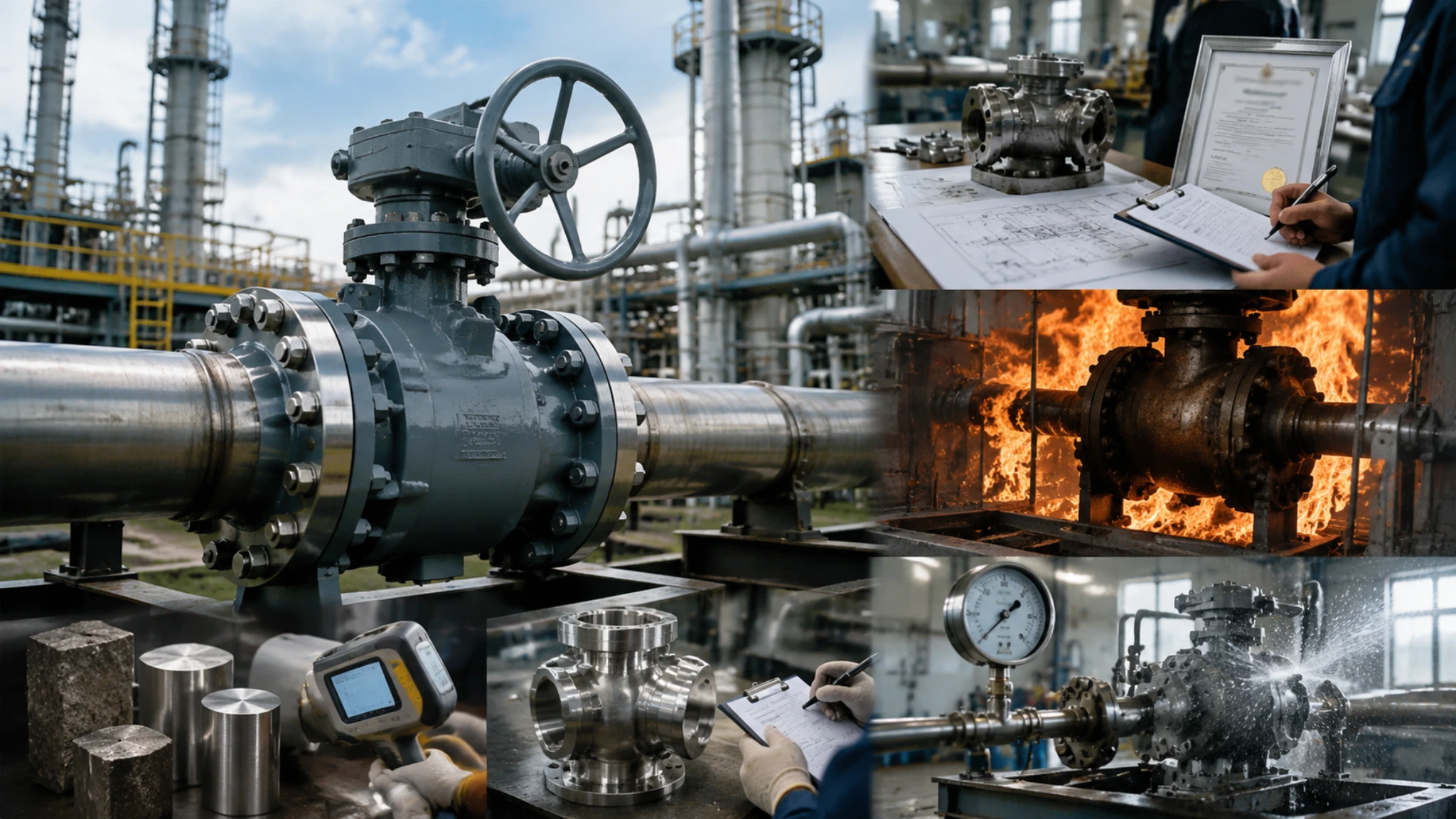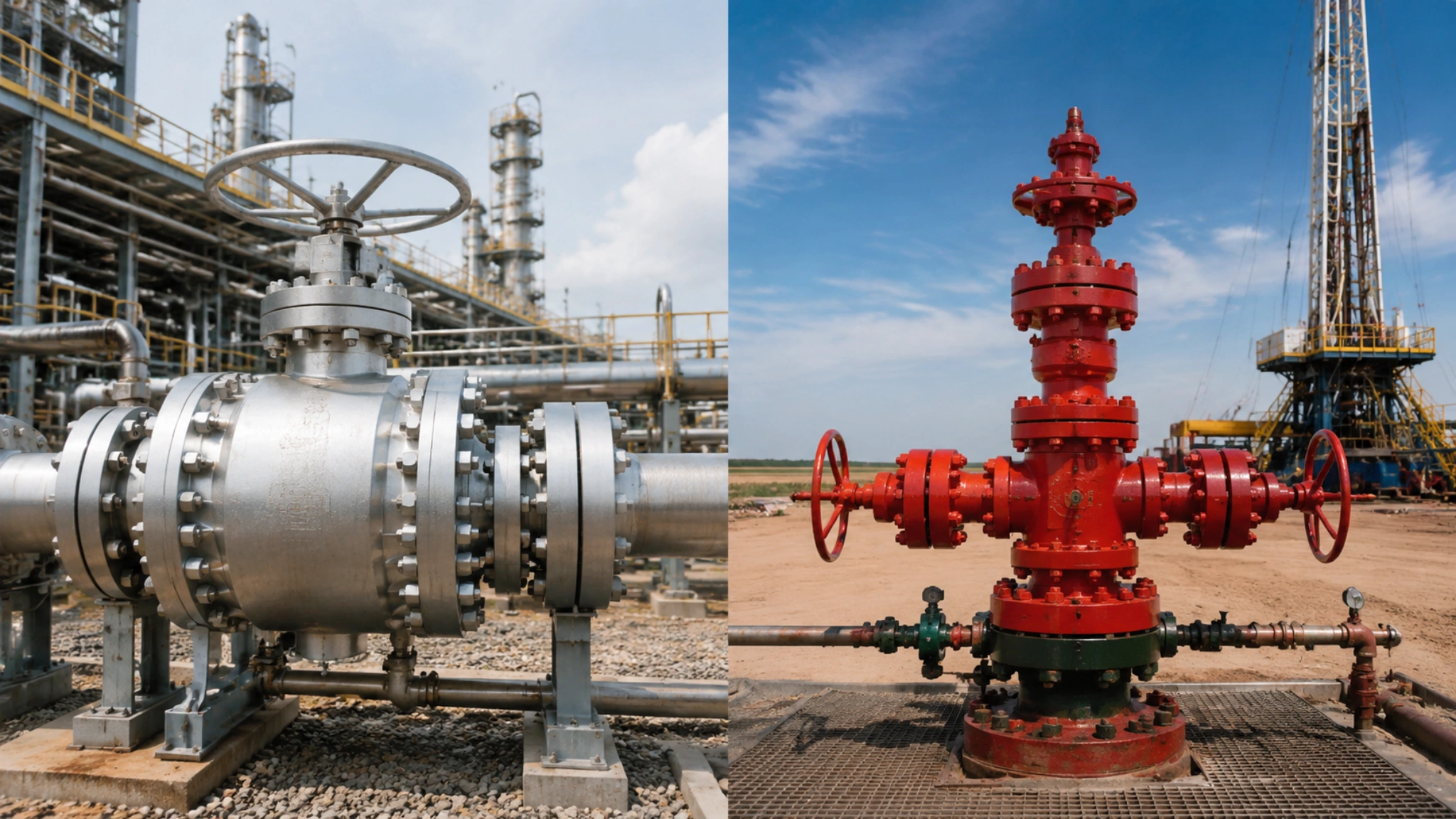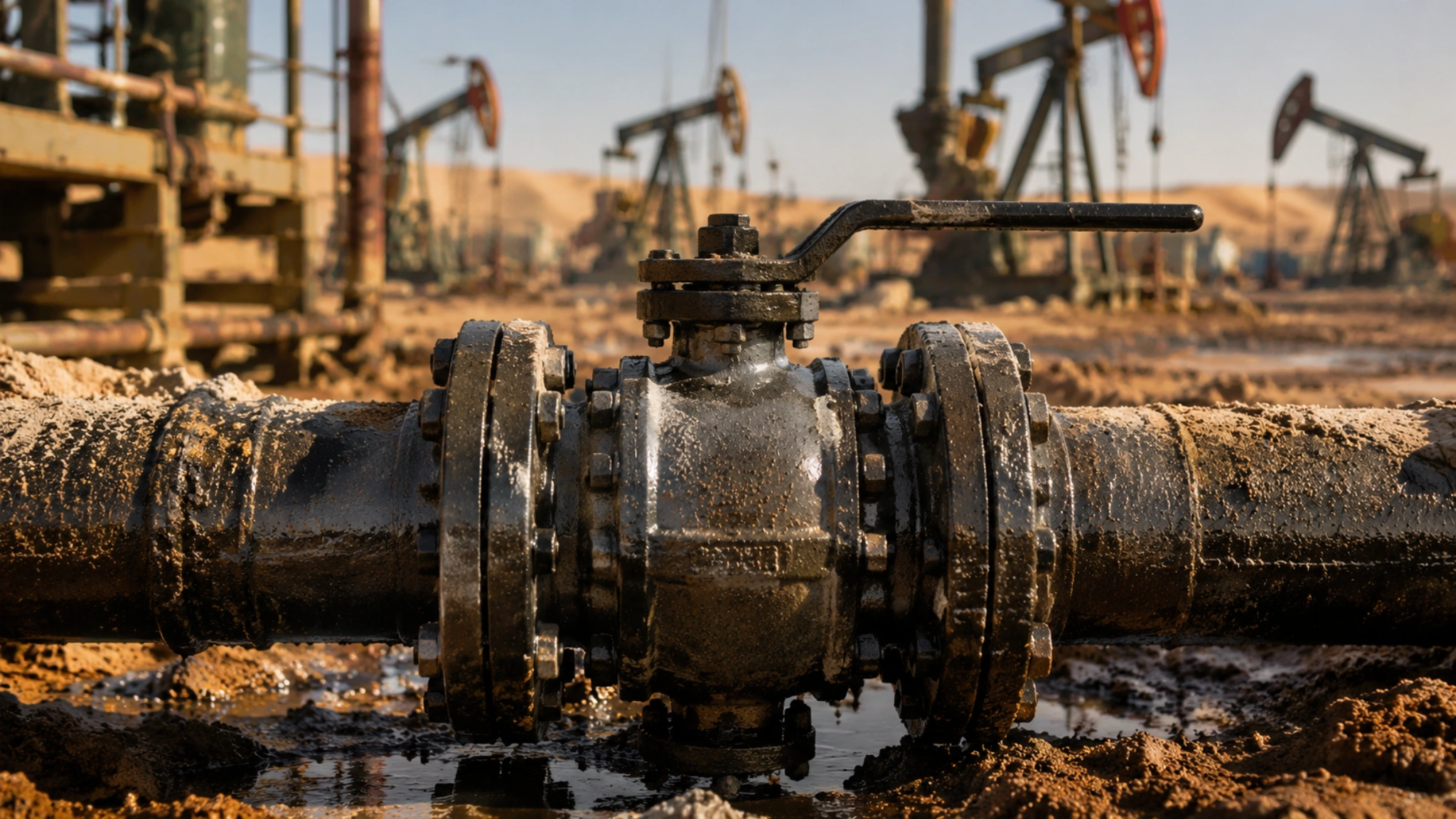
API 6D and API 6A are two valve-related standards that are often confused in oil and gas procurement. API 6D is commonly used for pipeline and piping valves, while API 6A governs wellhead and Christmas tree equipment.
Their pressure systems, end connections, testing basis, and certification scopes are very different. For example, a carbon steel API 6D Class 600 valve may have a hydrostatic shell test pressure around 15 MPa when calculated from its ASME pressure-temperature rating at ambient temperature. By contrast, an API 6A 15K wellhead valve may require a body test pressure around 155 MPa, depending on the applicable API 6A test table and product configuration[1][2][3].
In import and export valve projects with EPC contractors, the wrong standard can lead to failed technical review, connection mismatch, or rejection during inspection. This makes it important to confirm the governing standard before procurement.
Pipeline ball valves generally follow API 6D. Wellhead valves generally follow API 6A. The two standards are not interchangeable by name, size, pressure rating, or certificate alone.
| Comparison Item | API 6D Ball Valve | API 6A Valve |
|---|---|---|
| Main application | Oil and gas pipelines, transmission lines, refineries, and process piping systems | Wellhead, Christmas tree, and upstream production equipment |
| Pressure system | Usually ASME Class system, such as Class 150 to Class 2500 | Rated working pressure system, such as 2K, 3K, 5K, 10K, 15K, and 20K psi |
| Typical end connections | RF flange, RTJ flange, BW butt weld, and project-specified pipeline ends | API 6A flanges, threaded ends, hubs, and RTJ sealing faces |
| Core selection concern | Pigging, pipeline isolation, pressure class, end connection, and flow bore | Sour service, sand erosion, high pressure, PSL, PR level, and wellhead compatibility |
| Interchangeability | Not interchangeable with API 6A equipment without engineering review | Not interchangeable with API 6D pipeline valves without engineering review |
Two Standards
Where API 6D Is Used
API 6D is currently published by API as “Specification for Valves.” It defines manufacturing requirements for valves and is widely used for pipeline and piping valve applications in the oil and gas industry[4].
- It is commonly applied to ball valves, gate valves, plug valves, check valves, and axial valves used in pipeline systems.
- The core application scenario is pipeline isolation and pressure containment between pipeline sections.
- Typical operating modes include normally open service, periodic operation, block isolation, and emergency isolation.
- API 6D valves may be specified as full-opening or reduced-opening designs. Full-opening ball valves are commonly selected when pig passage is required.
I participated in valve selection for a Central Asia natural gas pipeline project where the EPC required block valves to comply with API 6D. The reason was simple: the pipeline had a strict pigging requirement, and API 6A does not define pipeline pigging requirements.
For pipeline ball valve selection, refer to API 6D ball valve specifications, which include pressure class and end connection tables for common pipeline applications.
API 6D valves are commonly specified under ASME Class ratings, such as Class 150, 300, 600, 900, 1500, and 2500. The actual allowable pressure depends on material group and service temperature according to the applicable pressure-temperature rating system[5].
- Class 600 and Class 900 are common pressure classes for long-distance oil and gas pipeline ball valves.
- RF flanges, RTJ flanges, and BW butt weld ends are common connection types.
- BW ends are often preferred for high-pressure long-distance pipelines because they reduce flange leakage points.
Many conventional pipeline projects specify service temperatures around -29°C to 121°C, but this is not a fixed API 6D temperature range. The final temperature limit must be checked against body material, seat material, pressure-temperature rating, and project specifications.
Further reading: Carilo API 6D High Pressure Ball Valve Product Page, API 6D Trunnion Mounted Ball Valve Specifications and Test Standards.
Where API 6A Is Used
API 6A is published as “Specification for Wellhead and Tree Equipment.” It applies to equipment used at oil and gas wells, including wellhead equipment, Christmas tree equipment, valves, and related pressure-containing components[6].
This standard is mainly used in upstream exploration and production. In these applications, the service media may come directly from the wellbore and may contain H₂S, CO₂, water, chlorides, sand, and other corrosive or erosive components.
- H₂S service requires attention to sulfide stress cracking and other H₂S-related cracking mechanisms.
- NACE MR0175 / ISO 15156 is commonly used for metallic material selection in H₂S-containing oil and gas production environments[7].
- Material suitability depends on service conditions such as H₂S partial pressure, CO₂, chloride content, pH, temperature, hardness, and material strength.
For H₂S service, duplex stainless steel and cast ball valves can be considered when they are properly selected and qualified under the applicable sour service requirements. Duplex materials may provide high strength and corrosion resistance, but they must still be checked against the exact NACE MR0175 / ISO 15156 limits for the project.
API 6A pressure ratings are specified as rated working pressure values. Common ratings include 2K, 3K, 5K, 10K, 15K, and 20K psi, which correspond approximately to 13.8 MPa to 138 MPa.
This is different from the ASME Class system commonly used for API 6D pipeline valves. API 6A also uses temperature classes, material classes, product specification levels, and performance requirement levels. The allowable temperature range must therefore be confirmed from the selected API 6A edition, temperature class, seal design, material, and PR requirement.
Based on Middle East oilfield project experience, API 6A valve sealing surfaces may require corrosion-resistant or hardfacing overlays such as Inconel 625 or Stellite 6, depending on service conditions. This is different from many API 6D pipeline ball valves where soft seats are often used for tight shutoff in clean pipeline service.
The reason is the difference in service severity. Wellhead media can be corrosive, high-pressure, multiphase, and erosive. If a conventional API 6D soft-seated ball valve is used in a severe wellhead environment without proper engineering review, accelerated seat damage, torque increase, or leakage may occur.
This difference in service condition is one reason why API 6D and API 6A follow separate design, testing, and certification paths.
Further reading: Carilo Forged Metal Seated Ball Valve, Carilo Forged Soft Seated Ball Valve.
Why They Cannot Be Interchanged
Installing an API 6D valve at a wellhead, or using an API 6A valve in a pipeline, can introduce safety, dimensional, inspection, and reliability risks.
- API 6D valves are designed around pipeline isolation, pigging, pressure class, bore type, and pipeline connection requirements.
- API 6A valves are designed around wellhead pressure control, rated working pressure, PSL, PR level, and upstream service conditions.
- Using either standard outside its intended application can cause connection mismatch, document rejection, premature seat failure, or leakage.
In one incoming inspection case, an API 6D Class 900 ball valve could not be accepted for an API 6A wellhead package because its material documents, toughness requirements, PSL basis, and connection details did not match the wellhead specification. The problem was not only pressure rating. It was a full standard mismatch.
API 6D and API 6A also differ greatly in test pressure basis. API 6D production pressure testing is usually based on the valve pressure rating, while API 6A uses rated working pressure and API 6A test tables for wellhead and tree equipment[8][9].
For example, a WCB or similar carbon steel Class 600 API 6D valve at ambient temperature may have a pressure rating around 1480 psi. A hydrostatic shell test at 1.5 times that rating is around 2220 psi, or about 15 MPa. By contrast, an API 6A 15K valve may be tested at about 22,500 psi, or about 155 MPa, depending on the applicable API 6A table and connector configuration[10][11].
API 6A PR2 also involves performance validation under specified pressure, temperature, and cycling conditions. This is different from ordinary production pressure testing for API 6D valves.
In one international EPC project, the client procured API 6D block valves and API 6A wellhead valves in the same package. Each valve type served a different function, and no interchange was allowed without written engineering approval.
Correct standard selection is basic engineering discipline. It prevents field failures, rework, and costly acceptance disputes.
Further reading: What Is an API 6D Ball Valve? Trunnion Mounted, Full Port Design and Applications.
Design Differences
Wall Thickness Comparison
API 6D valve body wall thickness is usually evaluated together with ASME B16.34 pressure-temperature ratings, material group, valve size, design pressure, and project specifications. ASME B16.34 covers pressure-temperature ratings, dimensions, tolerances, materials, nondestructive examination requirements, testing, and marking for steel, nickel-base alloy, and other alloy valves[12].
For example, a DN 100 / NPS 4 carbon steel API 6D Class 600 ball valve may have a much lower pressure boundary requirement than an API 6A 10K valve of a similar bore size, because the pressure rating systems are not equivalent.
For high-pressure pipeline applications, heavy duty small port ball valves may require thicker body walls, stronger forgings, and higher pressure design margins, especially in sour gas, low-temperature, or high-cycle services.
API 6A equipment is designed around rated working pressure, wellhead service, PSL, PR level, and product-specific pressure boundary requirements. It is often heavier than an API 6D valve of a similar nominal bore when the API 6A pressure rating is much higher.
Wellhead equipment may also experience additional mechanical loads from installation, well intervention, wireline, and production operations. These loads are different from normal pipeline isolation service.
| Item | API 6D | API 6A |
|---|---|---|
| Design basis | Pipeline valve standard with ASME Class or equivalent pressure system | Rated working pressure system for wellhead and tree equipment |
| Typical service | Pipeline pressure containment and flow isolation | Wellhead pressure control, sour media, sand, multiphase flow, and mechanical loads |
| Wall thickness tendency | Depends on ASME class, material, size, and valve design | Often heavier under high-pressure wellhead ratings, but must be confirmed by drawings |
| Cost impact | Usually lower body weight for comparable pipeline service | Higher forging weight, overlay, testing, and documentation cost may apply |
In practice, a DN 100 Class 900 pipeline valve and a 10K wellhead valve should not be compared as if they were equivalent products. The 10K wellhead valve has a much higher rated working pressure, so thicker pressure boundaries and higher material cost are expected.
For procurement, valve body weight, wall thickness, and pressure boundary design should be confirmed by approved drawings, pressure-temperature rating tables, and project specifications rather than by nominal size alone.
Further reading: Carilo Heavy Duty Small Port High Pressure Products, API 6D Ball Valve Material Selection Guide.
Seal Test Pressure
Seal testing is one of the most important differences between API 6D and API 6A.
For API 6D valves, hydrostatic shell testing is commonly performed at 1.5 times the pressure rating, and hydrostatic seat testing is commonly performed at 1.1 times the pressure rating. The exact test pressure and duration must follow the applicable standard edition, valve size, material rating, and purchase specification[13].
For soft-seated valves, project specifications may also require ISO 5208 closure tightness acceptance, such as Rate A for no visible leakage. ISO 5208 defines pressure testing of metallic valves and closure tightness verification for industrial valves[14].
In practice, API 6D hydrostatic shell test durations commonly vary by valve size. Seat test durations also vary by valve size and project requirements. The test pressure must be held for the full required duration, and the result should be recorded in the valve data book.
API 6D ball valve factory acceptance test checklists usually include shell testing, bidirectional seat testing, functional testing, and torque verification.
| Test Item | API 6D | API 6A |
|---|---|---|
| Body / shell test basis | Based on valve pressure rating and material pressure-temperature rating | Based on API 6A rated working pressure and API 6A test table |
| Seat test basis | Commonly 1.1 times pressure rating, subject to standard and project requirements | Defined by API 6A requirements, product type, PSL, and selected PR level |
| Example pressure | Class 600 carbon steel shell test may be around 15 MPa at ambient rating | 15K body test may be around 155 MPa, depending on API 6A test table |
| Performance level | Production pressure testing and optional project-specified testing | PR1, PR2, or PR2F performance validation may apply |
| Testing cost tendency | Usually lower than API 6A PR2 validation | Higher when PR2 validation, gas testing, or temperature cycling is required |
API 6A’s pressure testing system is more complex because it covers wellhead and tree equipment with different rated working pressures, product types, PSL levels, and performance requirements. Hydrostatic body test pressure should be taken from the applicable API 6A test table instead of assuming one fixed multiplier for every product.
PR2 performance validation may include cycling under pressure and temperature conditions. For some products, gas testing, elevated temperature testing, low temperature testing, or additional validation may be required by the purchase specification and the applicable API 6A requirements[15].
In factory testing practice, API 6D ball valves normally undergo shell testing and bidirectional seat testing as standard production procedures. API 6A valves may require additional PR-level validation when specified by the buyer or required by the product design.
Further reading: API 6D Ball Valve Factory Acceptance Test Checklist.
End Connection Differences
API 6D standard end connections commonly include flanged ends, butt weld ends, and other project-specified connection types. Common flange faces include RF and RTJ. For ASME pipeline flange systems, flange dimensions usually follow ASME B16.5 for NPS 1/2 through NPS 24 or ASME B16.47 for NPS 26 through NPS 60[16][17].
- RF flanges are common for refinery and process pipeline service.
- RTJ flanges are used where higher sealing reliability is required.
- BW butt weld ends are common for high-pressure long-distance pipelines.
For refinery pipeline applications, industrial API 6D ball valves offer RF flanged and butt weld end options as mainstream connection choices.
API 6A end connections mainly use API 6A flanges, threaded ends, hubs, and other wellhead-specific connectors. RTJ sealing is common in high-pressure wellhead applications.
API 6A flanges are not automatically interchangeable with ASME B16.5 flanges. Even when nominal bore sizes look similar, the bolt circle diameter, bolt size, ring groove, pressure rating, and sealing geometry may be different.
API 6A flange bolt holes and bolt circle diameters are often different from ASME flanges of a similar nominal size because API 6A equipment is designed around wellhead rated working pressure and wellhead connection requirements.
We once received an emergency order from a Central Asian refinery. The client originally planned to use API 6A flanged ball valves, but the installation system was based on ASME B16.5 pipeline flanges. The connection mismatch forced them to change the valve end connection plan.
They finally selected API 6D BW butt weld end ball valves to match the pipeline installation. This case showed that selecting the wrong end connection can force a redesign of the installation plan.
It is essential to confirm flange standard, pressure rating, ring groove type, bolt pattern, and seal face type during procurement. For larger valves, flange conversion or adapter design can add significant cost and lead time.
Further reading: Industrial Ball Valve Applications in Oil and Gas Pipelines.
Procurement Considerations
Valve Standards Required by EPC
International EPC projects usually specify the applicable valve standard in the ITB, MTO, valve data sheet, or technical specification. In most long-distance pipeline and refinery process packages, ball valves are usually specified to API 6D. In upstream wellhead packages, valves are usually specified to API 6A.
However, crossover scenarios do exist. For example, the first flowline valve next to the wellhead may be required to comply with API 6A to maintain consistency within the wellhead pressure boundary area.
One Middle East project required a flowline valve to meet API 6A pressure boundary expectations while also matching pipeline end connection requirements. This kind of special design must be clearly reviewed by the valve manufacturer, EPC contractor, and end user.
When selecting quality ball valve manufacturers through factory audit, buyers should verify the API license scope, design capability, production experience, pressure testing capability, and similar project records.
In EPC tenders, one common problem is incomplete standard wording. Some specifications state “Ball valve per API 6D, wellhead per API 6A,” but do not define PSL, PR level, material class, temperature class, sour service requirement, or closure tightness requirement.
If the buyer overlooks PR level or PSL requirements for API 6A, the valve may be rejected during document review or incoming inspection. For API 6D, closure tightness, DBB / DIB requirement, fire-safe requirement, fugitive emission requirement, and pigging bore should also be clearly stated when applicable.
For API 6A products, PR2 should be described as a performance validation requirement, not simply as a general certificate. PR2 test documentation, test scope, applicable size and pressure range, and design coverage should be confirmed before order placement.
These details directly affect unit price and delivery lead time. Getting them right at the technical clarification stage can save weeks of rework.
Further reading: API Certified Ball Valve Manufacturers — ISO 9001, CE Marking, and Test Reports.
Dimensional Interchangeability
A common misconception is that API 6D and API 6A valves of the same nominal size can be interchanged. This is not correct.
API 6D valves are usually ordered by NPS or DN size and ASME pressure class. API 6A valves use nominal bore sizes and rated working pressure values, with end connections based on API 6A wellhead connection requirements.
For example, an NPS 4 Class 900 API 6D flanged valve and an API 6A 4-1/16 inch 10K valve may appear similar by bore size, but they cannot be assumed to have the same bolt circle, bolt diameter, ring groove, face-to-face dimension, or pressure rating.
API 6A flanges may also have different bolt counts depending on size and pressure rating. For a 4-inch nominal comparison, ASME B16.5 Class 900 and API 6A 4-1/16 inch 10K may both use 8 bolts in some configurations, but the bolt circle, bolt diameter, and seal geometry are different.
For pipeline valves, face-to-face or end-to-end dimensions may be controlled by API 6D, ASME B16.10, or project requirements. ASME B16.10 covers face-to-face and end-to-end dimensions of straightway valves, and center-to-face and center-to-end dimensions of angle valves. Its purpose is to support installation interchangeability for valves of a given material, type, size, rating class, and end connection[18].
For butt weld ends, API 6D pipeline valve weld bevels are commonly specified to match pipeline welding requirements. API 6A butt weld or transition designs may require special wall thickness transitions to match wellhead equipment stress requirements.
When wall thickness changes significantly between two pressure boundary components, transition geometry must be reviewed to reduce stress concentration. The exact transition length should follow the applicable project code, welding procedure, and engineering design.
We encountered a case where a client attempted to connect wellhead-type equipment directly to a pipeline system without fully checking wall thickness transition and end connection compatibility. The mismatch required field rework and delayed installation.
Dimensional interchangeability differences cannot be overlooked. Flange standard, pressure rating, bore size, face-to-face dimension, bolt pattern, ring groove, and weld end preparation must be verified before placing an order.
Further reading: API 6D Ball Valve Manufacturer — Class 150–1500, DBB/DIB, Export Quality.
Are Certificates Mutually Recognized?
API 6D and API 6A are two independent API product specifications and licensing scopes. A manufacturer holding an API 6D Monogram license is not automatically licensed to apply the API Monogram to API 6A products, and the reverse is also true.
The API Monogram Program is a voluntary licensing program that allows licensed manufacturers to apply the API Monogram to products that meet the applicable API product specification. The license scope is product-specific, and the manufacturer must be authorized for the relevant specification and product type[19].
API also maintains the API Composite List, where buyers can verify API Monogram licensees, repair and remanufacture licensees, and management system registrations[20].
| Certificate Requirement | Pipeline Project | Wellhead Project |
|---|---|---|
| Product standard | API 6D | API 6A |
| Main API license | API 6D license scope for applicable valve products | API 6A license scope for applicable wellhead and tree equipment |
| Material documents | EN 10204 Type 3.1 material certificates or project-specified material documents | Material certificates plus sour service documents when required |
| Performance documents | Pressure test reports, dimensional reports, and valve data book | PR2 performance validation reports when PR2 is specified |
| Quality system | ISO 9001 can support the quality system but does not replace API product licensing | ISO 9001 can support the quality system but does not replace API product licensing |
In practice, EPC certificate requirements are separate for each standard. Pipeline projects normally require API 6D documentation, pressure test reports, material traceability, and valve data books. Wellhead projects may require API 6A documentation, PSL compliance, PR2 validation records, sour service compliance, and additional product-specific documents.
ISO 9001 quality management certification is a common foundation for manufacturing quality systems. However, ISO 9001 is a quality management system standard and does not replace product-specific API Monogram licensing[21].
Some EPC contractors prefer suppliers that hold both API 6D and API 6A licenses because it shows broader supply capability from wellhead to pipeline. However, buyers should still verify the exact license scope, product category, size range, pressure rating, and manufacturing site before awarding the order.
Further reading: Why More Global Buyers Are Working Directly with China Ball Valve Manufacturers.
API 6D and API 6A have similar names, but their application scenarios, design bases, pressure systems, end connections, testing requirements, and licensing scopes are different.
Choosing between them is not a matter of preference. It is an engineering decision based on the intended service, installation location, pressure system, end connection, material requirements, and project specification.
Pipeline ball valves generally follow API 6D. Wellhead valves generally follow API 6A. The two should not be treated as interchangeable without engineering review and written project approval.
The core differences are clear: API 6D is normally selected for pipeline valve service, API 6A is selected for wellhead and Christmas tree equipment, API 6D usually follows an ASME Class-based pressure system, and API 6A follows a rated working pressure system. Their flange dimensions, test basis, certification scope, and documentation requirements must be checked separately.
For buyers, the safest approach is to define the governing standard in the technical specification, confirm the end connection standard, verify the API license scope, and request the required test and material documents before production begins.