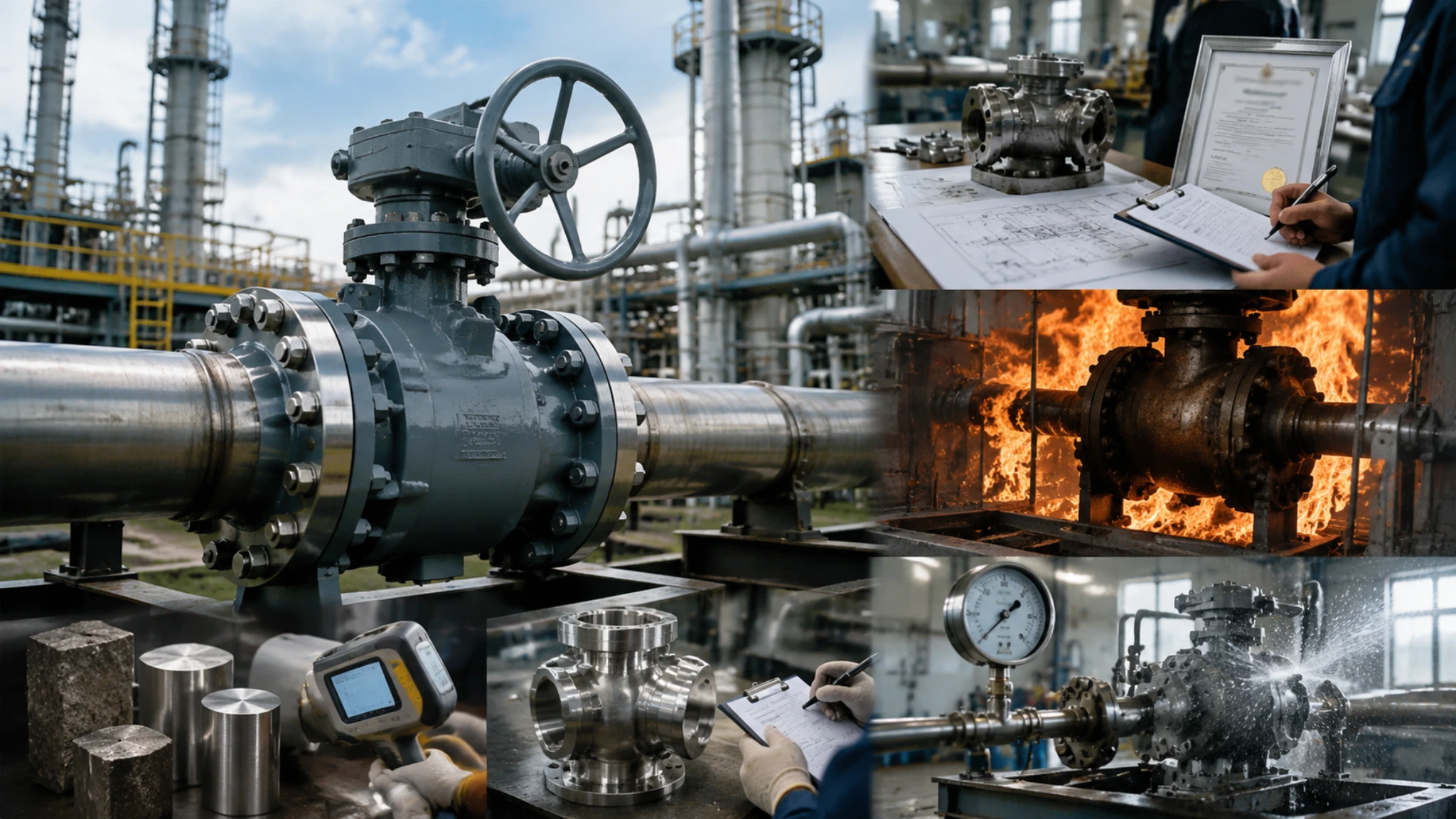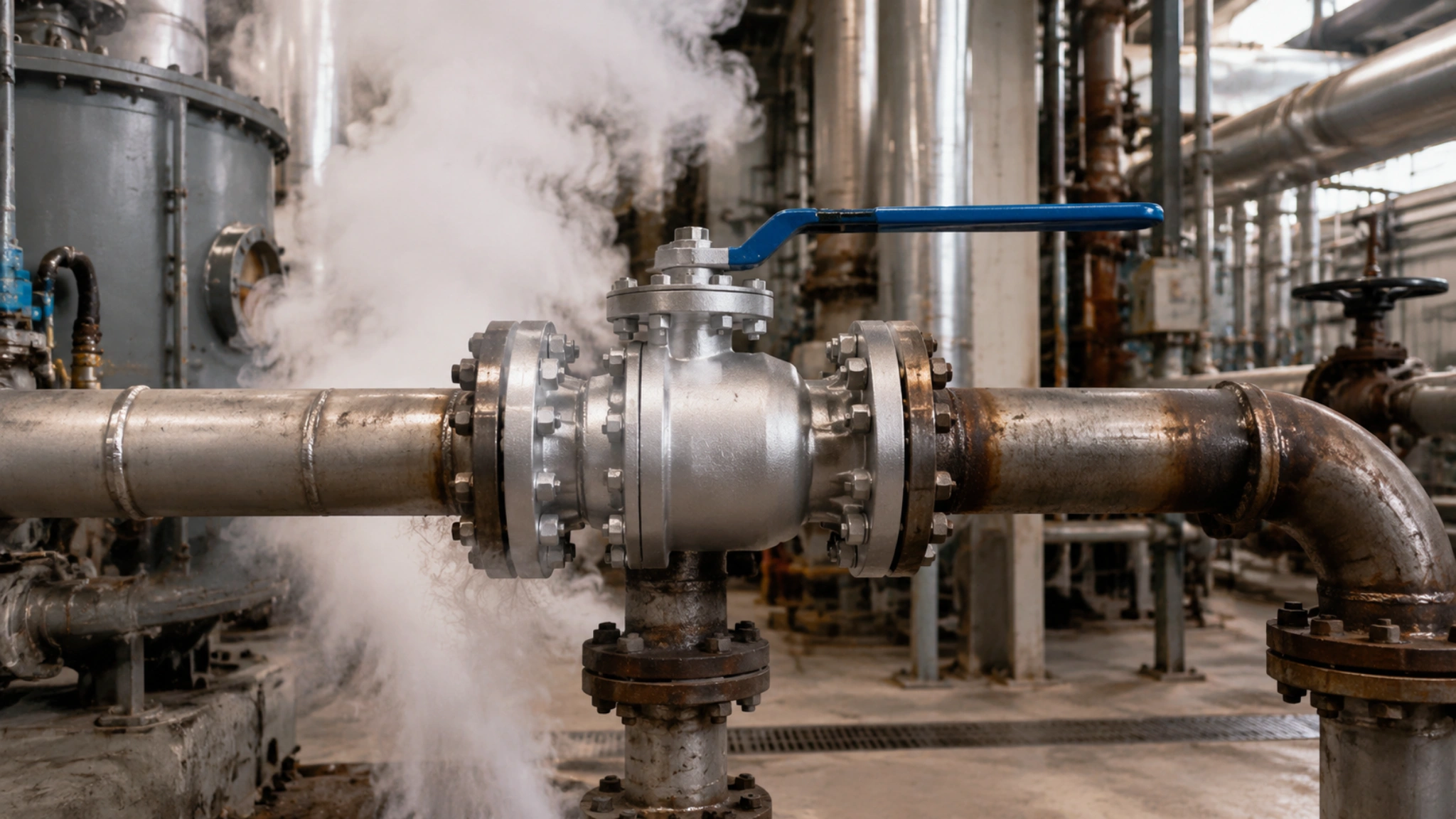
Valve sizing for steam systems differs fundamentally from liquid service. Temperature is a primary factor that determines body pressure-temperature rating, seat material, bolting grade, stem packing, and bonnet design.
Steam valve selection is not only a pressure-class decision. It requires a combined check of steam state, operating temperature, design pressure, body material derating, seat material, stem packing, bolting, and leakage acceptance requirements.
For steam service, always size the valve at the actual design temperature, not at the room-temperature pressure rating.
| Selection Checkpoint | What to Confirm | Why It Matters |
|---|---|---|
| Steam state | Saturated, wet, dry saturated, or superheated steam | Determines the actual media temperature and the suitability of soft seats or metal seats. |
| Temperature | Operating temperature and design temperature | Controls PTFE/RPTFE limits, packing life, bolting relaxation risk, and body material derating. |
| Pressure-temperature rating | ASME B16.34 rating at service temperature | Prevents using room-temperature pressure ratings in high-temperature steam service. |
| Seat material | PTFE, reinforced PTFE, carbon-filled PTFE, PEEK, or metal seat | Determines sealing reliability under heat, pressure, cycling, and particle contamination. |
| Bolting and packing | ASTM A193 B7/B16, ASTM A453 Gr.660, PTFE packing, or graphite packing | Maintains bonnet joint preload and stem sealing reliability under thermal load. |
| Leakage acceptance | ISO 5208, API 598, API 6D, or project-specific leakage class | Defines measurable leakage limits instead of relying on vague “zero leakage” claims. |
Steam Parameters
Saturated vs. Superheated Steam
Understanding the steam state is the first step in valve selection. Saturated steam is steam at the saturation temperature corresponding to a given pressure. It may be dry saturated steam or wet steam containing entrained liquid droplets.
Saturated steam temperature has a direct relationship with pressure. For engineering selection, gauge pressure should be converted to absolute pressure before reading the steam table.
Based on standard steam table values, 1.0 MPa(g) corresponds to about 184°C, 2.0 MPa(g) to about 214°C, and 3.0 MPa(g) to about 235°C.[1]
| Gauge Pressure | Approximate Saturation Temperature | Valve Selection Impact |
|---|---|---|
| 1.0 MPa(g) | About 184°C | Close to the practical upper range of standard PTFE in demanding steam service. |
| 2.0 MPa(g) | About 214°C | Soft-seat margin becomes narrow, especially with frequent thermal cycling. |
| 3.0 MPa(g) | About 235°C | Reinforced PTFE or carbon-filled PTFE may require manufacturer confirmation. |
| 3.0 MPa(g), superheated to 300°C | About 65°C above saturation | Metal seats and graphite packing should normally be evaluated as the baseline configuration. |
Superheated steam is steam heated above the saturation temperature at the same pressure. For example, 3.0 MPa(g) steam superheated to 300°C is approximately 65°C above its saturation temperature.[2]
The effect on valve selection is significant. Medium-pressure saturated steam may already be close to the practical limit of PTFE seats. Superheated steam can exceed 250°C and increase the risk of polymer creep, compression set, sealing-surface damage, and leakage growth.
If saturated steam is mistakenly treated as superheated steam, the valve may be over-specified and cost may increase unnecessarily. The reverse error is more serious. Treating superheated steam as saturated steam can cause soft seats and PTFE packing to lose sealing performance earlier than expected.
When steam conditions are ambiguous, confirm the steam state from the process datasheet before selecting the seat material.
Temperature margin above saturation is a key parameter. If the superheat margin is large, soft-seat reliability becomes less predictable, even when the nominal pressure class appears acceptable.
For steam lines above about 250°C, CARILO forged metal-seated ball valves can be considered where reliable sealing and longer maintenance intervals are required.
Further reading:
- CARILO forged metal-seated ball valves
- API 6D ball valve range
- Contact CARILO for steam service selection support
Pressure-Temperature Rating Tables
Engineers should not rely on pressure-class estimation alone. ASME B16.34 covers pressure-temperature ratings, dimensions, tolerances, materials, nondestructive examination requirements, testing, and marking for flanged, threaded, welding-end, wafer, and flangeless valves.[3]
The ASME B16.34 tables are organized by valve material, pressure class, and temperature. The rows list temperature points, while the columns list pressure classes such as Class 150, 300, 600, 900, 1500, 2500, and 4500.
Each intersection gives the allowable working pressure at that temperature. The allowable pressure generally decreases as temperature increases.
| Example Material | Pressure Class | Temperature | Approximate MWP | Selection Meaning |
|---|---|---|---|---|
| ASTM A216 WCB | Class 600 | -29°C to 38°C | 10.20 MPa | Ambient-range pressure rating only. |
| ASTM A216 WCB | Class 600 | 250°C | 8.39 MPa | Derating is already significant. |
| ASTM A216 WCB | Class 600 | 350°C | About 7.5 MPa | Do not use the ambient rating for sizing. |
| ASTM A216 WCB | Class 600 | 425°C | 5.75 MPa | High-temperature pressure margin becomes much narrower. |
For example, a Class 600 valve with ASTM A216 WCB body material has a maximum working pressure of about 10.20 MPa in the -29°C to 38°C range. It drops to about 8.39 MPa at 250°C, about 7.5 MPa at 350°C, and about 5.75 MPa at 425°C, based on publicly available ASME B16.34 pressure-temperature data.[4]
Sizing a steam valve only by its room-temperature class rating can lead to under-rating at high temperature. This may increase the risk of pressure-boundary overstress, bonnet joint leakage, gasket failure, or premature sealing problems.
Pressure-temperature verification should not stop at the valve body. The bonnet, pressure-containing joint, bolting, gasket, and end connections must also satisfy the design temperature and pressure requirements.
- Take the design pressure and design temperature from the process datasheet.
- Identify the valve body material and applicable pressure class.
- Read the ASME B16.34 allowable pressure at the design temperature.
- Confirm that the derated allowable pressure is higher than the design pressure.
- Apply the same check to the bonnet, bolting, gasket, flange, and pressure-containing joints.
For a valve installed as part of a pipeline assembly, the governing allowable pressure is the lowest-rated component after temperature derating. In high-temperature steam systems, this can be the valve, its bolting, its gasket system, or the adjoining flange rating.
Further reading:
PTFE Seat Temperature Limits
PTFE, or polytetrafluoroethylene, is one of the most common seat materials for soft-seated ball valves. PTFE has a high melting point, and engineering data often allows PTFE components to be used continuously up to about 260°C under suitable conditions.[5]
However, steam valve seats should not be selected only by the theoretical material limit. Pressure, thermal cycling, seat load, wet steam, superheat, and start-stop operation can reduce the practical margin.
For demanding steam applications, approximately 200°C is commonly treated as a conservative practical ceiling for standard PTFE soft seats unless the valve manufacturer approves a higher limit for the exact service condition.
Above this range, polymer deformation, creep, compression set, and sealing-surface damage become more likely. Reinforced PTFE, carbon-filled PTFE, TFM, or PEEK may extend the usable range in some designs, but the final selection must be confirmed against pressure, temperature, cycle frequency, and steam condition.[6]
For superheated steam around 300°C or higher, standard PTFE and reinforced PTFE seats generally do not provide enough long-term reliability margin. Metal seats, graphite packing, and suitable high-temperature bolting are normally preferred.
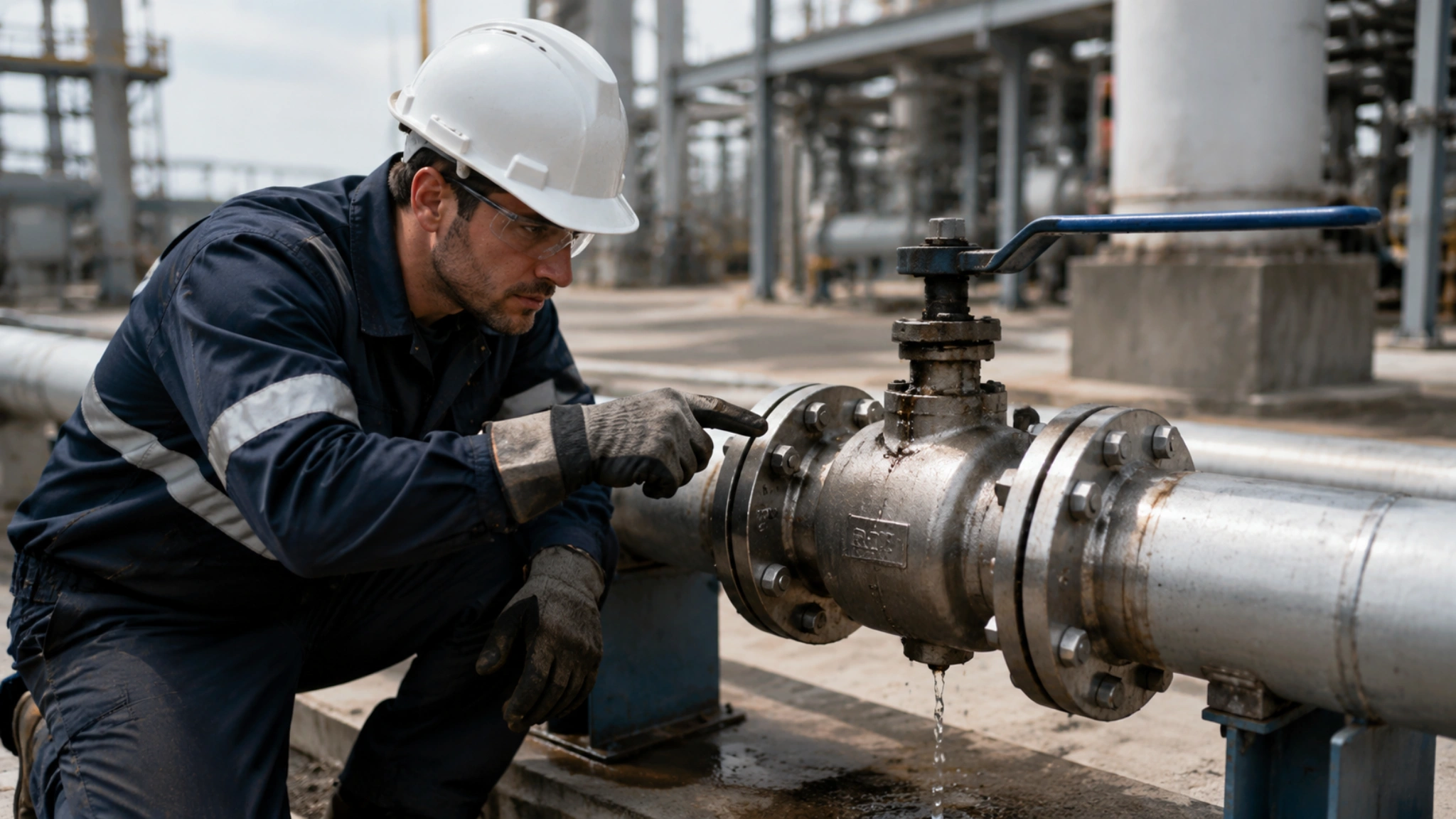
PTFE failure in steam does not always produce immediate symptoms. It may appear as gradual leakage growth as the seat loses compression recovery over time. A valve may pass a cold hydrostatic test but still leak during hot operation because seat stiffness, thermal expansion, and contact stress change at service temperature.
PTFE should be treated as a material with practical steam-service limits, not as a material that can always be used up to its nominal catalog temperature.
Further reading:
Material Derating
ASME B16.34 Derating Tables
ASME B16.34 is one of the key standards used in steel valve selection. It provides pressure-temperature rating rules and requirements for listed valve materials and pressure classes.[7]
The sizing engineer must map the maximum design temperature to the applicable ASME B16.34 temperature row and read the allowable pressure for the selected valve body material. A valve that is acceptable at ambient temperature may not be acceptable at 300°C, 350°C, or 425°C.
| Common Error | Why It Is Wrong | Correct Practice |
|---|---|---|
| Using only the room-temperature class rating | Steam temperature reduces allowable pressure. | Use the ASME B16.34 value at design temperature. |
| Checking only the valve body | Bonnet joint, bolting, gasket, and end connection may govern sealing reliability. | Check the complete pressure-containing assembly. |
| Assuming stainless steel always has a higher rating | CF8M does not automatically exceed WCB at every temperature and class. | Read the actual table value for the selected material. |
| Ignoring thermal cycling | Thermal expansion and relaxation can reduce sealing preload over time. | Review bolting, gasket, packing, and bonnet design together. |
For WCB Class 600, the standard-class rating drops from about 10.20 MPa in the ambient range to about 7.5 MPa at 350°C and about 5.75 MPa at 425°C. This reduction is too large to ignore in steam valve sizing.[8]
The correct approach is to compare the pipeline design conditions against the derated valve rating and select the pressure class, material, and construction that meet the design basis with adequate margin.
Bolting and gasket seating stress must be checked under the same high-temperature conditions. If bonnet bolts are not checked against the applicable code allowable stress and manufacturer pressure-temperature data, joint integrity may be compromised even when the body rating appears adequate.
Further reading:
CF8M High-Temperature Pressure Retention
CF8M is a cast austenitic stainless steel grade under ASTM A351/A351M. ASTM A351/A351M covers austenitic steel castings for valves, flanges, fittings, and other pressure-containing parts.[9]
CF8M is broadly comparable in service family to wrought 316 stainless steel, but engineers should not assume that CF8M always provides a higher ASME B16.34 pressure-temperature rating than WCB. CF8M is often selected for corrosion resistance, cleanliness, chloride considerations, or material compatibility, not simply for higher pressure retention.
| Material | Class | Approximate MWP at Low Temperature | Approximate MWP at 350°C | Approximate MWP at 425°C |
|---|---|---|---|---|
| ASTM A216 WCB | Class 600 | 10.20 MPa | About 7.5 MPa | 5.75 MPa |
| ASTM A351 CF8M | Class 600 | About 9.93 MPa | About 6.07 MPa | About 5.83 MPa |
Publicly available B16.34-based pressure-temperature tables show that CF8M Class 600 is about 9.93 MPa at low temperature, about 6.07 MPa at 350°C, and about 5.83 MPa at 425°C, depending on table edition and rounding method.[10]
The corrected selection logic is not “CF8M is always stronger than WCB.” The correct logic is to read the ASME B16.34 table first, then evaluate corrosion resistance, thermal cycling, sealing reliability, and lifecycle cost.
For a 3.8 MPa / 320°C steam service, Class 300 WCB may leave very little margin after derating, depending on the exact design temperature and applicable table value. Class 600 WCB provides a larger pressure margin, while CF8M may still be considered when corrosion resistance or lifecycle performance justifies it.
Do not use material reputation as a substitute for ASME B16.34 table verification.
Further reading:
High-Temperature Bolting Selection
Bolting is a frequently overlooked but critical pressure-containing component in steam ball valves. The bolting connects the body and bonnet, and it must retain sufficient preload after thermal expansion, gasket compression, and high-temperature exposure.
ASTM A193/A193M covers alloy-steel and stainless-steel bolting materials for pressure vessels, valves, flanges, and fittings for high-temperature or high-pressure service.[11]
For steam service above 300°C, ASTM A193 B7 bolts should not be selected only by habit. The allowable application temperature, allowable stress, relaxation behavior, assembly lubricant, and torque procedure should be confirmed through the applicable engineering code, valve manufacturer data, and project specification.
For higher-temperature service, frequent thermal cycling, stainless-steel pressure parts, or applications where preload retention is critical, ASTM A193 B16 or ASTM A453 Gr.660 may be considered.
ASTM A453 covers Grade 660 and other high-temperature bolting materials for use such as fasteners for pressure vessels and valve flanges.[12]
The main risk is progressive preload loss. At sustained high temperature, bolt relaxation can reduce clamp load on the bonnet gasket and eventually cause leakage along the joint face.
| Bolting Material | Typical Use Logic | Selection Note |
|---|---|---|
| ASTM A193 B7 | Common alloy-steel bolting for many pressure-boundary applications | Do not assume suitability without checking service temperature, stress, and project code. |
| ASTM A193 B16 | Often evaluated for higher-temperature service requiring better strength retention | Useful where thermal cycling and preload retention are important. |
| ASTM A453 Gr.660 | High-temperature bolting with expansion behavior comparable to austenitic stainless steels | Consider for selected high-temperature or stainless pressure-boundary joints. |
Valve designs should also consider thermal expansion effects. An extended bonnet or suitable stem extension can help reduce heat transfer to the packing area and improve stem sealing reliability.
Assembly practice is also important. Bolt finish, thread condition, lubrication, torque sequence, and re-torque procedure directly affect achieved preload. Always follow the valve manufacturer’s assembly torque specification and the plant’s high-temperature bolting procedure.
Further reading:
Special Design Features
Graphite Packing as an Alternative
Stem packing is the critical sealing element that prevents steam leakage along the stem-to-body clearance path. Conventional PTFE packing may be suitable for many low-temperature services, but in demanding steam service it can lose elasticity, develop compression set, or require more frequent adjustment.
Graphite packing, including flexible graphite or reinforced graphite packing, is widely used for high-temperature valve and steam applications because it provides better thermal stability than PTFE packing. For example, published graphite valve packing data commonly lists high steam-temperature capability, subject to product grade and manufacturer limits.[13]
Graphite valve packing is also described by major packing suppliers as suitable for high-temperature and high-pressure steam service, with self-lubricating and dimensionally stable characteristics depending on construction.[14]
However, graphite packing is not a simple one-for-one replacement for PTFE packing. The gland load, packing set arrangement, stem finish, live-loading option, and adjustment procedure should be reviewed with the valve manufacturer or packing supplier.
Graphite packing is electrically conductive and can support static dissipation through the stem interface. However, it should complement, not replace, a formally verified anti-static design where API 6D, project specifications, or flammable-service requirements apply.
For outdoor steam installations subject to thermal cycling and ambient condensation, graphite packing with a properly designed stem chamber and suitable drainage arrangement is usually more durable than PTFE packing.
Further reading:
When to Specify Metal Seats
Metal seats should normally be considered when steam temperature, cycling frequency, or particle contamination makes soft-seat performance uncertain.
- Temperature: when steam temperature continuously exceeds the conservative practical range of standard PTFE or approaches the upper limit of reinforced PTFE, metal seats should be evaluated as the baseline option.
- Cycling: frequent start-stop operation accelerates thermal fatigue, compression-set development, and sealing-surface damage in polymer seats.
- Particle contamination: industrial steam may carry rust scale, weld slag, or water-scale solids that can embed into soft seats and cause abrasive wear.
- Leakage requirement: when the project requires a defined leakage class under severe temperature and cycling conditions, metal-seat construction may provide a more stable long-term selection.
The hardness and thermal stability of metal seats help resist thermal fatigue and particle-related damage. Stellite hardfacing, tungsten carbide coating, chromium carbide coating, or other hardfacing systems can improve resistance to wear and erosion, depending on the valve design and service condition.[15]
CARILO metal-seated ball valves can be configured with hardfaced sealing surfaces for high-temperature or particle-laden steam service.
The metal-seat decision should not be treated as a temperature-only decision. It requires a combined assessment of temperature, cycling frequency, pressure, particle load, leakage class, operating torque, actuator sizing, and maintenance access.
When the service is borderline, metal seats are often the safer lifecycle choice for high-temperature steam.
Metal-seated valves usually cost more than standard soft-seated valves, but they can reduce maintenance frequency and unplanned downtime in severe steam service. The cost comparison should include spare parts, insulation removal, depressurization, labor, production loss, and safety risk.
Further reading:
Extended Bonnet Requirements
The bonnet is a pressure-containing component connecting the valve body and stem. Its design directly affects stem-packing temperature and sealing reliability in high-temperature steam service.
Standard bonnet designs place the stem packing chamber closer to the hot media. Heat conducts through the stem and bonnet, raising packing chamber temperature and accelerating packing aging.
An extended bonnet increases the axial distance between the packing chamber and the high-temperature flow path. This lengthens the heat transfer path and can help reduce packing temperature, depending on valve size, insulation arrangement, ambient condition, stem design, and operating temperature.
Extended bonnets are especially useful where:
- steam temperature is high enough to shorten packing life;
- the valve operates outdoors with repeated thermal cycling;
- the actuator or gearbox requires additional thermal protection;
- the project requires longer maintenance intervals for stem sealing;
- the valve is installed in an insulated steam line where heat soak around the stem area is significant.
For high-pressure and high-temperature steam service, extended bonnets are often specified by project standards or manufacturer recommendations. They should be reviewed together with packing material, stem finish, gland design, bolting, and actuator temperature limits.
Further reading:
Testing and Leakage Acceptance
Leakage performance should be stated using recognized test standards and acceptance rates. ISO 5208 specifies examinations and tests used to establish the pressure-boundary integrity of an industrial metallic valve and to verify valve closure tightness and the structural adequacy of the closure mechanism.[16]
API 6D defines requirements for the design, manufacturing, assembly, testing, and documentation of ball, check, gate, and plug valves for pipeline and piping systems in the petroleum and natural gas industries.[17]
For steam ball valves, avoid vague claims such as “zero leakage” unless the test method, test pressure, test medium, duration, temperature condition, and acceptance rate are clearly defined.
A more accurate statement is that the valve should meet the specified leakage rate under the applicable test standard and project requirement.
| Risky Wording | Better Wording | Why It Is Better |
|---|---|---|
| Zero leakage | Meets ISO 5208 Rate A/B, API 598, API 6D, or the project-specified leakage class | Defines a measurable acceptance criterion. |
| High-temperature certified | Designed and manufactured in accordance with ASME B16.34 for the stated pressure-temperature rating | Avoids vague certification language. |
| Suitable for steam | Suitable for the stated steam pressure, temperature, steam state, leakage class, and cycling frequency | Connects selection to actual service conditions. |
| Metal seats are mandatory | Metal seats should be evaluated as the baseline option for severe steam conditions | Avoids an absolute claim while still guiding conservative selection. |
Ball valve sizing for steam service is a balance between pressure-temperature derating and material limits. Steam parameters define the temperature boundary for seats and packing. ASME B16.34 pressure-temperature tables define allowable working pressure for the selected material and pressure class. Graphite packing, suitable bolting, metal seats, and extended bonnets become important once soft-seat limits are exceeded.
A mismatch at any point in this selection chain can cause early leakage or reduced maintenance life. A valve body that passes the pressure check may still leak if the bolting loses preload at high temperature. A metal-seated valve may still experience accelerated packing aging if the stem chamber runs too hot.
Contact CARILO for forged metal-seated ball valves designed for severe steam service, with graphite packing, ASME B16.34-compliant pressure-temperature selection, ISO 5208 leakage testing options, and material certificate support.