
Liquid Hydrogen Cryogenic Valve Supplier | -253°C Rating, Low Leakage, ASME Certified
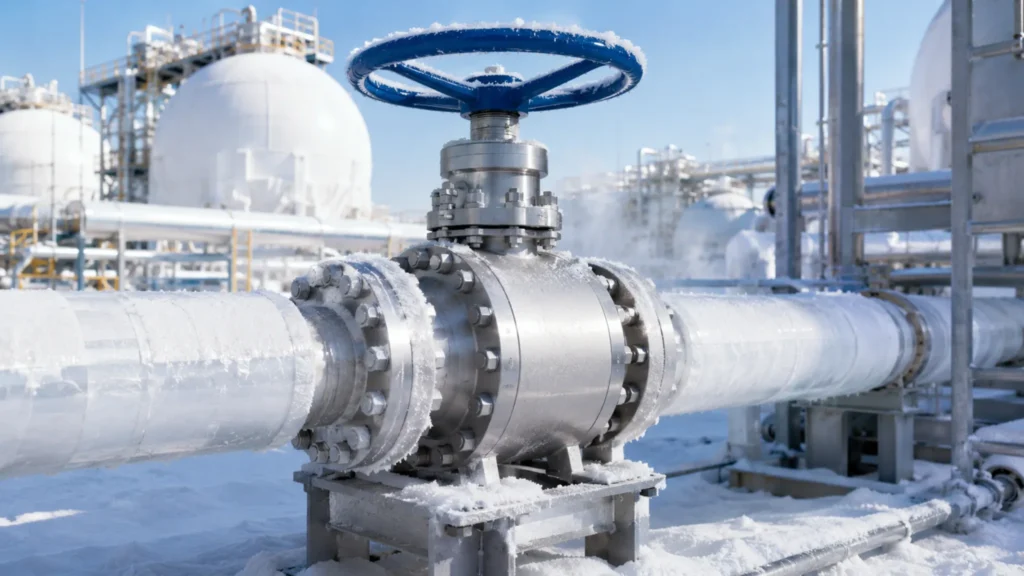
At -253°C liquid hydrogen service, every 1°C drop magnifies material brittleness. These 9 H4 sections break down the supplier selection rules for LH2 cryogenic ball valves. Extreme Cold Engineering Liquid Hydrogen Materials Liquid hydrogen boils at -253°C, which is 20 kelvin on the absolute temperature scale. At that temperature, valve body materials must remain austenitic […]
Cryogenic Piping Design Standards | Thermal Contraction, Insulation, Stress Analysis
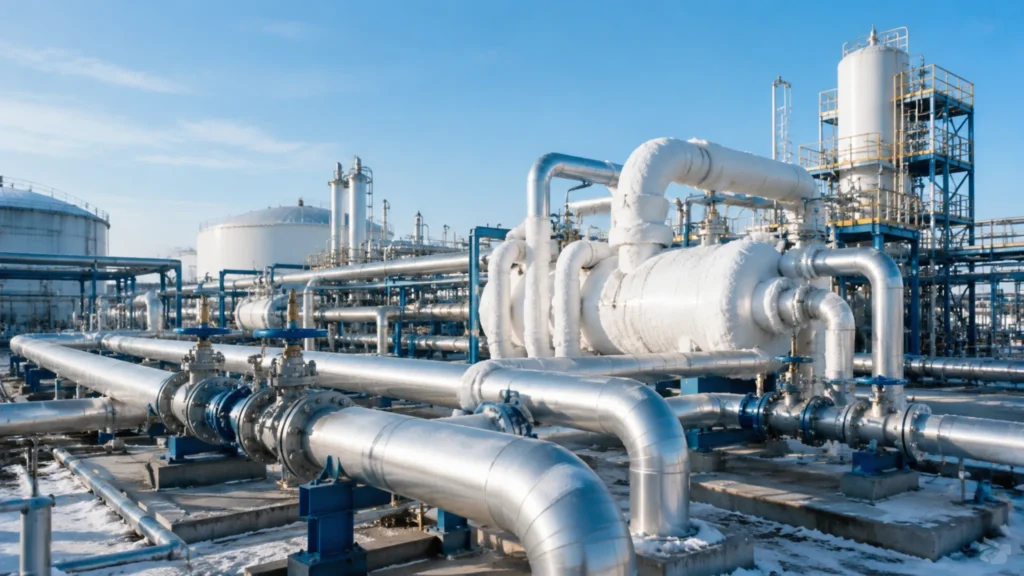
11 years in cryogenic piping, from 160,000 m?tanks to FSRUs. 80% of site rework I see traces back to cold-shrinkage miscalculation or wrong insulation. These 9 sections cover 3 cold-shrinkage solutions, 3 insulation methods, 3 stress-analysis rules. Handling Cold Shrinkage Expansion Loop Design 304L stainless steel, cooled from +20癈 to -196癈, contracts by roughly 0.36% […]
Cryogenic Valve Selection Guide | LNG Application, Leakage Standards, Material Match
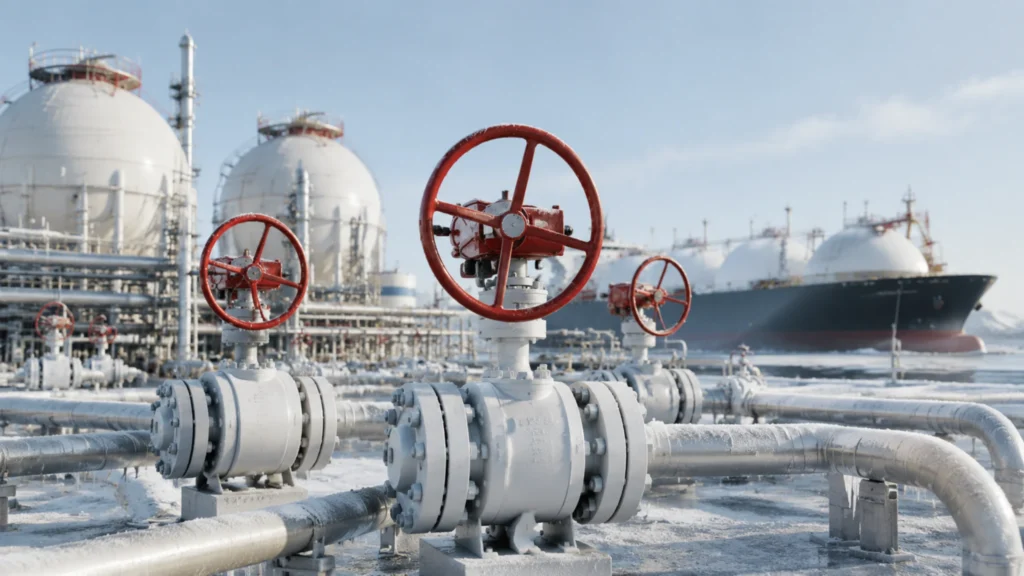
11 years in cryogenic valves, from -46°C carbon steel to -196°C LNG stainless steel. 90% of the selection pitfalls I see come from undersized bonnets or mismatched material grades. These 9 sections are my go-to client notes: 3 LNG scenarios, 3 standards, 3 material families. LNG Site Needs Storage Tank Lines “Valves in the storage […]
DBB Compact Manifold Weight Advantage | Skid Design, Space Efficiency, Transport Cost
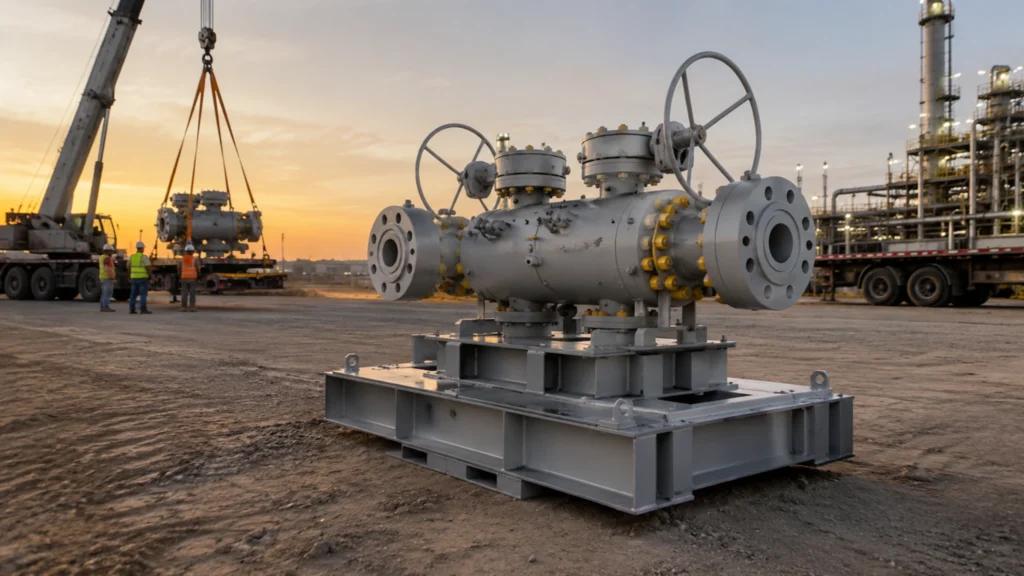
DBB compact manifolds cut weight 40-60% vs traditional three-valve sets. Class 600 1/2″-4″ units drop 95 kg to 38 kg. This article breaks the weight advantage into 3 dimensions and 9 angles, showing on-site benefits. Skid Design Benefits Lighter Steel Frames The “lightweight” benefit of DBB compact manifolds hits the skid frame steel consumption first. […]
DBB Compact Manifold vs Standard Valves | Space Saving, Weight Reduction, Cost

DBB compact manifolds save 30% to 50% length, 30% to 40% weight, and 20% to 30% total cost versus standard three-valve trains. This guide covers 9 sections across 3 dimensions (size, cost, safety) to quantify the practical gains. Size and Weight Smaller Footprint DBB compact manifolds save 30% to 50% footprint versus traditional three-valve trains. […]
DBB Compact Manifold Applications | Oil&Gas, Petrochemical, Pipeline Safety

DBB manifolds cover 3 oil and gas sites (wellhead, offshore, FPSO), 3 refinery applications (high-temp, dosing, sampling), and 3 pipeline safety scenarios (isolation, pigging, instrument). This guide reviews 9 field-tested deployments. Oil & Gas Sites Wellhead Control DBB compact manifolds deploy between the wing valve and master valve on the Christmas Tree at the wellhead, […]