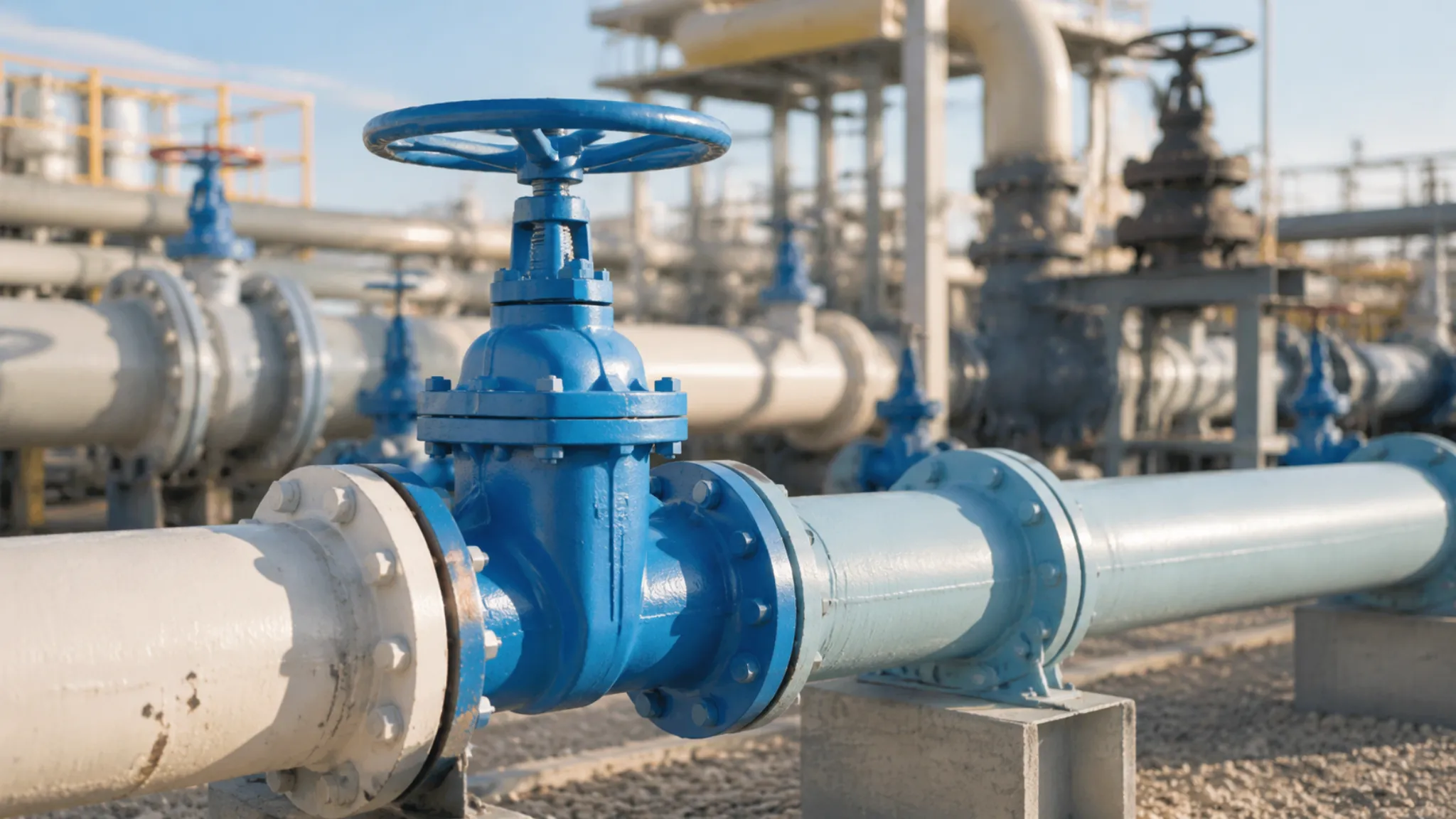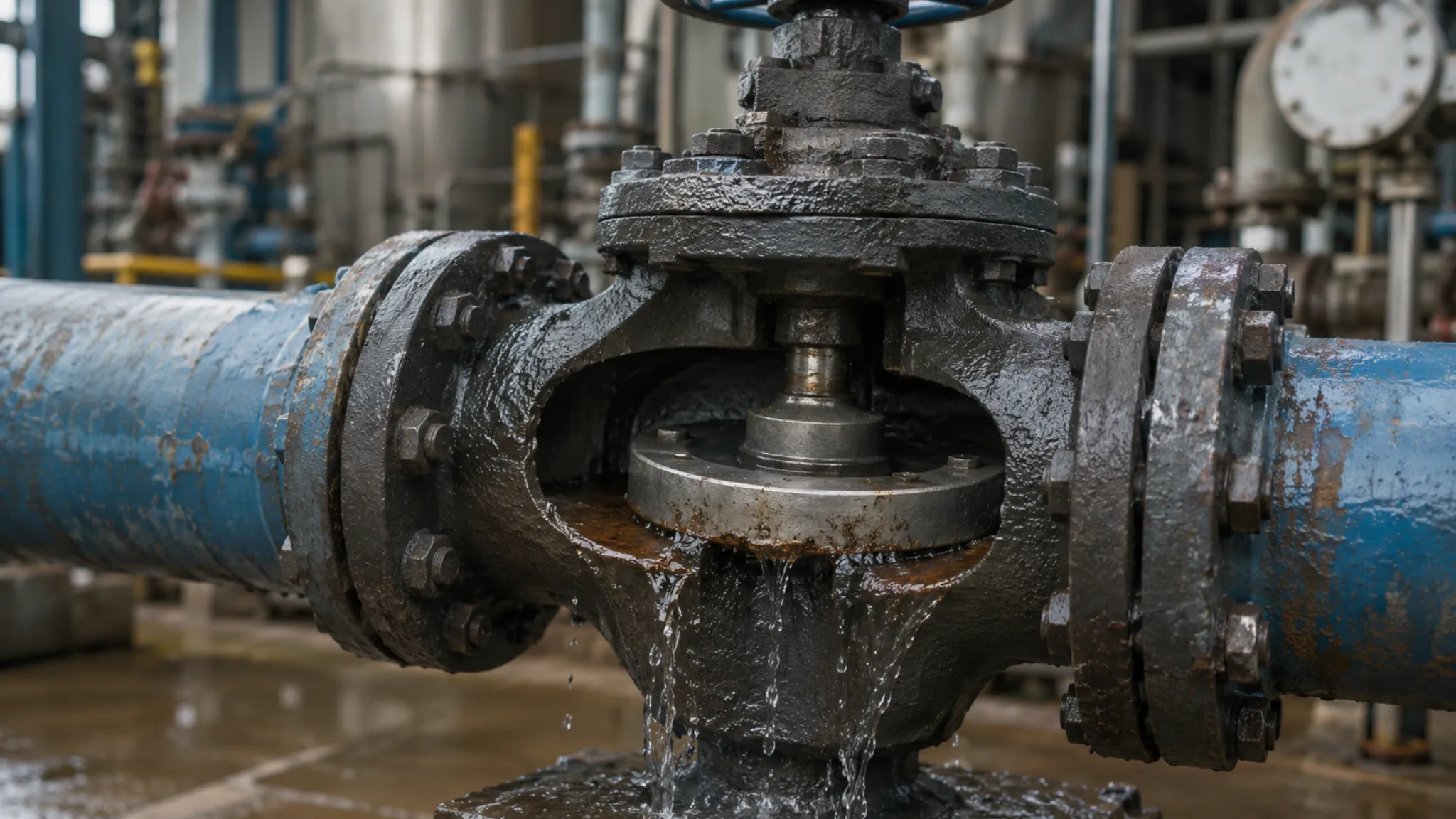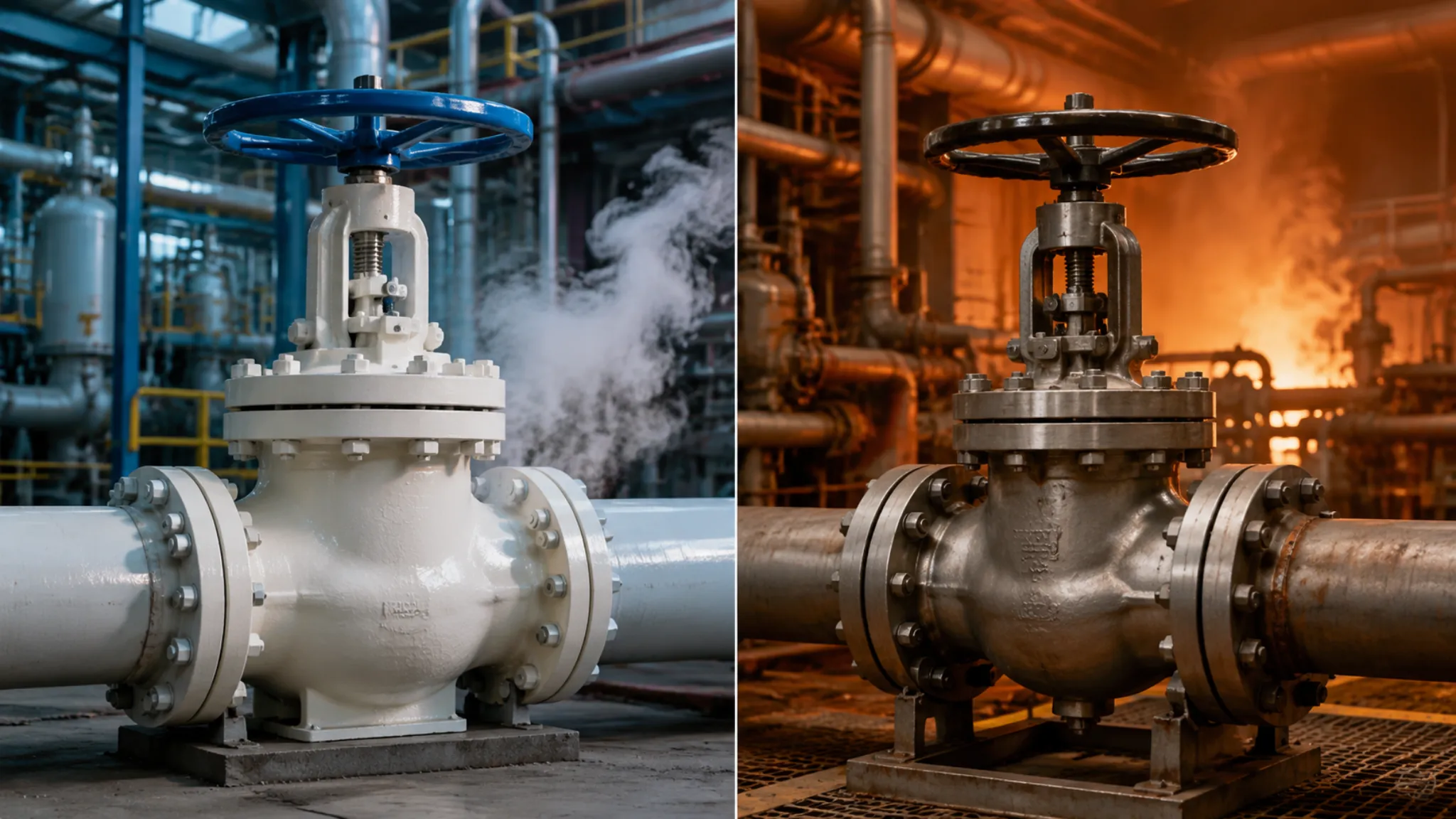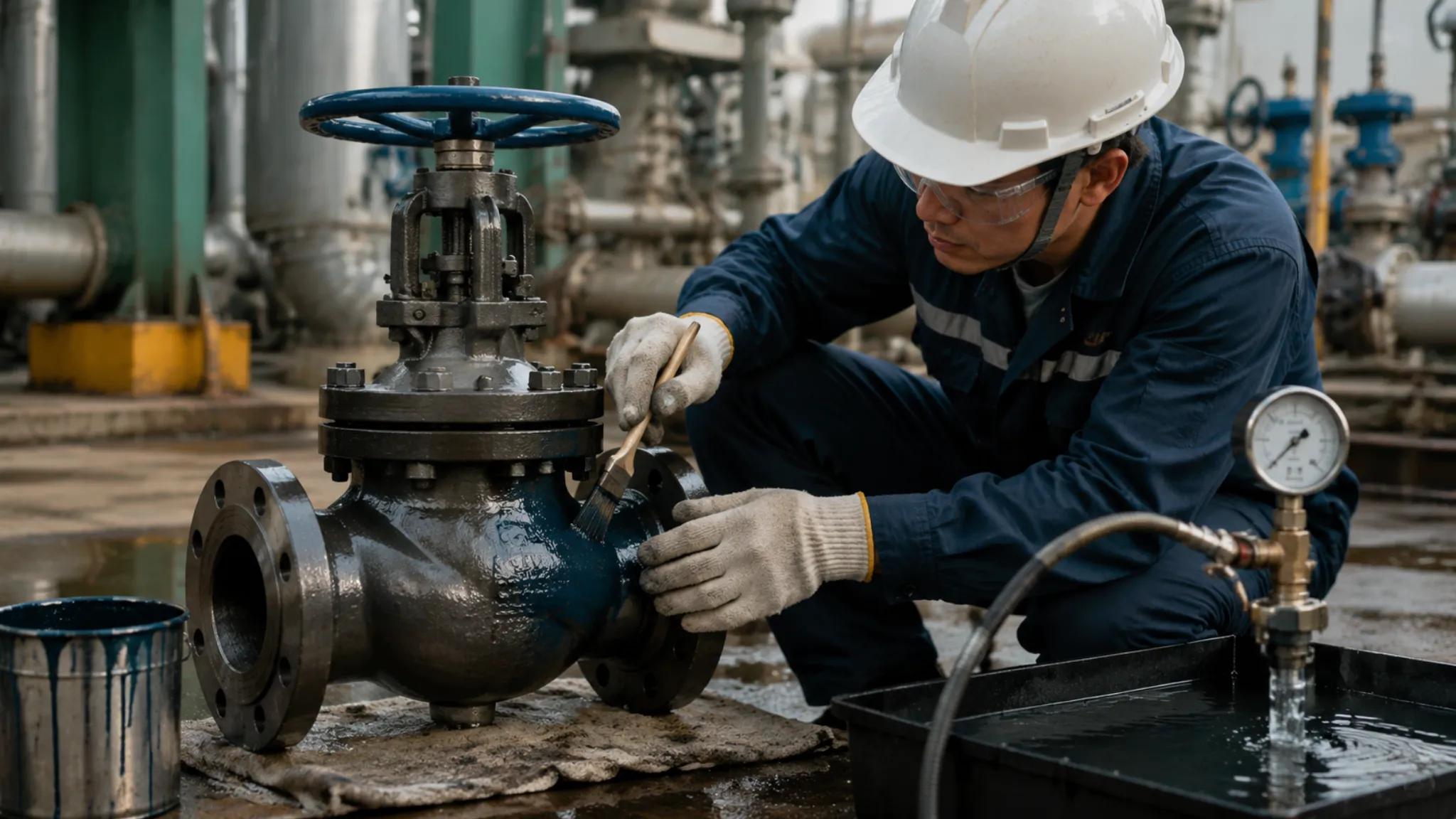
When selecting a ball valve for corrosive media, the valve body should use Hastelloy C-276 to withstand strong acids above 50% concentration, while the seat should be made of PFA-lined material rated to 260°C to ensure zero leakage.
It is also recommended to test stem torque once every 5,000 open-close cycles to maintain long-term reliability.
Corrosion Resistance
Forms of Corrosion
Once water contains as little as 500 ppm chloride ions, the wall of an ordinary 304 stainless steel pipe can develop tiny pits about 0.15 mm deep after just 72 hours of continuous exposure. Water trapped inside those pits cannot escape, and the pH can quickly drop to around 1.5.
Large amounts of iron ions dissolve into the water, and a sound pipe wall can be fully penetrated within weeks. In chemical plants, material testing is often done by immersing metal coupons in a 6% ferric chloride solution. For every 5°C increase in water temperature, the material’s resistance to localized dissolution drops sharply, and the protective threshold quickly collapses.
The joint where the metal ball meets the plastic seat inside a ball valve is one of the most failure-prone areas. Liquid gets trapped in stagnant gaps only 0.02 to 0.1 mm wide. In this dead zone, oxygen is depleted, and the oxide passivation film on the metal surface can no longer remain stable.
- Dead edges beneath flange gaskets
- Contact surfaces between soft seats and metal components
- V-ring grooves at the bottom of the stem
- Threaded joints where pipes are tightly screwed together
In chemical plants, material selection often focuses on the critical crevice corrosion temperature. 2205 duplex stainless steel begins to fail at around 20°C in standard test solutions. By contrast, 254SMO super austenitic stainless steel, with 6.1% molybdenum, raises that threshold to above 35°C.
The high heat from welding can turn good steel into scrap. When temperature stays in the 450–850°C range, the carbon in the steel combines with chromium, the element responsible for corrosion resistance. Large quantities of chromium carbide crystals then precipitate along grain boundaries.
- Legacy-standard fittings with 0.08% carbon
- Rough castings that have not been solution annealed at 1040°C
- Weld joints repeatedly built up with excessive current
Once chromium content at the grain boundaries falls below 12%, corrosion resistance is effectively lost. Experienced buyers often specify 304L or 316L ultra-low-carbon grades instead, keeping carbon below 0.03% by weight so that destructive chromium carbide precipitation is minimized.
When slurry moves through a pipe at speeds above 3 m/s, it becomes disastrous for valves. The freshly formed anti-corrosion film on the metal surface, only about 0.01 microns thick, can be stripped away by sand in less than half a second. The exposed metal then suffers both acid attack and constant abrasive wear.
To address this, plants often use supersonic spraying to apply a 0.25 mm tungsten carbide coating to the surface of the valve ball. With a Vickers hardness above HV1200, the coating can withstand severe cutting wear even in pipelines carrying heavy sand-laden media.
Serious problems also occur when dissimilar metals are fastened together and immersed in saltwater. In seawater lines, a titanium alloy valve bolted to an ordinary carbon steel flange can develop a natural potential difference of about 0.8 volts.
- Stainless steel seawater pipes connected to brass fittings
- Titanium plates touching steel supports near pickling tanks
- Pipe sections buried in high-salinity alkaline soil
The carbon steel, acting as the anode, corrodes 3 to 5 times faster than normal. If the titanium alloy has a large surface area and the carbon steel a small one, the weaker steel section can perforate within days. For this reason, installers must place a 3 mm rubber isolation gasket between the flanges before tightening the bolts.
Condensing lines at the top of refinery towers often crack without warning. The pipes operate under about 2.5 MPa of internal pressure while also carrying cooling water containing 30–50 ppm chloride ions.
Under the microscope, the cracks appear as branched, tree-like fractures running through the metal grains. From the outside, the pipe may show no visible thinning or deformation. If the water temperature rises from 50°C to 80°C, the growth rate of these branched cracks can multiply.
Natural gas wellheads are constantly exposed to high concentrations of hydrogen sulfide. When acidic water reacts with iron, it releases atomic hydrogen. These tiny hydrogen atoms force their way into crystal lattice gaps up to 0.5 mm deep within the steel.
Once dozens of hydrogen atoms collect in microscopic voids, they combine into hydrogen gas pockets. The expansion pressure can reach thousands of atmospheres, creating stepped blisters inside the steel plate. Factory qualification testing therefore requires immersion in acidic water at pH 2.7 for 96 hours without cracking.
Material Selection
On cooling-water circulation lines around chemical plants, WCB carbon steel ball valves are common. Once ambient relative humidity exceeds 70%, an unprimed cast steel surface can oxidize by about 0.01 mm per month. If the line carries dilute sulfuric acid at a concentration as low as 0.05%, the inner wall can develop pinhole corrosion the size of a fingernail in less than three days.
Switching to CF8 cast 304 stainless steel, which contains about 18% chromium and 8% nickel, can solve this in some services. In nitric acid below 65% concentration at room temperature, the pipe wall can remain intact for five years without scaling. But if it is mistakenly installed in a hydrochloric acid line, yellow-brown acid-wash bubbles can appear on the surface within two hours.
CF8M, which corresponds to 316 stainless steel, usually costs about 30% more per ton than 304. That extra cost mainly comes from the added 2–3% molybdenum. In coastal refinery systems handling seawater with about 30,000 ppm salinity, that molybdenum helps protect the flow passage from rust formation.
Under the high-pressure, high-salinity conditions of offshore drilling platforms, ordinary stainless steel is no longer sufficient. 2205 duplex stainless steel uses a roughly 50/50 austenite-ferrite microstructure, giving it a yield strength of about 450 MPa, more than twice that of 316 stainless steel.
For even harsher chloride brine lines, 2507 super duplex stainless steel is required. Its PREN value exceeds 40, and with about 25% chromium, it can withstand concentrated chloride water mixed with abrasive sediment even at 60°C.
At the bottom of reactors handling 98% sulfuric acid, metal selection reaches the top end of the hierarchy. Hastelloy C-276 is often used, with raw material prices 5 to 8 times those of ordinary stainless steel. Containing about 16% molybdenum and 15% chromium, it loses less than 0.05 mm of thickness over a full year in boiling sulfuric acid.
In processes for refining high-octane gasoline, highly toxic hydrofluoric acid may be used. At high concentration, it can even attack glass. Monel 400, with about 63% nickel and 30% copper, forms a dense nickel fluoride protective film on its surface when exposed to hydrofluoric acid. In plant service, Monel 400 valves can run continuously for three years while keeping leakage rates below 0.01%.
In many equipment warehouses, workers still rely on a yellowed material reference chart. Maintenance crews often shine a flashlight on the raised cast markings on the valve body and compare the alloy composition line by line.
| Cast Grade | Common Shop Name | Nickel (Ni) Content | Molybdenum (Mo) Content | Maximum Service Temperature |
|---|---|---|---|---|
| WCB | Carbon steel casting | < 0.5% | None | 425°C |
| CF8 | 304 stainless steel | 8.0–11.0% | None | 816°C |
| CF8M | 316 stainless steel | 9.0–12.0% | 2.0–3.0% | 816°C |
| A890 4A | 2205 duplex steel | 4.5–6.5% | 2.5–3.5% | 315°C |
| CW12MW | Hastelloy C-276 | Balance (about 57%) | 15.0–17.5% | Above 1000°C |
For aqua regia recovery lines where multiple waste acids are mixed in one tank, even specialty metals may fail. In such cases, plants often use a ductile iron or carbon steel outer shell and mold a 3–5 mm PTFE lining into the flow path under high pressure. This white PTFE lining can handle media from pH 0 strong acids to pH 14 strong alkalis.
Standard PTFE, however, begins to soften and darken around 150°C. Once the seat deforms, leakage begins. In high-temperature pickling tanks, plants upgrade to PFA, whose tighter molecular structure raises the heat resistance limit to 200°C. Although PFA resin costs several hundred yuan more per kilogram, it typically saves three to four shutdown repairs per year.
In coal washing plants, blackwater pipelines carry coal slag harder than stone. Alumina ceramic balls are sintered at 1500°C, achieving a surface hardness around HRA 88. Under slurry flow at 5 m/s, ceramic components can easily outlast cast alloy steel by two to three years.
In chlorination workshops at seawater desalination plants, pure titanium short pipes and ball valves are often kept in stock. When industrial titanium contacts oxygen in air, it forms a titanium dioxide film only tens of nanometers thick in one-thousandth of a second. Even when washed continuously by concentrated sodium hypochlorite, its annual corrosion rate stays below 0.01 mm.
Operating Environment
At 25°C, 98% sulfuric acid stored in an ordinary carbon steel tank forms a thick layer of iron sulfate on the surface. This passivation layer allows a carbon steel ball valve to lose less than 0.1 mm of thickness in a year.
But once steam is injected into the jacket and the acid inside reaches 80°C, that protective shell dissolves completely in about two minutes. Boiling strong acid can eat through a pipe wall designed for ten years of service in just half a month. Once fluid temperature exceeds 120°C, the molecular chains of standard PTFE linings begin to soften and deform.
A common engineering rule of thumb says: for every 10°C increase in temperature, the chemical corrosion rate of acidic media roughly doubles.
That is why plants often have no choice but to upgrade the entire valve cavity to PFA lining, despite the added cost of about 500 yuan per kilogram.
Carbon steel behaves well in 98% sulfuric acid, but if rainwater enters the line and dilutes the acid to 20%, the situation changes instantly. The diluted sulfuric acid strips away the protective film in seconds. Iron begins dissolving at a rate of up to 5 mm per day, and a 10 kg valve can be eaten hollow in just three days.
Trace elements hidden in a water analysis report can also be deadly. Softened water from a pure-water system may look clean, but once it contains just 50 ppm chloride ions, everything changes.
- A 304 stainless steel pipe wall in 50 ppm chloride water can develop 0.1 mm-deep pits in less than two weeks
- 316 stainless steel, thanks to molybdenum, can barely push chloride tolerance up to 200 ppm
- In pretreatment lines for seawater desalination where chloride exceeds 1000 ppm, only 2205 duplex stainless steel is reliable
Each step upward on the pressure gauge multiplies gas penetration power. At natural gas wellheads containing 5% hydrogen sulfide, ordinary sour-service carbon steel may still be acceptable when line pressure stays around 0.1 MPa.
But in downhole gas production at 35 MPa, those corrosive gas molecules behave like bullets driven into a chamber. Atomic hydrogen is forced into the metal lattice under enormous pressure equivalent to thousands of atmospheres. A thick steel wall that once resisted tensile loads well can become more than ten times as likely to develop internal microcracks.
NACE MR0175 clearly requires that, in high-pressure sour-gas service, valve body hardness must be strictly controlled below HRC 22.
Once hardness rises above that threshold, metal brittleness increases sharply, and high-pressure gas can trigger catastrophic sulfide stress cracking.
When slurry from a pump room moves through a pipe at just 1.5 m/s, friction against the pipe wall is minimal. But once a high-pressure slurry pump accelerates acidic water containing 20% quartz sand to 8 m/s, the impact on the throttling area inside a ball valve becomes as destructive as industrial sandblasting.
The newly formed anti-corrosion film on the metal surface, about 0.05 microns thick, can be stripped away in less than 0.1 second. The exposed fresh metal is then hit by both chemical attack and physical erosion, causing the wall to lose as much as 0.2 mm in one day.
As fluid passes through the bore of the ball, the sudden narrowing of the passage creates an abrupt pressure drop. A pipeline carrying 2 MPa at the inlet may drop to below 0.5 MPa through the restriction. Dissolved gas in the liquid then flashes into bubble-like cavities in an instant.
- After passing through the restriction, pressure recovers and the bubbles collapse violently against the metal surface
- The resulting microjets can reach speeds of 400 m/s
- Local impact pressure can exceed 1000 MPa
This cavitation produces dense honeycomb-like pitting across the metal surface. Under repeated microjet bombardment, 316 stainless steel can lose surface grains even faster than it would under strong acid attack. In applications with extreme pressure drop, experienced engineers often install three-stage pressure reduction orifice plates downstream of the ball valve, limiting the pressure drop in each stage to within 0.5 MPa.
Buried oil pipelines are in constant contact with microorganisms in the soil. In wet clay with moisture content above 20%, large colonies of sulfate-reducing bacteria thrive. In oxygen-poor soil, these bacteria consume sulfate ions and release corrosive hydrogen sulfide.
- Coastal saline-alkali soil with resistivity below 1000 ohm·cm is especially dangerous
- Bacterial byproducts can create local electrochemical fluctuations of about 0.5 volts
- Even a 3 mm asphalt anti-corrosion coating becomes ineffective if it has a tiny scratch
Before lowering the pipeline into the trench, installers often bury several 20 kg magnesium sacrificial anodes nearby. Connected to the buried valve body by copper wire, the lower-potential magnesium corrodes in place of the carbon steel.
In oil production, the ratio of oil to water in produced fluid often fluctuates. When water cut stays below 20%, the viscous crude forms a continuous oily film over the pipe wall, shielding it from chloride ions and carbon dioxide in the water.
But as the well approaches depletion, water cut can exceed 60%. Water becomes the continuous phase, while oil is reduced to droplets suspended in it. The pipe wall is then exposed directly to brine containing 500 ppm free CO₂.
As carbon dioxide dissolves in the produced water, it forms carbonic acid. A carbon steel pipe that once had a 10-year service life can see its corrosion rate jump from 0.05 mm/year to 2.5 mm/year in a single day. Even expensive corrosion inhibitors costing 50 yuan per liter may fail, leaving full replacement with stainless steel as the only solution.
Seat Material
PTFE
A pipeline carrying 98% sulfuric acid at 25°C and 2 m/s puts pure PTFE on display at its best. The material shows extreme chemical inertness, while its surface static friction coefficient remains as low as 0.04. A plant operator can open a DN50 Class 150 ball valve smoothly with one hand using only 45 N·m of torque.
But as the temperature rises past 120°C, the long-chain molecules within the milky-white polymer begin to shift microscopically under heat. Under 2.0 MPa of pressure, the seat undergoes about 10% cold flow deformation. The material gradually extrudes through the tiny gap of only a few tenths of a millimeter between the ball and the body.
- Stem operating torque rises by more than 50 N·m
- Sealing face thickness is reduced by more than 0.25 mm
- A visible white whitening ring appears at the seat edge
- Pressure-holding tests show leakage of 5 drops per minute
ASME B16.34 places strict limits on pressure differential for soft-seated service. The maximum working differential pressure for pure PTFE is effectively limited to 1.0 MPa. In LPG lines where instantaneous back pressure fluctuates sharply, even a 0.5-second gas surge can tear the already thinned polymer seat lip.
The safe working range for pure PTFE is -29°C to 150°C. In northern winters, outdoor exposed lines may fall to -40°C. At that point, the material’s Shore hardness rises from D55 to D65, and the hardened plastic loses the elasticity needed to conform to the microscopic grooves of a metal ball with a surface roughness of Ra 0.8 microns.
In machine shops, PTFE seats are turned on CNC lathes to a tolerance of ±0.05 mm. Even an interference compression error of 0.1 mm can cause the assembled ball to seize completely. Workers therefore tighten the surrounding flange bolts diagonally using a constant torque of 15 N·m.
A 0.3 mm pure PTFE film will show chlorine penetration within 48 hours under constant gas impact at 0.6 MPa. Replacing it with a solid seat increases section thickness to 5 mm, effectively blocking permeation paths through the polymer’s internal microvoids.
- Seat outer diameter machined with 1.5 mm interference
- A V-shaped disc spring embedded at the back to provide continuous compensation force
- Three 0.2 mm-deep concentric labyrinth grooves turned into the contact face
- Surface polished manually to Ra 0.4 microns
Low-grade components made with 20% recycled scrap PTFE often show a faint yellow tint when held against the light. Their tensile strength can fall from the normal 25 MPa to just 12 MPa. In nitric acid flowing at 1.5 m/s, the surface can develop visible pits 2 mm deep in under three months.
Plant maintenance logs from chlor-alkali operations show that, under standard conditions, PTFE seats can reach a service life of 100,000 cycles. But on high-frequency lines operating more than 50 pressurized openings per day, lip wear can increase by about 0.02 mm per month. Maintenance staff therefore carry precision calipers to monitor seat bore enlargement.
PTFE is not suitable for liquid fluorine or chlorine trifluoride, which can instantly break its carbon-fluorine bonds. But in 20% sodium hydroxide at 80°C for 120 hours, the material shows no swelling or discoloration at all. After 96 hours of immersion, its mass change remains below 0.01%.
- Check elastic recovery within 5 seconds using a fingernail indentation test
- Measure section thickness at multiple points with calipers, keeping variation below 0.03 mm
- Shine a strong flashlight through the material to ensure there are no internal black inclusions
- Apply blue marking paste to the ball and perform a full 360-degree contact test
PTFE has a very high linear expansion coefficient of 12 × 10⁻⁵ /°C, nearly 10 times that of ordinary carbon steel. In pipelines exposed to day-night swings of 50°C, the seat can undergo about 0.15 mm of thermal movement within the metal cavity.
At the loading arm of a hydrochloric acid transfer line handling 1000 L/min, a DN100 ball valve may need to perform 12 emergency shutoffs per hour. A 2.5 kg pure PTFE seat must absorb the full impact of an 8 MPa water hammer wave, yet its inherent resilience allows it to dissipate that energy within just 0.1 second.
API 598 requires high-pressure sealing tests. Under 1.5 times rated pressure, water is forced into the sealed cavity. During a 60-second hold, the PTFE seat remains tightly backed by the metal support ring, and the leakage gauge stays fixed at 0 mL.
Liquid ammonia lines are also prone to abnormal pressure buildup inside the cavity. Residual liquid ammonia can vaporize at 20°C, tripling the internal pressure in seconds. A properly designed PTFE seat will retreat toward the line by about 0.1 mm once the differential exceeds 0.5 MPa, allowing the trapped pressure to vent.
When replacing a damaged PTFE seat, mechanics often use a soft copper drift to separate the body halves. The removed seat may show dense scratches about 0.15 mm deep. Residual rust particles in the pipeline, moving at 3 m/s, abrade the plastic continuously, turning a once-smooth sealing face into a rough worn surface.
During installation of a new seat, workers apply a 0.5 mm layer of specialty fluorinated grease to the outer ring. The cover nuts are tightened in three crosswise steps using a powered wrench set to 25 N·m. After 48 hours of static rest, the internal stress in the PTFE is reduced by about 80%, and valve operation becomes noticeably smoother.
RPTFE
At 150°C, pure PTFE becomes as soft as warm cheese. When maintenance crews dismantle a DN80 reactor bottom valve, a once 5 mm thick white sealing ring may already have been compressed down to 2.1 mm. By adding 15% micron-scale glass fiber to PTFE powder, the material’s compression resistance can increase by roughly three times.
Glass-filled RPTFE is no longer pure white, but has a slightly frosted tone. When cut on a lathe, it produces a noticeably crisper sound. Tensile testing on the shop floor shows the composite can withstand up to 18 MPa before fracture, enabling it to endure sudden fluid shocks in service.
In steam-traced lines operating around 180°C, saturated steam at 0.8 MPa mixed with condensate repeatedly scours the valve cavity at 15 m/s. Ordinary plastic seats may fail in less than half a month, but 15% glass-fiber-reinforced RPTFE can run steadily for 8 months and 12 days under the same conditions.
When line pressure reaches 4.0 MPa, manufacturers often use 25% carbon fiber-filled RPTFE. After 100 hours under compression, dimensional shrinkage remains within 0.05 mm.
Different fillers completely change seat behavior. Because glass fiber and carbon fiber grades are often confused on purchase lists, engineers frequently keep comparison data posted right at the workstation.
| Filler Content | Maximum Service Temperature | Creep Reduction | Stem Torque (DN50) |
|---|---|---|---|
| 15% Glass Fiber | 200°C | Reduced to 3.2% | 55 N·m |
| 25% Carbon Fiber | 220°C | Reduced to 1.8% | 62 N·m |
| 15% Graphite | 210°C | Reduced to 2.5% | 48 N·m |
RPTFE filled with carbon powder or graphite also has natural self-lubricating properties. In pipelines circulating 400 tons per day of 30% hydrochloric acid containing trace crystalline solids, graphite-filled seats can reduce dry-friction coefficient to as low as 0.06.
At catalytic cracking units in petrochemical plants, pneumatic ball valves may cycle once per minute. After 250,000 cycles in six months, a black carbon-fiber seat may show only 0.03 mm of wear at the ball contact surface when scanned by a coordinate measuring machine.
On assembly lines, workers press blue alignment paste-coated RPTFE rings into stainless steel grooves. Because filled grades have less ductility, the press must apply about 40% more vertical force than with ordinary plastic to fully seat the outer lip against the metal shoulder.
For Class 300 ball valves, hydrostatic testing requires 7.5 MPa. During a 180-second hold, glass-filled seats show no seepage at all.
The higher hardness of filled materials does come with one side effect: slight abrasion to the metal ball. Stainless steel balls plated with 0.02 mm hard chrome will show a faint polished metallic band after about 5,000 cycles.
To reduce friction losses, pipefitters often polish the ball to a mirror-like Ra 0.2 finish. Since 55 N·m is already difficult to handle manually, installers often add a 24:1 worm gearbox to the flange.
On hydrofluoric acid storage tank drain lines, any glass-fiber-filled RPTFE is strictly prohibited. Free fluoride ions can destroy silicate glass fibers within 48 hours. In these cases, black carbon-fiber-filled grades are used instead, with weight loss staying below 0.2% even after 300 hours of immersion.
In outdoor chlor-alkali plants operating at -30°C, RPTFE still shows excellent resistance to low-temperature embrittlement. Even when struck accidentally with a 1.5 kg hammer, carbon-filled material may show only a 0.5 mm white mark without cracking.
Before startup, pipelines are purged with compressed air carrying welding residue at rates up to 800 m³/h. Reinforced seats with hardness raised to Shore D65 can withstand direct impact from 0.2 mm metal particles.
For plant retrofit projects, the cost of a DN65 RPTFE ball valve is often only about 85 yuan higher than a standard plastic-seated valve. Since one maintenance shutdown may consume 4 hours of labor from 3 pipefitters, the additional cost is often recovered within the first week of leak-free operation.
In storage, each RPTFE seat is usually vacuum-packed individually in 0.1 mm aluminum foil bags. The base material remains sensitive to UV exposure, and if left uncovered in sunlight for six months, elongation at break can drop by 20 percentage points.
PEEK
At the bottom of atmospheric and vacuum distillation towers, heavy oil lines often run continuously at 250°C and 6.0 MPa, with hot asphaltene-rich fluid moving at 4 m/s. Even 25% carbon-fiber-filled RPTFE seats can fail here in less than four hours, softening into a sticky mass.
By contrast, a PEEK seat taken from storage has a light brown, leather-like appearance. When tapped with an adjustable wrench, it gives off a metallic ring almost like brass. Its Shore hardness approaches D85, and even a hard thumbnail cannot leave a visible mark.
In the machine shop, CNC operators switch to coated alloy tooling to machine a 120 mm PEEK rod. Ordinary carbon steel tools can chip in fewer than 20 passes. Bore tolerances are held to a strict ±0.02 mm.
When the purchasing department reviews the BOM for a DN80 ball valve, a single set of PEEK seats may cost as much as 2,400 yuan, about 15 times the price of standard plastic parts.
But plant managers calculate the economics differently. In lines circulating 500 tons per day of 98% sulfuric acid at 220°C, ordinary soft seats leak and force repeated shutdowns. After upgrading to the light-brown specialty polymer, the line may run a full year without a single drop of acid leakage, saving every 5,000 yuan shutdown repair cost.
Incoming inspection reports for PEEK components often record values like these:
- Tensile strength reaching 100 MPa
- Continuous temperature resistance up to 260°C
- Water absorption below 0.1% in 24 hours
Its high hardness also creates a problem: friction rises sharply. During assembly, a worker bracing a DN50 body may see a half-meter torque wrench climb to 120 N·m without moving the ball. For this reason, valves are often fitted from the factory with a 50:1 worm gearbox.
In pipelines carrying 260°C superheated steam at 8.0 MPa, many ordinary plastics hydrolyze and fail. PEEK, however, can remain in steam for 3,000 hours without any loss of mechanical performance.
A common shop-floor trick during assembly is to place the light-brown sealing ring into a 150°C heated oil bath for 30 minutes.
While the polymer is still slightly expanded and softened, a 15-ton hydraulic press quickly pushes the outer ring into the stainless steel body step. After cooling naturally for 2 hours, the shrunken polymer locks into the surrounding metal groove as though it had grown there.
In coal-chemical blackwater lines carrying 0.1 mm ash particles, all-metal seats may be too costly and slow to source. PEEK offers a practical alternative. With 20 operations per day, its hard lip sweeps coal ash toward the ball cavity rather than letting it damage the sealing face.
During annual overhauls, technicians focus on three critical dimensions:
- Wear at the sealing bore must not exceed 0.15 mm
- The rear disc spring must retain 1.2 mm of compression allowance
- Surface roughness at the load-bearing face must remain within Ra 0.4 microns
On gas-tightness test benches, nitrogen is pressurized to 10.0 MPa and forced into the closed cavity. Because the material is relatively hard, microscopic conformity is not perfect at first. Operators often cycle the handwheel 15 times before testing so that the ball can press a 0.2 mm-wide seating band into the polymer.
Low-cost PEEK tubing from general hardware markets is often injection-molded and contains invisible residual stress. In high-pressure corrosive service, fine cracks 0.5 mm deep may appear in just three months. Reputable manufacturers instead use extruded solid rod stock and machine it slowly on a lathe.
Even then, the semi-finished part cannot be used immediately. It must be placed in an electric oven at 200°C for 24 hours. This long annealing process stabilizes the internal crystalline structure, preventing cracking when the line experiences sudden 50°C temperature drops.
Long-Term Reliability
Allow Enough Torque Margin
In industrial lines carrying 30% sodium hydroxide, everything may appear stable from the outside, but the internal PTFE seat is under constant chemical attack. By day 180, its friction coefficient can silently rise from 0.04 to above 0.12.
A valve factory test sheet listing 100 N·m of torque reflects only ideal assembly-line conditions. Engineers may initially select an aluminum pneumatic actuator rated at 110 N·m. But after 8 months of service, free chloride ions in the line may have already created tiny 0.2 mm pits on the ball surface.
When a pitted 316L stainless steel ball begins rubbing against a hardened, swollen PTFE seat, 110 N·m suddenly becomes insufficient. If plant air pressure drops from 6.0 bar to 4.5 bar during peak demand, the actuator piston may stall mid-stroke, leaving concentrated caustic solution washing continuously through a half-open gap.
The maintenance list caused by valve sticking can be lengthy:
- Remove an 80 mm ball valve and acid-clean it with a high-pressure water jet
- Replace the full set of FKM O-rings
- Refit with a new actuator using a 125 mm cylinder bore
- Spend 12 hours cleaning up leaked corrosive chemicals
Leaving sufficient mechanical margin in actuator selection is a basic rule of industrial design. For suspensions with 5% solids, the usual 1.3 safety factor is not enough. A ball valve requiring 100 N·m in pure water may need 150 N·m, and in media containing sand or crystallizing solids, the actuator may need to be increased to 200 N·m.
A 380V AC electric actuator may have overload protection set to trip at 115% of rated current. When scale buildup inside the valve causes a sudden resistance spike, locked-rotor current can reach three times normal value. The thermal relay cuts power within 2 seconds, and the red alarm light begins flashing on the control panel.
Torque calculation in engineering workshops must account for multiple parameters:
- Medium operating temperature (-20°C to 150°C)
- Pipeline design pressure (1.6 to 4.0 MPa)
- Elastic memory decay of the seat material
- Switching frequency (10 cycles per day or 1 cycle per month)
- Minimum plant air pressure during demand valleys (4.0 bar)
If a standard stainless steel ball is hard-coated with 0.3 mm tungsten carbide, surface hardness can jump from HRC 20 to above HRC 65. That hard shell behaves almost like sandpaper, scraping off salt crystals from the seat every time the valve turns. But doing so can push torque demand from 50 N·m up to 130 N·m.
Single-acting cylinders that rely on six high-carbon steel springs lose nearly 40% of their thrust by the end of the spring stroke. If actuator sizing is based on that minimum end-of-stroke force, the resulting cylinder can become very large.
A DN100 PN16 flanged ball valve fitted with a large single-acting cylinder may weigh close to 85 kg. Pipe supports may need reinforcing channel steel every 1.5 m to prevent distortion, and each exhaust stroke can release about 2.5 liters of oil-laden compressed air into the atmosphere.
Another approach is to slow the drive system down and multiply force through gearing. A gear train that originally opened the valve in 15 seconds may be replaced with one that takes 30 seconds, allowing a four-stage planetary gear system to amplify the motor’s modest input into more than 800 N·m at the output shaft.
At that point, the strength of the mechanical connection itself becomes critical. Valve stems are typically 16–25 mm in diameter and often made of 17-4PH precipitation-hardening stainless steel. Applying 800 N·m through a small keyway area creates severe stress, and even stems with yield strength above 1040 MPa can develop invisible fatigue microcracks after repeated full-load torsion.
Engineers must therefore review the temperature derating curve of each material carefully. Modified PTFE such as TFM1600 can withstand 10 MPa at 20°C without plastic deformation. But once the line carries 120°C corrosive steam, its compressive strength may drop sharply to 2.5 MPa. A seal that expands under heat and clamps the ball tightly makes cold-state torque values almost meaningless.
Engineering acceptance sheets often include parameters such as:
- Maximum allowable torsional stress of the stem
- ISO 5211 actuator flange dimensional tolerance
- Number of spline teeth and machining depth
- Motor insulation class (Class F or Class H)
A properly selected overload protection clutch is critical. Once torque exceeds the physical limit, the clutch disconnects the mechanical link. Its three brass shear pins are designed to break at 1.1 times the set torque, allowing the motor to spin free while the stem stops. A few inexpensive brass pins can save a 30,000-yuan specialty alloy valve body from being torn apart.
On the valve factory test bench, workers may connect 0.5 MPa of compressed air to a newly assembled unit. A dial torque wrench at the stem shows 45 N·m. But once the line is filled with dense brine containing 20% sodium chloride, the hydraulic pressure can force the ball hard against the downstream seat. A seal that was evenly loaded on both sides during dry testing now bears severe one-sided compression.
The extra friction caused by differential pressure can be dramatic. On a 150 mm full-bore ball valve with a liquid pressure difference of 0.8 MPa, the fluid can push a 12 kg solid metal ball hard against one seat. Overcoming that one-sided friction may require the motor to deliver an additional 75 N·m.
Understanding MTBF
On pipe racks in chemical plants, operators may inspect lines carrying 98% sulfuric acid every 4 hours. A batch of standard stainless steel ball valves purchased in March last year may begin leaking brownish acid through the stem packing in less than 45 days.
A DN50 valve that costs only 850 yuan may have to be scrapped roughly every 1,200 operating hours. Once downtime, 2.5 tons of lost raw material, and late-night labor for three mechanics are included, the hidden cost of each replacement can exceed 5,500 yuan.
By contrast, another workshop may run 30% hot caustic lines for three years without touching a single fastening bolt. Their heavy-duty Hastelloy C-276 ball valves cost 6,800 yuan each, yet they may still remain leak-free after more than 15,000 cycles. The factory test certificate clearly states an MTBF of over 25,000 hours.
When evaluating how long equipment can survive in harsh service, purchasing engineers typically focus on hard criteria such as:
- Annual corrosion rate of the medium (less than 0.05 mm/year)
- Temperature resistance of the sealing material (continuous 260°C service)
- Porosity in the valve body casting (less than 0.01% by flaw detection)
- Fatigue life of the spring assembly (50,000 cycles under pressure)
Putting common material combinations side by side makes maintenance economics much clearer.
| Valve Material Combination | Suitable Corrosive Medium | Purchase Price (DN50) | MTBF | Annualized Cost |
|---|---|---|---|---|
| 316 Stainless Steel + Standard PTFE | Dilute nitric acid (<10%) | 1200 yuan | Approx. 2,000 hours | 5250 yuan (including labor) |
| 2205 Duplex Steel + Carbon-Filled PTFE | Chloride wastewater (300 ppm) | 3500 yuan | Approx. 8,500 hours | 3500 yuan |
| Hastelloy + PEEK Seat | 98% sulfuric acid / hot caustic | 8800 yuan | Approx. 30,000 hours | 2570 yuan |
An 8,800-yuan specialty alloy ball valve can remain safely installed in a high-risk line for a full 40 months. A cheap valve may force a shutdown every 90 days. Over the course of a year, the cost of spare parts and lost production can easily exceed the price of three top-grade valves.
Ordinary 304 stainless steel, when exposed to free chloride ions, can lose its nanometer-thin passivation film within 24 hours. The once-smooth machined ball surface may soon be covered with pin-like pits up to 0.5 mm deep.
Once the ball is covered in pits, the rotating surface turns into a kind of industrial rasp. A PTFE seat that should have lasted five years may develop a 0.2 mm-wide groove after only 500 cycles, and 1.6 MPa corrosive liquid can then jet straight through it.
To extend service life, manufacturers often make subtle changes to sealing structure. They may pack the stem gland with five V-rings of specialty fluororubber and add disc springs at the top. When the lower elastomer shrinks by 0.1 mm after long exposure to 150°C, the spring automatically releases 30 N of preload to maintain sealing.
When experienced mechanics read foreign technical manuals, they look closely at destructive limit tests such as:
- 100,000 on-off cycles under 0.6 MPa differential pressure
- 50 full thermal shock cycles between 200°C and room temperature
- Helium leak rate below 10⁻⁶
- Stem torque variation within 15% over 36 months
Leakage does not just mean spare parts. It can also lead to severe environmental penalties. Last August, one plant leaked 50 liters of heavy-metal plating waste after a casting blowhole in a poor-quality ball valve ruptured. Removing and treating 30 m³ of contaminated soil cost an additional 120,000 yuan in hazardous-waste disposal fees.
Those dry operating-hour figures on procurement sheets can save a plant from countless problems later. Spending an extra 4,000 yuan on a high-reliability ball valve with graphite fire-safe design and an anti-blowout stem can buy more than 10,000 hours of peace of mind.
Factory Testing
On the plant manager’s desk, the shipment folder for a specialty ball valve designed for 98% sulfuric acid may run to 45 pages. Open to page three and the material inspection report shows heat number XH-8902, with 15.8% molybdenum and 3.2% tungsten in the Hastelloy C-276 melt.
Even when the paperwork looks flawless, inspectors still verify the body blank with a handheld spectrometer resembling an oversized infrared thermometer. Two seconds after the trigger is pulled, the screen may display 57% nickel in green digits. Only then does the inspector stamp an identification number into the side of the 18 kg metal casting.
The assembled industrial ball valve is then moved to the hydrotest station and clamped between blind flanges fitted with thick rubber gaskets. A 3 kW test pump forces water into the cavity until the mechanical gauge reaches 2.4 MPa, equivalent to a water column 240 meters high.
According to API 598, the body shell must hold 2.4 MPa for 120 seconds with not a single drop seeping through the outer casting surface. Otherwise, the casting must be rejected and remelted on the spot.
Once shell strength is confirmed, the internal PTFE seat is tested next. The ball is closed, 1.76 MPa of high-pressure clean water is applied from one side, and the other side is left open with a dry blue test paper attached. After 60 seconds, if the paper shows a water mark larger than 2 mm in diameter, the entire 12,000-yuan valve has to be disassembled and rebuilt.
But stopping high-pressure water does not guarantee gas-tightness. For high-risk chemical plant orders, the test shop must also perform a 6 bar low-pressure air leakage test. Workers hoist the full valve into a transparent glass tank containing 2 tons of water and continuously feed dry industrial compressed air into the cavity.
- Underwater observation time is fixed at 3 minutes
- No pinpoint bubbles are allowed from the stem packing
- The body joint flange must show absolutely zero leakage
- If a chain of fine bubbles appears, all 20 valves from that batch are held back from shipment
For extreme services such as phosgene or 70% perchloric acid, simple underwater bubble checks are not precise enough. Manufacturers then bring in a 450,000-yuan helium mass spectrometer leak detector. Helium is charged into the evacuated valve, and a probe resembling a searchlight scans along the metal joints at 1 cm per second, capable of detecting leakage as low as 10⁻⁶ mbar·L/s.
Installing a cheap ball valve in a strong-acid line without helium leak-test data is like running blind through a minefield. No operator can know which weld or joint might start venting toxic gas next month.
The tighter the seal, the harder the ball turns, so the workshop then moves into torque mapping. Under 0.6 MPa of internal air pressure, the tester slowly rotates the stem with a digital torque wrench. The display may show 42 N·m at breakaway, then fall back to 15 N·m when the ball reaches full open.
The complete force curve from 0° open to 90° closed is automatically plotted by the system and printed out. When the valve finally reaches the chemical plant 300 kilometers away, pipeline engineers can use that curve to select a pneumatic actuator rated at 60 N·m, confident it will neither stall nor apply enough force to twist off the stem.
After two full days of testing, all those procedures are condensed into the EN 10204 3.1 material certificate and mechanical test report shipped with the valve. The A4 document carries the handwritten signatures of three quality inspectors and a 12-digit anti-counterfeiting trace code that can track the material back to a steel heat from three years earlier.
The chemical plant buyer locks that stack of ink-smelling documents in a filing cabinet, and in return gains the confidence of not being woken up by emergency repair calls for the next three years. A corrosion-resistant valve that has survived 2.4 MPa hydrotesting, passed helium leak testing, and been matched to a full torque curve has already defined the stability of the next 4,000 days and nights the moment it leaves the factory.