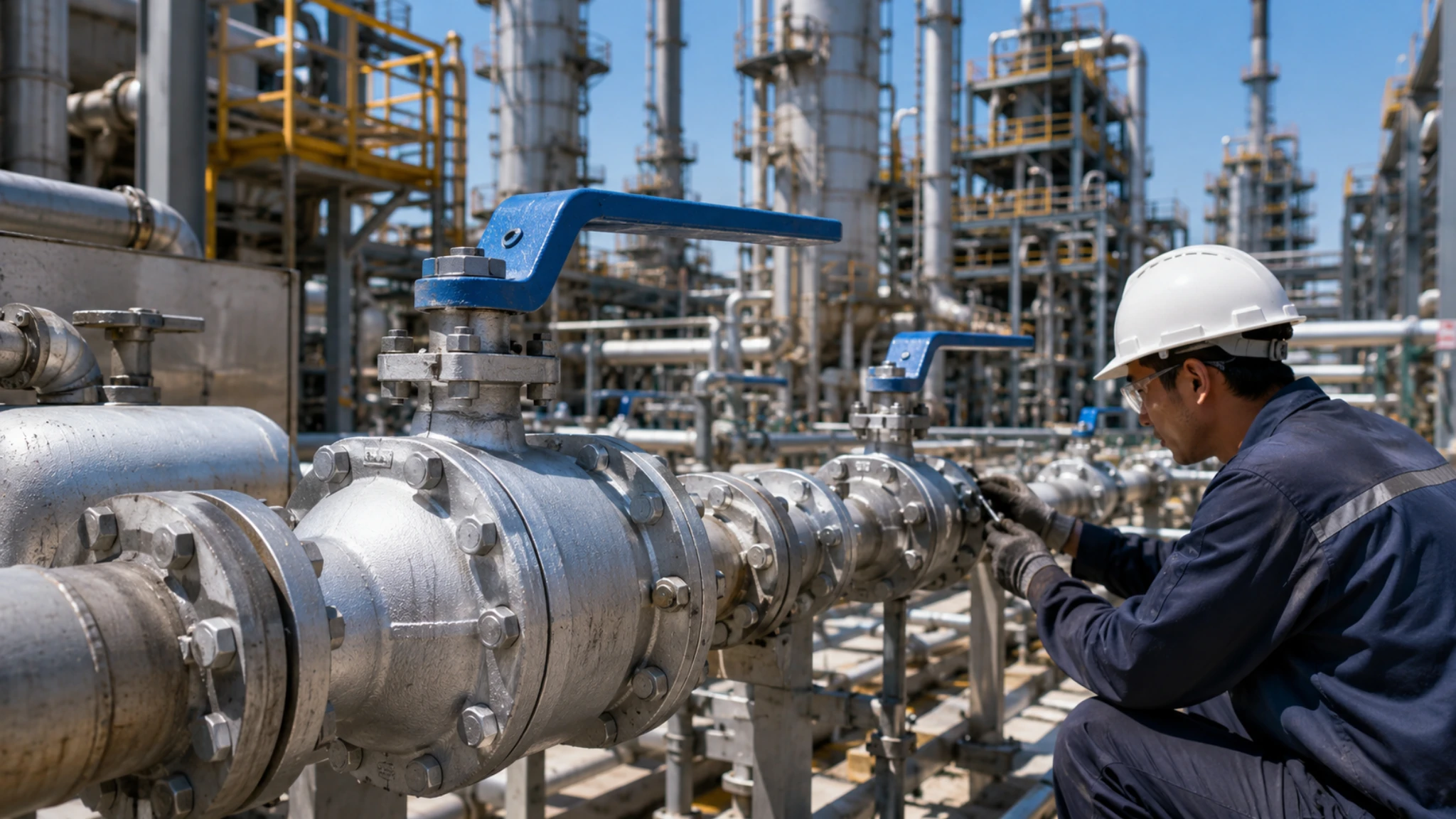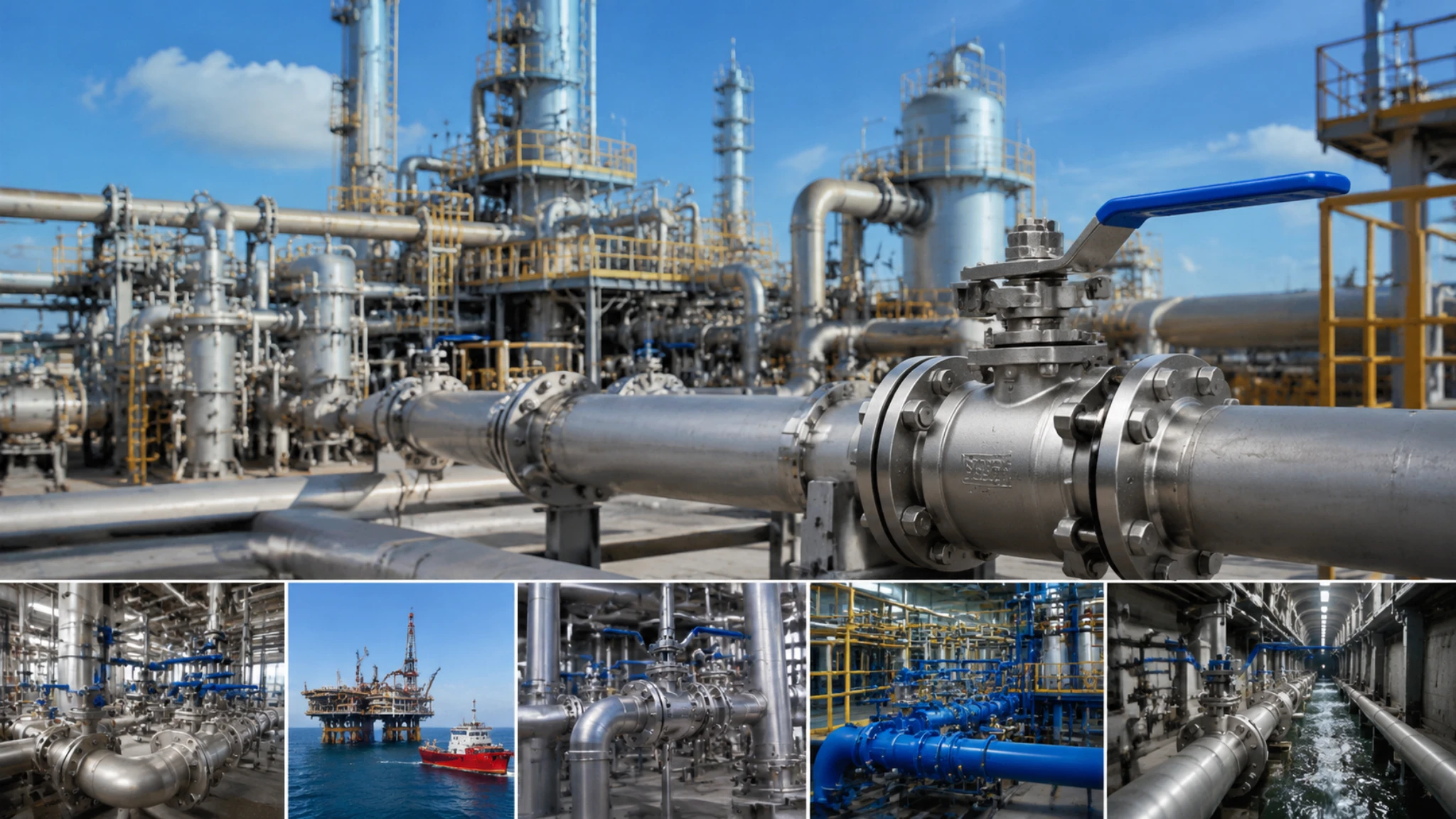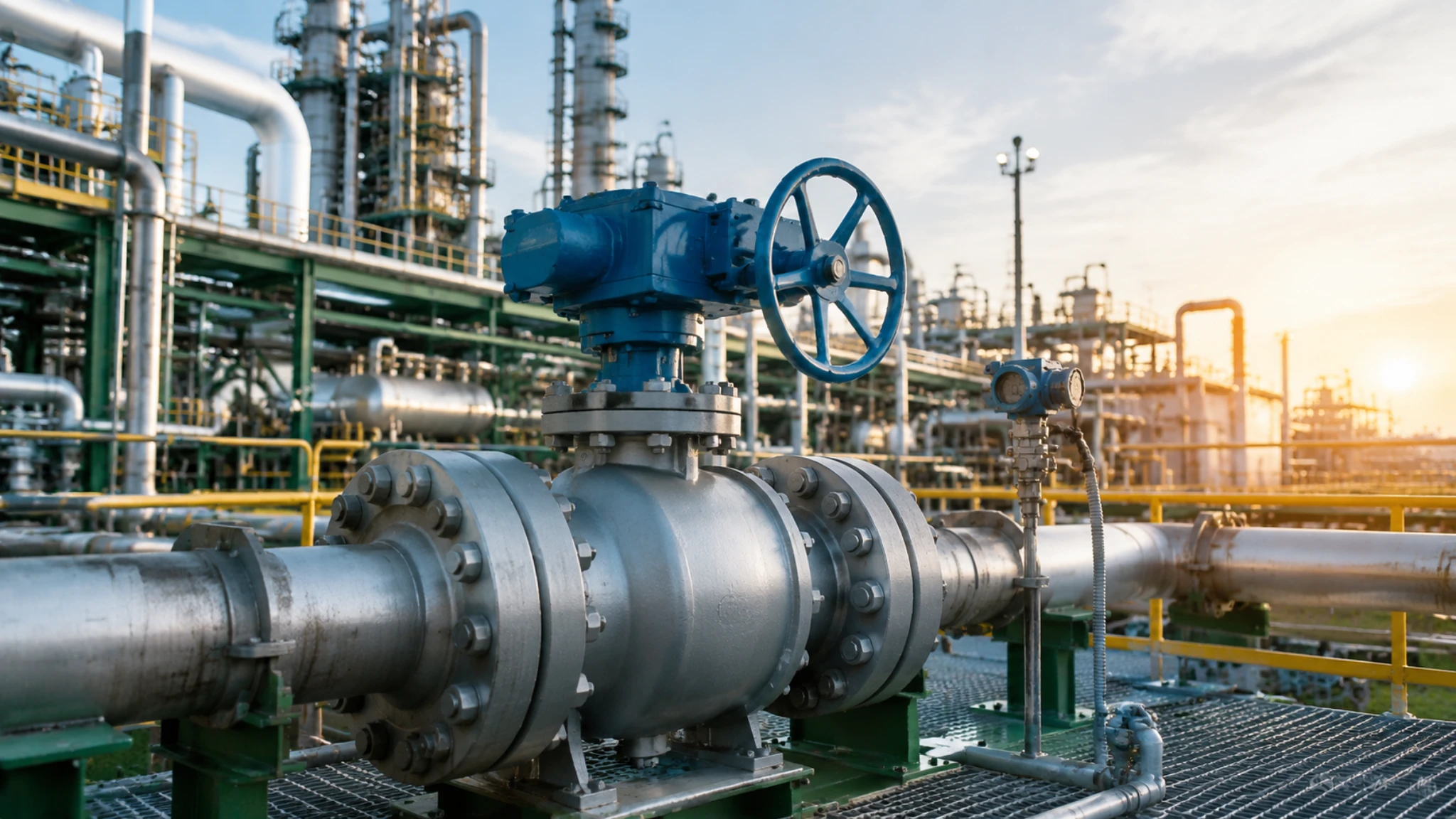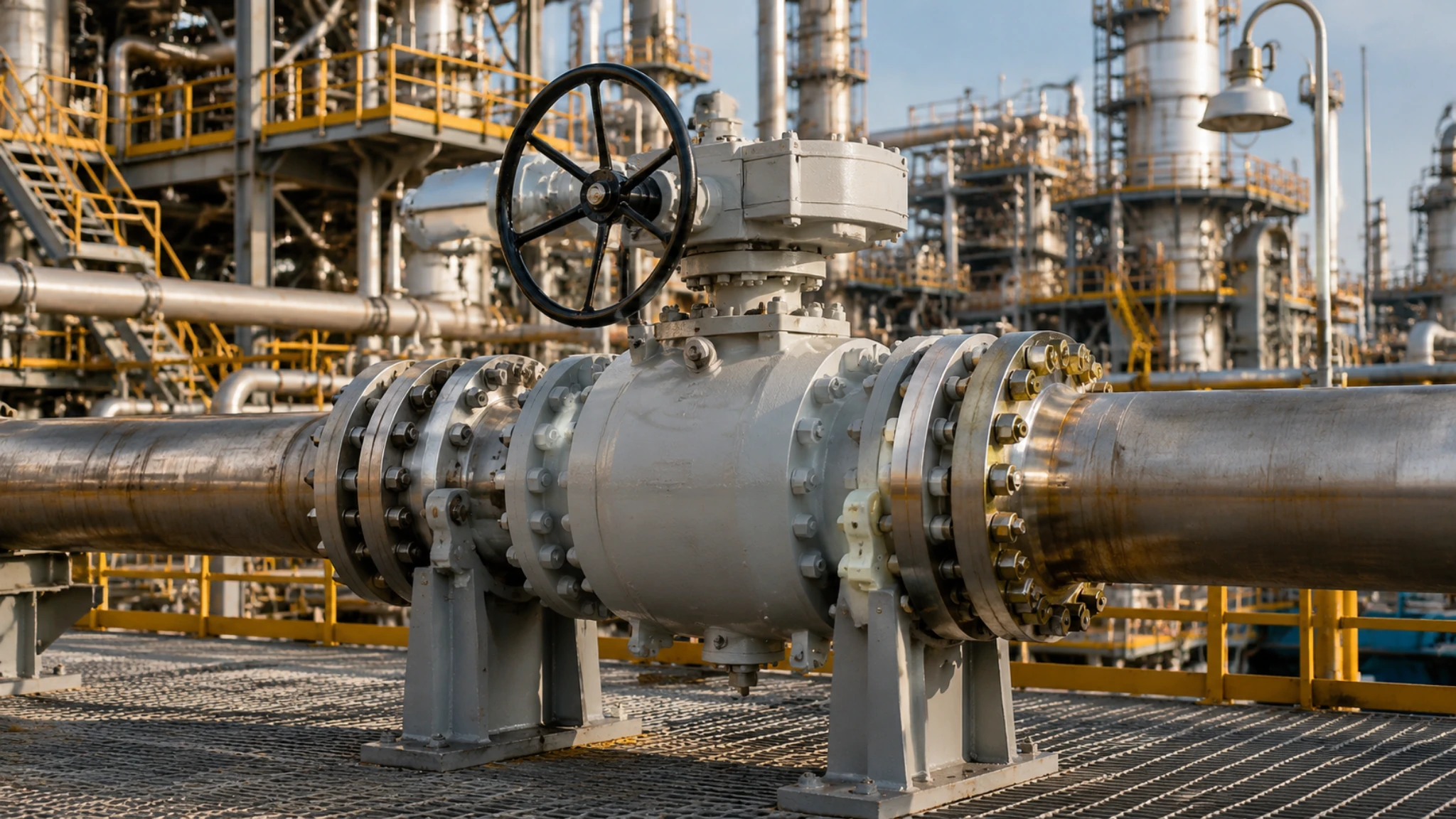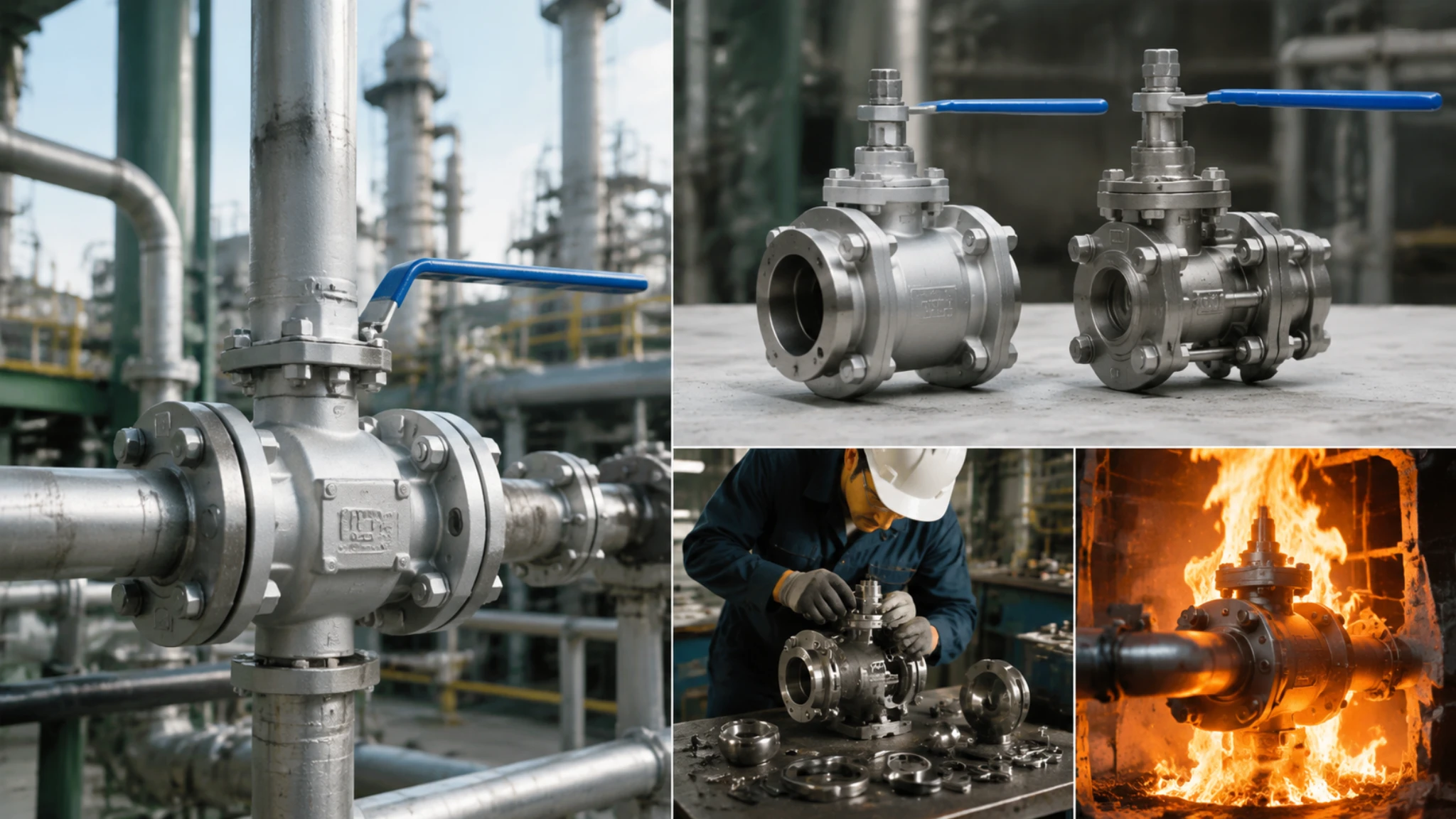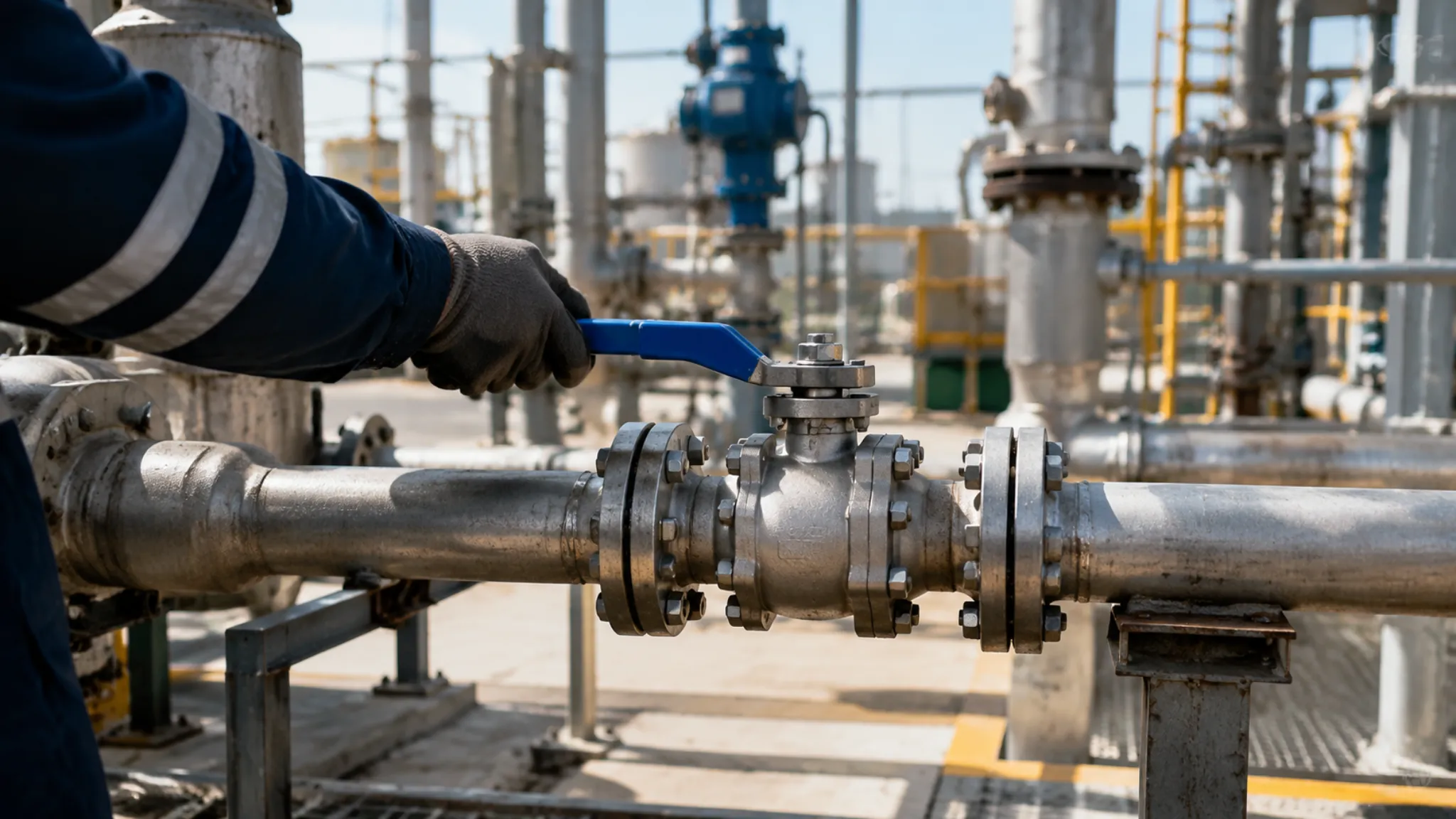
Three things matter when selecting isolation valves for gas pipelines: withstanding Class 1500 high pressure, achieving bubble-tight sealing (API 598 Class VI), and passing API 607 certification. The forged soft-seated floating ball valve covers all three, making it the most common valve configuration for gas pipelines.
Managing High Pressure
Bubble Tight Sealing
The core advantage of soft-seated valves in gas pipelines is bubble-tight sealing. This means that under 1.1 times the nominal pressure during a hydrostatic test at 15°C to 38°C, there is no visible bubble for at least 60 seconds. This corresponds to the API 598 Class VI rating, with a helium mass spectrometer leak rate of less than 1×10⁻⁷ mbar·l/s. This is the highest sealing class for industrial ball valves, representing near-zero leakage for gas pipelines—a fundamental requirement for environmental regulations and safety management. PTFE (polytetrafluoroethylene) is the key material for achieving this sealing level. Its molecular structure contains a large number of fluorine atoms, forming extremely strong C-F covalent bonds with carbon atoms, which gives the material an incredibly low friction coefficient. As a result, there is almost no wear on the sealing surface during valve ball opening and closing, providing the physical foundation for the soft seat to maintain Class VI sealing long-term.
It is worth noting that achieving bubble-tight sealing relies on the correct valve seat pre-tightening force design. Soft seats rely on spring preloads to continuously press the PTFE seat ring against the ball, maintaining an effective sealing contact area even during medium pressure fluctuations. If the spring force is too small, sealing is insufficient; if it is too large, the operating torque becomes too high, and the seat ring accelerates fatigue—this is a core parameter that must be precisely calculated during the design phase, rather than a question that a catalog parameter sheet can directly answer. At a certain natural gas gate station, I encountered a batch of soft-seated valves where sealing failed due to spring pre-tightening force issues, which ultimately took 3 weeks of troubleshooting to discover it was due to an abnormal material batch from the supplier.
| Test Parameter | Class VI (Soft Seat) | Class V (Metal Seat) |
|---|---|---|
| API 598 Helium Mass Spectrometer Leak Rate | <1×10⁻⁷ mbar·l/s | <1×10⁻⁴ mbar·l/s |
| Hydrostatic Bubble Test Pressure | 1.1 × Nominal Pressure | 1.1 × Nominal Pressure |
| No-bubble Duration | ≥60 seconds | ≥60 seconds |
| Typical Application Scenario | Gas, SCADA systems | General Industrial Pipelines |
Preventing Gas Leaks
The consequences of gas pipeline leakage are far more severe than liquid media—natural gas mixed with air forms an explosive gas, with a volume fraction of 5% to 15% being the explosive limit, meaning leakage at any point could trigger a catastrophic accident. The core of preventing leakage is the dual-sealing concept: stem leak prevention and seat leak prevention. The stem portion uses a combination of graphite packing box and live-loaded springs—graphite packing does not soften or harden at high temperatures, maintaining constant sealing friction, while live-loaded springs compensate for packing relaxation caused by temperature cycling, ensuring that the stem seal remains reliable after multiple operations. This is a basic requirement of API 608 for floating ball valves and a mandatory structural element to verify when selecting gas service valves.
- The stem packing uses graphite or flexible graphite (Flexitallic), with a temperature resistance of up to approximately 450°C. Coupled with live-loaded springs to compensate for packing relaxation, the stem seal remains stable after multiple operations—this is a basic requirement of API 608 and a mandatory verification item for gas valve selection.
- The body seal utilizes a spiral wound gasket with a 316 stainless steel inner ring, a low carbon steel outer ring, and flexible graphite filler. This structure maintains sealing integrity under high temperature and high pressure without the creep issues associated with soft gaskets, making it the standard configuration for body seals in Class 600 and above gas valves.
- The stem anti-static device electrically connects the ball and the stem via a spring, discharging accumulated static electricity into the valve body to prevent gas explosions caused by static discharge—this is mandatory for gas service ball valves under API 608 and ISO 10497.
- Double Block and Bleed (DBB) structure: A drain/vent port is set in the body cavity to discharge accumulated gas when the valve is closed to confirm the sealing status—this is an important safety feature for high-pressure gas valves and a design recommendation by ASME B16.34 for Class 600 and above gas valves.
Max Pressure Limits
Soft-seated valves have a physical limit in high-pressure gas conditions: the risk of seat blow-off. When the differential pressure (ΔP) across the valve exceeds the range that the seat spring pre-tightening force can compensate for, the high-pressure gas will blow the seat off the ball sealing surface, creating a pass-through channel—this is the most dangerous failure mode for soft-seated valves and usually occurs without obvious warning. Under Class 600 (PN100) conditions, ΔP typically does not exceed 30 bar; at Class 900 (PN150), the ΔP limit is around 45 bar; at Class 1500 (PN250), the ΔP limit is about 75 bar—these are reference values, and specific numbers must be precisely calculated based on seat spring stiffness, pre-tightening force, seat ring material, and geometry, rather than directly looked up in a catalog parameter sheet.
Blow-off accidents in high-pressure natural gas can trigger station fires or explosions, and they occur without warning, making them difficult to prevent. Both ASME B31.3 and B31.8 codes explicitly state that for high-pressure natural gas conditions above Class 600, if the differential pressure exceeds the design limit of the soft-seated valve, metal-seated valves should be preferred—this is not a recommendation, but a mandatory requirement of the design codes. In a high-pressure natural gas pipeline project, I once encountered a case where the design institute insisted on using soft-seated valves due to cost reasons, but was ultimately rejected by the owner’s safety team during the ΔP verification phase. This case demonstrates that soft-seat selection under high-pressure conditions is not a price issue, but a safety margin issue.
- Class 600 (PN100): ΔP reference limit is around 30 bar; specific values must be precisely verified based on spring pre-tightening force.
- Class 900 (PN150): ΔP reference limit is around 45 bar; a typical configuration for high-pressure natural gas gate station distribution lines.
- Class 1500 (PN250): ΔP reference limit is around 75 bar; usually requires branch pressure regulation or sectional isolation design.
- When the above reference limits are exceeded or ΔP cannot be precisely verified, metal-seated valves should be preferred—mandatory requirement of ASME B31.3/B31.8.
- Valve seat blow-off gives no warning and is the most dangerous soft-seat failure mode in high-pressure natural gas conditions—real-time condition parameter verification is the only effective means of protection.
ASME B31.8 explicitly requires: for high-pressure natural gas pipelines above Class 600, the valve seat design differential pressure must have a safety factor of 1.5 times or greater relative to the maximum operating differential pressure. The blow-off verification for soft-seated valves must be signed off by a qualified design engineer and cannot be replaced by catalog parameters—this rule is a mandatory safety threshold for high-pressure natural gas pipeline design and is the technical basis most frequently challenged by owners’ safety teams.
Meeting Safety Rules
Key Safety Certificates
Forged soft-seated ball valves used in gas pipelines require a three-layer certification: product design standards, fire-safe certification, and fugitive emission certification. Design standards typically adopt API 608 (floating ball valves) or API 6D (pipeline valves). Both have basically identical requirements for body strength, stem sealing, and seat structure, but API 6D adds requirements for pipeline full bore and butt-welding ends—long-distance pipeline station isolation valves typically require API 6D, while city gate stations and distribution stations can suffice with API 608. Fire-safe certification is based on API 607 or ISO 10497, requiring the valve to maintain basic sealing functionality after a 30-minute 800°C open flame test—this is particularly important for soft-seated valves because PTFE begins to soften above 300°C and melts completely at 500°C. Fire-safe designs incorporate an additional graphite or metal seal ring outside the PTFE seat to provide secondary protection.
API 607 Fifth Edition Section 5.6.4 explicitly specifies fire testing for soft-seated valves: the “for soft seat” fire-safe structure requires an additional graphite or metal fire-safe seal ring on the outer layer of the soft seat. After the primary PTFE seal fails, the fire-safe seal ring assumes the secondary sealing function—this is the core structural requirement for soft-seated gas valves to pass API 607 fire-safe certification. Soft-seated valves that do not meet this requirement must not be used in high-pressure gas pipelines.
Fugitive emission certification is based on ISO 15848 or API 622, requiring the stem packing leak rate under high temperature and pressure to be below a specified limit (typically 100 ppm). This is a basic requirement for gas valves under environmental regulations (such as EPA 40 CFR Part 60 Subpart GGG). When purchasing, you should verify whether the supplier provides an API 607 fire-safe certificate, an ISO 15848 fugitive emission test report, and an API 6D or API 608 design certificate—having all three certificates is the basic compliance threshold for gas valves.
Fire Safe Design
The core of the fire-safe design for soft-seated valves is adding a graphite or metal fire-safe seal ring to the outer layer of the primary PTFE seal ring. PTFE begins to soften at around 300°C and melts completely at around 500°C. The fire-safe seal ring takes over the sealing function after the primary seal fails, ensuring that the valve maintains basic sealing after a 30-minute 800°C open flame test. This “secondary seal” structure is the signature design of API 607 soft-seated fire-safe valves. In high-temperature gas conditions, the body cavity temperature may rise sharply due to friction or external heat sources, and the protective role of the fire-safe seal ring is directly related to station safety.
The valve body material is equally critical to fire-safe performance. A forged ASTM A105 body loses its structural strength after about 15 minutes under an 800°C open flame, whereas ASTM A182 F316 stainless steel can maintain it for a significantly longer period—therefore, high-pressure, high-temperature gas valves usually opt for stainless steel bodies rather than carbon steel. In addition to the material, the body wall thickness design must meet the ASME B16.34 high-temperature rating requirements, increasing the wall thickness where necessary to improve thermal inertia and delay the rate of temperature rise.
API 607 Fifth Edition Section 5.6.4 explicitly requires a “for soft seat” fire-safe structure: adding a graphite or metal fire-safe seal ring to the outer layer of the soft seat. The oxidation onset temperature of graphite in an inert atmosphere is around 450°C, while the 316 stainless steel seal ring maintains mechanical strength at higher temperatures, forming a secondary sealing barrier after the soft seat fails. The structural strength retention time of an ASTM A182 F316 stainless steel body under an 800°C open flame is significantly better than that of A105 carbon steel, so high-pressure, high-temperature gas valves should give preference to stainless steel bodies over carbon steel. The body wall thickness design must meet the high-temperature Class requirements of ASME B16.34, increasing wall thickness if necessary to enhance thermal inertia—this is a structural means to delay the temperature rise of the seal ring. Soft-seated valves without a fire-safe seal ring must not be used for high-pressure gas service; this is a mandatory requirement of API 607 for gas valve fire-safe design, with no exceptions.
| Material | Performance Under 800°C Open Flame | Typical Application |
|---|---|---|
| ASTM A105 (Carbon Steel) | Loses structural strength in approx. 15 minutes | Low-pressure, ambient-temperature gas; limited use for fire-safe applications |
| ASTM A182 F316 (Stainless Steel) | Maintains strength significantly longer | Preferred for high-pressure, high-temperature gas |
Required Leak Tests
The three sealing tests that gas valves must pass before leaving the factory are: seat seal test, stem seal test, and body seal test. The seat seal test is based on API 598, applying hydrostatic pressure at 1.1 times the nominal pressure to the seat and observing whether there are visible bubbles within 60 seconds—this is the basic test for determining Class IV to Class VI ratings. The stem seal test is also based on API 598, checking the leak rate of the stem packing area at 1.1 times the nominal pressure. For high-pressure gas valves above Class 600, API 608 also requires a low-pressure gas test (typically 5 to 7 bar air) to detect seat micro-leakage more sensitively. Gas molecules have a much smaller diameter than water molecules; micro-leaks that are difficult to detect in hydrostatic tests are clearly identifiable in gas tests.
The low-pressure gas test also serves an easily overlooked purpose: it can detect minute flatness errors on the seat sealing surface. In a hydrostatic test, water molecules may temporarily fill micro-gaps due to capillary action and show a successful seal; however, in a gas test, gas molecules pass through tiny gaps more easily. Under equivalent accuracy requirements, the gas test is a more rigorous verification method. Therefore, after passing the hydrostatic sealing test, high-pressure gas valves should generally be supplemented with a low-pressure gas test as the final basis for acceptance.
- Seat hydrostatic seal test (API 598): 1.1 × nominal pressure, 60 seconds without bubbles, used for Class IV to Class VI rating determination.
- Seat low-pressure gas test (API 608, Class 600+): 5 to 7 bar air, more sensitive than hydrostatic testing, used as supplementary verification for high-pressure gas valves.
- Stem packing gas test (API 598): Verifies packing area leakage at 1.1 × nominal pressure; ISO 15848 quantitative fugitive emission testing requires a leak rate of < 100 ppm.
- Body hydrostatic test (ASME B16.34): Test pressure is 1.5 × nominal pressure (or design pressure × 1.5, whichever is greater), sustained for at least 5 minutes to verify body structural integrity.
- Fire-safe functional test (API 607/ISO 10497): 800°C open flame burn for 30 minutes; after cooling, the seat must still maintain basic sealing, and the stem packing must not fail.
| Test Type | Reference Standard | Test Pressure | Acceptance Criteria |
|---|---|---|---|
| Seat Hydrostatic Seal | API 598 | 1.1 × nominal pressure, 60s | No visible bubbles (Class VI highest level) |
| Seat Low-Pressure Gas | API 608 (Class 600+) | 5–7 bar air | No continuous bubbles; higher sensitivity than hydrostatic |
| Stem Packing Gas | API 598 / ISO 15848 | 1.1 × nominal pressure | Leak rate < 100 ppm (ISO 15848) |
| Body Hydrostatic | ASME B16.34 | 1.5 × nominal pressure, ≥ 5 mins | No visible leakage on the body |
| Fire-safe Functional | API 607 / ISO 10497 | 800°C open flame, 30 mins | Seat and stem packing maintain basic seal after cooling |
Gas Pipeline Uses
Forged Body Strength
A forged body is a basic requirement for gas pipeline ball valves. During the forging process, metal grains flow continuously along the contour of the valve body, forming a uniform and dense grain flow structure whose mechanical properties (especially fatigue resistance) are significantly superior to sand castings of the same material. Fatigue loads on gas pipeline valves originate from two sources: first, pipeline pressure fluctuations during station operation (typically cycling between 80% and 100% of the design pressure); second, instantaneous impact pressure generated when a pipeline pig passes through. The pigging speed can reach several meters per second, pushing the natural gas within the pipeline to drive the pig forward, which creates a pulse-like impact force on the valve body. Cast bodies may experience grain boundary crack propagation under long-term pulse fatigue.
Another advantage of forging is material density. During the forging process, the metal undergoes multiple pressings, compacting internal defects such as pores and shrinkage cavities, which results in material strength and structural uniformity far superior to castings. ASTM A105 is the most commonly used forged material for carbon steel bodies in gas valves; its minimum tensile strength is 485 MPa and yield strength is 250 MPa, which can meet the strength requirements of ASME B16.34 under Class 600 to Class 1500 high-pressure conditions. For corrosive natural gas (containing H₂S or CO₂), stainless steel or duplex stainless steel materials such as ASTM A182 F316/F51 must be selected. When the H₂S partial pressure exceeds 0.001 bar, NACE MR0175/ISO 15156 compatible materials must be selected—this is a mandatory requirement for sour natural gas.
In a coal-to-gas project, I once encountered an issue where the impact energy failed during the on-site valve acceptance inspection. The Charpy V-notch impact energy requirement for ASTM A105 material at -29°C is not less than 27 J, but the material test report provided by the supplier showed an impact energy of only 14 J. Traceability ultimately revealed that the supplier had used a lower impact grade heat of the same material designation and supplied it directly without specialized impact testing. This incident shows that material acceptance for gas valves cannot rely solely on the material designation; the specific heat’s impact test data must be verified.
Handling Gas Flow
The flow characteristics of gas pipelines determine the uniqueness of valve bore sizing selection. Natural gas is compressible, so the differential pressure (ΔP) across the valve directly affects the mass flow rate passing through it. When the valve is fully open, for every 1 bar increase in ΔP, the natural gas flow rate through a DN100 ball valve decreases by approximately 2% to 3% (depending on upstream pressure). This means that high-pressure gas transmission mainlines often do not require full-bore valves (Full Bore) and instead choose reduced-bore valves (Reduced Bore) to reduce cost and weight—the bore of a DN100 (4-inch) reduced-bore ball valve is typically DN80 (3-inch), which is sufficient to meet the distribution flow demands of most city gate stations. However, pigging stations must use full-bore valves to ensure the smooth passage of pigs.
- High-pressure gas transmission mainlines (Class 600+): Either full-bore or reduced-bore ball valves can be used; the bore size must be determined through flow calculations. The impact of ΔP on mass flow cannot be ignored in high-throughput pipelines, and process verification should be conducted using HYSYS or Aspen PLUS rather than relying solely on the catalog Cv value.
- City gate station distribution lines (Class 150 to Class 600): Reduced-bore ball valves are typically used (reducing DN50 to DN40 or DN80 to DN50) to lower valve procurement costs and actuator specifications while meeting flow requirements.
- Pigging stations (Pipeline Pigging Station): Full-bore ball valves must be used. The pig core diameter is typically 95% to 98% of the pipeline’s internal diameter, and a reduced-bore valve will jam the pig—this is a mandatory design requirement for pigging stations and must not be compromised.
- Pressure regulation skids (Pressure Regulation Skid): High-velocity gas flow induces noise and vibration during natural gas pressure regulation. The isolation ball valves upstream and downstream of the regulator should be low-noise types (incorporating restriction orifices and silencer designs), and the body’s fatigue strength to withstand pressure pulsations and vibration loads must be verified.
| Application Scenario | Valve Type | Pressure Rating | Remarks |
|---|---|---|---|
| High-Pressure Transmission Mainline | Full Bore or Reduced Bore | Class 600+ | Determine bore size based on flow process calculations |
| City Gate Station Distribution | Reduced Bore (DN50→DN40) | Class 150–600 | Reduces procurement costs and actuator specifications |
| Pigging Station | Full Bore (Mandatory) | Class 600+ | Full bore is a mandatory requirement; reduced bore is prohibited |
| Pressure Reg. Skid Isolation | Low-Noise Type | Class 150+ | Verify pressure pulsation fatigue strength |
Quick Selection Tips
Quick selection tips for gas pipeline forged soft-seated ball valves: When medium temperature ≤ 260°C (PTFE/RPTFE), pressure ≤ Class 1500, and precise ΔP verification data is available—satisfying all three conditions makes the soft seat comprehensively superior to the metal seat in terms of economics and sealing. When ΔP cannot be precisely verified or exceeds the reference limit, soft seats should not be forced due to cost reasons—the blow-off risk is an inherent safety hazard.
Selection data sheets usually only provide the Class rating and temperature range, but actual operating conditions are often far more complex than standard conditions. A certain high-pressure gas field featured wet natural gas containing CO₂ (8% mole fraction) and trace H₂S (0.0003 bar partial pressure) with a design pressure of Class 900. While the temperature and pressure seemed within the soft seat range, the CO₂ partial pressure reached 6.8 bar, resulting in a carbon steel corrosion rate exceeding 0.3 mm/year. The selection had to upgrade the material to 316 stainless steel and perform NACE compatibility verification according to ISO 15156. Gas composition and partial pressure data impact selection just as much as temperature and pressure parameters, and cannot be ignored by looking only at the catalog parameter sheet.
- DN15 to DN300, Class 150 to Class 1500, temperature -29°C to 260°C (RPTFE): The standard selection range for city gas gate stations, distribution lines, and station isolation.
- Natural gas containing H₂S (partial pressure > 0.001 bar): NACE MR0175/ISO 15156 compatible materials must be selected (ASTM A182 F316/F51 or equivalent duplex steel).
- Natural gas containing CO₂: Carbon steel corrosion rates can exceed 0.5 mm/year in high-pressure CO₂ environments; materials of 316 stainless steel or higher should be selected.
- Pigging stations: Full bore, Class 600+, API 6D certified, DBB structure—all four are indispensable.
- Mandatory fire-safe requirement: API 607 certification is the basic threshold for high-pressure gas valves, with no exceptions.
Remember three key figures: ΔP ≤ 30–75 bar (Class 600+), T ≤ 260°C (soft seat), and H₂S partial pressure < 0.001 bar (NACE compliance required above this)—crossing these red lines is gambling with accidents.