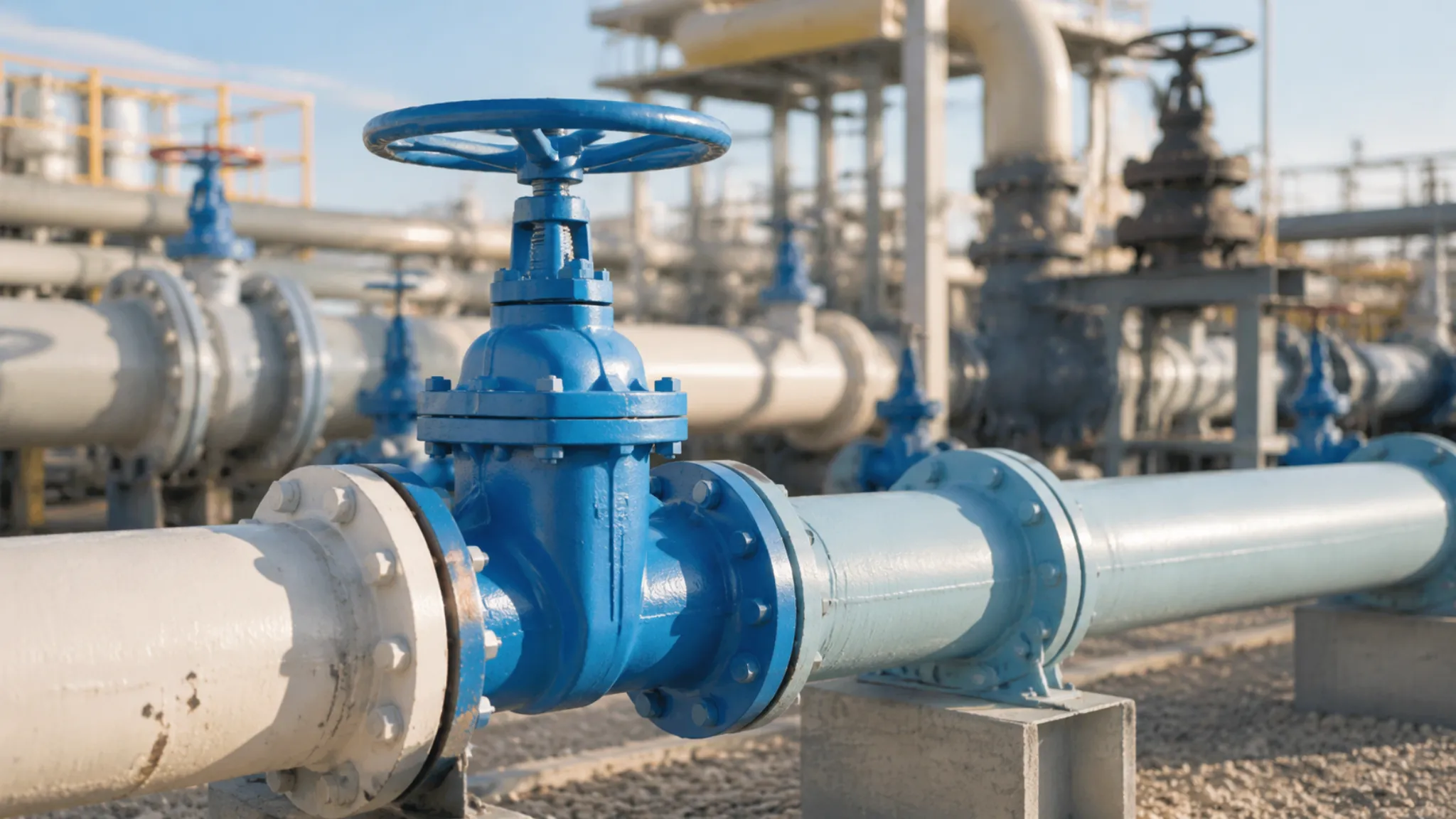
Ball valve manufacturers for oil and gas applications, such as Emerson and Flowserve, typically design to standards such as API 6D and API 608.
Common pressure classes range from Class 150 to Class 2500, with upper limits approaching 1000 bar.
Typical body materials include A105 carbon steel, 316L stainless steel, and duplex stainless steel.
Material selection must match the medium and service conditions—for example, 2205 duplex stainless steel is often used for H₂S-containing media—while operating temperatures generally span from -50°C to 538°C.
API 598 hydrostatic and sealing tests are then used to verify safety and reliability.
API Standards
API 6D
API 6D requires a full-bore design, meaning the internal bore of the ball valve must match the pipeline bore. For a 48-inch Class 600 ball valve, for example, the seat bore is strictly specified at 1194 mm. A misalignment of even 2 mm can cause a pig, driven by dozens of tons of force, to slam into the seat and instantly shatter the PTFE sealing ring.
In high-sulfur natural gas service, H₂S can easily penetrate ordinary carbon steel. When combined with moisture, hydrogen atoms accumulate within the metal and cause hydrogen-induced cracking. A350 LF2 forgings used in API 6D ball valves must therefore undergo full ultrasonic inspection before leaving the factory. Hardness is tightly controlled below 22 HRC to comply with NACE MR0175. Sulfur content in the steel must be reduced below 0.01%, and phosphorus must not exceed 0.02%.
At -29°C, Charpy V-notch impact testing is mandatory. Each specimen must absorb no less than 20 joules. Internal metal and polymer components are also subject to strict material requirements:
- The stem uses 17-4PH precipitation-hardening stainless steel with a yield strength above 700 MPa.
- The ball surface is coated with tungsten carbide to a thickness of 0.15 to 0.2 mm.
- Springs are made from Inconel X-750 nickel alloy for stress-corrosion resistance.
- Seals use AED-resistant fluororubber to prevent explosive decompression damage under high-pressure gas.
- Bolts are ASTM A320 L7 alloy steel for low-temperature service.
A 1°C rise in external temperature can generate roughly 10 MPa of pressure inside trapped liquid. Trunnion-mounted ball valves therefore include an internal cavity pressure relief design. When cavity pressure reaches 1.33 times line pressure, the spring-loaded seat automatically lifts, releasing the trapped pressure back into the pipeline so the center-flange bolts are not torn apart by hundreds of bar of internal force.
Once the valve is fully closed, operators can open the drain port underneath to discharge any remaining oil. A DBB structure makes line draining significantly safer. Offshore drilling platforms often impose even stricter requirements and typically specify DIB-1 valve configurations. Both seats can withstand the force created by the double-piston effect, so even if one side fails, the other can still hold a differential pressure of up to 250 bar.
Factory functional testing is also governed by fixed requirements:
- Fill the valve with water and pressurize it to 1.1 times the rated pressure.
- For 2-inch to 4-inch valves, the hold time is 2 minutes.
- For large ball valves over 18 inches, the hold time extends to 5 minutes.
- Leakage from the drain port must be zero.
- DIB testing requires reverse-direction high-pressure water to test each individual seat separately.
API 6D also requires the anti-blowout stem design to be internal. When 15 MPa of pressure pushes outward from the pipeline, the internal shoulder locks the stem firmly against the thrust bearing. No matter what happens outside, the stem cannot be blown out by internal pressure and injure personnel. Valves that sit idle for months often require very high breakaway torque on first operation, so actuators are typically oversized by a factor of 1.5 to 2.
Take an NPS 36 Class 900 trunnion-mounted ball valve as an example. The factory test torque is specified at 80,000 N·m. Its pneumatic actuator can deliver 150,000 N·m of torque. The adjacent control cabinet contains a 500-liter high-pressure air tank, with enough stored energy to perform three consecutive operations—open, close, then open again. The flange bolts on the valve body must not only contain the internal pressure but also withstand bending moments of several hundred kilonewtons caused by thermal expansion and contraction of the pipeline.
A fully welded ball valve eliminates the center flange entirely, with the body closed by two submerged arc welds. These welds are fully radiographed and evaluated to ASME BPVC Section VIII. For buried service, the exterior is coated with a 1.5 to 2.5 mm polyurethane anti-corrosion layer. Inspectors then use a 15,000-volt holiday detector to scan the coating and identify pinhole-sized defects.
API 608
When installing metal ball valves in process piping, workers must purchase them to API 608. The standard covers sizes from as small as 1/4 inch up to 24 inches. Pressure classes are limited to Class 150, Class 300, and Class 600.
The base ASME B16.34 standard does not provide enough protection for highly corrosive chemical service. API 608 adds a mandatory 2.5 mm corrosion allowance on top of the original wall-thickness formula. On a 2-inch Class 300 carbon steel valve, for example, the body wall thickness must never be less than 8.6 mm.
At the stockyard, inspectors use handheld spectrometers to verify incoming material:
- WCB carbon steel must contain less than 0.30% carbon.
- CF8M stainless steel contains 2.0% molybdenum.
- Forged material must have a forging reduction ratio of 3:1.
- Ultrasonic testing must be able to detect internal cracks as small as 2 mm.
Machinists turn a 3 mm shoulder disk at the bottom of the stem. Even if all gland bolts fail, 10 MPa of heavy oil inside the line still cannot blow out a stem designed with anti-blowout retention.
With a one-meter lever, the required operating force must not exceed 360 N. On gear-operated valves, the rim force at the handwheel must remain under 80 N. If the measured value even slightly exceeds the limit, the entire gearbox is dismantled and sent back to the workshop for re-gearing.
Class 300 ball valves larger than 4 inches use a heavy bottom shaft weighing several kilograms to support the ball. Small valves under 2 inches use a hollow ball around 50 mm in diameter. Line pressure pushes the ball forward against the PTFE seat, sealing against 2.0 MPa of chemical process backflow.
The workshop test benches are lined with pressure gauges, and every assembled valve must pass three stages of hydraulic and pneumatic testing:
| Inspection Stage | Test Medium | Pressure Requirement | Duration for 2-inch Valve | Leakage Limit |
|---|---|---|---|---|
| Shell test | Water with rust inhibitor | 1.5 × specified pressure | 15 sec | 0 visible surface droplets |
| High-pressure seat test | Water with rust inhibitor | 1.1 × specified pressure | 15 sec | 0 internal droplets |
| Low-pressure air test | Dry nitrogen | 0.4 to 0.7 MPa | 15 sec | 0 bubbles |
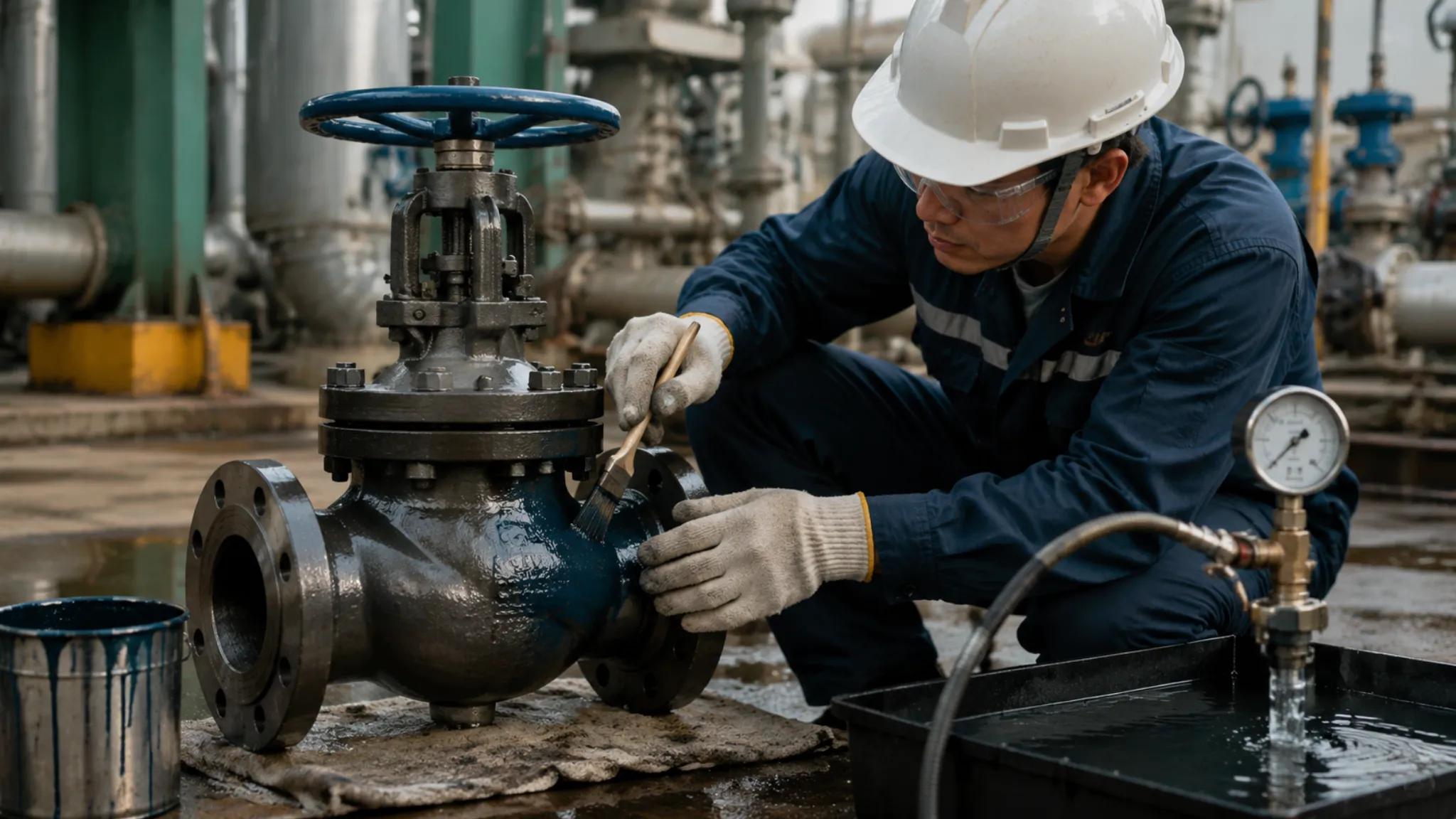
At 0.6 MPa, workers brush leak-detection solution around the ball-seat interface. If a single soap bubble larger than 1 mm appears within 15 seconds, the valve is immediately rejected and sent back for rework. Assembly workers must replace the PEEK seat ring with a brand-new one.
The square actuator drive pad on top is also designed as a mechanical safeguard. If rust or deposits jam the ball inside the pipeline and the actuator suddenly outputs 500 N·m of torque, the external bracket is designed to shear first. The internal stem and ball must not deform by even 0.1 degree.
Pure toluene flowing at 10 meters per second can generate static electricity inside the pipeline. Continuous friction between the polymer seat and the metal ball can build up several thousand volts of charge. To dissipate it, workers drill a hole and insert a 5 mm 316 stainless steel ball.
To connect with older chemical plant piping, the end connections must follow strict machining values:
- Threaded connections must have a 60-degree thread angle.
- Weld ends must be beveled at 37.5 degrees.
- Flange face roughness must fall within 125 to 250 Ra.
- Dimensional tolerance on the outer flange diameter is limited to 1.5 mm.
A 3 mm thick insert can withstand expansion and contraction caused by thermal cycling. In a fire reaching 700°C, graphite remains locked in the gap without melting, containing toxic gases long enough to give firefighters a critical 30-minute response window.
In 20% sulfuric acid, ordinary WCB carbon steel may fail within days. Drawings therefore specify A351 CF8M, which contains 2.0% to 3.0% molybdenum to form a corrosion-resistant surface film.
API 607 & API 6FA
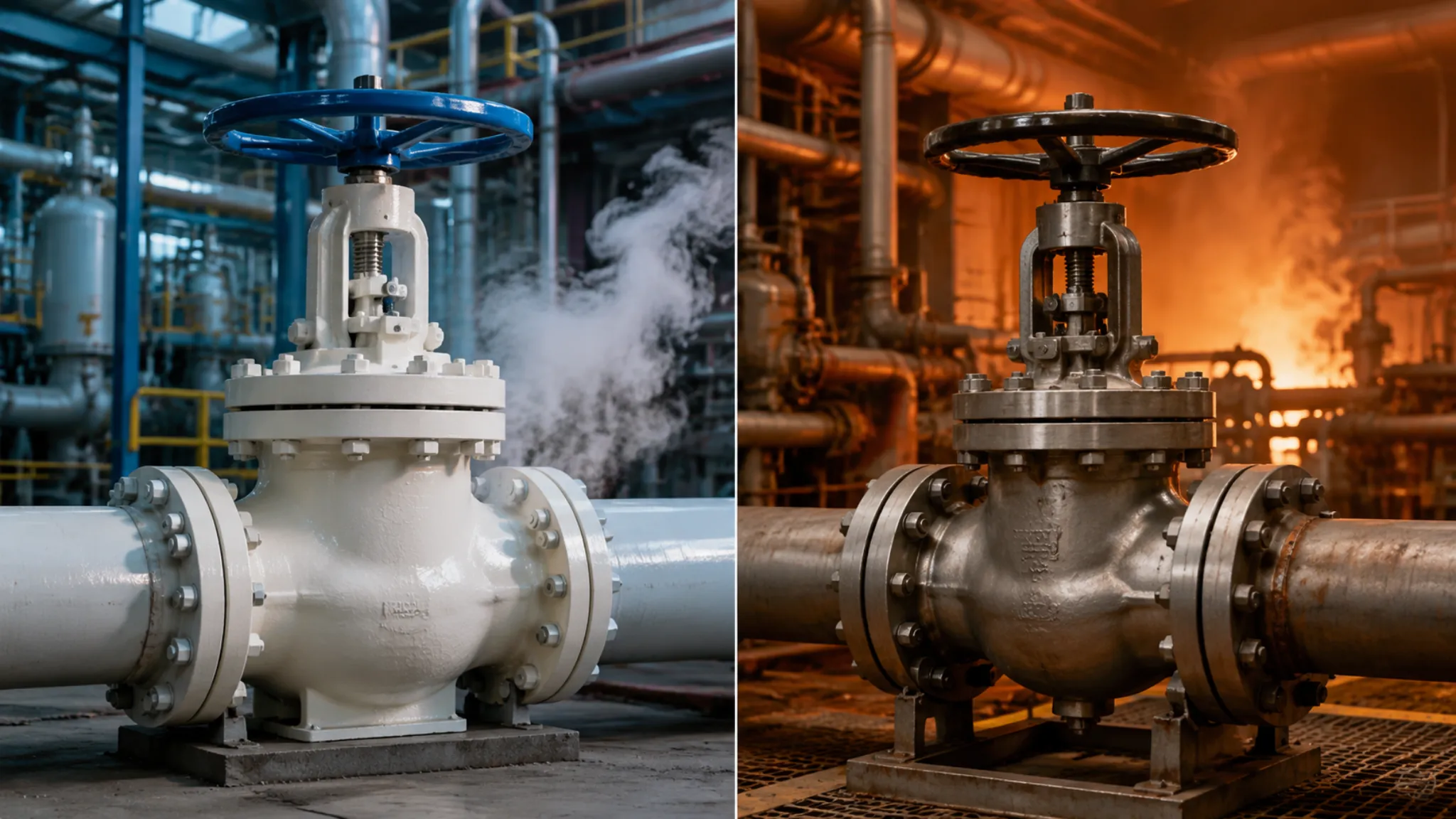
PTFE and nylon soft seals inside a valve can melt into a pool of plastic within three minutes of direct fire exposure. API 607 and API 6FA therefore require ball valves to maintain shutoff using metal-to-metal sealing after all soft components have burned away.
At the test site, four burners surround a 2-inch ball valve. Flame temperature is tightly controlled between 760°C and 980°C. Once the timer starts, the valve must remain in the fire for a full 30 minutes. The test piece is pre-filled with water and pressurized to 75% of its rated pressure.
A thermocouple is inserted into a 1.5-inch-square carbon steel block. Within two minutes of ignition, the measured temperature must exceed 760°C, forcing the valve body to endure severe thermal assault.
Once the soft seals are gone, the spring-backed seat—using Inconel 718 springs—moves forward sharply. The stainless steel ball is then pressed against a pre-machined metal shoulder, forming a hard metal-to-metal seal.
The 2-inch test pipeline is fitted with six auxiliary valves of different functions before and after the test valve. A water pump continuously feeds ambient-temperature water into the line. A large metal collection tray below captures leakage, and an electronic scale with 1-gram resolution records every drop.
Graduated cylinders and weighing pans monitor every bit of leakage during the 30-minute fire. Allowable leakage is strictly limited as follows:
- Through-seat leakage downstream must not exceed 400 mL per inch of nominal size per minute.
- External body-joint leakage must remain below 100 mL per inch per minute.
- For an 8-inch pipeline ball valve, the total internal leakage over 30 minutes is limited to 96 liters.
By that point, the rubber O-rings between the cast sections have already burned away. A 3 mm flexible graphite gasket expands into place instead. Graphite remains dimensionally stable even at 1000°C, sealing tightly around the flange bolt circle.
Manufacturers can qualify an entire product family through representative fire tests. A Class 300 valve that passes may qualify similar valves from Class 300 to Class 600. A 2-inch valve that passes may qualify valves from 2 to 4 inches, provided all internal structures are scaled proportionally.
Inside the stem packing box, five V-shaped graphite rings are bleached white by the fire. The gland nuts may already have lost their temper, but the expanding graphite still grips the 17-4PH stem and maintains the seal.
For floating ball valves, fire testing pushes water pressure directly against the front of the ball, forcing it backward onto the rear metal seat after the polymer seat is destroyed. Trunnion-mounted ball valves are more complex: the ball is fixed in place by upper and lower shafts, while two independent seats—with dozens of small springs behind them—press tightly against the ball surface.
These trunnion-mounted valves also demonstrate cavity pressure relief. When cavity pressure exceeds 1.33 times line pressure, the upstream seat is forced open slightly to discharge the water. If the few hundred milliliters trapped in the cavity cannot escape, the body can rupture on the spot.
Two external thermocouples are used—one attached to the valve body wall and one to a bolt head. Four additional fire-zone probes surround the test valve from all sides. A computer logs temperature once per second and produces a smooth temperature curve. During the full 30 minutes, there can be no interruption in temperature recording longer than two minutes.
The burners do not use ordinary gas; they run on high-calorific propane. Workers in the control room adjust three valves to maintain the correct air-propane ratio. The flame must appear bright yellow, with multiple tongues of fire fully engulfing the flange. The floor is covered with heavy refractory brick to catch melted aluminum nameplates and burning paint.
At the 30-minute mark, the burners are shut off. Two fire hoses then spray cold water directly onto the red-hot valve body. API 6FA imposes a hard limit of 10 minutes to bring the surface temperature below 100°C. The rapid quench causes violent thermal contraction and generates hundreds of MPa of internal stress.
This severe thermal cycling subjects the B7 alloy bolts to extreme tensile fatigue. If even one bolt snaps, high-pressure water inside the line can force the flange open and discharge violently. After the insulation layer has burned through and the outer metal shell is exposed to cooling water, white steam pours off the surface. But even after surviving flame and quench, the blackened valve still has to pass the final checks:
- After full cooling, reduce internal water pressure to 0.2 MPa and rely solely on the heat-weakened springs to seal for another 5 minutes.
- The tester must grip the 17-4PH stem with a pipe wrench and force the ball to rotate 90 degrees.
- The stem must not fracture, and no thread stripping or slippage is allowed.
- After operation, external leakage must not exceed 200 mL per inch per minute.
At 0.2 MPa low pressure, the tester watches the gauge closely. In this 5-minute low-pressure test, there is no strong water force helping press the ball into the seat. If there is the slightest gap in the metal-to-metal contact, the pressure reading will drop.
By then, the fire has destroyed the handwheel and the aluminum housing of the gearbox. The tester can only clamp a two-meter pipe wrench onto the exposed stem drive. A valve that normally turns at 50 N·m may now require 200 N·m to move. That enormous torque is transmitted inward, where the fire-deformed internal shoulders must still absorb the load.
Pressure Class
ASME B16.34
Open the 260-page ASME B16.34 standard, and Table 3 is the one engineers check most often. It specifies the minimum wall thickness for metal components in pipe sizes from 1/2 inch to 24 inches. For a 4-inch Class 900 forged steel ball valve, the formula in Section 6.1 sets the minimum wall thickness at 15.7 mm.
If the machinist removes even a little too much material, the weight of a single valve can increase by 4.2 kg to compensate elsewhere. Material loss rises, and the selling price can jump by 12%. The appendix groups materials by strength class: ordinary A105 carbon steel falls into Group 1.1, while 316L austenitic stainless steel is in Group 2.2.
Material selection depends heavily on service temperature. Between -29°C and 38°C, A105 carbon steel performs well. But once process temperature climbs to 427°C, the metal softens dramatically, and the drawing must switch to Group 1.9 F22 chromium-molybdenum alloy steel.
The flange faces at each end also have strict surface requirements. The standard specifies a roughness of 125 to 250 microinches, or 3.2 to 6.3 microns. If the machining marks are too deep, a helium leak detector will continuously alarm at 5.0 × 10^-6 atm-cc/sec because gas is escaping.
To clamp the upper and lower body halves together, workers use A193 B7 alloy bolts with a tensile strength of 105,000 psi. Threads are tightly controlled: exactly 8 threads per inch on an 8-UN pattern, with dimensional deviation limited to 0.02 mm.
To inspect internal porosity, radiographs must be reviewed in a darkroom. Premium ball valves follow rigid inspection rules:
- Castings under 2 inches thick require E446 radiography.
- Ultrasonic reflection at sealing areas must not exceed 5%.
- High-stress external body areas must receive 100% magnetic particle inspection.
- After penetrant application, inspectors must wait a full 15 minutes before evaluation.
A Class 1500 ball valve must withstand a hydrostatic pressure of 5400 psi. Once the pump is stopped, workers hold timing with a stopwatch. Large-size valves must maintain pressure for at least 3 minutes. If the gauge drops even 0.5 psi, the entire batch must be rejected and reworked.
If pressure in the line suddenly spikes to 1800 psi, the operating stem must never blow out like a projectile. The stem includes a retaining shoulder with a 2.5 mm radius, and the surrounding dimensions are tightly controlled:
- Stem surface roughness must not exceed 0.4 microns.
- O-ring groove depth tolerance must remain within 0.05 mm.
- Packing eccentricity must not exceed 0.1 mm.
- Compression on the internal spring washer is fixed at 2.2 mm.
Ordinary PTFE begins to deform at 200°C, while PPL can endure up to 250°C. In ultra-high-pressure hydrogen service, the metal surface may need a 0.3 mm tungsten carbide coating, which can reach HRC 68.
The two mating metal surfaces are lapped for 8 hours, beginning with 400-grit media and progressing to 2000 grit. This produces a 3.5 mm wide sealing band. With 80 psi of nitrogen applied and the valve submerged in water for 3 minutes, not a single bubble is allowed.
If the valve ends are to be welded directly into the pipeline, they must be machined to a 37.5-degree bevel with a 1.6 mm root face to ensure complete weld penetration. If pipeline pigs must pass through, the internal bore is set at 150.2 mm—1.5 mm larger than the standard pipe bore.
Water flowing at 3 m/s through a 6-inch reduced-bore valve causes a 2.5 psi pressure drop. Fully open on the test stand, it can discharge 4500 gallons per minute. The anti-static device contains a 4 mm stainless steel ball, and multimeter resistance must remain below 10 ohms.
Coating inspectors use film-thickness gauges constantly: 75 microns of zinc primer, 100 microns of epoxy, and 50 microns of polyurethane topcoat. The resulting 225-micron coating must withstand 1440 hours in a salt-spray chamber without peeling.
For fire testing, the valve is exposed to 980°C flame for a full 30 minutes. Once the rubber components burn away, graphite rings must take over sealing. After cooling, leakage must remain below 1200 mL per minute.
Valves for natural gas service are immersed in liquid nitrogen at -196°C for 24 hours. The internal PCTFE polymer shrinks by 1.8%, while the springs extend by 3 mm to maintain sealing force. The exterior is wrapped in 150 mm of foamed insulation.
During assembly, workers tighten M36 super-size nuts to 1850 N·m. Each bolt elongates by 0.2 mm. The nameplate specifies an 80 psi air supply requirement. The finished 245 kg unit is strapped with steel bands rated for 500 kg and lifted by crane onto a vessel headed offshore.
Operating Pressure Parameters
At drilling depths of five to six kilometers, mud and crude oil can surge violently back to the surface. The wellhead equipment used in these conditions must resist extreme destructive force. Valves used here are not built to ordinary pipeline standards; they must comply with API 6A. Nameplates commonly show pressure ratings of 10,000 psi or 15,000 psi, meaning each square centimeter must withstand well over a thousand kilograms of force.
Ordinary cast iron with internal porosity is completely unsuitable. Instead, manufacturers use high-strength AISI 4130 or 4140 alloy steel forged under hydraulic presses. The anti-burst body wall is increased to more than 65 mm thick. Before shipment, hydrostatic testing is extremely aggressive: rust-inhibited water is pumped in until the gauge reaches a dead-stop at 22,500 psi.
At these extreme pressures, the steel shell of a multi-ton assembly can expand elastically by 0.3 mm. Crude oil carrying sand and grit strikes the internal cavity at 15 meters per second. The ball surface is placed in a vacuum furnace and coated with a 0.5 mm tungsten carbide layer, pushing hardness close to HRC 70.
The two hard-metal seats are finished into a lapped metal-to-metal contact design with a 4.2 mm sealing band. Even gravel the size of a fingernail caught in the interface is crushed into powder the moment the stem turns. Once the crude escapes the wellhead, it is forced into a 48-inch transnational long-distance pipeline.
Along the main crude line, pump stations are installed about every 50 kilometers, using machines with thousands of horsepower to drive the flow. The mainline valves follow API 6D, and purchase orders commonly specify Class 600. These giant steel bodies, weighing tens of tons, are fully welded by automatic argon-arc systems layer by layer.
The V-groove at each pipeline connection is 45 mm deep, and welders fill it in 12 separate passes. On X-ray film, even a 0.1 mm dark pore is unacceptable. These valves are buried two meters deep in frozen ground, where the pipeline wall is continuously subjected to roughly 1480 psi of hydraulic thrust.
The Devlon nylon sealing rings used to contain oil and gas must pass bidirectional hydrostatic seat tests. With pressure raised to 1628 psi, the inspector watches the stopwatch for a full 5 minutes, and not a single drop of water may appear in the collection cup below the outlet. The rubber pipeline pig used to clean the line must be able to pass through the valve smoothly.
The drawing specifies a central flow bore of 1200 mm. Even a projection of more than 0.5 mm on the pipeline inside wall is unacceptable. If the pig gets stuck halfway, the oilfield can lose nearly 300,000 barrels of throughput in a single day. The air cylinder on top of the actuator is charged with 120 psi compressed air so the valve can shut in just 3 seconds during an emergency.
| Field Location | Applicable Standard | Normal Operating Pressure | Maximum Pressure Test | Physical Safeguard |
|---|---|---|---|---|
| Subsurface wellhead | API 6A | 10,000–15,000 psi | 22,500 psi | 65 mm extra-thick forged steel |
| Long-distance transmission pipeline | API 6D | 740–1480 psi | 1,628 psi | Devlon nylon ring |
| High-temperature refinery service | ASME B16.34 | 285–1480 psi | Reduced with temperature | Inconel 625 overlay |
When crude oil reaches the refinery, it enters a dense network of above-ground piping. Pressure drops into the Class 150 to Class 300 range, usually 285 psi to 740 psi. But the lines now contain boiling corrosive liquids and hydrogen sulfide at temperatures as high as 450°C.
Ordinary carbon steel piping may fail in less than three months under these conditions. Buyers must switch to 2205 duplex stainless steel or the far more expensive Hastelloy C276. In high-risk hydroprocessing units, workers may even climb into the valve body and manually apply a 3 mm nickel-alloy weld overlay.
Welders, wearing air-fed helmets, slowly deposit filler metal in the tight internal corners of the body. Inspectors check the overlay thickness with ultrasonic gauges. If the reading falls below 2.8 mm anywhere, the entire weld layer must be ground out and redone. As temperature rises, the metal softens and pressure capacity drops sharply.
A Class 300 valve that can withstand 740 psi at 25°C may be limited to only 400 psi when installed in a 400°C line. Engineers calculate this carefully: each degree of temperature increase consumes about 0.5 psi of pressure capacity.
The large flange bolts are upgraded to A194 8M to resist thermal distortion. Tightening torque is no longer fixed at 1000 N·m; instead, assemblers reduce it by 85 N·m after calculating thermal expansion and contraction. The body exterior is wrapped in 200 mm of aluminum silicate insulation.
Every six months, the maintenance team scans the line with infrared thermometers. If the outer skin exceeds 60°C, alarms are triggered, because the graphite gasket compressed in the joint may already have eroded into a leak path only 0.05 mm wide.
The warehouse keeps three sets of original repair seal kits in stock at all times. During the 72-hour shutdown and cooling window of the refining tower, workers use hydraulic tools to remove the 16 giant bolts, each weighing 5 kg. New triple-wave graphite rings are installed to once again lock hazardous oil and gas inside the line.
Manufacturer Pressure Parameters
Experienced engineers begin by opening ANSYS on their computers and importing a 3D valve model. They simulate the impact of 2250 psi drilling mud striking the pipeline. The body is instantly divided into 300,000 tiny mesh elements so the program can calculate which areas carry the highest stress.
Minutes after hitting Enter, the screen fills with colored contours in red, yellow, and blue. One sharply defined deep-red zone appears at the inner corner of the body cavity, where local stress spikes to 42,000 psi. The drawing shows that A105 carbon steel is only rated to 36,000 psi. Once that limit is exceeded, permanent deformation begins.
Even if the dangerous deep-red zone on the screen is no larger than a fingernail, the actual valve will rupture immediately when it reaches the hydrostatic test stand.
The engineer quickly drags the mouse across the critical area, increasing the metal thickness around that corner by 4.5 mm. After rerunning the model, the red fades to safe blue-green. The peak stress drops to 28,000 psi, safely below the limit. Dozens of pages of calculation reports are printed, and the purchase order is sent overnight to a major forging plant hundreds of kilometers away.
When the forged steel blocks arrive, the supplier must provide an EN 10204 3.1 mill certificate stamped with official marks. It records the exact chemical composition of the heat. Carbon must be held below 0.23% to prevent weld cracking later. Sulfur and phosphorus must each remain below 0.025%.
A sample is cut from the raw steel and soaked in a special alcohol bath at -46°C before Charpy V-notch testing. A heavy pendulum swings down from two meters and breaks three frozen standard specimens in succession. The absorbed energy readings are 35 J, 32 J, and 38 J—well above the 27 J minimum set by the drawing.
Every finished part must be marked with a six-digit heat number using a pneumatic stamping tool. If a field pipeline ruptures five years later, that number can trace the part back to the exact workshop, operator, and heat-treatment record—including whether the furnace was precisely held at 980°C.
The giant forging is loaded onto a CNC lathe, where cutters machine the grooves for the O-rings. High-pressure water is extremely good at finding escape paths, so the entire sealing task depends on the soft rubber O-rings. The machining instructions leave no room for compromise:
- Groove wall finish must be held to Ra 1.6 microns with no visible tool marks.
- The VITON fluororubber O-ring inserted into the groove must stay within ±0.08 mm in cross-section.
- The metal backup ring compressing the O-ring may leave only 0.15 mm of internal clearance.
Under 1500 psi, a soft elastomer behaves almost like fluid. Any excess gap at all can cause it to extrude and tear apart.
The finished valve is then pushed into the blast-proof test bunker at the far end of the plant for real leakage testing. The enclosure is surrounded by 10 mm bulletproof glass and reinforced steel mesh. Two heavy steel blind plates seal the pipeline ends, while four 50 mm hydraulic cylinders hold everything in place. The high-pressure water pump rumbles and forces in water mixed with 2% rust inhibitor.
Pressure is not recorded by an ordinary gauge but by a mechanical chart recorder. A red ink pen traces a line on a slowly turning paper disk. Once pressure reaches 2225 psi, the pump stops. The red trace must remain perfectly flat for 15 full minutes. If it dips even 1 mm, the entire batch is rejected for disassembly.
After draining the water and drying the cavity with heated air, the setup is connected to a high-pressure nitrogen bottle. Gas molecules are much smaller than water molecules and are better at exposing leakage paths. At 80 psi nitrogen pressure, the tester brushes soap solution all around the body joints and watches for 5 full minutes. Not even one bubble is permitted.
The valve is then moved to a micro-leak station equipped with a helium sniffer. The probe is passed inch by inch around the stem. The display fluctuates—12 ppm, 15 ppm—but never reaches the 50 ppm alarm threshold. Nearby, a strange-looking robotic arm grips the lever and cycles it 100,000 times to simulate ten years of field operation.
When dealing with sour-gas wells releasing toxic H₂S, buyers present a thick set of NACE MR0175 requirements. Ordinary commercial bolts soaked in sour service for three months can develop hairline cracks throughout the interior and then snap like firecrackers under only modest tension.
Material Options
Body Materials
Valve bodies are generally produced either by pouring molten steel into molds to make WCB castings, or by using massive forging hammers to form A105 forgings. During solidification, cast steel can easily develop shrinkage cavities. Under ASTM E446, any section thicker than 50 mm must receive 100% radiographic inspection. If the film reveals a pore larger than 2 mm, the whole batch must be scrapped and remelted.
In forged material, the internal grains are far denser, reaching ASTM grain size 6 or finer. For high-pressure natural gas transmission service above ASME Class 900, buyers almost always specify forgings. The dense steel structure blocks the tiny natural-gas molecules and reduces the risk of microleakage.
When welding pipe to the valve in the field, welders pay close attention to the carbon equivalent (CE value) in the material report. If A105 steel exceeds 0.43% CE, the heat-affected zone around the weld can harden and become brittle. Workers must preheat the joint above 120°C to prevent cracking under pressure.
LCC steel goes through repeated heating, tempering, and cooling cycles in the factory to lower its brittle transition temperature. The EN 10204 3.1 certificate must clearly record Charpy V-notch impact test results at -46°C.
The industry minimum is 27 J. If the actual result is only 15 J, the pipe could shatter into pieces when struck by moving ice in arctic service. Some Alaska pipeline projects specify testing at -196°C, forcing manufacturers to abandon carbon steel entirely in favor of austenitic stainless steel.
The corrosion resistance of 316 stainless steel comes from its 2.0% to 3.0% molybdenum content. Offshore platforms are continuously exposed to marine air with salinity around 35,000 ppm. Ordinary 304 stainless steel may show brown pitting after just three months. With molybdenum added, a nanoscale chromium-rich film forms on the surface and protects the metal.
Carbon content is the weak point of stainless steel. Standard 316 allows up to 0.08% carbon. After welding, if the material remains in the sensitization range of 425°C to 815°C, carbon and chromium combine to form precipitates. That depletes chromium at the grain boundaries, and the weld zone can fail completely under corrosive flow.
316L eliminates this risk. The “L” means carbon is held below 0.03%. With the extra carbon removed, the grain boundaries are no longer depleted. Buyers generally pay about 15% more per ton for this ultra-low-carbon material because of the additional refining required.
Engineers often calculate corrosion resistance with the pitting resistance equivalent number, or PREN. Using the chromium, molybdenum, and nitrogen values from the mill certificate, the formula helps define suitable environments:
- Material with a PREN above 32 is barely adequate for ordinary seawater service.
- Super duplex stainless steel with a PREN above 40 is suitable for deepwater environments.
- Nitrogen is multiplied by 16 in the formula, so even a small increase sharply improves corrosion resistance.
S31803 duplex stainless steel requires a tightly balanced microstructure: ferrite and austenite must remain close to 50/50. If the ratio shifts by more than 5%, pressure resistance drops sharply. During solution treatment, the furnace temperature is held between 1020°C and 1100°C, and once the metal comes out, it must be quenched within 3 minutes.
According to ASTM G48 Method A, a duplex stainless steel sample must be immersed in 50°C ferric chloride for 72 hours. Afterwards it is weighed on a balance accurate to 0.0001 g. Weight loss must not exceed 40 mg/cm², and a 20× magnifier must show no visible pitting.
2507 super duplex stainless steel reaches a yield strength of 450 MPa. Compared with ordinary 316 stainless steel at only 205 MPa, it is far stronger in tension, allowing body wall thickness to be reduced by 40%. On offshore FPSOs, every ton of weight saved can free up about $100,000 in effective deck payload.
In deep oil and gas wells, the produced fluid often contains H₂S at partial pressures above 0.05 psi. Hydrogen atoms generated in the presence of moisture are tiny enough to diffuse into the metal lattice. Under internal stress, that leads to hydrogen embrittlement and rapid cracking—sometimes within hours.
NACE MR0175 sets hard limits for materials exposed to sour environments:
- Carbon steel body hardness must not exceed HRC 22.
- Special nickel alloys such as Inconel 718 must remain below HRC 40.
- Residual machining stress must be fully relieved by annealing.
Inconel 625 contains more than 58% nickel and about 20% chromium. At deepwater high-pressure wellheads, fluids may reach 200°C with chloride concentrations above 100,000 ppm. Ordinary alloys may not survive even seven days. Thanks to its very high nickel content, Inconel 625 can withstand this aggressive chloride attack.
Inconel 625 is also extremely costly to machine. Every additional 1 mm cut can significantly increase work hardening. For an 8-inch 1500-lb Inconel 625 valve body, tooling cost alone can exceed $2,000, and buyers typically face lead times of at least 24 weeks.
Seat & Seal Materials
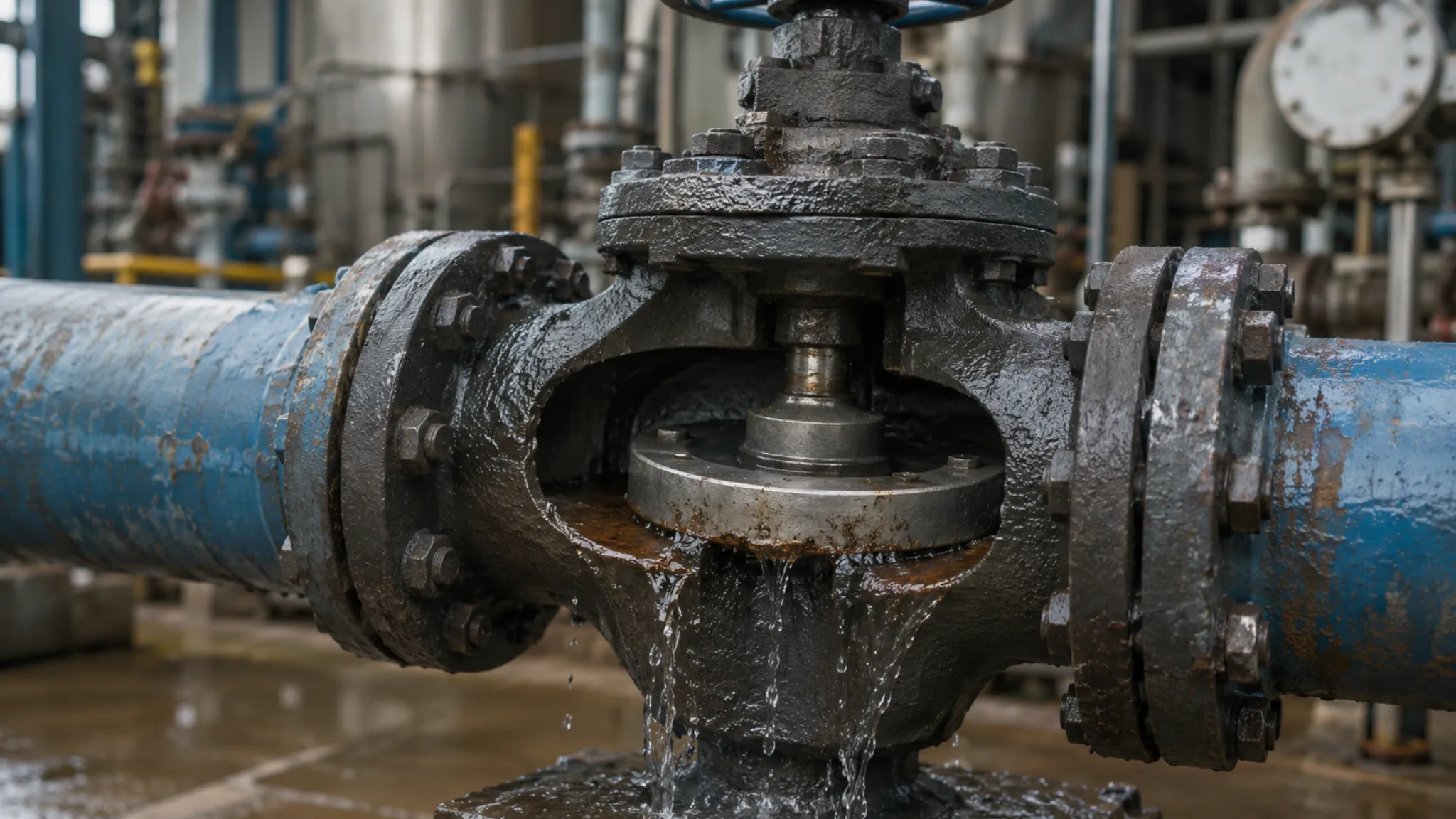
The cheapest option on the market is plain white PTFE. But once crude oil pressure exceeds 300 psi, pure PTFE will deform under load. During API 598 hydrostatic testing, the pressurized water can then spray violently through the distorted sealing gaps.
The weak points of pure PTFE are clear:
- Pressure limit around 300 psi
- Softens and deforms at 150°C
- Highly prone to cold flow
- Can leak visibly during hydrostatic testing
In the compounding shop, workers blend 15% to 25% glass fiber into virgin PTFE powder, then sinter the mixture in a high-temperature furnace. The resulting RPTFE reinforced ring becomes dramatically harder. Even after extended exposure to 200°C in an oven for many days, it remains dimensionally stable. Under ASME Class 300 hydrostatic pressure, it still holds its original geometry tightly.
In ASME Class 900 high-pressure natural gas service, ordinary PTFE can be torn apart by the gas flow. Buyers often switch to Devlon V-API, a high-performance yellow nylon. This material is highly moisture-sensitive: unless it is tightly wrapped in thick plastic, it can absorb up to 5% ambient moisture through its open capillary structure.
PEEK is one of the toughest engineering plastics in service. Before molding begins, the furnace temperature must be raised above 400°C to fully melt the resin. Once formed and installed, a PEEK seal can withstand crude oil flow in 260°C pipelines. Laboratory tensile testing puts its ultimate strength near 35,000 psi.
Subsea Christmas tree systems at depths of 3,000 meters are packed with PEEK components because they must withstand ASME Class 2500 ultra-high pressure. Behind these rigid plastic seats, an auxiliary rubber O-ring is often installed. But high-pressure gas can slowly diffuse into the elastomer through microscopic pores.
Chemical plant purchase specifications therefore often require all O-rings to pass explosive decompression testing. In acidic gas wells approaching 200°C, ordinary nitrile rings can soften like candy within minutes. Buyers must instead order FFKM perfluoroelastomer O-rings.
The acceptance criteria for elastomer explosive decompression are strict:
- Full compliance with NORSOK M-710
- Test gas contains 10% carbon dioxide
- Exposure at 1500 psi for 8 full days
- Instantaneous depressurization to zero
- No surface cracking allowed under the microscope
Even a single 50 mm diameter perfluoroelastomer O-ring can cost more than $2,000 from the original manufacturer. Yet after months in highly concentrated acid, it can emerge with dimensions unchanged from new. Still, when crude oil carries large volumes of abrasive mud and grit, even these premium polymer seals may wear deep grooves within 48 hours.
Two hard metal surfaces alone are difficult to seal. So in the workshop, workers use HVOF spray equipment to coat the seat surface with tungsten carbide (TCC). The coated surface measures up to HRC 72. Immediately after spraying, however, it is far rougher than sandpaper.
Lapping technicians then apply diamond compound along the edge and run the ball and seat together on a powered machine for 8 full hours. Afterward, inspectors check the metal surface inch by inch with a roughness meter. The final finish must remain below Ra 0.2 microns—smoother than bathroom glass.
Machining requirements for metal-seated rings are therefore strict:
- Surface must be overlaid with tungsten carbide or Stellite
- Working face must be lapped with diamond compound
- Ball and seat must be run together on a machine for 8 hours
- Final finish must remain below Ra 0.2 microns
- A wave spring must be installed behind the seat to maintain contact force
On the assembly floor, workers insert more than a dozen Inconel X-750 wave springs behind the metal seat. These springs provide hundreds of kilograms of constant force, pushing the seat into position. Even if line pressure drops as low as 5 psi, the all-metal seat is still forced tightly against the ball, preventing any oil leakage.
In catalytic cracking units, fluid temperature can surge well past 500°C. Under those conditions, tungsten carbide coatings may oxidize and spall away. Welders then grind off the damaged coating and replace it with cobalt-rich Stellite 6 hardfacing. Under the arc, a new hard armor layer is deposited around the seat. Metallographic examination after cooling reveals dense chromium carbide phases throughout the overlay.
| Seat/Seal Material | Maximum Pipeline Temperature | Pressure Limit (ASME Class) | Test Data / Performance |
|---|---|---|---|
| Pure white PTFE | 150°C | Class 300 | Laboratory friction coefficient as low as 0.04 |
| PEEK engineering plastic | 260°C | Class 2500 | Tensile strength near 35,000 psi |
| FFKM perfluoroelastomer | 327°C | Custom by groove design | Resistant to 10,000 chemicals in strong acid exposure |
| TCC tungsten carbide hard coating | 400°C | Class 2500 | Hardness above HRC 72 |
| Stellite 6 cobalt alloy | Above 500°C | Class 2500 | Chromium carbide phases resist galling |
The people signing the contract usually sit over the quotation sheet and compare every operating temperature and pressure value line by line. Choosing PTFE just to save a few thousand dollars can be disastrous if a high-temperature gas well opens and toxic gas blows through a burned-through seat, setting off alarms across the entire plant. On the other hand, spending heavily on perfluoroelastomer seals for ordinary ambient-temperature water lines is equally wasteful.