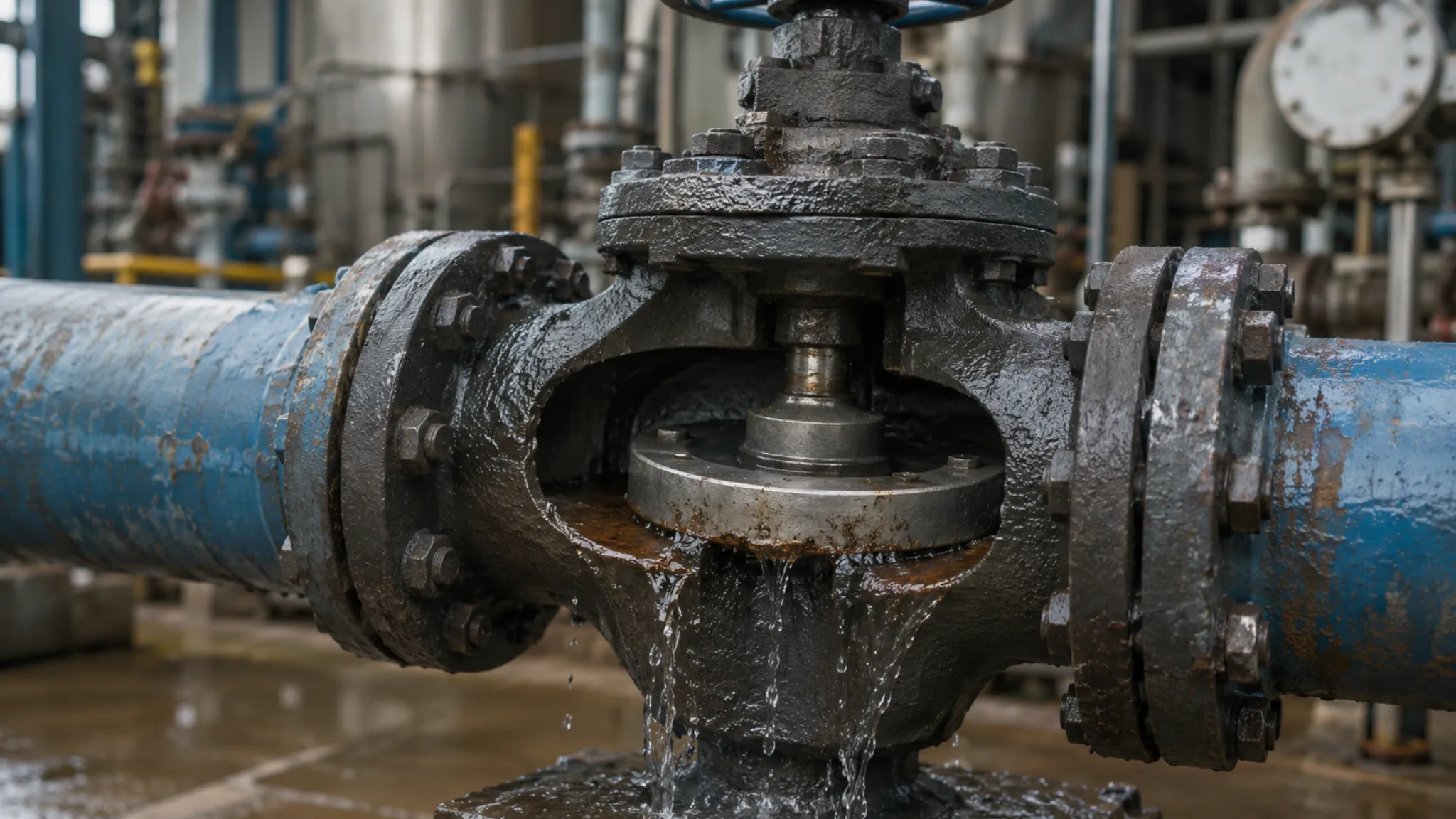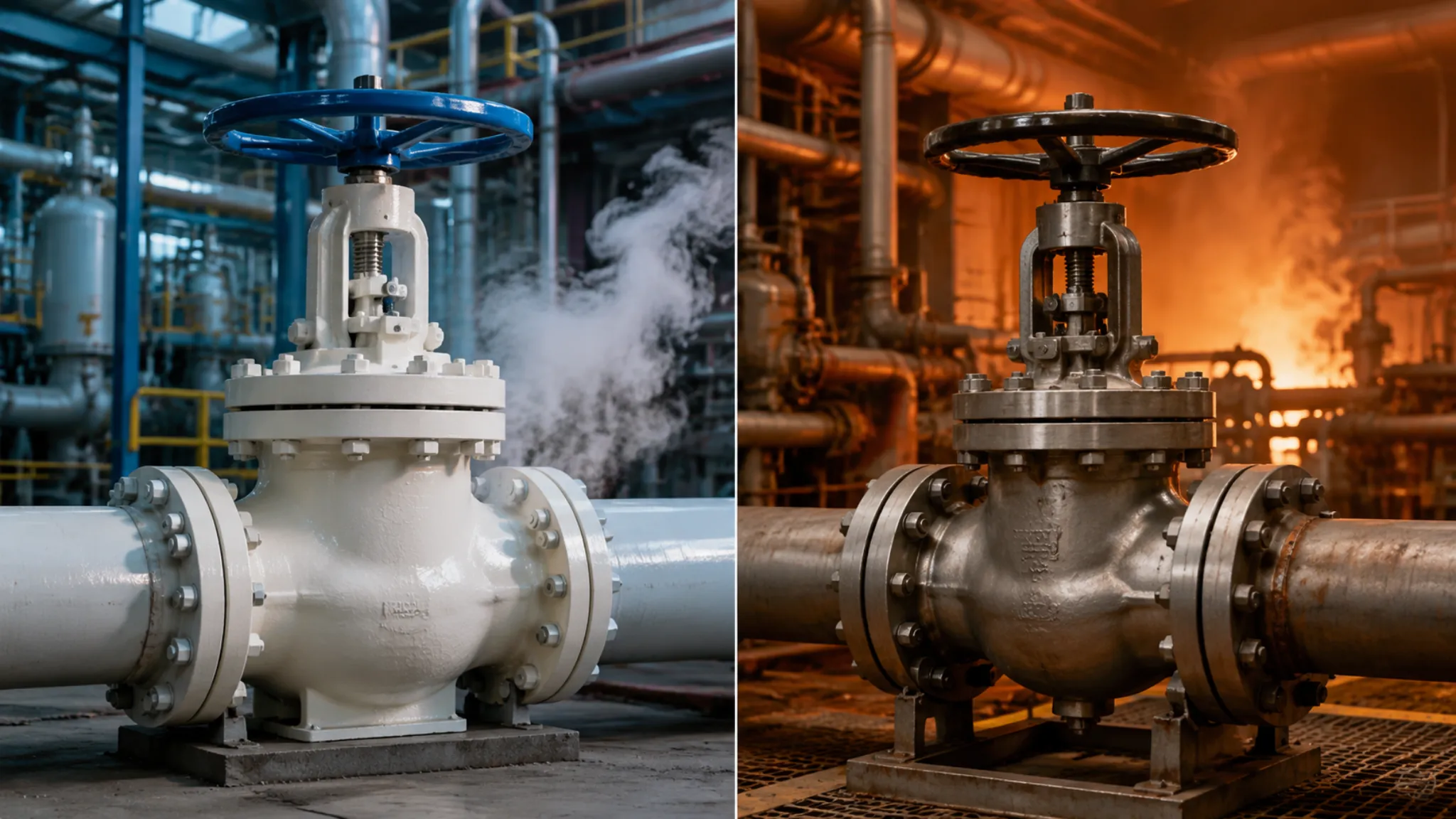
Stellite in high-temperature ball valves usually is better: its melting point is about 1285–1410°C, corrosion resistance is close to stainless steel, and impact resistance and cavitation resistance ability are strong;
While tungsten carbide hardness is higher (about 1400HV, Mohs 8.5–9), wear resistance is excellent but easy to brittle crack, under high temperature may decompose.
Engineering commonly adopts “erosion area uses Stellite, abrasive area uses WC” combination scheme.
high-temperature stability
Tungsten Carbide
Walking in the ball valve manufacturing workshop, the roaring sound of supersonic flame spraying equipment can penetrate heavy soundproof earmuffs. The oxygen pressure gauge pointer at the rear end of the spray gun stays on the red warning line of 1.2 megapascals. Aviation kerosene and high-pressure oxygen violently react in a narrow combustion chamber about 15 centimeters long. High-temperature gas instantly expands outward, erupting a high-speed flame stream reaching 40 centimeters in length and up to 3000 degrees in temperature.
Tungsten carbide powder as fine as flour is packed in a transparent powder feeding tank, quantitatively fed into the high-temperature flame stream by a powder feeder at 30 grams per minute. Tiny particles are instantly heated to a semi-melted state, rapidly climbing to a staggering flying speed of 1000 meters per second. Powder particles like micro cannonballs densely impact on the surface of a 316 stainless steel ball weighing 50 kilograms. Accompanied by severe impacts, the powder undergoes plastic deformation, overlapping layer by layer on the metal substrate, slowly growing into a layer of cermet layer about 0.35 millimeters thick.
- Mixed with 10% metal cobalt powder as binder material
- Powder particle size is precisely controlled by precision screens between 15 and 45 microns
- Sintering furnace maintains 1200 degrees high temperature to prepare mixed powder
- Liquid cobalt in molten state firmly wraps the hard tungsten carbide grains
The workshop quality inspector puts the sprayed test block under a high-magnification microscope to observe, and the screen clearly shows the microscopic structure inside the coating. Porosity is strictly controlled below 0.8%, hitting the hardness needle on the grains only leaves extremely small indentations. The microhardness on the reading meter surges to HV 1300, more than six times harder than the untreated stainless steel base material.
The ball surface just off the assembly line is abnormally rough, wearing canvas gloves touching it feels as prickly as coarse sandpaper. Assembly workers move the ball weighing dozens of kilograms onto the polishing machine tool. The machine tool spindle rotates at high speed, and workers use an 80-mesh diamond grinding wheel to perform long up to 4 hours of precision water-added grinding.
In a mud pipeline of a mine, every hour flows 800 tons of muddy water mixed with a large amount of sharp quartz sand. Extremely hard tungsten carbide crystals stubbornly block the cutting friction of sand grains at 5 meters per second. Continuous impacts make the dark gray coating surface more rubbed more bright. Site engineers bring a portable roughness meter to measure, the screen reading shows the ball core surface smoothness maintains at an extremely low level of Ra 0.2, and the friction coefficient between two pieces of metals is only 0.15.
On the instrument panel of the boiler room, the red numbers of steam temperature jump over the 400 degrees grand mark. Metal cobalt acting as a binder meets boiling hot oxygen, rapidly undergoes irreversible chemical changes, slowly becoming loose and porous cobalt oxide. Tungsten carbide particles losing the firm grab of metal cobalt become loose and shaking. The originally seamless solid defense line slowly appears tens of thousands of micro gaps only one-tenth the width of a hair.
- The thermal expansion coefficient of tungsten carbide itself is only 5.0 microstrains
- The expansion rate of the valve stainless steel base material is as high as 16.0 microstrains
- The huge difference in values tears huge shear forces at the junction of the two materials
- The original coating binding force up to 70 megapascals occurs a cliff-like drop
The nowhere-to-release huge internal stress spreads everywhere deep in the coating. The metal surface derives network thermal fatigue cracks completely invisible to the naked eye. Superheated steam of 50 kilograms pressure carrying extremely small water drops crazily drills into the depths of cracks. Water drops in the extremely narrow enclosed space are violently heated, volume instantly expands 1700 times.
The coating peels off in blocks like old mottled wall skin, a curved gap up to 5 centimeters long and up to 2 millimeters wide appears between the hard ball body and the softened metal valve seat. High-temperature and high-pressure fluid whistles past along the metal notch, the flow speed of internal erosion breaks through the speed of sound. The ball valve completely loses the basic function of cutting off fluid in the extreme-speed torrent, and the internal pressure of the thick pipeline drops suddenly by 3 megapascals within 10 minutes.
Factory technicians try to adjust the powder formula, using more heat-resistant nickel-chromium alloy to replace extremely easy-to-oxidize pure cobalt. 86% tungsten carbide powder matched with 10% cobalt powder and 4% chromium powder, mixedly filled into the hopper of the spraying machine. The new formula barely pushes the continuous usage temperature upper limit of the ball valve high up to 500 degrees. Under the microscope, it can be seen a layer of chromium oxide protective film only a few nanometers thick is generated on the coating surface, barely blocking the crazy invasion of high-temperature oxygen.
The natural barrier of materials bearing high temperature is still insurmountable. Encountering the rapid heating and sudden cooling working condition of pipeline temperature soaring to 600 degrees, surface microcracks still appear on time. Extremely unstable carbon elements in the coating undergo decarburization reactions under high-temperature roasting, becoming extremely brittle ditungsten carbide crystals. Maintenance workers’ daily patrols have to bring a large box of professional equipment to troubleshoot deeply hidden hidden dangers.
- Spray red coloring penetrant to find surface tiny microcracks
- Take out a portable hardness tester to spot-check the high-temperature softening point of the pipe wall coating
- Use a surface roughness meter to detect the abrasive wear depth in local areas
- Cut sample blocks and put under a metallographic microscope to observe binder phase loss condition
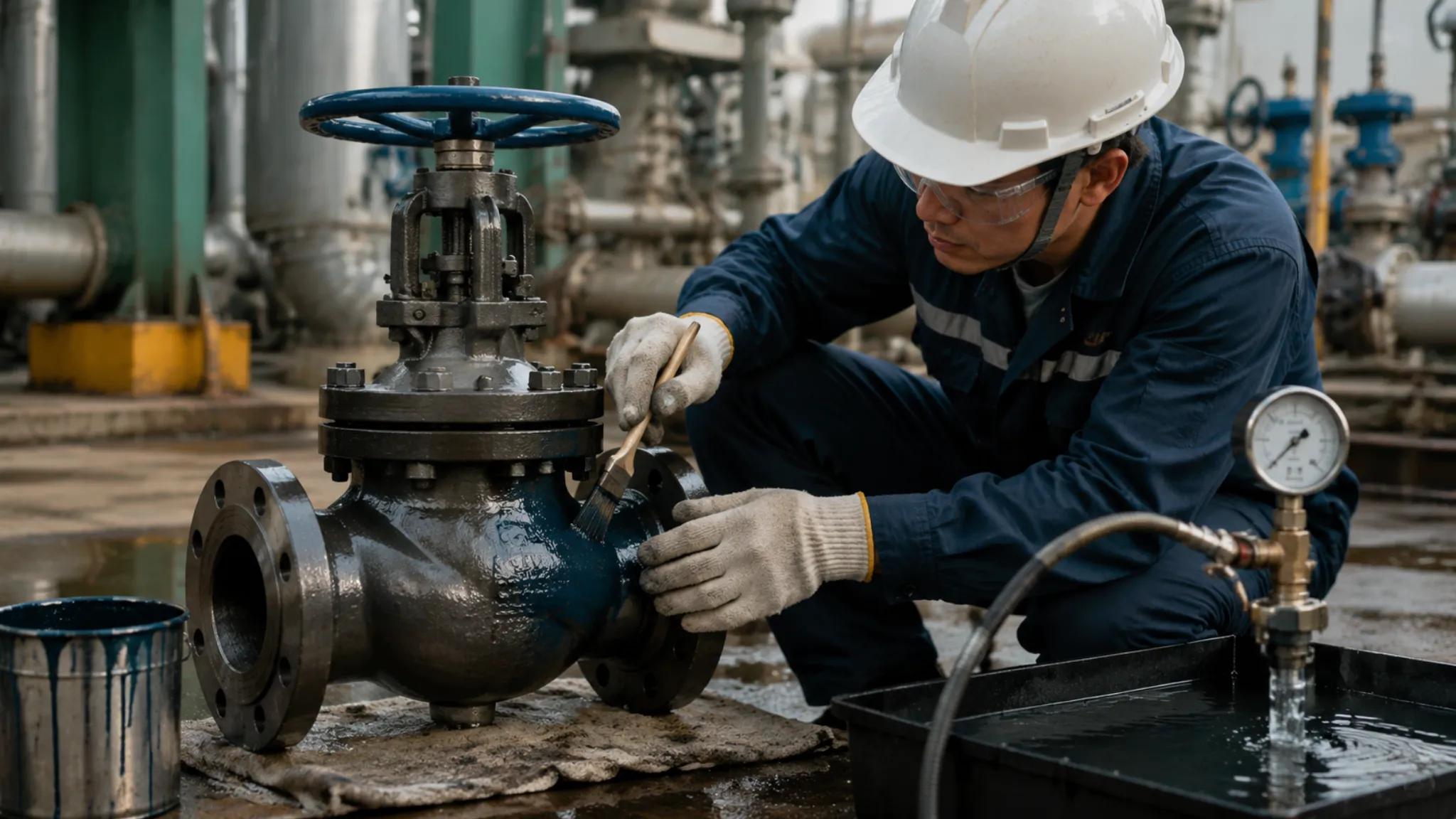
In a silicon powder conveying pipeline of a polysilicon chemical plant in the northwest, the fluid all year round maintains at the room temperature of 25 degrees, inside are full of extremely abrasive large and small silicon blocks. The workshop stipulates spraying 0.4 millimeters thick pure tungsten carbide powder as the mandatory acceptance standard for new valves entering the factory. Two workers install the heavy-duty ball valve into the main line containing ultra-high hardness silicon powder.
Stellite
Walking in the hardfacing workshop, the plasma transferred arc (PTA) welding gun emits glaring blue-white strong light. The operator wears an extremely black protective mask, gazing at the 1500-degree high-temperature plasma arc generated by the 200-ampere current breaking through argon gas at the end of the welding gun. The 1500-degree high-temperature arc melts a liquid molten pool 8 millimeters wide and 1 millimeter deep on the surface of the 316 stainless steel valve body.
Stellite No. 6 alloy powder loaded in the powder feeding cylinder is blown into the boiling molten pool along with protective gas. The powder formula holds more than 50% metal cobalt, 28% chromium, and 4% tungsten. Accompanied by the uniform speed movement of the welding gun at 15 centimeters per minute, the powder and the stainless steel base material completely melt into one body. A silver-white weld bead about 12 millimeters wide and reaching 2.5 millimeters in thickness slowly cools and forms.
The cooled coating is swept over by an ultrasonic flaw detector, and the screen shows the tensile shear strength at the joint breaks through 400 megapascals. The two metals achieve complete metallurgical bonding at the atomic level, eliminating the physical risk of the coating peeling off in whole blocks. A worker brings a Rockwell hardness tester and presses down heavily, the dial pointer steadily stops on the scale line of HRC 42.
Put the metal test block tested at room temperature into a 600-degree industrial heating furnace to continuously bake for 48 hours. Take out the red-hot test block and again perform puncture measurement while hot, the reading of the hardness testing instrument still maintains at the higher level of HRC 35.
| Test Temperature Environment | Surface Hardness Performance | Oxide Layer Thickness Change | Sealing Face Friction Coefficient | Bonding Layer Tensile Strength |
|---|---|---|---|---|
| 25 degrees room temperature room | HRC 42 | 0.00 microns | 0.28 | 420 MPa |
| 400 degrees steam | HRC 38 | 0.05 microns | 0.32 | 415 MPa |
| 650 degrees pyrolysis gas | HRC 35 | 0.12 microns | 0.38 | 405 MPa |
| 800 degrees coal gasification | HRC 32 | 0.25 microns | 0.45 | 390 MPa |
Chromium elements up to 28% in a high-temperature oxygen environment rapidly generate a layer of dense chromium oxide protective film 0.1 microns thick on the alloy surface. The bottom metal completely isolates air erosion.
- Surface Cr2O3 oxide film blocks oxygen atoms from diffusing into the depth of 5 microns inside
- Trace carbon elements inside the alloy combine with tungsten to generate extremely hard carbide phases
- Crystals maintain 0.1% low deformation rate after experiencing 20 to 800 degrees severe thermal shock
In the catalytic cracking unit area of an oil refinery in East China, the outer wall of the pipeline is wrapped with 15-centimeter thick aluminum silicate insulation cotton. Inside the pipeline is conveying 650-degree high-temperature oil-gas mixture at a speed of 25 meters per second. The operator presses the pneumatic switch on the console, and the heavy ball valve slowly closes under a system pressure of 10 megapascals.
Two pieces of sealing faces hardfaced with 3-millimeter thick Stellite alloy happen severe friction under high temperature. The extremely dry surfaces do not have any lubricating fluid, totally relying on the extreme-speed dry friction of the metal itself. Experiencing 3000 times of on-off tests with pressure, the engineer disassembles the valve and uses a coordinate measuring machine to scan the surface morphology of the ball body.
The 3D modeling data on the computer screen shows the wear depth of the ball core surface is only 0.05 millimeters. The roughness reading changes from Ra 0.4 when leaving the factory to Ra 0.6, still seamlessly fitting the metal valve seat of the same material. Reconnect a high-pressure nitrogen bottle to pump in 15 megapascals test pressure, the leak detector shows the leakage amount is less than 2 milliliters per minute.
In the black water pipeline of a coal chemical plant in the northwest, the fluid temperature reaches 550 degrees, mixed with 15% hard coal cinder particles. Last month the pipeline just replaced an old ball valve that caused serious internal leakage due to metal coating falling off. The maintenance monitor directs a heavy crane to hoist into place a new ball valve weighing 1.5 tons with sealing faces adopting pure Stellite alloy hardfacing.
thermal shock resistance
Rigid and easy to break
The inside of the refinery’s catalytic cracking pipeline usually maintains at 25 degrees Celsius. Less than 3 seconds after the operator presses the start button, 550 degrees Celsius superheated steam carrying a large amount of powder rushes into the valve inner cavity.
The temperature difference exceeding 500 degrees crazily makes trouble in the surface coating less than 0.3 millimeters thick. Industrial-grade tungsten carbide powder attaches to the metal ball surface through supersonic flame spraying. The formed tungsten carbide Vickers hardness breaks through 1500. The extremely dense particle arrangement makes it can easily resist the crazy scratching of fluid at tens of meters per second.
Throw a piece of pure ice at minus 20 degrees into a boiling hot water pot, the ice block surface will emit crisp cracking sounds and be covered with network cracks. Tungsten carbide’s performance facing high-temperature shock is the same principle as this ice block. It is too hard, there is not any physical space that can buffer bearing forces.
The thermal expansion value of the bottom 316L stainless steel base material approaches 12. Under the 550-degree high-temperature scalding attack, the stainless steel base material desperately expands and becomes larger outward. The tightly wrapped tungsten carbide coating’s expansion value is only around 4.5.
- The external tungsten carbide hard shell is deadlocked in place and refuses to move
- The internal stainless steel base is heated and crazily props up its volume outward
- The junction of the two layers of materials erupts a tearing force of 300 megapascals
- The tiny pores on the coating surface are instantly torn open by this brute force
The strength of 300 megapascals pressing on an area of a fingernail roughly equals suspending a heavy object of 3000 kilograms. Tungsten carbide’s anti-cracking index wanders around 5 all year round, exceptionally fragile. That layer of 0.2-millimeter bulletproof-vest level hard shell on the surface, as long as appears one micron-level thin seam, the security defense line of the entire pipeline then completely collapses.
Without any flexibility to provide buffer, the crack tips savagely drill toward the depth along the weakest direction of particle binding. The pipeline experiences less than 100 times of opening and closing with pressure, a 20-micron deep tiny wound penetrates the whole layer of tungsten carbide. 550 degrees boiling hot fluid along crevices thinner than hairs deadly bites the metal binding face at the bottom of the coating.
The high pressure of 50 bar inside the pipeline forcibly stuffs gas into the deepest of the crevices. The gas violently expands in the extremely narrow bottom crevice. The originally firmly attached hard tungsten carbide blocks are abruptly pushed out of the base material surface.
- High-pressure high-temperature gas turns into countless microscopic metal crowbars
- The metal binding points at the bottom of the coating are violently broken one by one
- The 0.3-millimeter thick hard outer shell falls off like old wall skin
- The shattered hard blocks drop into the boiling hot fluid and are instantly washed away
Workers use plasma hardfacing craftsmanship, dead melt-connecting Stellite alloy exceeding 3 millimeters in thickness onto the valve ball surface. Under the same test, the Rockwell hardness of this kind of material is around 40, much softer than tungsten carbide. It comes with a kind of flexibility and softness peculiar to metals.
The Stellite alloy’s expansion value is as high as 14, extremely like a tacitly cooperating duet dance partner with the stainless steel at the bottom. When the 500-degree high-temperature torrent slaps over, the surface layer alloy follows the internal base to stretch body together. That tearing force of several thousand kilograms at the interface is quietly dissolved by the tiny sliding of metal particles inside.
There is no dead-end fighting hard against hard, only the real physical collision of rigid and easy to break versus overcoming hardness with softness. The Stellite internal grid slightly deforms under high-temperature shock, replacing that kind of jade-and-stone-burned-together shattering.
- Metal internal microscopic crystal lattice is heated and produces slight slip
- Hundreds of megapascals of destructive force are removed layer by layer by huge grid
- The outer shell follows the internal base to synchronously complete expansion actions
- After pipeline cooling, the material automatically shrinks and recovers to initial appearance
The field test equipment runs through 2000 extremely cold and extremely hot rigorous cycles. The ball valve sealing face hardfaced with Stellite alloy is as bright and clean as new. The surface physical wear amount scanned out by the flaw detection instrument only stays at 0.05 millimeters. Disassembling the entire valve, cannot find one long and thin crack penetrating the surface.
When the factory selects materials for high-temperature ball valves, a fluctuation of 50 degrees Celsius per minute is an extremely dangerous warning line. Crossing this line, tungsten carbide’s ultra-high hardness becomes a rope strangling itself. The higher the hardness of the material, under the suddenly cold and suddenly hot extreme-speed pulling, the faster it shatters.
Ductility & Toughness
In the extremely cold factory area of minus 30 degrees Celsius, the pipeline outer wall is covered with frost. The operating room pushes down the pressurization joystick, 600 degrees Celsius liquid high-temperature medium breaks through the pipeline gate within 1.5 seconds. The stainless steel valve ball weighing 450 kilograms instantly suffers fierce high-temperature torrent slapping.
That layer of 3.2-millimeter thick Stellite alloy hardfaced on the valve ball surface welcomes the most furious physical tearing. The severe temperature difference of several hundred degrees attempts to tear the outer metal apart rawly. The cobalt-based crystal grid inside the Stellite alloy starts a defense war of microscopic level.
Ductility in physics makes this layer of metal can happen stretching like dough when suffering huge forces. Tungsten carbide’s tensile limit infinitely approaches zero, slightly stressed then shatters into powder. Stellite alloy shows a fracture elongation rate of 1% to 3% on the tensile testing machine.
Put a heavy-duty valve ball of 500 millimeters diameter under a microscope to observe. That layer of 3.2-millimeter thick alloy coating on the surface, forced by 600 degrees high temperature, extends outward a physical deformation of nearly 5 millimeters. The 5 millimeters stretching space eats cleanly the furious thermal stress sufficient to destroy the equipment.
Toughness gives the material an invisible life-saving trump card. The Charpy impact testing machine in the laboratory violently knocks and smashes the metal test block with a pendulum weighing 20 kilograms. The tungsten carbide test block cannot even withstand an impact force of 2 joules, immediately collapsing and shattering into hundreds of pieces of residue.
The Stellite alloy test block suffers the same fierce pendulum heavy blow, only leaving a dent on the surface. The testing instrument records the impact energy it absorbs is as high as 40 joules. A full 20 times of energy absorption gap originates from the layer-by-layer slip of the cobalt-based grid inside the alloy.
- Face-centered cubic crystal lattice is heated and happens microscopic dislocation slip
- Carbide particles at grain boundaries block cracks from going deeper
- The huge mechanical energy absorbed is quietly transformed into heat energy
- The metal structure still maintains absolute denseness after completing millimeter-level expansion
After the 550 degrees Celsius high-temperature fluid recedes, the pipeline enters the room-temperature purging stage. The extended 5 millimeters alloy coating slowly shrinks along with the bottom metal base material. It peacefully shrinks back to the initial position, the outer skin has not the slightest trace of bulging or falling off.
Undergoing the torture of continuous 8000 hours of alternating working conditions, the valve interior bears over a thousand times of extremely cold and extremely hot back-and-forth scouring. Maintenance workers use high-pressure water guns to wash away the black residue on the sealing faces. The bonding face of the Stellite coating fits seamlessly, cannot even find a 0.01-millimeter peeling gap.
| Physical Test Item | Tungsten Carbide Coating | Stellite Cobalt-based Alloy |
|---|---|---|
| Vickers Hardness (HV) | 1500+ | 400 – 500 |
| Fracture Elongation Rate (%) | < 0.1 | 1.0 – 3.0 |
| Charpy Impact Energy (J) | 1 – 2 | 35 – 50 |
| Thermal Shock Failure Cycles | < 100 times | > 2000 times |
Stellite, whose Rockwell hardness stays around 45, gives up absolute defense of fighting hard against sand and stones to the end. It uses cobalt elements and chromium elements to build up an elastic microscopic metal drawbridge.
1500 psi system back pressure superimposing 600 degrees heat flow crazily squeezes the valve ball sealing face. The alloy crystal under heavy pressure happens slight plastic deformation, taking the opportunity to fit the irregular protrusions of the valve seat. The two metal faces perfectly bite together under the squeezing force of several hundred tons.
The engineer holds an ultrasonic flaw detector and sweeps over the heavy-duty valve used for one year. The waveform graph representing coating integrity on the screen glides smoothly, cannot find a single peak signal representing fracture. The 200,000-dollar purchased industrial ball valve, relying on this layer of 3-millimeter outer clothing that can bend and stretch, saves its lifespan.
Material Selection Suggestions
A 24-inch heavy-duty shut-off ball valve on the purchasing list is priced at 150,000 US dollars. The engineer holds the material confirmation sheet, his line of sight stopping on the surface coating option. The real physical parameters in the fluid pipeline dominate the service life of equipment with tens of millions level production capacity.
Open the operation record sheet of the gasification unit in the coal chemical industry park. Black water with solid content as high as 30% is surging in the pipeline. Flow speed reaches 25 meters per second, like countless high-pressure water knives day and night scouring the metal inner wall. The temperature on the instrument panel stably stays in the constant temperature interval of 250 degrees Celsius all year round.
Putting Stellite alloy into the working condition of pure physical wear, it at most cannot hold up over 3 months. Rockwell hardness 45 soft metal facing 80-mesh sharp quartz sand, the outer skin will be scraped off alive layer by layer. The process sheet specifies tungsten carbide spraying.
The HV 1500 ultra-high surface hardness carries the sand and stone scouring of 25 meters per second completely to death.
- Pipeline medium mixes over 15% high-hardness solid particles
- Hourly temperature fluctuation recorded by instrument panel does not exceed 10 degrees Celsius
- Fluid impacts valve inner cavity at extremely high speed exceeding 20 meters per second
- Production scheduling requires equipment to continuously run 17520 hours without stopping
The steam pipe network of the gas turbine combined cycle power plant next door has a completely different temper. The high-pressure superheated steam discharged from the boiler temperature is as high as 650 degrees Celsius. Every time the cold state start button is pressed, the entire plant’s pipelines must complete pressurization and heating up within 15 minutes.
“The pipe wall from the 15-degree icy cold state is instantly penetrated by a 600-degree heat wave, a hard coating without physical extension buffer cannot even survive the first purging cycle, large areas of peeled-off metal residues will go along the water flow and smash all the impellers of downstream water pumps.”
120-bar high-pressure steam mixed with condensed water smashes towards the valve inside like heavy hammers one after another. Purchasing documents explicitly fill in Stellite No. 6 alloy hardfacing with a thickness of 3.5 millimeters. Pure physical anti-wear performance retreats to the second line, guarding against thermal shock tearing becomes the primary task.
Severe temperature drop as high as 585 degrees completes crossing within seconds level time. The cobalt-based grid inside Stellite alloy relying on microscopic extension eats the thermal stress sufficient to make metal collapse and crack. The valve still maintains Class VI level absolute zero-leakage sealing under high temperature and high pressure.
- Extreme shock of temperature difference crossing 300 degrees within 10 seconds appears in production process
- Pipeline needs to frequently discharge high-pressure steam mixed with low-temperature water hammer effect
- Valve actuator needs to complete over 5000 times of opening and closing with pressure every year
- Equipment is still required zero gas test leakage after extreme-speed heating and cooling cycles
The inbound account book in the consumable warehouse records real material costs. The purchasing price of one kilogram of industrial-grade tungsten carbide spraying powder is about 200 US dollars. The Stellite alloy hardfacing welding wire of the same weight, the wholesale price is around 120 US dollars.
The initial material unit price covers up the real industrial running bill. A 10-inch faulty ball valve with shattered coating leaks 500 cubic meters of toxic gas to the atmosphere every hour. The pollution fine issued by the environmental protection bureau is as high as 10,000 US dollars every day.
The maintenance team disassembling and replacing a scrapped valve needs to consume 3 skilled workers a whole 48 hours. The production capacity pipeline loss brought by stopping the machine can buy 100 brand-new heavy-duty valves. Equipment choosing the right 3.5-millimeter anti-thermal-shock outer clothing can serve safely on steam pipelines for 60 months.
galling resistance
Metal Structure
The metal parts inside the valve are deadly pressed together with a force of 50 megapascals. Tiny metal contact points bear huge lateral thrust. The huge thrust forcibly squeezes and deforms the originally square-shaped atomic arrangement.
Atoms are forced to re-queue, becoming a tight hexagonal honeycomb shape. The gaps that atoms could slide each other before instantly reduce by over 70%. The two metal surfaces approach to the limit distance of 0.3 nanometers, and atoms cannot grow together either. The deformation action of arrangement shape absorbs a large amount of heat generated by friction.
The temperature inside the pipeline breaks through the red line of 427°C. New changes happen inside Stellite alloy. Chromium elements accounting for 27-32% by weight separate out. Chromium turns into countless micron-sized hard particles in high temperature. Tens of thousands of extremely hard tiny particles are like miniature steel nails, deadly embedded in the deformed metal grid.
- Square-shaped arranged atoms squeeze into hexagonal honeycomb to block fusion
- Surface atoms are extremely difficult to be dragged running everywhere by huge thrust
- Chromium elements over 27% proportion turn into micron-level hard small steel nails
- Atomic arrangement formation change eats over 70% of severe friction heat generation
Valve ball and valve seat hard-against-hard dry-rubbed 100,000 times. Vernier caliper measures Stellite surface only rubbed off 0.02 millimeters. The hexagonal honeycomb-shaped atomic layer is extremely easy to peel off layer by layer. 200 Newtons lateral pulling force drags the surface. A layer of 0.5-micron thick extremely thin metal neatly falls off like playing cards.
Below exposes a brand-new flat metal layer. Dropped metal debris becomes 0.1-micron thickness extremely fine powder. Powder is sandwiched under 80 megapascals local high pressure, dead or alive refusing to re-group and stick together. The torque monitoring chart of operating valve draws a smooth straight line. The self-sacrifice of surface tiny atoms exchanges for the smooth operation of the whole machine.
Tungsten carbide powder is fed into the combustion chamber of the spraying gun. The spray gun belly spews 3000°C extreme high flame. The mixed 10% cobalt and 4% chromium inside are burned into liquid glue. Hard tungsten carbide sand grains sizing in 1 to 5 microns wrap metal liquid water, heavily smashing towards valve steel body at a speed of 800 meters per second.
High-temperature coating rapidly cools and hardens, smashing into flat wave shapes mutually overlapping layer upon layer. Tested Vickers hardness of tungsten carbide sand grains is as high as 1200 HV. Encountering 300 megapascals super squeezing force, metal glue softens turning into flowing paste. The originally tightly wrapped tungsten carbide sand grains expose extremely sharp knife-edge rims.
Wandering metal atoms cross 0.5-micron tiny seams. Tungsten carbide surface even if machine-polished to Ra 0.1 microns smoothness, zoomed in still hides 0.2-micron deep small ditches. 500°C high temperature scalds both sides’ surface atoms to dash wildly. A 0.01-millimeter thick microscopic welding dead knot takes shape in one second.
Motor outputs 5000 N·m strength to raw-pull and hard-drag valve stem. Tiny welding dead knots are pulled on a tensile force exceeding 350 megapascals. Tungsten carbide coating’s internal wave overlapped layers are torn rotten. Several-micron big hard stone blocks are rawly peeled out from metal glue. Leaving broken holes on the surface depth exceeds 0.05 millimeters.
- Tungsten carbide sand grains sizing in 1 to 5 microns are very easy to brittle crack
- Metal glue under 300 megapascals squeezing turns into soft rotten paste
- Dashing atoms knot into 0.01-millimeter thick tiny weld spots in one second
- Pulling exceeding 350 megapascals rawly tears rotten overlapping coating
- Broken holes with depth breaking through 0.05 millimeters let fluid leak water everywhere
Half a second of door-opening action, hard sand grains scratch 0.03-millimeter wide deep ditches on metal face. 150 pounds pressure liquid crazily sprays out along tiny scratches. Water flow scouring washes small ditches into 0.5-millimeter wide leaking big rivers in less than 48 hours.
Limit high temperature exceeding 600°C roasts tungsten carbide’s interior. A massive amount of carbon atoms run away from inside the material. The originally extremely solid material turns into very brittle glass body. Detector finds out a force swelling outward hides in the coating, values wildly soaring above 400 megapascals.
Factory pushes spray gun robot’s moving speed fast to 600 millimeters per second. Accurately dead-locking powder only stays in 3000°C sea of fire for a few milliseconds. Microscope cuts open and sees, tiny hollow holes of air hiding in coating drop below 0.5%. Workers pick up 150-mesh thickness diamond sandpaper roughly grinding for 6 hours.
Thermal Spraying Technology
Push open the heavy lead door of the soundproof room, 120 decibels roaring sound fills eardrums. High Velocity Oxygen Fuel (HVOF) equipment’s combustion chamber is injected with aviation kerosene and pure oxygen. After mixed gas ignites, cavity internal pressure instantly surges to 0.8 megapascals.
Tungsten carbide powder filtered by 400-mesh screen is fed into flame stream center by high-pressure nitrogen. Powder particle sizes are strictly controlled between 15 to 45 microns. In an extremely short flying time of less than 3 milliseconds, particle surface temperature sharply climbs to 1900°C. Hard tungsten carbide inside hasn’t melted, cobalt metal binder on the surface has become liquid state.
Semi-melted state powder particles accelerate to 1000 meters per second. Opposite is stainless steel valve ball body preheated to 150°C. Hypersonic impact force rawly slaps the originally spherical powder flat. Metal surface leaves a layer of microscopic deformed layer like pancakes only 2 microns thick.
- Powder feeder dial scale is stuck at fixed output amount of 60 grams per minute
- Spray gun nozzle’s distance away from valve surface is dead-locked at 350 millimeters by laser ruler
- High-pressure air knives on both sides regularly blow away 0.5-micron loose wandering dust
- Slapped-flat powders mutually overlap and bite to knot into complex and intricate mechanical deadbolts
Spraying robotic arm’s moving speed is set at 500 millimeters/second. Flame stream back and forth sweeps 30 passes altogether on valve ball surface. Thickness gauge measures coating thickness overlaps to 0.35 millimeters. Tensile testing machine hard pulls coating, interface bonding strength reading stays at 85 megapascals.
If spray gun distance retreats back to 400 millimeters, powder’s flying speed will drop gear. Speed smashing onto valve ball surface only has 600 meters per second left. Kinetic energy decays by half, powder particles are slapped not flat enough. Microscopic hollow holes of 5 microns size will be left inside coating.
60 megapascals closing pressure presses on valve seat, microscopic hollow holes become hotbed of cracks. Tiny cracks climb outward along 5-micron pores. Entire piece of coating fragment 0.05 millimeters wide separates from base body and falls off. Metal dry friction bite destruction point then spreads from the place of dropping blocks.
Stellite alloy’s spraying play style is completely different. Plasma spraying machine starts, 15000°C argon plasma arc is pulled out between two poles. Stellite No. 6 alloy powder in extreme high temperature thoroughly and completely melts into liquid metal water drops.
| Spraying Process Comparison | Flame Stream Temperature | Particle Speed | Porosity | Bonding Strength |
|---|---|---|---|---|
| HVOF Tungsten Carbide | 3000°C | 1000 m/s | < 0.5% | 85 MPa |
| Plasma Stellite | 15000°C | 400 m/s | 1.5% | 60 MPa |
| PTA Hardfacing Stellite | 6000°C | Molten Pool Metallurgy | 0 | 150 MPa |
Liquid Stellite water drops smash on steel material surface, iron atoms at bottom and cobalt atoms in water drops mutually dash wildly. Both sides in junction zone mix out a 10-micron wide transition belt. Tension machine goes to pull, bonding strength easily breaks through 150 megapascals.
High-temperature water drops cool at a speed of 10000°C per second. Extremely fast temperature drop freezes chromium’s carbides into extremely tiny micro-particles. Thermal expansion and cold contraction force accumulates 300 megapascals pulling force in coating. Factory puts valve body into furnace to heat up to 300°C, blocking risk of coating cracking.
Valve ball surface after spraying finishes presents rough matte gray. Crane stuffs it into vacuum heat treatment furnace, furnace temperature is pulled up to 1050°C. Continuous 2 hours of high-temperature baking lets tiny pores inside coating mutually fuse. Instrument detection shows internal porosity drops from 1.5% to below 0.2%.
Hardness tester’s diamond probe hangs 300 grams weight and smashes towards coating. Pressed-out diamond-shaped small pit’s diagonal line length is less than 20 microns. Vickers hardness calculation result steadily stops at 1150 HV. Scratch instrument powerfully carves 0.1-millimeter deep ditch, edge does not have a bit of peeling and falling off.
Console cuts off aviation kerosene’s supply pipeline. Lathe chuck clamps valve ball with 0.35-millimeter armor and slowly rotates. Cooling down speed is stuck on the scale of 20°C per minute. Thermal expansion coefficient in extremely harsh cooling curve completes matching and synchronizing.