Soft seated (PTFE/RPTFE) and metal seated ball valves dominate process plant shut-off valve procurement. How do you pick the right one for your application?
Comparing Sealing Performance
Soft Seat Sealing
Soft seated valves rely on elastic seat materials (PTFE, RPTFE, PPL) to elastically deform under preload, filling microscopic valleys on the ball surface to achieve sealing. Spring preload typically provides 5-20 N of force. PTFE has Shore D hardness D50-D60 with a honeycomb micro-structure visible under microscope — when compressed, PTFE flows to fill surface valleys. Factory test: nitrogen at 0.5 MPa, held 30 minutes underwater, pass criteria ISO 15848 Class A or B (no visible bubbles).
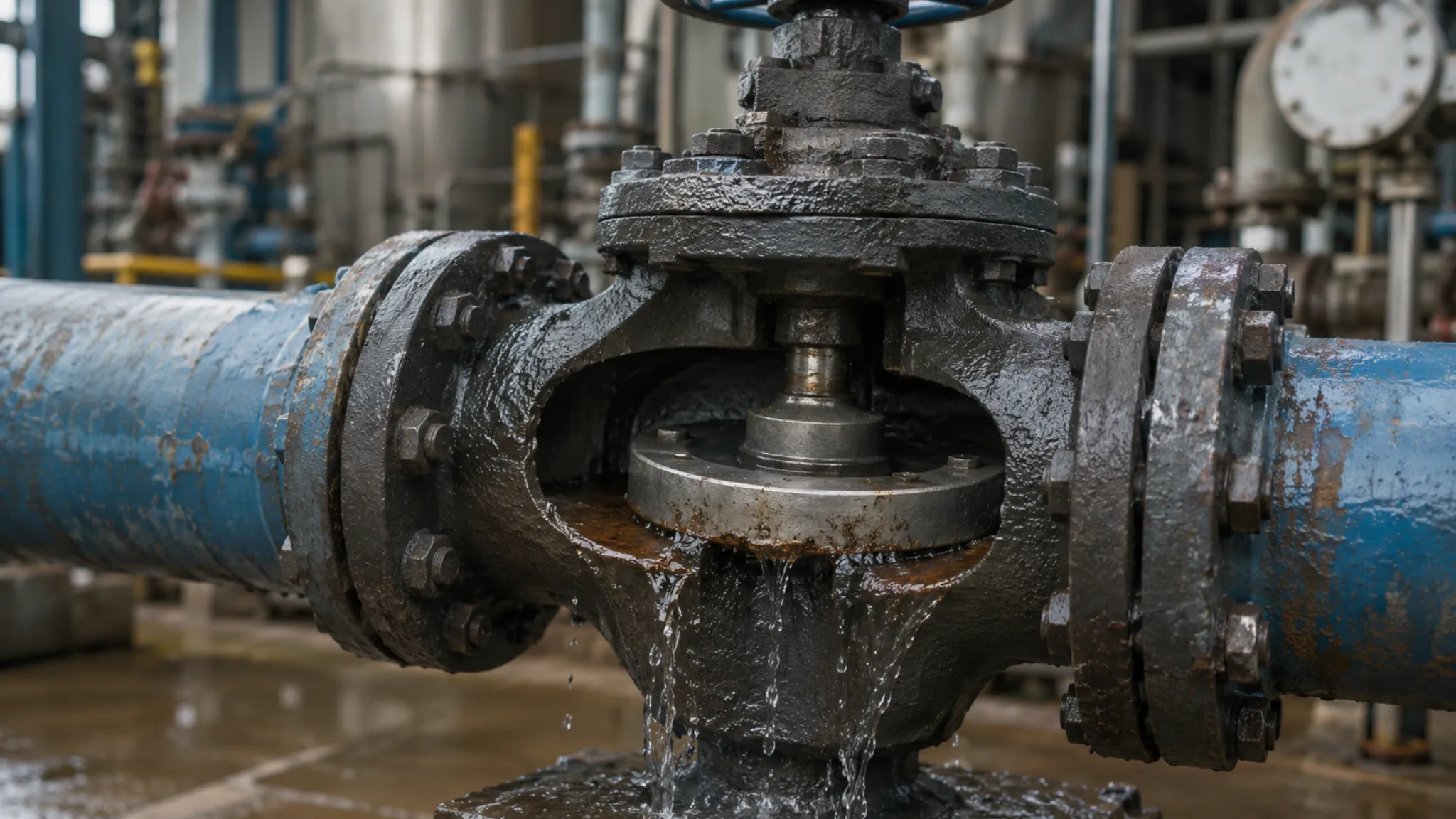
At a chemical plant, a batch of PTFE seated valves showed preload dropped 40% after 3 years, and leak rate increased by an order of magnitude. PTFE cold flow causes seat thickness to gradually reduce under repeated compression. On-site diagnosis took 2 months to confirm creep-induced preload decay. Lesson: soft seat performance degrades gradually without obvious failure warning — this is the primary safety hazard in high-temperature service. A seal force inspection cycle must be built into the maintenance schedule, not waiting until leaks become visible.
Metal Seat Sealing
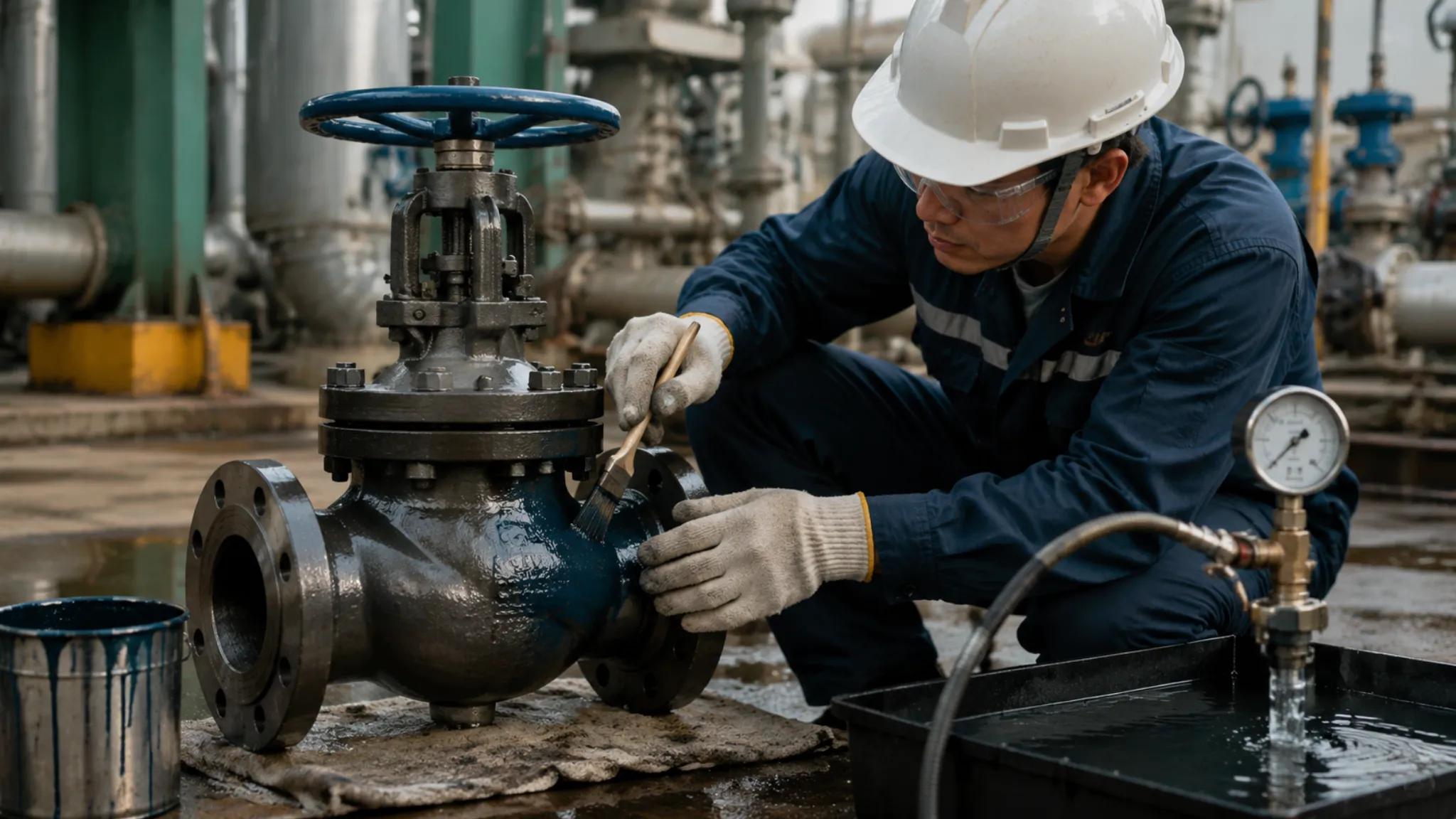
Metal seat sealing relies on precision-grinding metal-to-metal line contact. Both ball and seat sealing faces are ground to flatness within 0.01 mm and Ra 0.2 um. When closed, two sealing lines form line contact under preload (theoretical width 0.1-0.3 mm). Unlike the soft seat’s surface seal, metal seat is line seal — contact area is small, force is highly concentrated, and reliability is extremely sensitive to grinding precision.
| Grinding Step | Target | Precision Required | Inspection Method |
|---|---|---|---|
| Coarse grind | Ball | Roundness error 0.02 mm | CMM |
| Fine grind | Seat | Ra 0.2 um | Profilometer |
| Contact ratio check | Seat | 75% minimum | Prussian Blue |
| Seal test | Full valve | 10 bubbles/min maximum | Air under water |
- Grinding precision determines sealing reliability: Ra 0.2 um, roundness error 0.01 mm, contact line width 0.1-0.3 mm
- Contact ratio must be 75% minimum: below this causes localized stress concentration
- Gas seal test must follow grinding immediately: nitrogen 0.4-0.7 MPa, 10 bubbles/min maximum
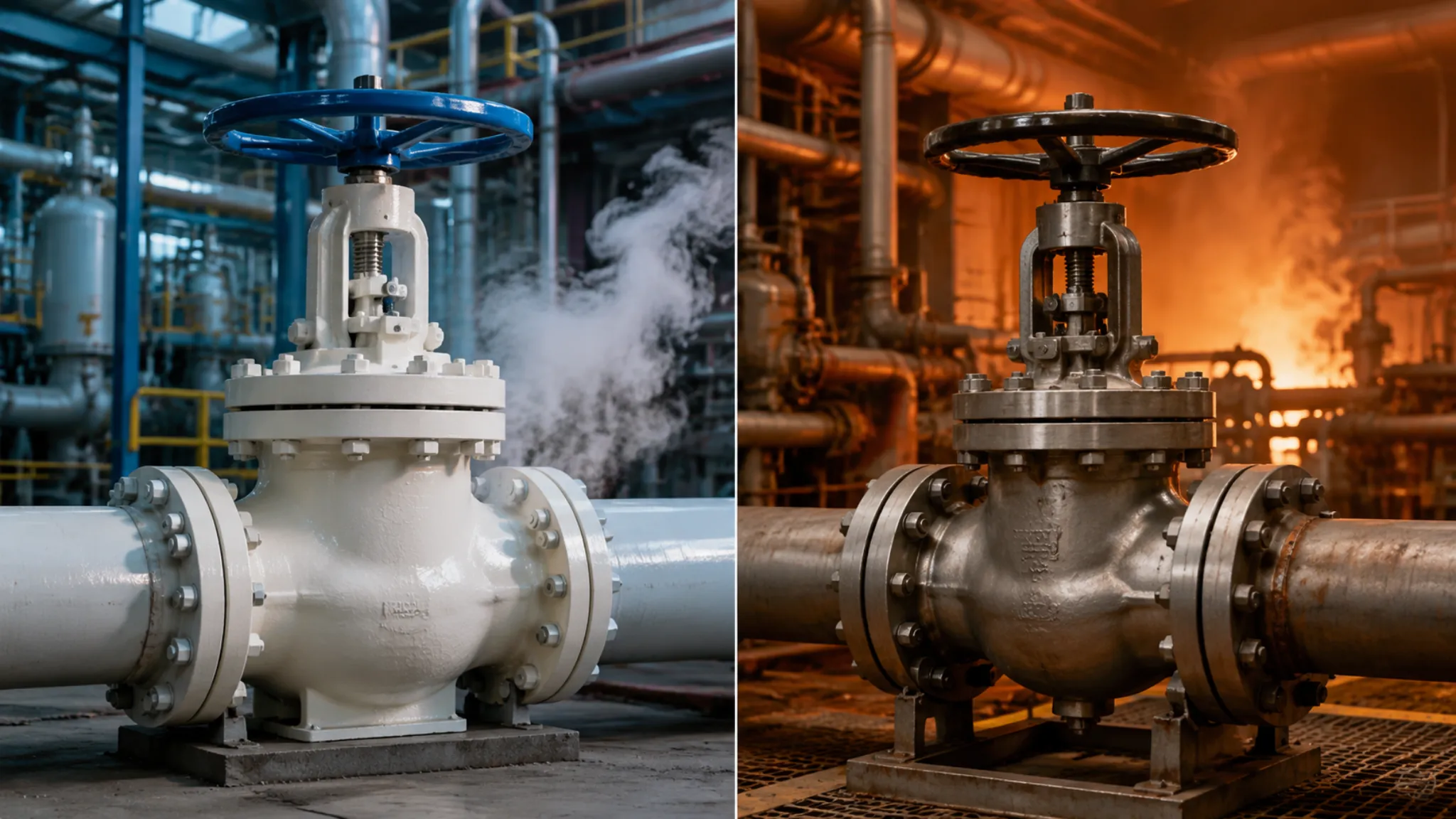
At a delayed coker, I reviewed 10-year data: soft seat leak rate increased 5x (from undetectable to ~50 bubbles/min), while metal seat leak rate barely changed (steady 3-5 bubbles/min) — direct proof of the fundamental difference between the two sealing mechanisms.
Comparing Leak Levels
- Soft seat ISO 15848 Class VI: zero leakage (helium mass spectrometry), 100x stricter than metal seat
- Metal seat ISO 15848 Class IV: 10 bubbles/min maximum; API 598 2020 raised limit 20%
- Class 600+ high pressure: metal seat blow-off risk rises sharply — safety is primary concern
Leakage rate difference is an objective engineering fact and should not be measured by the same standard. Soft seat Class VI requires zero visible leakage (helium spectrometry, sensitivity 10-9 mbar.L/s); metal seat typically meets Class IV or V (10 or 1 bubble/min). API 598 2020 raised the metal seat upper limit 20%, formally acknowledging higher metal seat leakage is normal physics — this ended the incorrect practice of evaluating metal seats against Class VI.
At a refinery catalytic cracker hot air line (Class 300, 420C), the client demanded Class VI. I insisted on metal seat + Class IV, and the client accepted — because at 420C, PTFE soft seat lasts no more than 6 months, while Inconel 625 metal seat has a 5+ year expected life. The contract explicitly stated leakage rate: metal seat had 10x the leak rate of soft seat, but temperature resistance was 2x better. Three-year follow-up confirmed all valves operating with leak rate consistently within Class IV.
Physics determines the difference: line contact (metal) vs. surface contact (soft) — metal seat leaks 10-100x more, cannot be eliminated, and should not be treated as a quality defect. In Class 600+ service, comparing leakage rates is meaningless; safety must be the primary criterion.
Temperature and Heat
Soft Seat Limits
Soft seat temperature limits are determined by seat material thermal properties. PTFE continuous service limit is 260C, short-term peaks to 300C, but above 200C creep resistance drops sharply. Creep is PTFE slow plastic deformation under sustained compressive stress and high temperature — it reduces seat thickness, decreases preload, and lowers sealing force. At 220C under 5 MPa differential pressure, PTFE loses ~0.15 mm/year thickness. After 3 years, preload loss reaches ~40% and the valve can no longer hold seal — only seat replacement can fix it.
| Temperature Zone | PTFE Behavior | Risk Level | Recommendation |
|---|---|---|---|
| Below 200C | Normal creep rate, acceptable | Low | Soft seat acceptable |
| 200-260C | Accelerated creep, preload decay | Medium | Reduce cycling, add preload monitoring |
| Above 260C | Creep and thermal decomposition | High | Metal seat mandatory |
| Cryogenic below -50C | PTFE embrittlement | High | Graphite-filled PTFE or metal seat |
Temperature margin is a reliability margin. Design limit (260C for PTFE) is not the operating limit — operating at 200C or below with fewer than 500 thermal cycles/year gives acceptable creep rates. Above 200C with frequent cycling, creep accelerates non-linearly. Always apply a temperature safety margin of 30C below rated limit, and monitor preload at every turnaround.
- Below 200C: normal creep rate, soft seat acceptable
- 200-260C: accelerated creep, reduce thermal cycles and add preload monitoring
- Above 260C: creep and thermal decomposition, metal seat mandatory
- Below -50C: PTFE embrittlement, use graphite-filled PTFE or metal seat
- PTFE: 260C continuous, 300C short-term peak; above 200C creep accelerates sharply
- Creep is irreversible: preload loss cannot be recovered, only seat replacement restores seal
- Thermal cycling above 500 cycles/year accelerates creep even at 200C
- Cryogenic service below -50C: PTFE embrittles, use graphite-filled PTFE or metal seat
Metal Heat Limits
Metal seat temperature limits are determined by seat alloy high-temperature mechanical properties. Stellite 6 (Co-Cr-W alloy) maintains HRC 35+ below 650C, the most common metal seat overlay. Inconel 625 (Ni-Cr-Mo alloy) maintains 250 MPa tensile strength below 850C, recommended for hydrogen service. Tribaloy T-800 (Co-Cr-Mo-Si alloy) maintains HRC 50+ below 700C, superior wear resistance but moderate corrosion resistance.
| Alloy Type | Max Temp | Hardness | Recommended Service |
|---|---|---|---|
| Stellite 6 | 650C | HRC 35-40 | FCC regenerator |
| Inconel 625 | 850C | HB 150-200 | Residue hydrotreating / H2 |
| Tribaloy T-800 | 700C | HRC 50+ | Coal chemical slurry |
Alloy selection must take medium as the primary input: Stellite 6 for non-corrosive high-temperature wear; Inconel 625 for hydrogen and sulfidic service; Tribaloy T-800 for pure wear service.
At a direct coal liquefaction plant, Inconel 625 seats ran continuously for 8 years at 460C (actual 445C) in hydrogen service — seats never replaced, leak rate never degraded. The key: H2S partial pressure within NACE MR0175/ISO 15156 limits. Wrong alloy selection leads not to a quality problem but a selection problem — one coal chemical company used Stellite 6 in high-temperature high-sulfur coal liquefaction service; sulfide corrosion preferentially attacked the cobalt matrix, and seats failed in 3 months. Switching to Inconel 625 gave 3+ years of normal service.
High Temperature Risks
Metal seat high-temperature failure modes differ fundamentally from soft seats. Above 450C, primary risk is not corrosion but material softening and oxidation. Stellite 6 hardness drops from HRC 40 at 20C to ~HRC 25 at 650C — still sealing-capable, but cobalt matrix oxidation creates a brittle oxide layer that accelerates erosive wear. Solution: above 500C, specify chromium carbide HVOF coating on sealing faces in addition to Stellite 6 overlay.
| Failure Mode | Soft Seat | Metal Seat |
|---|---|---|
| Above 300C | Creep and decomposition — irreversible | – |
| Above 450C | – | Oxidation and thermal cycling fatigue |
| Above 500C | – | HVOF coating required on sealing faces |
- Above 500C: add chromium carbide HVOF coating regardless of base alloy
- Thermal cycling service: minimum 3 mm overlay thickness required
- Require post-weld heat treatment before grinding to relieve residual stress
- Soft seat above 300C: creep and thermal decomposition — irreversible, seat replacement only
Most overlooked high-temperature risk for metal seats is not temperature itself but thermal cycling fatigue.
Soft seat failure above 300C: creep and thermal decomposition are irreversible — seat replacement is the only solution. Metal seat failure above 500C: oxidation and thermal cycling fatigue are inspectable and repairable by re-grinding. Above 500C, the HVOF carbide coating is non-negotiable regardless of base alloy choice — without it, the overlay wear rate is approximately 5x higher.
How to Choose
Check Fluid Types
Medium type is the first filter in valve selection. Chloride ion media (Cl-) is the soft seat natural enemy — at one chemical plant with Cl- at 5,000 ppm, soft seat valves failed with seat perforation in 3 months. Solid particle media affects the two seat types differently: in soft seats, particles embed causing abrasive wear; in metal seats, particles form wedge damage at the sealing line — the latter is diagnosable by borescope and repairable by grinding; the former often requires complete seat replacement.
- Water, air, general organic solvents: soft seat preferred
- Steam 260C or hot oil 300C: soft seat acceptable, confirm thermal cycles 500/year maximum
- Steam > 260C or H2S or Cl- > 200 ppm or hydrogen: metal seat mandatory
- Solids-laden media (catalyst, sand, residue oil): metal seat preferred, Tribaloy T-800 recommended
The first selection principle: medium comes first. Cost is never the primary factor — safety and reliability are. Soft seat procurement savings are often repaid many times over in the first failure maintenance event.
Match Pressure Needs
Pressure class is the second filter. In Class 600+ high-pressure service, the core risk for soft seats is blow-off. During an offshore platform audit, Class 1500 soft seat ball valve spring preload was found to have lost 30% at 9 MPa differential pressure — blow-off risk far exceeded design expectations, and the client ultimately accepted a metal seat solution.
| Valve Type | Differential Pressure Profile | Recommended Seat | Key Consideration |
|---|---|---|---|
| Block valve | Full differential pressure | Metal seat above Class 600 | Use max operating pressure x 1.1 x 1.3 safety factor |
| Control valve | Continuously high | Metal seat preferred | Requires Cv calculation and flash/cavitation analysis |
| Bypass valve | Relatively low, typically Class 300 or less | Soft seat acceptable | Confirm no pulsed pressure |
| Blowdown valve | Maximum instantaneous differential pressure | Metal seat mandatory | Soft seat has 100% blow-off probability |
- Always use actual differential pressure, not nominal pressure, as the selection input
- Use maximum operating pressure x 1.1 x 1.3 as the design pressure for block valves
- Control valves require full Cv calculation plus flash and cavitation analysis
- Blowdown valves always require metal seats — soft seat blow-off probability is effectively 100%
Quick Selection Tips
Synthesizing three dimensions (temperature, seal class, pressure), soft vs. metal seat selection can be distilled into three quick judgment questions — applicable to refineries, chemical plants, coal chemical, and oil and gas pipelines. Survey data: in refinery atmospheric/vacuum, FCC, and hydrotreating units, metal seat ratio exceeds 50%; in coal chemical and oilfield surface facilities, it exceeds 80%.
| Selection Conclusion | Judgment Condition |
|---|---|
| Soft seat correct | All three questions answered “no” |
| Metal seat mandatory | Any one question answered “yes” |
| Three red lines | Temperature / differential pressure / corrosiveness exceeded |
- Is temperature exceeding soft seat limits (above 260C, or frequent thermal cycling above 200C)? Yes → Metal seat
- Is differential pressure above Class 600 or is there significant pulsed pressure? Yes → Metal seat
- Does the medium contain H2S, Cl- above limits, or abrasive solids? Yes → Metal seat
Three red lines: temperature exceeds 260C — metal seat; differential pressure above Class 600 — metal seat; H2S or Cl- exceeds limits — metal seat.