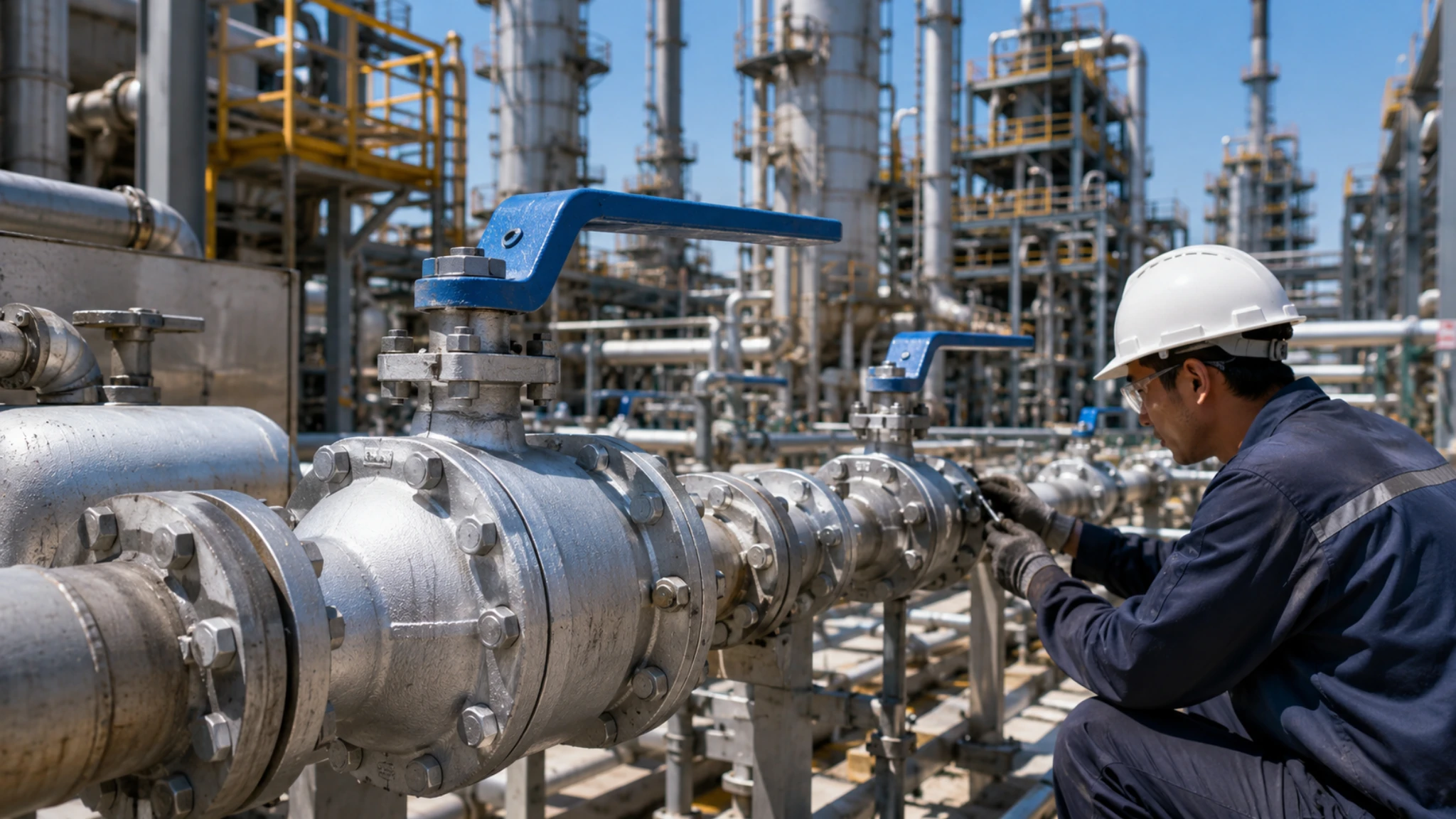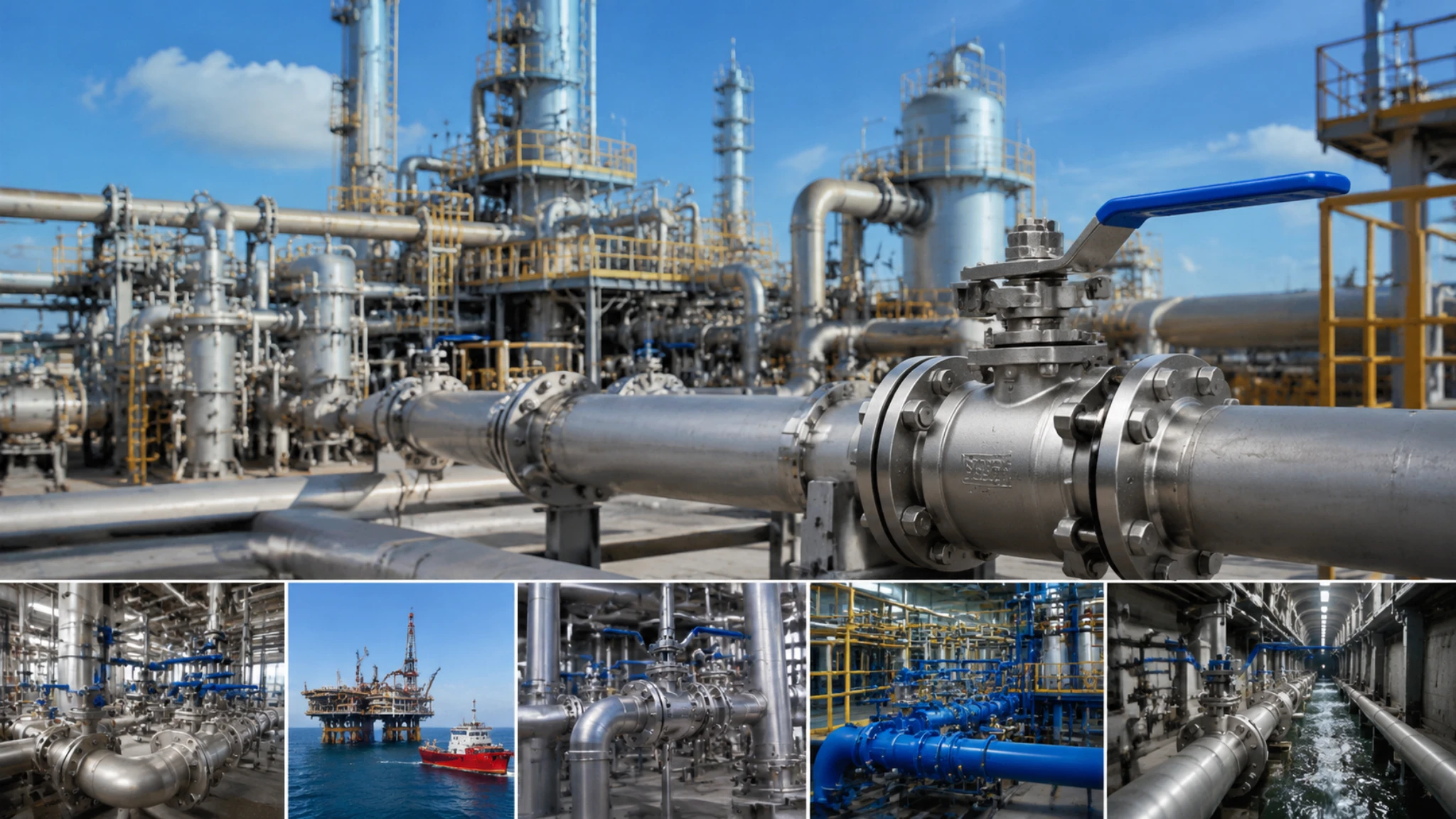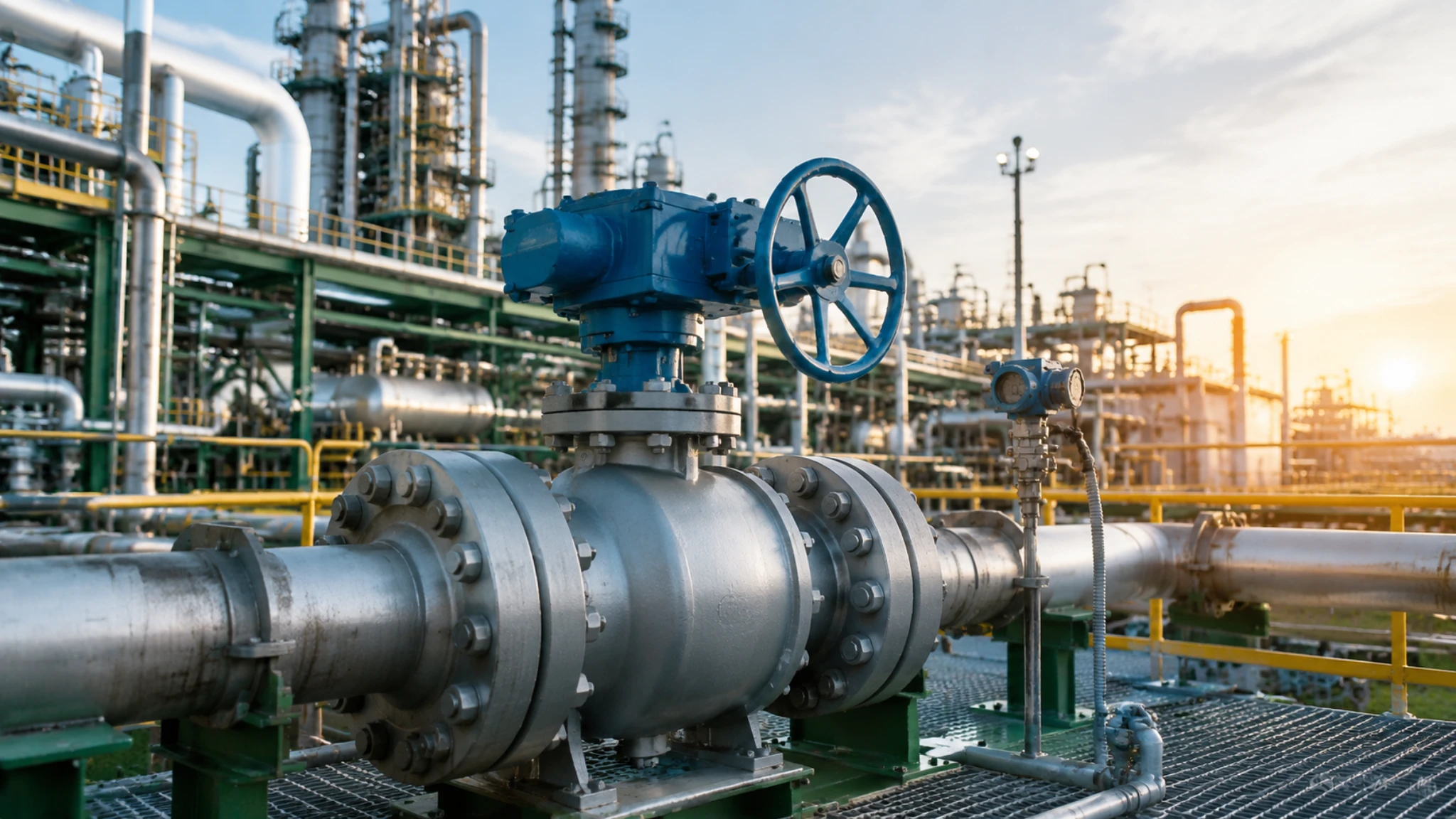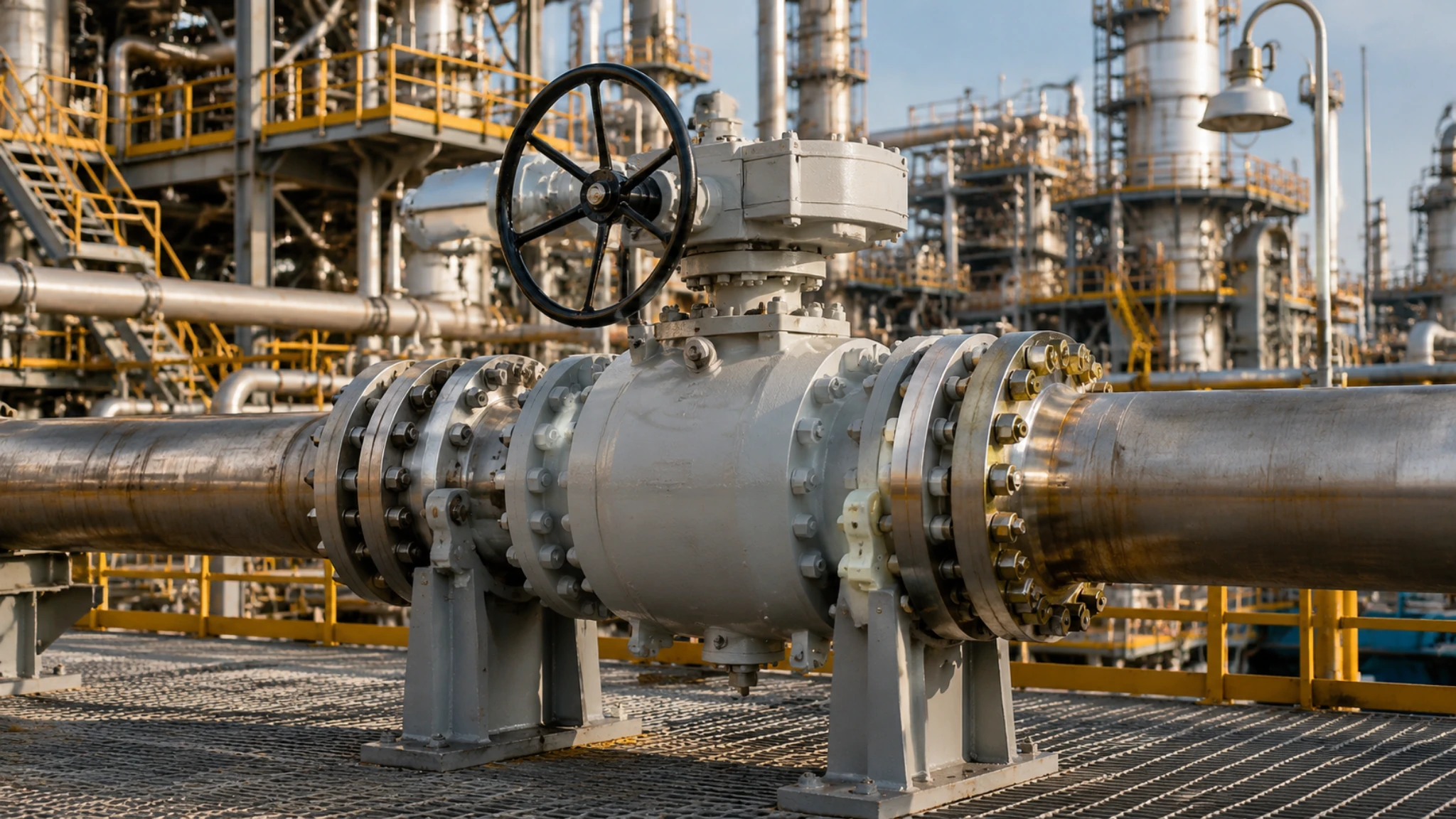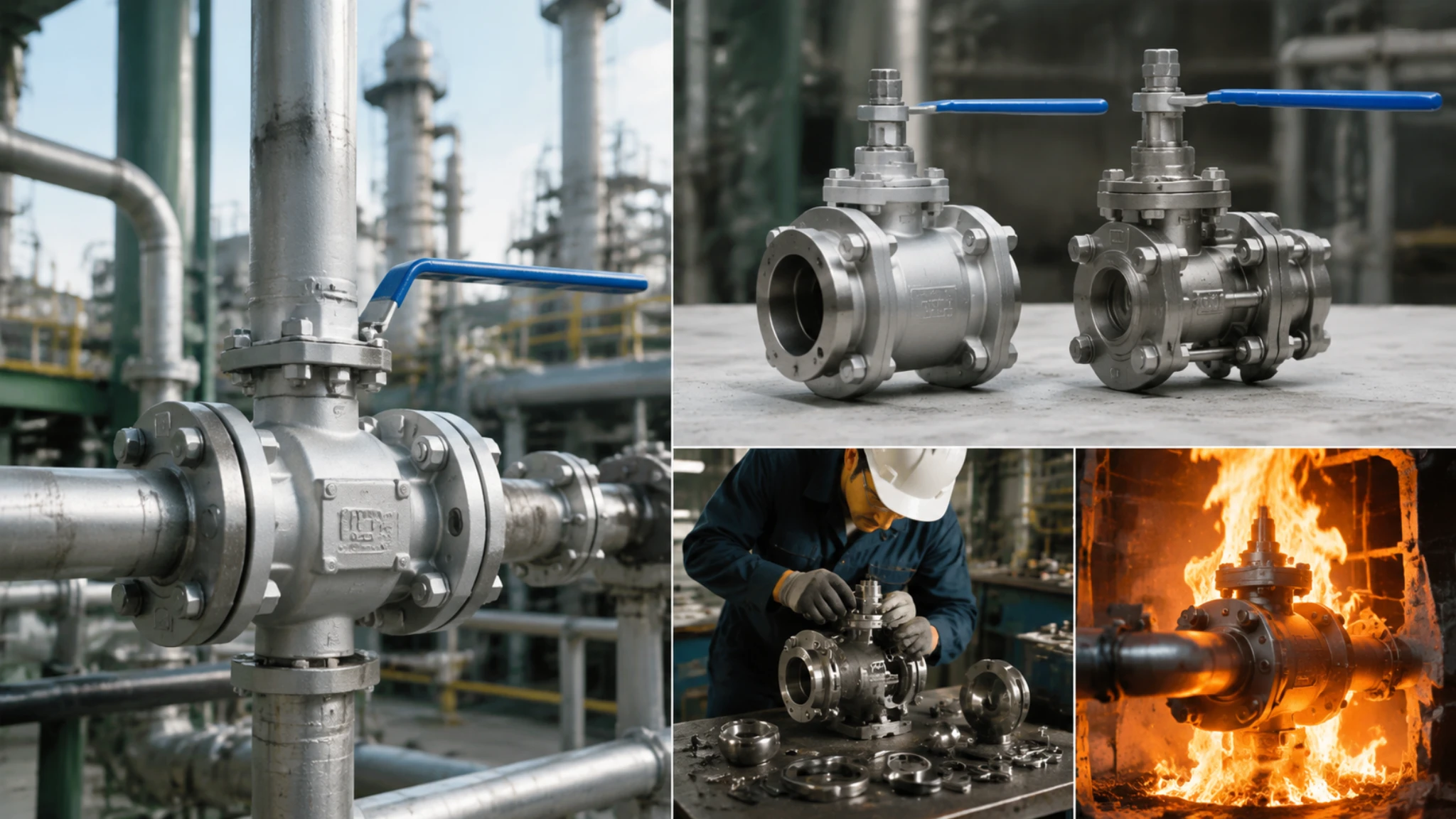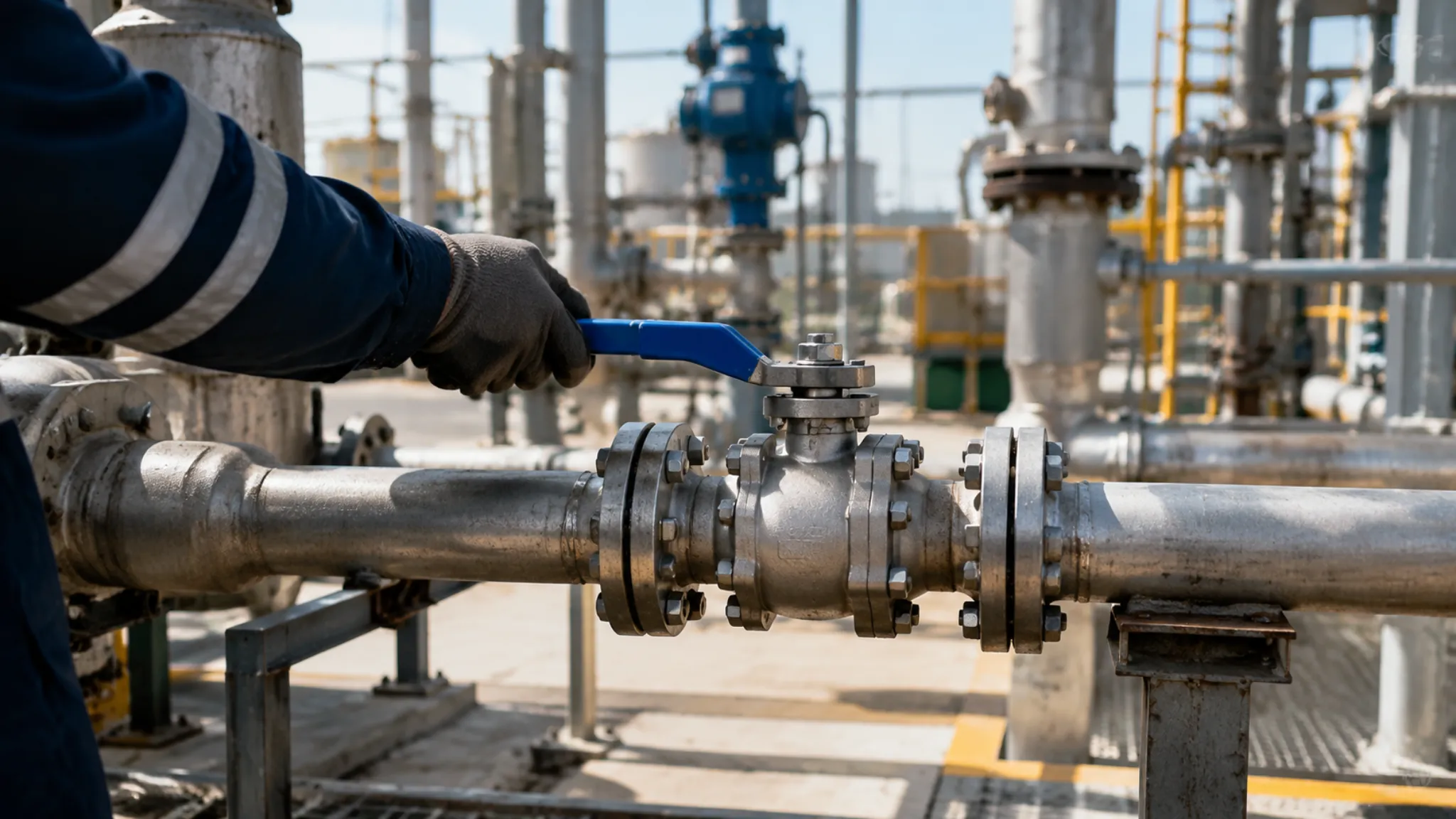
API 6D forged steel ball valves are critical control equipment in oil and gas pipeline systems — the three structural types (full bore, reduced bore, and Fire Safe) differ in flow capacity, pressure rating, and application scenarios, and selecting the correct structural type is the fundamental prerequisite for ensuring pipeline system operational efficiency and safety in hydrocarbon transmission service.
Valve Types
Full Bore Valve
The DN50 bore diameter equals 50mm under API 6D standards, providing 1.05-1.2 times the flow capacity of same-specification reduced bore valves — this numerical difference in high-pressure oil and gas pipelines translates to measurably lower pressure drop losses, which can save approximately 3-5% in pumping energy costs over long-term operation, an operational cost optimization that is too significant to overlook on long-distance transmission pipelines.
Full bore ball valve ball port diameter matches the pipeline bore, allowing pipeline pigs to pass unobstructed — this is the fundamental requirement for periodic pigging operations in oil and gas pipelines, and reduced bore valves require bypass design or temporary removal during pigging, adding operational complexity and downtime, which is why I recommend prioritizing full bore selection on main trunk pipelines.
The full bore configuration also means larger valve body volume and higher material costs — DN300 and above full bore ball valves weigh approximately 15-20% more than reduced bore equivalents, with proportionally higher procurement costs, making full bore selection a resource waste on short-distance branch lines or auxiliary pipelines without pigging requirements.
I worked on a subsea natural gas pipeline project where the main trunk selected full bore ball valves to meet pigging requirements — but one subsea branch section only spanned 2 kilometers with no pigging needs, and reduced bore was chosen to save costs, which ultimately saved approximately USD 120,000 in material expenses as confirmed during project acceptance, proving that actual pipeline functional requirements rather than generalization determine the correct selection.
- Bore diameter equals nominal size, pig pass-through fully compatible
- Flow capacity 5-20% higher than reduced bore, lower pressure loss
- DN300 plus weighs 15-20% more than reduced bore, higher cost
- Best for: main trunk lines, pigging-required sections, high-flow conditions
Reduced Bore Valve
Reduced bore valve bore diameter is one to two sizes smaller than nominal (DN50 valve ball port approximately 38-40mm), with compact structure and lighter weight — this characteristic is particularly important on offshore platforms and modular skidded equipment with space constraints, significantly reducing valve footprint and structural load.
I encountered a typical reduced bore valve selection error during anSoutheast AsianLNG terminal process pipeline retrofit project — the engineer selected reduced bore ball valves on the high-pressure export pipeline to save costs, but post-commissioning pressure drop was approximately 18% higher than design value, forcing replacement within six months, which demonstrates that reduced bore valve pressure drop characteristics must be verified through detailed hydraulic calculations at the design stage, not estimated from experience alone.
Another critical reduced bore limitation: pipeline pigs cannot pass through — if the pipeline has pigging requirements, reduced bore sections must include pig launcher/receiver bypass piping, adding pipeline complexity and valve count, and in this situation directly selecting full bore is often more economical than adding bypass piping.
Typical reduced bore applications: auxiliary pipelines, instrument air lines, branch lines without pigging requirements, in-service pipeline retrofits — in selection decision-making I typically use pigging requirement as the first filter condition, excluding reduced bore if pigging is needed, then comparing cost and space factors only if pigging is not required.
- Bore one to two sizes smaller than nominal, compact structure
- 15-25% lighter than full bore, superior space utilization
- Pigs cannot pass, bypass design required where pigging is needed
- Best for: branch lines without pigging, retrofit projects, space-constrained areas
Fire Safe Valve
The 650 degrees Celsius (923K) Fire Safe design operating temperature is the key technology preventing fire accident escalation in oil and gas processing facilities and high-temperature pipelines — when fire occurs and normal sealing materials fail, Fire Safe ball valves still maintain basic shutoff function, preventing leaked media from becoming fire fuel, which is the fundamental difference between Fire Safe design and standard ball valves.
Fire Safe ball valve core design features: seats constructed from graphite or flexible graphite filling materials that do not melt or soften at high temperatures; external valve body spring-loaded structure prevents binding under fire-induced thermal deformation, maintaining basic operating torque capability; stem equipped with secondary sealing (graphite packing) preventing the stem from becoming a leakage pathway.
According to American Petroleum Institute standards, Fire Safe ball valves must maintain valve operating function for at least 30 minutes at 923K (650 degrees Celsius) under fire conditions, which is the minimum time requirement for valves to maintain pipeline shutoff capability in fire environments and determines whether Fire Safe design meets compliance requirements.
I observed a post-fire drill comprehensive inspection of Fire Safe ball valves on an offshore oil and gas platform — that inspection found early-stage aging in seat graphite sealing components on three ball valves, and although the design failure temperature had not been reached, the inspection results reminded us that Fire Safe ball valves require regular functional testing rather than visual inspection alone.
Fire Safe ball valve seat materials typically use graphite or graphite-composite materials, and graphite high-temperature stability (withstand up to approximately 873K or 600 degrees Celsius) is the key reason graphite became the Fire Safe standard material, whereas standard polymer seats soften and fail above approximately 473K (200 degrees Celsius).
- Graphite or flexible graphite seats, no failure at high temperature
- Spring-loaded valve body maintains operating function under fire conditions
- Stem secondary sealing (graphite packing) prevents leakage pathway
- Best for: refineries, high-temperature pipelines, offshore platforms, oil and gas processing facilities
Material & Build
Body Materials
API 6D ball valve body materials typically include ASTM A105 (carbon steel), ASTM A182 F316/F316L (stainless steel), or ASTM A182 F51/F53 (duplex stainless steel) — material selection directly determines ball valve pressure capacity, corrosion resistance, and compatible media range, and selecting the wrong material can lead to valve body corrosion perforation or low-temperature brittleness fracture, which is one of the most common causes of ball valve failure.
I typically determine body material based on three variables: media temperature (below minus 29 degrees Celsius requires LTCS, room temperature to 200 degrees Celsius uses carbon steel or stainless steel, above 200 degrees Celsius requires special alloys), corrosiveness (chloride ion environments require duplex stainless steel or Alloy 625, weak corrosion uses 316L), and pressure class (Class 150-2500 corresponds to different material pressure-temperature ratings).
ASTM A105 is the most common body material for carbon steel ball valves, but it undergoes brittle fracture below minus 29 degrees Celsius, therefore LTCS such as ASTM A350 LF2 must be selected for operating temperatures below that threshold; at equivalent specifications, A105 body cost is approximately 40% lower than stainless steel, making it the most economical choice for non-corrosive media applications.
- A105 carbon steel: room temperature to approximately 200 degrees Celsius, non-corrosive media, most economical
- A182 F316/F316L stainless steel: corrosion-resistant, suitable for chloride ion environments
- A182 F51/F53 duplex stainless steel: balanced between the two, best cost-performance ratio
- Below minus 29 degrees Celsius: LTCS LF2 mandatory
Ball Materials
The ball is the core on-off component of ball valves, directly contacting process media — ball material must simultaneously satisfy three requirements: high hardness, corrosion resistance, and low friction coefficient, and API 6D ball valves commonly use ASTM A182 F316 (stainless steel) and Inconel 625 (nickel-based alloy) as ball materials, with clearly defined application scenarios for each type.
316 stainless steel ball surface hardness is approximately HRC 25-30, with surface roughness controlled at Ra 0.2-0.4 micrometers — this roughness standard ensures uniform seat sealing face contact, reduces operating torque, and prevents sealing face early wear, and roughness exceeding standard causes elevated operating torque with particularly severe consequences in high-pressure service conditions.
Inconel 625 alloy balls are primarily used in hydrogen sulfide (H2S) containing sour natural gas environments — ASTM A182 F625 nickel content approximately 58%, chromium content approximately 21%, and in H2S partial pressure above 0.34 kPa sour environments, 316 stainless steel balls will experience stress corrosion cracking, making Inconel 625 the only economically viable material solution in sour gas fields, despite costing 4-5 times more than 316 stainless steel.
- 316 stainless steel ball: Ra 0.2-0.4 micrometer surface roughness, HRC 25-30 hardness
- Inconel 625 alloy ball: H2S sour environment resistance, nickel-based alloy
- Surface roughness exceeding standard elevates operating torque and causes sealing face early wear
- Sour gas fields must use Inconel 625, ordinary media uses 316
Stem & Seats
The stem and seats are two critical components of the ball valve sealing system — the stem transfers operating torque and isolates media, and the seats provide the primary seal between the ball and valve body, and their material matching and structural design determine ball valve sealing performance and service life, with API 6D ball valves typically falling into two main categories: soft seated or metal seated.
Soft seated valves use reinforced PTFE (RTFE) or flexible graphite as sealing materials — RTFE seat temperature limit is approximately 200 degrees Celsius (Class 150-600), pressure-rated up to Class 2500, and performs reliably in common media such as petroleum, natural gas, and water; graphite seats withstand temperatures up to approximately 300 degrees Celsius but have higher friction coefficient requiring greater operating torque.
API 6D ball valve seat pressure ratings are typically expressed as Pressure-Temperature Ratings, and for example, a Class 600 RTFE seat is rated at 14.1 MPa at room temperature but reduces to approximately 10.5 MPa at 200 degrees Celsius, which means temperature-derated ratings must be checked during selection rather than pressure class alone.
Metal seated valves are primarily used in high-temperature (above 300 degrees Celsius) or solid-particle containing media applications — metal seat sealing relies on elastic deformation matching between ball and seat metal faces, and sealing effectiveness is inferior to soft seated valves, typically requiringpredetermined higher operating torque than soft seated valves, and I typically specify metal seats on high-temperature catalytic cracking units and coal chemical pipelines with high solid particle content.
Stem packing typically uses a layered structure of flexible graphite rings plus carbon fiber braided packing — the graphite layer provides high-temperature stability while the braided layer provides elastic compensation, and this combined structure maintains effective stem sealing across a wide temperature range from minus 29 degrees Celsius to approximately 400 degrees Celsius, making it the standard configuration for industrial ball valves.
- RTFE soft seats: withstand to 200 degrees Celsius, suitable for Class 150-2500
- Graphite seats: withstand to 300 degrees Celsius, higher operating torque required
- Metal seats: above 300 degrees Celsius or solid-particle media specialized
- Stem packing: graphite plus carbon fiber layered structure, minus 29 to 400 degrees Celsius range
Operation & Use
Manual Operation
Manual operation is the most basic operating method for API 6D ball valves — converting human force into stem torque through a handle or gear reducer, with standard API 6D ball valve operating torque ranges from approximately 15 N·m for DN50 to approximately 2000 N·m for DN600, and gear reducers can amplify operating torque by 5-10 times, significantly reducing operating force requirements for large-bore ball valves.
I once encountered an incident where operators complained a DN200 ball valve torque was too high for manual closure — on-site torque measurement reached approximately 450 N·m, far exceeding the design value, and subsequent inspection revealed seat wear causing increased back pressure; after seat replacement, torque returned to normal, and this case demonstrates that actual ball valve operating torque is a sensitive indicator of seat condition, with elevated torque often signaling abnormal wear on the sealing faces.
Gear reducers are suitable for DN200 and above specifications — for ball valves requiring frequent operation such as control valves, handwheel operation is completely impractical; for spaces too shallow to accommodate large handwheels such as underground pipe galleries, selecting gear reducers with extended stems is a common solution, and I typically determine reducer type based on space constraints at the design stage.
- DN50 operating torque approximately 15 N·m, DN600 approximately 2000 N·m
- Elevated torque is typically an early warning signal of seat wear
- Gear reducers amplify torque 5-10 times, suitable for DN200 plus
- Extended stem solutions address valve operation in depth-restricted spaces
Automation Options
Pneumatic actuators are the most common automation configuration for API 6D ball valve retrofits — pneumatic actuator response speed is typically 0.5-2 seconds (DN50-DN200), air pressure requirement typically 0.4-0.7 MPa, with output torque range from approximately 50 N·m to 2000 N·m, covering automation requirements for the vast majority of small and medium-bore ball valves.
Electric actuators offer advantages in precision control and remote monitoring — ESD (Emergency Shutdown) ball valves typically configure electric actuators to meet automation logic requirements, with electric actuator torque output precision reaching set value within plus or minus 5%, and response time typically 15-30 seconds (DN50-DN200), slower than pneumatic actuators but far superior to manual operation and fully meeting ESD response time requirements (typically 30 seconds or less).
I typically select actuator type based on operating frequency and energy availability: unmanned stations (gas field gathering stations) prioritize pneumatic (existing air source), installations with SCADA system integration requirements choose electric, ESD loops choose electric (accepting slow response but demanding high reliability); in extreme environments below minus 40 degrees Celsius, pneumatic actuator compressed air systems require trace heating, otherwise air pressure fluctuation causes actuator malfunction, which is a common engineering challenge in Arctic Circle oil and gas projects.
- Pneumatic actuators: 0.5-2 second response, 0.4-0.7 MPa air pressure, DN50-DN200 preferred
- Electric actuators: 15-30 second response, ESD loop essential, remote monitoring capable
- Air source limited (below minus 40 degrees Celsius): compressed air systems require trace heating
- Operating frequency determines type: frequent operation prioritizes electric, intermittent operation chooses pneumatic
Common Applications
The largest application area for API 6D ball valves is oil and gas field gathering and transmission systems — according to industry statistics, more than 85% of API 6D ball valves are installed in oil and gas field surface facilities, including wellhead equipment, gathering pipelines, metering stations, and processing plant inlet positions; characteristics of such service conditions include high pressure (Class 300-600 predominantly), complex media (hydrocarbon-containing with minor H2S), and low operating frequency (majority in normally-open status).
Offshore oil and gas platforms are another core application scenario for API 6D ball valves — platform pipeline space constraints and lightweight requirements determine that ball valve material selection and structural design must be more stringent, with common configurations: full bore (meeting pigging requirements), duplex stainless steel body (reducing platform load), Inconel 625 balls (seawater corrosion resistance), and this combined configuration is standard practice for deepwater platform projects.
My practical selection experience: for oil and gas field gathering systems, the full bore plus RTFE seats plus 316 ball combination is the optimal configuration in 90% of cases — moderate price, ample stock, strong parts commonality for maintenance, and the remaining 10% special conditions (sour gas, high temperature, low temperature) only require targeted material upgrades based on the standard configuration rather than specifying all-special-material solutions from the start.
- Oil and gas field gathering systems: account for over 85% of API 6D ball valve usage
- Offshore platforms: full bore plus duplex stainless plus seawater-resistant balls
- Refineries: Fire Safe configuration primarily, graphite seats in high-temperature areas
- Standard configuration priority: full bore plus RTFE plus 316 balls covers 90% of conditions
API 6D forged steel ball valve selection parameters summary — differences between Full Bore and Reduced Bore in bore diameter, flow capacity, and pigging compatibility, Fire Safe configuration seat materials and operating temperature ranges, applicable temperature ranges for three body materials (A105/F316/duplex steel), ball material (316/625) and seat type (RTFE/graphite/metal seated) combinations, temperature deration curves for pressure classes from Class 150 to Class 2500, and the first step in selection is always confirming nominal diameter and pressure class before proceeding to material and sealing specifications.
| Parameter | Full Bore Valve | Reduced Bore Valve | Fire Safe Valve |
|---|---|---|---|
| Bore Diameter | Equals nominal size | 1-2 sizes smaller than nominal | Equals nominal size |
| Pigging Compatibility | Fully compatible | Incompatible, bypass required | Fully compatible |
| Typical Pressure | Class 150-2500 | Class 150-600 | Class 150-1500 |
| Seat Material | RTFE/Graphite | RTFE | Graphite (high-temp rated) |
| Typical Application | Main trunk, gathering stations | Branch lines, auxiliary piping | Refineries, high-temp pipelines |