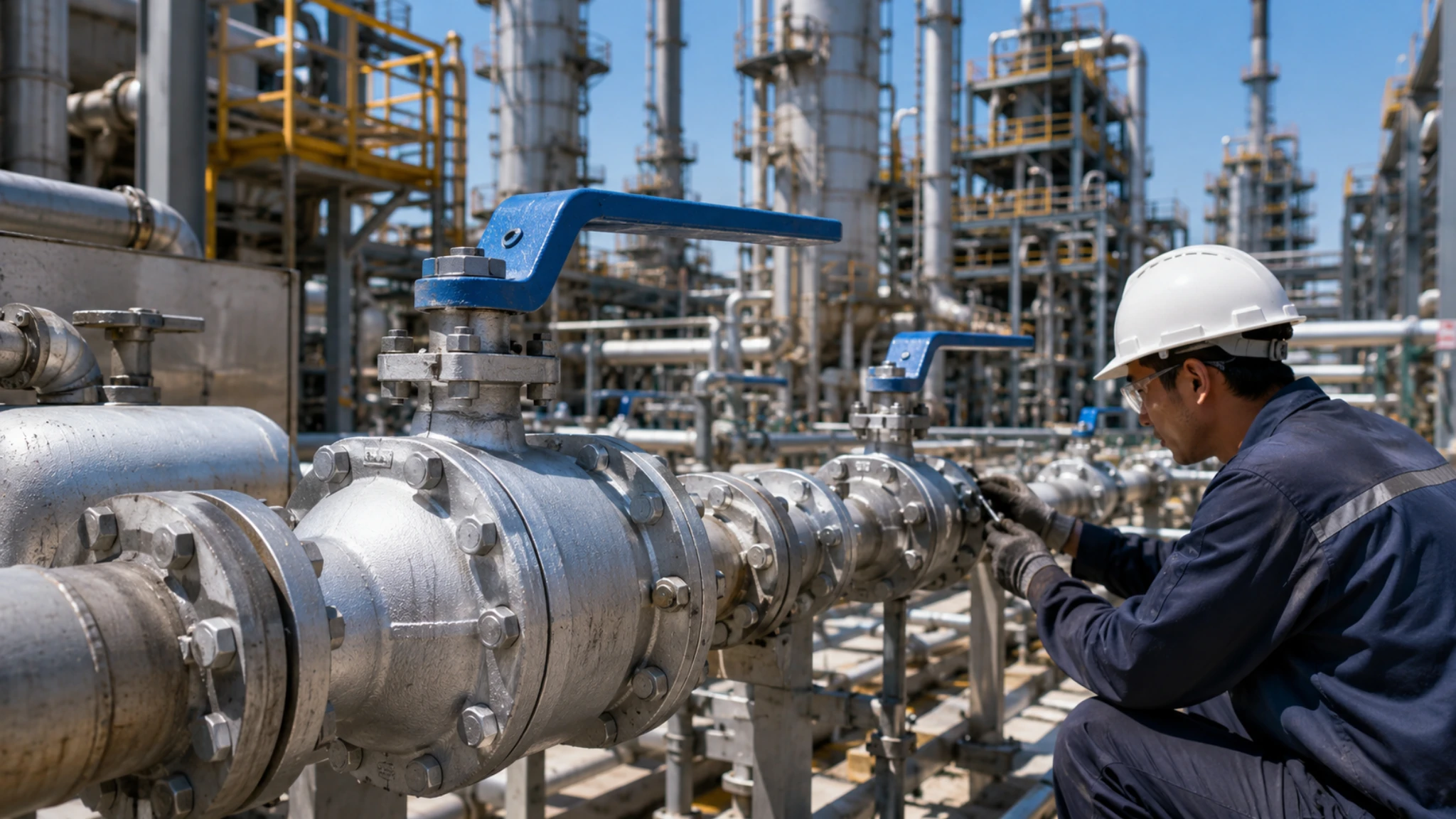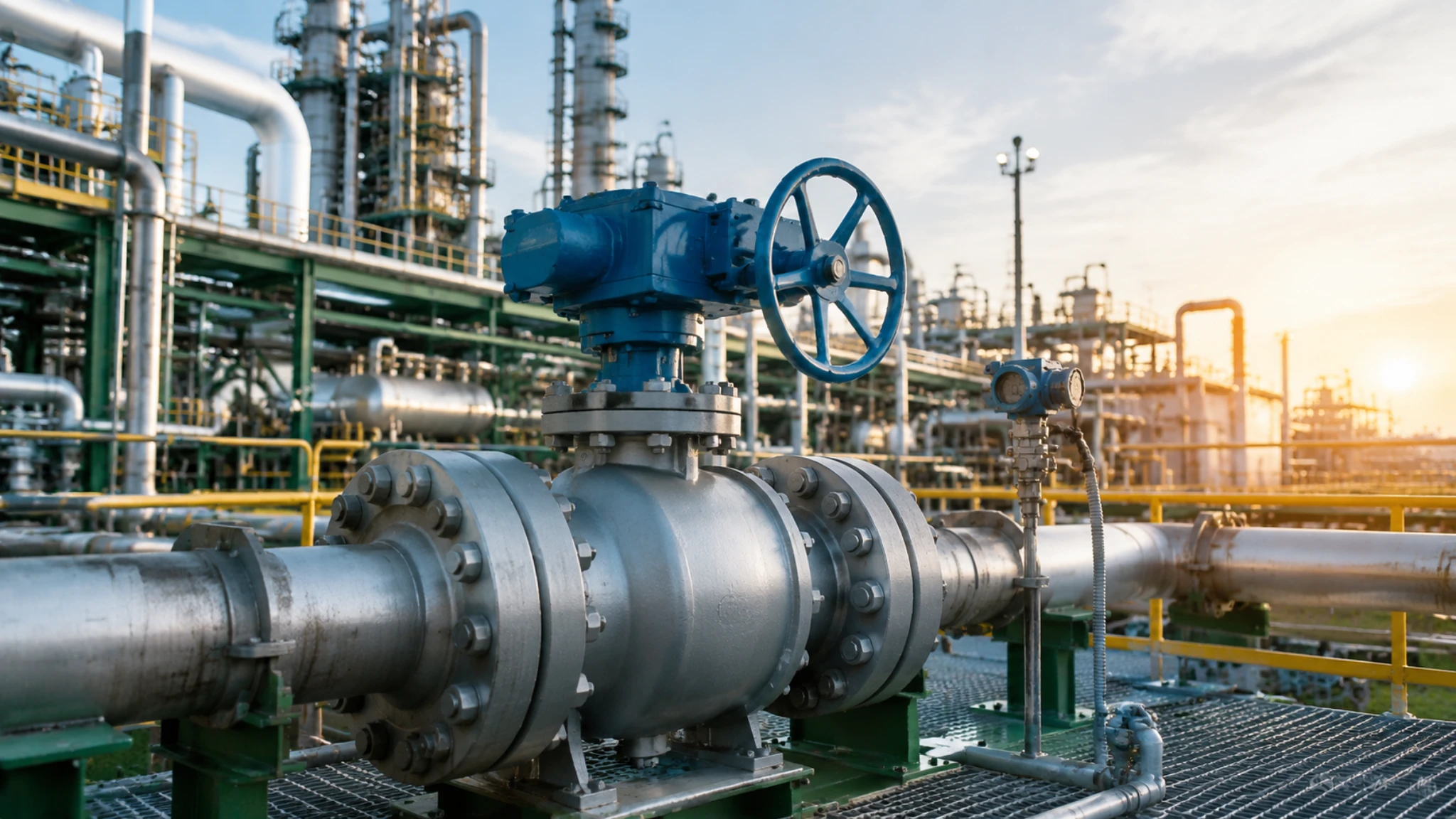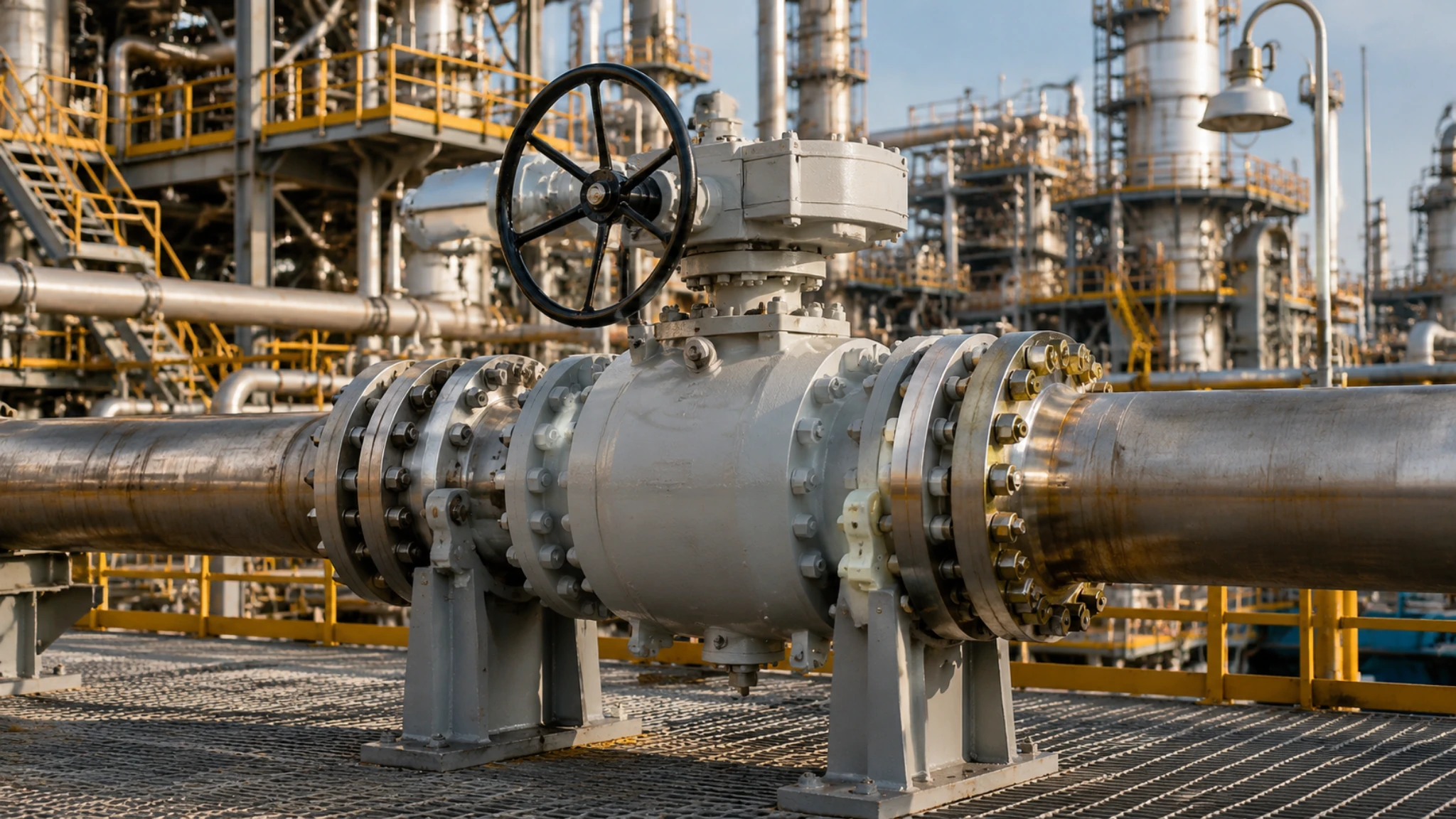
A procurement manager at an EPC firm once told me he’d been buying forged ball valves for fifteen years and had never seen a forging fail in service.
Castings, yes. Weld-end valves, occasionally. But a properly forged body? Never.
He wasn’t saying forgings are indestructible. He was saying that when the forging process is done right – proper reduction ratio, proper heat treatment, proper inspection – the failure modes that plague castings simply don’t exist.
There’s no shrinkage porosity to find. No inclusions to act as crack initiation sites.
No random grain structure that varies from thick sections to thin. Just continuous grain flow, uniform mechanical properties, and a predictable fatigue life.
That’s what you’re buying when you specify a forged ball valve. Not a magic material. Not a guarantee against all possible failures. But a body whose quality is built into the manufacturing process itself, not verified after the fact by inspection that might miss something.
Here’s what that means in practice – when you need it, what it costs, and how to make sure you’re getting what you paid for.
The two things a forging guarantees that a casting can’t
First: internal soundness. A properly forged body has no internal voids. The forging process mechanically works the steel under pressure, closing any porosity that existed in the original ingot.
The resulting density is essentially 100% of theoretical. A casting, even a good one, has some level of microporosity. The question is whether it’s at a level that affects performance, not whether it exists.
For most applications, properly inspected castings with porosity below the acceptance criteria perform fine. But for applications where any internal defect is unacceptable – high-pressure gas, cyclic loading, hydrogen service – the guaranteed soundness of a forging eliminates a failure mode that inspection can only manage, not eliminate.
Second: directional grain flow. The forging process aligns the grain structure along the flow lines of the part. At a flange-to-body transition, the grain flow follows the contour of the radius, providing continuous load paths through the geometry.
In a casting, the grain structure at that same transition is random, with grain boundaries oriented in all directions. Under cyclic pressure loading, cracks propagate along grain boundaries.
A continuous grain flow forces the crack to cross grain boundaries, which requires more energy and takes more cycles. The fatigue life improvement is typically 15-20% for a forging compared to a casting of the same geometry and material.
| Property | Forging | Casting |
|---|---|---|
| Internal soundness | No voids; ~100% density | Some microporosity present |
| Grain structure | Continuous grain flow along part contours | Random grain orientation |
| Fatigue life improvement | 15-20% better than casting | Baseline |
When forged ball valves are mandatory – and when they’re overkill
Class 900 and above: forged is standard. A Class 900 WCB carbon steel valve at 38°C sees 2,220 psi working pressure. The wall thickness for an 8-inch valve is about 38mm.
The consequences of a body failure at this pressure are severe enough that the industry has standardized on forged bodies. I’ve seen specifications that allow cast bodies at Class 900 with 100% radiography and additional NDE, but these are exceptions, not the rule.
Forged API 6D ball valves in Class 900 and 1500 are the default specification for pipeline and process plant isolation valves.
Class 600: forged is preferred but not mandatory. A properly inspected cast body with 100% RT will perform adequately for most Class 600 applications. The decision typically depends on the service criticality and the end user’s material specification.
Major oil companies often mandate forged at Class 600 as a blanket requirement in their valve specifications. Independent operators and EPC contractors focused on cost may accept cast with enhanced NDE. The cost difference is about 30-40% in favor of casting.
For safety-critical isolation, emergency shutdown, and blowdown valves at Class 600, forged is worth the premium.
Class 300 and below: forged is rarely necessary. The working pressures are low enough that a properly inspected cast body has ample design margin. Specifying forged at Class 300 adds cost without adding value.
The exception is cyclic service – valves that cycle open and closed multiple times per day for years. The fatigue properties of a forging can extend service life in cyclic applications even at low pressure classes.
Hydrogen service: forged is strongly recommended regardless of pressure class. Hydrogen embrittlement affects steel at the microstructural level, and the uniform grain structure of a forging provides better resistance than the variable structure of a casting.
The forging’s lack of internal porosity also eliminates the hydrogen trapping sites that can cause blistering and cracking in castings exposed to high-pressure hydrogen. For hydrogen service at any pressure above about 300 psi, forged bodies are worth the cost premium.
Forged ball valves for high-pressure gas service including hydrogen are increasingly specified as hydrogen blending and pure hydrogen pipelines become more common.
What the ASTM standards actually require
A105 is the standard forged carbon steel. The specification requires a minimum tensile strength of 485 MPa and minimum yield of 250 MPa. But those are minimums.
A properly forged and normalized A105 body typically tests at 520-560 MPa tensile and 280-320 MPa yield. The difference between “meets the minimum” and “exceeds the minimum by 15-20%” is the difference between a forging that was properly worked and heat treated and one that barely met the specification.
The mill certificate should show the actual test results, not just “conforms to A105.” If the results are right at the minimum, ask why.
The forging ratio is not explicitly stated in A105. It’s implicit in the requirement that the forging be produced by a process that provides sufficient hot working to refine the grain structure. The industry standard is a minimum 3:1 reduction.
Below that, the forging doesn’t develop full forging properties. This is why you can’t forge a 24-inch body from a 26-inch billet. The reduction ratio of 1.2:1 would produce a part with essentially the same grain structure as the starting billet – which is to say, a casting-like structure.
The forging press makes it a forging. The reduction ratio makes it a good forging.
A182 covers forged stainless and alloy steel for high-temperature service. F316 is the standard 316 stainless forging grade. F316L is the low-carbon version for improved corrosion resistance in welded applications.
F51 is duplex stainless. F53 is super duplex. F44 is 6% molybdenum super austenitic for the most aggressive chloride environments. The A182 grades cover the full range of corrosion-resistant alloys used in valve manufacturing.
Forged materials for corrosive environments extend from standard 316 stainless through duplex, super duplex, and nickel alloys like Inconel 625 and Hastelloy C276.
A350 covers forged carbon and low-alloy steel for low-temperature service. LF2 is the standard grade, impact tested at -46°C. LF3 is tested at -101°C and LF6 at -51°C with higher strength requirements.
The impact test is not a one-time qualification. It’s required on every heat, and the test specimens must be taken from a forging that received the same heat treatment as the production parts.
A mill certificate that shows impact test results from a separately heat-treated test bar doesn’t prove the production forgings have the required toughness. The test bar and the production forging must see the same thermal history.
How to verify the forging you ordered is the forging you got
- Weight is the first check. A forged valve body of a given size and class should weigh 5-10% more than the catalog weight for a cast body of the same dimensions. The higher density of the forging – no porosity – and the slightly greater wall thickness from the machining allowance add weight. If the valve is lighter than expected, get out the calipers and the ultrasonic thickness gauge.
- Ultrasonic thickness mapping is the second check. Map the wall thickness at 15-20 points around the body. A forging should show thickness variations of 1-3% because the machined surfaces are consistent. A casting will show 5-10% variation because the mold shifts and the casting cools non-uniformly. Consistent wall thickness suggests a forging. Variable thickness suggests a casting or a forging that was badly machined.
- PMI with an XRF spectrometer is the third check. A105 forging chemistry has tighter tolerances than WCB casting chemistry, particularly on silicon. A105 silicon should be 0.15-0.35%. WCB silicon can be up to 0.60%. If the XRF shows silicon above 0.40%, the material is likely a casting, not a forging. Also check for residual elements like chromium and nickel. A105 should have chromium below 0.40% and nickel below 0.40%. Higher levels suggest alloy steel or stainless, which might be acceptable if you ordered alloy steel or stainless, but it’s the wrong material if you ordered carbon steel.
- The heat number traceability is the fourth check. A forging heat number traces to a specific heat of steel from a specific mill, forged on a specific press, on a specific date. The heat number should be stamped on the body and match the mill certificate. The mill certificate should show the chemical composition, the tensile test results, and the impact test results if applicable. If the heat number on the body doesn’t match the certificate, the traceability chain is broken and the forging claim is unverifiable.
- Surface finish is the fifth check, and it’s subjective but useful. A forging that’s been properly machined has a uniform surface texture with visible tool marks from the machining process. A casting that’s been machined may have small surface porosity visible as tiny pits in the machined surface. The pits are where gas or shrinkage porosity intersected the machined surface. A few small pits are normal for a casting. Any pits on a forging are not normal and suggest either a casting passed off as a forging or a forging with unacceptable internal defects.
API certified forged valve manufacturers who maintain full heat traceability from mill to finished valve provide the documentation chain that verifies a forging is what it claims to be.
The procurement manager who’d never seen a forging fail understood something that’s easy to forget in the rush to get valves ordered: a forging’s quality comes from the process, not from the inspection.
You can inspect a casting and find problems. You can’t inspect quality into a part after it’s made.
A forging that’s been properly reduced, properly heat treated, and properly machined doesn’t need heroic inspection to be trustworthy. The quality is built in.
That’s what the premium buys you. The inspection just verifies that the process was followed. The process is what matters.