
How to Perform a Factory Acceptance Test for API 6D Ball Valves | Full Witness Test Checklist
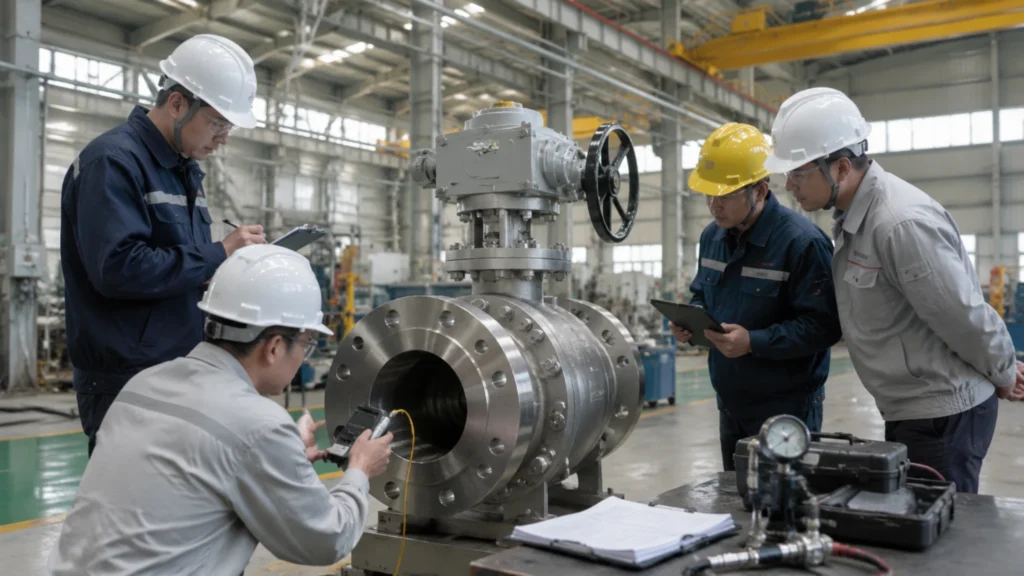
Factory Acceptance Test (FAT) is the final checkpoint for API 6D[1] ball valves from manufacturing to delivery, typically lasting 2–3 days. The purchaser witnesses a series of standardized tests (shell hydrostatic, seat seal, and operating torque – 3 major items) to confirm that the valve materials, performance, and dimensions fully comply with the order technical […]
How to Specify a Trunnion Mounted Ball Valve for Sour Gas Service | NACE MR0175 Material Requirements
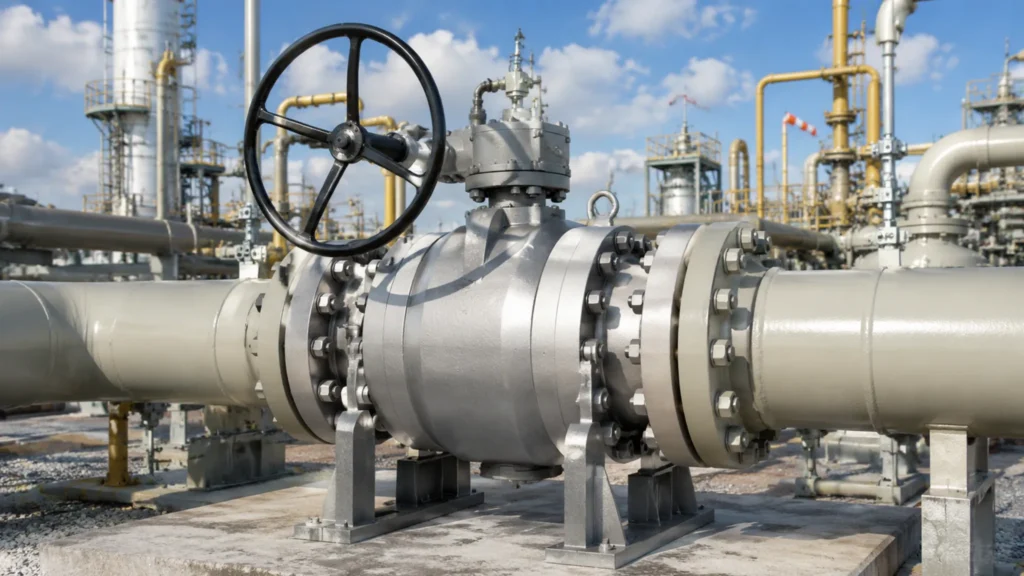
In sour service valve material selection, the standard divides materials into three groups: Group Scope of application Typical materials Group 1 Covers about 80% of normal service conditions Carbon steel, low‑alloy steel Group 2 For non‑welded castings Martensitic stainless steel, etc. Group 3 For nickel‑base alloys Inconel series, etc. The standard strictly prohibits the use […]
How to Install a Large Bore Flanged Ball Valve | Alignment, Gasket Selection, Bolt Torque Sequence
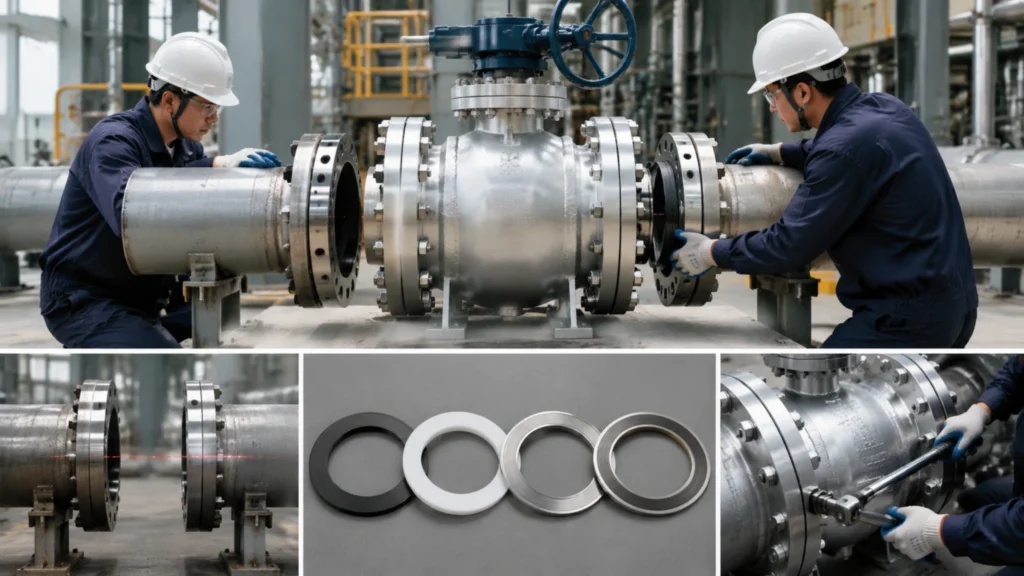
The installation quality of large-diameter flanged ball valves (above DN300, Class 150~Class 600) directly determines the sealing reliability of the pipeline system. Unlike small-diameter valves, large-diameter flange joints require higher bolt preload forces and larger gasket areas. Any procedural deviation will be amplified during high-temperature and high-pressure (Max 550°C / Class 2500) operations. This article […]
How to Select the Right Actuator for an API 6D Ball Valve | Pneumatic vs Electric vs Hydraulic
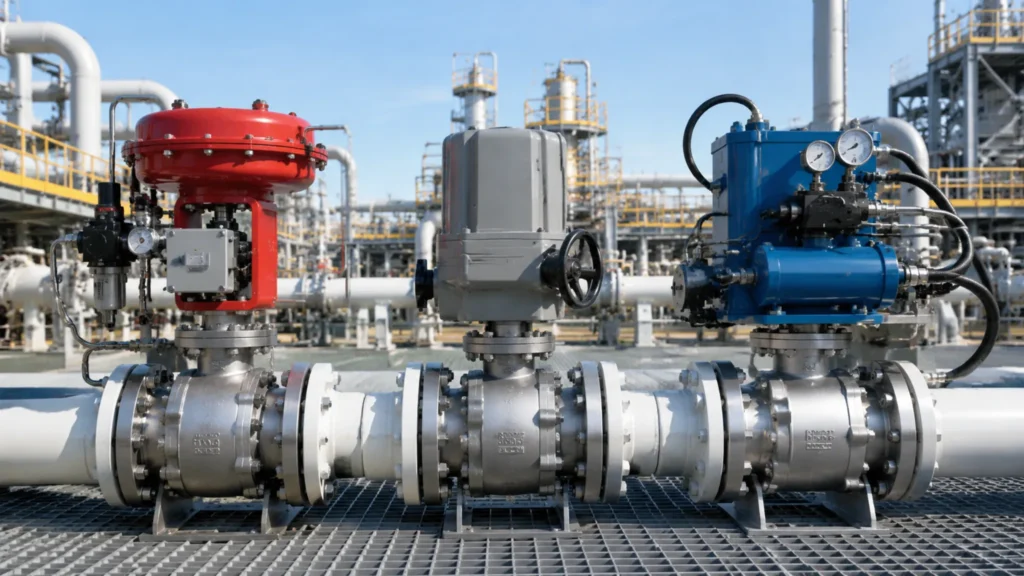
API 6D ball valves are critical isolation equipment in pipelines. Actuator selection directly impacts system operational reliability and construction costs. This guide comprehensively covers valve selection for sizes ranging from DN50 to DN1200 and pressure ratings from Class 150 to Class 900. It provides a comparative analysis of the three mainstream actuator solutions: pneumatic, electric, […]
How to Interpret a Valve Material Test Report | EN 10204 3.1 Certification, Chemical Composition, Mechanical Properties
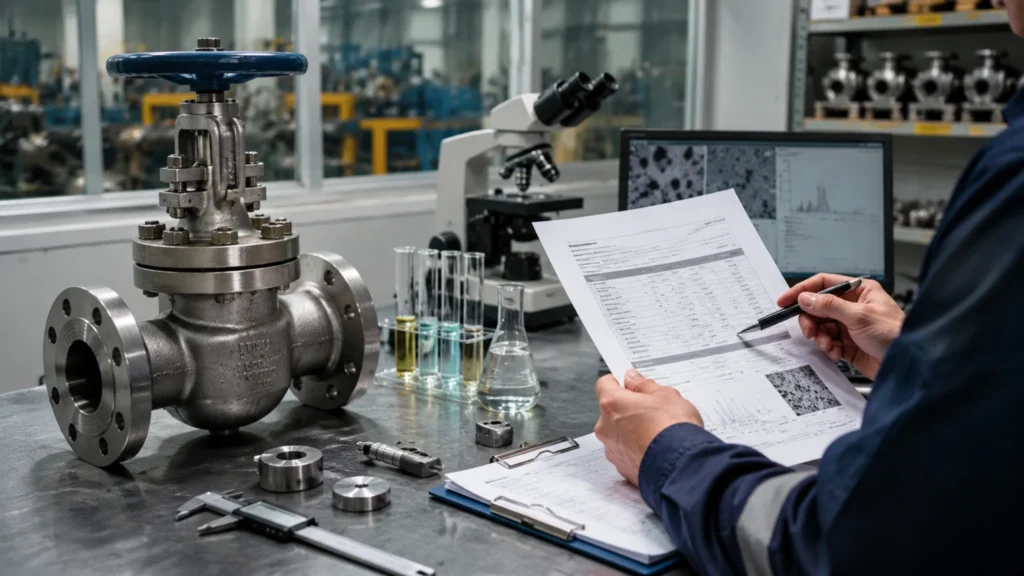
When each valve leaves the factory, a material certificate (EN 10204 3.1) is delivered together with the physical product. It covers key data such as: Property Value / Range Chemical composition 9 major elements plus trace elements Tensile properties Re ≥ 250 MPa, Rm = 485–655 MPa Impact toughness -46°C ≥ 20 J Hardness ≤ […]
DBB Compact Manifold Maintenance | Seal Replacement, Pressure Test, Life Cycle
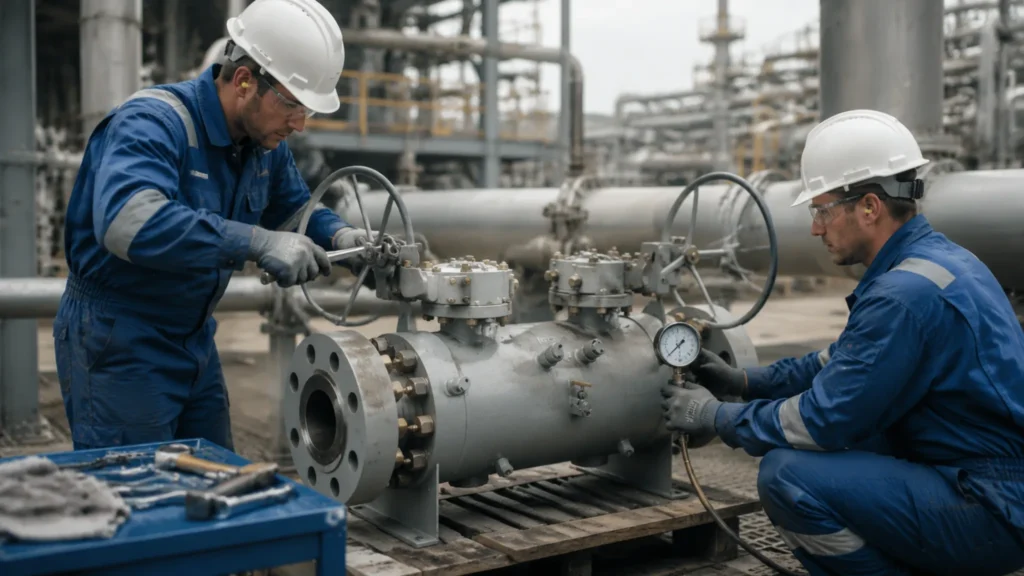
DBB compact manifolds are critical isolation equipment in oil, gas, and petrochemical applications. In Class 600-900 service, seal failures cause costly unplanned shutdowns — proper maintenance cuts this risk by up to 80%. Replacing Valve Seals Checking Seal Damage DBB valve seat seal damage does not occur suddenly; in most cases, the sealing surface has […]
Cryogenic Valve Supplier | Extended Neck Design, Packing Protection, Zero Leakage
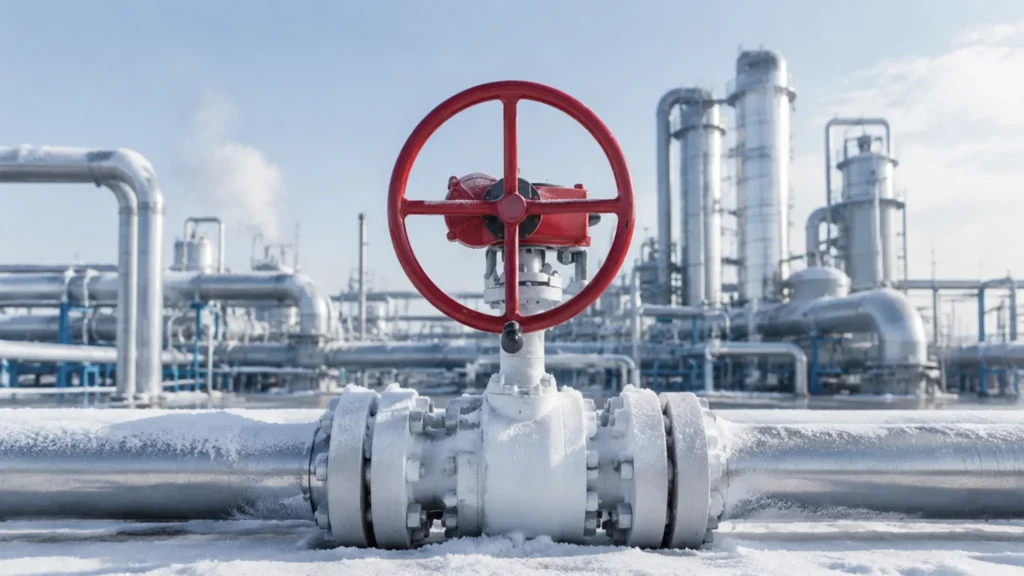
At LNG terminals and liquid hydrogen carriers, the valve stem packing gland is the primary leakage source. Extended neck protection, configured packing components, and ultra-low temperature testing determine zero-leakage performance. Extended Neck Design Keeping Packing Warm When the internal valve body temperature drops to minus 169 degrees C during LNG or liquid hydrogen service, atmospheric […]
Industrial Cryogenic Valves | TÜV Certified, Deep Cryogenic Treatment, Cold Insulation
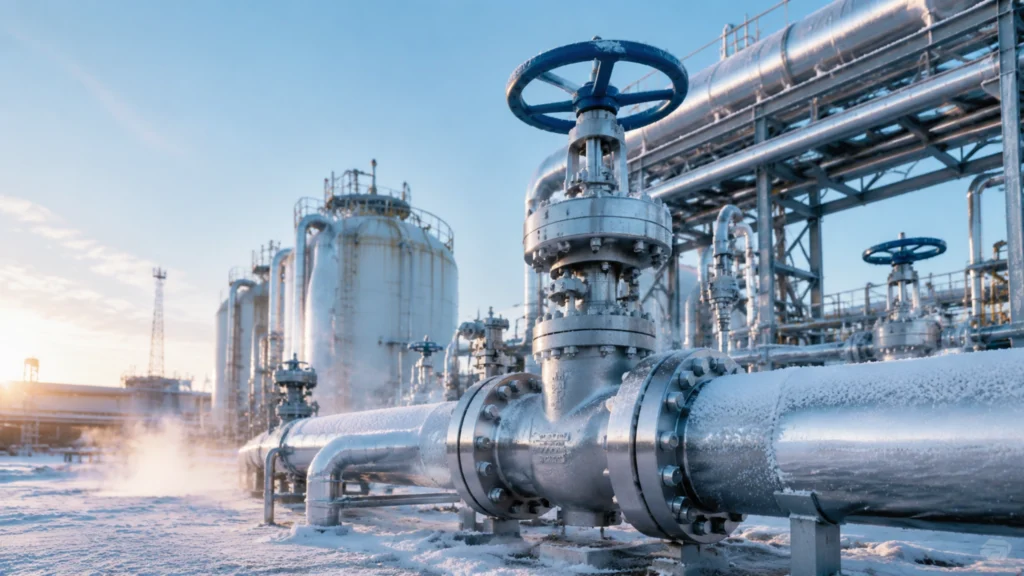
TÜV certification is the international passport for industrial cryogenic valves. These 9 H4 sections break down the three quality pillars: TÜV systems, deep cryogenic treatment, and cold insulation. TÜV Valve Standards Safety Proof Tests TÜV safety verification for industrial cryogenic valves is not a single certificate but a layered system of third-party witness, on-site audit, […]
Liquid Hydrogen Cryogenic Valve Supplier | -253°C Rating, Low Leakage, ASME Certified
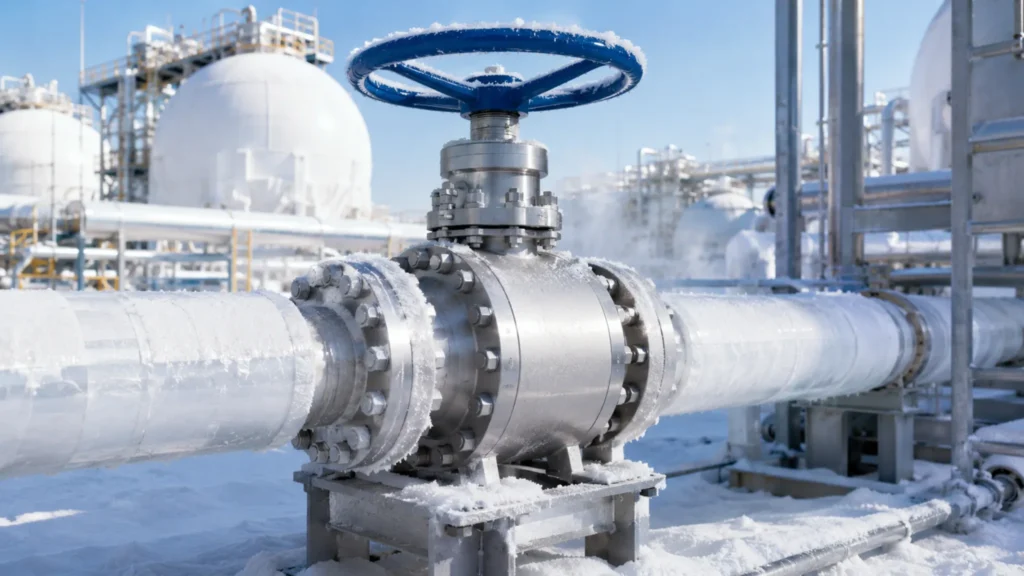
At -253°C liquid hydrogen service, every 1°C drop magnifies material brittleness. These 9 H4 sections break down the supplier selection rules for LH2 cryogenic ball valves. Extreme Cold Engineering Liquid Hydrogen Materials Liquid hydrogen boils at -253°C, which is 20 kelvin on the absolute temperature scale. At that temperature, valve body materials must remain austenitic […]
Cryogenic Piping Design Standards | Thermal Contraction, Insulation, Stress Analysis
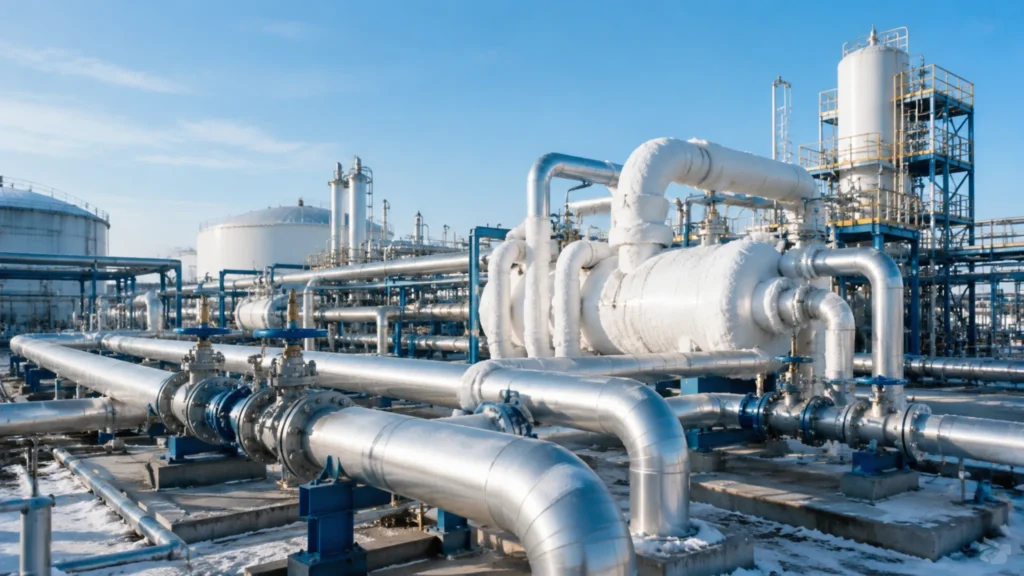
11 years in cryogenic piping, from 160,000 m?tanks to FSRUs. 80% of site rework I see traces back to cold-shrinkage miscalculation or wrong insulation. These 9 sections cover 3 cold-shrinkage solutions, 3 insulation methods, 3 stress-analysis rules. Handling Cold Shrinkage Expansion Loop Design 304L stainless steel, cooled from +20癈 to -196癈, contracts by roughly 0.36% […]