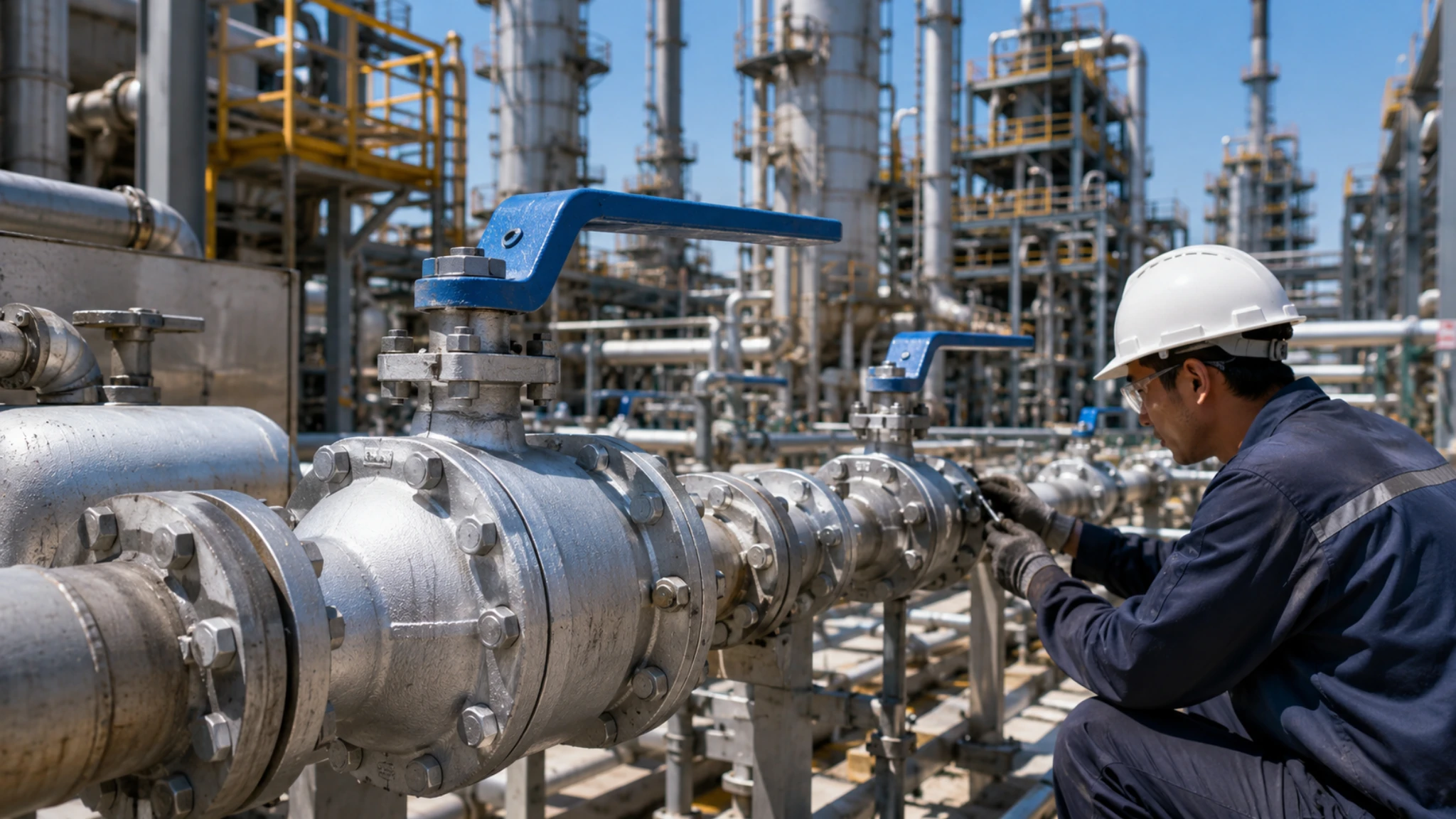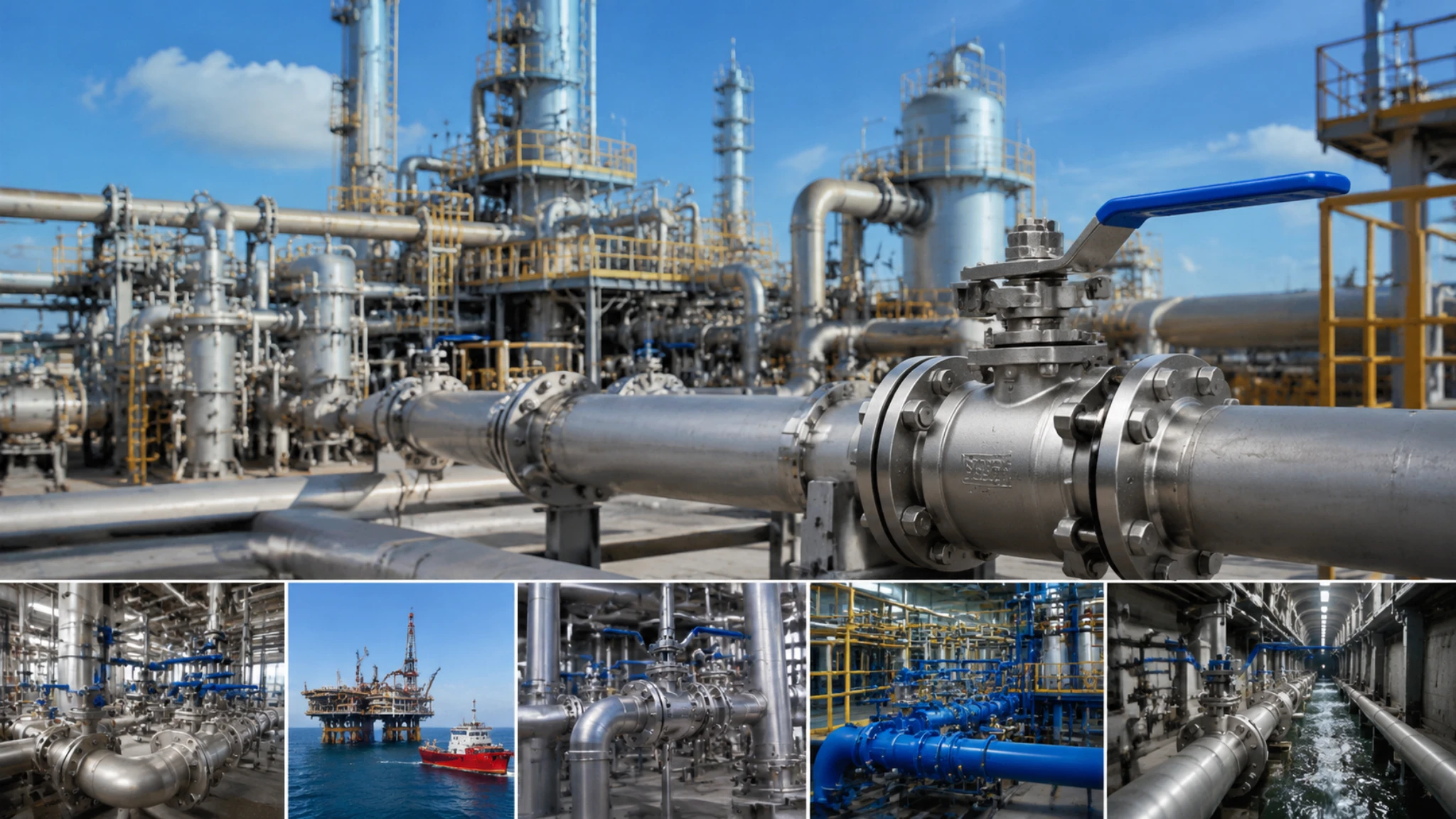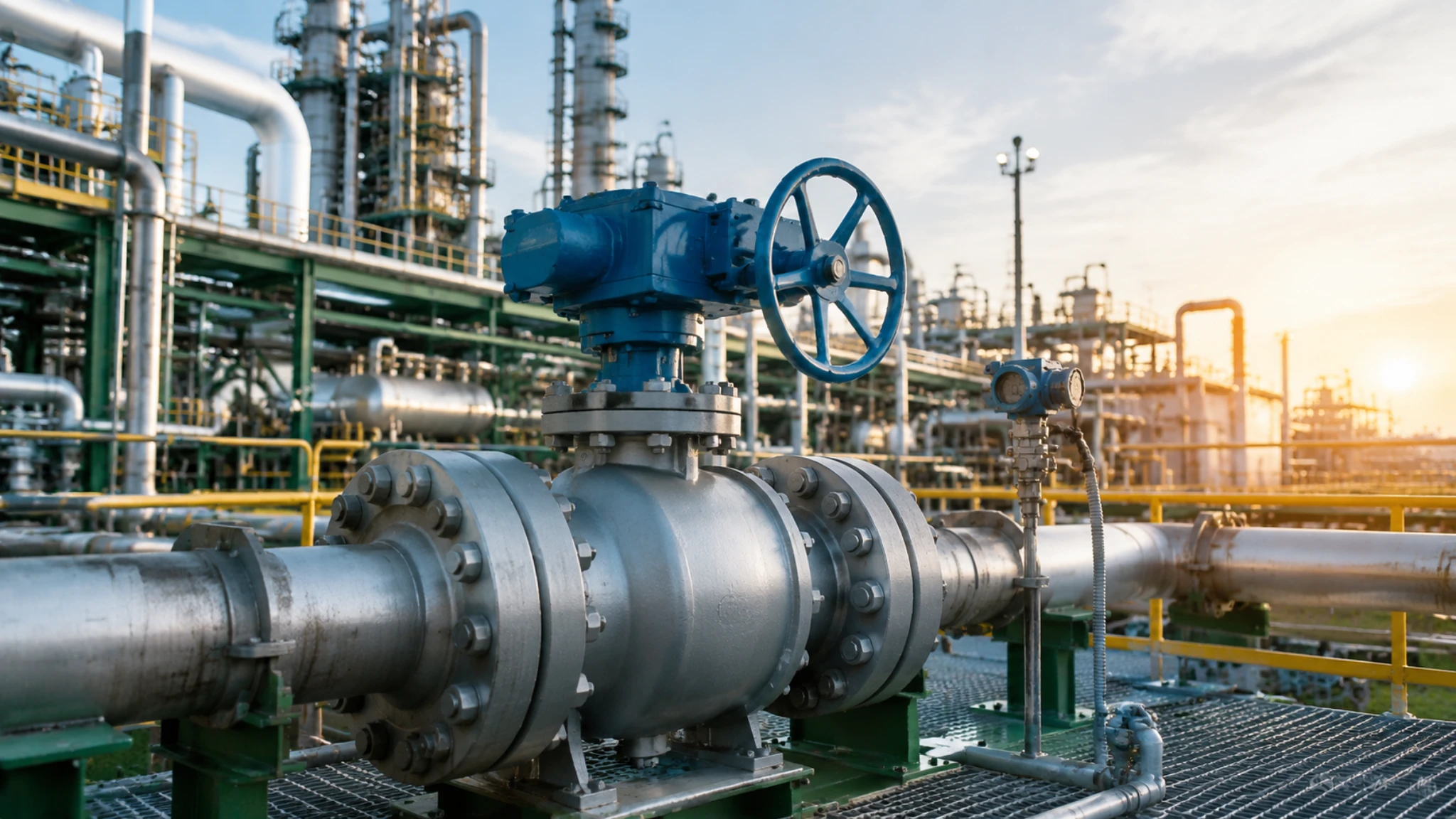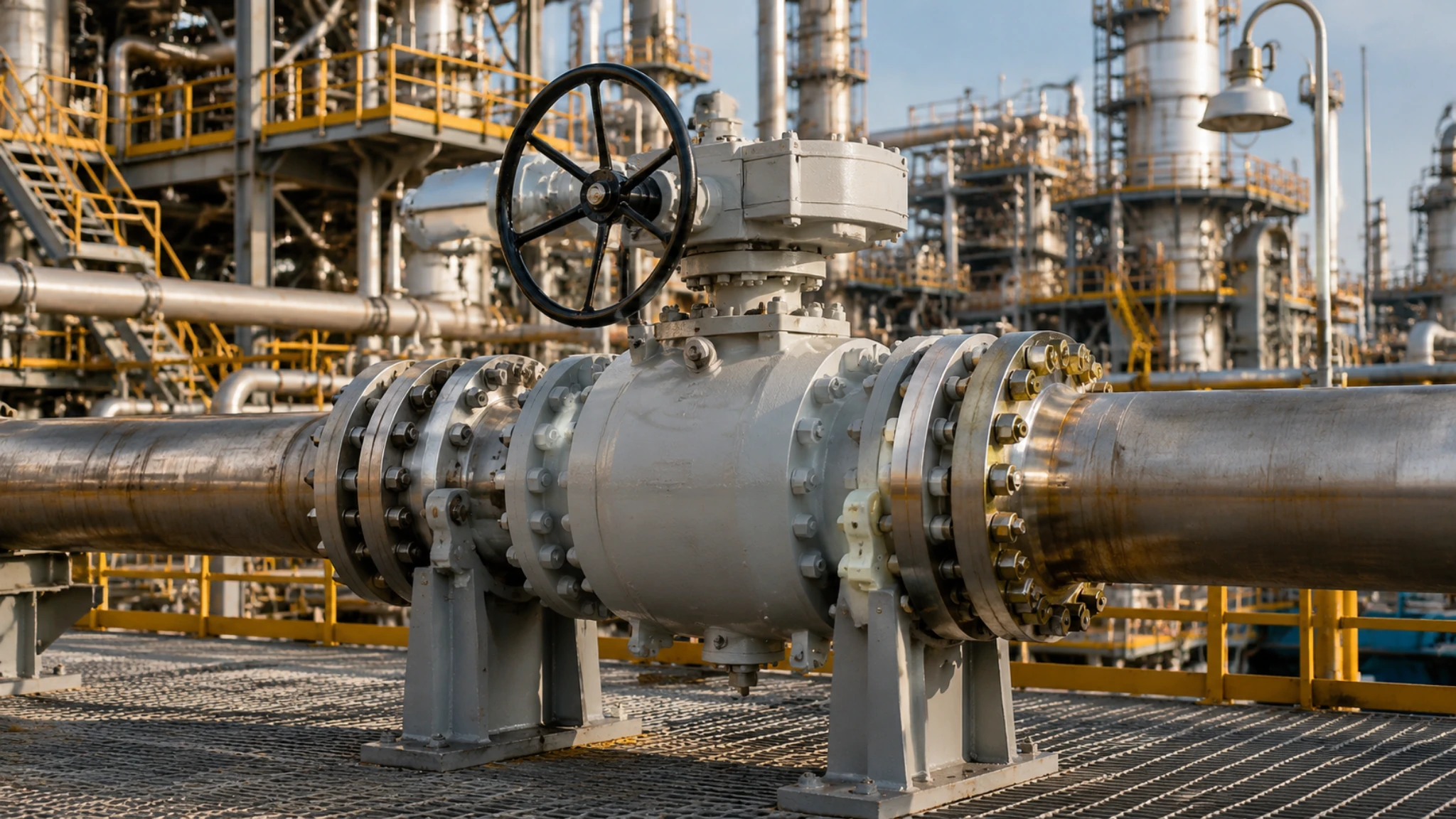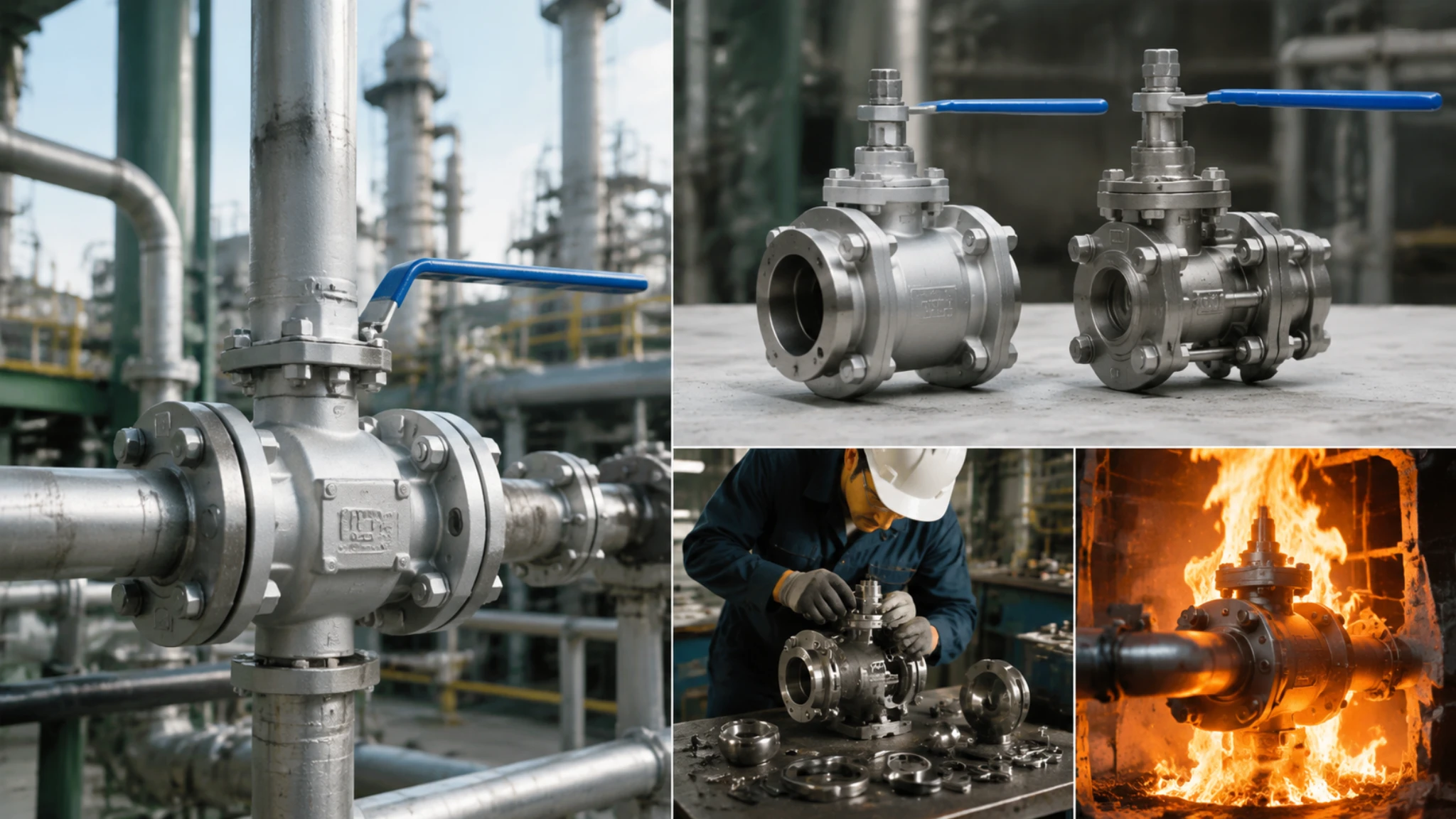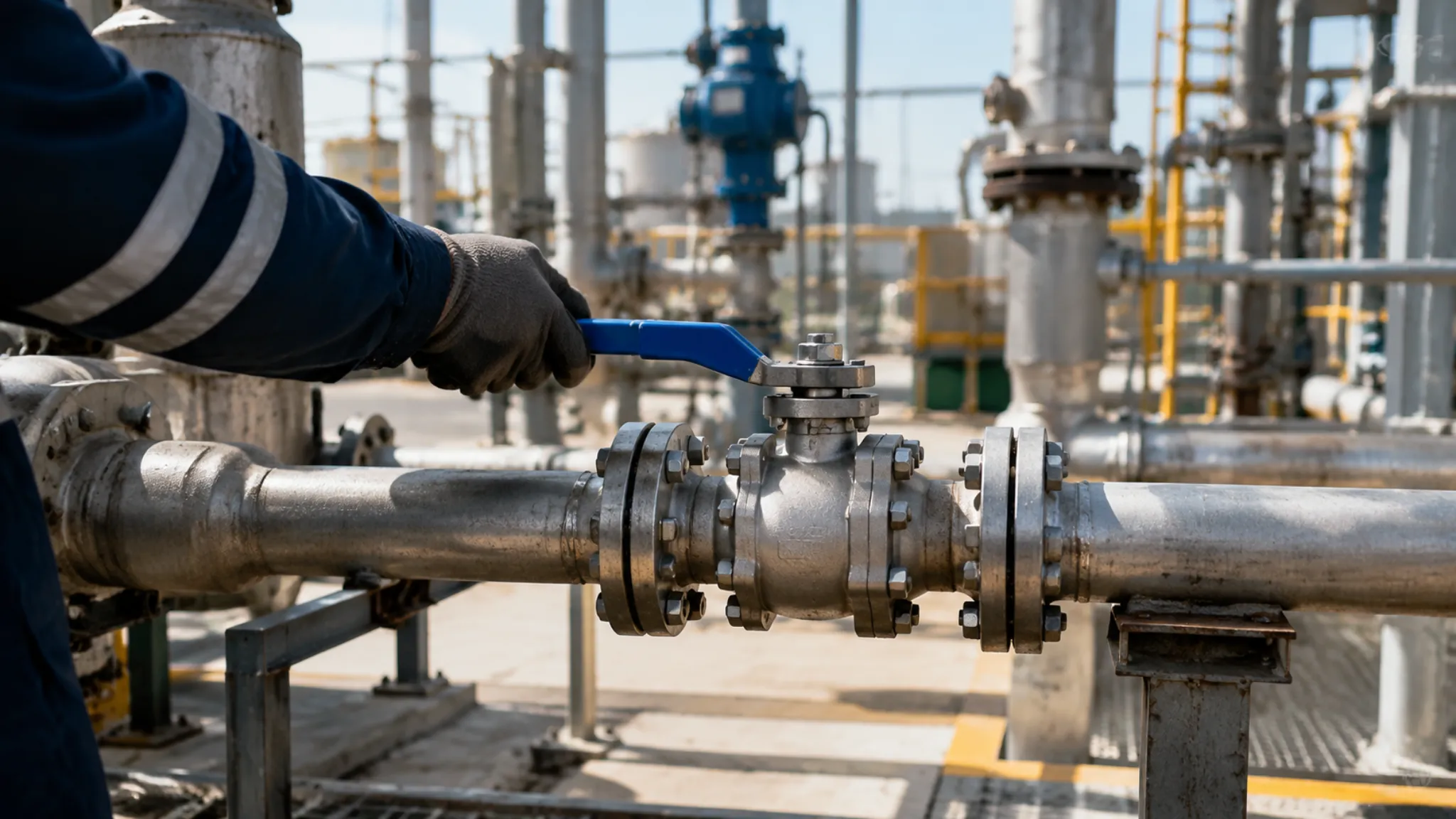
Forged floating ball valves are the mainstream choice for high-pressure operating conditions, available in Class 150 to 1500, NPS 1/2 to 12. They feature soft seats made of PTFE/RTFE, support a temperature range of -196°C to 260°C, and are highly suitable for oil & gas, chemical, and water treatment systems.
Valve Material Selection
Forged Valve Body Strength
The forging process uses high-pressure stamping or hammering to force the metal grains to flow along the profile of the valve body, creating a continuous and dense fibrous structure.
Grains are elongated and compacted during the forging process, eliminating the dendritic segregation typical of casting and homogenizing the material’s internal structure.
This creates a fundamental difference from the coarse dendritic structures found in casting—the tensile strength of forgings is typically 25% to 40% higher than that of castings with the same specifications, and the impact toughness is improved by over 30%.
In high-pressure conditions above Class 600, every 1 mm increase in valve body wall thickness can improve fatigue life by approximately 18%. API 6D and ASME B16.34 standards explicitly require high-pressure valves to be machined from forged blanks. Forged valve bodies are entirely free of porosity, slag inclusion, or shrinkage porosity, ensuring that pressure loads are distributed uniformly.
In long-distance oil and gas pipelines, the working pressure of floating ball valves can reach Class 1500 (approx. 103 bar), where the uniformity of the forged blank serves as the key to preventing stress concentration.
I once encountered an issue in the Dongying United Petrochemical project where a cast valve body cracked during a winter cold wave—the shrinkage porosity of the cast blank turned into a crack initiation source at a low temperature of -20°C. After replacing it with an A105 forged valve body, the same pipeline operated continuously for 3 years with zero leakage.
On offshore platforms, the valve body of a floating ball valve must also withstand cyclic loads—the alternation between external seawater pressure and internal pressure can easily trigger fatigue failure. Aligning the fibrous structure direction of the forged blank with the principal stress axis is essential for fatigue resistance.
API 6D specifications explicitly require that for ball valves of DN 50 and above with a pressure rating of Class 400 and above, the valve body must use a forged blank; cast blanks are only permitted for small-diameter valves from Class 150 to Class 300.
API 6D specifications also dictate that ball valves of DN 50 and above, Class 400 and above using forged blanks must be in a Normalized + Tempered heat treatment state, ensuring fine, uniform grains and a boost in fatigue strength by over 15%.
| Process Type | Tensile Strength Increase | Fatigue Life | Applicable Pressure Rating | Typical Application |
|---|---|---|---|---|
| Forging (A105) | Baseline (+0%) | Baseline (+0%) | Class 150–1500 | High-pressure pipelines, Christmas trees |
| Forging (F316) | +5%–10% | +15%–20% | Class 150–1500 | Corrosive media, offshore platforms |
| Casting (WCB) | Baseline -25% | Baseline -40% | Class 150–600 | Low-pressure water systems, general chemical |
A105 Carbon Steel
A105 is a forged carbon steel valve material under the American ASME standard, designated as SA-105N. It is suitable for medium-temperature conditions ranging from -29°C to 427°C, offering the best cost-performance ratio in the Class 150 to Class 600 range. The carbon content is controlled below 0.35% (A105N ≤ 0.30%), with manganese at 0.60% to 1.05%, phosphorus ≤ 0.040%, and sulfur ≤ 0.050%, qualifying it as a regular-grade carbon steel. It features a yield strength ≥ 248 MPa, a tensile strength of 483–655 MPa, a hardness ≤ HB 187, and exceptionally stable comprehensive mechanical properties.
In API 6D pipeline ball valves, A105 is usually phosphated or electrophoretically coated, allowing it to withstand up to 500 hours in salt spray testing without showing red rust.
In the China-Russia Crude Oil Pipeline Phase II Station Upgrade project I participated in, the A105 valve body was specified to pair with a fusion-bonded epoxy (FBE) coating (film thickness ≥ 250 μm). It had a design life of 25 years and continues to operate smoothly past its design life today.
A105 must comply with NACE MR0175 requirements in H₂S-containing media. When the chloride ion concentration exceeds 50 mg/L, an anti-corrosion coating is mandatory; otherwise, stress corrosion cracking will occur within 3 to 5 years. Compared to F316 stainless steel, the cost of A105 is about 45% to 55% lower, making it the preferred material in non-highly corrosive environments.
In petroleum refinery fluid catalytic cracking units (FCCU), the high-temperature oil and gas pipelines of the reactor-regenerator system utilize A105 valve bodies, with peak operating temperatures reaching 450°C (switching to F316 or Inconel when exceeding the upper temperature limit of A105).
The low-temperature ductile-to-brittle transition temperature of A105 is approximately -30°C. When the minimum winter temperature in Northeast China drops below -30°C, pipeline valves require low-temperature impact toughness verification (CVN ≥ 54 J at -46°C per ASME B16.34).
The mainstream anti-corrosion coating solution for carbon steel valves in the industry is Fusion Bonded Epoxy (FBE) electrostatic spraying, with a coating thickness of 200–300 μm and an adhesion strength ≥ 30 MPa, verified effective by 15 years of anti-corrosion practice on the Eastern South China Sea platforms. The heat treatment state of A105 significantly impacts its final performance. The normalizing temperature is 920–950°C with a holding time of 1–2 hours per 25 mm wall thickness; the tempering temperature is 580–650°C to eliminate normalizing stresses and improve impact toughness.
During on-site processing, post-weld heat treatment (PWHT) for A105 valve bodies must maintain an interpass temperature ≤ 150°C, followed immediately by hydrogen elimination treatment (holding at 250–300°C for 2 hours) to prevent welding cold cracks in high-strength steel.
环境This is a process easily overlooked by small domestic factories, and it marks the quality gap between domestic A105 valve bodies and European/American products.
- ASME SA-105N standard, designated as A105N, suitable for -29°C to 427°C, offering the best cost-performance ratio for Class 150–600.
- Carbon content ≤ 0.30% (A105N), manganese 0.60%–1.05%, phosphorus ≤ 0.040%, sulfur ≤ 0.050%.
- Yield strength ≥ 248 MPa, tensile strength 483–655 MPa, hardness ≤ HB 187.
- Salt spray testing after phosphating or electrophoretic coating can reach 500 hours without red rust (coating thickness ≥ 250 μm).
- Media containing H₂S must comply with NACE MR0175; anti-corrosion coating is mandatory when chloride ions > 50 mg/L.
- Cost is 45%–55% lower than F316, making it the preferred material in non-highly corrosive environments.
F316 Stainless Steel
F316 is a molybdenum-bearing austenitic stainless steel with a molybdenum content of 2% to 3%, significantly improving pitting and crevice corrosion resistance compared to F304. The low-carbon grade F316L restricts carbon content to ≤ 0.030%, effectively reducing the risk of intergranular corrosion, making it a standard configuration for sour oil and gas fields.
With a chromium content of 16% to 18% and nickel content of 10% to 14%, the addition of molybdenum is key to enhancing chloride ion tolerance—in offshore or salt spray environments where chloride ion concentration exceeds 200 mg/L, the service life of F316 is 3 to 5 times that of ordinary carbon steel. The yield strength of F316 is ≥ 205 MPa (AISI 316L), slightly lower than A105, but its tensile strength reaches 515–720 MPa, and its strength decays more gradually at high temperatures. PREN (Pitting Resistance Equivalent Number) = Cr + 3.3Mo + 16N, with typical values of 24–28, higher than F304’s 18–22.
I participated in the valve selection for the Wenchang offshore FPSO project, where an F316 valve body was paired with a Hastelloy seat. It operated continuously for 3 years without any corrosion penetration under oil production wastewater conditions at 180°C and a Cl⁻ concentration of 3000 mg/L.
Compared to A105, the material cost of F316 is about 60% to 80% higher, but its life-cycle cost in corrosive media is actually lower.
In the water injection system of the Norwegian North Sea oil field (injection water chloride ion concentration 800–1200 mg/L, temperature 65°C), ball valves with F316 valve bodies were inspected after 12 years of service; the seat wear was < 0.1 mm, far lower than the 0.5–0.8 mm wear observed on A105.
In high-temperature, high-pressure hydrogen environments (H₂ concentration > 95%, pressure 21–70 bar), the hydrogen embrittlement sensitivity of F316 is 3 orders of magnitude lower than that of carbon steel, making it the preferred material for coal chemical and ammonia synthesis units. Inconel 625, due to its nickel content > 58% and 9% Mo content, performs better than F316 in ultra-deep well environments (wellhead temperature > 150°C, H₂S partial pressure > 0.001 bar), but its cost is 4 to 6 times that of F316.
The low-carbon design of F316L (≤ 0.030% C) is key to preventing intergranular corrosion—when carbon content exceeds 0.030%, holding the material in the sensitization temperature range (450–850°C) causes chromium carbides (Cr₂₃C₆) to precipitate at grain boundaries, resulting in a chromium-depleted zone at the grain boundaries and increasing the corrosion rate by 10 to 100 times.
In seawater reverse osmosis (SWRO) desalination plants, F316L valve bodies paired with electrolytic seawater cathodic protection systems can achieve a 30-year design life, extending it by 3 to 5 times compared to traditional carbon steel.
- Molybdenum content of 2%–3% raises PREN to 24–28 (vs 18–22 for F304); the lifespan is 3–5 times that of carbon steel under conditions where chloride ions > 200 mg/L.
- Low-carbon F316L (≤ 0.030% C) prevents carbide precipitation in the sensitization temperature range, avoiding chromium depletion at grain boundaries that accelerates pitting.
- Wenchang FPSO project empirical evidence: Zero corrosion penetration after 3 years in oil production wastewater at 180°C and Cl⁻ concentration of 3000 mg/L.
- 12-year data from North Sea water injection system: F316 seat wear < 0.1 mm vs 0.5–0.8 mm for A105.
- Inconel 625 is recommended for ultra-deep wells (>150°C, H₂S partial pressure > 0.001 bar), though its cost is 4–6 times that of F316.
Sealing and Certification
Soft Seat Advantages
The core sealing element of soft-seated floating ball valves is PTFE (polytetrafluoroethylene) or RTFE (reinforced PTFE).
The friction coefficient of PTFE is only 0.04, the lowest among known solid materials. The valve can achieve bubble-tight sealing (ISO 5208 Class A) at an extremely low differential pressure of 0.14 bar.
Compared to metal-to-metal sealed valve seats, the soft seat forms a surface contact with the ball, providing a longer sealing path and a leakage rate that is about two orders of magnitude lower.
In gas transmission and distribution systems (such as the city gate stations of the Second West-East Gas Pipeline), soft-seated ball valves ranging from DN 50 to DN 300 have maintained a zero-leakage record of over 99.7% after 10 to 15 years of service.
The upper temperature limit for PTFE is 260°C (280°C for short periods). Filled with glass fiber or carbon fiber, RTFE pushes its heat deflection temperature above 280°C.
Graphite-filled PTFE incorporates graphite particles to reduce the coefficient of thermal expansion, maintaining a stable seal at 260°C; carbon fiber-filled RTFE raises the upper pressure limit from 17 bar (for pure PTFE) to 35 bar. Selection empirical formula: Applicable Pressure (bar) = 260 − Operating Temperature (°C) × 0.08. When the operating temperature is 200°C, the maximum applicable pressure is approximately 144 bar (for carbon fiber-filled RTFE).
The wear self-compensation of soft seats is a unique advantage—the soft PTFE material undergoes microscopic wear against the spherical surface during opening and closing to form a mirror-like fit, meaning the sealing performance actually improves with use.
In practical use, the greatest challenge facing PTFE soft seats is the “cold flow” phenomenon—PTFE molecules creep under continuous high pressure, causing gaps in the sealing surface to widen.
The solution is to add 15%–25% glass fiber (GF) or carbon fiber (CF) reinforcement into the PTFE matrix. Glass fiber filling can increase the compressive strength of PTFE from 14 MPa to 21 MPa, significantly suppressing the cold flow effect. The friction coefficient of graphite-filled PTFE rises from 0.04 to 0.05–0.07, but its thermal conductivity increases by 40%, favoring heat dissipation in high-temperature conditions.
The upper limit of the PV value (pressure × velocity) for RTFE is approximately 4500 kPa·m/s, which is 3 times that of pure PTFE, making it suitable for high differential pressure and high-cycle frequency application scenarios.
| Soft Seat Material | Upper Temp Limit | Upper Pressure Limit | Corrosion Resistance | Typical Application |
|---|---|---|---|---|
| PTFE (Virgin) | 200°C | 17 bar | Excellent (Aqua Regia grade) | General chemical, pure water systems |
| Graphite-filled PTFE | 260°C | 20 bar | Good | Steam, hot oil systems |
| Glass fiber-filled RTFE | 280°C | 28 bar | Good | Refining, heavy hydrocarbon systems |
| Carbon fiber-filled RTFE | 300°C | 35 bar | Good | High-pressure chemical, GTL plants |
CE Certification Standards
Soft-seated floating ball valves entering the EU market must obtain the CE mark, with the core regulation being the Pressure Equipment Directive (PED 2014/68/EU).
Valves are classified into Categories I to IV based on volume and pressure—valves from Class 150 to Class 300 and DN 50 to DN 200 are typically classified as Category I (SEP, Sound Engineering Practice, requiring no notified body certification); Class 600 and above or DN 250 and above are usually classified as Category III, which must be reviewed and certified by an EU Notified Body. Certification testing must comply with EN 1626 (specific to ball valves) or EN 12266-1 (industrial valve testing).
Pneumatic testing requires that under 1.1 times the rated pressure, the leakage rate does not exceed 0.03 vol%/h (Rate B), and the high-temperature test must cover the design temperature range (typically -29°C to +200°C).
Material certificates must be EN 10204 3.1 (traceable third-party inspection report), specifying the heat number, heat treatment batch, and actual chemical composition values—using untraceable materials without certificates is forbidden. The nameplate must display DN, PN, pressure rating, temperature range, batch number, and the CE identification number (4-digit Notified Body number). The Operations Manual (OM) must include instructions for installation, commissioning, and maintenance, and comply with EU official language requirements.
There are three compliance paths for PED certification: (1) Module H (Full Quality Assurance), requiring an EU notified body to review design, manufacturing, and final inspection throughout, with a certificate validity of 5 years subject to annual surveillance audits; (2) Module G (EC Unit Verification), where each valve is individually inspected, suitable for custom products in batches of < 5 units; (3) Module A (Internal Production Control), applicable to Category I SEP products, which only requires a manufacturer’s self-declaration without notified body intervention.
Notably, the legal liability for a Module A declaration rests solely with the manufacturer—strict product liability applies in the event of an incident, and EU customs can demand a technical documentation review. API 6D certification and PED certification are mutually independent and cannot substitute for each other.
- PED 2014/68/EU Category I–IV classification verification; SEP valves require an attached production quality assurance declaration.
- EN 1626 or API 608 pneumatic test report, 1.1 times rated pressure, ≤ 0.03 vol%/h (Rate B).
- EN 10204 3.1 material certificate, stating the heat number, heat treatment batch, and actual chemical composition values.
- CE-marked nameplate specifying DN, PN, pressure rating, temperature range, batch number, and CE identification number.
- Operations Manual (OM) covering installation, commissioning, and maintenance instructions, conforming to official EU language requirements.
- Hydrostatic pressure test records, test pressure = 1.5 × rated pressure, held for 30 minutes with zero visible leakage.
Strict Leakage Testing
100% of soft-seated floating ball valves undergo API 598 or ISO 5208 leakage testing before leaving the factory. Testing is divided into three stages: shell strength test, seat tightness test, and bi-directional seal verification.
Taking a Class 300 valve as an example, with a rated pressure of 49.2 bar, the shell strength test pressure is 1.5 × 49.2 ≈ 74 bar, held for 30 minutes with zero deformation and zero leakage; the seat tightness test pressure is 1.1 × 49.2 ≈ 54 bar, checking that the leakage rate is ≤ 0.03 vol%/h. The low-pressure pneumatic test uses 6 to 7 bar of air or nitrogen, achieving a sensitivity of 5 × 10⁻⁴ mbar·l/s, matching the Class V leakage rate requirements of ANSI/FCI 70-2.
Open-close cycle testing completes 5 full openings and closings at 1.1 times the rated differential pressure to confirm that the seat suffers no damage or jamming.
For ball valves above DN 100, the seat torque value must be recorded during testing to ensure that the operating torque under pressure does not exceed the design limit (typically ≤ 150 N·m).
Valves intended for high-risk conditions (such as hydrogen or highly toxic media) must also undergo extreme sealing validation at low temperatures (-46°C) and high temperatures (design temperature + 20°C).
Upon completion of the test, stamped original test records must be provided, including: test date, operator name, equipment calibration certificate number, and actual measured leakage values.
The ANSI/FCI 70-2 standard defines six leakage classes (Class I to Class VI). Class VI requires 0 oz/yr, which is the strictest level for gas valves and is usually guaranteed through design calculations rather than empirical verification.
High-pressure pneumatic testing (> 10 bar) must use nitrogen or an inert gas; using compressed air is forbidden (the 21% oxygen content presents an explosion risk).
Pressure holding times are governed by ISO 5208: 5 minutes for nominal sizes ≤ DN 100, and 30 minutes for > DN 100. Insufficient duration can result in missing slow leaks.
The seat seal test must be conducted with the ball in a semi-open position, as this is when the sealing surface experiences the most uneven force distribution, making it a critical condition for verifying soft seat quality.
- Shell strength test: 1.5 × rated pressure (Class 300 ≈ 74 bar), held for 30 minutes, with zero visual leakage, deformation, or abnormal noises.
- High-pressure seat test: 1.1 × rated pressure (Class 300 ≈ 54 bar), using clean water or hydraulic oil, held for 15 minutes, leakage rate ≤ 0.03 vol%/h.
- Low-pressure pneumatic test: 6–7 bar air/nitrogen, sensitivity of 5 × 10⁻⁴ mbar·l/s, matching ANSI/FCI 70-2 Class V, passed based on zero bubbles.
- Bi-directional sealing validation: One seat test performed in both forward and reverse directions to confirm zero leakage on both sides of the floating ball valve.
- Operating torque test: 5 full openings and closings completed under pressure, with the torque value ≤ upper design limit (≤ 150 N·m for DN 100).
Sourcing from China
Verifying Factory Quality
Before purchasing forged ball valves from China, the factory’s quality assurance system must be verified.
The most effective verification method is sending personnel for an on-site audit (ITP – Inspection and Test Plan), focusing on: the material traceability system (the entire chain from heat number → forged blank → finished product → test records), heat treatment process records (normalizing + tempering temperature curves, holding time calculated by wall thickness), Welding Procedure Specification and Procedure Qualification Record (WPS + PQR), and welder qualifications.
For remote verification, the factory can be required to provide: EN 10204 3.1 material certificates (must contain third-party witnessed data for chemical composition and mechanical properties, not just standard values), API 598 or ISO 5208 test reports (attached with test equipment calibration certificates, with a typical calibration cycle of 1 year), and PED certificates or Declarations of Conformity.
Video witnessing of critical tests (shell strength test and pneumatic test) is an effective way to mitigate risks, requiring the factory to notify the buyer 24 hours prior to testing to allow time to arrange witnessing. For API 6D products, the API certificate number must be verified to match the nameplate, which can be checked online via the official API website for authenticity.
For first-time suppliers, it is recommended to implement a tiered verification strategy: Phase 1 (low-risk valves): Audit factory qualification documents (ISO 9001, API 6D, or PED certificates), review test report samples from the past 3 years, without actual factory visits; Phase 2 (mid-risk valves): Send personnel for an on-site ITP audit to verify the material traceability system, heat treatment processes, and equipment calibration records, and witness at least one valve test on-site; Phase 3 (high-risk valves, batches > 50 units): Involve third-party inspection agencies (such as SGS, Bureau Veritas, Applus) to witness material incoming, in-process inspection, and final testing throughout the entire process.
API monogram licensed manufacturers’ API certificates can be verified at api.org, but having an API monogram alone does not guarantee the quality of every single valve—API 6D allows factories to issue product certificates on their own during the certificate’s validity period (typically 3 years); the key remains the test witness records.
- EN 10204 3.1 material certificate, including heat number, chemical composition (actual measured values, not typical values), and mechanical properties.
- API 598 / ISO 5208 test report, attached with a calibration certificate within its validity period for the testing equipment (CNAS accredited).
- PED 2014/68/EU category confirmation; Category III valves require a Notified Body number, while Category I SEP requires a quality assurance declaration.
- Heat treatment process records (normalizing temperature 920–950°C, tempering temperature 620–650°C, holding time calculated based on wall thickness).
- Send personnel for an on-site ITP audit, or request video witnessing of the entire shell strength and pneumatic testing process.
- For API 6D products, verify that the API certificate number matches the nameplate, which can be checked online via the official API website for authenticity.
Safe Export Packaging
Export packaging must meet the quarantine requirements of both the place of export and the port of destination.
Since 2015, developed economies such as the EU, US, and Australia have completely banned the use of solid wood packaging (ISPM 15 fumigated wood), requiring IPPC-certified fumigation-free wood or synthetic material packaging instead.
Fumigation treatment fees at domestic ports cost around $50 to $100 per crate, and the fumigation + waiting cycle takes 2 to 5 days, representing one of the major risks for export delivery delays.
The internal packaging uses double-layer PE bags + silica gel desiccant (desiccant ≥ 500g per cubic meter), and the external packaging uses fumigation-free plywood crates (plywood is processed under high temperature and high pressure and contains no bark). Valve flange faces are protected with plastic covers + foam gaskets, and the ball is protected with plastic end caps.
The net weight per crate is controlled within 500 kg (suitable for forklift handling), and the crate is marked with the product name, specifications, net/gross weight, batch number, shipping marks, as well as “THIS SIDE UP” and “HANDLE WITH CARE” symbols.
Comprehensive costs: internal packaging is about $5 to $8 per unit (DN 50), and the external plywood crate is about $15 to $25 per crate. Although this is 15% to 25% more expensive than regular wood boxes, it saves fumigation fees and time, providing a better overall cost-performance ratio. Packaging design must satisfy both cargo safety and importing country quarantine requirements.
The standard for fumigation-free plywood is ISPM 15 Annex I. After high-temperature and high-pressure treatment (wood core temperature ≥ 56°C for 30 consecutive minutes or longer), it is stamped with the official IPPC mark and can be directly exported to developed economies like the EU, US, and Australia. Common specifications: 9mm boards are suitable for net weights ≤ 200 kg/crate, 12mm boards for 200–400 kg/crate, and 18mm boards for > 400 kg/crate.
For large-diameter valves above DN 200, it is recommended to add internal wooden framing supports to prevent the valves from shifting or rolling during transit. Desiccant dosage is calculated per JIS Z0301: 500 g/m³ is needed for humid southern shipping routes (humidity > 75%), while it can be reduced to 300 g/m³ for dry northern routes.
| Packaging Level | Material & Specifications | Protection Goal | Cost Reference |
|---|---|---|---|
| Internal Packaging | Double-layer PE bags + 500g/m³ silica desiccant | Moisture, oxidation, and salt spray protection | Approx. $3–5/unit (DN 50) |
| Flange Protection | Plastic flange covers + 10mm foam gaskets | Collision and sealing face damage prevention | Approx. $2–3/unit |
| External Packaging | Fumigation-free plywood crate (12–18mm boards) | Compression resistance, shockproof, exemption from quarantine | Approx. $15–25/crate |
| Securing Method | Wooden pallets + strapping bands + corner cardboard protectors | Shifting and tipping prevention during transit | Approx. $5–8/crate |
| Marking | Shipping marks + Net/Gross weight + THIS SIDE UP | Port recognition, correct sorting | Printing fee approx. $0.5/crate |
Transportation and Logistics
Ocean freight is a primary cost component of valve exports.
A 20-foot container can hold approximately 80 to 96 soft-seated ball valves from NPS 2 to NPS 8 (with a utilization rate of around 80%, leaving 20% space for wooden pallets and cushioning material).
Large-diameter valves above NPS 10 typically require flat rack or platform containers, with single-container freight rates being 2 to 3 times those of regular containers. Less than Container Load (LCL) shipping is suitable for small-batch trial orders, though special care must be taken regarding protection when consolidating with other cargo.
For ocean transit, it is recommended to purchase Marine All Risks insurance (covering the entire process of loading/unloading, transit, and storage), with an additional On Deck clause suitable for large-diameter valves.
Customs clearance at the port of destination requires a Bill of Lading (B/L), Commercial Invoice, Packing List, Certificate of Origin (CO Form E or Form A), and product certificates—incomplete documentation will incur demurrage charges ($100 to $300/day). The export tax rebate rate is about 9% to 13% (based on HS Code 8481.80.40) and should be factored into the comprehensive quotation.
Shipping transit times: Qingdao/Shanghai to US West Coast takes 20 to 25 days, US East Coast takes 30 to 35 days, and Europe takes 25 to 35 days. It is advised to budget a 2- to 3-week buffer for customs clearance and inland transportation.
Full Container Load (FCL) export is more suitable for valve products than Less than Container Load (LCL) for three reasons: valve flange faces require delicate protection, and consolidating with other cargo in LCL can easily damage the sealing faces; LCL freight forwarders handle multiple liftings during devanning and distribution, leading to a cargo damage rate that is about 0.5%–1% higher than FCL; LCL customs clearance requires waiting for all consolidated goods to arrive before unified declaration, whereas FCL allows immediate clearance and pickup of the whole container.
It is recommended to use a “Shipped on Board” Ocean Bill of Lading and avoid a Telex Release—the latter makes it impossible to claim property rights in the event of document disputes during ocean transit.
HS Code 8481.80.40 (Other Valves) qualifies for a 9% export tax rebate, but if it includes an electric/pneumatic actuator, it is classified under 8481.80.50 with a rebate rate of 13%, which must be distinguished during quoting.
- 20-foot container: holds approx. 80–96 NPS 2–8 valves, freight cost approx. $800–1200/ton (reference price for US West Coast route).
- Valves above NPS 10 require flat rack containers: freight rate approx. $2000–4000 per container, which is 2–3 times that of a standard container.
- Marine All Risks insurance: premium is approx. 0.1%–0.3% of the cargo value; an additional On Deck clause is suitable for large-diameter valves.
- Customs clearance documents at destination port: B/L + CI + PL + CO + product certificates; incomplete documents will generate demurrage charges ($100–300/day).
- Export tax rebate: HS 8481.80.40 soft-seated ball valves receive a 9%–13% rebate, which should be factored into the comprehensive cost when quoting.
- Shipping transit time: Qingdao/Shanghai to US West Coast 20–25 days, US East Coast 30–35 days, Europe 25–35 days.
Remember the core parameters: PTFE/RTFE soft seats are applicable for -196°C to 260°C; A105 carbon steel covers Class 150–600, while F316 stainless steel covers Class 150–1500; 100% undergo API 598 pneumatic testing before leaving the factory; fumigation-free plywood crates are used for export, and a 20-foot container can hold 80–96 units of NPS 2–8 valves.