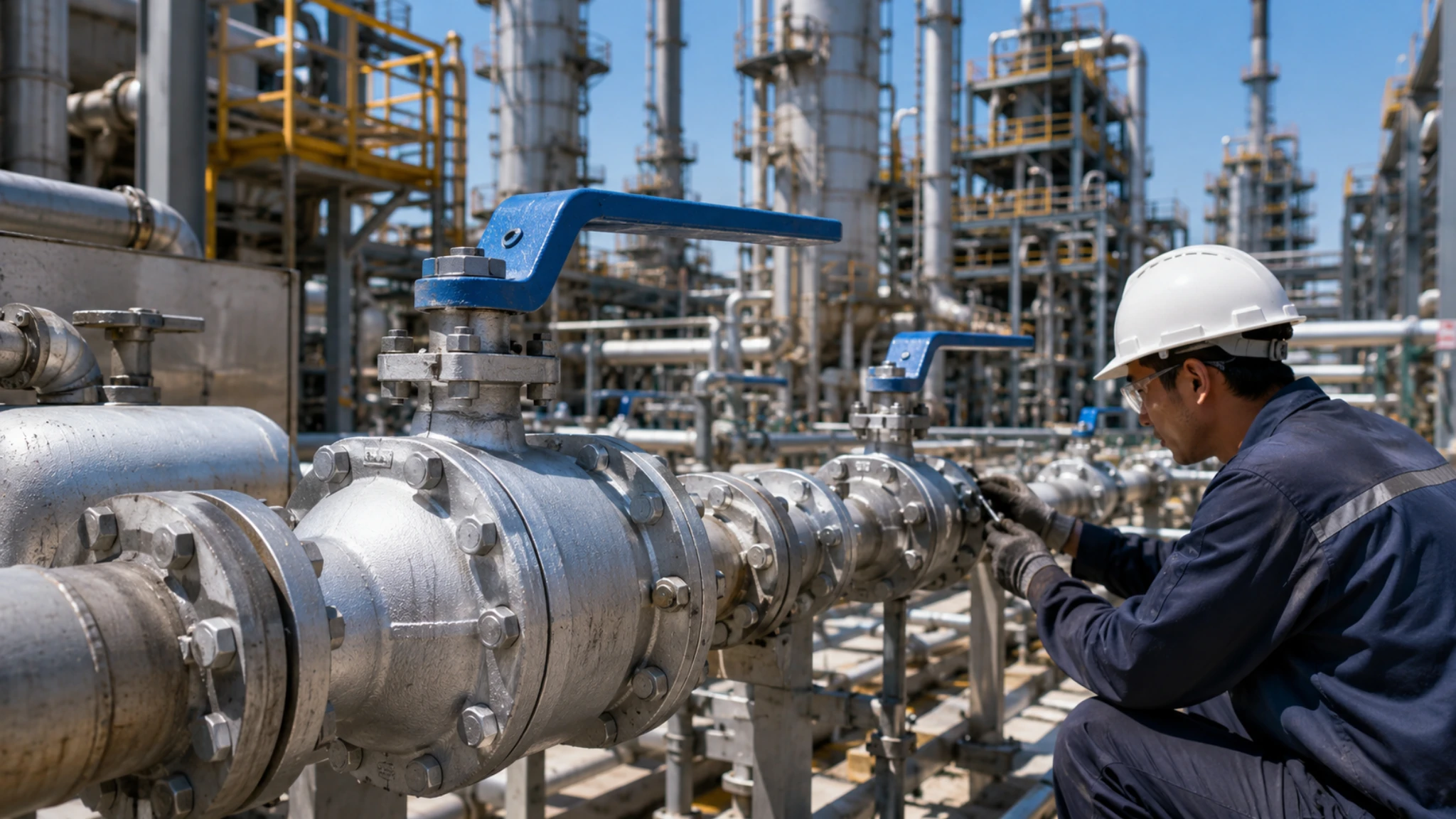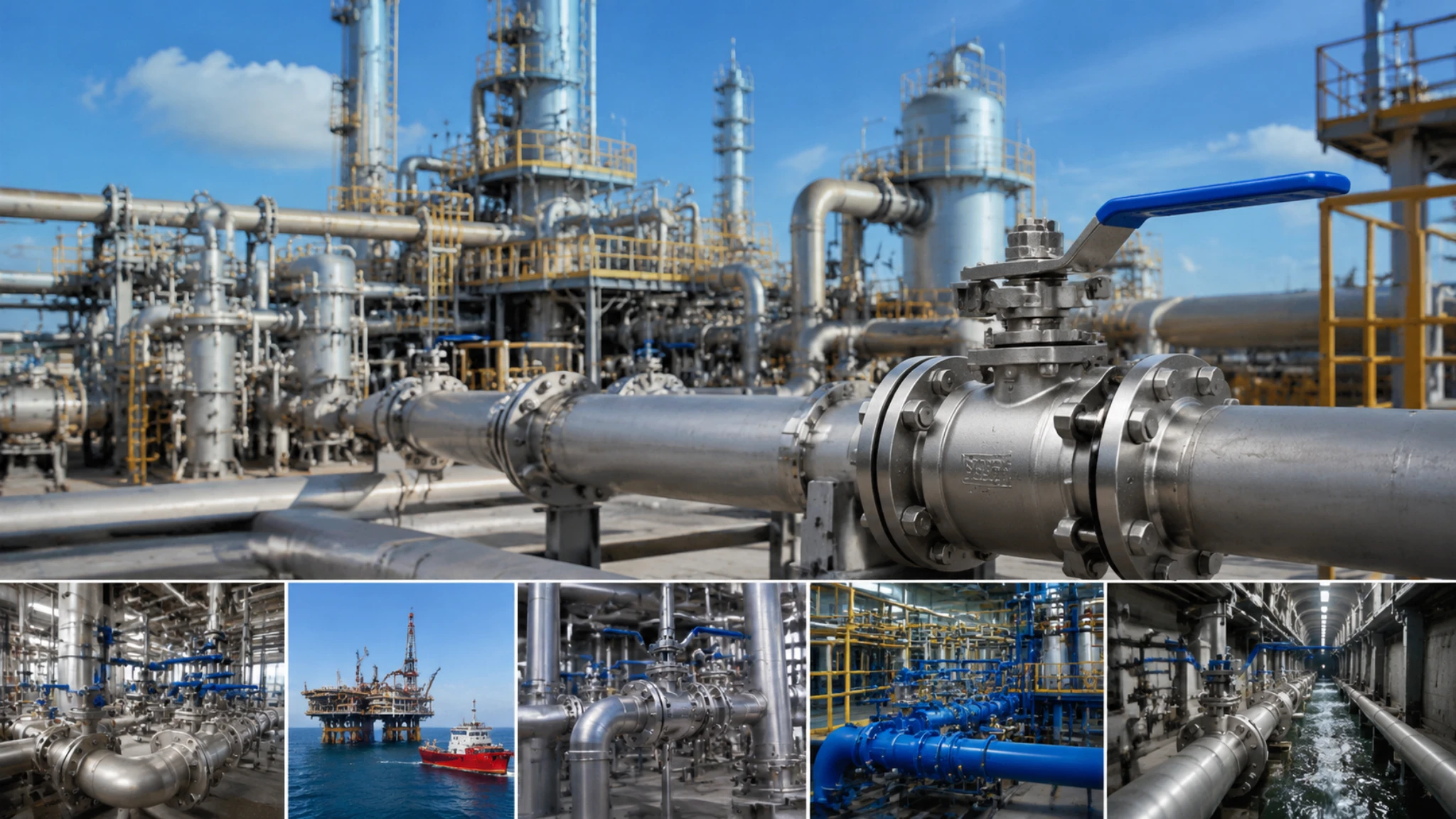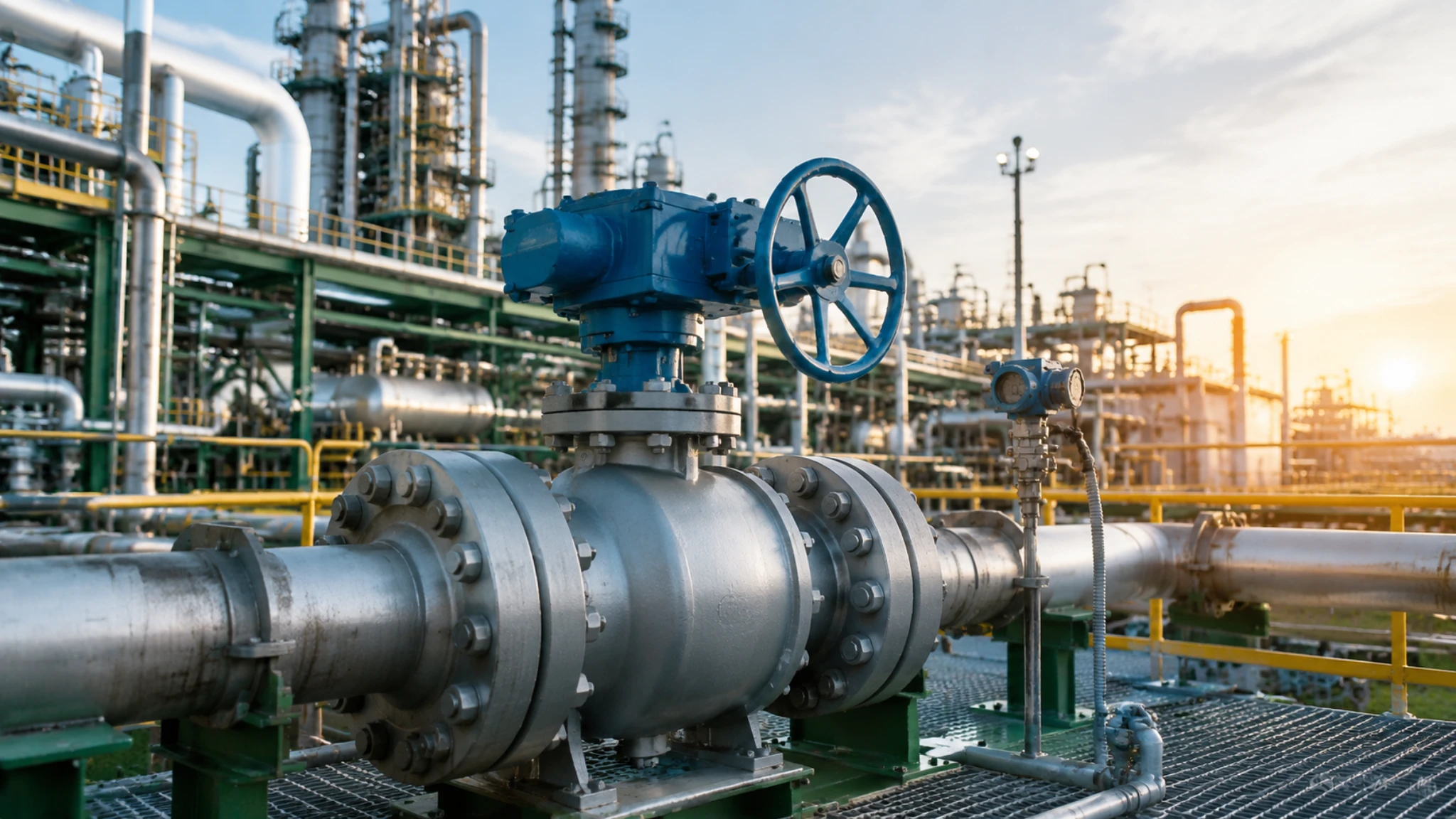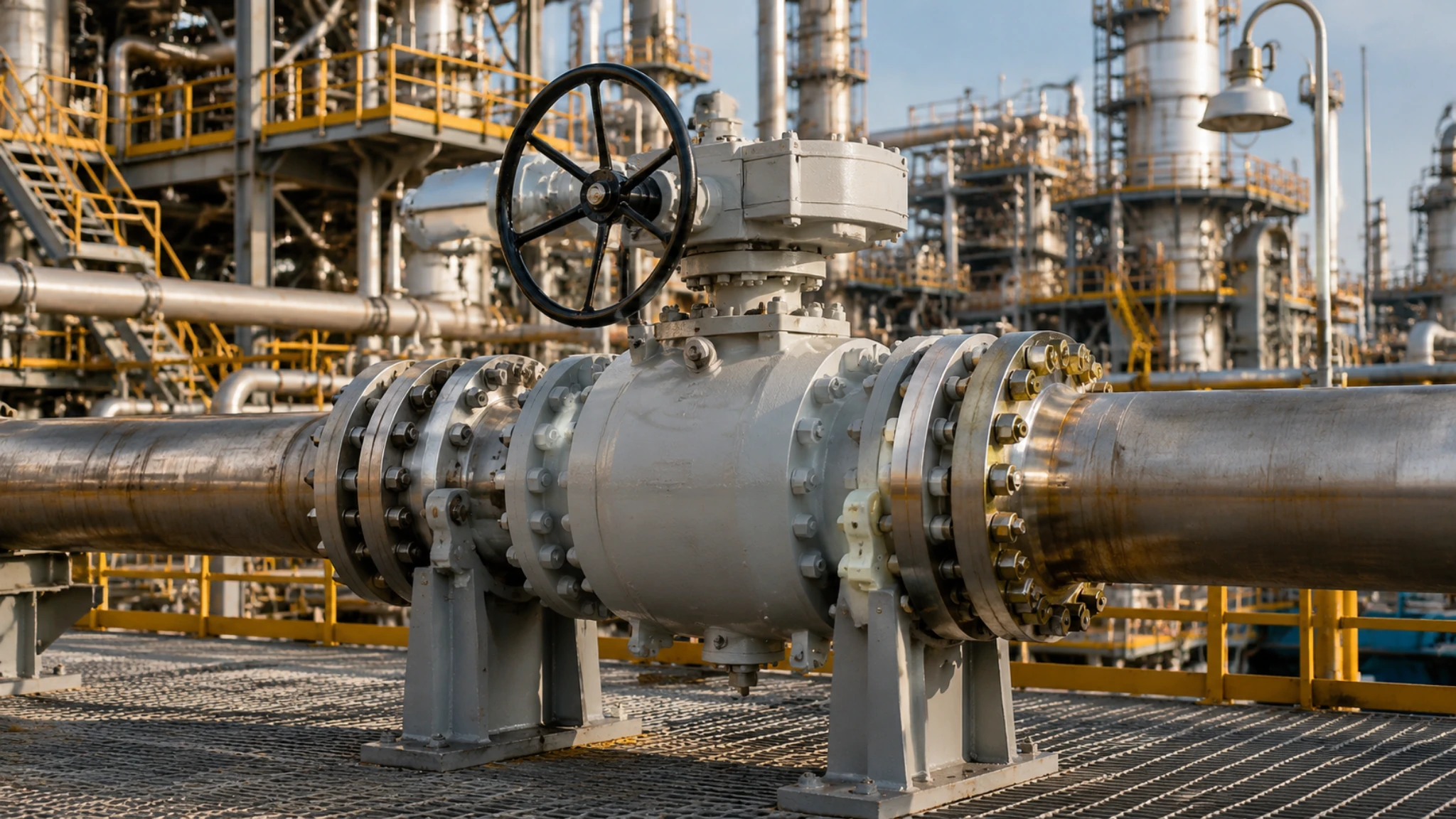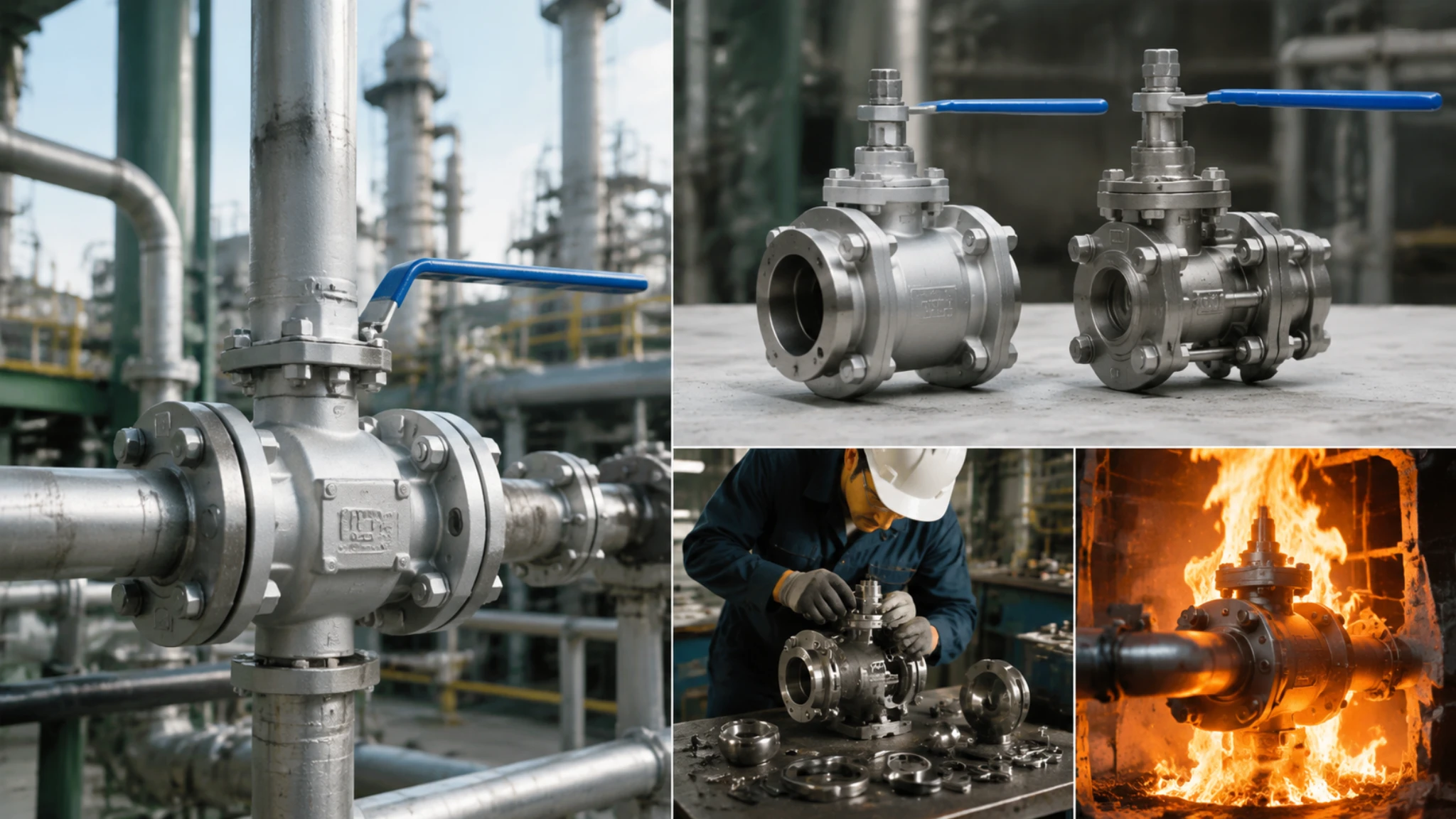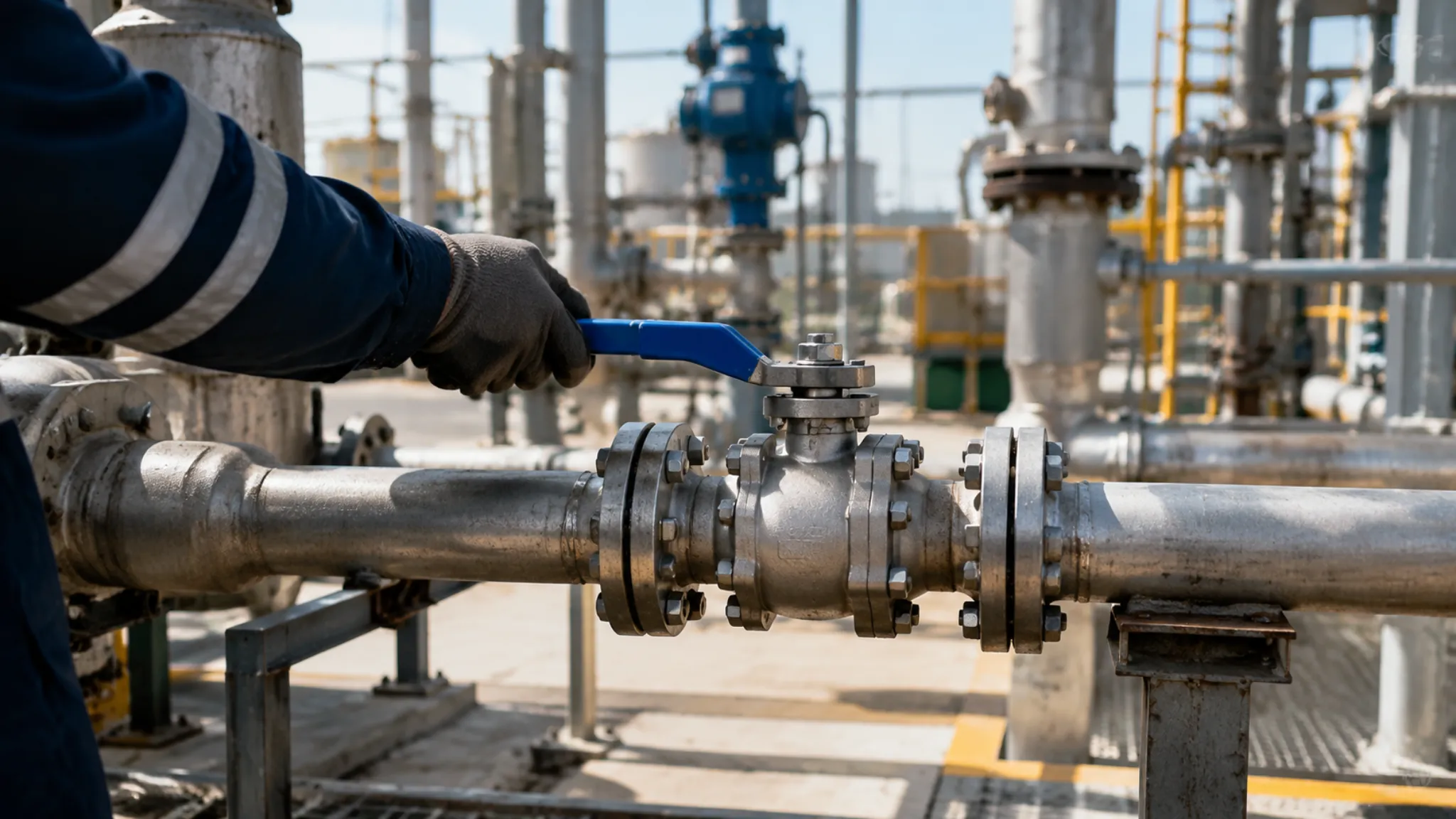
Forged floating ball valves cover -196°C to 680°C, DN15 to DN300, up to Class 1500. After 200+ valve selections, I know: seat material, sealing structure, and fugitive emission design must align — any gap causes shutdowns or safety risks.
Oil and Gas Uses
Upstream Pipeline Flow
Upstream pipelines are the first step in moving crude oil and natural gas from wellhead to processing facilities. The forged valve body’s uniform grain structure resists fatigue from pipeline vibration and thermal cycling. In one project, a DN200 natural gas pipeline experienced seat contraction leaks twice during a winter cold snap — the root cause was valve selection that didn’t account for thermal contraction margin. Replacing with a Class 600 forged floating ball valve eliminated the problem for 3 years of continuous operation.
| Pipeline Size | Pressure Class | Body Material | Seat Material | Typical Application |
| DN50–DN100 | Class 150–300 | A105 / F304 | PTFE / DEVLON | Gathering lines |
| DN150–DN300 | Class 400–600 | F316 / F316L | PEEK / Metal-seal | Trunk lines |
| High-pressure injection | Class 900–1500 | F51 / 17-4PH | Stellite overlay | Water flooding |
High-asphaltene crude combined with high water-cut in the same pipeline can cause seat swelling at the oil-water interface — a failure mode I documented in a field project that was resolved only by switching to oil-resistant FKM seats. Full-bore design reduces solids buildup and pigging blockage risk, making it essential for multiphase flow with high sand content.
Handling High Pressure
High pressure is one of the most demanding conditions in oil and gas. Class 600+ forged floating ball valves use reinforced body wall thickness — 20% to 30% thicker than standard flange valves — to manage stress concentration from internal pressure. I investigated a premature leak in a wellhead valve operating below its rated pressure: microscopic cracks had developed on the seat sealing face under long-term pulsating pressure. Switching to a Stellite metal-seat forged floating ball valve solved it permanently.
- Define design pressure: design pressure = maximum working pressure × safety factor (typically 1.5–2.0) — this is the primary input and cannot be estimated from memory
- Reference ANSI B16.34 tables: look up minimum body wall thickness and material allowable stress for the target Class rating
- Apply temperature-pressure correction: at high temperature, material allowable stress drops — F316 at 400°C retains only about 60% of its room-temperature allowable stress
- Verify burst pressure: forged steel body burst pressure is typically 3–4× the rated pressure class — this is the final safety margin check
Sealing face flatness on Class 600+ valves must be ≤0.0005 mm. Any deviation causes local stress concentration and premature failure. Site acceptance should include spot checks of sealing face grinding marks and surface finish — a requirement missing from most procurement specifications but critical for reliability.
Preventing Fluid Leaks
Fugitive emission from oil and gas media is both a safety hazard and an environmental compliance issue. ISO 15848 specifies leakage rates, while API 608 and API 6D require fugitive emission control design for sour gas service. I participated in a refinery fire investigation where the absence of fire-safe valves was identified as a contributing factor in fire spread — API 607/ISO 10497 requires that even after fire destruction of seats and stem packing, the valve body must still maintain basic sealing function.
- Stem packing: graphite-filled PTFE or flexible graphite compression rings in multiple stages — the primary barrier against stem leakage
- Body seal: spiral wound gasket on flange faces with controlled bolt preload for long-term sealing integrity
- Fugitive emission test: each production batch tested per ISO 15848-1 Class B, leakage rate must be ≤1×10⁻⁶ Pa·m³/s
- Anti-static device: spring maintains electrical continuity between ball, stem, and body; resistance must be ≤10Ω to prevent static ignition
At site acceptance, I routinely use a multimeter to spot-check body-stem continuity — in many cases the anti-static spring has corroded during storage and measured resistance far exceeds 10Ω. This is a fatal hazard in explosion-hazardous areas. Fugitive emission testing cannot rely on factory reports alone; on-site verification is the final safety guarantee.
Water Treatment Uses
Clean Water Supply
Ball valve selection for drinking water systems prioritizes sanitary safety. NSF 61/372 certification is mandatory in North America; domestic projects must meet GB/T 17219 standards. Forged ball valve inner wall polish typically needs to reach Ra 0.8μm or better to minimize media adhesion and bacterial growth. In a residential secondary water supply retrofit, I witnessed cast iron ball valves with pitted inner walls causing rusty water — switching to 316L stainless steel forged floating ball valves reduced turbidity from 0.8 NTU to below 0.1 NTU.
| Application | Size Range | Body Material | Seat Material | Certification Required |
| Municipal main supply | DN50–DN300 | Ductile iron / stainless | EPDM | GB/T 17219 |
| Building water intermediate | DN15–DN50 | 304 stainless | EPDM / NBR | NSF 61 |
| Booster pump station | DN25–DN100 | 316L stainless | EPDM | ACS / WRAS |
| Disinfectant dosing line | DN15–DN50 | 316L stainless | EPDM | Chlorine resistance test |
Residual chlorine is the key parameter affecting seat service life in secondary water supply — when residual chlorine ≥2 mg/L, standard EPDM seats age accelerated. In a Zhejiang residential project where residual chlorine stayed at 2.5–3.0 mg/L year-round, standard EPDM seats failed in average 18 months. Switching to chlorine-resistant EPDM extended service life beyond 4 years.
Managing Waste Water
Municipal and industrial wastewater systems handle suspended solids, corrosive ions, and microorganisms in varying concentrations. DN50 to DN300 ball valves are the standard workhorses of wastewater pipeline networks. In a southern China wastewater treatment plant expansion, the original cast iron valves on aeration tank outlet failed with body perforation in under 2 years. Switching to F316L body + EPDM seat combination has been running 4 years without a single replacement — this case validates that material matching is the decisive factor for wastewater valve service life.
- Municipal sewage (pH 6–9): NBR seats, rated -20°C to 80°C — the economical default choice
- Industrial acidic wastewater (pH 2–5): PTFE seats, rated pH 2–12, -20°C to 200°C — but with weaker mechanical impact resistance
- High-sand municipal wastewater: full-bore valves reduce solids accumulation by ~60% versus reduced-port, cutting blockage frequency and maintenance cost
- High chloride environments (Cl⁻≥500 ppm): F316L stainless body resists stress corrosion cracking, clearly superior to standard 304
Chemical phosphorus removal and coagulant dosing lines carry high-concentration aluminum sulfate or PAC. In a Zhejiang textile wastewater plant, dosing line valves required replacement every 6 months. Recommending PTFE seats with stainless support rings extended the service interval to over 24 months without replacement. Packing gland material compatibility with the medium must be analyzed in parallel with seat material selection — not added as an afterthought.
Resisting Valve Rust
Valve corrosion is the most common failure mode in water treatment. Corrosion types — uniform corrosion, pitting, crevice corrosion, and stress corrosion cracking (SCC) — each have distinct triggering conditions. For a southern China electroplating wastewater plant, I recommended F316L body + PTFE seat based on the water analysis report (Cl⁻ 800 ppm, pH 3.5, TDS 3500 mg/L). Four years of failure-free operation confirmed the selection. An empirical choice of 304 would have caused pitting perforation within 6 months.
| Body Material | Corrosion Resistance | Weakness | Recommended For |
| 304 stainless (F304) | General oxidizing acids | Not resistant to Cl⁻ pitting (≤200 ppm) | Pure water, neutral wastewater |
| 316L stainless (F316L) | Pitting, crevice corrosion | Not resistant to high-temp strong acid | Municipal wastewater, Cl⁻≤1000 ppm |
| Duplex stainless (F51/2205) | SCC-resistant, high-pressure | Lower low-temperature toughness | High-pressure supply, seawater desalination |
| Hastelloy (C276) | All acid concentrations, all Cl⁻ | Cost (≈8× F316L) | Strong acid/alkali wastewater |
Three core parameters drive material selection: TDS, chloride ion concentration, and dissolved oxygen. Temperature’s effect on corrosion rate is often overlooked — when water temperature rises from 20°C to 40°C, the pitting rate of 316L in chloride solution increases by approximately 2–3×. This explains why water treatment valve failure rates are consistently higher during summer high-temperature periods than winter.
Chemical Plant Uses
Corrosive Fluid Control
Chemical plant media range from inorganic acids (sulfuric, nitric, hydrochloric) to organic solvents, each with distinct corrosion mechanisms. PTFE or RPTFE seats resist nearly all inorganic acids, but a common procurement mistake is ignoring dynamic changes in medium concentration and temperature. In a nitric acid tank outlet valve selection, the supplier initially recommended 316L + PTFE — however the actual process conditions involved 95%–98% concentration at over 60°C, pushing 316L corrosion resistance to its limit. Switching to Hastelloy C276 body resolved it permanently.
The most common mistake in chemical plant valve selection is not choosing the wrong material — it is using design data that does not match actual process conditions. Site-measured process data always takes priority over standard handbook values.
| Corrosive Medium | Body Material | Seat Material | Connection | Key Notes |
| 98% sulfuric acid | 316L / Hastelloy B | PTFE / Glass-lined | Flange EN 1092-1 PN16 | Carbon steel passivates in conc. acid; change grade when concentration drops |
| 37% hydrochloric acid | 316L / Hastelloy B | PTFE | Flange / BW | 316L only handles ambient temp and low concentration |
| Hydrofluoric acid | Hastelloy C276 | PTFE | Butt weld BW | Fluoroplastic lining can reduce body material requirements |
| Organic solvents (benzene) | A105 / 316 | PTFE / PEEK | Flange / Threaded | Verify solvent purity; upgrade material if halogens present |
| 50% NaOH (caustic soda) | 316L / Carbon steel | EPDM / PTFE | Flange | Carbon steel viable for high-temp caustic, but monitor for SCC |
Resisting High Heat
High-temperature chemical processes challenge both material performance and the sealing system. Above 150°C, standard PTFE seats soften and creep, causing sealing force decay. In a delayed coker high-temperature gas cut-off valve application (260°C, Class 600), the initial 316L body + metal-seat combination suffered seat face seizure after 3 months — operating torque spiked from 80 N·m to 350 N·m. Replacing with Stellite overlay floating ball valve seats and adding stem graphite packing stages resolved it.
- 150°C to 200°C: glass-filled PTFE (G-PTFE) seats with stainless steel spring compensating sealing force — spring preload must be recalculated for design temperature
- 200°C to 350°C: metal seats (Stellite overlay ball face + metal sealing ring) with graphite stem packing — the most proven combination currently available
- Above 350°C: flexible graphite sealing construction with F51 or P91 alloy steel body — rated to 680°C
- Thermal expansion differential: 316L stainless changes length approximately 1.7 mm/m per 100°C temperature difference — flange connections must accommodate this with proper preload compensation
Thermal expansion differential is the primary cause of high-temperature valve flange joint leakage. During initial startup and heating ramp-up of that delayed coker unit, two high-temperature ball valve flanges leaked. Post-incident analysis revealed that bolts had been tightened to room-temperature torque specs, but at operating temperature the combined thermal expansion of bolting and flange resulted in approximately 15%–20% preload loss. The lesson: hot-torque compensation must be specified in high-temperature flange installation procedures — a hard-won experience.
Ensuring System Safety
Chemical production systems operate continuously, handle hazardous media, and involve dense personnel — system safety design is the non-negotiable floor for valve selection. ATEX directives and IECEx certification are the international entry requirements for explosion-hazardous markets. API 608 specifies fire-safe structure requirements, and ISO 15848 low-leakage certification is the last line of defense against fugitive emissions.
Three non-negotiable safety criteria for valve selection: (1) Anti-static — measured body-stem resistance must be ≤10Ω; rusted springs void certifications. (2) Fugitive emission control — stem packing must pass ISO 15848 Class B; batch spot-check required at delivery. (3) Fire-safe design — must pass API 607 or ISO 10497; valve body must retain basic sealing after fire exposure. None of these can be traded off for price advantage.
A southern China chlor-alkali plant experienced a flammable gas flash fire during startup commissioning due to ball valves selected without ATEX explosion-proof requirements. The investigation revealed the supplier’s anti-static test reports did not match actual delivered goods — stem springs were corroded and contact resistance far exceeded the standard. The company subsequently upgraded its procurement specification to require batch spot-checks of body-stem electrical continuity at delivery, paired with ATEX certificate traceability to the specific production lot’s type test report. Certification is only the entry threshold — on-site batch verification is the final safety line.
Three key factors — pressure class (ANSI B16.34 Class sets wall thickness), temperature (determines seal material), and medium corrosivity (sets alloy grade) — must all cross-verify for reliable forged floating ball valve selection.