Choosing Your Steel
SS304 for General Use
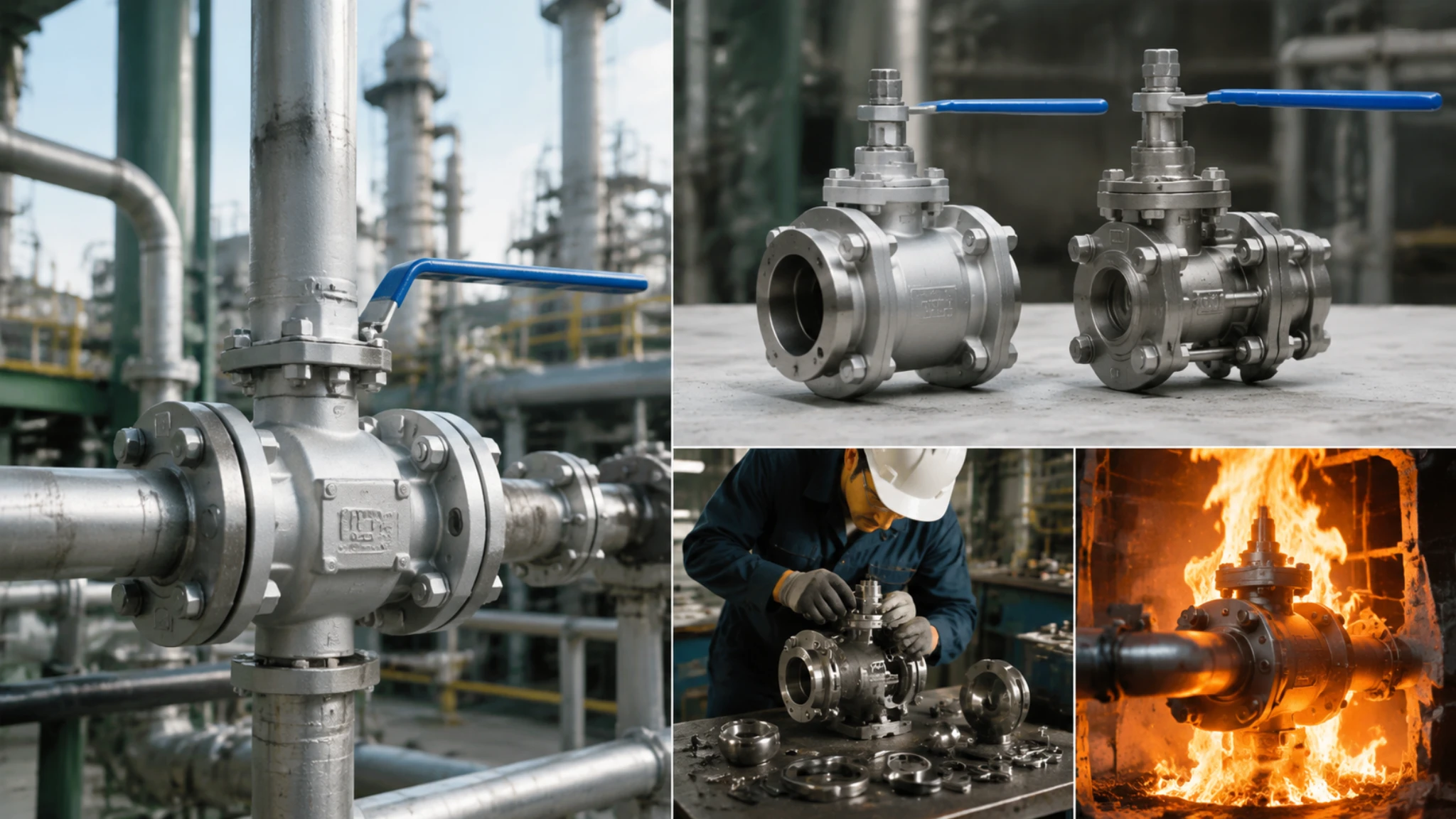
ASTM A276 / ASTM A479 Grade 304 (UNS S30400) is the baseline austenitic stainless steel for small port connectors (≤ NPS 2) operating in non-corrosive, controlled environments. Chemically structured with approximately 18% Chromium and 8% Nickel, it relies on a chromium oxide (Cr2O3) passive layer for environmental isolation.
From an engineering standpoint, SS304 yields a minimum tensile strength of 515 MPa and a minimum yield strength of 205 MPa at room temperature. It is strictly limited to applications lacking severe chemical exposure, such as clean dry air (CDA) systems, indoor hydraulic control loops, and low-pressure utility water lines.
The primary compliance boundary for SS304 is its susceptibility to sensitization. When subjected to temperatures between 425°C and 815°C during welding or operation, chromium carbides precipitate at the grain boundaries, depleting adjacent areas of chromium and causing intergranular corrosion (IGC).
SS316 for Harsh Spots
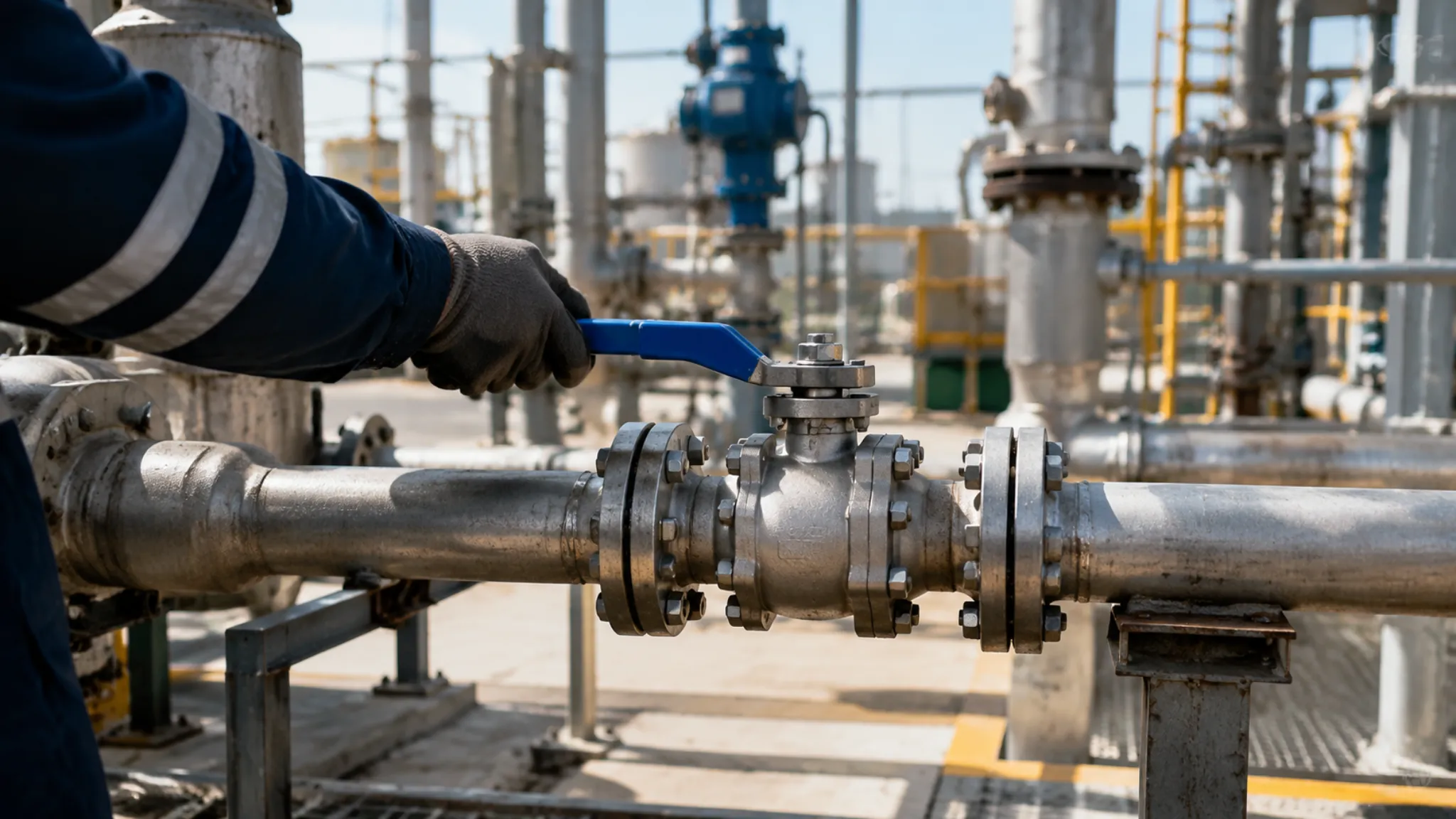
For applications exposed to marine air, chemical processing fluids, or sour gas (H2S), ASTM A276 Grade 316 (UNS S31600) or its low-carbon variant 316L (UNS S31603) is mandated by technical standards like NACE MR0175 / ISO 15156. The critical differentiator is the addition of 2.0% to 3.0% Molybdenum (Mo), which fundamentally alters the alloy’s resistance to localized chloride attack.
The performance of the material against pitting and crevice corrosion is quantified using the Pitting Resistance Equivalent Number (PREN), calculated via the standard empirical formula:
While standard SS304 yields a PREN value of approximately 18 to 20, SS316 delivers a PREN of 23 to 25. This increase determines whether a small port connector survives or undergoes catastrophic pitting in environments with high chloride concentrations (Cl–), such as offshore platforms or coastal infrastructure.
Main Material Differences
The table below establishes the explicit material and performance boundaries required for engineering procurement specifications:
| Parameter | SS304 (UNS S30400) | SS316 (UNS S31600) | SS316L (UNS S31603) |
|---|---|---|---|
| Chromium (Cr) Content | 18.0% – 20.0% | 16.0% – 18.0% | 16.0% – 18.0% |
| Nickel (Ni) Content | 8.0% – 10.5% | 10.0% – 14.0% | 10.0% – 14.0% |
| Molybdenum (Mo) Content | 0% | 2.0% – 3.0% | 2.0% – 3.0% |
| Carbon (C) Maximum | 0.08% | 0.08% | 0.03% |
| Min. Yield Strength (MPa) | 205 | 205 | 170 |
| PREN Value (Average) | 19 | 24 | 24 |
| NACE MR0175 Compliance | No | Yes (Condition Dependent) | Yes |
Field Audit Case Study:
During a compliance audit on a North Sea water injection skid operating at 40 bar, I identified a premature failure where a subcontractor substituted SS304 instrumentation fittings for specified SS316 components. Due to a total lack of Positive Material Identification (PMI) verification, the fittings were exposed to a 2.5% chloride water stream. Within 14 months, the fittings developed catastrophic stress corrosion cracking (SCC) along the thread roots, leading to a localized blowout. The hidden operational lesson here is clear: Never rely on visual stamping on small-bore components. Implement 100% PMI testing per ASME B31.3 Section 345 for all pressure-retaining fittings in severe services.
Knowing Load Limits
Max Weight Limits
Small port connectors (≤ NPS 1) are highly sensitive to unsupported external loads. In process piping designed to ASME B31.3, these connections are frequently used to mount heavy instruments like pressure transmitters, isolation manifolds, and dial gauges.
The maximum allowable weight limit is not determined by static gravitational force alone, but by the cantilevered bending moment (M) exerted on the first engaged thread or weld hub. The maximum structural bending moment before yielding occurs is determined by the section modulus (Z) of the connector and the allowable design stress (S):
When installing an assembly that exceeds 5 kg (such as a double-block-and-bleed valve assembly), standard practice dictates that the instrument must be independently supported by a structural bracket rather than hanging directly off the small port connection.
Pressure and Stress
To calculate the structural integrity and maximum allowable working pressure (MAWP) of a small-bore cylindrical connector under internal pressure, engineers must apply Barlow’s Formula:
D
Where:
- P = Internal design gauge pressure (MPa)
- S = Allowable material stress at design temperature (MPa) per ASME B31.3 Table A-1 (e.g., 138 MPa for SS316 at 100°C)
- t = Nominal wall thickness of the connector sleeve/pipe (mm)
- D = Outside diameter of the connector (mm)
When dynamic mechanical loads (such as pump cavitation or acoustic induced vibration) are present, fluid-structure interaction introduces high-cycle fatigue. Under these conditions, the allowable stress (S) must be derated by a fatigue strength reduction factor (Wf) per ASME B31.3 Section 302.3.5 to prevent fatigue failure at geometric stress concentration points.
Signs of Overload
Recognizing mechanical overload prior to a breach of the pressure boundary requires precise inspection protocols rather than casual visual checks.
- Micro-Deformation at Thread Roots: Over-torqueing during installation or exposure to excessive bending moments causes the male threads to deform elastically, then plastically. This can be verified using Go/No-Go thread ring gauges per ASME B1.2. If a standard “Go” gauge binds prematurely on a cleaned thread, plastic deformation has occurred.
- Thread Galling: Stainless steels (both 304 and 316) have a relatively low hardness profile (typically HRC 20 to 25). Without proper lubrication via a nickel-based anti-seize compound conforming to MIL-PRF-907E, friction causes the protective oxide layer to shear off. The exposed metal asperities cold-weld under load. Upon disassembly, the threads tear away completely, destroying the pressure seal.
Important Technical Specs
Size and Threads
Small port connectors rely on specific thread profiles to establish either a mechanical join or a pressure-tight seal. Mixing mismatching standards is a severe compliance violation that regularly causes industrial accidents.
- NPT (National Pipe Taper): Governed by ASME B1.20.1. Features a 60° thread angle and a 1:16 taper ratio. The seal is achieved via metal-to-metal interference between the roots and crests of the male and female threads, requiring a PTFE tape or anaerobic sealant to fill the helical leak path.
- BSPP (British Standard Pipe Parallel): Governed by ISO 228-1. Features a 55° Whitworth thread form. Because the threads are parallel, they do not form a pressure seal on their own; instead, they require an elastomeric O-ring or a bonded metallic washer (bonded seal) at the shoulder or base of the port.
NPT Profile (Tapered 1:16, 60° Angle):
   /\    /\    /\
  /  \  /  \  /  \
 /    \/    \/    \  <-- Interference Fit Sealing

BSPP Profile (Parallel, 55° Angle):
  | /\  | /\  | /\
  |/  \ |/  \ |/  \
  |    \|    \|    \ <-- Requires O-Ring/Washer for Seal
Tacit Knowledge Note:
A common field error is forcing a 1/2″ NPT male thread into a 1/2″ BSPT (Tapered) or BSPP female port. Because both profiles feature a pitch value close to 14 threads per inch, the fitting will initially engage for 2 to 3 turns. However, the conflict between the 60° and 55° flank angles will cause the threads to jam, creating a false torque reading. This leaves an unsealed, structurally compromised joint that will predictably eject under pressure.
Heat and Temperature
As temperature increases, the mechanical properties of austenitic stainless steels degrade due to thermal excitation of the crystal lattice. The table below outlines the mandatory pressure derating factors for SS304 and SS316 small port connectors as temperature scales, based on ASME B31.3 data:
| Operating Temperature (°C) | SS304 Derating Factor | SS316 Derating Factor | Compliance Limit / Structural Risk |
|---|---|---|---|
| 20°C to 38°C | 1.00 | 1.00 | Baseline design pressure limits apply. |
| 100°C | 0.84 | 0.85 | Initial thermal yield strength reduction. |
| 200°C | 0.69 | 0.77 | SS316 exhibits superior structural stability over SS304. |
| 300°C | 0.62 | 0.71 | Enhanced risk of stress-relaxation in threaded joints. |
| 400°C | 0.58 | 0.67 | Upper threshold for SS304 before severe sensitization risks. |
| 500°C | 0.55 | 0.65 | Creep deformation domain; requires high-temperature alloys. |
How to Choose
To make an objective engineering decision that balances long-term safety compliance with economic efficiency, use a Life Cycle Cost (LCC) model rather than judging solely on capital expenditure (Ccap):
Where:
- Ccap = Initial procurement cost of the connector.
- Cinst = Installation labor, validation, and PMI costs.
- Cmaint = Periodic inspection, torque verification, and replacement costs.
- Cfail = The financial penalty of a containment loss (including unscheduled downtime, environmental fines, and safety remediation).
In highly corrosive marine environments, selecting SS304 may reduce Ccap by 30%, but it introduces a massive Cfail value due to the high probability of chloride stress corrosion cracking within 24 months.
Decision Matrix Rule: If the process medium contains > 50 ppm of dissolved chlorides, or if the system is located outdoors within 5 km of a coastline, SS316L is the absolute compliance red line. SS304 must be rejected unconditionally to prevent stress corrosion cracking failures.