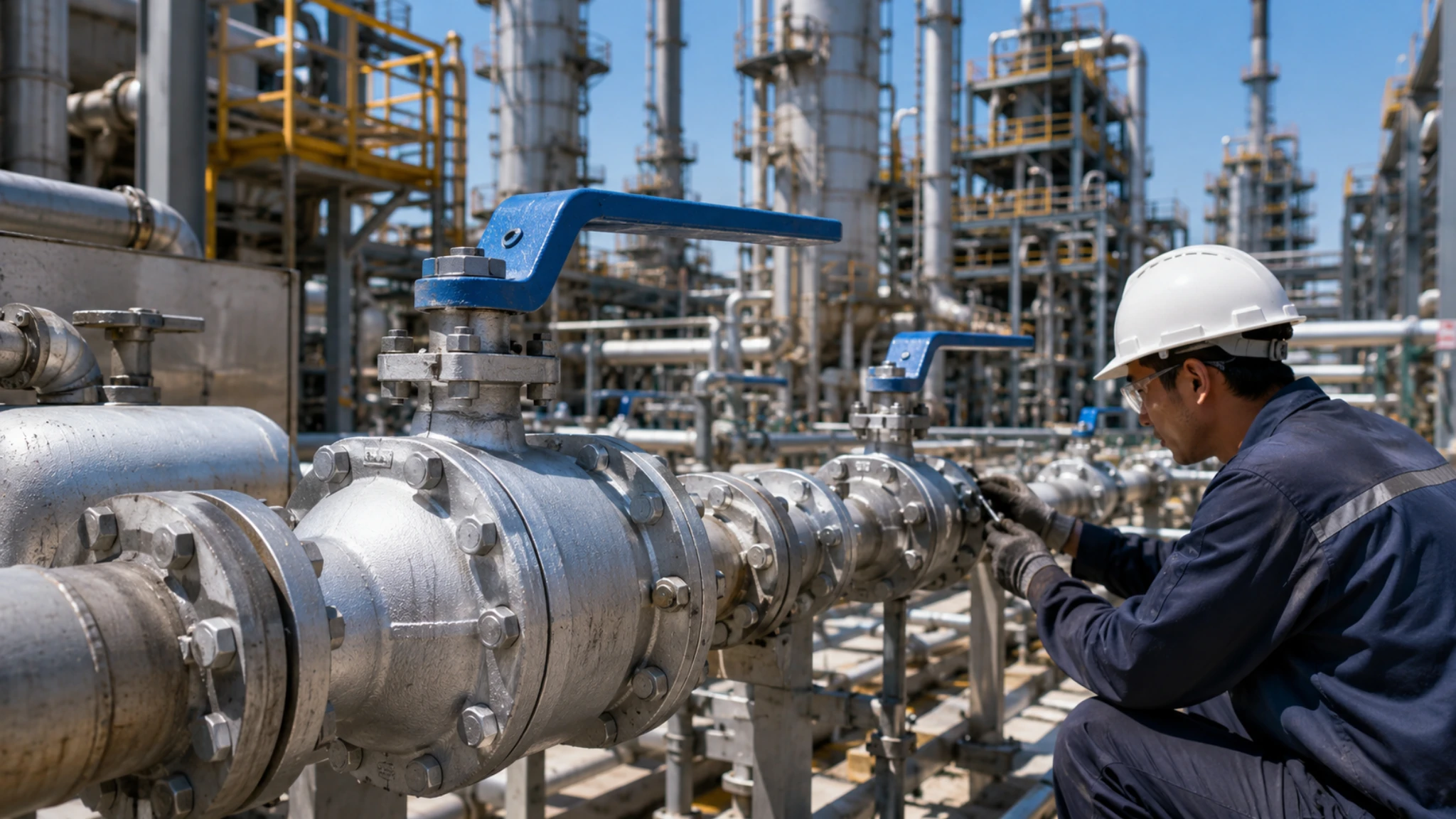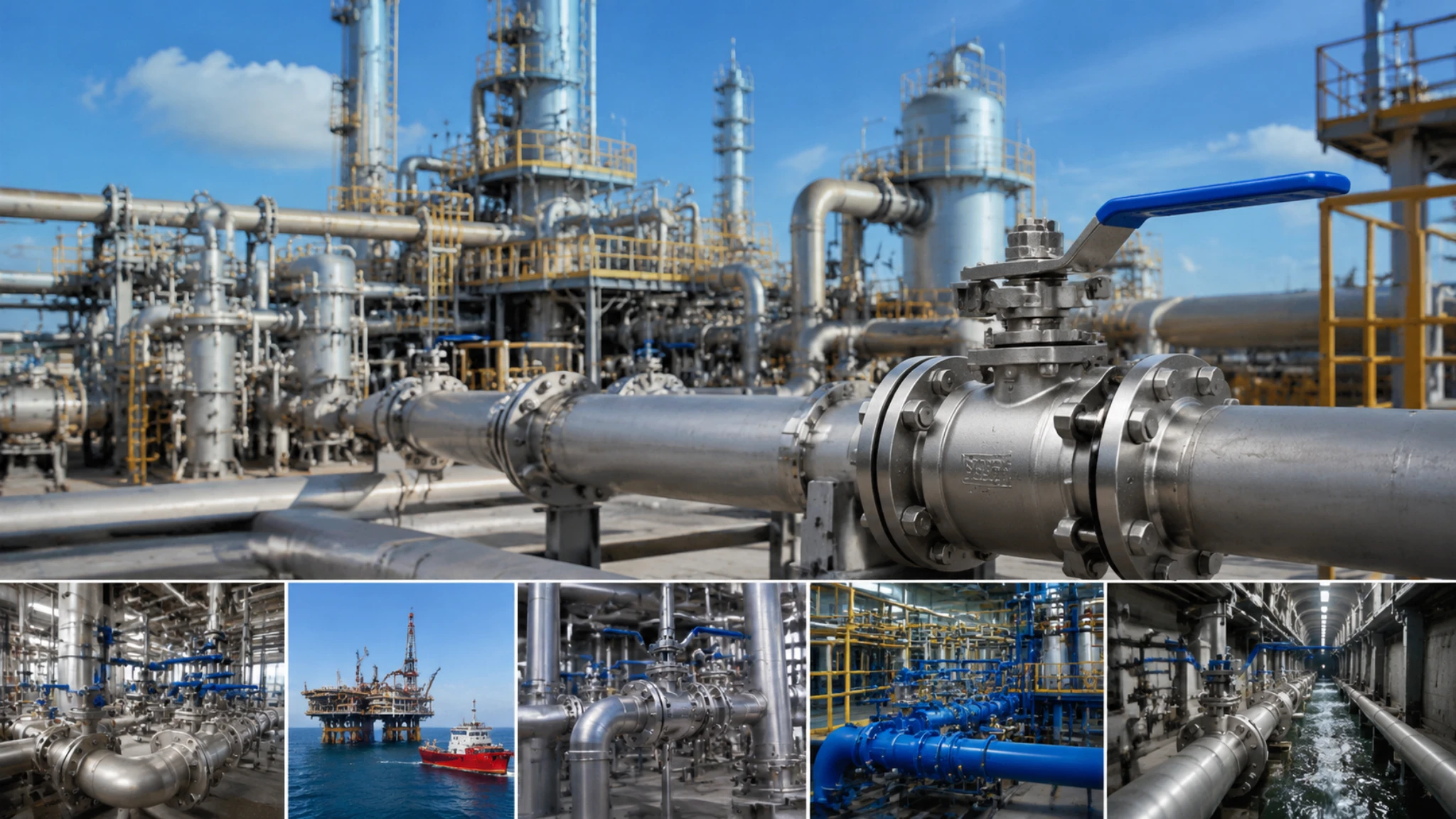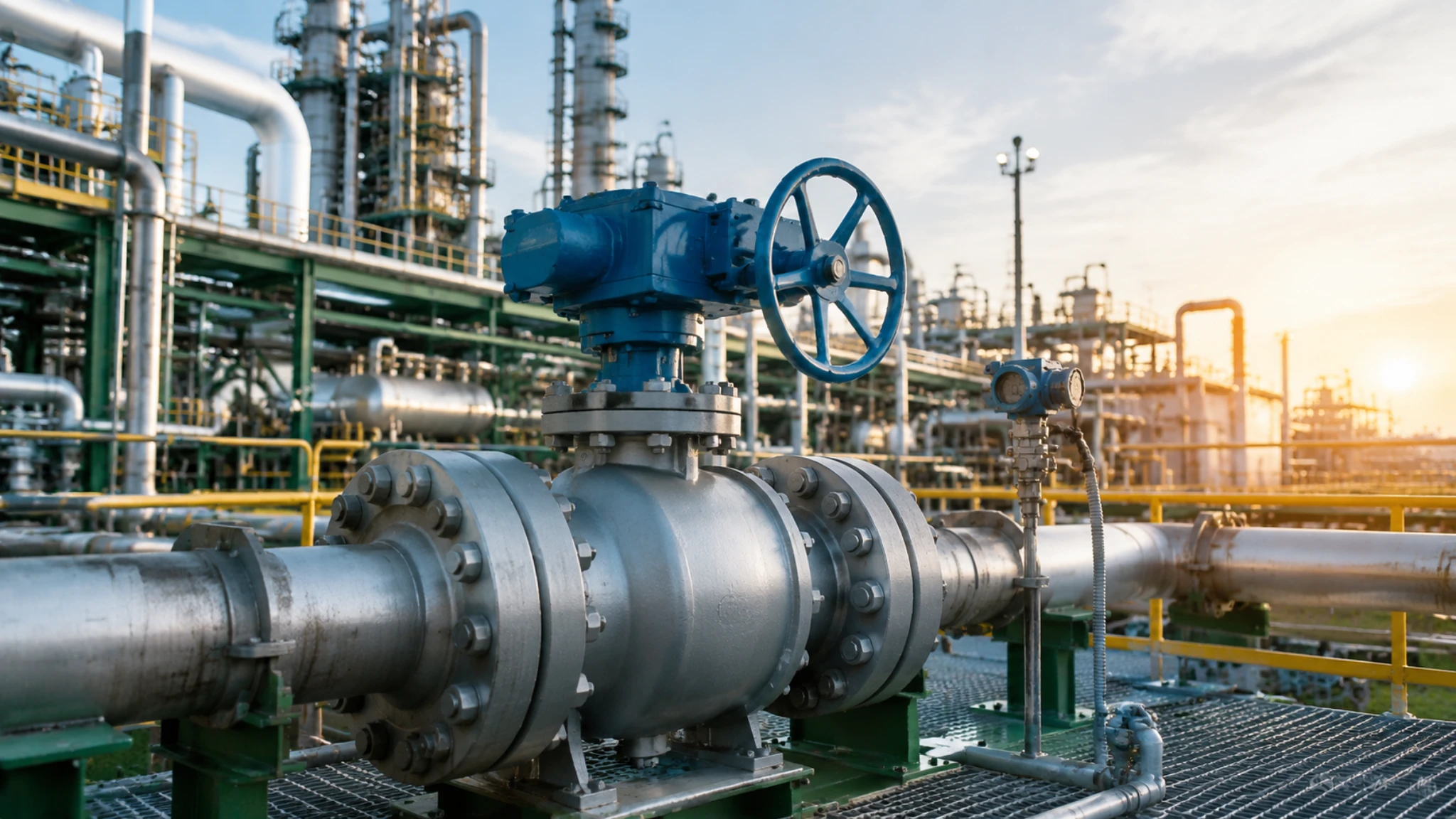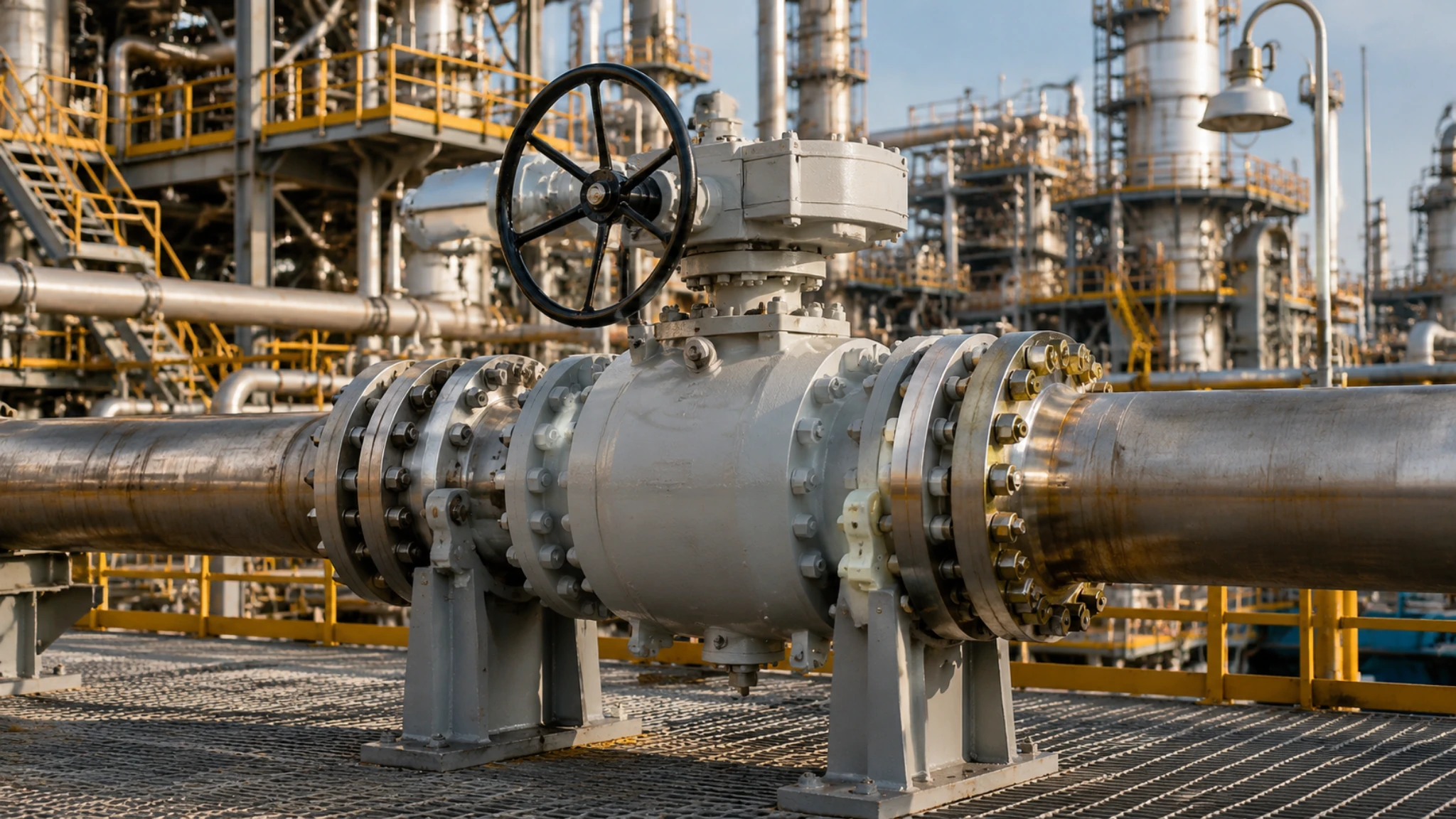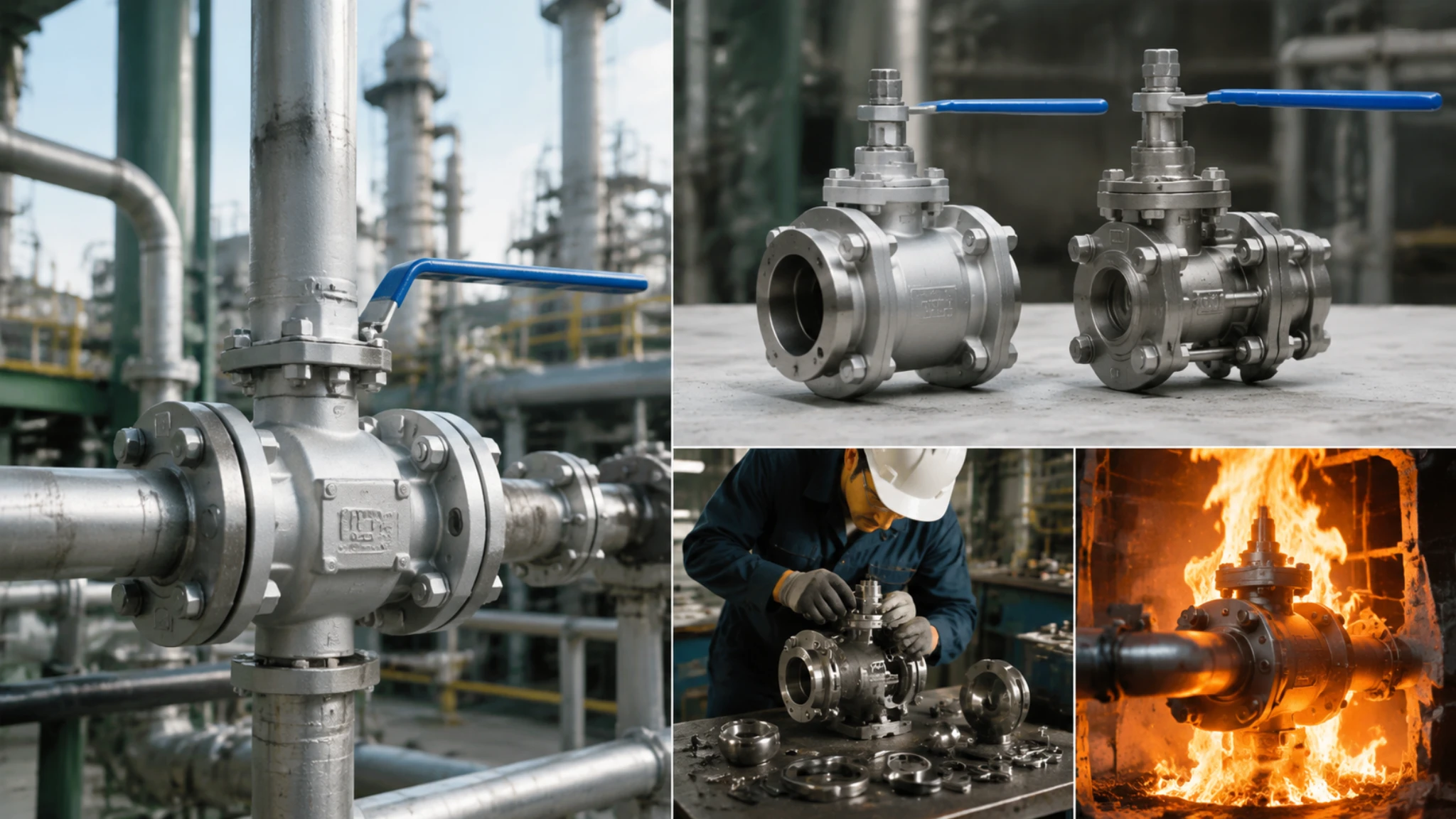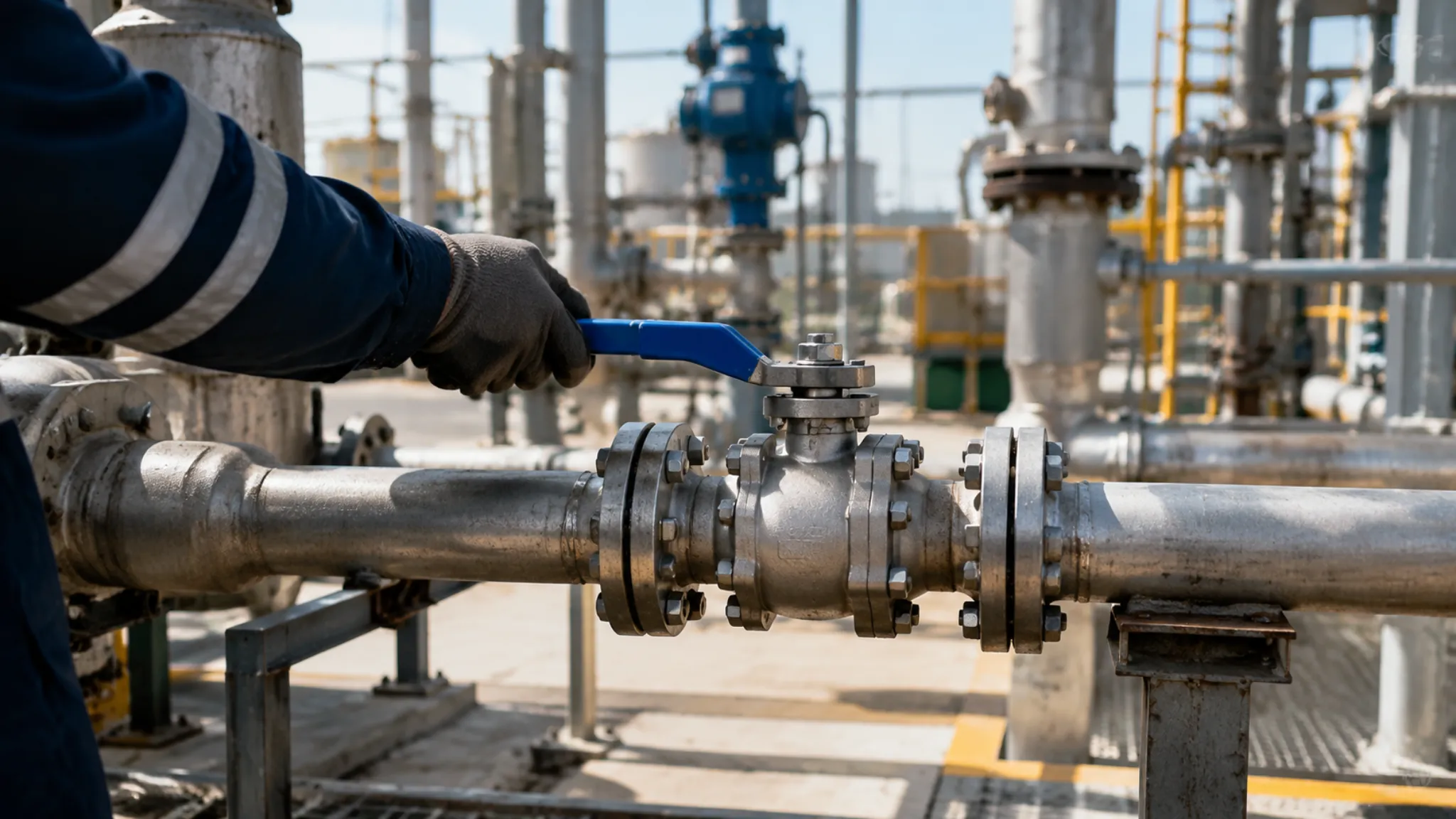
Heavy‑duty small valves and pipe fittings are core connection components in industrial piping systems, designed to transport high‑pressure, high‑temperature and corrosive media. Nominal diameters typically range from DN6 to DN50, with threaded and socket‑weld connections being the most common. The prevailing materials are forged carbon steel (A105) and stainless steel (F304/F316), and they are widely used in the oil & gas, chemical, and power‑generation industries.
Two Connection Types
Threaded End Basics
Threaded connection is the most traditional joining method for small-sized high-pressure piping components. Its key characteristic is that no special equipment is required—pipe connection can be achieved simply through thread engagement, offering irreplaceable convenience in field installation and maintenance.
The applicable standard for threaded fittings is ASME B16.11 (Forged Fittings, Socket-Welding and Threaded), which specifies thread sizes from DN6 to DN50, the NPT thread form angle (60°), and the pressure class coverage. NPT (National Pipe Thread) uses a tapered thread design. The thread pair generates an interference fit during tightening, achieving sealing through elastic deformation to fill gaps. Thread pitch is classified by threads per inch, with common specifications including 11.5 TPI (NPT) and 14 TPI (BSPT). Clear distinction must be made during procurement to avoid thread mismatch.
The primary limitation of threaded connections is that seal reliability degrades significantly with increasing temperature. When temperature exceeds 260°C, differential thermal expansion between the thread pair causes preload loss, substantially increasing the risk of joint leakage. Additionally, high-frequency vibration service (such as reciprocating compressor outlet piping) can easily cause thread loosening, requiring lock nuts or spot welding for securement. Therefore, API 608 explicitly states that Class 900 and higher high-pressure ball valves must not use pure threaded connections and must be upgraded to welded or flanged joints.
Field quality inspection methods for threads include: using a thread ring gauge to verify thread form integrity, using a depth micrometer to measure effective thread length (which must be at least 1.5 times the pipe wall thickness), and using light transmission inspection to check for cracks at the thread crest. For installed piping, a soap bubble leak test (0.4–0.7 MPa air pressure held for 5 minutes) can quickly determine whether joints are leaking.
Socket Weld Basics
Socket weld (also called socket welding) is the most widely used permanent joint method for small high‑pressure pipe fittings. Its principle is to insert the pipe end into the fitting socket, then perform a full‑penetration weld along the annulus between the pipe wall and the socket, achieving weld strength that can reach or exceed that of the base material. The execution standard for socket welding is also ASME B16.11, which specifies the socket’s inner‑diameter tolerance (typically the pipe OD plus a clearance of 0.8–1.6 mm), the insertion depth (no less than the pipe OD), and the end‑bevel configuration. If the insertion depth is too shallow, the weld metal fill will be insufficient, leading to stress‑concentration cracking during thermal cycling; if it is too deep, the risk of lack‑of‑fusion increases. The correct insertion depth should leave a 1.6 mm gap between the pipe end and the socket face to provide space for the weld metal fill. A notable advantage of socket welding is its structural strength. Because the weld is full‑penetration and equal in strength to the base material, the joint can withstand the same pressure and temperature ratings as the pipe, with no sealing‑degradation issues that affect threaded joints. ASME B31.3 Process Piping Code classifies socket weld joints as “strength welds,” permitting their use in high‑pressure service up to Class 6000, whereas threaded joints of the same rating are not recommended for use above Class 3000. In terms of welding process requirements, socket welding must be performed by a certified welder (qualified per AWS D1.1 or ASME Section IX), and the filler metal must match the base material (E7018/E7018‑1 for carbon steel, E308L/E316L for stainless steel). The joint must be preheated to 100–150 °C before welding when the carbon‑steel thickness exceeds 19 mm, and after welding radiographic testing (RT) must be carried out per ASME B31.3, with a sampling rate of no less than 10 % to confirm there are no lack‑of‑fusion, incomplete‑penetration, or crack defects.
Choosing Your Fit
- Threaded and socket‑weld connections each have clear application limits; an incorrect choice not only wastes material cost but can also cause joint failure and serious safety accidents in severe cases.
- The final selection of connection type is governed by the following factors:- **Design pressure and temperature are the primary criteria** – when the design pressure is < 2.0 MPa and the temperature is < 200 °C, a threaded connection can meet the sealing requirements and allows easy assembly/disassembly; when the pressure exceeds 2.0 MPa or the temperature exceeds 200 °C, socket‑weld connections are preferred.
– **Vibration and cyclic‑loading conditions must avoid threaded connections** – in reciprocating‑compressor discharges, pulsating‑flow lines, and systems that start and stop frequently, threaded joints are prone to loosening under alternating stresses, so socket‑weld or flanged connections should be used.
– **Maintenance frequency influences the selection** – locations that need frequent removal for inspection (e.g., instrument root valves, sampling‑point connections) preferably use threaded or flanged joints; socket‑weld is unsuitable (once welded, it cannot be dismantled).
– **When space is too confined to permit welding, threaded is the only option**, but additional support brackets must be added to counteract vibration.The actual selection should reference the combined criteria of ASME B31.3 Table 341.3.1 and API 608 §5: in a given pipeline system, high‑pressure sections (Class ≥ 600) should use socket‑weld or flanged connections, while low‑pressure auxiliary lines such as instrument air or nitrogen purge can use threaded connections to lower retrofit costs.
- For standard pipe runs (Class 300–600) in new projects, the design institute normally specifies socket‑weld as the baseline connection, using threaded only where space is limited or maintenance access is difficult.**Forged Steel Benefits**
Forged Steel Benefits
High Pressure Strength
Forging gives small‑bore pipe fittings very high material density and structural strength, making them the preferred choice for high‑pressure service. This advantage stems from the directionally optimized microstructure that results from forging the metal.
Forging is a plastic‑forming process in which a steel billet heated to its recrystallization temperature is shaped by external forces. For A105 carbon steel, the specified tensile strength is ≥ 485 MPa and the yield strength is ≥ 250 MPa—far higher than those of sand‑castings of the same material (tensile strength only ≥ 415 MPa). The grain refinement that occurs after hot forging raises the material’s fatigue limit by about 20 %–30 %, which is especially important for pipe joints that experience cyclic loading. The grains are arranged in a fibrous pattern along the contour of the workpiece (fiber flow), significantly enhancing the load‑bearing capacity in the direction of the maximum stress.
The strength design of high‑pressure pipe fittings must follow the wall‑thickness calculation in ASME B16.11:
t = PD⁄(2S) + C
where P is the design pressure, D is the nominal outside diameter, S is the allowable stress (for carbon steel at 38 °C taken as 137.9 MPa; when temperature rises the value must be corrected according to the temperature‑derating factor in ASME B16.11 Table 2), and C is the corrosion allowance (typically 1.6 mm). The standard divides fittings into pressure‑class series—Class 2000, Class 3000, and Class 6000—each with its own wall‑thickness and threaded‑bearing depth requirements. Selection must strictly match the design pressure; the classes must not be mixed. The socket depth of Class 6000 is about 50 % deeper than that of Class 3000 to compensate for the higher stress concentration at greater pressure. The allowable stress decreases as temperature rises; for carbon steel at temperatures above 260 °C the value of S drops to about 103 MPa, so the temperature‑correction factor in ASME B16.11 Table 2 must be consulted during design.
Better Wear Resistance
- High-pressure pipe fittings operating in pipelines containing solid particle media (such as crude oil, coal slurry, or ore slurry) experience continuous erosion and wear on their inner walls. The uniform microstructure of forged fittings gives them superior performance compared to castings under abrasive wear conditions.Regarding wear mechanisms, different impingement angles of solid particles against the pipe wall result in varying wear patterns.
- Low-angle impingement (<30°) is dominated by cutting mechanisms, while high-angle impingement (>70°) is primarily governed by deformation mechanisms. The surface hardness of forged carbon steel is typically HB 140~180.
- Without surface hardening treatment, it offers good resistance to hard abrasives with hardness below HB 400. When particle hardness approaches or exceeds that of the base material, wear-resistant fittings with Stellite hardfacing or ceramic linings should be selected.Under equal wall thickness conditions, the wear resistance of forged fittings is approximately 30% better than that of cast fittings.
Long Service Life
Forged pipe fittings, when correctly selected and installed in accordance with specifications, can achieve a service life comparable to that of the main pipeline. Improper maintenance is usually the root cause of actual service life being far lower than the design value.
The main factors that influence fitting life are:
– Material‑medium compatibility (electrochemical corrosion, stress corrosion cracking (SCC))
– Fatigue accumulation caused by temperature cycling
– Wear of the sealing surfaces
Taking A105 carbon steel as an example, in service conditions free of corrosive media (such as nitrogen or dry steam) the design life is typically 20 – 30 years. In acidic oil‑and‑gas environments containing H₂S (H₂S partial pressure > 0.3 kPa), a sulfur‑resistant steel (A350 LF2 or a higher grade) must be selected and its hardness controlled to ≤ HB 235; otherwise there is a risk of sulfide stress corrosion cracking (SSCC).
Maintenance measures to extend fitting life:
– Every six months perform a visual inspection of the outer surface of exposed pipe fittings, recording any coating damage and surface corrosion.
– Every three years conduct ultrasonic wall‑thickness testing (UT) on high‑temperature and high‑pressure critical pipelines, plot the thickness‑reduction curve, and replace the fittings immediately when the measured thickness falls below the value calculated per ASME B16.11.
– During pipeline shutdown, maintain a slight positive nitrogen pressure (≥ 5 kPa) to prevent atmospheric corrosion.
– For buried or insulated pipelines, install corrosion probes (Electrical Resistance Probe) to monitor wall‑thickness loss in real time and provide an early‑warning for replacement.
– It is also recommended to establish a pipeline life archive, documenting each inspection result and operating parameters, to supply data support for future replacement scheduling.
Bulk Supply Tips
Bulk Supply Tips
Lower Unit Costs
| Bulk procurement of small high‑pressure pipe fittings is the most direct way to reduce unit cost, with a cost reduction potential far greater than individual‑piece negotiation. | The bulk procurement strategy is a core element of cost control in Engineering, Procurement, and Construction (EPC) projects.
In the pricing structure of forged pipe fittings, mold development and process preparation costs account for 15–25% of the ex‑factory price, raw material (steel billet) costs for about 40–50%, and processing and testing costs for about 20–30%. When purchasing a single piece, mold costs cannot be amortized and raw materials are priced at small‑lot rates. |
Once the order reaches a certain volume, mold costs are spread over large orders, raw material purchases shift to wholesale pricing, and processing time decreases due to improved proficiency, all together leading to a noticeable drop in unit price.
Batch tier price reference (example: DN25 Class 3000 A105 threaded pipe fittings): Quantity (pieces) | Unit reference price (CNY) | Discount vs. single piece (%) Actual transaction prices are affected by fluctuations in steel futures, galvanizing/surface‑treatment requirements, brand premium, etc. |
| When procuring in bulk, it is recommended to sign a framework agreement (unit price lock period of 6–12 months) and also agree on a tolerance range for quantity fluctuation (typically ±15%) to accommodate adjustments caused by design changes. | Delivery schedules should be arranged in batches (each batch ≥ 500 pcs), which ensures cash‑flow efficiency and allows requesting the factory to give priority scheduling to regular sizes that have stock on hand, further shortening the lead time by 3–5 days. | Bulk customers can require the factory to include a material quality bond (3–5%) in the quote for rapid compensation of quality issues. |
| 100~500 | 22~28 | ~15-20% |
| 1000~5000 | 18~22 | ~30-35% |
| ≥10000 | 15~18 | ~40-45% |
Checking Quality Standards
- Although small high‑pressure fittings are small in size, the importance of their quality inspection is no less than that of the main equipment.
- The market is flooded with counterfeit and inferior products passing off as genuine, and any fittings installed without inspection become the weakest failure point in the piping system.Acceptance inspection must cover the following aspects:
– **Material report (MTR / Mill Test Report)** – each batch must be accompanied by the steel mill’s material certificate; the chemical composition must comply with ASTM A105 (C ≤ 0.35 %, Mn ≤ 1.05 %, P ≤ 0.035 %, S ≤ 0.040 %) or the corresponding grade standard.
– **Mechanical property report** – tensile strength, yield strength, elongation, and hardness (≤ HB 187) must meet the standard requirements.
– **Heat‑treatment condition** – A105 must be in the normalized condition or normalized‑plus‑tempered condition. - If the original condition is hot‑forged and normalized from residual heat, the material report must specify the heat‑treatment furnace batch number (Heat Number).
– **Marking inspection** – a proper fitting must have clear markings stamped on the body: material grade, pressure rating (Class), furnace batch number, and manufacturer name or trademark.**High‑risk inspection items include:**– **Chemical composition analysis** – a hand‑held spectrometer is used for on‑site sampling of C, Mn, S, and P contents; results are available within 5 minutes; any value below the standard leads to immediate rejection of the lot.
– **Hardness sampling** – a Brinell hardness tester is used; at least 5 % of each batch must be tested; if a single piece exceeds the hardness limit, the entire batch is rejected.
– **Wall‑thickness measurement** – an ultrasonic thickness gauge is employed; the measured value must be ≥ the calculated wall thickness per ASME B16.11; at least 10 % of each batch, and no fewer than five pieces, must be inspected.
– **Visual and marking inspection** – verify that the markings match the order and that the lettering is clear and free of scratches.For suspect batches, the factory may be required to provide an additional third‑party test report (e.g., SGS, BV, Intertek), with the cost shared by both parties through mutual agreement.
Finding Right Suppliers
Selecting a reliable pipe‑fitting supplier is a key prerequisite for successful bulk procurement, as the supplier’s production capacity, quality‑control system, and certifications directly determine the stability of supply quality.
Required qualifications for a qualified supplier: Special Equipment Manufacturing License (TS certification, issued by the State Administration for Market Regulation; the certificate number can be verified on the official website), ISO 9001 quality‑management‑system certification, and API 6D or API 608 certification (if export is required). Trading firms must verify that they source from factories that actually hold production qualifications; the trading firm itself does not hold TS certification and only holds a distributor‑authorization.
Key evaluation dimensions during on‑site inspections: whether the forging shop is equipped with a medium‑frequency induction heating furnace (which determines the heating quality of the billet), the forging‑press tonnage (≥ 1,600 tons to ensure the forming density of DN50 fittings), and whether the heat‑treatment furnace has an automatic temperature recorder (to meet ASME traceability requirements). For inspection equipment, a spectrometer (for material‑composition verification), a universal testing machine (for tensile testing), a hardness tester, and an ultrasonic thickness gauge are essential—none can be omitted.
When entering a new supplier for the first time, it is advisable to start with small trial orders (50–100 pieces) and only sign a bulk framework agreement after the trial order passes inspection. During the trial period, monitor the incoming‑inspection pass rate (target ≥ 98 %), the appearance‑defect rate (target ≤ 2 %), and the on‑time delivery rate (target ≥ 95 %). Build a supplier‑performance file; if two consecutive batches fail, initiate a supplier‑improvement process or reassess the supplier’s qualification.
Carilo Valve (Zhejiang Carilo Valve Co., Ltd.) offers a full range of ASME B16.11 standard forged pipe fittings, covering A105 carbon steel, F304/F316 stainless steel, and LF2 sour‑service steel, with pressure ratings from Class 2000 to Class 6000. The company supports bulk purchases, custom machining, and worldwide export, and provides API 6D certification together with material‑traceability reports.
Carilo Valve (Zhejiang Karilu Valve Co., Ltd.) offers a full range of ASME B16.11 forged pipe fittings in materials such as A105 carbon steel, F304/F316 stainless steel, and LF2 sulfide‑resistant steel, with pressure ratings from Class 2000 to Class 6000. We support bulk orders, custom machining, and global export, and provide API 6D certification along with material traceability reports.