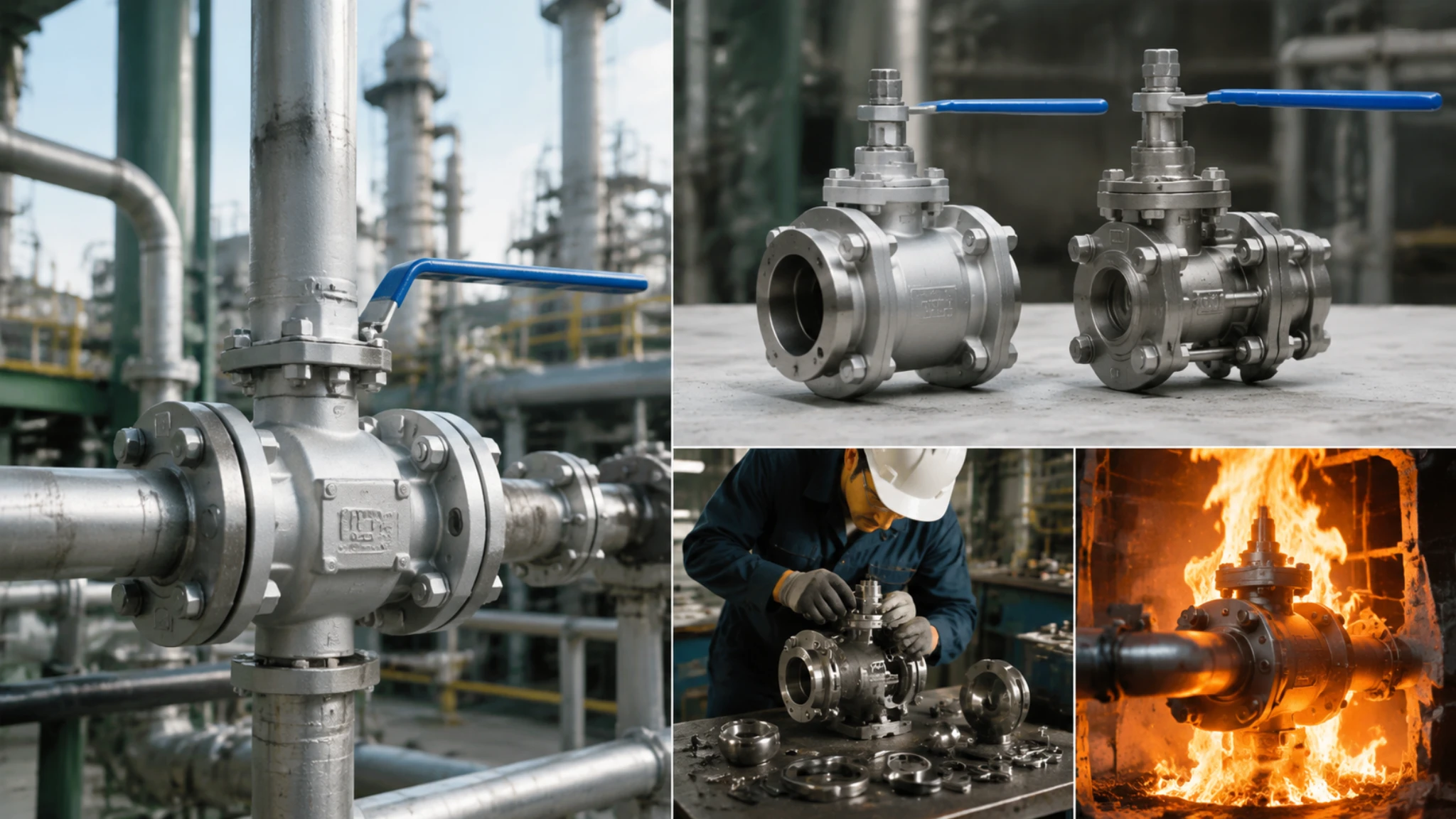
In petrochemical EPC projects, the valve data sheet serves as the critical technical bridge linking design, procurement, and construction. A complete data sheet must cover four major sections: project information, process parameters, valve body parameters, and special requirements.
Any omission or error in these fields will propagate into procurement documents, leading to irreparable rework losses at the construction site.

Data Sheet Fundamentals
How to Fill in Project Information
In EPC projects, the project information section at the top of the data sheet is often filled out in haste, yet it directly impacts the legal validity of subsequent procurement and construction contracts.
- Data Sheet (DS) Number: The unique identifier for the document.
- Project Code: Must match the official contract version.
- Unit Code: E.g., “RF-01” for an atmospheric distillation unit.
- Contract Number: Ties the equipment to the legal procurement scope.
Design institutes should use the official full project name as stated in the contract, avoiding any abbreviations to prevent documentation mismatches during owner handover.
Where Process Parameters Come From
Process parameters in a valve data sheet are not arbitrary; they are derived from P&IDs (Piping and Instrumentation Diagrams) and process design specifications.
- Design Pressure & Temperature: Taken from piping design conditions; must account for hydrostatic test pressure requirements per API 521[1] or ASME B31.3.
- MAWP (Maximum Allowable Working Pressure): Must be the controlling parameter during selection as it may exceed design pressure due to temperature compensation.
- Operational Boundaries: Must specify normal operating ranges, abnormal boundary conditions, and emergency shutdown requirements.
For example, in cryogenic service (-196°C), valve body materials must be upgraded from WCB to LCA or LCB to prevent brittle fracture.
Pipeline and Instrument Tagging
The Line Number and Instrument Tag are the vital links between the data sheet and the P&ID. Mismatches here lead to massive site rework.
- Standard Pipeline Numbering: “Piping Class – Nominal Diameter – Material Class” (e.g., L1B-8-SS316).
- Instrument Tags: Follow ISA S5.1[2] (e.g., TV for Control Valves, FV for Flow Control Valves).
Valve Parameters
| Parameter Category | Key Considerations |
|---|---|
| Size (DN/NPS) | Must use a unified standard; conversion is not linear (e.g., DN25 is 1″, but DN80 is 3″). |
| Pressure Rating | Must match system MAWP; verify using ASME B16.34 temperature correction factors. |
| Material | Must specify body, bonnet, stem, seat, and ball/plug materials based on NACE/ISO requirements. |
Size and Pressure Rating
Valve size is the primary selection parameter. Calculation is based on maximum design flow, allowable pressure drop, and fluid characteristics. The actuator must be sized to overcome both pipeline thrust and internal sealing friction.
Always ensure the pressure rating is compatible with the system; a Class 150 valve cannot be used in a Class 600 system.
Material Requirements
Material selection is your main defense against corrosion. Always specify the material for all wetted parts, not just the body.
- Carbon Steel (WCB/WCC): For non-corrosive hydrocarbons (-29°C to 425°C).
- Alloy Steel (LCB/LCC, WC6/WC9): For sour or cryogenic conditions.
- Stainless Steel (CF8M/CF3M): For corrosive media and low-temperature environments.
For sour service, ensure compliance with NACE MR0175[3]/ISO 15156. Specify the exact grade (e.g., CF8M) rather than a generic term like “stainless steel” to avoid catastrophic failures.
End Connections
End connections define installation space and mounting method:
- Flanged (ASME B16.5): Specify face type (RF, RTJ, or FF).
- Butt-weld (BW): Used for high-pressure/high-temp; specify welding bevel (ASME B16.25).
- Socket-weld (SW) & Threaded (NPT): Suitable for small-bore valves, typically up to Class 2500.
Special Requirements
NACE Compliance
NACE MR0175/ISO 15156[5] is mandatory for sour oil and gas fields.
Trigger point: If $H_2S$ partial pressure exceeds 0.001 bara, NACE compliance is required.
Valves must be manufactured using controlled steel smelting (sulfur < 0.02%) and verified Carbon Equivalent (CE) levels. Missing NACE documentation is a common cause for project delivery delays.
Fire-Safe Requirements
Fire-Safe valves ensure sealing and operability during a fire. Standards API 607 and API 6FA[6] require the valve to withstand 1093°C for 30 minutes.
Always verify the certification number on the official API website to avoid counterfeit certificates.
Third-Party Inspection (TPI)
TPI is the final quality gate. Specify the inspection level in the data sheet:
- Level I: High-stringency; includes 100% UT and RT testing.
- Level II: Standard; 10% sampling of tests.
- Level III: Basic; visual and dimensional checks only.
Ensure all materials provide valid EN 10204[7] 3.1 certificates with matching heat batch numbers.
Quality control begins at the design source. Before issuance, ensure a joint sign-off by process, piping, procurement, and quality departments to prevent costly site rework.