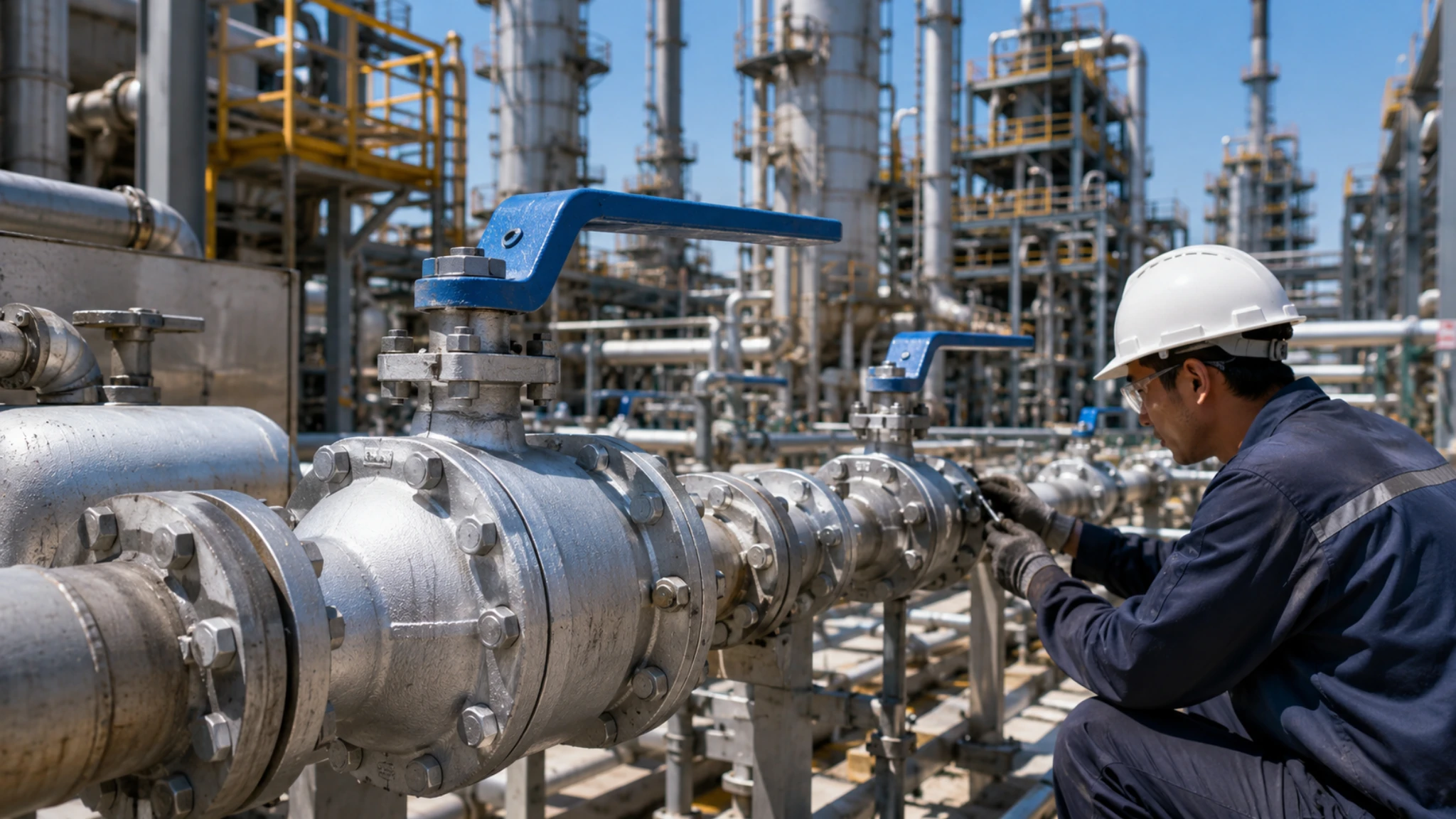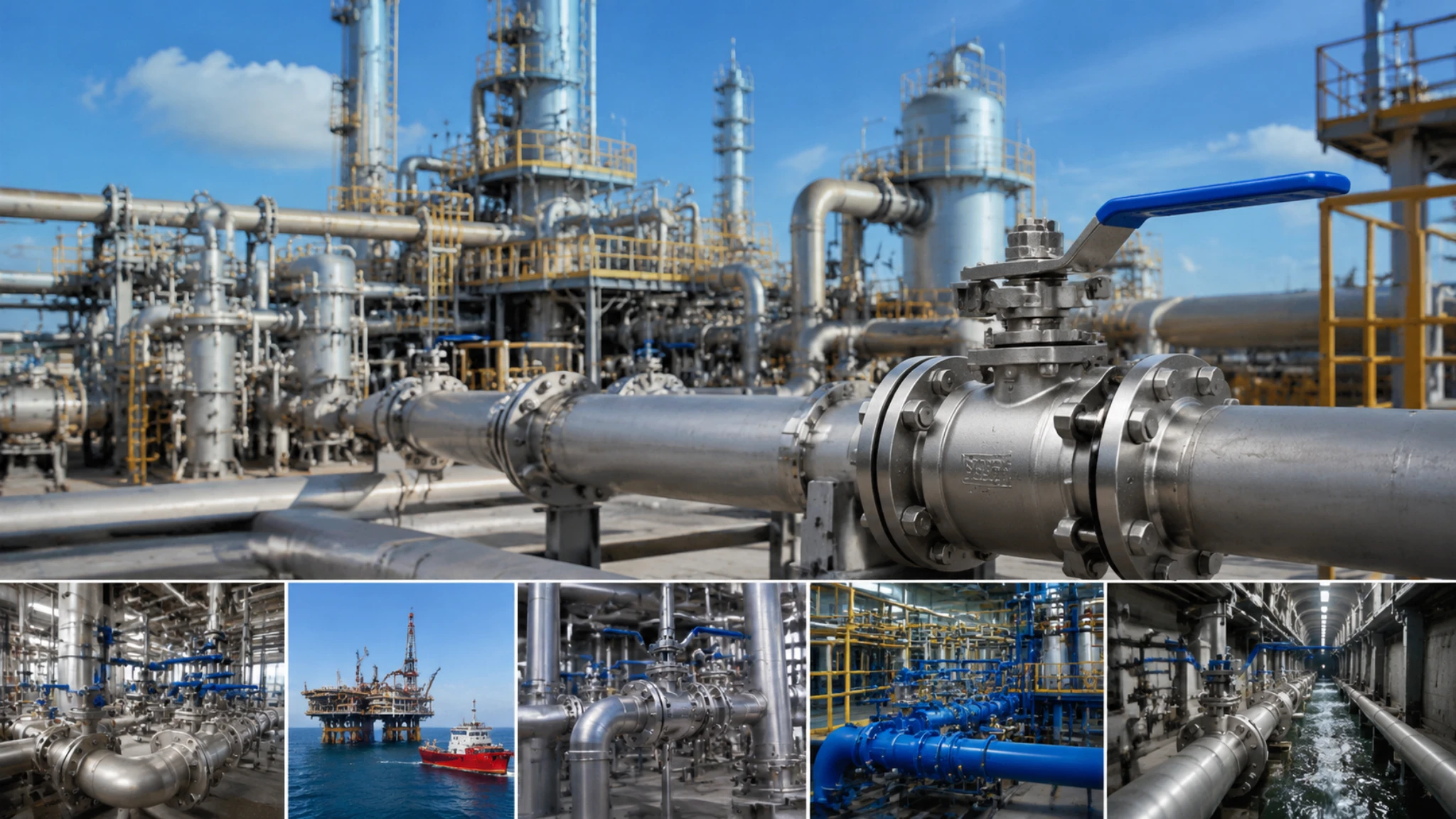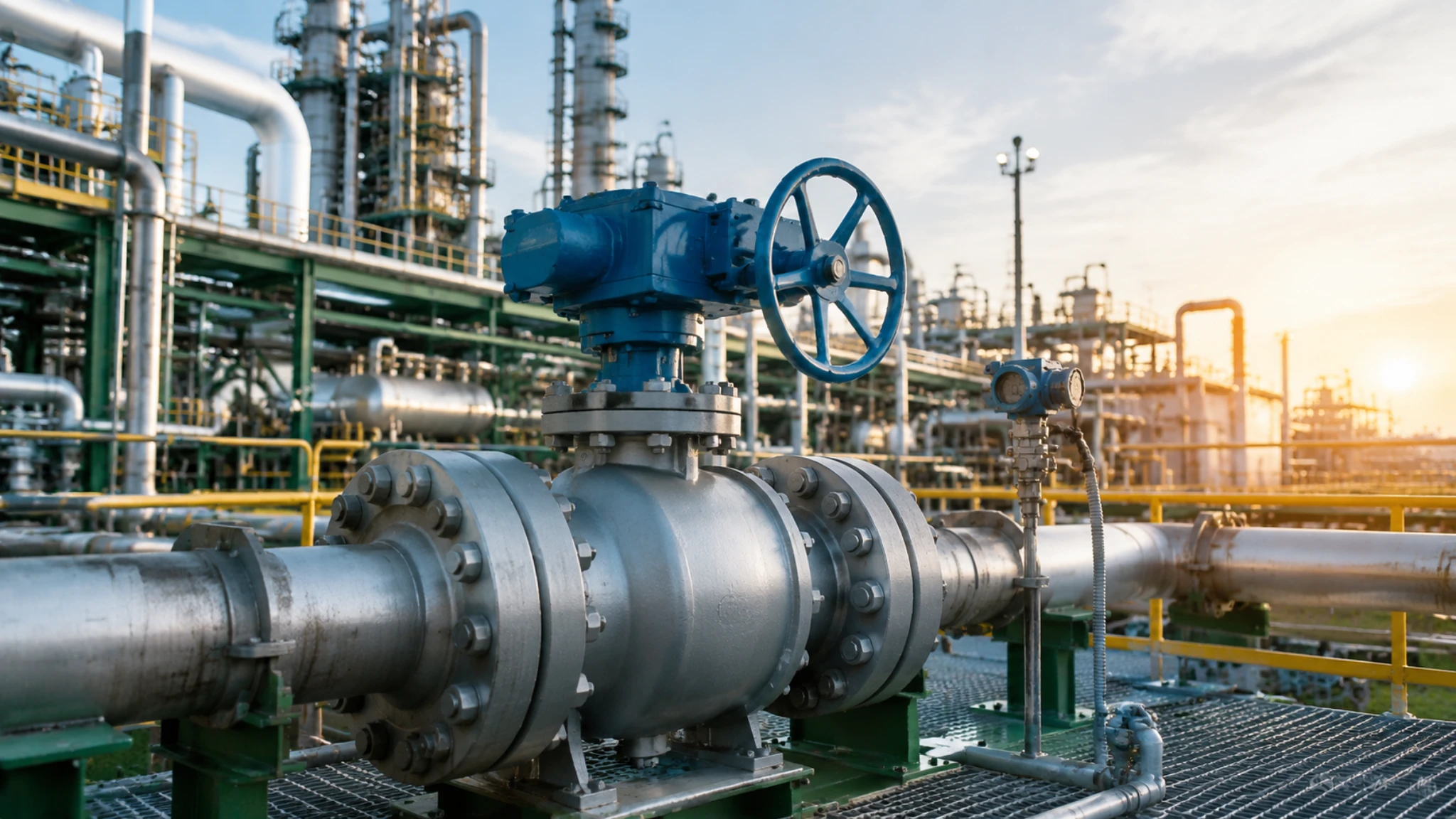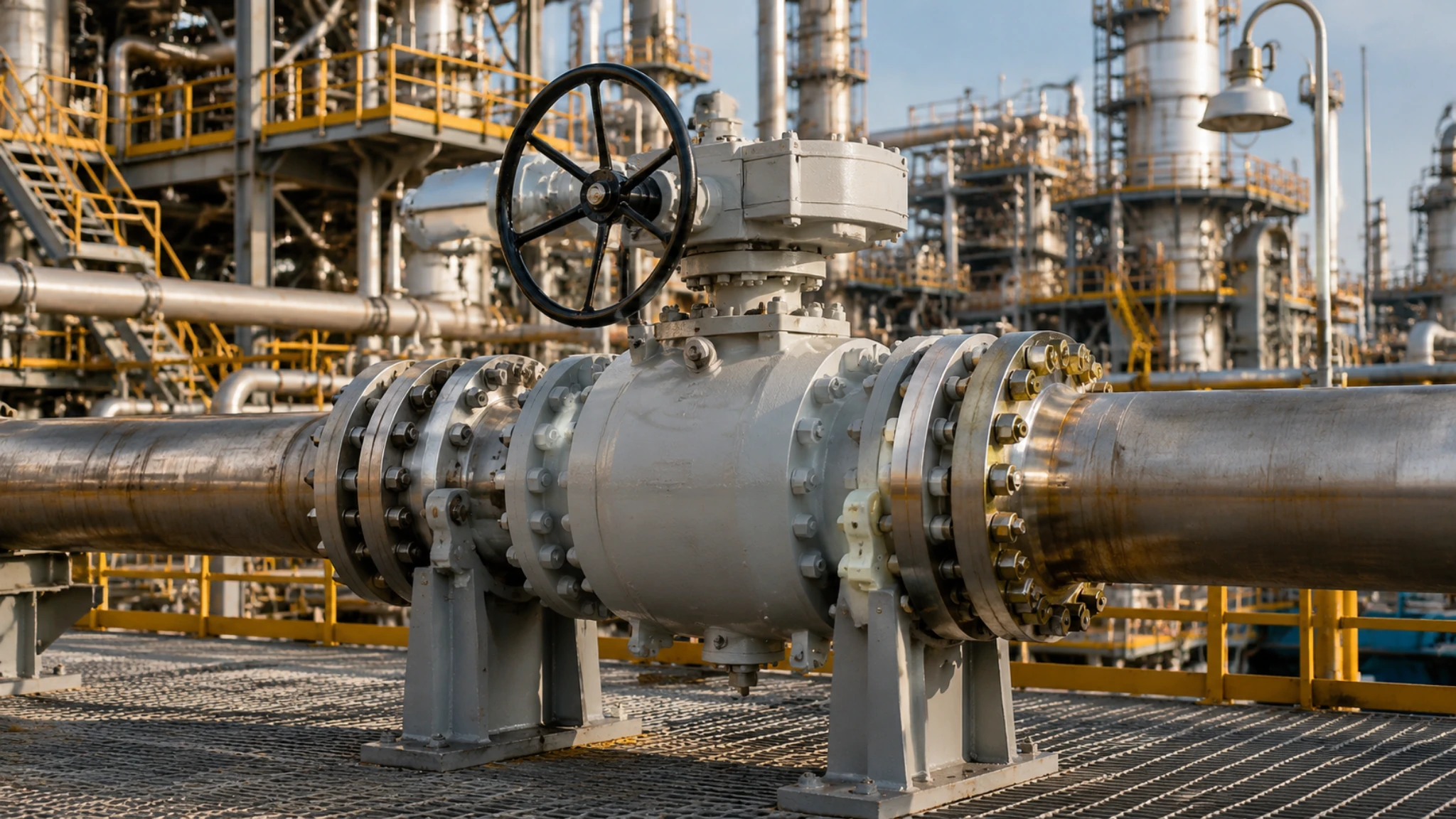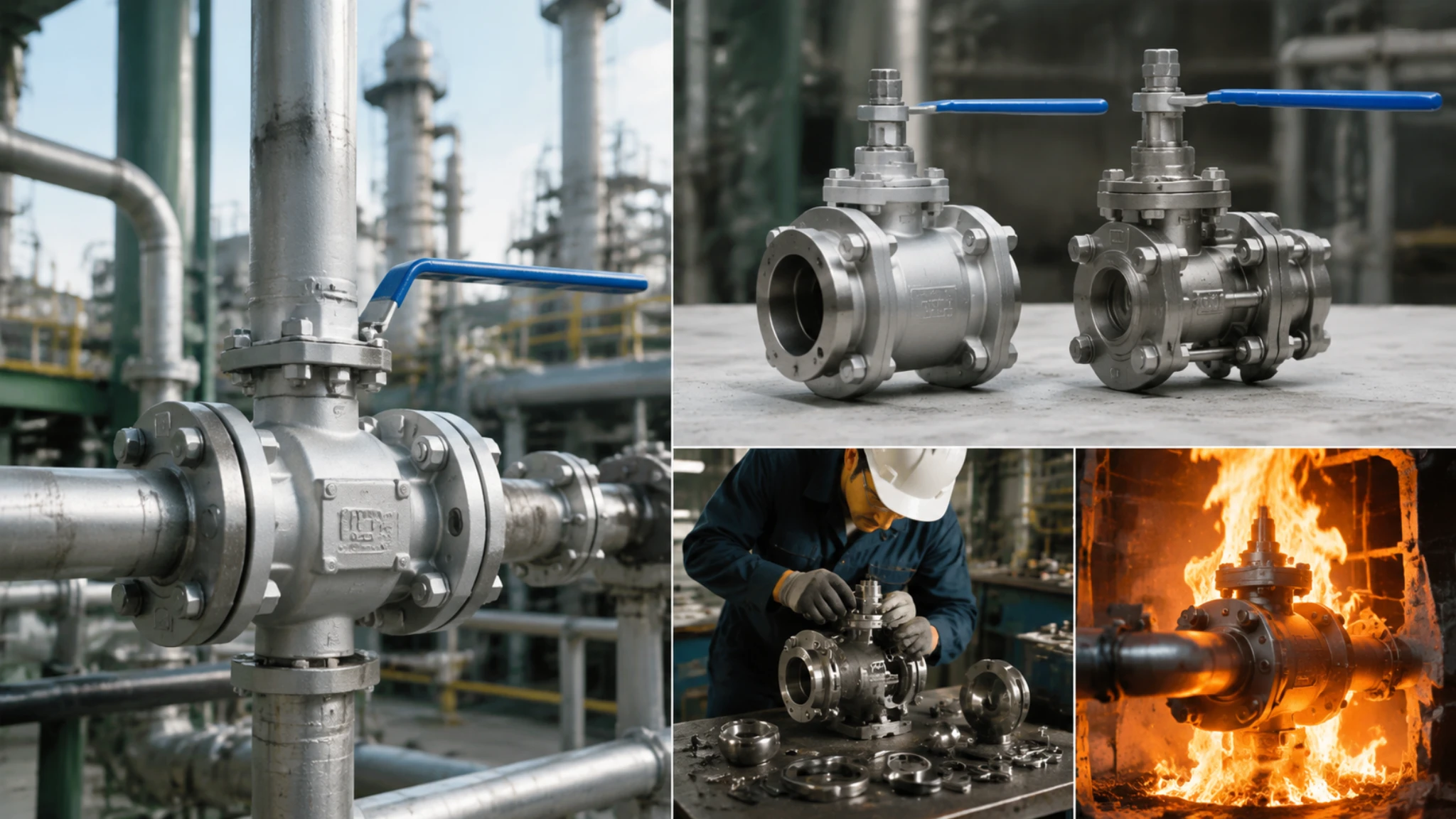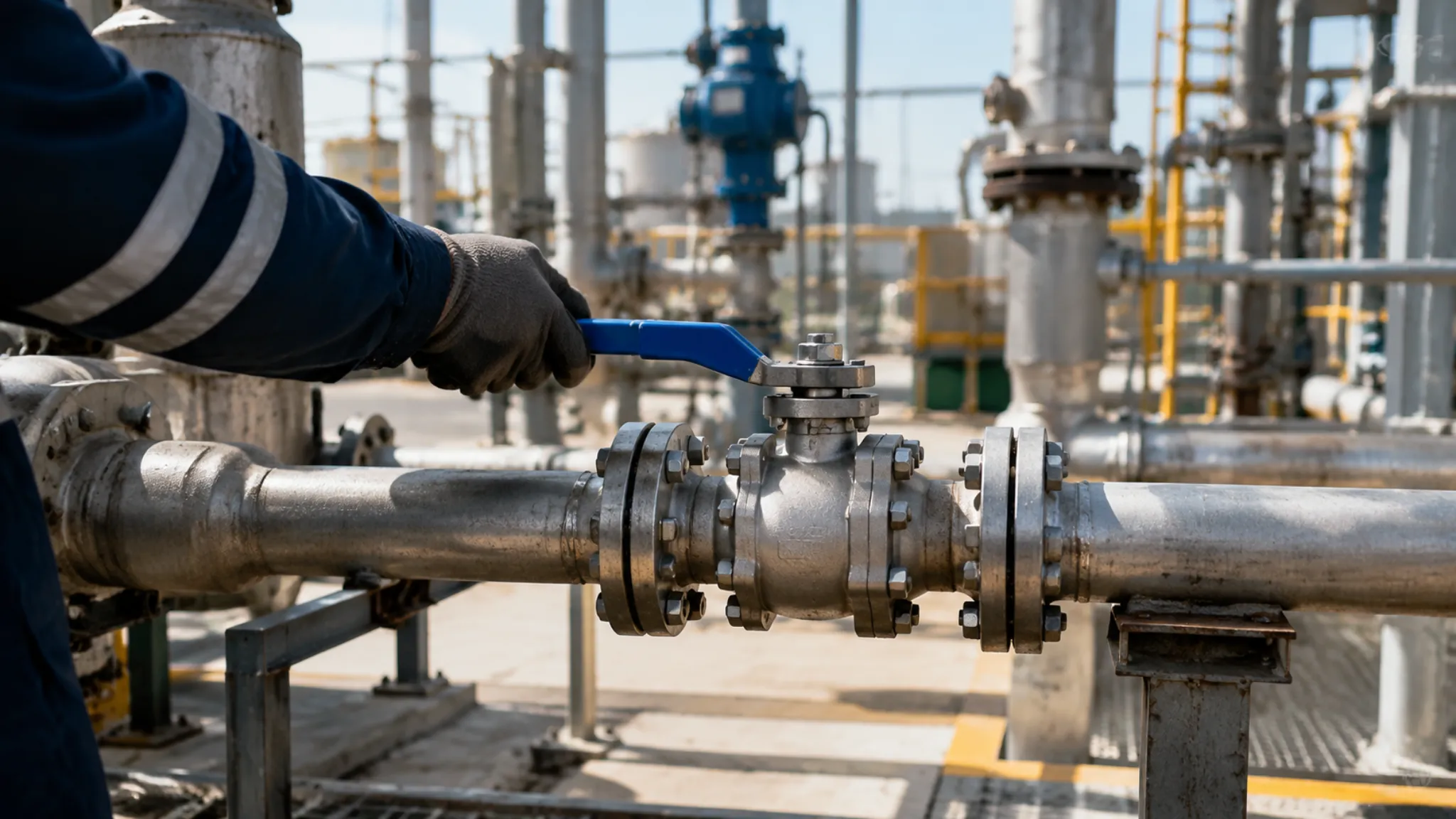
When evaluating ball valve factories for procurement, I typically look at three core dimensions: whether API 6D certification is complete, whether material test reports for forgings are verifiable, and whether OEM customization supports non-standard sizes—factories meeting all three criteria represent approximately 12% of Chinese manufacturers, and I once helped a gas utility identify three qualifying suppliers whose on-time delivery rate reached 100% with a 97% first inspection pass rate across multiple projects.
API 6D Standards
Official Quality Stamps
API 6D certification is the foundational threshold for ball valve manufacturers—certification means the factory’s quality management system has passed API Q1 audit, the design pressure-temperature curve complies with ASME B16.34, and fugitive emissions comply with ISO 15848-1; I once reviewed a factory’s API 6D certificate where the issuing body was a Turkish institution rather than an API-authorized agency, which does not meet requirements; a legitimate API certificate must be searchable on the API official website, with a certificate number starting with “6D-” and issued by one of API’s 17 authorized inspection bodies (such as BV, TUV, SGS, or Bureau Veritas).
The CE marking applies to the Pressure Equipment Directive (PED 2014/68/EU) in the European Economic Area—ball valves above DN300 fall under Category III under the PED framework, requiring involvement of a Notified Body in the audit; I once saw “CE certified” in a project document but without the corresponding PED Category level stated, and when I pressed the supplier, they admitted it was a self-declaration (Category I), which is non-compliant for the actual service condition (Class 600 natural gas pipeline); therefore, verifying that the CE certification level matches the actual working pressure is an essential step in procurement evaluation.
- API 6D certification: searchable on API website, certificate number starts with “6D-“, issued by BV/TUV/SGS or equivalent
- ISO 9001: quality management system foundation certification, distinct from API Q1
- CE/PED certification: Category III requires Notified Body involvement, no self-declaration allowed
- I typically require three documents as a package: API website screenshot, MTC material certificate, and most recent API factory audit report
API 6D-2022 requires: manufacturers holding API 6D certification must publish their certified product list (Monogram scope) on the API website; procurement parties can verify certification coverage through the API Monogram query system (monogram.api.org) to confirm whether the target product model is within scope.
API Q1 and API Q2 represent two levels of factory quality management—API Q1 establishes foundational quality system requirements for manufacturing organizations, while API Q2 (Spec Q2) builds on Q1 with additional requirements for service-oriented organizations, including risk management, critical equipment management, and performance indicator monitoring. I once audited a factory holding both API Q1 and API 6D certifications and found their API Q2 audit scope did not cover their valve repair workshop. A batch of repaired valves was shipped without retesting after repair, demonstrating that API Q1 and API 6D certifications may not cover all of a factory’s production activities—each certification’s specific scope must be verified individually.
Factory Pressure Tests
API 598 specifies the factory test standards for valves—shell test pressure is 1.5 times rated pressure, seat test is 1.1 times, and bubble test (Class B) requires zero visible bubbles; I once conducted sampling inspection on a batch of Class 900 DN200 ball valves for an LNG project acceptance, maintaining API 598 test pressure of 1.1 times rated pressure (16.9 MPa) for 60 seconds, and one of the 12 valves showed visible bubble strings at 30 seconds—that valve was immediately rejected. This case demonstrates that even API-certified factories can have batch quality variations that allow individual non-conforming products to slip through.
High-pressure gas tightness testing (API 598 Hydrostatic) exposes micro-leakage paths more effectively than hydrostatic testing—natural gas pipeline ball valves should prioritize pneumatic testing, and I have seen a factory detect body slag defects through pneumatic testing (confirmed by X-ray radiography) that hydrostatic testing failed to reveal; for the same valve specification, pneumatic testing costs approximately 30% more than hydrostatic testing but reduces the leakage escape rate from 3% to 0.5%, making it more economical in the long run.
- API 598 shell test: 1.5x rated pressure, hold time per specification
- Pneumatic testing is required for natural gas service above Class 300—I have seen a factory miss this requirement and supply valves tested hydrostatically for a 6.4 MPa gas pipeline, which caused a leakage dispute at commissioning because water and gas have different leakage physics at the seat interface
- API 598 seat test: 1.1x rated pressure, Class B bubble test zero bubble passage
- Pneumatic vs hydrostatic: pneumatic more effective at exposing micro-leakage paths
- I typically use square-root sampling (SQRT method) based on batch quantity to determine inspection sample size
API 598-2022 specifies: valve shell test medium is water or air, test pressure is 1.5 times the rated pressure corresponding to nominal pressure (PN) or pressure class (Class); pneumatic testing applies only to valves for gas medium and requires written agreement between supplier and purchaser before proceeding.
Pneumatic test procedure differs from hydrostatic in its operational sequence—test medium is typically nitrogen or dry compressed air, initial pressurization should be staged (25%, 50%, 100% rated pressure with 5-minute holds at each stage), and the pressurization rate approaching test pressure should not exceed 5 psi per second (0.35 MPa per minute). I once observed a factory performing pneumatic testing by ramping directly from atmospheric pressure to 100% test pressure, which caused a Class 600 ball valve seat to fail during the pressurization process—this impact damage is not a normal quality defect but a direct consequence of improper pneumatic test procedures. Therefore procurement specifications should define not only test pressure but also pressurization rate limits.
Safe Design Rules
API 6D mandates anti-blowout stem design—the stem must be retained inside the valve body if it fractures and must not be ejected by the pressure medium; specific implementation requires a forged tapered section (taper angle 12 degrees or greater) plus threaded gland lock; I once disassembled and inspected a competitor’s stem structure on-site and found the taper angle was only 8 degrees, below the API 6D minimum of 12 degrees—the batch was immediately rejected. This defect would not manifest during normal use, but pressure fluctuations in the pipeline could cause axial stem displacement and damage the packing seal.
API 607 fire-safe certification is mandatory for soft-seated ball valves—it requires that the valve withstand 593 degrees C flames for 30 minutes with no visible body leakage and that the seat function recovers after the test; I once helped a petrochemical company review API 607 certified ball valves and found the test pressure marked on the certification report was Class 300 (1.38 MPa) while the actual service condition was Class 600 (10.4 MPa)—the test pressure was below actual working pressure, rendering the certification invalid. Correct API 607 fire-safe testing pressure must cover the highest pressure class of actual service.
- API 6D anti-blowout stem: forged taper angle 12 degrees or greater plus threaded lock
- ISO 15848-1 low fugitive emission certification for outdoor gas installations is often treated as optional, but I have found that without it, valves in Class 300+ gas service will fail PEMS (Process Equipment Management System) audits in European-operated facilities, requiring retrofits that cost 3-5x the original valve price
- API 607 fire-safe: 593 degrees C for 30 minutes with no leakage; test pressure must match or exceed actual service pressure
- ISO 15848-1 low fugitive emission: required for outdoor natural gas installations
- Stem taper inspection: I carry a 15-degree taper gauge for on-site batch inspection of every order
Forged Steel Strength
High Pressure Safety
Ball valves in Class 600 and above must use forged valve bodies (A182 F316/F51) or high-grade cast steel (A216 WCC)—forged materials have approximately 90% lower internal defect rates than castings, making them more reliable under high-pressure service; I once conducted a selection analysis for a high-pressure natural gas pipeline: for a Class 900 DN300 ball valve, the A182 F51 duplex stainless steel forging allowable stress is 207 MPa while the A216 WCC casting allowable stress is 172 MPa—with equal wall thickness, the forged component safety factor is approximately 20% higher, and under 15.4 MPa working pressure, the WCC casting requires wall thickness approaching material limits, whereas the forging still has adequate margin.
Forging ultrasonic testing (UT) must comply with ASTM A388 standard—the primary purpose is detecting internal slag inclusions, cracks, and porosity; I once conducted UT sampling on a batch of A182 F316 forgings during incoming inspection and found one piece had linear indications exceeding ASTM A388 allowable limits, which resulted in rejection. A UT report stating “no record” does not equal “qualified”—it must cite specific acceptance criteria (such as ASTM A388 paragraph 8.4, with allowable indication size ranges).
- A182 F316/F51 forgings: internal defect rate approximately 90% lower than castings
- For DN800 and above in Class 600+, I have observed that only approximately 8 factories globally can supply trunnion forgings without outsourcing—their workshop records show the number of hydraulic presses and heat treatment furnaces on-site as the key distinguishing factor from smaller players who subcontract these operations
- Class 900 DN300: forged component safety factor approximately 20% higher than cast equivalent
- ASTM A388 ultrasonic testing: each forging must have a UT report
- “No record” in UT report does not equal qualified—must cite acceptance standard with allowable range
ASME B16.34-2020 allowable stress table: A182 F51 duplex stainless steel allowable stress at Class 900 service is 207 MPa, A216 WCC cast steel is 172 MPa—under equal design pressure, the minimum required wall thickness for forged components is approximately 15% less than for cast components.
A182 F51 and A182 F316 are the most common forged materials for Class 600 and above ball valves—F51 is duplex stainless steel (nitrogen approximately 0.2%, austenite/ferrite ratio approximately 50:50), while F316 is 316SS austenitic stainless steel. Their core difference: F51 yield strength (450 MPa) is approximately double F316 (215 MPa), meaning F51 valve bodies can be approximately 35% thinner at equal pressure class, resulting in lighter weight and lower cost. F316 advantages include better ductility and weldability with lower machining costs, and it maintains a stable austenite structure at cryogenic temperatures (below minus 50 degrees C), while F51 experiences significant impact toughness reduction below minus 50 degrees C—therefore LNG cryogenic service (minus 196 degrees C) requires 316L or F316 and cannot use F51.
Tough Valve Bodies
WCB and WCC are the two most common cast steel body materials—WCC has a higher carbon ceiling (0.25% vs 0.30%), requires more stringent preheating, but offers better low-temperature toughness; I once encountered WCB valve bodies in a Northeast China natural gas pipeline project operating at minus 20 degrees C where Charpy impact values measured only 12J (design requirement was 27J or higher); after switching to WCC, impact values reached 31J and 34J. This case demonstrates that cast steel materials of the same pressure class can have significantly different impact performance under low-temperature conditions, and selection should not be based solely on room-temperature mechanical properties.
Cast steel heat treatment (Heat Treatment) is the critical process determining impact toughness—normalizing plus tempering (N+T) produces finer grain size and higher impact values compared to annealing alone; I once reviewed a factory’s heat treatment records for A216 WCC valve bodies: normalizing at 920 degrees C, tempering at 650 degrees C, holding for 2 hours then furnace cooling—all measured impact values in that batch exceeded 27J. Another batch with insufficient tempering hold time under 1 hour produced impact values of only 18J, failing requirements.
- A216 WCC vs WCB: WCC has higher carbon content and better low-temperature impact toughness
- WCC preheating at 150 degrees C or above before welding is mandatory— I have reviewed a factory’s welding procedure qualification record (WPQR) that did not specify the preheat temperature, and when I asked to see the actual preheat temperature log during welding, the factory admitted they had been welding without preheat to save time; this batch was rejected and the WPQR was corrected before re-qualification
- Northeast China pipeline case: minus 20 degrees C service, WCB impact 12J, WCC 31J
- Normalizing plus tempering: 920 degrees C normalize plus 650 degrees C temper for 2 hours is standard WCC heat treatment
- I require heat treatment process records plus impact test reports for every batch of valve bodies
ASME B16.34-2020 impact test requirements: pressure-containing parts must undergo low-temperature impact testing when design temperature is below minus 29 degrees C; WCB-grade material minimum impact energy requirement is 27J (Charpy V-notch); room-temperature mechanical properties cannot be extrapolated for service below minus 29 degrees C.
Common casting defect types determine which detection methods to apply—sand holes and slag inclusions are the most frequent internal defects, typically detected by MT (magnetic particle testing) for surface defects and UT (ultrasonic testing) for internal defects. Hot tears and cold shuts are crack-type defects occurring during solidification or cooling and must be confirmed through radiographic testing (RT) or ultrasonic testing. I once performed RT sampling on a batch of WCC valve bodies during incoming inspection and found 3 pieces with hot tear indications exceeding ASME B16.34 allowable limits—the entire batch was rejected. This case demonstrates that visual examination (VT) and MT cover only surface defects; internal defects require UT or RT, and omitting either creates significant risk.
Longer Service Life
Valve lifecycle cost (LCC) analysis is a systematic approach to selection—I once conducted a 10-year LCC evaluation for a chemical park: Class 300 DN200 trunnion ball valve, 316SS body purchase price USD 3,200, WCB body purchase price USD 1,100; including maintenance and replacement over 10 years, LCC was approximately USD 4,800 for 316SS and USD 6,200 for WCB. The additional USD 2,400 procurement cost premium was recovered by maintenance savings in year 4, and by year 10 the 316SS option had saved USD 1,400 overall. The only valid reason to select lower-cost WCB is when service temperature is below minus 29 degrees C and corrosion conditions are mild.
One of the world’s largest valve manufacturers—Flowserve—maintains an LCC database showing that under continuous operation with chloride concentration above 300 ppm, 316SS trunnion ball valves deliver a 10-year LCC that is 22% lower than WCB floating ball valves; the gap comes primarily from unplanned replacement frequency (WCB averages 3.2 times vs 316SS at 0.4 times). This data comes from Flowserve’s operational samples across 186 chemical plants globally and represents the most comprehensive publicly available LCC dataset for industrial valves.
- Class 300 DN200 10-year LCC: 316SS USD 4,800 vs WCB USD 6,200
- Actuator sizing for trunnion valves in cycles above 5,000 per year must also consider bearing life—ISO 5208 references API 6D for the mechanical endurance test, and I have seen specifications that only cited ISO 5208 Table 9 without noting that API 6D paragraph 7.3 imposes additional stem torque verification requirements for trunnion designs
- LCC crossover at year 4 (maintenance cost differential exceeds procurement premium)
- API 617 cycle life: Class 600 and above requires 5,000 or more cycles
- Cycle count specification must reference both ISO 5208 and API 6D
- I typically recommend 316SS for chloride above 200 ppm or temperature above 200 degrees C
| Service Type | Recommended Body Material | Recommended Seat | Rationale |
|---|---|---|---|
| Class 300 and below, Cl- less than 200 ppm | A216 WCB | PTFE/RTFE | Lowest cost |
| Class 300-600, Cl- above 500 ppm | A351 CF8M (316SS) | PTFE/metal | Molybdenum inhibits pitting |
| Class 600 and above, HP natural gas | A182 F316 forged | Metal seat | Strength plus seal dual guarantee |
| Seawater/high Cl- cryogenic | A352 LC3 | Grafoil | Cryogenic impact plus Cl- resistance |
Electric versus pneumatic actuator lifecycle cost must also be included in LCC analysis—Class 600 DN200 trunnion ball valves paired with electric actuators (0.75 kW, IP67) cost approximately USD 1,800 in procurement, while pneumatic actuators (double-acting, 0.6 MPa) cost approximately USD 600. However, pneumatic actuators require a compressed air system (air compressor, dryer, filter) with an initial investment of approximately USD 3,500 and operating energy cost of approximately USD 400 per year. I calculated a 5-year LCC comparison for a water treatment plant: pneumatic total was approximately USD 5,500 while electric was approximately USD 4,300. Therefore for water treatment service (low cycling frequency, no explosion-proof requirement), electric actuators deliver lower LCC; for cycling frequency above 500 operations per year or explosion-proof requirements, pneumatic is the better choice.
Custom OEM Support
Special Size Making
Non-standard size ball valves are the core expression of OEM capability—dimensions outside DN50 to DN1200, special flange sizes (such as ASME B16.5 NPS 24 Class 300 flanges with 1,520mm outside diameter for extra-large specifications), and extended bonnets (for cryogenic or thermal insulation service) all require the factory to have independent design and manufacturing capability; I once assisted an LNG receiving terminal with customizing a batch of extended bonnet ball valves (bonnet extended by 400mm), and one factory agreed to accept the order but required the customer to provide complete stress calculation documentation—this indicated the factory lacked independent design capability and was merely processing orders to specification rather than functioning as a true OEM manufacturer.
A genuine OEM manufacturer should be able to provide: design calculation documentation (pressure-temperature curve, stress analysis, fire condition verification), material selection rationale, and third-party inspection services; my standard approach when evaluating OEM capability is to check whether the factory has an independent engineering design team that can issue design responsibility signed documents—factories that can sign design documents are also better positioned to provide technical support when products encounter issues in service.
- Non-standard size customization: outside DN50-DN1200, special flanges, flange face machining
- Extended bonnet engineering for high-temperature bitumen service (280 degrees C) requires thermal expansion calculations for the stem and packing—I once reviewed a supplier’s extended bonnet design that had no thermal calculation at all and was simply a longer version of the standard bonnet; we rejected it and the revised submittal included a FEM analysis showing the packing gland would loosen at operating temperature within 200 hours
- Extended bonnets (cryogenic/insulation): must have independent design capability, not just order processing
- OEM qualification criterion: ability to issue design responsibility signed documents
- I typically require suppliers to provide recent three non-standard customization cases with customer confirmation letters
ASME B16.10-2020 specifies standard valve face-to-face dimensions, but extended bonnets and special connection lengths fall outside the standard scope; face-to-face dimensions for non-standard size valves must be confirmed by the manufacturer’s design calculation documentation and approved in writing by the user before production begins.
The most commonly overlooked aspect of non-standard customization is material procurement traceability—non-standard valve bodies typically require separate casting or forging with procurement lead times 8-16 weeks longer than standard components. I once encountered a situation where a factory accepted a non-standard valve body order then discovered their in-house casting capacity was insufficient, outsourcing rough castings to a third-party foundry. The third-party foundry heat analysis reports and raw material certificates of conformance could not be completed within the delivery period, causing the MTR (Material Test Report) traceability chain to break. The entire shipment was rejected at inspection. Therefore non-standard contracts must explicitly require suppliers to provide sub-tier supplier (foundry or forge) qualification certificates and procurement records, with MTR traceability requirements clearly specified.
Material Choice Options
Special alloy materials are mandatory for high-end service conditions—Hastelloy C-276 is suitable for strongly reducing acids (such as hydrochloric acid and hydrofluoric acid), Inconel 625 for high-temperature chloride-bearing media, and 254 SMO (super austenitic stainless steel) for chloride-bearing seawater service; I once recommended 254 SMO valve bodies for a seawater desalination high-pressure pump discharge valve when the owner initially considered 316SS due to cost concerns—I provided corrosion rate data for both materials under the 19,000 ppm Cl- at 45 degrees C service condition: 316SS at 0.35 mm per year versus 254 SMO at 0.015 mm per year, a lifespan gap of 23 times. The owner ultimately accepted the 254 SMO solution and the valve has operated safely for 4 years.
Material selection is not “the more expensive the better” but “the best fit for the specific condition”—I once encountered a selection error case: a salt chemical plant selected Alloy 625 valve bodies for a sodium chloride crystallizer (temperature 135 degrees C, Cl- concentration 280,000 ppm), and Alloy 625 has a sensitization temperature range that precisely covers 135 degrees C. After 18 months of operation, the valve bodies showed intergranular cracking; after switching to 254 SMO under the same temperature and chloride concentration, operation has been normal to date. This case demonstrates that special alloy selection must reference the alloy’s sensitization temperature curve, not just brand reputation.
- Hastelloy C-276: strongly reducing acids (hydrochloric acid, HF acid)
- Super duplex stainless steels (PREN above 40, such as 2507 or ZERON 100) are increasingly specified for offshore splash zone applications—I assisted a shipyard in qualifying a 2507 super duplex ball valve for a FPSO seawater cooling system, and the key qualification test was the ASTM G48 Method E critical pitting temperature test, which must be conducted at or above the maximum expected seawater temperature plus a 10-degree C margin
- Inconel 625: high-temperature chloride-bearing media
- 254 SMO: seawater Cl- 19,000 ppm, corrosion rate 0.015 mm per year
- Duplex steel F51: PREN approximately 35, approximately 40% higher than 316SS, wall thickness reducible by 25%
- Material selection must be based on actual service Cl- concentration, pH, and temperature conditions
Private Label Packing
Private label packaging is a standard requirement for distributors and EPC manufacturers—it includes 6 packaging formats (neutral cartons, custom wooden crating, inner box labeling, nameplate printing, multi-language manuals, and certificates of origin); I once helped a Middle East EPC client customize a batch of ball valves with packaging requirements: neutral cartons, inner boxes marked with customer model numbers, English and Arabic instruction manuals, SASO certification for Saudi Arabia, and China Certificate of Origin. This shipment was delayed by two weeks during customs clearance due to a format issue with one of the COO documents, demonstrating that document compliance is as critical as product quality in cross-border delivery.
Certificates of Origin (COO) come in three types: ordinary certificates of origin (CO), preferential certificates of origin (such as FORM E China-ASEAN, FORM A Asia-Pacific Trade Agreement), and customer-specific certificates of origin; I typically recommend clarifying the COO type during the quotation stage because different types require different issuing agencies (ordinary CO can be issued by a chamber of commerce, preferential CO requires application to customs) and have different lead times (ordinary CO in 1-2 business days, preferential CO may require 5-7 business days).
- Neutral packaging: cartons or wooden boxes without factory logos, labeled with customer model numbers
- Custom nameplates: brand name plus model plus pressure class plus factory batch number
- Multi-language manuals: English-Chinese-Arabic / English-Chinese-French / English-Chinese-Russian
- COO types: ordinary CO, preferential CO (FORM E/A etc.), exclusive CO
- Customs delay case: COO format issue caused two-week delay—confirm requirements upfront
China General Administration of Customs regulations: ordinary certificates of origin (CO) are issued by trade promotion councils or customs authorities at all levels; Chinese export enterprises can apply online through the China Council for the Promotion of International Trade (CCPIT) online declaration system, with issuance within 1-2 business days after approval.
The most critical compliance step in private label packaging is nameplate and marking review—ASTM A182, ASTM A216, and similar material standards require valve bodies to bear material designation, heat number, and manufacturer identification. I once inspected a batch of private label valves and found the nameplate material designation was inconsistent with the MTR report (nameplate stated F316, MTR stated CF8M—both are functionally equivalent but not interchangeable in material traceability systems). In projects requiring full material traceability (such as nuclear power or seawater desalination), this is a major non-conformance. Nameplate content must match MTR reports exactly, and contracts should specify that any discrepancy between nameplate and material report constitutes grounds for batch rejection.
Evaluating ball valve factories across the three dimensions—completeness of API 6D certification, traceability of forging material reports, and OEM non-standard customization capability—is essential in practice. API 6D certification is the entry threshold, forging UT reports plus heat treatment records are the core documents for traceability, and OEM design capability is the real glue of long-term cooperation. I typically use these three criteria to filter out over 80% of candidate suppliers, leaving 2-3 factories for on-site factory audits. These audits verify actual production capacity, equipment status, and quality management system execution consistency—not box-ticking exercises.