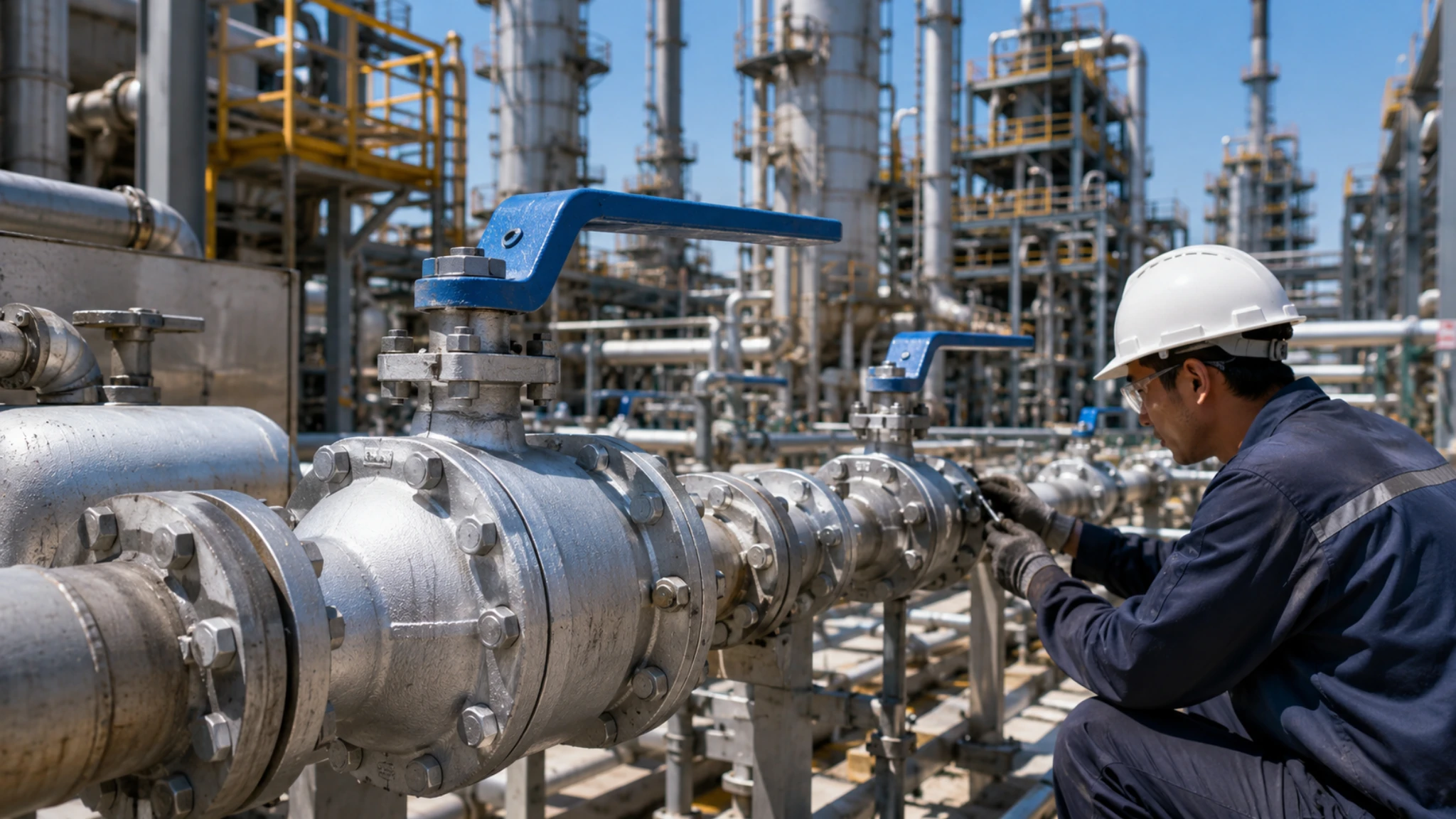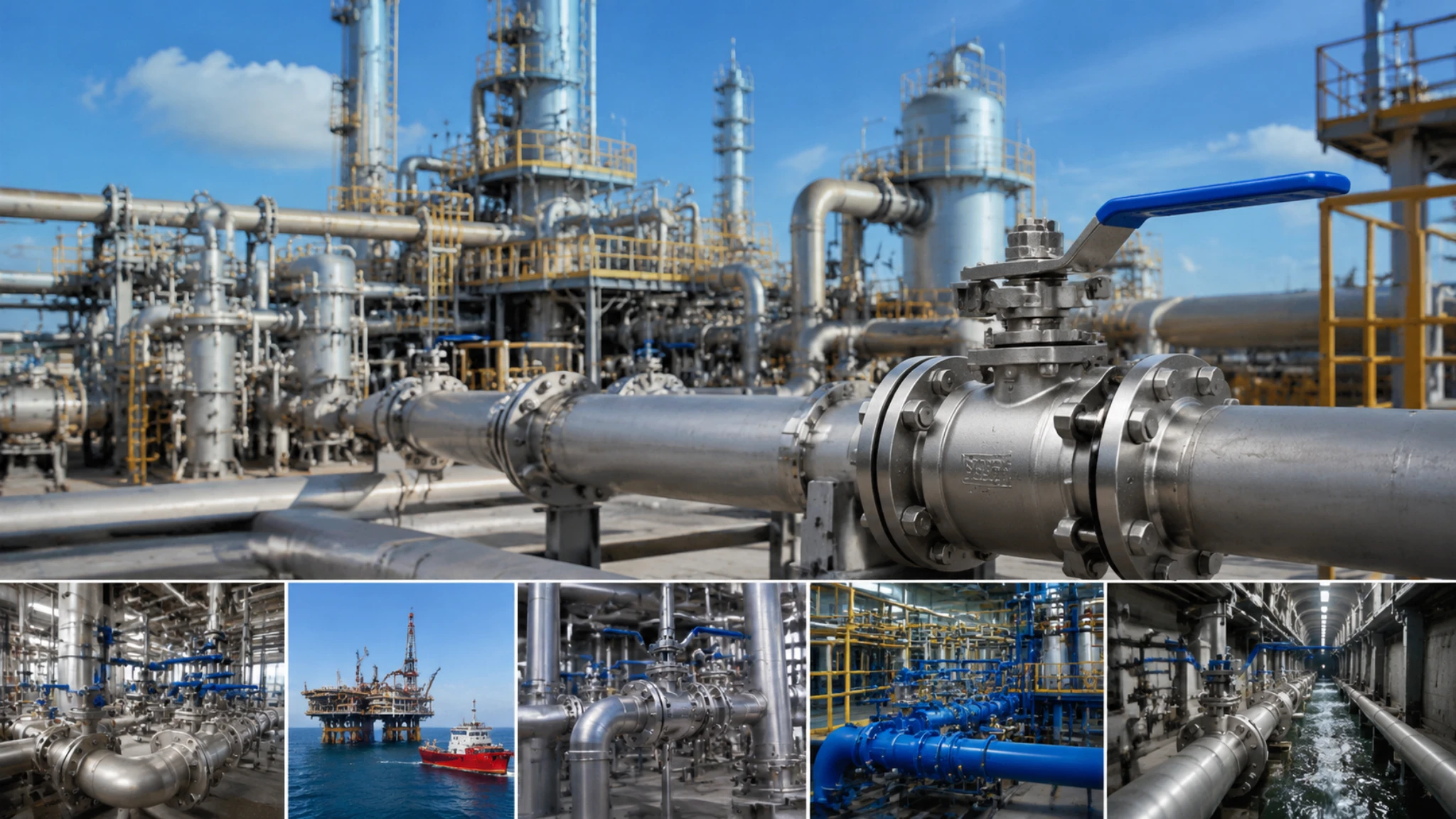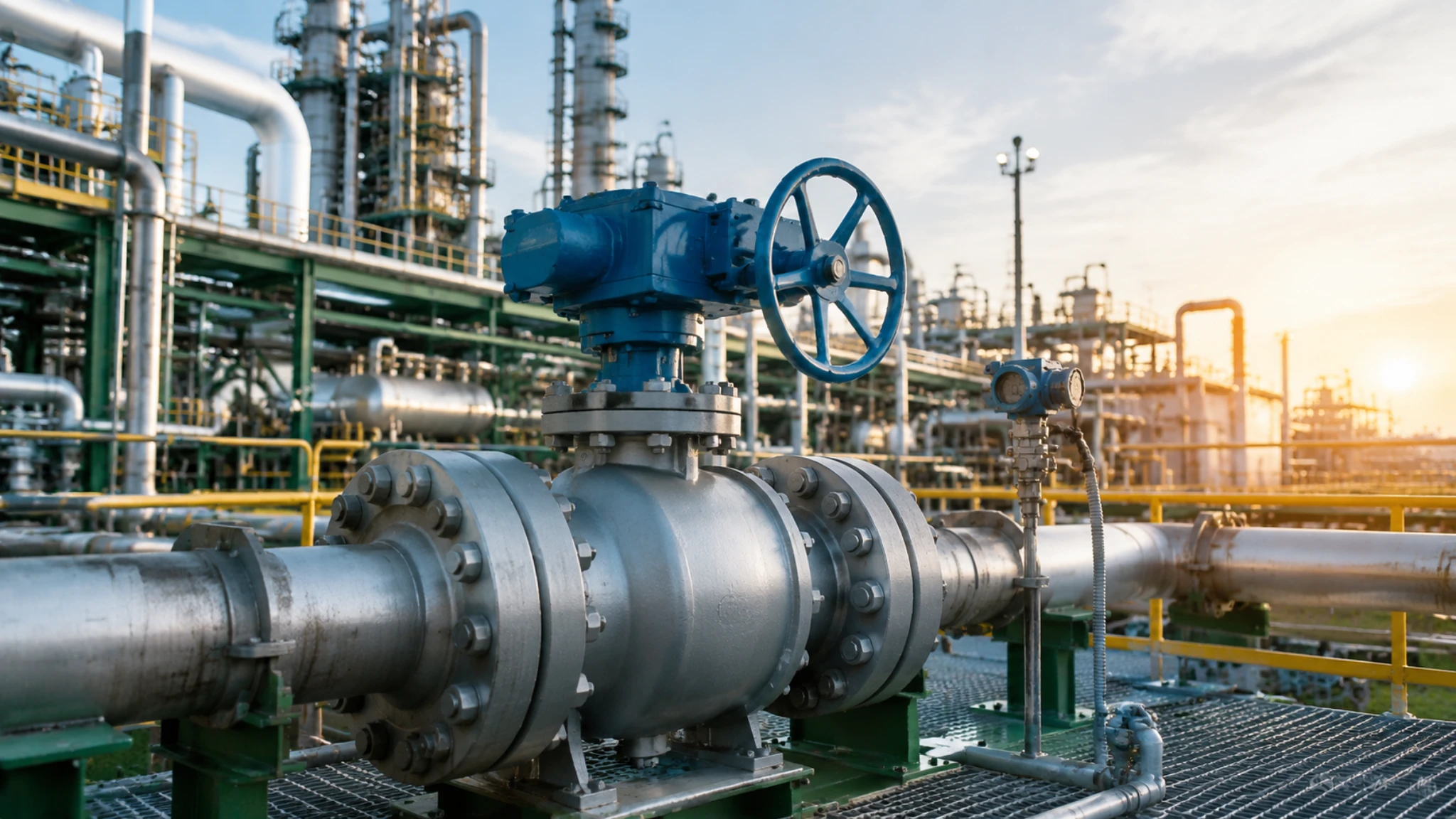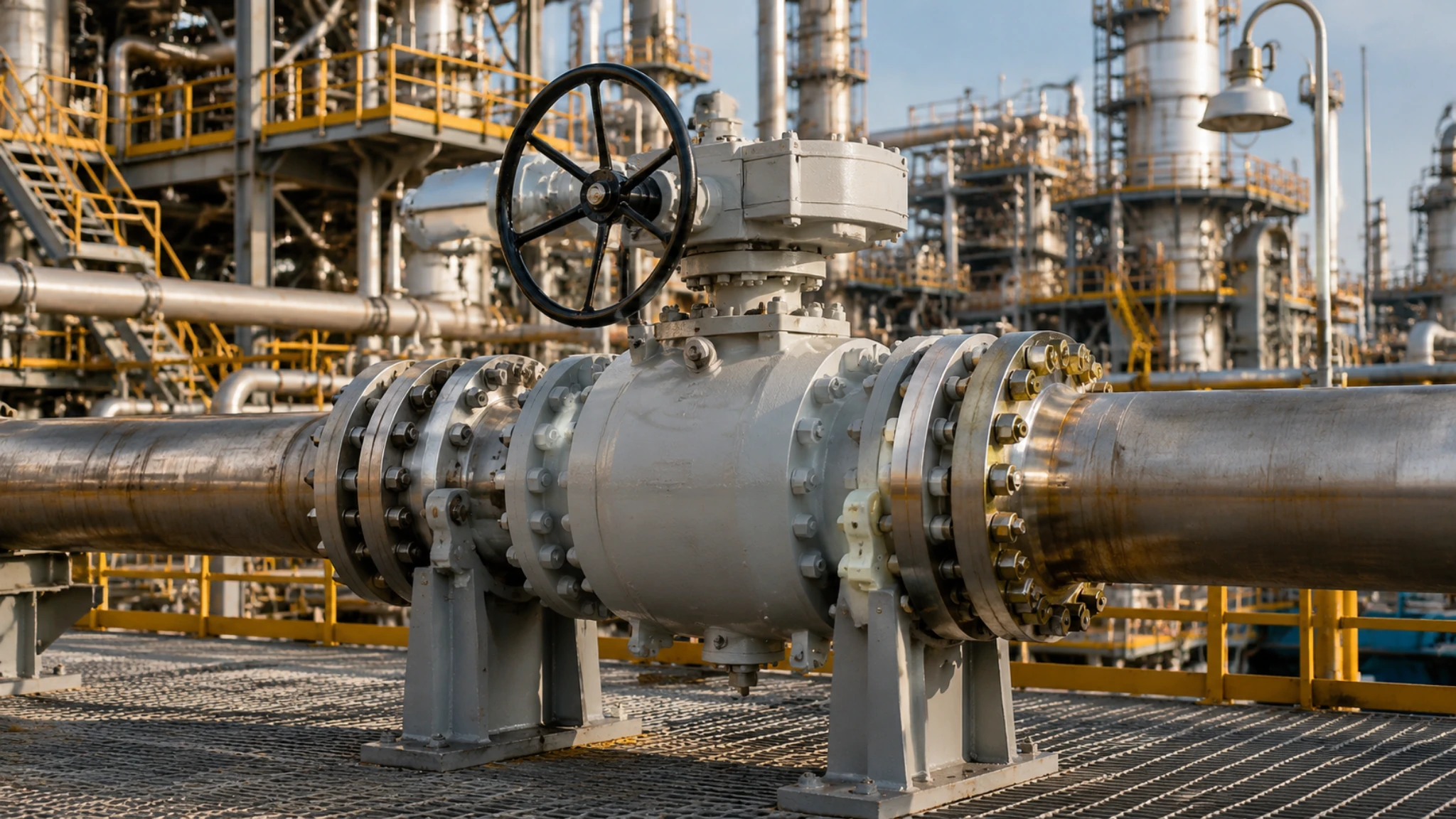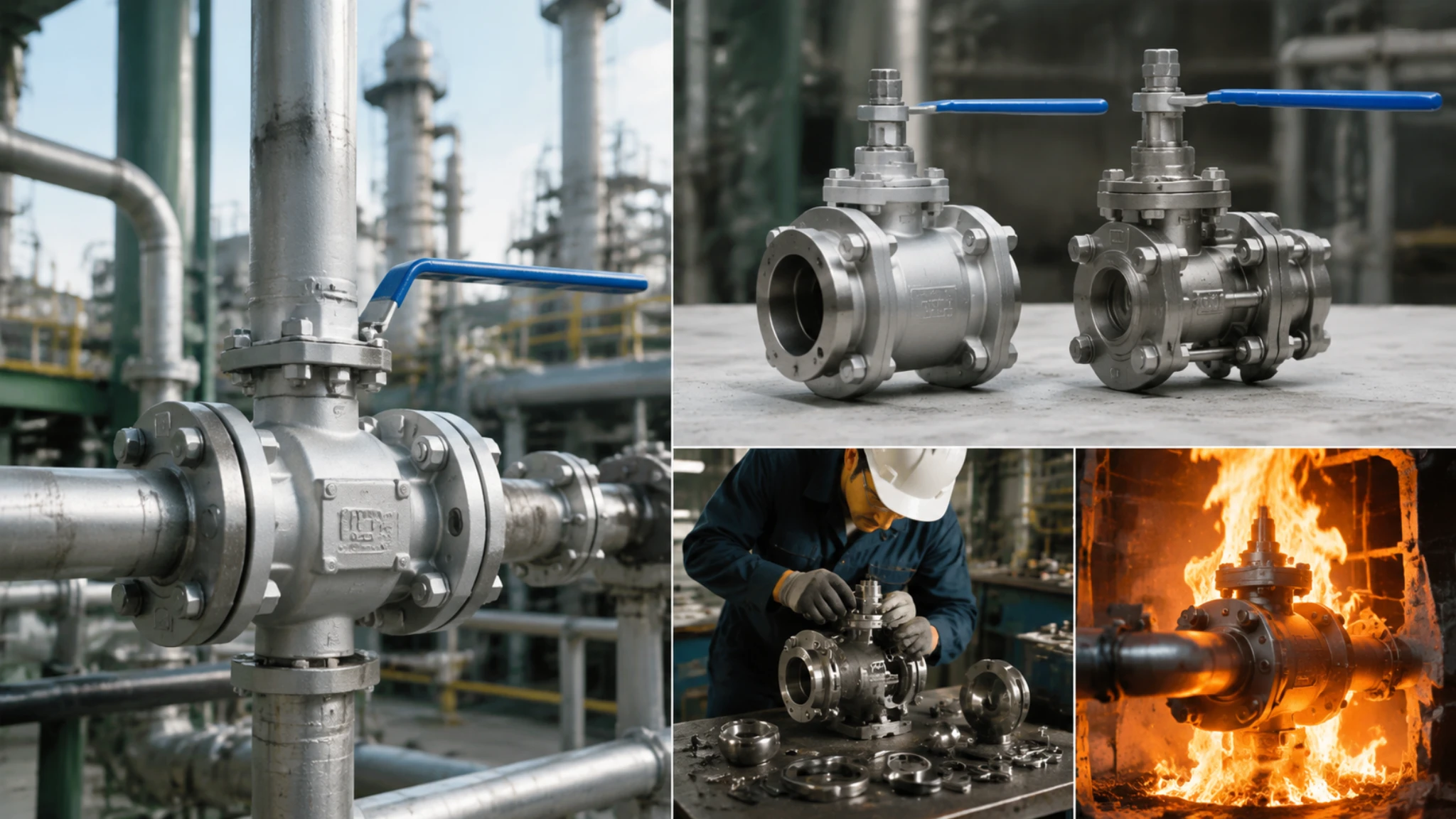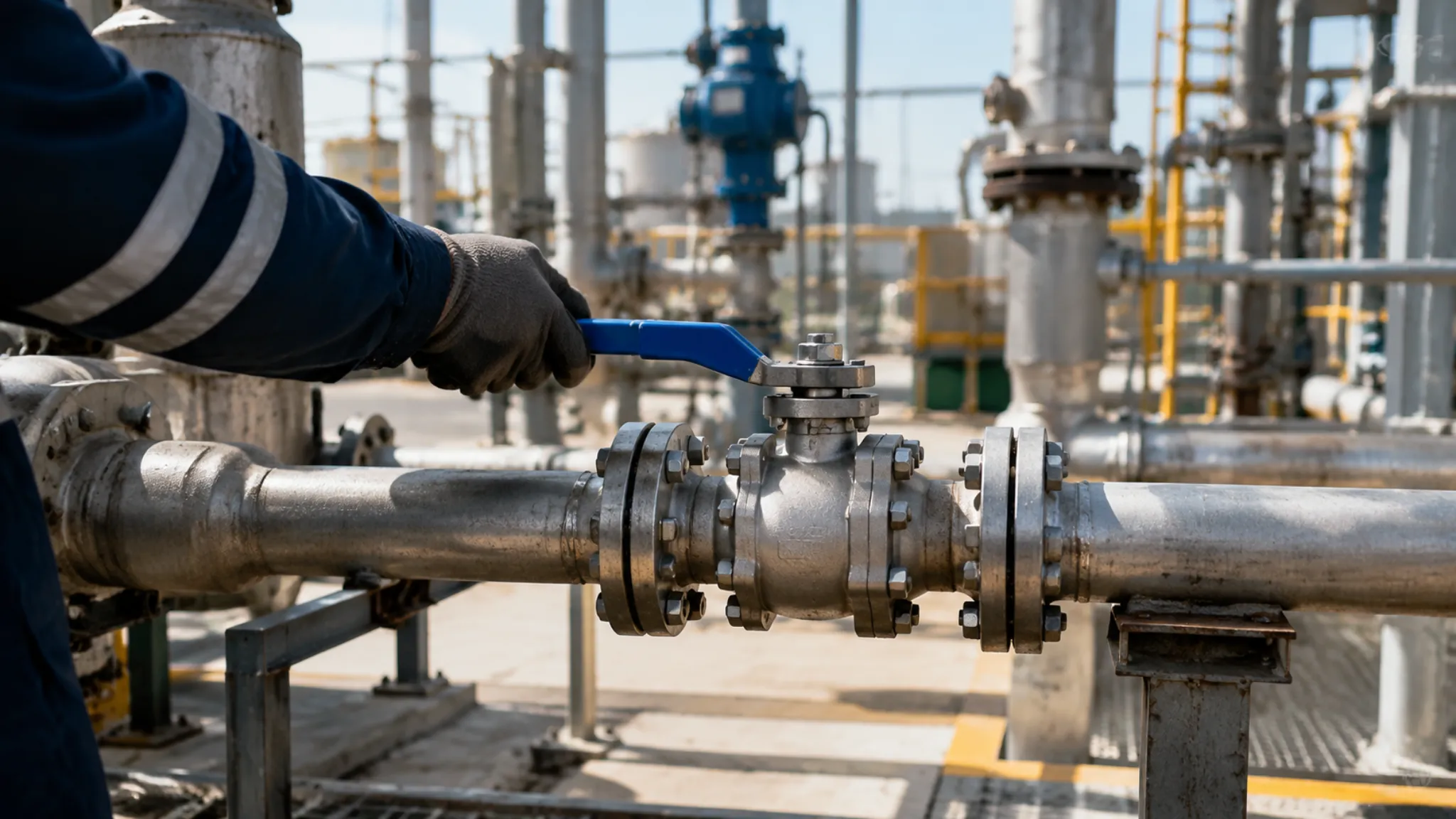
A refinery in the Middle East experienced a high-temperature cracking failure in a cast steel valve — post-incident analysis traced the origin to shrinkage porosity in the as-cast structure; the facility subsequently replaced all Class 600 and above valves with forged equivalents and established an internal policy mandating forged valves as the default choice, marking a turning point in Gulf-region petrochemical valve selection standards.
Basics of Forged Valves
What They Are
Forged valves are industrial valves formed by forging — hydraulic presses or hammers apply 5,000 to 30,000 tonnes of pressure to metal blanks, causing grain structures to flow continuously along the valve contour and achieve full densification, with pressure ratings spanning Class 150 to Class 2500 (equivalent to PN 20 to PN 420) and service temperatures from -196°C in LNG cryogenic service up to +650°C in refining applications.
The primary forged valve types are ball valves, gate valves, globe valves, and check valves — ball valves excel with 90-degree rotation for reliable isolation, gate valves use linear gate motion for bidirectional shutoff, globe valves regulate flow through vertical stem travel, and check valves automatically prevent backflow under fluid pressure, each suited to specific advantage applications.
API 6D (Pipeline Valves) and ASME B16.34 (Valve Pressure-Temperature Ratings) are the two most critical product standards for forged valves — API 6D governs the design, manufacture, and testing of forged ball valves, while ASME B16.34 specifies pressure-temperature ratings for valve materials at various temperatures, together forming the foundational reference for engineering valve selection.
The global forged valve market is valued at approximately USD 8–12 billion annually, with the oil and gas sector accounting for over 55% of demand — this dominance reflects the near-intolerant reliability requirements of high-pressure, high-temperature, cryogenic, and corrosive service conditions, and the cumulative weight of cast steel valve failure history in those same demanding environments.
The price premium of forged over cast steel valves typically runs 15%–25% — for critical Class 600 and above pipelines, this premium is fully justified because a single unplanned shutdown valve replacement often costs the equivalent of 10–20 new valve purchases, and offshore platform valve replacement operations can run to tens of thousands of dollars per incident.
How They Work
Forged valve opening and closing mechanisms vary by type — ball valves rotate the ball 90 degrees via the stem, with seats self-energizing under fluid pressure so tighter closure improves sealing; gate valves move the gate linearly up and down along the stem axis to achieve shutoff, with full-open providing unrestricted flow and full-closed offering double-seal isolation; globe valves regulate flow by vertical stem travel that changes the port opening between the disc and seat, with linear contact providing inherent flow control precision.
Operating torque is the core parameter for actuator sizing on forged valves — a DN 150 Class 600 ball valve requires approximately 25–40 N·m of breakaway torque, so pneumatic actuators are typically selected at 300–500 N·m output capacity (providing over 8x safety margin), guaranteeing reliable operation under low temperatures or excessive differential pressure; this torque margin coefficient is an empirically validated industry standard.
Valve flow capacity is expressed as the Cv factor — defined as the gallons per minute of 60°F water flowing through the valve with a 1 psi pressure drop, a DN 200 full-bore ball valve has a Cv of approximately 1,800–2,200, far exceeding an equivalent gate valve (Cv ~1,400) or globe valve (Cv ~900), which is one structural reason why ball valves dominate high-pressure large-diameter pipeline applications.
I once conducted an operating torque test on a DN 100 Class 600 ball valve in the field — the closing torque measured approximately 28 N·m while the opening torque was approximately 22 N·m, the 21% difference matching pressure-balance theory precisely; after fitting a pneumatic actuator (set at 350 N·m output), valve operation remained smooth even at -15°C winter conditions, confirming the necessity of actuator sizing margins.
Materials Used
Forged valve body materials are classified into four main categories by temperature and medium conditions — carbon steel A105 (-29°C to +425°C, for sulfur-free oilfield gathering and general process lines), chromium-molybdenum steel F22/F91 (+425°C to +600°C, for refining high-temperature crudes and steam lines), austenitic stainless steel F304/F316 (-196°C to +650°C, for LNG cryogenic and strongly corrosive service), and cryogenic nickel steel A350 LF2 (-46°C to +345°C, for ethylene and chemical cryogenic separation systems).
Seat and sealing surface materials define the valve service envelope — graphite seats cover +200°C to +350°C high-temperature service but require 15%–20% higher operating torque than polymer seats; RTFE (reinforced PTFE) seats suit -30°C to +200°C general oilfield conditions with superior wear resistance and lubricity over standard PTFE; Stellite or tungsten carbide overlay on seating surfaces handles abrasive media with solid particles and extends seal face life by 3–5 times.
Bolt and nut materials must be matched to the body material for environmental compatibility — in H₂S-containing sour gas environments, A193 B7M bolts with A194 2HM nuts are the API 6D-recommended combination, with minimum yield strength of 655 MPa and sour-service stress corrosion cracking qualification; in marine atmospheric environments, stainless steel A193 B8M/A194 8M bolting prevents chloride stress corrosion cracking.
Surface treatment of valve internals (stem, ball, seats) is a critical corrosion-resistance process — Electroless Nickel Plating (ENP) deposits a uniform 25–50 micrometer coating on complex geometries, achieving hardness of HRC 50–55 and significantly improving stem wear resistance in corrosive media; hard chromium plating on the ball (10–20 micrometers) extends its erosion resistance in throttling service by 2–3 times, a standard value-added offering from valve manufacturers.
Industry Applications
Oil & Gas Use
Oilfield gathering facilities represent the most concentrated application domain for forged valves — a single offshore platform typically deploys 2,000 to 10,000 valves in total, with forged valves accounting for over 70%; wellhead assemblies (ball valves withstand high-pressure sandy gas flow erosion), metering stations (ball valve operational reliability under frequent cycling outperforms gate valves), pigging stations (full-bore ball valves ensure unobstructed pig passage), and station inlet/outlet pipelines (ESD emergency shutdown is the core of station safety) — forged ball valves are the virtually exclusive choice at these critical service points.
- Wellhead Assembly: Class 600–900, high-pressure and sandy gas flow erosion
- Metering Station: Class 300–600, frequent cycling, reliability governs measurement accuracy
- Pigging Station: Class 150–600, full-bore ball valve ensures unobstructed pig travel
- Station Inlet/Outlet: Class 300–900, ESD emergency shutdown is station safety core
Long-distance pipeline pump stations, compressor stations, and delivery stations are equipped primarily with large-diameter high-pressure forged ball valves — DN 400 to DN 600 Class 600–900 forged ball valves are the standard trunkline isolation configuration, typically fitted with gas-hydraulic actuators for remote quick-closing upon pipeline leak detection; a Class 600 DN 400 ball valve typically costs USD 20,000–50,000 per unit, but compared to the millions of dollars in losses from pipeline shutdown incidents, this investment is entirely justified.
I once worked on preparing the valve technical specification for an offshore oil and gas platform — during technical clarification meetings with the client, they insisted that all Class 600 and above ball valves must use forged valve bodies; we presented comparative data on tensile strength, impact energy, and density for three key material properties, ultimately convincing the client to adopt forged valve bodies as a mandatory requirement for high-pressure ball valves, and this decision was fully validated during subsequent platform operations.
Offshore platform valve procurement must also account for marine environment corrosion — C5-M protection class per ISO 12944 imposes mandatory external surface treatment requirements for valves in marine atmospheric zones, and thermal-sprayed zinc-aluminum coating with sealer topcoat is the standard anti-corrosion treatment for offshore platform valves, providing 25+ years of protection and eliminating the need for recoating within the 15–20 year platform design life.
Power Plants
The main steam systems of thermal and nuclear power plants represent the most demanding forged valve application — main steam conditions in supercritical or ultra-supercritical units typically reach 540–565°C at 8–12 MPa, with forged gate valves and forged check valves as standard main steam line configurations; ultra-supercritical units operating at 30 MPa/600°C levels demand exceptional high-temperature strength and creep resistance from valve materials, making P91/P92 martensitic heat-resistant steel valves the preferred choice at those parameters.
Forged valves in nuclear island service operate under an independent technical framework — the RCC-M code imposes near-stringent requirements on material, manufacture, and testing of nuclear-grade forged valves; nuclear-class valves must pass four non-destructive examinations (radiographic, ultrasonic, liquid penetrant, and magnetic particle testing) and maintain full traceability throughout the design life (typically 60 years); in the nuclear island valve lists for both the CGN CPR1000 reactor design and the EDF 900 MWe reactor design, forged valve varieties account for over 40% of the total nuclear-grade valve count.
Gas turbine inlet and heat recovery steam generator (HRSG) systems in gas-fired combined cycle gas turbine (CCGT) plants equally depend heavily on forged valves — the gas turbine rapid startup requirement (cold to full load in approximately 10–15 minutes) demands extremely fast actuator response, with pneumatically actuated forged ball valves as the standard configuration for gas turbine emergency isolation, and a Class 300 DN 300 ball valve in this service typically requires full-open or full-close actuation within 3 seconds.
Thermal power plant valve maintenance strategies typically combine condition monitoring with planned turnaround maintenance — main steam and high-temperature high-pressure valves undergo annual infrared thermography inspection and stem torque comparison testing to detect packing relaxation or seating surface wear trends early, targeting unplanned outage rates below 0.5 events per year.
Chemical Plants
Forged valve selection for chemical process units requires integrated consideration of four key factors: temperature, pressure, medium corrosivity, and safety class — in ethylene units, the cracking furnace outlet conditions are approximately 850–900°C at 0.2–0.5 MPa, with angle-type globe valves and forged check valves as the standard cracking gas line configuration requiring high-temperature heat-resistant steel bodies; polyethylene and polypropylene unit reactor feed systems use forged ball valves with reaction pressures reaching 200–300 MPa, making the design and manufacture of ultra-high-pressure forged ball valves one of the most technically demanding valve applications in the chemical industry.
Caustic chlorine chemical and soda ash production involve corrosive media that impose special material requirements on valves — wet chlorine gas (moisture content below 30 ppm) is strongly oxidizing, making titanium alloy valves the standard for wet chlorine handling as standard stainless steels suffer stress corrosion cracking; high-temperature concentrated caustic (concentration above 50%, temperature above 100°C) in caustic soda production requires Hastelloy C-276 or Inconel alloy valve bodies, with PTFE or PFA linings as the standard internal corrosion barrier against alkaline liquids.
Refinery hydrotreating and hydrocracking units represent the most concentrated forged valve application — hydrocracker reactor feed and outlet piping operates at 450–550°C and 10–25 MPa, with forged high-pressure gate valves and forged globe valves as the standard configuration for these hot high-pressure lines, and material upgrades from F22 to F91/F92 are the prevailing trend for higher-parameter units; API 607 Fire Safe certification is a baseline requirement for forged valves in refinery service.
In PTA (purified terephthalic acid) production units, bromide-containing acetic acid media is extremely corrosive to valves — even 316L stainless steel suffers corrosion rates of 0.5–1 mm per year in high-temperature acetic acid plus bromide ion environments, making Hastelloy C-276 or titanium alloy valves the standard configuration for this service, with unit costs 5–8 times higher than 316L valves — but fully justified against the cost of 30 days of unplanned plant shutdown.
Benefits and Selection
Durability
Forged valve durability advantages stem from two core factors: material densification and continuous grain structure — the forging process achieves metal density above 99.5% (compared to approximately 97%–98.5% for cast steel), eliminating microporosity and shrinkage defects inherent to the casting process — precisely the microscopic defect population where cyclic stress cracks initiate; under Class 600 and above conditions where cyclic pressure exceeds 30% of design pressure, forged valve fatigue life is 30%–50% longer than cast steel equivalents, and forged valves in offshore platform sour gas wellhead service average 15–20 years of service life versus the 5–8 year replacement interval typical for cast steel valves.
I once analyzed 12 years of offshore platform valve maintenance records — across all 487 valve repair entries, forged valve unplanned repair rates were just 3.2%, while cast steel valves reached 18.7%, nearly a 6x difference; the primary maintenance drivers for forged valves were actuator and accessory failures (2.1% of total), with structural body issues virtually absent throughout the 12-year operating period.
The dominant failure modes for forged valves concentrate in the sealing and actuation systems — stem packing leaks (approximately 35% of failures) and actuator failures (approximately 30%) are the two most common maintenance causes, while body structural issues (cracking, corrosion thinning) account for only approximately 5%, indicating that forged valve structural reliability is inherently high and that maintenance resources should focus on sealing and actuation systems — the core principle behind Valve Health Management (VHM) strategies, which can provide 7–10 days advance warning before failure occurs.
Pressure Handling
Pressure handling capability is the core guarantee of reliable forged valve performance in high-pressure service — Class 150 to Class 2500 ratings correspond to design pressure ranges from 0 to 42 MPa; at equivalent ratings, forged valve body walls are thinner than cast steel equivalents (due to higher material strength), reducing valve weight, lowering material cost, and decreasing flange connection preload burden — a Class 600 DN 200 forged ball valve has a typical wall thickness of approximately 22–25 mm, while an equivalent cast steel ball valve requires approximately 28–32 mm.
ANSI/ASME B16.34 establishes pressure-temperature ratings for different materials at various temperatures — A105 carbon steel has a rating of 20.7 MPa (Class 1500) at 38°C, progressively derating with temperature, dropping to approximately 10.3 MPa at 425°C; F316 stainless steel is rated at 18.6 MPa at 38°C and retains approximately 6.9 MPa at 650°C — this high-temperature strength retention is precisely why stainless forged valves are irreplaceable in refining and petrochemical high-temperature service.
Ultra-high-pressure conditions (Class 1500 and above) impose more stringent design requirements on forged valves — a Class 2500 DN 50 forged ball valve has a body wall thickness of approximately 18–20 mm, and wall thickness stress calculations at 42 MPa design pressure must be calculated precisely to the millimeter level, with insufficient thickness causing yield failure and excessive thickness creating thermal stress concentration; API 6D mandates additional non-destructive examination requirements (100% radiographic or ultrasonic testing) for Class 1500 and above valves — a mandatory measure to ensure safe use of ultra-high-pressure valves.
The ANSI/ASME B16.34 pressure-temperature rating tables are the essential tool for engineering valve selection — the tables list maximum allowable pressures at each temperature point organized by material group (A105, F22, F316, etc.) and pressure class (Class 150 to Class 2500); any selection exceeding these tables is unsafe and requires re-selecting a higher-grade material or larger wall-thickness specification.
I once discovered a valve selection error during project drawing review — the designer had specified an A105 carbon steel valve on a Class 600 DN 200 pipeline with a maximum design temperature of 400°C; cross-referencing the B16.34 table revealed that A105 at 400°C is rated at only approximately 6.9 MPa, far below the Class 600 requirement of approximately 13.8 MPa, presenting a serious safety hazard; the valve body material was subsequently upgraded to F22 and the design resubmitted for approval.
Choosing Right Valve
Forged valve selection follows a five-step methodology — DN 200 Class 600 is the most common offshore platform specification starting point; Step 1 confirms nominal size (DN or NPS) and pressure class (Class), as these two parameters determine body wall thickness, material temperature range, and cost bracket, forming the foundation for all subsequent configuration decisions; Step 2 selects body material (carbon steel/chromium-molybdenum steel/stainless steel/nickel steel) based on medium temperature; Step 3 determines seating surface material (graphite/RTFE/hardfacing/Stellite) based on medium corrosivity; Step 4 selects actuator type (manual/pneumatic/electric) based on operating frequency and available utility (air or power); Step 5 confirms Fire Safe, explosion-proof, and other certification requirements based on safety class mandates.
Understanding the advantage applications of different valve types is essential — ball valves excel in rapid operation (90-degree rotation), reliable sealing, and full-bore minimal restriction, suited to services requiring frequent cycling and dependable isolation such as ESD emergency shutdown; gate valves offer minimal pressure drop, bidirectional sealing capability, and straight-through body bore, ideal for large-diameter pipelines needing straight-through medium flow and complete isolation; globe valves provide high flow control precision with a linear relationship between disc position and flow rate, suited to applications demanding accurate flow regulation.
I once encountered a valve selection case on a Middle East refinery project — the designer originally planned to use cast steel gate valves on the hydrocracking unit hot high-pressure feed pipeline, and through our technical engagement the specification was changed to equivalent forged steel gate valves; although the procurement cost increased by approximately 12%, over the 15-year plant operating cycle the forged gate valve high reliability and low maintenance rate reduced total lifecycle cost by approximately 35%, demonstrating that the initial premium for forged valves in demanding service is a fully justified investment.
API 6D (24th Edition) mandates that forged valve body materials must pass both tensile and impact tests (Charpy V-notch), with impact testing temperature no lower than the minimum design temperature and minimum impact energy of 27 J — these three requirements are the most fundamental metallurgical criteria distinguishing forged from cast steel.
The Energy Institute 2022 technical report documents a forged valve incident rate of approximately 0.3% across oil and gas facilities, compared to 2.1% for cast steel valves — a ratio of roughly 1 to 7, with the reliability gap widening further at Class 600 and above.
EEMUA 194 establishes design verification testing requirements for high-pressure valves: all valves rated Class 600 and above must pass a hydrostatic strength test at 1.5 times rated pressure and a pneumatic seat leak test at 1.1 times rated pressure — these two tests constitute the minimum factory acceptance criteria for high-pressure valves.
SPE 2023 data identifies valve selection errors — material grade mismatch or incorrect seating surface choice — as the root cause in approximately 35% of offshore platform valve failures, with actuator failures accounting for 25% and installation issues for 20% — valve selection is the single most controllable factor in valve lifecycle reliability.
| Comparison Dimension | Forged Valve | Cast Steel Valve |
|---|---|---|
| Manufacturing Process | High-pressure forging densification | Molten metal solidification forming |
| Tensile Strength | 480–650 MPa | 380–550 MPa |
| Density (% dense) | ≥99.5% | 97%–98.5% |
| Fatigue Life | 30%–50% longer than castings | Shorter life under equivalent stress |
| High-Temperature Strength Retention | Retains adequate strength at +650°C | Significant strength loss above +425°C |
| Typical Applications | High-pressure, high-temp, cryogenic critical pipelines | General service and auxiliary systems |
| Manufacturing Cost | 15–25% higher | Lower |
Forged valve selection is always governed by five parameters: temperature, pressure, medium, operating frequency, and design life — forged valves are not merely an option but a mandatory choice in demanding service conditions above Class 600, below -30°C, or above +400°C, and correct selection is the primary guarantee of long-cycle safe plant operations.