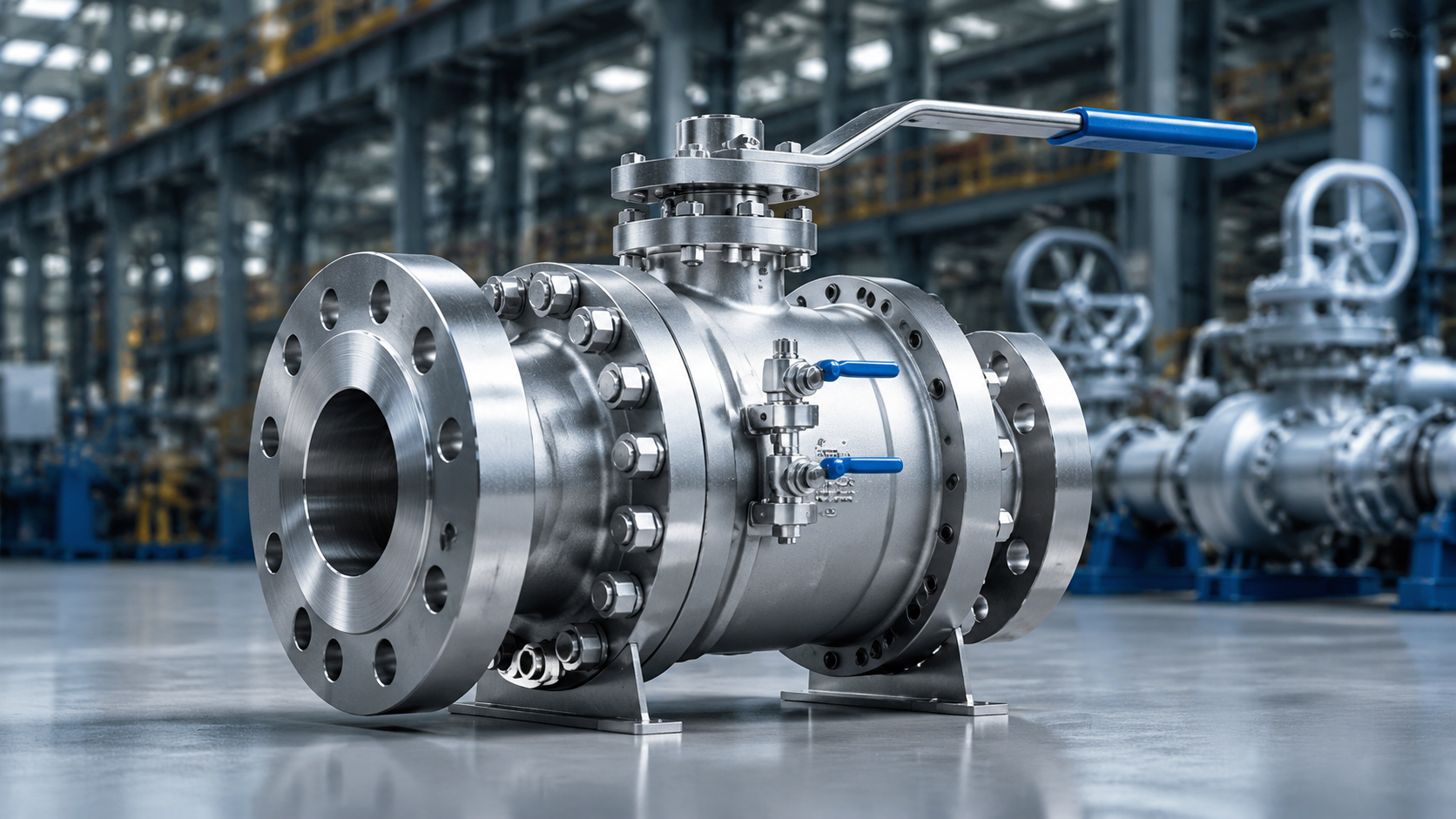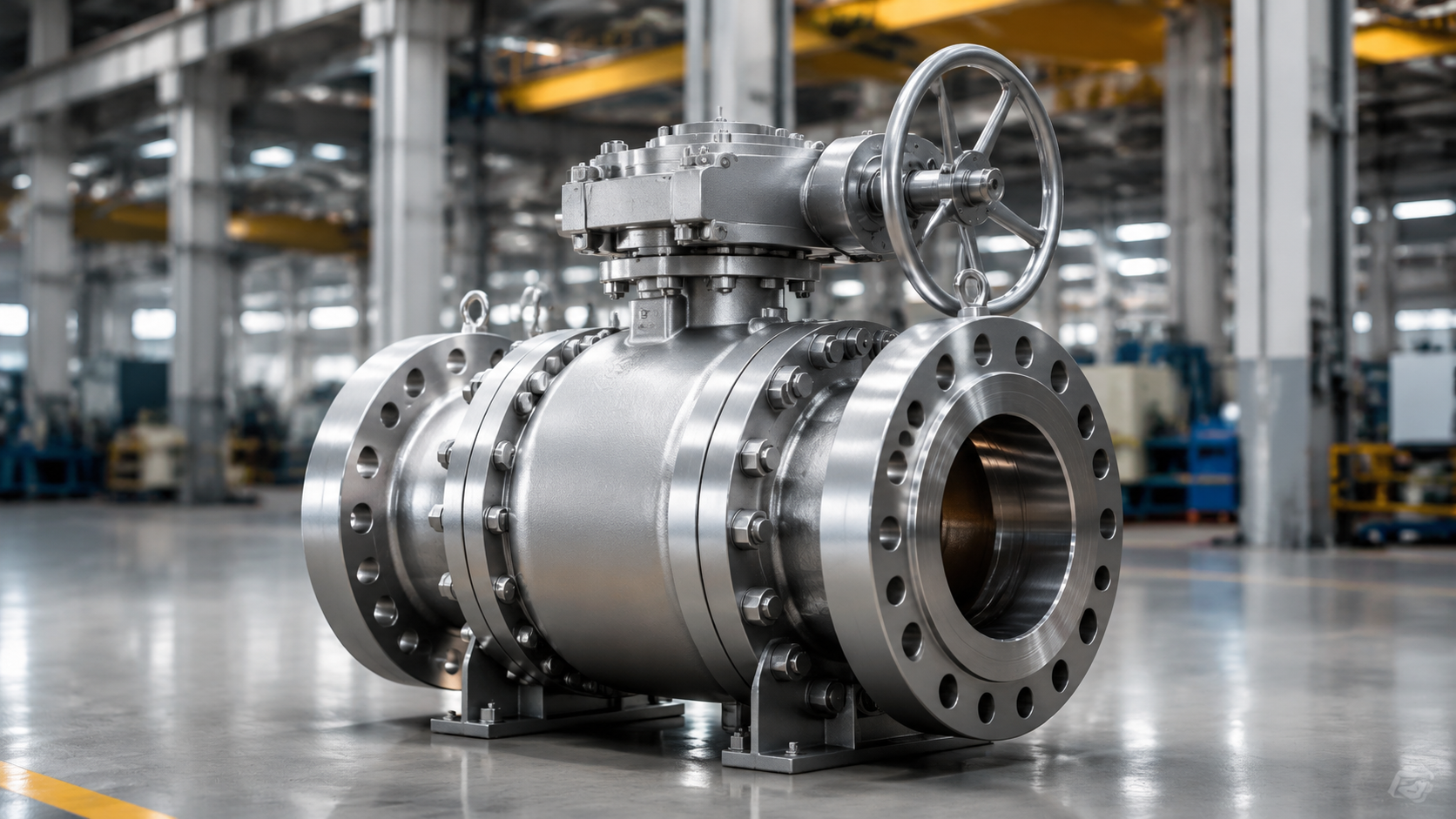
Custom float valves can withstand high pressures up to 25 MPa in natural gas processing.
The float counterweight must be precisely calibrated based on a specific gas gravity of 0.65 to prevent malfunction in liquid level control.
This ensures extreme reliability at the API 6D level, significantly extending the system’s Mean Time Between Failures (MTBF) to over 50,000 hours.
Reliability
For severe operating conditions in natural gas separators with H2S concentrations up to 15,000 ppm and entrained sand, custom float valves utilize NACE MR0175-compliant materials and specific buoyancy calculations to increase the Mean Time Between Failures (MTBF) from 3 months for standard components to over 40,000 hours.
Adjusting the float wall thickness and leverage ratio based on the user’s specific process parameters (such as a liquid specific gravity range of 0.3 to 0.8) ensures that the valve does not experience mechanical binding under a 50 Hz vibration frequency and a 1500 psi pressure drop.
This design reduces the unplanned downtime rate by 90% and achieves ANSI/FCI 70-2 Class VI shutoff requirements, guaranteeing continuous system operation.
Materials & Operating Conditions
In the wellhead effluents of the Haynesville Shale gas field in North America, the hydrogen sulfide concentration is consistently maintained between 15,000 ppm and 25,000 ppm year-round, with a carbon dioxide volume fraction reaching 10% to 12%. The initial pressure of local gas wells is as high as 10,000 psi, and fluid temperatures generally exceed 120°C, accompanied by large amounts of formation sand and highly concentrated brine.
Commercially available standard 316L stainless steel float valves have an average service life of only 45 to 60 days in highly acidic and corrosive environments. Once the chloride ion concentration in free water exceeds 50 mg/L and the temperature rises above 60°C, the 316L surface is highly susceptible to pitting and stress corrosion cracking, leading to float perforation, water ingress, and a complete loss of buoyancy.
Customizing valve materials based on fluid chemical composition analysis reports is a fundamental physical requirement to prevent early equipment failure. For high-chloride conditions containing free water, super duplex stainless steel (such as SAF 2507) is extensively used; its Pitting Resistance Equivalent Number (PREN) is greater than 42, and its yield strength reaches 80,000 psi, allowing it to withstand severe pressure pulses.
At the bottom of desulfurization towers with extremely high H2S concentrations, the NACE MR0175/ISO 15156 standard strictly limits the hardness of metals exposed to sour gas. Due to its copper-nickel composition ratio, Monel 400 alloy exhibits an extremely low corrosion rate of less than 0.02 mm per year in oxygen-free liquid hydrocarbons with high concentrations of H2S.
| Gas Well Fluid Characteristics | Typical Operating Data | Recommended Custom Alloy | Expected Corrosion Resistance Metrics |
|---|---|---|---|
| High Chlorides + High Temperature | Chloride Ions > 10,000 ppm, 150°C | Super Duplex Stainless Steel 2507 | Zero Stress Corrosion Cracking Record |
| Extremely High H2S Concentration | H2S > 20,000 ppm, 100°C | Monel 400 | Corrosion Rate < 0.02 mm/year |
| High Acidity + High CO2 | CO2 > 15%, pH < 3.5 | Hastelloy C-276 | PREN > 45, No Pitting |
| Severe Erosion + Sand-bearing | Solid Particles > 2%, 10 m/s Flow Velocity | Inconel 625 Surface Hardening | Rockwell Hardness up to 70 HRC |
The specific gravity (SG) of the liquid inside a natural gas condensate separator is typically between 0.45 and 0.65, which is far lower than water’s 1.0. This extremely low medium density requires the float to provide sufficient mechanical upward buoyancy within a limited volume to push open a valve trim subjected to a 2000 psi differential pressure.
When calculating buoyancy, the manufacturer must determine the fluid density at the operating temperature accurately to three decimal places. If the condensate SG is 0.50, under a 1500 psi system backpressure, the outer diameter of the custom float typically needs to be expanded to 8 inches (203.2 mm), with the sphere’s internal volume reaching 4180 cubic centimeters.
While increasing the volume, the float wall thickness must concurrently be increased to 3.0 mm to 4.5 mm to prevent high-pressure gas from collapsing the sphere. An 8-inch float manufactured from Hastelloy C-276 with a wall thickness of 4.0 mm has a dead weight of approximately 2.2 kg, producing a net displaced mass of about 2.09 kg in a liquid with an SG of 0.50.
- Custom Temperature Resistance for Sealing Surface Materials: Standard Polytetrafluoroethylene (PTFE) valve seats experience cold flow deformation at 150°C, leading to seal failure. Custom solutions utilize Polyether Ether Ketone (PEEK) to machine the valve seats, withstanding the dual physical loads of 260°C high temperatures and 3000 psi pressure.
- Anti-wear Treatment for Sand-bearing Fluids: Natural gas in the Appalachian Basin frequently entrains quartz sand particles. The contact surfaces of the valve trim and seat require High-Velocity Oxygen Fuel (HVOF) spraying to apply a 0.2 mm thick tungsten carbide coating, preventing the sealing surfaces from forming grooves under high-speed gas-liquid erosion.
- Anti-fatigue Material Selection for Springs and Pins: The internal return springs and leverage pins of the valve operate under peak stress conditions. Springs manufactured from Inconel X-750 alloy undergo 1 million compression cycles at 200°C high temperatures with an elasticity decay rate of less than 2%.
The contact angles between the sealing surface and the valve seat are typically machined with a specific taper angle difference (e.g., 45 degrees for the trim, 46 degrees for the seat) to form an extremely narrow line-seal contact band. High-pressure fluid acting on this minute area generates extremely high specific pressure, achieving an ANSI/FCI 70-2 Class VI leakage rate even without rubber gaskets.
| Medium Specific Gravity (SG) | Maximum System Pressure Drop (psi) | Custom Float Outer Diameter Requirement | Custom Lever Arm Length Ratio |
|---|---|---|---|
| 0.45 | 1000 | 8.0 inches | 1 : 6.5 |
| 0.55 | 1500 | 7.5 inches | 1 : 5.8 |
| 0.65 | 2000 | 7.0 inches | 1 : 5.0 |
| 0.80 | 3000 | 6.0 inches | 1 : 4.2 |
Pre-factory material verification procedures are extremely strict, including Positive Material Identification (PMI) spectral analysis. Handheld X-ray fluorescence spectrometers scan the surfaces of the valve body, flanges, float, and fasteners to read the mass percentages of each element.
Taking Inconel 625 components as an example, the PMI report must clearly show a nickel content above 58%, chromium content between 20% and 23%, and molybdenum content between 8% and 10%. Any slight deviation in chemical composition will result in the part being returned for remelting, ensuring that equipment delivered to the site fully complies with ASME B16.34 and relevant high-temperature and high-pressure piping specifications.
After the complete assembly of the valve, it is filled with high-pressure helium at room temperature for mass spectrometry leak testing. The instrument probe scans around all static and dynamic sealing joints of the valve body, requiring the helium leak rate to be strictly controlled to within 1 x 10^-6 standard cubic centimeters per second.
Fluid Dynamics
Custom equipment must precisely calculate the local pressure drop inside the valve cavity based on Bernoulli’s equation to prevent phase changes caused by sudden velocity surges. When high-pressure liquid passes through the valve seat orifice, the cross-sectional area sharply reduces from 4 square inches in the original pipeline to 0.25 square inches, causing the static pressure to plummet below the fluid’s saturated vapor pressure within milliseconds.
The localized low-pressure zone prompts dissolved butane and pentane in the condensate to vaporize instantly, forming microbubbles with a volume expansion coefficient up to 800 times. After the fluid passes through the throttling zone, as the pipe diameter expands to a 2-inch drain pipe, the pressure rebounds to 600 psi, causing the bubbles to undergo violent implosion.
- Shockwave peak exceeds 100,000 psi
- Microjet velocity reaches 400 m/s
- Standard 316 valve seats exhibit honeycomb-like spalling within 48 hours
- Triggers high-frequency equipment resonance above 85 decibels
The fluid does not pass through a single 0.5-inch orifice all at once; instead, it is dispersed and guided through 120 staggered micro-holes with a diameter of 0.05 inches drilled into the sleeve.
The pressure drop is evenly distributed across three to four throttling stages, with the pressure differential of each stage strictly controlled to within 300 psi. After the fluid passes through the multi-stage labyrinth flow path, kinetic energy is progressively converted into thermal energy for dissipation, and the Mach number at the valve outlet is safely limited to below 0.3, suppressing the occurrence of cavitation.
In addition to cavitation damage, calibrating the fluid’s flow coefficient (Cv value) is also a fundamental physical requirement for high-load natural gas processing units. For a gas well with a daily production of 50 million standard cubic feet (MMSCFD), the associated free water flow rate can fluctuate violently between 5 gallons and 500 gallons per hour.
The customization process requires inputting data on the maximum daily liquid production, operating pressure, and the pressure differential across the valve. Based on this, engineers calculate a maximum required Cv value of 12.5 and a minimum Cv value of 0.8, and machine a V-port valve trim featuring an equal-percentage flow characteristic.
An equal-percentage valve trim allows a minimal flow of only 2.5 GPM when open to 20%, but when the opening reaches 80%, the flow rate rapidly expands exponentially to 45 GPM. Even with minute displacements of a few millimeters in the liquid level inside the separator, the regulating mechanism can still output a proportional discharge volume.
- 0-20% stroke: Handles trace amounts of formation condensate water
- 20-60% stroke: Manages steady-state liquid flow during normal production
- 60-100% stroke: Rapidly discharges surging liquids caused by slug flow
- Flow deviation rate: Strictly controlled within ±4% of the set calculated value
When handling high-viscosity crude oil and natural gas mixtures, the boundary conditions between laminar and turbulent flow undergo a significant shift. In the North Sea oilfields, winter ambient temperatures drop as low as -15°C, causing the dynamic viscosity of condensate to surge to 500 centipoise (cP) and the Reynolds number to rapidly drop below 2000.
The fluid exhibits a viscous laminar state within the pipeline, with frictional resistance along the path four times that of summer operating conditions. The inner walls of the flow path in custom float valves are polished to a surface roughness of Ra 0.4 microns, while the valve cavity cross-section is enlarged by 1.5 times to offset the flow attenuation caused by high viscosity.
The dynamic response of the float system itself must match the physical state of the liquid. For liquids with a viscosity of 500 cP, the drag coefficient of the float moving up and down is nearly 8 times that in water; standard-design lightweight floats will cause discharge delays exceeding 30 seconds due to hysteresis effects.
Manufacturers adjust the natural frequency of the float system away from the excitation frequency of liquid level fluctuations by increasing the counterweight and enlarging the sphere’s diameter. A custom 10-inch solid Hastelloy counterweight ball provides over 35 pounds of downward gravitational potential energy, forcefully cutting through the enveloping resistance of viscous liquids.
When high-pressure gas-liquid mixtures pass through the valve body, they easily generate a Kármán vortex street shedding effect at the clearances between the valve stem and bearings. Alternating fluid forces up to 400 Hz continuously strike exposed metal components, leading to metal fatigue fractures in cotter pins or connecting bolts within 15 days.
Design drawings specify that the upstream face of the valve stem must be machined into an aerodynamically sound teardrop or streamlined cross-section. By altering the geometric boundaries of fluid flow around the object, the Strouhal number is controlled below 0.2, eliminating fluid-induced vibration.
- Valve stem cross-section streamlined aspect ratio is set to 3:1
- Bearing clearance tolerance tightened to 0.002 inches
- Fluid-induced vibration amplitude reduced by 95%
- Component fatigue life exceeds 2,000,000 cycles
According to simulation data from Computational Fluid Dynamics (CFD) software, severe flow dead zones exist within unoptimized standard globe valves. Fluids with sand content reaching 150 mg/L form localized vortices in these dead zones, where quartz sand particles continuously erode the bottom of the valve body’s inner wall under centrifugal force.
Custom valve bodies adopt Y-pattern or angle-pattern structures, setting the included angle between the inlet and outlet to exactly 45 or 90 degrees. Solid impurities carried by high-speed fluids are guided to smoothly discharge through the drain port along a smooth curved paraboloid, with the internal anti-erosion wall thickness increased by 5.0 mm in vulnerable areas.
When handling gas-liquid mixed slug flow, the fluid’s discharge coefficient (Cd) needs to be recalibrated based on phase ratios. When the gas volume accounts for 15% to 20% of the liquid, the actual pressure drop curve of the fluid flowing through the orifice will deviate from the standard calculation model for single-phase liquids.
The drain port size of standard valves is usually fixed, making gas-liquid mixtures prone to choked flow during discharge. The fluid velocity at the vena contracta reaches sonic speeds, and the downstream mass flow rate is strictly limited to a physical upper limit of 200 gallons per hour.
Custom solutions significantly raise the system’s critical flow velocity threshold by enlarging the valve body chamber and increasing the drain hole diameter from the standard 1 inch to 1.75 inches. In a 1500 psi differential pressure environment, the optimized discharge channel allows a maximum of 650 gallons of mixed fluid per hour to discharge smoothly.
High-frequency opening and closing actions require internal fluid passages to possess excellent anti-surge characteristics. When the liquid level suddenly drops from 10 mm above the set point to 5 mm below it, the valve trim needs to complete a mechanical movement from fully open to 30% open within one second.
Drastic throttling actions trigger reverse water hammer pressure waves in the upstream piping. Fluid momentum is instantaneously truncated, and 500 pounds of liquid mass impacts the closed valve seat at a velocity of 10 feet per second, generating an instantaneous shock backpressure exceeding 800 psi.
Custom valves are internally equipped with damping chambers and fluid buffer guide sleeves. As the valve trim moves downward to close the passage, the liquid inside the guide sleeve is forced to slowly squeeze out through a 0.06-inch bleed micro-hole, utilizing the fluid’s own viscous drag to limit the absolute speed of mechanical closure.
Pre-Factory Testing
API 6A and API 598 specifications form the testing baseline for Houston valve manufacturing plants. After final assembly, each high-pressure float valve is sent into an explosion-proof test bunker equipped with a 50-gallon high-pressure water pump.
Hydrostatic shell testing verifies the physical integrity of the metal pressure boundaries. When the equipment’s design rated pressure is calibrated at 10,000 psi, the hydraulic pump will force the test backpressure up to a peak of 15,000 psi.
Digital pressure sensors have a sampling frequency set at 100 times per second, monitoring the hydraulic curve within the piping network in real-time. During a mandatory 15-minute hold-pressure period, the pressure drop reading on the dashboard must not exceed 1% of the total set value.
A test hydraulic pressure up to 15,000 psi applies a physical load of 6.8 tons per square inch of the valve body surface, forcing microscopic sand holes at the 0.5 mm level inside the casting to exhibit penetrating leaks.
After concluding the hydrostatic procedure, the test station switches to an extremely high-precision gas sealing verification phase. The test medium changes from filtered water to 99.99% pure industrial helium, simulating a 2,500 psi pressure drop environment in the field.
The vacuum nozzle of a mass spectrometer leak detector is attached to the junction of the stuffing box and flange gasket to scan and sample. To meet ANSI/FCI 70-2 Class VI shutoff standard requirements, the volume of gas leaking through metal contact surfaces per minute must be less than 0.15 milliliters.
- Mass spectrometer leak rate threshold locked below 1.0 × 10^-6 std cc/sec
- Sealing contact band width machined to a range of 1.2 mm to 1.8 mm
- Helium testing maintains a constant 20°C temperature throughout to eliminate thermal expansion and contraction errors
Because workshop safety constraints prevent the use of real condensate oil with a specific gravity of 0.50, technicians substitute buoyancy thrust by suspending precisely calibrated 304 stainless steel weights.
An 8-inch Hastelloy float weighing 2.2 kg generates a net displaced mass of approximately 2.09 kg in a 0.50 SG liquid. The weight suspension system exerts an equivalent pulling force, while a pneumatic push rod provides a reverse differential pressure resistance at the 1,500 psi level from the opposite side.
The internal leverage and pin system must endure alternating shear stress during 100 physical cycles of opening and closing. External laser displacement sensors record the motion trajectory of the float; the displacement deviation for a single full stroke of 150 mm must be less than 0.5 mm.
The mechanical hysteresis rate of the internal linkage components undergoes repeated testing to ensure that the equipment can drive the trim off the sealing seat within 0.8 seconds after receiving a signal that the liquid level has risen by 10 mm.
Radiographic Testing (RT) specifically screens the deep metallurgical structure of the valve body. A 450-kilovolt X-ray generator penetrates the 60 mm thick carbon steel pipe wall, generating a 2D grayscale image of the internal metal lattice on a light-sensitive element behind it.
Image processing software scans the background noise of the X-ray film, searching for blowholes or slag inclusions that cause high-pressure ruptures. Any internal linear defect indication with a measured diameter exceeding 1.5 mm will result in the valve body being scrapped and returned to the melting furnace for remelting.
Surface non-destructive testing utilizes Liquid Penetrant Testing (PT) and Magnetic Particle Inspection (MPI) alternately. A magnetic suspension with fluorescent powder is evenly sprayed on the heat-affected zone of the flange neck weld.
Illuminated by an ultraviolet detector lamp with a wavelength of 365 nanometers, if a surface micro-crack with a width as small as 10 microns exists in the inspection area, the leakage magnetic field will aggregate the fluorescent powder, displaying a 0.2 mm wide yellow-green luminescent band.
- Flange connection surface roughness polished to Ra 3.2 microns
- Normal center distance tolerance of fastening bolt holes controlled within ±0.25 mm
- Ring Type Joint (RTJ) taper angle machining error below 0.5 degrees
Tungsten carbide coatings featuring anti-sand wear functionality face dual physical inspections for adhesion and hardness. Ultrasonic thickness probes take measurements at 10 grid points on the valve trim surface, where the coating thickness must fall uniformly between 0.2 mm and 0.25 mm.
The 120-degree diamond cone indenter of a portable Rockwell hardness tester is pressed into the hardened layer with a test force of 1470 Newtons. The surface hardness value fed back on the display screen must be within the range of 68 HRC to 72 HRC.
Positive Material Identification (PMI) is conducted 24 hours prior to equipment crating and shipping. A handheld X-ray fluorescence spectrometer is pressed tightly against the unpainted area above the valve body nameplate, performing spectral excitation irradiation for up to 15 seconds.
Pressure Resistance
Field pipelines typically adopt ASME Class 900 or 1500 flange standards.
Standard 316 stainless steel floats with a wall thickness of 0.035 inches will experience structural inward collapse when external pressure reaches 800 PSI.
By increasing custom wall thicknesses to 0.065-0.125 inches, or specifying the use of Titanium Grade 2 and Monel 400 with yield strengths exceeding 40,000 PSI, coupled with full-penetration TIG welding, we elevate the float’s rated collapse pressure capacity to over 6,000 PSI, fully conforming to the equipment technical specifications for API 12J high-pressure vessels.
High-Pressure Collapse
At high-pressure gas well sites in the Marcellus Shale, when wellhead fluids enter horizontal gas-liquid separators, internal hydrostatic and gas pressures are maintained between 2,500 and 4,000 PSI over long periods. The liquid level control float inside the separator experiences comprehensive, uniform centripetal pressure on its surface. The wall thickness of standard off-the-shelf 316 stainless steel floats is typically 0.035 inches. When the external pressure inside the equipment vessel exceeds 800 PSI, the physical structure of the metal shell begins to undergo elastic deformation.
When external pressure reaches the metal material’s yield point (approximately 30,000 PSI), elastic deformation transitions into irreversible plastic deformation.
Under an operating pressure of 1,500 PSI, a roundness deviation of 0.01 inches will form a localized stress concentration area on the sphere’s surface. High external pressure will squeeze inward along the deviation area, forming a dent on the float surface. Once dented, the physical displacement volume of the float instantly decreases. A standard 8-inch diameter custom float has an initial internal volume of approximately 268 cubic inches. Severe inward collapse will cause the overall volume to plummet by 40% to 60%. According to Archimedes’ principle of buoyancy, the upward buoyant force is proportional to the volume of liquid displaced. In natural gas liquids with a specific gravity (SG) of 0.65, a 40% volume loss will cause the upward buoyancy to plummet from 6.3 pounds to less than 3.8 pounds.
The mechanical linkage mechanism controlling the dump valve requires at least 5 pounds of upward thrust to overcome the physical resistance caused by the 1,500 PSI system pressure on the valve trim. Insufficient buoyancy renders the float unable to lift the linkage. Consequently, the liquid level inside the separator uncontrollably rises, breaching the High Liquid Level Alarm (LSH) setpoint located 36 inches from the bottom of the vessel within 3 minutes.
The continuously rising liquid level submerges the gas dome, allowing crude oil and condensate to enter the compressor suction line along with the high-pressure natural gas flow.
Liquid-entrained gas flow entering the cylinders of a reciprocating compressor spinning at 1,200 RPM triggers a hydrostatic lock phenomenon. The impact of the incompressible liquid causes compressor valve plates to shatter and piston rods to mechanically bend. Replacing a damaged compressor cylinder block requires a 12 to 16-week procurement lead time. During the equipment downtime for repairs, the processing plant will lose 50 million standard cubic feet (50 MMSCFD) of natural gas processing capacity per day.
To prevent physical structural collapse, custom manufacturers use Barlow’s Formula to calculate the minimum required wall thickness. For a Maximum Allowable Working Pressure (MAWP) of 3,500 PSI, engineers must increase the metal shell thickness. Increasing the wall thickness is accompanied by a linear increase in weight. An 8-inch 316 stainless steel float with a wall thickness of 0.120 inches has a dead weight reaching 4.2 pounds. In lightweight liquids with a specific gravity of 0.50, the maximum buoyancy it generates is only 4.8 pounds. After deducting its own weight, the net upward pull provided by the float is a mere 0.6 pounds. Under a ,2000 PSI differential pressure, opening the 1-inch orifice of a mechanical dump valve seat requires an effective mechanical force of 2.5 pounds.
- Increased wall thickness enhances the ability to resist external collapse.
- Increased weight weakens net buoyancy in lightweight liquid environments.
- Physical interference causes high-pressure valve action to lag or jam completely.
Engineers specify the use of Titanium Grade 5 (Ti-6Al-4V) to balance the conflict between weight and compressive strength. The yield strength of this material reaches 120,000 PSI, which is four times the parameter of standard 316 stainless steel.
| Material Specification | Yield Strength (PSI) | Pressure Resistance at 0.080 in. Wall (PSI) | 8-inch Sphere Dead Weight (lbs) |
|---|---|---|---|
| 316 Stainless Steel | 30,000 | 1,500 | 2.8 |
| Ti-6Al-4V | 120,000 | 4,000 | 1.6 |
A titanium alloy float with a wall thickness of only 0.080 inches can withstand an external hydrostatic pressure of 4,000 PSI. The overall weight is kept below 2.5 pounds, outputting a net lifting force of 2.3 pounds in a 0.50 SG condensate. The manufacturing process employs deep drawing or hydroforming technology to press two hemispheres. The metal thinning tolerance at the top of the sphere is controlled within 0.005 inches. Wall thickness reduction during stamping creates physical weak points. When the internal pressure of the vessel reaches 2,500 PSI, collapse deformation will first begin at specific coordinate locations where the metal thickness falls below 0.060 inches. The two hemispheres are spliced using automatic Tungsten Inert Gas (TIG) welding. The weld seam at the equator requires a 100% full-penetration depth to eliminate deep mechanical stress.
Any minute blowholes larger than 0.02 inches within the weld seam will evolve into micro-cracks under 3,000 PSI pressure cycling.
High-pressure natural gas processing systems will execute a rapid blowdown procedure in emergencies. The gas pressure inside the separator will drop sharply from 2,000 PSI down to 100 PSI within 15 minutes. If microscopic permeation channels exist in the float’s weld seam, high-pressure gas will slowly seep into the sphere, causing the internal gas pressure to also accumulate to 2,000 PSI. During rapid blowdown, the external pressure plummets, but the trapped internal high-pressure gas cannot be exhausted quickly. The 1,900 PSI internal-external pressure differential will cause the float to physically burst outward. The metal fragments generated by the burst follow the fluid flow into the drain line. Metal debris larger than 2 inches will get stuck on the seat of the dump valve, causing high-pressure gas to continuously blow-by into low-pressure storage tanks.
Each batch of custom floats is placed into a high-pressure water chamber prior to factory dispatch. A positive displacement pump elevates the chamber pressure to 1.5 times the design pressure (typically 4,500 PSI) at a rate of 500 PSI per minute. The test water pressure is maintained at the 4,500 PSI mark for 60 minutes. Technicians measure the equatorial circumference of the float with micrometers before and after pressurization to verify that the dimensional change rate is zero. A laser engraver etches permanent identification on the float’s surface, recording the MAWP value of 3,000 PSI, the rated liquid specific gravity of 0.60, and the precise date of the hydrostatic test record.
Wall Thickness and Specific Gravity
In natural gas gathering stations in the Permian Basin, the specific gravity of natural gas liquids (NGL) within the processing system typically ranges between 0.45 and 0.65. The specific gravity baseline for pure water is 1.00. Floats generate upward buoyancy by displacing liquid volume. A standard 8-inch outer diameter sphere has a physical displacement volume of approximately 268 cubic inches. In water with a specific gravity of 1.00, a displacement of 268 cubic inches generates a raw buoyancy of 9.6 pounds. A decrease in fluid specific gravity will cut down the buoyancy value. In condensate with a specific gravity of 0.50, an equivalent displaced volume of 268 cubic inches will see its raw upward buoyancy shrink to 4.8 pounds.
The metal shell’s dead weight offsets a portion of the raw buoyancy. A standard 8-inch 316L stainless steel float with a 0.035-inch wall thickness has an absolute weight in air of approximately 1.5 pounds. Subtracting the 1.5-pound shell dead weight from the 4.8-pound raw buoyancy leaves the device with a final net upward lifting force of 3.3 pounds. Operating a mechanical dump valve under 1,000 PSI pipeline pressure requires overcoming internal spring resistance and fluid hydrostatic pressure. Opening a 1-inch valve seat orifice requires a mechanical pull of 2.5 pounds, making the 3.3-pound net lifting force compliant with action requirements.
Rising external environmental pressure forces modifications to the wall thickness parameters. To cope with a 2,500 PSI working pressure inside separators on deep-water platforms in the Gulf of Mexico, the wall thickness parameter for 316L stainless steel floats is adjusted up to 0.080 inches. Increased metal thickness leads to a doubling of weight. An 8-inch stainless steel float with a 0.080-inch wall thickness has a physical weight reaching 3.4 pounds. In a fluid environment with a 0.50 specific gravity, deducting the 3.4 pounds of added dead weight from the 4.8 pounds of raw buoyancy leaves a net pull force at the mechanical linkage end of only 1.4 pounds.
A 1.4-pound pull force is below the 2.5-pound opening threshold required by the dump valve. The float sinks to the bottom of the vessel, the liquid level overflows the separator baffle within 4 minutes, and liquid hydrocarbons flood into the downstream gas compressor. Engineers utilize Finite Element Analysis (FEA) software, inputting the fluid specific gravity into the algorithm model to precisely calculate the absolute minimum wall thickness for a given operating pressure.
| Metal Material | External Dimensions | Nominal Wall Thickness (in) | Fluid Specific Gravity | Pressure Limit (PSI) | Net Pull Force (lbs) |
|---|---|---|---|---|---|
| 316L Stainless Steel | 8-inch Sphere | 0.035 | 0.50 | 800 | 3.3 |
| 316L Stainless Steel | 8-inch Sphere | 0.080 | 0.50 | 2,500 | 1.4 |
| Titanium Grade 5 | 8-inch Sphere | 0.080 | 0.50 | 4,000 | 2.9 |
The calculation equation incorporates three unalterable physical variables:
- The exact fluid specific gravity at an operating temperature of 120 degrees Fahrenheit (120°F).
- The Maximum Allowable Working Pressure (MAWP) PSI value marked on the vessel nameplate.
- The pounds per cubic inch (density parameter) of the formed metal material.
Titanium Grade 5 has a density of 0.160 lbs/cu. in., while 316L stainless steel has a density of 0.289 lbs/cu. in. Manufacturing an 8-inch outer diameter, 0.080-inch wall thickness high-pressure titanium float drops the finished product weight to 1.9 pounds. Subtracting the 1.9-pound dead weight from the 4.8-pound raw buoyancy yields an output of 2.9 pounds of net lifting force. The physical pull force once again exceeds the 2.5-pound valve action requirement.
A 10-inch outer diameter float has a physical displacement volume reaching 523 cubic inches, almost twice that of an 8-inch model. In a condensate environment with a 0.50 specific gravity, a 523-cubic-inch displacement generates a raw buoyancy of 9.4 pounds. A 10-inch 316L stainless steel float with a 0.100-inch wall thickness weighs 5.5 pounds, with its pressure resistance limit set at 2,000 PSI. Subtracting 5.5 pounds from 9.4 pounds yields a net pull force of 3.9 pounds.
The side of high-pressure separators adhering to API 12J standards is equipped with an 8-inch diameter flange connection port; a 10-inch float cannot be inserted into the vessel. Manufacturers employ a cylindrical float with a 4-inch outer diameter by 12-inch length. The narrow, elongated structure passes smoothly through the flange interface, maintaining a displacement volume of 150 cubic inches. The structural mechanics performance of a cylinder when resisting external centripetal pressure is weaker than a perfect sphere. Flat surface areas are more prone to indent under external hydrostatic pressure. To achieve a 2,500 PSI pressure resistance metric, the 316L stainless steel wall thickness of the cylindrical float is increased to 0.125 inches.
| Float Shape | Physical Dimensions | Wall Thickness (in) | Displaced Volume (cu. in.) | Pressure Limit (PSI) |
|---|---|---|---|---|
| Sphere | 8-inch OD | 0.080 | 268 | 2,500 |
| Cylinder | 4×12 inches | 0.125 | 150 | 2,500 |
The 0.125-inch thick wall brings the cylindrical float’s dead weight to 4.2 pounds. A 150 cubic inch volume provides only 2.7 pounds of raw buoyancy in a 0.50 specific gravity fluid. A negative net buoyancy calculation result (2.7 minus 4.2 equals -1.5 pounds) causes the component to lose floating capabilities entirely, sinking to the bottom of the heater treater. Pipeline temperature fluctuations alter the physical specific gravity of fluids. At 60 degrees Fahrenheit (60°F), the specific gravity of propane stabilizes at 0.50.
Scorching sun exposure raises the surface pipeline temperature to 140 degrees Fahrenheit (140°F), thermal expansion causes the propane volume to expand, and the specific gravity drops to 0.45. A float calibrated for a 0.50 specific gravity loses 10% of its raw buoyancy in a 140°F environment. The net lifting force drops from 2.6 pounds to 2.3 pounds. A 2.3-pound pull force cannot overcome the 2.5-pound valve spring resistance. Consequently, 50 barrels of liquid hydrocarbons are forced into the flare system due to the inability to drain.
The report specifies hydrocarbon compositions and precise specific gravity change curves under a 100 PSI pressure gradient. Engineers mark the extreme physical boundaries on the drawings: a 160°F maximum operating temperature, a 0.42 minimum expected specific gravity, and a 3,200 PSI maximum surge pressure. By machining Monel 400 alloy with a 0.065-inch wall thickness combined with a non-standard 8.5-inch outer diameter, the float can consistently output 2.8 pounds of net buoyancy at a 0.42 specific gravity. This physical parameter covers the energy consumption of the drainage mechanism in a 3,200 PSI environment.
Specific Materials
The operating parameters for the primary separator are set to a pressure of 1,440 PSI and a working temperature of 180°F. A standard 304 stainless steel float exposed to this environment will experience pitting corrosion within 72 hours. The material’s 30,000 PSI yield strength cannot withstand the structural degradation caused by chloride ion attacks. Engineers specify the use of 316L stainless steel for sour gas pipelines. The letter “L” denotes that the material’s carbon content is strictly limited to below 0.03%, preventing carbide precipitation during the 2,500°F Tungsten Inert Gas (TIG) welding process.
While 316L offers a minimum yield strength of 25,000 PSI at room temperature, its mechanical integrity drops by 15% when pipeline temperatures exceed 200°F.
According to NACE MR0175 material standards, when the partial pressure of hydrogen sulfide in the system exceeds 0.05 psia, 316L is highly prone to Sulfide Stress Cracking (SSC). Once an 0.065-inch wall thickness 316L float develops SSC micro-cracks, it will physically rupture under 1,200 PSI of pressure. Monel 400 alloy is introduced into highly corrosive sour gas wells in the Permian Basin. This nickel-copper alloy consists of 63% nickel and 28% copper, with a density parameter of 0.318 lbs/cu. in.
Monel 400 in an annealed condition outputs a yield strength of 40,000 PSI. A 6-inch diameter Monel float with an 0.080-inch wall thickness can withstand 2,200 PSI of external hydrostatic pressure and resist hydrofluoric acid pitting. The high-density physical characteristics require precise specific gravity calculations. A 6-inch Monel float weighs up to 2.8 pounds and needs to be immersed in liquid hydrocarbons with a specific gravity above 0.65 to maintain a net upward buoyancy of 1.5 pounds. In deep-water platforms in the Gulf of Mexico, where brine and CO2 mix under 3,000 PSI of pressure, Hastelloy C-276 becomes the specified material. Its Pitting Resistance Equivalent Number (PREN) reaches 45, far exceeding the 24 PREN value of 316L.
The addition of 16% molybdenum and 4% tungsten allows Hastelloy C-276 to control the corrosion rate to below 0.1 mils per year (MPY) in 250°F saturated brine.
Hastelloy C-276 features a 52,000 PSI yield strength, allowing engineers to reduce the float’s metal wall thickness. An 8-inch outer diameter float only needs a 0.060-inch wall thickness to achieve a 3,000 PSI rated pressure resistance metric. Titanium Grade 2 provides a high strength-to-weight ratio for deep-water separation units. Its density is 0.163 lbs/cu. in., making it 45% lighter than standard 316 stainless steel alloy. A 10-inch Titanium Grade 2 float utilizing a 0.100-inch wall thickness has a physical weight of just 4.2 pounds. After displacing 523 cubic inches of fluid, it can generate 8.5 pounds of net lifting force in a natural gas condensate with a 0.45 specific gravity.
- Titanium Grade 2 yields at 40,000 PSI, supporting a 3,500 PSI Maximum Allowable Working Pressure (MAWP).
- Titanium Grade 5 (Ti-6Al-4V) pushes the yield point up to 120,000 PSI, suitable for 5,000 PSI choke valve operating conditions.
- Inconel 625 alloy provides 60,000 PSI yield strength and is immune to chloride stress corrosion cracking in environments up to 400°F.
Titanium metal will absorb atmospheric oxygen and nitrogen when temperatures exceed 800°F, leading to severe hydrogen embrittlement of the metal’s physical structure.
The welding process for titanium alloy floats must be completed within a fully sealed glove box filled with 99.999% pure argon gas, preventing atmospheric contact that causes physical contamination.
The sealed chamber maintains a 0.5 PSI positive pressure differential to isolate outside air. Real-time monitoring by oxygen sensors must confirm that the atmospheric oxygen content inside the chamber is below 10 parts per million (PPM) before the welder can strike a tungsten arc. Inconel 625 is procured in large quantities for amine gas processing plants operating at 4,200 PSI pressure. Exposed to amine solutions containing 20% hydrogen sulfide at temperatures reaching 600°F, this material can still retain 90% of its mechanical tensile strength. A 4-inch by 12-inch cylindrical float machined from Inconel 625 requires an 0.125-inch metal wall thickness configuration to prevent inward indentations in a 4,000 PSI environment. The weight of the assembled component reaches 3.9 pounds.
Machining Inconel 625 will trigger work hardening and accelerate tool wear. CNC lathe carbide inserts must be replaced every 45 minutes of operation to maintain a 0.002-inch dimensional tolerance on the float hemispheres. Metallurgical composition verification requires Positive Material Identification (PMI) spectral analysis using an X-ray Fluorescence (XRF) analyzer. The device scans the surface of the finished float for 15 seconds, comparing the elemental composition against the values required by the ASTM B443 standard. A data deviation of 0.5% in molybdenum content will result in the entire batch of products being returned. Material Test Reports (MTR) log specific heat numbers issued by the steel mill, ensuring that components in 5,000 PSI sour gas pipelines possess physical traceability.
Lifespan
In sour gas processing facilities containing high concentrations of hydrogen sulfide (>500 ppm), the average service cycle of a standard 316L stainless steel float valve is typically only 6 to 8 months.
Custom float valves strictly enforce NACE MR0175 anti-corrosion standards, select specialty alloys like Inconel 625 or Monel 400, and increase the wall thickness of the sphere’s load-bearing surfaces by 2.0 to 3.5 millimeters.
This data-driven customization targeting specific operating conditions can resist cavitation erosion under differential pressures up to 5000 psi, extending continuous run times to 5 to 7 years or more, directly reducing equipment replacement frequencies by over 80%.
Different Materials
Conventional 316L stainless steel is highly susceptible to inducing Sulfide Stress Cracking (SSC) when the partial pressure of hydrogen sulfide (H₂S) exceeds 0.05 psi. Facing the 10,000 psi ultra-high-pressure desulfurization tower conditions defined in API 6A specifications, simply increasing the wall thickness of 316L will increase the dead weight of the sphere.
When the density of the float exceeds the specific gravity (SG) of the surrounding liquid, the valve will lose its buoyancy control function. In condensate or Natural Gas Liquid (NGL) separators, fluid specific gravity is often as low as 0.45 to 0.65. Floats manufactured using high-strength carbon steel or standard stainless steel must have increased wall thickness to resist high pressures, causing them to sink in low-specific-gravity fluids.
The NACE MR0175/ISO 15156 standard explicitly outlines acceptable Corrosion Resistant Alloy (CRA) categories and hardness limits in sour oil and gas environments. Engineers must precisely calculate the Pitting Resistance Equivalent Number (PREN) based on the H₂S concentration, CO₂ partial pressure, free water chloride ion content, and operating temperature in the medium.
When fluids contain free hydrogen sulfide at concentrations between 5% and 15% alongside trace hydrofluoric acid, Monel 400 (UNS N04400) becomes the premier choice. Composed of 63% nickel and 28%-34% copper, this alloy exhibits extremely low corrosion rates in reducing sour environments, with annual corrosion loss typically less than 0.025 mm.
For high-salinity gravity separators where free water chloride ion concentrations exceed 100,000 ppm, Super Duplex Stainless Steel 2507 (UNS S32750) demonstrates the physical advantages of a dual-phase microstructure (50% austenite plus 50% ferrite). Its yield strength reaches up to 550 MPa (80,000 psi), more than double that of standard 316L.
High yield strength allows for the manufacturing of hollow floats with a wall thickness of merely 1.5 mm while withstanding external hydrostatic pressures up to 3,000 psi. The PREN value of super duplex steel remains stable above 42, completely resisting crevice corrosion caused by high-concentration chlorides at 60°C, preventing high-pressure gas penetration leaks resulting from microscopic pitting on the sphere.
In extremely severe deep-water gas field platforms or high-sulfur Liquefied Natural Gas (LNG) pretreatment pipelines, H₂S concentrations frequently breach 20%, and temperatures approach the 250°C limit. Hastelloy C-276 (UNS N10276), leveraging its 15-17% molybdenum content and 3-4.5% tungsten content, provides extremely high resistance to localized corrosion.
The PREN value of Hastelloy C-276 reaches 45, making it almost immune to stress corrosion cracking in high-temperature, chloride-containing sour gas environments. Even under strongly acidic extracted water conditions where pH levels drop to 2.0, the material surface can maintain physical integrity for tens of thousands of hours.
Facing high-frequency pulsations triggered by alternating gas-liquid two-phase flow impacts, Inconel 625 (UNS N06625) exhibits an excellent mechanical fatigue limit. The fatigue strength of this alloy at room temperature reaches 550 MPa, effectively resisting microscopic crack initiation under continuous variable pressure conditions.
Inconel 625 contains 20-23% chromium and 8-10% molybdenum, plus 3.15-4.15% niobium (Nb). The addition of niobium creates a solid-solution strengthening effect with the nickel-chromium matrix, providing an extremely high tensile strength of 827 MPa in the as-welded condition without requiring heat treatment.
Confronted with the buoyancy challenges of extremely low specific gravity fluids in NGL separation, pure Titanium (Titanium Grade 2, UNS R50400) offers a superior strength-to-weight ratio. The density of titanium is only 4.51 g/cm³, nearly 44% lighter than 316L stainless steel (8.0 g/cm³).
The extremely low density enables pure titanium floats to maintain sufficient positive buoyancy to drive a tungsten carbide ball head connected to the valve stem, all while bearing a 1,500 psi system pressure. To clearly display the physical parameters and applicable limits of higher-order alloys, the material selection evaluation data is organized below:
| Material Category (UNS Number) | Yield Strength (MPa) | Density (g/cm³) | PREN Number | Max Applicable Temp (°C) | Typical Anti-Corrosion Target |
|---|---|---|---|---|---|
| Monel 400 (N04400) | 170 – 345 | 8.80 | N/A | 480 | Hydrofluoric Acid, Low-Concentration H₂S |
| Super Duplex 2507 (S32750) | 550 | 7.80 | > 42 | 315 | High-Concentration Chlorides, Crevice Corrosion |
| Hastelloy C-276 (N10276) | 355 | 8.89 | > 45 | 1038 | High-Concentration H₂S, Strong Acids, High Temps |
| Titanium Grade 2 (R50400) | 275 | 4.51 | N/A | 315 | Extremely Low Fluid Specific Gravity (SG < 0.5) |
The PREN values presented in the table are determined by the formula %Cr + 3.3(%Mo + 0.5%W) + 16%N. Variances in the microscopic ratios of elements within the alloys lead to macroscopic mechanical performance changes on an exponential scale. Once the fluid composition determination report is issued, material selection must establish a mapping with Computational Fluid Dynamics (CFD):
- Physical Model Analysis: Utilizing Finite Element Analysis (FEA) to simulate the stress distribution of the float under 6,000 psi hydrostatic pressure to determine if buckling deformation will occur at the sphere’s equatorial weld.
- Thermodynamic Assessment: In -196°C cryogenic LNG environments, the material’s Charpy V-notch impact energy must be maintained above 27 Joules to prevent brittle fracture.
- Chemical Compatibility Verification: Combining fluid chromatography analysis reports and comparing them against NACE corrosion data sheets to rule out the risk of specific metal ions undergoing catalytic reactions with trace amine degradation byproducts.
- Buoyancy Center of Gravity Calculation: Calculating total displaced volume based on sphere wall thickness to ensure Archimedean buoyancy is at least 1.5 times the sum of valve seat friction and backpressure resistance.
Engineering practices employ Electron Beam Welding (EBW) to process the hemispherical docking of Hastelloy and titanium floats. This process is executed in a vacuum chamber at 10⁻⁴ mbar to avoid reactions between the high-temperature weld pool and oxygen or nitrogen in the atmosphere, preventing the formation of hardened brittle phases in the weld zone.
The depth-to-width ratio of the weld typically reaches 10:1; the extremely narrow weld reduces the area of the Heat-Affected Zone (HAZ). In corrosion determinations, a smaller HAZ drastically reduces the probability of intergranular corrosion occurring, guaranteeing that the valve maintains gas-tightness under the impact of sour gas for three consecutive years.
The correlation between material yield strength and wall thickness follows the design criteria of ASME Boiler and Pressure Vessel Code Section VIII. For conditions where an internal hollow structure bears external pressure, the Collapse Pressure is directly proportional to the square of the wall thickness and inversely proportional to the square of the sphere’s average radius.
Inside a high-pressure separation skid handling 50 MMSCFD, internal valve flow velocities can reach 15 m/s. Micron-sized sand grains carried by the fluid will generate intense Erosion-Corrosion on upstream facing surfaces, at which point alloy hardness values directly correlate positively with anti-erosion performance.
The Brinell Hardness (HB) of super duplex steel reaches over 250, far exceeding that of austenitic stainless steel. Performing High-Velocity Oxygen Fuel (HVOF) deposition of a 0.2 mm thick chromium carbide coating in wear-prone areas causes localized microscopic hardness to spike to 1000 HV, completely severing the synergistic destruction chain of mechanical wear and chemical corrosion.
Lifespan Extension Methods
Sand-bearing natural gas liquid droplets breaching flow velocities of 25 m/s will scour 0.5 mm deep grooves into standard 316L surfaces within 30 days. The engineering sector employs Tungsten Carbide Physical Vapor Deposition (PVD) technology to counteract high-frequency particulate impacts.
The PVD process vaporizes tungsten carbide targets in a vacuum chamber between 400°C and 600°C, adhering an ultra-hard protective film just 15 to 25 microns thick onto the upstream face of the float. Coating Rockwell Hardness (HRC) reaches 72 or higher, and the friction coefficient drops below 0.15. Low-friction surfaces drastically reduce the residence time of acidic media in microscopic pits.
Resisting 10,000 psi hydrostatic pressure cannot rely purely on simply increasing pipe wall thickness. A weight increase crossing the critical threshold of 0.6 SG fluid specific gravity will cause the float to lose stroke control. Built-in titanium alloy support rib systems are radially welded inside the sphere at 120-degree angles through finite element topology optimization.
Ribs measuring a mere 0.8 mm in thickness can boost overall buckling resistance by at least 40%. While keeping total weight under 1.2 kg, it withstands transient pressure pulses under API 10K standards. The internal cavity is injected with 0.5 bar high-purity nitrogen gas to balance external micro-pressures and provide a tracer gas for leak detection.
Physical interventions during the manufacturing phase form the foundational defense line for anti-fatigue lifespan:
- 100% X-ray Radiographic Testing (RT) of weld seams
- 1020°C solution annealing to eliminate residual stress
- Mechanical polishing to a surface finish of Ra 0.4 microns
- Micro-leak rate testing using a helium ultrasonic leak detector
- Thermal shock aging in a -196°C liquid nitrogen environment
The connection between the valve seat and stem endures Flow-Induced Vibration (FIV) up to 50 Hz. Strouhal Number calculations indicate that when the vortex shedding frequency coincides with the natural frequency of the float assembly, a fatigue fracture will occur within 2 million cycles.
Fluid dynamics calculations reshape the geometric flow path of the valve’s inner cavity. Adding a converging draft tube design cuts the peak flow velocity impacting the sphere by 35%. The valve stem guide tube is embedded with a Polyether Ether Ketone (PEEK) dampening ring, which still retains a tensile strength of 100 MPa at 250°C.
The self-lubricating properties of the PEEK material absorb 70% of high-frequency amplitude. Mechanical wear transitions from hard, pure metal-on-metal contact to soft friction between a high-molecular polymer and a corrosion-resistant alloy. Wear rate tests show that after enduring 80,000 lifting actions daily for 12 consecutive months, the reduction in the valve stem’s outer diameter dimension is less than 0.01 mm.
Ancillary designs on the process piping provide external operational barriers for the valve:
- Upstream configuration of a 5-micron absolute precision gas-liquid filter separator
- Bypass installation of a restriction orifice plate to control initial pressurization rates
- Storage tank inlets equipped with energy dissipation baffles to reduce liquid splashing
- Continuous injection of film-forming amine corrosion inhibitors (10-50 ppm concentration)
Time-based preventative maintenance is shifting towards condition-based predictive monitoring. Acoustic Emission (AE) sensors affixed to the valve body exterior capture high-frequency acoustic wave signals at a 100 kHz sampling rate. Friction generated by internal components or fluid cavitation forms specific peaks on the background noise spectrum graph.
Edge computing gateways compare captured decibel (dB) values against baseline data. When frequency drift caused by micro-leaks exceeds a preset 5% threshold, the DCS system in the control room immediately triggers an early warning. Consequently, engineering personnel acquire an intervention window before the float wall thickness depletes to the minimum safe thickness mandated by ASME Section VIII.
Homogeneous material Corrosion Coupons in contact with the fluid are placed in the downstream pipe segment. According to the NACE SP0775 standard, the coupons undergo precise weight loss measurements every 90 days. Annualized corrosion rate (mpy) data is fed back to the materials database, verifying the margin by which the actual service lifespan deviates from the initial theoretical model.