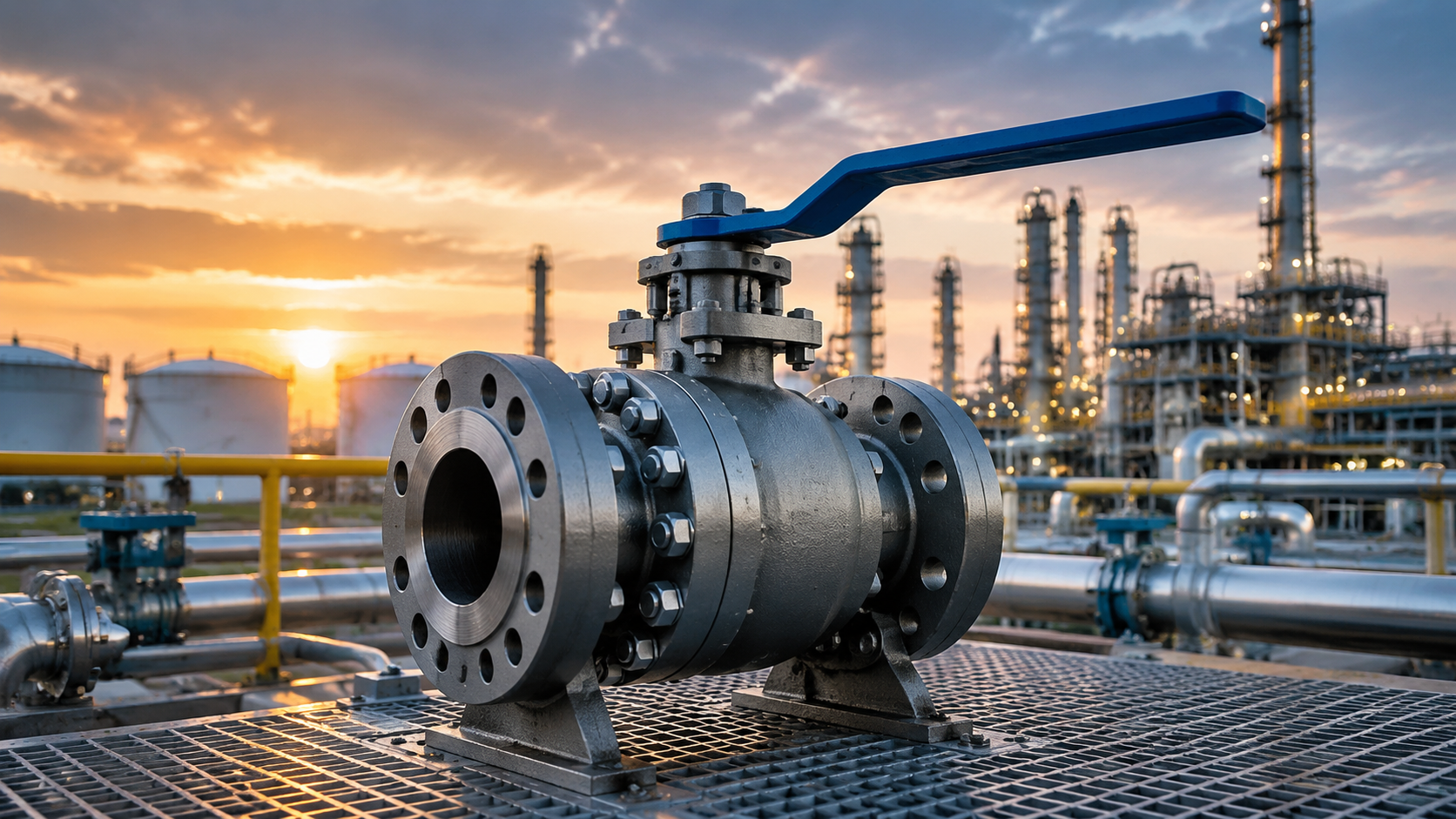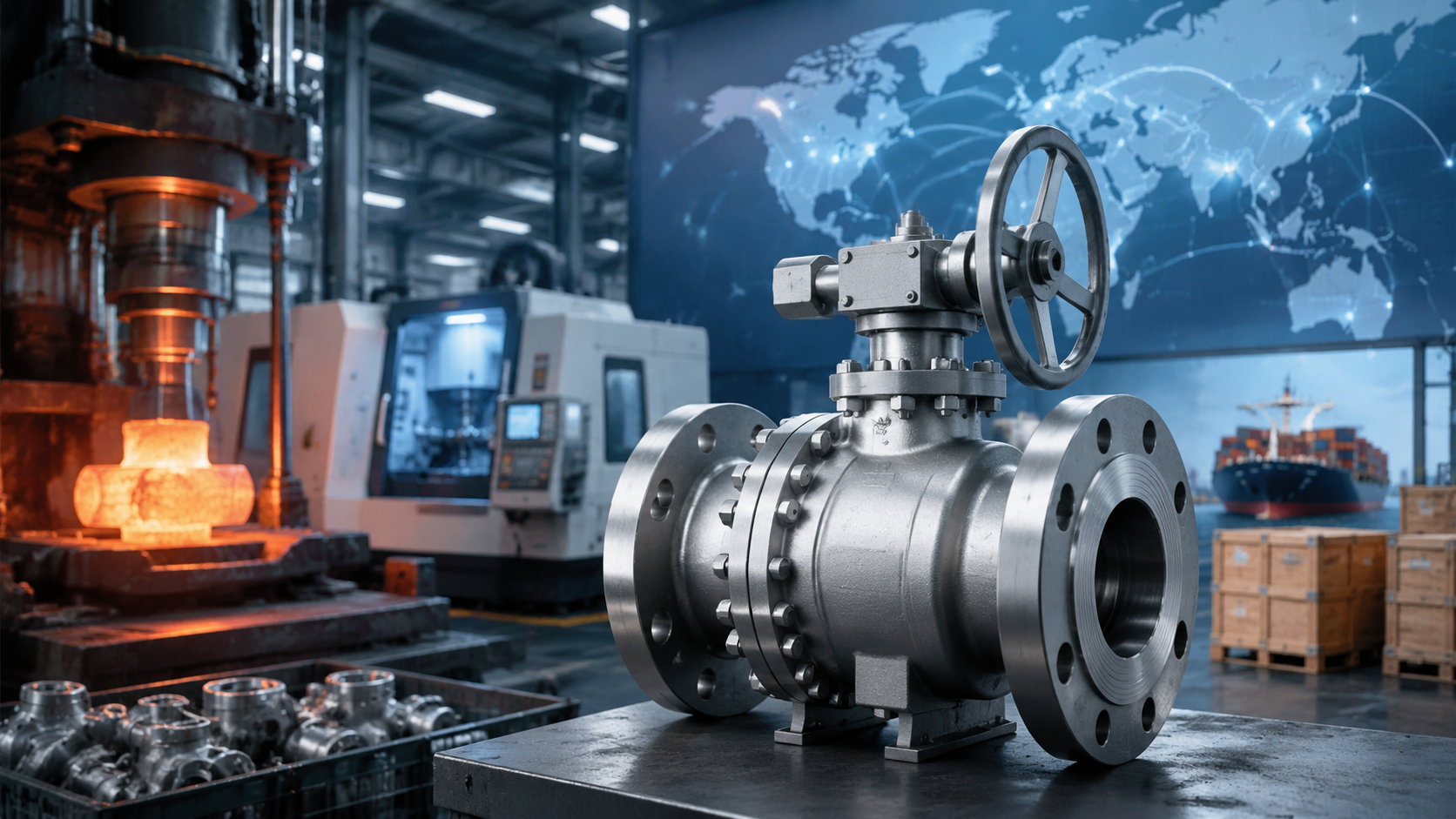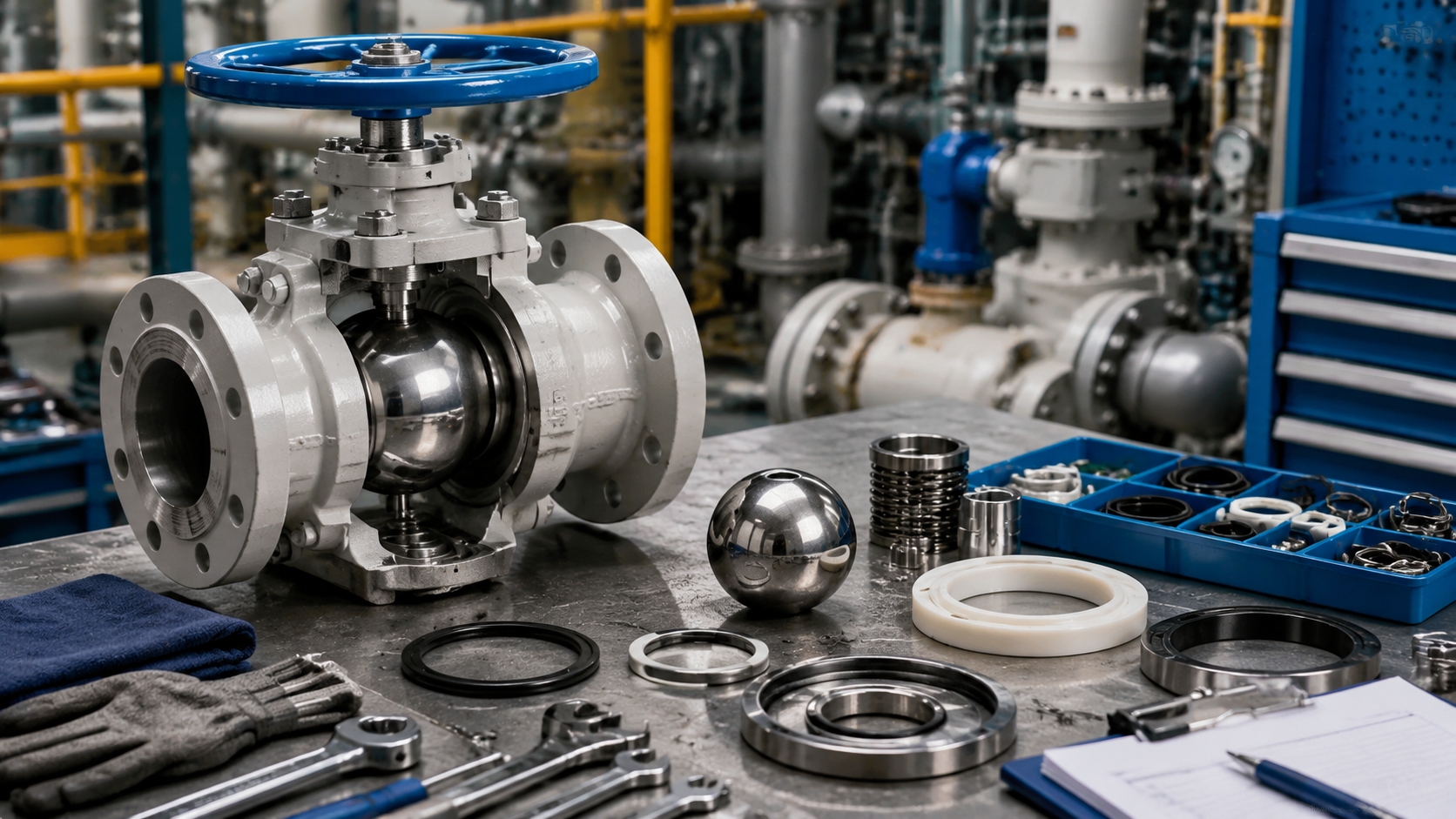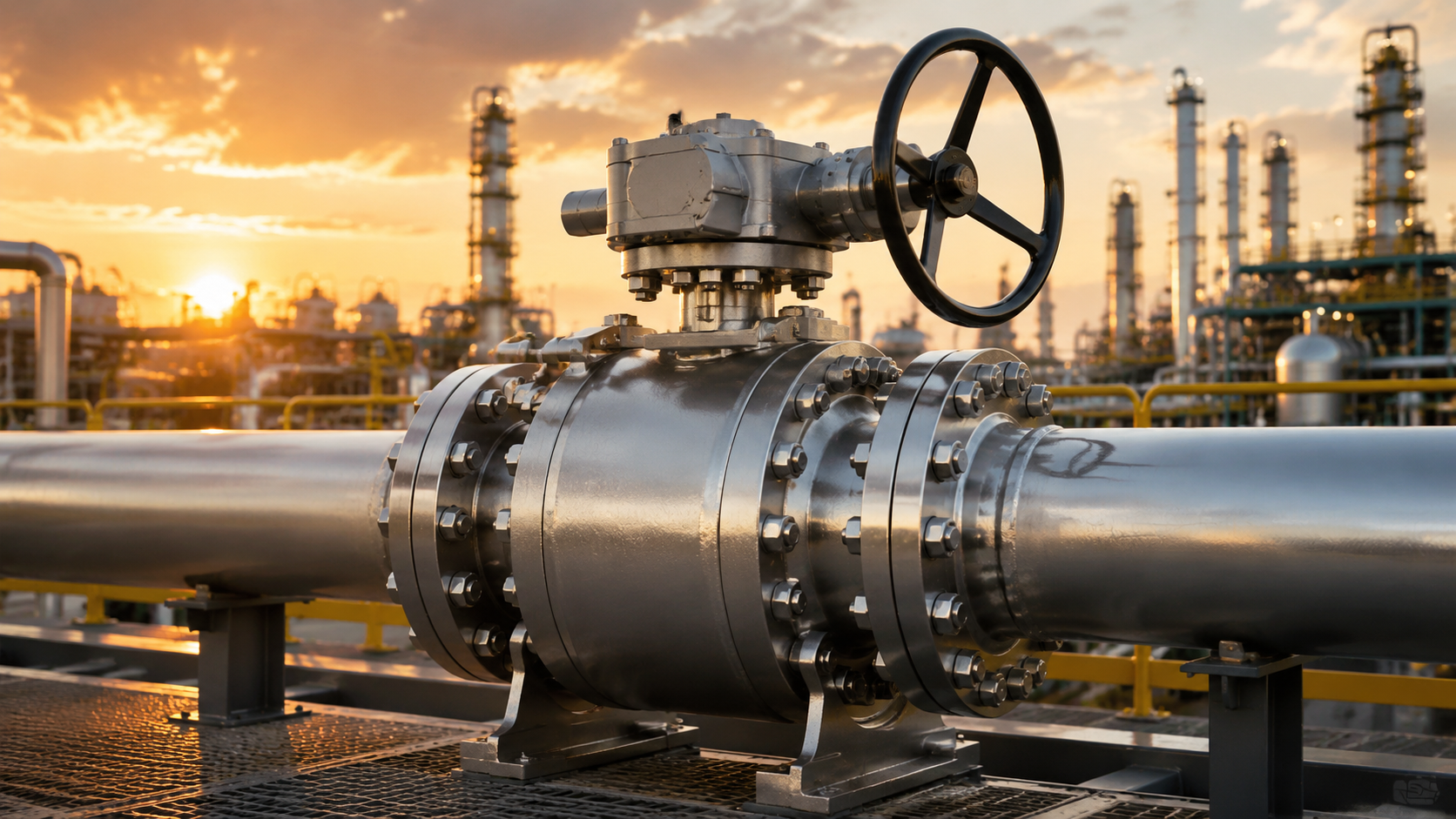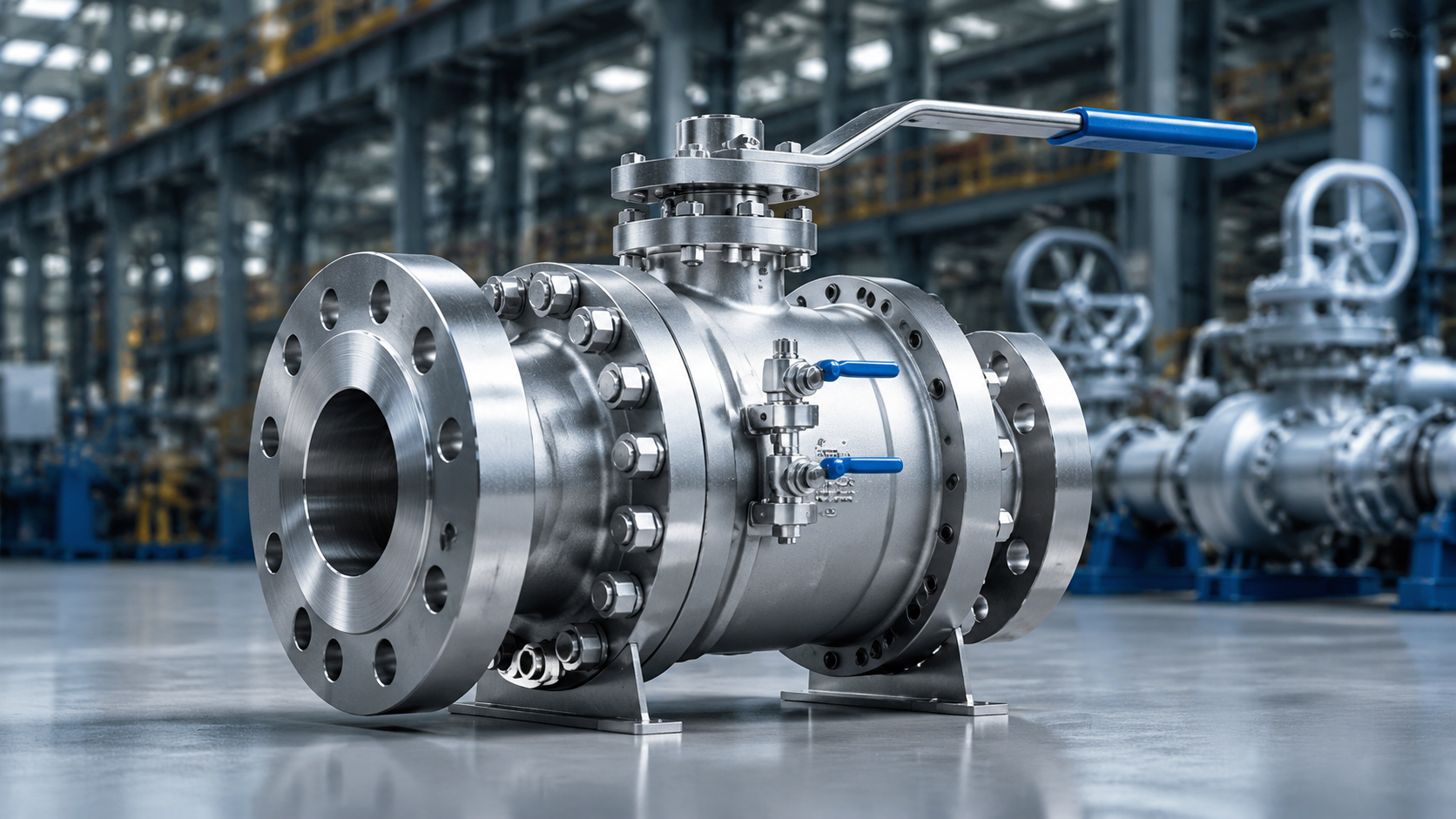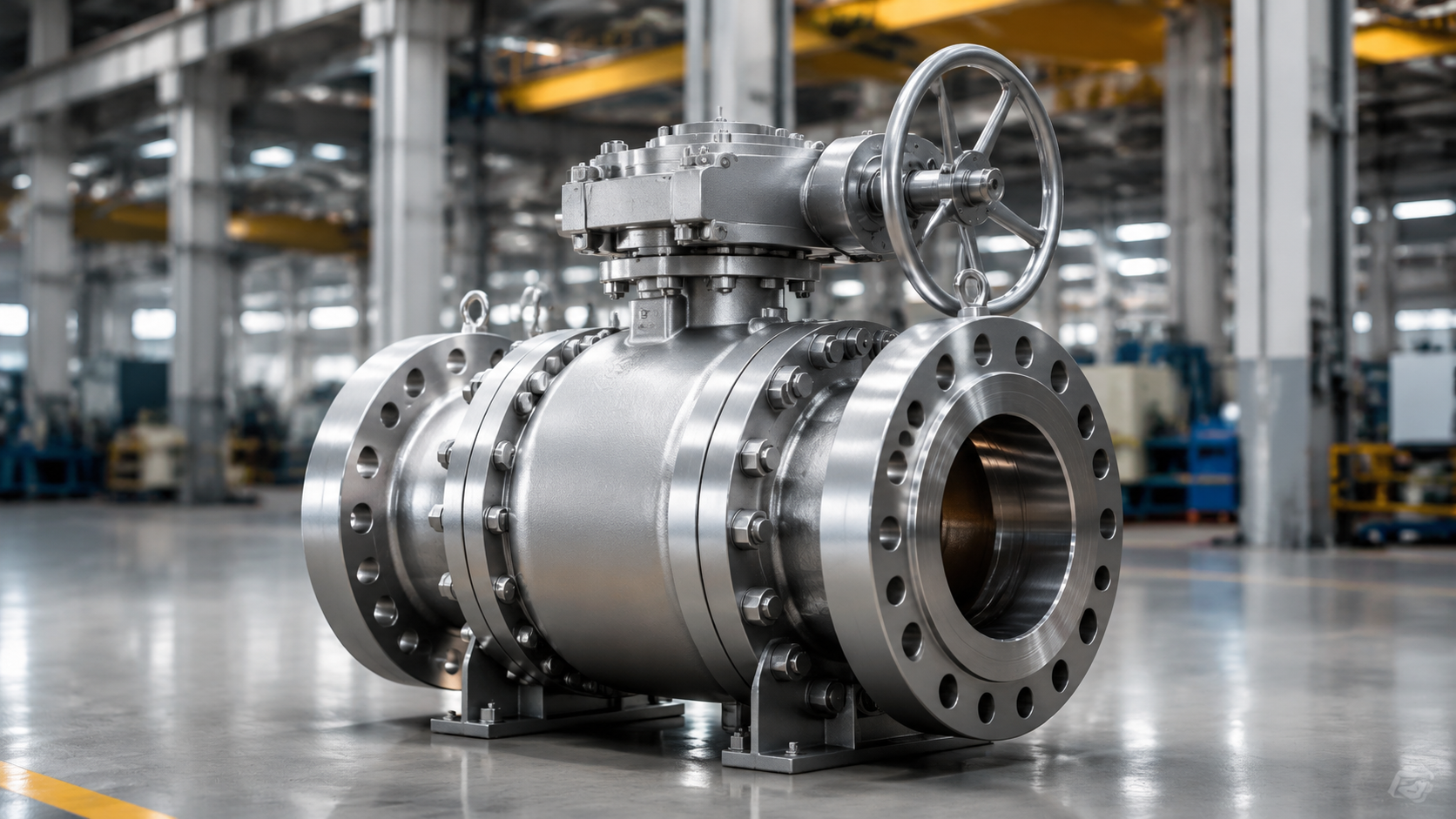
In 2019, a pipeline fire caused by ball valve seal failure at Enterprise Products resulted in approximately $2.3 million in losses. API 6D ball valves are safety-critical components in petroleum refining, long-distance natural gas transmission, and large-scale chemical plants—correct selection directly determines facility safety and economic performance.
Key Safety Standards
API 6D Compliance
API 6D is the authoritative pipeline valve standard published by the American Petroleum Institute, covering ball valves, gate valves, globe valves, and more. It sets explicit requirements for structural strength, fugitive emission control, and hydrostatic testing—all foundational to global oil and gas procurement.
- Class 150LB → 2.0MPa
- Class 300LB → 5.0MPa
- Class 600LB → 10.0MPa
- Class 1500LB → 25.0MPa
- Each unit requires hydrostatic testing
- Each unit requires leakage testing verification
- Designed per ANSI B16.34
- Verify API 6D registered certificate on procurement
According to API statistics, over 90% of subsea pipeline projects globally require API 6D certification as a mandatory entry threshold. Buyers must request the manufacturer’s API 6D product registration certificate and confirm that the model, pressure class, and specifications match actual requirements exactly.
Fire-Safe Testing
In petroleum and natural gas facilities, a fire can cause ordinary ball valve soft seals—typically PTFE—to melt and decompose above 260°C, leading to massive fluid leakage. API 607 specifically defines fire test methods for quarter-turn valves (ball valves fall into this category), exposing the valve to flames above 650°C and verifying whether its secondary seal can still prevent fluid leakage.
- API 607 defines fire test methods
- Applicable specifically to quarter-turn valves
- Test temperature exceeds 650°C
- Validates secondary seal effectiveness
- API 6FA supplements fire-safe design requirements
- PTFE rated temperature limit is 260°C
- Fire test certification is the baseline requirement
- Secondary seal functions at high temperature
In 2018, a Texas chemical park procured ball valves without fire-safe certification. Six months later, a small fire in the pipeline area caused all PTFE seats to burn through completely at high temperature, with natural gas leaking for over 40 minutes before remote shutoff. Replacing all valves and associated piping cost approximately $870,000.
Leak Protection
Valve leakage falls into two categories: body cavity leakage (fluid seeping between the ball’s two seal seats) and external leakage (fluid seeping from the stem or body joints). API 6D sets quantified requirements for both types. ISO 15848-1 classifies fugitive emissions into three grades—A, B, and C—with Grade A requiring methane leakage below 50ppm, the common standard in the oil and gas industry.
- ISO 15848-1 defines A/B/C grades
- Grade A: methane leakage below 50ppm
- Same model varies widely by operating conditions
- Request emission certificates to verify conditions
- PTFE seals risk thermal aging and cracking
- Operating near 260°C shortens seal life significantly
- Manufacturers suggest 5-year replacement intervals (adjust for high-temp)
- Actual service life shortens under high temperature
An ethylene plant discovered severely thermally aged and cracked PTFE seals during a turnaround after only 3 years of operation. The root cause: operating temperatures had been consistently near the PTFE rated limit (260°C), while the manufacturer’s recommended seal replacement interval was 5 years. High-temperature conditions require deviation from standard intervals.
Core Design Specs
Full Bore Flow
Full Bore ball valves have an inner diameter exactly matching the pipeline bore—rotating the ball 90° creates a channel identical in diameter to the pipe, essentially eliminating turbulence and pressure drop at any restriction point. Full bore ball valves have Cv values 15% to 25% higher than equivalent reduced-port designs. For an NPS 4″ Class 150 ball valve: full bore Cv ≈ 850 versus reduced bore Cv ≈ 650. At identical pressure differential, full bore delivers significantly higher flow.
- Cv value 15%~25% higher than reduced bore
- NPS 4″ full bore Cv ≈ 850
- Same-spec reduced bore Cv ≈ 650
- Full bore delivers higher flow at same pressure differential
- Pigging operations mandate full bore design
- Pig balls must pass through valve unobstructed
- NPS 4″~24″ validated by CFD flow simulation
- Pressure drop error controlled within ±3%
Trunnion Support
Trunnion mounted ball valves install fixed bearings at both the top and bottom of the ball, transferring axial and radial loads from the pipeline through the bearings directly into the valve body structure—rather than relying on seal seats to bear the load. This design prevents ball displacement under high pressure, ensures uniform seal seat loading, and significantly reduces operating torque. Trunnion designs cover NPS 2″ through NPS 48″ at pressures up to Class 2500.
- Ball experiences no displacement under high pressure
- Seal seats bear uniform pressure
- Operating torque significantly reduced
- Suitable for NPS 2″~48″
- Maximum pressure rated to Class 2500
- Floating ball valves prone to localized wear at large bore/high pressure
- North Sea platforms specify trunnion design
- Limited platform space makes failure prevention essential
In the selection of NPS 12″ Class 900 subsea ball valves for a North Sea gas processing platform in the Netherlands, trunnion mounted construction was an explicit owner requirement—because platform space is extremely limited and valve maintenance is highly difficult, minimizing fugitive emission risk during operation was the primary concern.
Body Material Choices
Body material directly determines a valve’s media resistance and service life. API 6D specifies three major material categories: carbon steel, stainless steel, and alloy steel. Carbon steel (A216 WCB/WCC) is the most commonly used body material, suitable for crude oil, natural gas, water, and air—offering excellent cost-performance for conventional media. Stainless steel (304/316) provides superior corrosion resistance, ideal for sour gas fields, marine environments, and chlorinated or mildly acidic media.
- Carbon steel A216 WCB/WCC most common
- Preferred for crude oil, natural gas, water, air
- Most prevalent in Class 150~600 applications
- Stainless 304/316 provide stronger corrosion resistance
- 316L suitable for high chloride ion conditions
- Alloy steel WC6/WC9 resist high-temperature steam
- Maintains stable mechanical properties above 400°C
- Hastelloy for extreme corrosive media
Smart Selection Tips
Oil & Gas Needs
The petroleum and natural gas industry imposes four non-negotiable requirements on ball valves: fire safety, antistatic protection, sour service capability, and fugitive emission control. Fire-Safe design ensures the secondary seal still prevents media leakage during a fire. Antistatic design grounds static electricity through a metal spring between the ball and stem, preventing ignition of flammable media. Procurement must confirm API 607 fire certification, API 6D Section 22.3 antistatic compliance, and NACE MR0175 certification—the latter is mandatory for H₂S-containing sour gas fields as the material standard for sulfide stress cracking resistance.
- Fire-Safe: secondary seal remains effective during fire
- Antistatic: grounds electricity to prevent ignition
- API 607 fire certification required
- API 6D antistatic compliance required
- NACE MR0175 mandatory for H₂S service
- Missing certifications are serious safety hazards
- Saving 12% on procurement cost led to $8M+ production loss
- Complete certification is the safety baseline
A Middle Eastern gas processing plant, under cost pressure during procurement, selected a batch of ordinary ball valves without fire-safe certification. Eight months later, seal seats gradually failed under high-pressure natural gas service, causing internal leakage and forcing a full-line shutdown for replacement. Procurement cost savings were approximately 12%, but the production suspension loss exceeded $8 million.
Pressure Ratings
Pressure class selection is the single most critical parameter in valve procurement—always select higher, and maintain adequate safety margin as a fundamental principle. Class 150LB (2.0MPa) suits urban gas medium-pressure pipeline networks; Class 300LB (5.0MPa) fits general chemical process piping; Class 600LB (10.0MPa) is common for offshore platforms; Class 1500LB (25.0MPa) serves high-pressure oil transmission and refinery hydroprocessing units. Critical note: pressure class and temperature are strongly interdependent—the allowable working pressure of the same valve decreases significantly at elevated temperature.
- Class 150LB (2.0MPa): urban gas distribution
- Class 300LB (5.0MPa): chemical process piping
- Class 600LB (10.0MPa): offshore platforms
- Class 1500LB (25.0MPa): refinery hydroprocessing
- Maintain over 25% safety margin on selection
- Upgrade one class when pressure fluctuations are severe
- Allowable working pressure drops significantly at high temperature
- Must consult ANSI B16.34 pressure-temperature rating tables
Longevity Tips
Establishing a preventive maintenance program is key to extending API 6D ball valve service life and reducing unplanned shutdowns. Inspect stem seals quarterly for any leakage signs; perform annual operating torque tests; lubricate stems and bearings every six months. For actuated valves, check pneumatic or electrical power supply pressure each quarter. Replace stem seals every five years—for high-temperature service (media above 200°C), inspect seal condition annually and do not mechanically apply standard intervals.
- Quarterly: inspect stem seals for leakage
- Annual: perform operating torque tests
- Semi-annual: lubricate stems and bearings
- Quarterly: check actuator air/electrical supply
- Every 5 years: replace stem seals
- Spare valves: periodic no-load cycling to prevent sticking
A petrochemical company found during turnaround that 3 of their 16 full bore ball valves could not be operated due to seal seats fused to the ball body after two years of inactivity. Each valve required complete disassembly and replacement. Periodic no-load cycling effectively prevents this type of seizure.
| Pressure Class | Room-Temp Rating | Typical Application | Representative Brands |
|---|---|---|---|
| Class 150LB | 2.0MPa | Urban gas medium-pressure networks, water supply | Neway, Tomoe |
| Class 300LB | 5.0MPa | Chemical process piping, power plant circulating water | Cameron, Watts |
| Class 600LB | 10.0MPa | Offshore oil and gas platforms, high-pressure gas gathering | Emerson, Metso |
| Class 1500LB | 25.0MPa | High-pressure oil pipelines, refinery hydroprocessing units | Crane, Weir |
API 6D ball valves are among the few “install once, run for twenty to thirty years” types of equipment in industrial pipeline systems. Correct selection means the facility’s entire lifecycle proceeds with virtually no maintenance, while incorrect selection may embed safety hazards or cause production losses. Before procurement, cross-reference API 6D requirements, fire certification levels, and fugitive emission specifications against your actual operating conditions to confirm pressure class, material, and structural type—the optimal solution delivers both safety and cost performance.