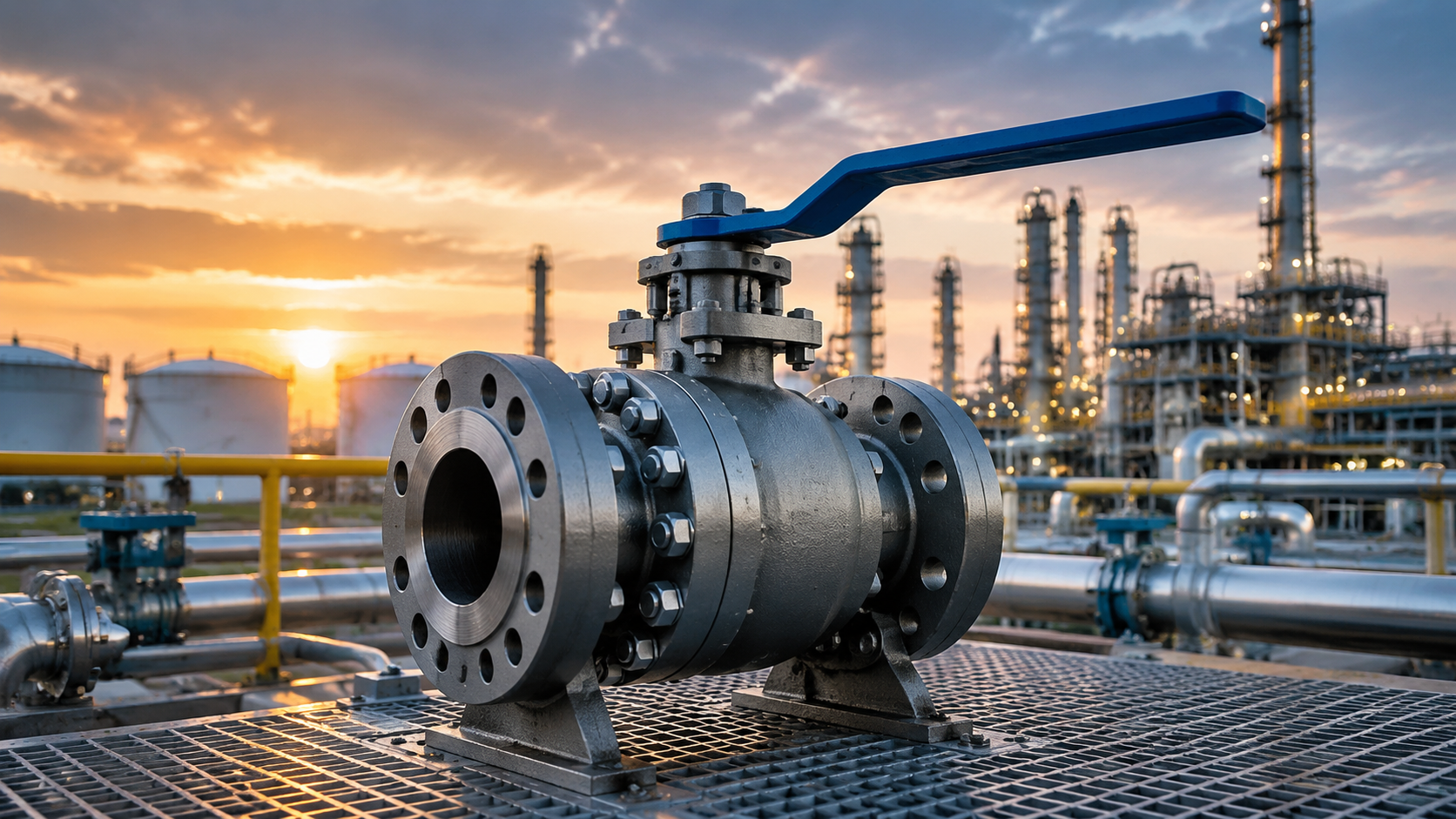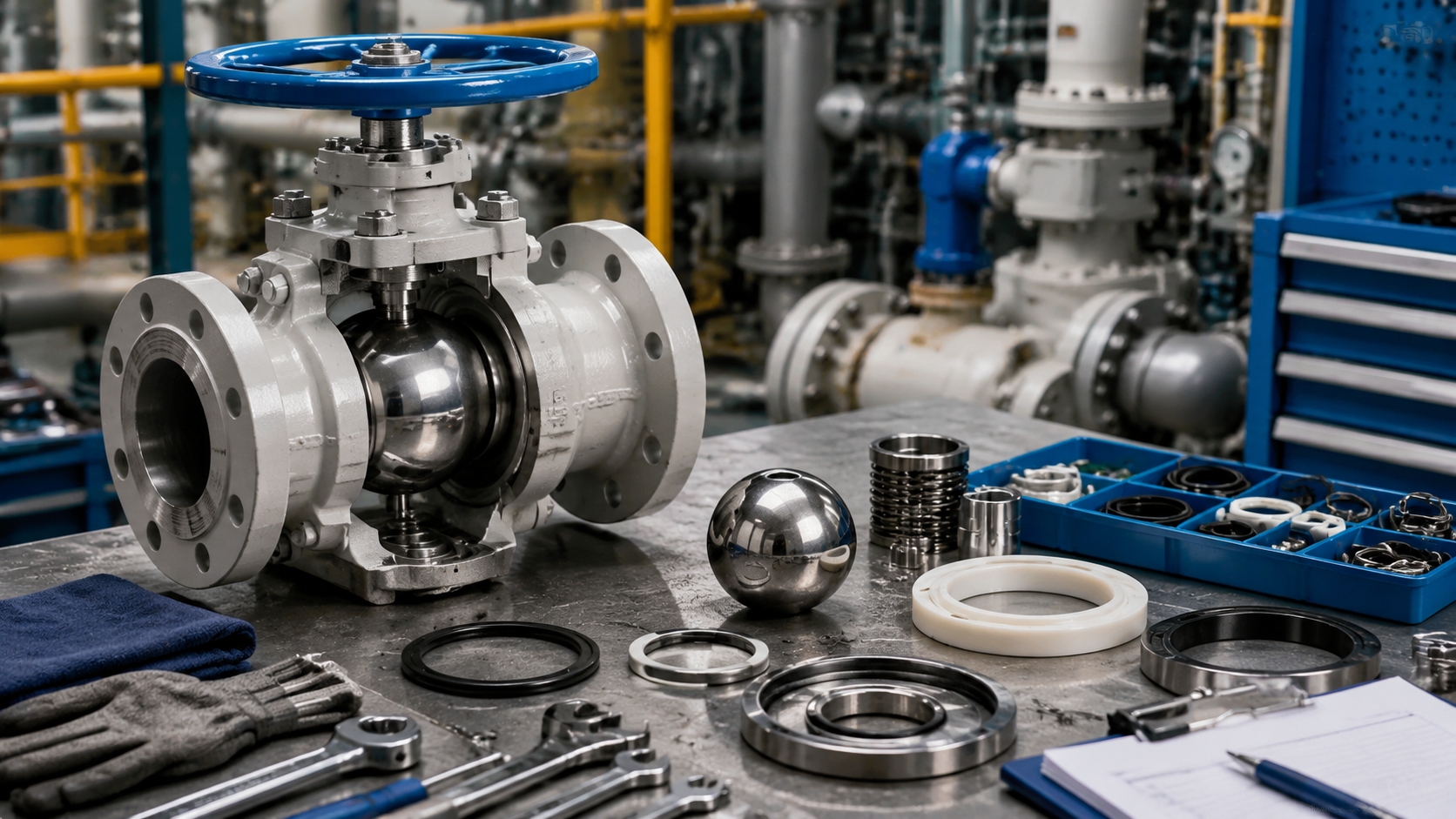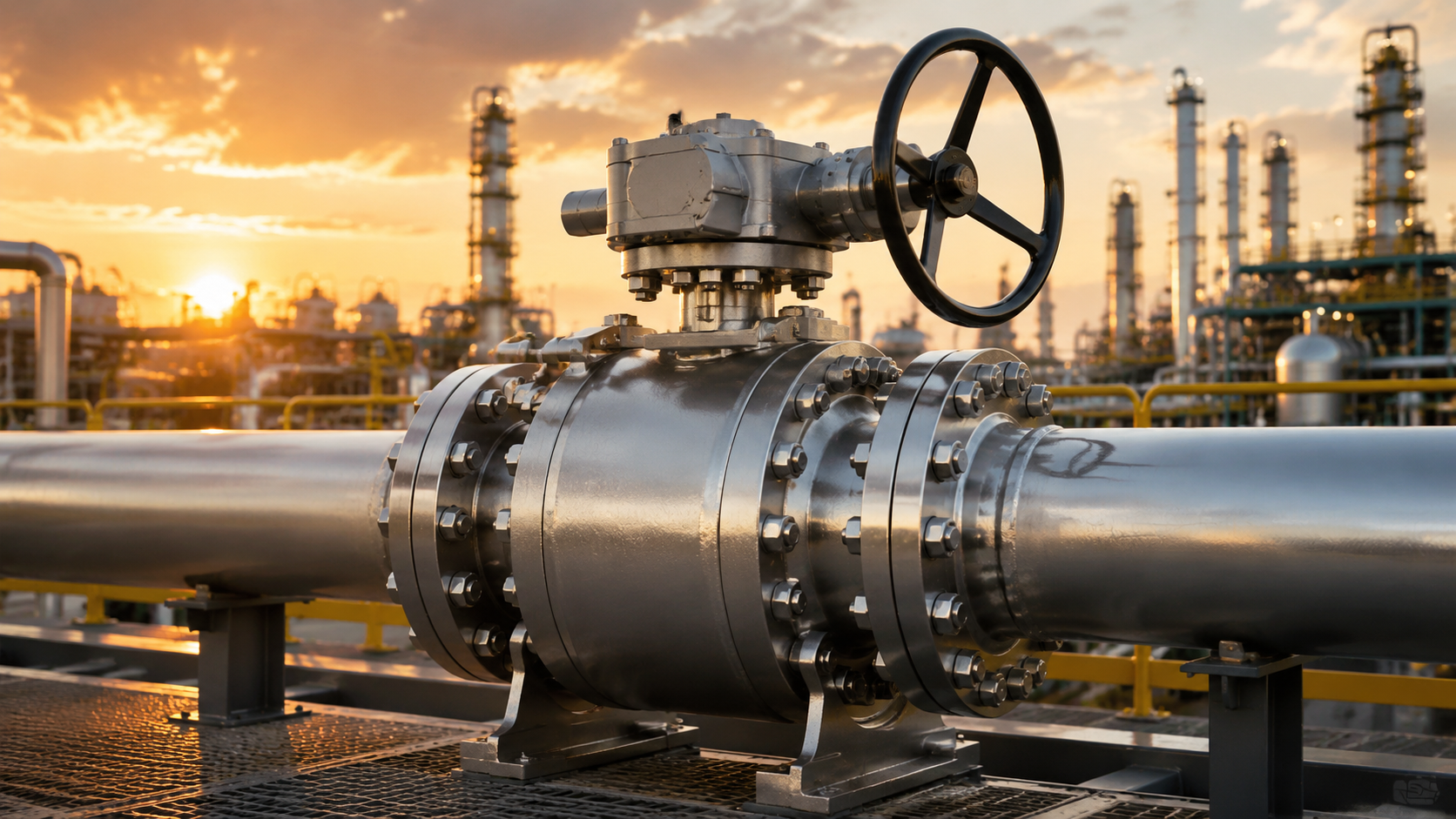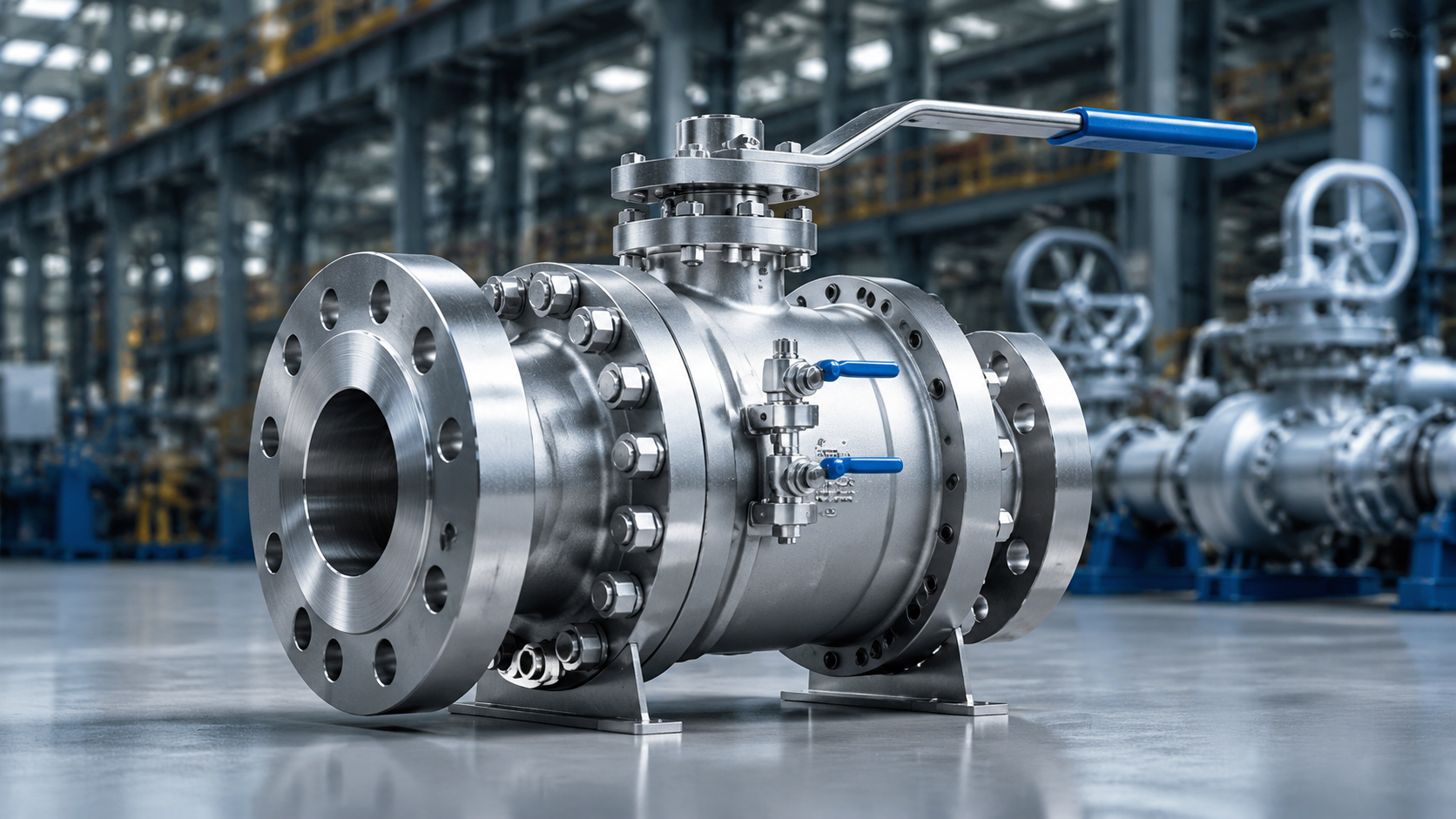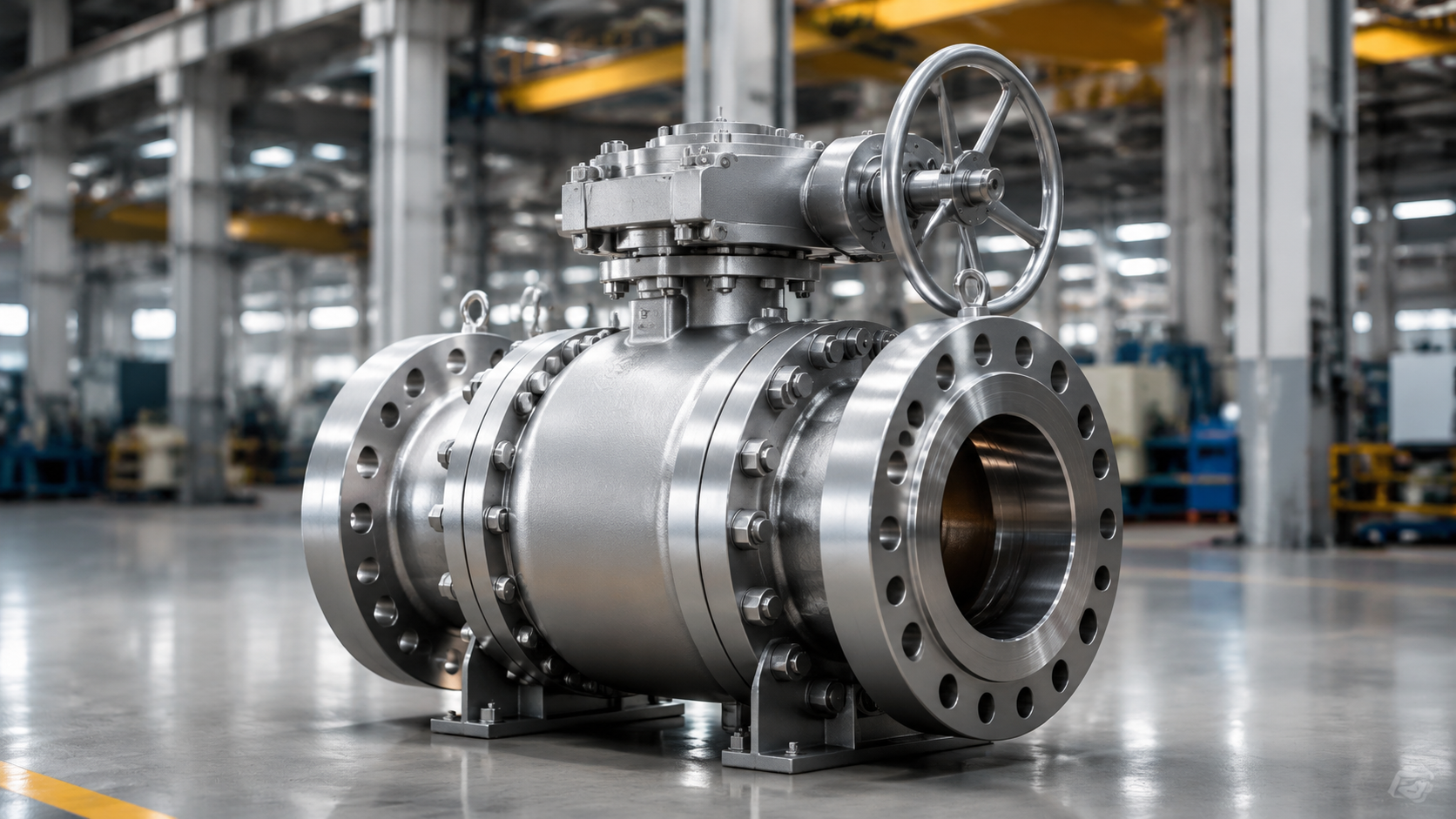
API 6D, published by the American Petroleum Institute, covers the full range of ball valves from NPS 2 to NPS 48 in design, manufacture, and testing. The 2015 revision (also adopted as ISO 14313:2015) introduced mandatory Dual Block and Bleed (DBB) and Dual Isolation and Bleed (DIB) requirements, and comprehensively revised P-T ratings for Class 150 through Class 2500 at both 260°C and 454°C. Per Chevron’s 2019 onshore pipeline technical specification, API 6D has replaced API 608 as the mandatory standard for ball valves NPS 4 and above; API 608 now applies only to manually operated small-bore gate valves with gear actuation.
Valve Pressure Ratings
Low Pressure Classes
Class 150 is the highest-inventory API 6D ball valve pressure class globally. I once consulted for a Gulf of Mexico offshore platform where the client initially demanded Class 300 throughout the facility, but after I reviewed the actual operating pressures and found the ambient-temperature seawater lines were designed at only 0.8 MPa, downrating 60% of the valves to Class 150 cut procurement costs by 22% with zero change orders at first article inspection. At 260°C the Class 150 rating is 1.0 MPa (approximately 150 psi), but at ambient temperature the allowable stress of carbon steel rises to approximately 2.0 MPa, which is why selecting by class number alone without consulting the P-T curve easily results in over-spending on procurement.
Class 300 carries a higher rating of 2.0 MPa at 260°C and maintains 5.0 MPa or more at 454°C, making it suitable for saturated steam and hot oil systems. Per ASME B16.34 pressure-temperature principles, the same Class rating corresponds to different allowable pressures at different temperatures: Class 150 is rated at approximately 1.56 MPa at 200°C and drops to approximately 1.15 MPa at 250°C. This is precisely why many buyers fall into the misconception that Class 300 is always more expensive than Class 150—in reality, selecting the correct class requires a table lookup at the design temperature, not a simple ranking by class number.
I once reviewed a city gas company’s pressure reduction station design where an engineer had used Class 150’s nominal “1.0 MPa” as the design pressure for pipe wall thickness selection, but the actual media temperature reached 65°C in summer, reducing Class 150’s allowable pressure to only 0.8 MPa when the P-T curve was consulted—both the pipe and the valve needed to be upgraded. This was caught during the design institute’s review, before issue-for-construction drawings were issued, which was fortunate; the cost of a field change after construction began would have been substantial.
- Class 150: 1.0 MPa at 260°C, approximately 2.0 MPa at ambient; approximately 1.56 MPa available at 200°C, approximately 1.15 MPa at 250°C
- Class 300: 2.0 MPa at 260°C, 5.0 MPa at 454°C; approximately 4.15 MPa available at 200°C
- Typical service: ambient-temperature seawater lines, low-pressure natural gas, city gas district stations, circulating water systems
- Size range: NPS 2 through NPS 48 fully covered; NPS 24 and above Class 150 valves require dedicated lifting plans
- Connection: Raised Face (RF) flange preferred; Ring Type Joint (RTJ) for Class 300 and above high-pressure flanges
- Body material: A216 WCB standard; A352 LC3 for low-temperature service
High Pressure Classes
Class 600 marks the boundary where API 6D ball valves enter the high-pressure category, and the selection logic differs fundamentally from low-pressure classes. I once helped an ethylene plant in China where the initial engineering design specified Class 600 throughout, and I recommended changing six NPS 24 large-diameter ball valves on the import pipeline to Class 300 on the condition that pipeline wall thickness was increased from SCH 40 to SCH 80, saving the owner nearly USD 1 million in procurement costs with the added pipe cost representing less than 30% of that savings. This is a classic tradeoff: large-bore valve prices increase exponentially with pressure class, while thickening pipe wall is comparatively inexpensive.
Class 900 and Class 1500 differ from Class 600 not just in pressure numbers but in body wall thickness (DN 200 Class 900 body wall approximately 38 millimeters versus approximately 28 millimeters for Class 600), stem diameter (Class 900 stem approximately 50 millimeters versus approximately 38 millimeters for Class 600), and bolt specifications across the board. These three factors combined mean Class 900 body weight is typically 35% to 40% heavier than Class 600, and actuator sizing must be upsized accordingly. Class 2500 is rated at approximately 42.0 MPa with batch availability limited to NPS 2 through NPS 12—larger sizes require custom fabrication with few suppliers, lead times can reach 18 months, and supplier qualification must begin at the selection stage.
- Class 600: maximum working pressure 10.0 MPa; commonly paired with worm-gear actuators; full-port design minimizes fluid resistance coefficient
- Class 900: rated approximately 15.4 MPa (at 260°C); selected for high-pressure natural gas pipeline header stations and compressor discharge
- Class 1500: pressure approximately 26.0 MPa; common at water injection wellhead installations and high-pressure gas injection platforms
- Class 2500: rated approximately 42.0 MPa; batch availability NPS 2 through NPS 12 only; NPS 16 and above requires custom fabrication, 18-month lead times possible
- High-pressure valves must include anti-blowout stem as a mandatory feature per API 6D Section 7.5
- Actuator sizing: Class 900 and above valve torque is typically 2 to 3 times Class 600, requiring individual torque calculations
Baker Hughes 2024 technical data shows that among Class 900 and above ball valve failures, stem blowout accounts for 18% of annual incidents. Once such a failure occurs, repair costs run 4 to 6 times the valve’s original purchase price plus associated production losses. During selection I always verify anti-blowout certification documentation, including stem forging tensile test reports and anti-blowout step dimension inspection records.
Safe Working Limits
API 6D Section 7 mandates the P-T (pressure-temperature) deration curve as the single most critical document for safe working limits. API 6D requires every ball valve to be supplied with the manufacturer’s P-T curve, which graphs the Maximum Allowable Working Pressure (MAWP) at each temperature for each pressure class. I have found at multiple project sites that many engineers only archive the PDF and never verify actual operating pressure at the design temperature—this was identified as one of the contributing factors in a 2018 chemical plant explosion investigation where the operating temperature exceeded design temperature by 12°C while the system continued running at what was considered “normal pressure.”
As temperature rises, the allowable stress of carbon steel body material decreases significantly: A216 WCB allowable stress at ambient is approximately 138 MPa, dropping to approximately 117 MPa at 200°C (approximately 15% reduction), approximately 103 MPa at 300°C (approximately 25% reduction), and only approximately 79 MPa at 400°C (over 40% reduction). Design temperature P-T curves must be used for verification—the practice of applying ambient-temperature values under-designs high-temperature service. P-T curves are typically shown as piecewise linear graphs with different starting points and slopes for each pressure class.
- Carbon steel (A216 WCB): recommended service temperature -29°C to 425°C; oxidation and creep effects require consideration above 350°C
- Stainless steel (A351 CF8M): suitable from -196°C to 550°C; preferred material for LNG terminals
- Cryogenic service: below -50°C requires impact testing (A352 LC3 impact energy ≥18J at -46°C)
- Dual Block and Bleed (DBB): bleed port between two seats allows cavity pressure to be vented to zero before maintenance
- Dual Isolation and Bleed (DIB): bidirectional isolation function, defined in API 6D Annex D can achieve bidirectional zero-leakage isolation
- API 598 shell test: 1.5 times rated pressure, 30-second hold with no visible leakage; seat test at 1.1 times rated pressure
I typically advise owners to perform a spot leak test on a randomly selected ball valve during incoming inspection: pressurize to 80% of rated pressure with nitrogen, hold for 15 minutes, and check with soap solution. This costs less than USD 70 but catches transport damage or improper packaging that could otherwise lead tofield leakage. Per NACE MR0175, sour service environments (H₂S partial pressure exceeding 0.34 kPa) require body materials with NACE MR0175/ISO 15156 compliance certificates; A216 WCB requires NACE certification with H₂S partial pressure above 3.5 kPa also requiring a maximum Brinell hardness limit of HB 235.
Common End Connections
Standard Flanged Ends
Flanged ends are the most common terminal connection for API 6D ball valves, accounting for approximately 70% of global ball valve orders according to Emerson’s 2022 market report. ASME B16.5 defines the complete RF (Raised Face) flange dimension tables from NPS 1/2 through NPS 24, with pressure-temperature ratings covering Class 150 through Class 2500. The primary advantage of flanged ball valves is site disassemblability—maintenance requires only bolt loosening to remove the valve without cutting the pipe—a feature that makes flanged ends the preferred choice at midstream pipeline stations such as compressor stations and metering stations.
RTJ (Ring Type Joint) flanges are used for Class 300 and above where the metal ring gasket (oval R-type or octagonal RX/BX-type) produces elastic self-energizing compression under high pressure, delivering superior seal reliability over RF flat gaskets. The tradeoff is that the ring gasket must be replaced at every maintenance interval, approximately doubling the cost per maintenance event. RTJ flange groove machining precision requirements are extremely tight (Ra ≤3.2 μm), and any impact damage in the field can result in repair costs exceeding the valve’s own value.
The NPS 24 Class 300 flange has an outside diameter of approximately 1.52 meters with 24 bolt holes, individual bolt preload approximately 150 kN, and total bolt preload approximately 3.6 MN—onsite lifting of such a flange requires a dedicated lifting plan, otherwise misalignment of bolt holes and forced correction with pry bars will damage the flange sealing face. I recall a project where exactly this occurred, resulting in a 12-hour production shutdown.
- RF (Raised Face): smooth or concentric serrated (wiper grooves) gasket seating surface; preferred for Class 150 through Class 600; RF flange seal reliability decreases at Class 900 and above
- RTJ (Ring Type Joint): metal ring seal; selected for Class 300 through Class 1500 high-pressure service; oval R-ring is non-self-energizing, octagonal RX-ring is pressure self-energizing
- Flange face finish: ASME B16.5 requires RF surface roughness Ra 3.2 μm to 6.3 μm; RTJ groove Ra ≤3.2 μm
- Gasket selection: Class 150 uses non-metallic flat gaskets such as Spiral Wound; Class 300 and above uses Spiral Wound with SS304/316 winding
- Bolt specifications: ASME B16.5 Appendix A provides flange bolting dimensions and material requirements
- Post-pressure-test: RF flange gasket compression directly affects seal service life; over-compression causes gasket extrusion while under-compression causes leakage
Flange companion components must match the valve body pressure class. This is something I emphasize in every design review. What happens when Class 600 flanges are used with Class 900 bolts? The bolts are too long, threads protrude beyond the nut after tightening, effective thread engagement is insufficient, initial preload is achieved but thermal cycling causes loosening; conversely, bolts that are too short simply cannot be torqued to specification. Physical size similarity does not mean interchangeability.
Butt Weld Ends
NPS 4 and above, Class 600 and above: butt weld (BW) ends eliminate flange sealing surfaces and are the preferred choice for high-pressure large-diameter applications, being the near-exclusive choice at critical locations such as natural gas long-distance pipeline header stations and compressor discharges. ASME B16.25 defines the end bevel geometry: the common V-groove has a 60-degree bevel angle ±5 degrees, a root gap of 1.6 to 3.2 millimeters, and a land thickness of approximately 1.6 millimeters ±0.8 millimeters—all of which must be individually verified in the Welding Procedure Specification (WPS) during site welding qualification, as deviation outside these ranges directly affects root weld quality.
I once observed an LNG terminal rework case where an NPS 20 BW ball valve suffered incomplete root fusion due to a 3-degree bevel angle deviation, discovered only during X-ray inspection. The combined cost of non-destructive testing (NDT) and weld repair exceeded USD 200,000. More insidious is the ID step problem: when the inner diameters on either side of a butt weld differ by more than 3 millimeters, a step is created at the weld joint, causing local fluid acceleration, erosion-corrosion, and noise—and long-term operation may eventually trigger erosion-induced failure.
For material matching, A216 WCB body typically pairs with A106 Grade B pipe for butt weld service—both have similar Carbon Equivalent (Ceq approximately 0.40) and weldability, preheating is not required for welding. However, if the body material is A217 WC6 (1.25Cr-0.5Mo) or a higher-grade alloy steel, preheating to 150°C to 250°C is mandatory before welding, and Post Weld Heat Treatment (PWHT) is required afterward with temperature and hold time per ASME B31.3 Chapter V requirements.
- V-groove bevel: 60°±5° bevel angle, root gap 1.6 to 3.2 millimeters, land 1.6 millimeters ±0.8 millimeters
- Material matching: A216 WCB to A106 Gr.B (Ceq approximately 0.40) requires no preheat; A217 WC6 requires preheat 200°C±25°C
- Weld quality: ASME B31.3 Chapter IX imposes impact toughness requirements on high-pressure pipeline welds (minimum 21J at 0°C)
- Inner diameter alignment: ID mismatch on either side ≤3 millimeters; exceeding this requires an internal transition piece or overlay machining
- PWHT requirement: mandatory when body wall thickness exceeds 30 millimeters or when material alloy content exceeds certain thresholds
- Internal oxidation: carbon steel BW ball valve internals develop oxide scale during high-temperature service; designing with adequate bore margin is recommended
An offshore floating production unit (FPSO) installation revealed that an NPS 16 BW ball valve had a 6-millimeter inner diameter mismatch with the pipeline, exceeding the allowable step height, which was resolved with a weld-in liner ring but delayed the project by three months. Verifying pipeline and valve ID matching at the design stage is the only way to prevent such issues—discovering this at site is already too late.
RTJ Joint Types
API 6D requires RTJ ball valves to carry R, RX, or BX ring numbers, with different sealing principles and applicable pressure classes for each: R-type is non-self-energizing for Class 300 to 1500, RX self-energizes under pressure and is the preferred choice for high-pressure natural gas, and BX is restricted to Class 5000 and above—the three types are not interchangeable and mixing them results in 100% leakage. The RTJ (Ring Type Joint) seal relies on precision mating between the metal ring gasket and the groove to create line contact (line contact), with metal elastic deformation achieving self-energizing sealing under high pressure.
Oval R-type or octagonal RX/BX ring gaskets for non-self-energizing applications rely on flange bolt preload for sealing effectiveness, and installation requires a dedicated ring number gauge to verify groove dimensions; ring gaskets can be reused after visual inspection following each disassembly. RX-type is pressure-actuated self-energizing—the ring has pressure-equalizing holes, and seal performance improves as internal pressure increases, making it the preferred choice for high-pressure natural gas pipelines. BX-type is reserved for Class 5000 and above ultra-high-pressure service, with unit prices reaching hundreds of dollars per gasket, and is not interchangeable with R or RX types.
I once helped troubleshoot a refinery catalytic cracking unit ball valve leak in an area where H₂S concentration reached 2000 ppm, and found the ring gasket material was incorrect: the design specified Inconel 625 but the installed ring was carbon steel, with the corrosion rate difference exceeding 20 times in the same service conditions. In sour environments, the ring gasket material is as critical as the body material, and the selection list must verify ring gasket grade item by item—”RTJ” as a two-letter abbreviation is not sufficient.
- R-type ring (oval/octagonal): non-self-energizing; for Class 300 to Class 1500 conventional high pressure; oval R-ring can be inverted for installation, RX-ring has directional preference
- RX-type ring: pressure self-energizing; ring has pressure-equalizing holes; preferred choice for high-pressure natural gas
- BX-type ring: ultra-high-pressure only (Class 5000+); octagonal cross-section; cannot substitute for R or RX types; site stock unavailable; ordering lead time 8 to 16 weeks
- Ring groove machining: ASME B16.20 specifies groove dimensional tolerances ±0.05 millimeters, surface roughness ≤3.2 μm Ra
- Installation orientation: oval R-ring has directional marking (seal face facing up); octagonal RX/BX ring has face orientation requirement; incorrect assembly results in 100% leakage
- Maintenance note: inspect groove for scratches, corrosion, or deformation after each disassembly; ring gasket surface hardness ≥HB 40 requires replacement
Per ASME B16.20, RTJ flange groove surface roughness exceeding specifications significantly reduces seal service life, potentially dropping from the target 5-year service life to 18 months. During maintenance I recommend using a dedicated Ring Joint Gasket Gauge to verify groove geometry rather than relying on visual inspection alone—this is explicitly covered in API 6D’s informative annexes but treated as an optional practice in many domestic projects, which it should not be.
Valve Build Materials
Carbon Steel Bodies
ASTM A216 WCB (cast steel) is the most widely used API 6D ball valve body material, accounting for approximately 65% of global API 6D ball valve orders. WCB has a carbon content of 0.25% Max, manganese content 0.70-1.00%, tensile strength 485-655 MPa, and yield strength 250 MPa Min, suitable for the vast majority of oil and gas service from -29°C to 425°C. ASTM A105 (forged steel) is reserved for small-diameter high-pressure valves (typically NPS 4 and below) or forged connection ends that require better density than castings; in ultra-high-pressure service (such as Class 2500) it is the more reliable choice.
During my design reviews I have found projects sometimes confusing A216 WCC with WCB—these materials look similar and have similar carbon content (WCB: C≤0.25%, WCC: C 0.25-0.30%), but WCC has a higher carbon content ceiling and slightly inferior weldability, requiring preheat approximately 25°C higher than WCB before welding. Clear specification at purchase is necessary to avoid cracking from insufficient preheat in the field. For API 6D ball valves Class 150 through Class 300, A216 WCB offers the widest supplier base with typical lead times of 8 to 12 weeks; special materials or non-standard specifications can require 24 to 36 weeks.
LNG service at minus 162°C absolutely requires A352 LC3 (impact toughness at -196°C) or higher-grade materials—ordinary WCB transitions from ductile to brittle fracture mode at LNG temperatures, and the industry has hard lessons here. In 2016, an LNG unloading arm ball valve suffered brittle fracture after three years of service because the body material was A216 WCB rather than A352 LC3; the accident resulted in major leakage and all similar valves at the facility were subsequently replaced.
- ASTM A216 WCB: carbon steel casting; chemistry C≤0.25%, Mn 0.70-1.00%, tensile strength 485-655 MPa; rated -29°C to 425°C
- ASTM A105: carbon steel forging; tensile strength 485 MPa, yield strength 250 MPa; directly weldable; preferred for NPS 4 and below Class 600 and above
- ASTM A216 WCC: carbon content 0.25-0.30%; preheat temperature approximately 25°C higher than WCB; must be clearly distinguished at purchase
- LNG cryogenic service: must use A352 LC3 (impact energy ≥18J at -196°C); WCB and WCC are prohibited
- Sour service: H₂S partial pressure >0.34 kPa requires NACE MR0175 compliance, maximum Brinell hardness HB 235; NACE certification mandatory
- Cr-Mo alloy steel: A217 WC6 (1.25Cr-0.5Mo) used for high-temperature hydrogen resistance such as in hydrocracker units
A 2016 NACE case illustrates this clearly: a natural gas pipeline ball valve body developed stress corrosion cracking after five years of service, and the investigation concluded the body material was standard WCB without NACE certification in a sour H₂S environment where the H₂S partial pressure exceeded 0.34 kPa. Even though other chemical and physical properties were acceptable, the maximum allowable hardness of HB 235 for sour service was not met, and the SCC risk was real. Confirming NACE MR0175 compliance in the procurement technical specification is now standard practice on international projects.
Stainless Steel Parts
ASTM A182 F316 or A351 CF8M: the ball and stem inside a ball valve are the two most critical internal components, directly subjected to media erosion and sealing face friction. ASTM A182 F316 (forged) or A351 CF8M (cast) is the most common trim material—the 316 series adds 2% to 3% molybdenum compared to 304, which dramatically improves pitting resistance in chloride-containing water. The Pitting Resistance Equivalent Number (PREN = %Cr + 3.3×%Mo + 16×%N) for F316 is approximately 24-26, while F304 is only approximately 18, which explains why seawater cooling systems must use 316 rather than 304.
The anti-blowout stem design is mandatory under API 6D. The common construction forges a tapered step at the upper stem end combined with a threaded gland to lock it in place; alternatively, a blowout-prevention snap ring is installed between the stem and the bonnet. When cavity pressure abnormally rises, a standard stem can be pushed out of the bonnet by pressure, causing massive media release—anti-blowout design prevents this failure mode through a mechanical stop structure.
API 6D also requires the body-to-stem electrical resistance to be ≤10 ohms to prevent static charge accumulation that could ignite fires. 316 stainless steel conductivity is approximately 1/6 that of A216 WCB, and for high-pressure flammable media (such as natural gas), the body-to-stem continuity must be tested periodically. I once handled a case where a plant ball valve measured 40 ohms between body and stem—ten times the API 6D limit—caused by deteriorated sealing washers that impaired contact; replacing the washers restored compliance.
- ASTM A182 F316: 316 stainless steel forging; primary material for ball and stem; PREN approximately 24-26, pitting resistance superior to 304
- ASTM A351 CF8M: 316 stainless steel casting; can substitute for F316 forgings at approximately 20% lower cost; slightly lower density
- Molybdenum content: F316 contains approximately 2.00-3.00% Mo; key to chloride pitting resistance; counterfeit 316 has virtually zero molybdenum
- Surface treatment: hard chrome plating 0.05-0.08 millimeters on ball, hardness HRC ≥65, surface roughness Ra ≤0.8 μm
- Anti-static: API 6D mandates body-to-stem resistance ≤10 ohms; measured with micro-ohmmeter during annual maintenance
- Stem packing: graphite packing for high temperature (>200°C); PTFE packing for low temperature (<150°C)
I once handled a complaint about an NPS 6316 ball valve that developed pitting perforation after only two years in seawater service. Material analysis revealed counterfeit 316 with molybdenum content of only 0.02%—essentially zero. Such issues are not uncommon through informal supplier channels. Mill Sheets must accompany the shipment with heat numbers (L heat No.) noted. I recommend that purchase contracts explicitly state that nonconforming materials may be rejected and that the owner reserves the right to conduct independent third-party testing on samples.
Inner Seat Choices
Soft seats (PTFE/RTFE) in Class 150 to Class 300 service at ambient temperature with clean media (no solids, clean oil/gas/water) perform excellently. PTFE friction coefficient is only 0.04, one-tenth that of metal, resulting in switch torque 40% to 50% lower than equivalent metal seats, which means actuator sizing can be one size smaller. However above 200°C PTFE begins to soften (softening point approximately 327°C), and above 260°C in continuous service it undergoes creep deformation or even extrusion—this is precisely the most common cause of ball valve leakage in steam service.
RTFE (20% glass-fiber-filled PTFE) raises the maximum service temperature to 230°C with approximately 30% higher hardness and improved resistance to abrasive particle scratching, at the cost of approximately 30% higher friction coefficient. A second limitation of soft seats is particle tolerance: if the media contains solid particles (such as sandy natural gas or slurry), soft seats will have their sealing faces scratched after just a few cycles, creating permanent leak pathways.
Metal seats perform the opposite way: Stellite 6 overlay on the seat surface operates reliably above 400°C in high-temperature, high-pressure, and high-solids media, but switch torque is 2 to 3 times that of equivalent soft seats, requiring upsized actuator selection. More critically, the initial seating stress of metal seats is 3 to 5 times higher than soft seats, potentially making them less effective at low differential pressure—this is a commonly overlooked tradeoff point.
- PTFE seat: maximum 200°C (intermittent 230°C); friction coefficient 0.04; economical; not particle-resistant; extrusion failure above 260°C continuous
- RTFE (filled PTFE): 20% glass fiber filler; maximum 230°C; approximately 30% harder; cost approximately 1.5 times PTFE
- Metal seat (Stellite overlay): service above 400°C; particle-resistant; switch torque 2 to 3 times soft seat; requires upsized actuator
- Lip seal: used for blowdown, low-pressure steam, wastewater treatment; simplest construction; lowest cost; limited sealing pressure
- PEEK seat: high-performance engineering plastic; maximum 250°C; organic solvent resistant; direct upgrade from PTFE
- API 607 fire-safe design: soft seats must pass API 607 fire test, maintaining basic sealing function under external flame exposure
According to Emerson 2023 technical data, in 1.0 MPa steam service PTFE seat average service life is approximately 18 months while Stellite metal seats exceed 60 months, yet PTFE initial cost is approximately one-third that of metal seats. Over a 10-year operating period, if PTFE seats are replaced every 18 months, the cumulative cost of valve disassembly, labor, and shutdown per replacement event may exceed the one-time premium of metal seats. A 10-year Life Cycle Cost (LCC) analysis at the selection stage is more scientific than simply comparing procurement prices.
The key to API 6D ball valve selection is balancing four constraints simultaneously: pressure class determines body wall thickness and connection type; media corrosiveness drives material grade and seat selection; temperature range sets the upper limit for material performance and seals; and project budget determines whether premium alloys or economical materials are appropriate. LNG projects tend toward stainless steel bodies to ensure 30-year service life, while short-cycle gas projects may select carbon steel to control first cost. Putting all four dimensions on the table at the same time during selection is the only reliable way to reduce specification errors.
| Dimension | Class 150 / RF Flange | Class 900 / RTJ Flange | Class 1500 / BW Weld |
|---|---|---|---|
| Rated Pressure at 260°C | 1.0 MPa | 15.4 MPa | 26.0 MPa |
| Body Material | A216 WCB | A216 WCB | A105 forged steel |
| Typical Size Range | NPS 4 to NPS 24 | NPS 2 to NPS 12 | NPS 2 to NPS 8 |
| Seat Material | PTFE / RTFE | Metal seat | Stellite overlay |
| Typical Media | Natural gas, water, low-temperature oil | HP natural gas, refining | Water injection wellhead, HP gas injection |
| Corrosion Protection | Carbon steel at ambient temperature | 316 stainless internals | Fully alloyed |
Per ASME B16.34, API 6D ball valve class pressure ratings at 260°C (carbon steel base temperature) and 454°C (alloy steel base temperature) differ, and selection must use the curve corresponding to the design temperature rather than the ambient-temperature nominal value.
Baker Hughes 2024 technical data: stem blowout accounts for 18% of annual Class 900 and above ball valve failures, and anti-blowout stem design is mandatory per API 6D Section 7.5, requiring verification of stem forging tensile test reports and anti-blowout step dimensional inspection records.
NACE MR0175 specifies maximum allowable Brinell hardness of HB 235 for body materials in H₂S environments where H₂S partial pressure exceeds 0.34 kPa, and A216 WCB requires NACE certification for sour service; non-NACE-certified WCB in sour oil and gas fields presents SCC risk.
Emerson 2023 technical white paper: in 1.0 MPa steam service, PTFE seat average life is 18 months versus 60+ months for Stellite metal seats; over a 10-year operating period, total Life Cycle Cost (LCC) of metal seats typically falls below cumulative soft seat replacement costs.