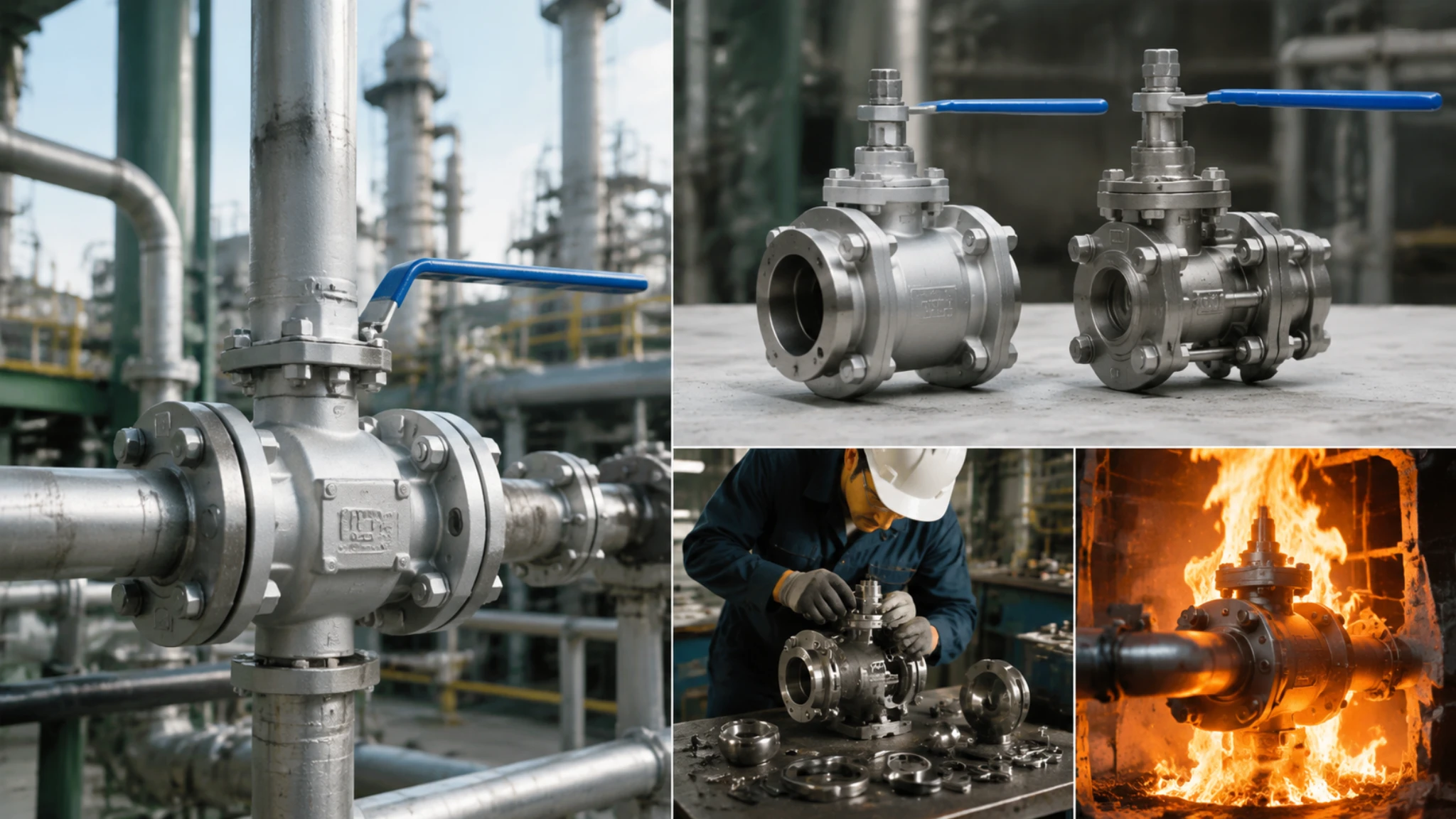
Cast valve body cost is lower by about 20%-30%, suitable for complex structures, but easy to have blowholes, strength slightly lower;
Forged valve body density is high, compressive strength increases by about 15%-25%, life is longer, but cost is high.
When purchasing should check flaw detection report, pressure test records, and verify material certificate.
manufacturing cost
Cast Valve Body
Heat electric furnace to above 1600 degrees Celsius, power expenditure per ton of molten steel maintains at around 900 kilowatt-hours, this is the start of cast valve body cost calculation. For ASTM A216 WCB this kind of carbon steel, raw material market price per ton fluctuates around 1100 dollars, material utilization rate can stabilize between 92% to 95%.
Cast formed blank and final finished product size are very close, machining allowance left for CNC machine tools usually only 3mm to 5mm. This near-net forming characteristic saves a large amount of cutting man-hours. In production of stainless steel such as CF8M, this process can save about 30% of raw material procurement expenditure compared to forging process.
- Wood mold expenditure: Aimed at DN100 specification valve, one set of wood mold production fee is between 2500 dollars to 4000 dollars, suitable for sporadic orders within 30 pieces.
- Aluminum mold fee: Single set cost about 12000 dollars, but sand casting life exceeds 5000 times, single valve body mold allocation cost drops to 2.5 dollars.
- Coated sand input: Per ton industrial sand price is around 160 dollars, if recycling rate is lower than 90%, single piece molding cost will extra increase 7%.
Mold precision degree decides blank size consistency. Castings delivered according to ISO 8062 CT10 standard can reduce tool abnormal wear by 15%. When handling DN200 caliber ball valve, casting machining total duration is about 4.5 hours, while forged part needs more than 13 hours of cutting.
Cast valve body internal flow channels such as S-type or spherical space are formed at once during casting. If changed to forged part, not only needs 5-axis linkage machining center, hourly equipment depreciation fee will also jump from 60 dollars to 150 dollars. For shapes more complex control valves, casting economy is more obvious.
- Melting burning loss: Metal oxidation burning loss rate controlled within 2%, if exceeds this value, each furnace of molten steel will for no reason loss more than 50 kg of metal.
- Radiographic testing fee: One RT flaw detection film cost is about 85 dollars, one DN300 valve body needs shooting around 15 films, this expenditure sometimes accounts for 30% of blank price.
- Repair welding man-hours: Sand hole repair within allowed range plus subsequent heat treatment, labor fee and electricity fee account for about 6% of total cost.
When order quantity exceeds 200 pieces, automated molding line output efficiency will significantly pull down unit price, every hour can continuously produce 40 sand molds. This scale effect is especially prominent in large valve field. When caliber exceeds DN600, forging required ten-thousand-ton level hydraulic press rental fee is extremely high, casting per kg comprehensive unit price usually is more than 120% cheaper than forged part.
- Riser residual rate: Riser weight proportion in gating system is about 18% to 25%, these extra metals need to be re-cut and returned to furnace, increasing 10% secondary melting energy consumption.
- Shot blasting treatment: Cleaning surface sticking sand labor and equipment operation fee accounts for about 12% in total expenditure.
- Material chemical analysis: Every furnace of molten steel needs to perform spectrum analysis, single analysis consumable cost about 20 dollars, ensuring chromium, nickel and other alloy element ratio error lower than 0.01%.
For micro valves with extremely high precision requirements, silica sol investment casting can control tolerance within plus or minus 0.5%. Although silica sol per ton price is as high as 1350 dollars, far exceeding common molding sand, it eliminates 80% of late-stage polishing procedures, making total account more cost-effective.
First-rate foundry can suppress scrap rate at around 2%, while process unstable factory scrap rate often breaks through 8%. This 6% gap will reflect in final contract quotation.
Casting process performance is stable under working conditions from minus 29 degrees Celsius to 425 degrees Celsius, its about 70% price advantage lets it occupy 85% share of global general valve market. As long as single weight exceeds 500 kg, casting account performance in material turnover and energy consumption is better than heavy forging process.
Cast iron valve body application in low-pressure water system is more money-saving, per ton finished product price is only about 40% of carbon steel casting. In urban water supply and drainage engineering, this material cost return cycle shortened by nearly half compared to other materials.
Aimed at Hastelloy and other extremely high unit price materials, casting can recycle more than 95% of waste and re-input into melting furnace. This closed-loop material usage mode, when handling precious metals exceeding 50 dollars per kg, can save huge floating capital for production end.
Factory environmental governance investment will also be spread to each valve body. Per ton casting matching dust removal and sewage treatment electricity expenditure is about 45 dollars. Although this increases 5% short-term cost, because of reducing shutdown risk, long-term supply stability is higher, this is also the reason buyers are willing to pay premium.
Forged Valve Body
ASTM A105 carbon steel round bar is the starting material of forged valve body, market procurement unit price per ton maintains between 1300 dollars to 1600 dollars. Compared to scrap steel raw material used for casting, its price is more than 40% higher. High purity raw material expenditure accounts for 48% to 55% of total production cost.
Induction furnace heating billet to 1200 degrees Celsius needs to consume large amount of electricity. Every one ton of forged part thermal processing energy consumption is about 1450 kilowatt-hours. Under heavy pressure of 1000 ton to 5000 ton level hydraulic press, metal fiber structure is strongly squeezed.
Heavy equipment depreciation fee and operation electricity fee account for about 18% in valve body cost. If manufacturing Class 2500 level high-pressure valve, single hit forming force needs to reach above 3000 tons. Per hour equipment occupation fee fluctuates at 120 dollars to 200 dollars.
Forging process will lead to 35% to 45% material loss. These steels in subsequent processing become extremely low unit price metal waste chips. For 316L stainless steel material, financial loss caused by this material waste is 3 times higher than common carbon steel.
- Die forging mold fee: Aimed at small caliber valves below DN50, single set precision forging die cost is between 18000 dollars to 35000 dollars.
- Mold life limit: Mold will appear cracks after bearing 3000 to 5000 impacts, leading to single product allocated tooling fee at 6 dollars to 12 dollars.
- Material loss ratio: Forged valve body blank weight usually is 1.8 times of finished product weight, while casting is only 1.1 times.
- Free forging labor cost: Large caliber valves (above DN200) mostly adopt free forging, skilled blacksmith per hour salary cost is around 45 dollars.
Valve body needs to keep warm in 1050 degrees Celsius resistance furnace for 5 hours. Electricity consumption accounts for 65% of heat treatment total cost, single valve body heat treatment surcharge is at 20 dollars to 80 dollars.
Forged blank because of poor shape regularity, its machining man-hours is 2.5 times of same specification casting. Taking DN100 (4″) gate valve as example, forged part needs to cut out flange face and middle cavity from square shape, CNC machining center work duration usually reaches 10 hours.
Cutting tool loss rate increases by 22% when processing forged parts. Forging structure dense leads to higher hardness, machine tool spindle load long-term maintains above 85%. This high-intensity processing leads to each product electricity fee and maintenance allocation fee rising by 15%.
| Cost Component Item | Forged Valve Body (ASTM A105) | Cost Proportion (%) |
|---|---|---|
| Raw material procurement | $1.5/kg – $2.2/kg | 52% |
| Forging energy consumption and equipment depreciation | Per ton about $280 | 16% |
| Machining man-hour fee | $75 – $110/hour | 24% |
| Heat treatment and flaw detection | Per piece $40 – $150 | 8% |
Since almost no blowhole defects exist inside forged parts, ultrasonic testing (UT) pass rate year-round maintains above 99%. This makes single valve detection cost about 60% lower than casting parts.
In small caliber (2 inch and below) field, automated die forging production line per hour can output 120 blanks. When order quantity reaches above 2000 pieces, scale effect produced by this production speed can offset expensive mold fees, making unit price drop to be level with casting parts.
- Surface cleaning cost: Oxide scale produced during forging process needs treatment through acid pickling or shot blasting, per ton treatment fee about 55 dollars.
- Dimension precision tolerance: Free forged part dimension tolerance is above plus or minus 5 mm, leading to huge metal removal amount in subsequent rough machining.
- Yield rate premium: Forged parts due to dense structure, burst scrap rate during pressure test stage is lower than 0.1%, reducing 5% quality failure risk cost.
Under high pressure working conditions (above Class 1500), material safety factor requirement makes valve body wall thickness increase. Forged valve body 15% advantage in material strength can let it reduce 10% total weight during design, thus offsetting part of pressure brought by raw material price rise.
Aimed at F91 or F22 etc. high alloy steel, forging process precision temperature control system every 1 degree Celsius increase in error might produce 1000 dollars whole batch return loss. This high risk processing requires factory to equip spectrum online detector worth 300,000 dollars each.
Logistics cost is significantly affected by forged part weight. Because forged parts need to leave large amount of machining allowance, its blank transport weight is more than 20% heavier than casting. Per 1000 km logistics expenditure increases 2% extra expenditure in total account.
mechanical strength
Microstructure & Streamline distribution
Under 1200 degrees Celsius high temperature, 1000 ton hydraulic press repeatedly squeezes metal billet, 5:1 forging ratio completely smashes internal coarse dendritic crystals. Grain size under ASTM standard is refined from level 2 to level 8. Grain boundary quantity in unit volume increases more than 10 times.
This microstructure change produced by violent deformation lets metal internal form streamlines invisible to naked eye but clear under metallographic microscope. Metal fibers distribute continuously along valve body contour without cutting signs. Tensile strength measured along streamline direction reaches 550MPa. Strength perpendicular to streamline direction is about 480MPa. 15% strength increment concentrates at flange corners.
- Forging streamlines form natural reinforcement zones at high pressure parts such as stem holes.
- In 3000 times pressure cycle test, forged parts with complete streamlines show no fatigue lines.
- Bonding force between grains excludes 99% of atomic gaps due to high temperature squeezing.
- Forged part reduction of area stabilizes above 45%, plastic deformation ability is strong.
Casting process is completely different, 1600 degrees Celsius steel water enters sand mold. Cooling speed maintains at 40 degrees Celsius per hour. Slow crystallization leads to impurities such as sulfur and phosphorus segregating toward grain boundaries. Local area chemical composition deviation reaches 12%. Casting microstructure presents disordered columnar crystals or coarse equiaxed crystals.
Coarse grains will leave 0.1mm to 0.3mm microscopic looseness inside metal. This structure when bearing high pressure above 15MPa, looseness points evolve into stress concentration centers. Cast steel part fatigue limit is about 180MPa. Forged carbon steel fatigue limit stabilizes at 240MPa. Fatigue life difference between the two reaches 1.5 times.
- Castings contain about 0.2% volume porosity rate.
- Among 100 casting samples, average 5 exist slag inclusion searchable by RT ray.
- Coarse grains lead to impact energy dropping to 18J at minus 46 degrees Celsius.
- Forged LF2 material under same low temperature impact energy maintains above 35J.
Valve body wall thickness under Class 900 level usually exceeds 30mm. Casting quality factor given by ASME standard is 0.8. Forged part quality factor is set at 1.0. Under same pressure requirement, cast valve body must extra increase 20% wall thickness to compensate for structure defect risk. Increased wall thickness leads to valve self-weight rising by about 15%.
Ultrasonic testing propagates extremely fast in refined forged structure, sound speed about 5900m/s. Sound wave meeting 0.8mm tiny defect immediately produces obvious reflection signal. Casting structure grain is coarse, sound wave scattering is serious. Insufficient signal-to-noise ratio leads to internal cracks below 3mm being difficult to find.
- Forged part hardness gradient deviation after heat treatment is controlled within 10HB.
- Casting affected by segregation, hardness difference between surface and core often exceeds 25HB.
- On fine-machined sealing surface, forged parts have no sand holes visible to naked eye per square centimeter.
- Casting sealing surface repair welding rate is 8%, weld zone stress level is relatively high.
In 450 degrees Celsius high temperature condition, metal will undergo slow creep. Forged part due to grain boundaries being pressed tight, intergranular sliding resistance is larger. Permanent deformation amount after 10,000 hours operation, forged part is 30% lower than casting. High temperature tensile strength maintains at 380MPa. Casting under same conditions might produce structure softening phenomenon.
If high frequency vibration frequency produced by pump outlet is close to 2000Hz, micro-crack expansion rate inside casting structure is 3 times faster than forged part. Forged part relies on continuous fiber structure to block crack straight radial extension. Metal fibers like binding bands maintain valve body overall structural strength.
- Forging procedure needs to go through more than 4 times repeated deformation such as upsetting and drawing.
- Casting controls steel water flow direction through inner gate, belonging to gravity natural forming.
- Forged part surface decarburization layer depth is controlled within 0.3mm, surface layer strength is high.
- Casting surface often attaches 0.5mm thick oxide scale, reducing surface fatigue limit.
In high pressure water test, 1.5 times rated pressure holding for 60 minutes. Forged valve body outer surface keeps dry. If casting exists penetrating microscopic pores, high pressure fluid will seep out surface in “sweating” form. This permeability difference reflects sealing grade at material microscopic level. Dense structure is physical barrier against medium penetration.
Under acidic medium environment, HIC hydrogen induced cracking more easily attacks non-metallic inclusion accumulation zones of castings. Forging process smashes inclusions and homogenizes them. Measured in hydrogen sulfide containing medium, forged part service life is extended about 5000 hours than untreated casting. This durability comes from metal internal structure purity and distribution uniformity.
- Every 1 unit forging ratio increases, material toughness increases about 5%.
- Every 1 level casting grain size decreases, tensile strength drops about 20MPa.
- Large caliber valves above 24 inch, casting is mainstream means to realize complex shapes.
- Small caliber high pressure valves, forging process proportion reaches above 95%.
During mechanical cutting process, forged part chips are continuous long strips. This proves metal structure has excellent continuity and toughness. Casting chips are mostly broken pieces. Cutting force fluctuation leads to difference in processed surface roughness. Forged valve body smoothness after fine machining is usually one grade higher than casting.
This systematic difference from microscopic grains to macroscopic streamlines decides both performance in bearing load under extreme conditions. Forging forcibly changes metal attributes through physical means. Casting utilizes natural phase change from liquid to solid. Every indicator leading in data level originates from fundamental difference in metal internal atom arrangement density.
Valve needs to bear huge bolt pre-tightening force during long-distance pipeline installation. Stress concentration is highest at flange root. Forging streamlines travel in arc shape at flange root. This arrangement mode eliminates stress dead corners. Casting here is random grains, bearing capacity completely relies on wall thickness. Forged part shows higher safety margin at high pressure flange connection.
Physical Performance Comparison
ASTM A105 forged part yield strength labeling is usually 250MPa, actual tensile test values fall in 285MPa to 315MPa range. In contrast, ASTM A216 WCB casting although executing same 250MPa standard, its output value often sticks to lower limit, fluctuation range at 255MPa to 270MPa. Forged part extra 15% strength redundancy provides physical level safety buffer when handling pipeline pressure pulses.
On elongation indicator, forged part shows extremely high uniformity. A105 forged part elongation stabilizes at 22% to 30%. WCB casting affected by internal microscopic shrinkage holes, elongation value fluctuates violently, local area might drop to 18% edge. This 5 percentage point gap decides whether valve body under extreme overpressure load undergoes benign plastic deformation or sudden fracture.
- Forged part tensile strength measured value: about 12% to 18% higher than standard lower limit
- Casting reduction of area: usually 8% to 12% lower than same material forged part
- Hardness distribution precision: forged part hardness difference controlled within 10HB, casting fluctuation often reaches 30HB
- Fatigue limit comparison: forged part cyclic load times reach 10 to the 7th power level, casting easy to initiate cracks at 10 to the 5th power level
- Material density difference: forged part density is 7.85g/cm³, casting due to porosity existence, measurement often is 7.78g/cm³
- Low temperature impact energy: forged LF2 at -29℃ stabilizes above 40J, LCB casting fluctuates between 15J to 25J
- Weld repair rate data: high quality forged part weld repair rate is 0, casting pressure-bearing part repair welding proportion often at 5% to 10%
Significant difference in macroscopic physical parameters originates from completely different tolerance level for structure defects inside material.
| Physical Indicator Performance Comparison | Forged A105 / F316 | Cast WCB / CF8M | Performance Gain/Deviation |
|---|---|---|---|
| Yield Strength (Yield) | 280 – 310 MPa | 250 – 275 MPa | Forged part higher about 12% |
| Charpy V-Notch Impact Energy (-29℃) | 45J – 60J | 18J – 30J | Forged part impact resistance doubled |
| Grain Size Grade (ASTM) | Grade 7 – 9 (Fine Grain) | Grade 2 – 4 (Coarse Grain) | Finer structure more stable performance |
| Internal Porosity (Vol%) | < 0.01% | 0.2% – 0.5% | Casting loose risk is higher |
| Fatigue Strength (10^6 cycles) | 240 MPa | 175 MPa | Forged part vibration resistance 37% stronger |
ASME B16.34 standard applies 0.8 quality factor limit to cast steel parts. Designing Class 600 pressure level valve, casting wall thickness calculation value needs to reach 35mm, while forged part only needs 28mm to bear same internal pressure. This 7mm thickness difference offsets unpredictable sand holes and looseness during casting process, ensuring both theoretical safety are at same evaluation line.
Pump station outlet valves long-term bear high frequency vibration above 50Hz. Forged valve body relies on continuous metal fiber streamlines, its fatigue strength is more than 30% higher than cast steel parts. After accumulating 1 million times alternating stress cycles, forged part internal structure remains tight. Micro-pores inside casting will produce stress concentration effect, crack initiation time is about 500 to 800 hours ahead of forged parts.
In 540℃ supercritical power plant application, F22 forged part endurance strength is significantly better than WC9 casting. Forged part fine equiaxed grain structure reduces grain boundary slip speed. Measurement data shows forged part creep rate at high temperature is about 25% lower than casting.
- High pressure drop conditions: pressure difference exceeding 10MPa suggest choosing forging, erosion resistance increases 15%
- Frequent opening/closing frequency: more than 1000 cycles per year, forged valve seat support strength is more stable
- Wall thickness tolerance control: forged part tolerance at ±1.5mm, casting often needs to leave ±3.0mm process allowance
- Thermal conductivity performance: dense forged part heat conduction is 3% to 5% faster than casting, reducing thermal stress gradient
- Acoustic impedance characteristics: forged part sound wave conduction loss is extremely low, supporting 0.5mm precision ultrasonic testing
- Shear resistance ability: when streamlines are parallel to force surface, forged part shear strength increases 18%
- Surface decarburization depth: forged part controlled within 0.3mm, casting oxide layer often reaches above 1.0mm
Besides static stress bearing, long-term stability of physical performance shows real difference in chemical corrosion environment.
| Low Temperature Steel Physical Performance Test | Forged ASTM A350 LF2 | Cast ASTM A352 LCB | Measured Temp Difference Performance |
|---|---|---|---|
| -46℃ Impact Energy (Average) | 48 J | 24 J | Forged toughness higher 100% |
| Ductile-Brittle Transition Temp (DBTT) | Below -60 ℃ | Around -40 ℃ | Forged part more resistant to extreme cold |
| Reduction of Area (Z%) | 45% – 55% | 30% – 35% | Forged part plastic advantage obvious |
| Intergranular Corrosion Rate (mm/a) | 0.02 – 0.04 | 0.05 – 0.08 | Forged corrosion resistant more uniform |
A105 forged part after normalizing treatment hardness is between 137HB to 187HB, distribution curve presents normal distribution. WCB casting hardness affected by uneven cooling speed, local areas will appear soft points of 120HB. These soft points under high speed medium scouring, erosion depth is about 0.05mm more per year than forged parts.
In dimension stability during heat treatment process, forged part shows excellent isotropic shrinkage. After 550℃ stress relief annealing, forged valve body flange parallelism deviation is less than 0.1mm. Casting due to uneven internal residual stress release, deformation amount often reaches above 0.3mm.
- Elastic modulus data: both close to 200GPa, but forged part linear zone is longer under limit load
- Bending modulus: under same section forged part increases about 10% bearing limit than casting
- Thermal expansion coefficient consistency: forged part each direction deviation less than 1%, casting deviation reaches 3%
- Thread connection strength: forged valve body thread biting force shear strength is 15% higher than casting
In acidic oil and gas fields containing H2S, material stress corrosion cracking (SSC) resistance ability is crucial. Forging process excludes composition segregation, hardness peak strictly limited within 22HRC. Non-metallic inclusions inside casting often become accumulation points of hydrogen embrittlement. Experimental records show forged part fracture time in standard NACE solution is on average more than 40% longer than casting.
Metal structure density decides valve body anti-corrosion performance. Under 5% salt spray test environment, forged valve body with uniform structure pitting rate is 0.02mm/a. Casting due to composition segregation existence, local electrochemical corrosion speed accelerates to 0.05mm/a. This chemical stability at microscopic level makes forged valve paint maintenance cycle in marine atmospheric environment extend about 18 months.
When forging ratio reaches 4:1, original voids inside metal realize physical welding through atomic diffusion. This compaction effect lets forged valve body when bearing instantaneous water hammer impact, instantaneous bearing capacity is more than 25% higher than same wall thickness casting. Potential microscopic cracks inside casting under water hammer pulse, expansion speed is more than 5 times of forged structure.
Internal Defects
1600 degrees Celsius high temperature steel water flows into sand mold, volume will produce 3% to 5% physical shrinkage during cooling process. If riser feeding is not timely, thick part of valve body center will form macro shrinkage holes with diameter from 2mm to 10mm. This kind of void directly cuts off metal stress section, in water pressure test bearing 1.5 times rated pressure, it is the main cause triggering shell fracture.
Microscopic looseness scatters in dendritic gaps, size usually between 0.01mm to 0.1mm. This defect cannot be perceived by naked eye, yet lets metal internal become permeable like sponge. Under high pressure gas conditions above Class 600, helium molecules will penetrate along these tiny channels, leakage per second can reach above 10 to the minus 5th power cubic centimeters.
- Shrinkage hole: mostly occurs at T-junction zone of valve body cavity and flange connection.
- Blowhole: diameter 0.5mm-3mm, caused by mold moisture or steel water hydrogen content exceeding standard.
- Slag inclusion: slag with density about 3.5g/cm³ rolled into steel water with 7.8g/cm³.
- Looseness: due to uneven solidification gradient, causing local area density to drop about 8%.
- Crack: line-shaped tear produced at corners due to cooling stress exceeding material strength limit.
ASTM A216 standard divides casting defects into 5 grades. Grade 1 is minor negligible, Grade 5 is judged as scrap. General industrial valves usually execute Grade 2 or Grade 3 acceptance. Continuous shrinkage holes exceeding 3mm present as clear black spots under RT ray detection.
Steel water scouring sand mold inner wall will lead to sand grains with diameter 0.5mm to 2mm embedded in valve body. Sand hole hardness is much higher than carbon steel matrix, causing tool edge collapse during mechanical processing. More trouble is sand holes in acidic medium will induce pitting corrosion, local corrosion rate is 3 to 5 times faster than normal structure.
1200 degrees Celsius forging pressure can close internal pores with thickness below 0.05mm. Through mutual diffusion between atoms, microscopic looseness originally existing in casting stage is physically welded. Measured data shows ultrasonic penetration rate of same material forged part is more than 40% higher than casting.
- Forging fold: metal surface oxide layer pressed into matrix, depth often in 0.5mm-1.5mm.
- Forging overburn: heating temperature close to melting point, leading to grain boundary oxidation, material toughness loss 90%.
- Internal fracture: central tear produced due to forging temperature below 850 degrees Celsius forced deformation.
- Non-metallic inclusion streamline: impurities in raw material ingot are elongated, forming weak zone along stress direction.
Forging fold usually appears at junction part of valve neck and flange. In 400Hz high frequency vibration test, fold marks with depth 1mm will evolve into fatigue cracks 5mm deep after 50,000 cycles. UT flaw detection must perform multi-angle scanning aimed at such defects.
Forged part raw material is taken from steel bars or ingots processed through large compression ratio. Original segregation existing inside steel ingot is crushed during forging process, distribution uniformity increased by 60%. But observing under extreme high magnification, might still find sulfide inclusions with length around 0.1mm. These inclusions if perpendicular to stress direction, will lead to local tensile strength dropping about 15MPa.
Repair welding of cast valve body is industry recognized norm. ASTM A216 allows cavity repair welding for defects not affecting strength. Statistical data shows one 24 inch WCB cast steel valve, average repair welding points are 3 to 8. Thermal expansion coefficient difference between repair zone and base metal, when bearing thermal shock (temp difference exceeding 150 degrees Celsius), will produce additional thermal stress as high as 120MPa.
- Weld blowhole: repair welding process control not strict, 1mm level holes left between weld layers.
- Tungsten inclusion: electrode accidentally contacts molten pool in TIG process, forming hard points.
- Lack of fusion: 0.1mm wide gap exists between weld edge and base metal, easy to induce stress concentration.
- Heat affected zone embrittlement: within 3mm-5mm range of weld edge, hardness might soar to above 250HB.
Aimed at low temperature conditions, ASME standard strictly limits repair welding depth not to exceed 20% of wall thickness. Defect repair exceeding this value must undergo 100% post-weld heat treatment. Measurement shows impact energy of untreated weld zone is often lower than 10J, extremely easy to occur low temperature brittle fracture.
RT ray detection is sensitive to volume-type defects (such as blowholes, shrinkage holes), sensitivity about 2% of wall thickness. For valve body with thickness 50mm, can clearly identify defects above 1mm. While UT ultrasonic is extremely sensitive to area-type defects (such as forging cracks, folds), can find tiny cracks with reflection surface area only 0.8mm².
In experimental box containing salt water, potential difference between segregation zone and normal structure reaches 50mV. This potential difference triggers micro-battery effect, leading to casting after 5 years service, corrosion depth at internal defects is 1.2mm deeper than flat surface. Forged structure is uniform, this local chemical battery reaction is weakened by 70%.
- Magnetic particle testing (MT): mainly aimed at cracks on surface and near-surface 3mm depth.
- Penetrant testing (PT): only can find 0.01mm level tiny gaps open to surface.
- Radiographic testing (RT): strong penetration power, suitable for checking looseness and slag inclusion inside castings.
- Ultrasonic testing (UT): has extremely high resolution for directional defects inside forged parts.
Valve body when bearing Class 2500 ultra-high pressure, stress concentration coefficient produced by internal defects reaches above 3.0. When nominal stress is 100MPa, actual stress at defect tip is as high as 300MPa, exceeding material yield limit. Forged part since almost eliminating internal voids above 1mm, its stress distribution curve is about 45% smoother than casting.
defect risk
Physical Limitation
Molten metal turns from liquid to solid, volume spontaneously shrinks 3% to 6%. ASTM A216 WCB cast steel material valve body, wall thickness exceeding 50mm, center zone cooling speed is only 20% of surface layer. Metal atoms replenishment not timely, crystal boundaries produce 0.1mm to 2mm tiny looseness. Presenting dendritic distribution under microscope.
Steel liquid hydrogen content exceeding 2ppm, needle-tip blowholes precipitate during solidification. Sand mold casting exhaust ability has upper limit. Residual gas forms holes above 0.5mm at valve seat sealing surface. Sealing pair cannot pass API 598 pressure test after machining. In water pressure test, these holes are leakage sources hard to see by naked eye.
- Casting grain size 100 microns to 500 microns.
- Forged part 1100 degrees Celsius plastic deformation, grain refined to 15 microns to 30 microns.
- 3:1 forging ratio squeezes away internal looseness.
- Metal structure density close to theoretical limit value.
Fiber streamlines distribute along valve body contour. Longitudinal tensile strength is 15% higher than transverse. This structure resists pipeline shear force. In contrast, casting internal structure is messy, having no directional enhancement characteristic.
Under same composition, forged part fracture toughness is 35% higher than casting. -29 degrees Celsius low temperature environment, cast steel Charpy impact energy measured at 12 Joules to 40 Joules. Value jump range is large. Forged part stabilizes at 40 Joules to 70 Joules.
- Casting RT ray detection Grade 2 film allows small amount of sand holes.
- Under fluctuating load above 15MPa, sand holes induce cracks.
- Forged part ultrasonic detection noise level lower than base wave 10%.
- Signal resolution is high, micron-level cracks visible.
Casting longitudinal sound speed is 2% to 5% slower than forged part. Structure looseness absorbs sound wave energy. When executing ASTM E446 standard, ray penetration power of thick part is limited. Internal shrinkage holes develop into penetrating gaps under extreme high pressure. Forged part internal is dense, ultrasonic detection sensitivity far exceeds casting standard.
Above 1500 lb level high pressure valve, valve body middle cavity stress is complex. Internal pressure, pipeline tension, bending stress superimposed. If casting internal has slag inclusion spanning one third of wall thickness, bending modulus drops 20%. Forging process lets safety margin rise from 1.5 times to 2.2 times.
- Casting mold loss makes wall thickness tolerance reach plus or minus 3mm.
- Die forged part wall thickness error controlled within 1mm.
- Forged part surface hardness uniformity is 10% higher.
- Medium erosion thinning speed is slower.
Large caliber valves above 24 inch, usually choose casting. Sulfur and phosphorus content in chemical composition must be lower than 0.025%. High sulfur content increases hot shortness risk. Welding valve body and pipeline, heat affected zone crack probability increases 40%. Forged part heat treatment temperature above 950 degrees Celsius, composition segregation phenomenon basically disappears.
Laboratory data shows forged steel fatigue life cycle times is 3 to 5 times of cast steel. Handling abrasive medium, forged part sealing surface damage speed is slow. Casting surface as-cast structure anti-corrosion peeling ability is poor. Long term operation, casting valve body more easily appears local ulcer-like corrosion.
- Casting detection fee accounts for 15% to 20% of total cost.
- Forged part material utilization rate is low, machining amount is large.
- Under same size, forged part burst pressure measurement is 25% higher.
- Quality fluctuation between forged batches controlled within 3%.
Plastic Deformation
Metal billet temperature rises to 1100 degrees Celsius to 1250 degrees Celsius in heating furnace. Binding force between atoms weakens as temperature rises. During ten-thousand-ton press down stroke. Tiny gaps originally 3% to 5% inside casting billet. Are violently squeezed closed under forging ratio above 3 to 1.
Metal atoms undergo violent sliding and rotation. Dendritic crystals originally coarse as 500 microns are completely smashed. Re-arranged under high temperature. Crystallized into equiaxed grains around 20 microns. Metal structure density rises from 7.82 grams per cubic centimeter to 7.85 grams per cubic centimeter.
Forging pressure induces internal non-metallic impurities to elongate along deformation direction. Forming fiber-like structure with continuous distribution. At connection of valve body flange and cylinder. Streamlines bend along curved contour instead of being cut off. Inside casting is random stacked messy structure.
This streamline distribution makes valve body anti-fatigue limit increase 30% to 50%. After experiencing 10,000 times pressure pulse cycles. Forged part crack expansion rate is only one quarter of casting. Along same stress direction. Longitudinal tensile strength of forged structure is about 15% higher than transverse.
| Parameter Indicator | As-cast Structure (Un-deformed) | Forged Structure (After Deformation) | Data Change Range |
|---|---|---|---|
| Grain Size (ASTM standard) | Grade 1 to 3 | Grade 5 to 8 | Refined more than 2 times |
| Material Density (g/cm3) | 7.75 to 7.82 | 7.84 to 7.86 | Increase about 0.5% |
| Impact Toughness (20 Celsius/J) | 25 | 60 | Increase 1.4 times |
| Fatigue Life (Cycle periods) | 100,000 times | 500,000 times | Increase 5 times |
Surface Brinell hardness rises from HB 180 to HB 210. Valve seat support ring thickness even if reduced by 10% than casting. Its instantaneous bearing capacity is still 20% higher. Dislocation accumulated by lattice distortion can effectively stop micro-crack penetration.
ASTM A105 carbon steel forged part yield strength measurement increases from 250MPa to 285MPa. Reduction of area rises from 35% to above 50%. Valve body under extreme overpressure state. Will first produce expansion deformation visible to naked eye. Instead of directly exploding accompanied by brittle fracture like casting.
Leaving 5 to 10 minutes emergency handling buffer for field operator. Plastic deformation also repaired microscopic segregation of chemical composition. Steel ingot center carbon content usually 0.05% higher than surface. Repeated forging and kneading lets carbon atom distribution deviation drop to within 0.01%. This uniformity guarantees hardness gradient fluctuation after heat treatment is less than 5%.
| Defect Type Comparison | Casting Random Detection Rate | Forging Residual Rate | Improvement Physical Mechanism |
|---|---|---|---|
| Internal Blowhole | 8% to 12% | Lower than 0.1% | Mechanical pressure squeezing |
| Micro-shrinkage Hole | 5% to 10% | 0 | Riser cutting plus deformation |
| Slag Inclusion Stress | 2% to 5% | Lower than 0.5% | Crush and refine impurities |
Welding joint one-time flaw detection pass rate increases from 85% of casting to above 98%. Forging process excludes composition segregation in as-cast structure. Laboratory data shows forged steel valve body when handling sand-containing medium. Surface wear resistance uniformly increases 10%.
Large caliber Class 2500 level high pressure valve. Valve body middle cavity bears static pressure exceeding 40MPa. If casting exists sand hole spanning one third of wall thickness. Bending modulus will instantaneously drop 20%. Forging process shrinks material internal defect limit to micron level. Structural safety factor increases from 1.5 times to 2.2 times.
Forging mold after producing 2000 pieces of valve body. Tolerance fluctuation only 0.5mm. This industrial consistency. Guarantees valve in -46 degrees Celsius to 450 degrees Celsius temperature change cycle. Sealing pair coaxiality deviation always controlled within 0.02mm. Effectively avoiding valve stuck caused by temperature difference deformation.
Purchasing high pressure pipeline valves below 12 inch. Comprehensive cost advantage of forging process is significant. Although raw material price is 20% higher than casting. But because of machining pass rate increase and NDT flaw detection fee saving. Single valve manufacturing cost instead drops about 8%.
Technical Comparison
ASTM A216 WCB cast steel carbon content upper limit set at 0.30%, ASTM A105 forged steel controlled below 0.35%. Under 425 degrees Celsius high temperature environment, casting strength attenuation rate about 12%. Forged part due to internal atom dislocation density being high, creep strength at same temperature is 15% higher than casting. Manganese carbon ratio (Mn/C) in forged parts usually required larger than 2.0, to ensure good low temperature impact toughness.
Dispersity of chemical composition decides material performance in late stage non-destructive testing.
- Sulfur and phosphorus impurity content in casting every 0.005% decrease, hot crack sensitivity drops 8%.
- Forged part after 1050 degrees Celsius normalizing treatment, hardness difference between surface and core is less than 15HB.
- In water pressure strength test of 1.5 times nominal pressure, forged part elastic recovery rate is more than 5% higher than casting.
Radiographic testing (RT) has high sensitivity for looseness above 5mm inside casting. ASME B16.34 standard stipulates, Grade 2 film allowed sand hole diameter upper limit is 3% of wall thickness. For Class 900 level valve, if 1.5mm hole exists at wall thickness 50mm, under scour of 15 meters per second flow speed, local thinning speed will be 3 times faster than normal zone.
“On high pressure steam pipeline, internal micro-pores of cast valve body after 2000 times thermal expansion and contraction cycles, crack expansion length generated at stress concentration point can reach 3.5mm, easy to trigger valve body leakage.”
Ultrasonic testing (UT) penetration depth in forged parts can reach above 1000mm. When detecting 120mm thickness flange neck, forged steel longitudinal wave sound speed stabilizes at 5900 meters per second. Due to dense structure, background noise decibel value is 12 decibels lower than casting. This lets artificial defect of transverse hole with diameter 0.8mm clearly display on screen, signal resolution is 2 times higher than casting.
Density difference of structure reflects on interception ability for tiny molecule medium.
- Casting internal exists large amount of 10 microns to 50 microns microscopic looseness, not suitable for hydrogen medium.
- Forged part through 4 to 1 forging ratio, compresses internal gas gap volume to below 0.1% of original size.
- Under same wall thickness, forged part permeability for helium is one order of magnitude lower than casting.
- Non-metallic inclusions inside forged part are crushed to below 5 microns, presenting diffuse distribution.
In valve body welding procedure, casting heat affected zone width usually between 5mm to 8mm. Due to composition segregation existence, local hardness might suddenly soar to HB 280. This situation must undergo 620 degrees Celsius stress relief heat treatment. Forged part composition distribution is uniform, heat affected zone narrows to 2mm to 3mm, welding joint impact toughness usually can reach above 95% of base metal.
“Under high salt spray environment of offshore platform, forged steel valve uniform corrosion rate is 0.05mm per year, while casting with sand holes under pitting induction, penetration time shortened by 40%.”
Water hammer effect at valve closing instant will produce instantaneous impact load 4 times of working pressure. Laboratory destructive pressure test shows Class 600 forged steel valve burst pressure usually above 45MPa. Same specification cast steel valve due to notch effect produced by internal slag inclusion, might fracture from middle cavity weak point at 32MPa, fracture surface presents obvious brittle characteristics.
Precise dimension control reduced mechanical failure rate during valve operation.
- Die forged part wall thickness repetition precision deviation within 0.5mm, guaranteed stress uniformity.
- Casting mold loss often leads to flange eccentricity reaching 1.5mm, increasing risk of uneven bolt pre-tightening force.
- Forged part surface Brinell hardness uniformity increases 10%, reducing erosion wear of valve seat sealing surface.
- Under same design pressure, forged valve body overall weight can be reduced by 15%, reducing pipeline bracket load.
Aimed at conditions of minus 46 degrees Celsius, ASTM A350 LF2 forged part impact energy stabilizes above 20 Joules. Cast steel LCB material data distribution at same temperature is extremely scattered, ranging from 12 Joules to 35 Joules. This uncertainty leads to engineer must increase safety factor from 1.25 to 1.50 during design, increasing valve overall volume and procurement cost.
Long term operation maintenance data shows within 5 years service cycle, non-planned downtime times of forged steel valve average 0.1 times per unit. Cast steel valve affected by internal hidden defects, this indicator rises to 0.4 times per unit. On high temperature oil pipeline of refinery, forged part anti-thermal fatigue life measured is 3.5 times of casting, reducing fire risk caused by valve body cracking.
“For high pressure globe valves with caliber smaller than DN50, forging process processing pass rate is close to 100%, while casting after 100% flaw detection, scrap rate year-round maintains at 8% to 12%.”
Large caliber valves such as above DN600, due to limitation of ten-thousand-ton press, usually adopt multi-segment forging welding or integral casting. At this time if choosing casting, must check if phosphorus and sulfur content is lower than 0.025%. Hot shortness produced by high sulfur content when valve operating under pressure, will lead to micro-cracks hard to see by naked eye at flange neck stress zone, its bearing capacity will exponentially drop with operation time.
Cost accounting at procurement stage should not only look at unit price. Although forged valve raw material price is about 20% higher than casting, its maintenance-free cycle usually long as 8 years. Casting valve after 3 years operation, due to electrochemical corrosion occurring at internal shrinkage holes, repair welding frequency increases significantly. Comprehensive 5 years spare parts procurement and shutdown loss, choosing forged part comprehensive cost actually is about 15% lower than casting.