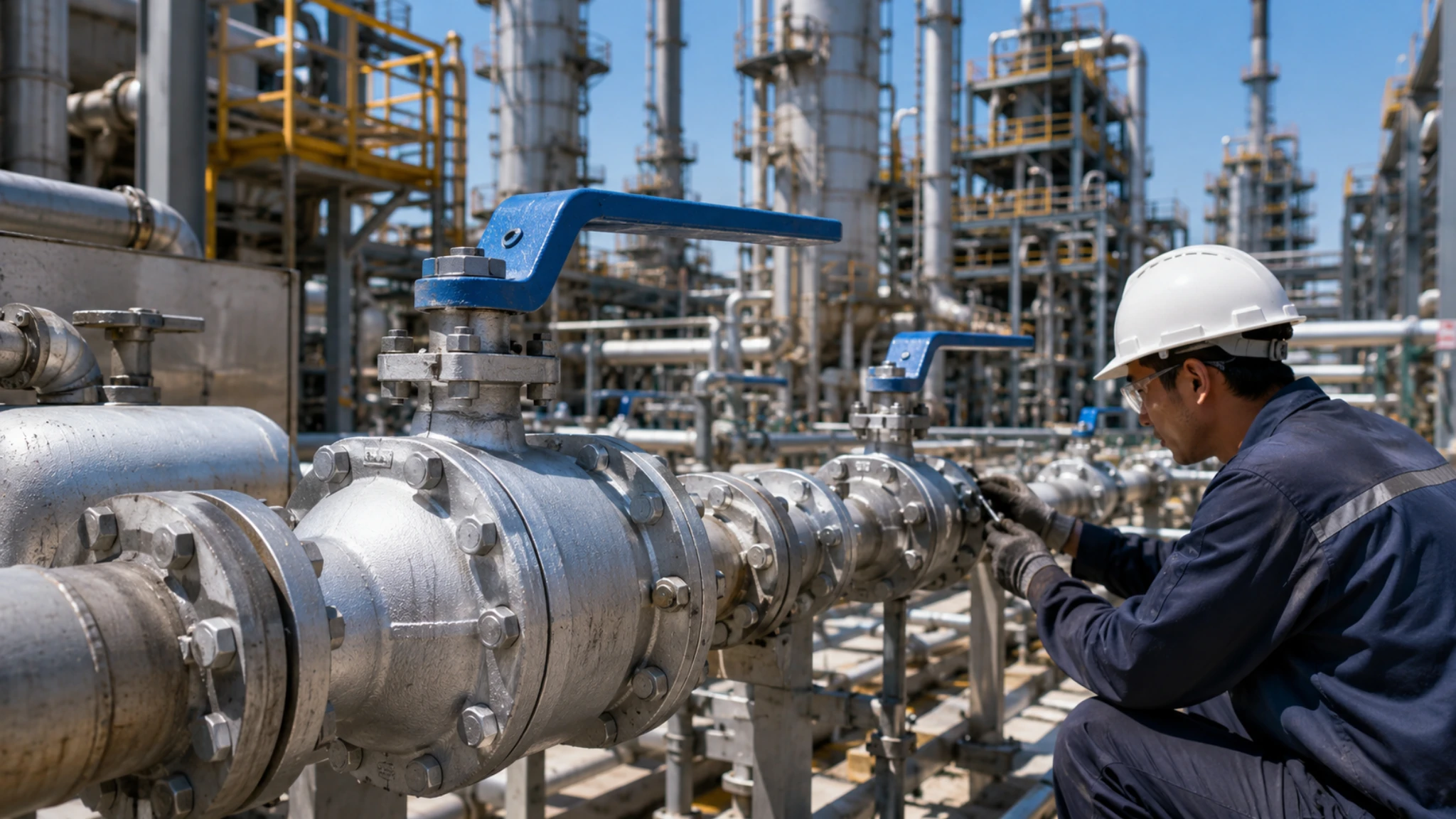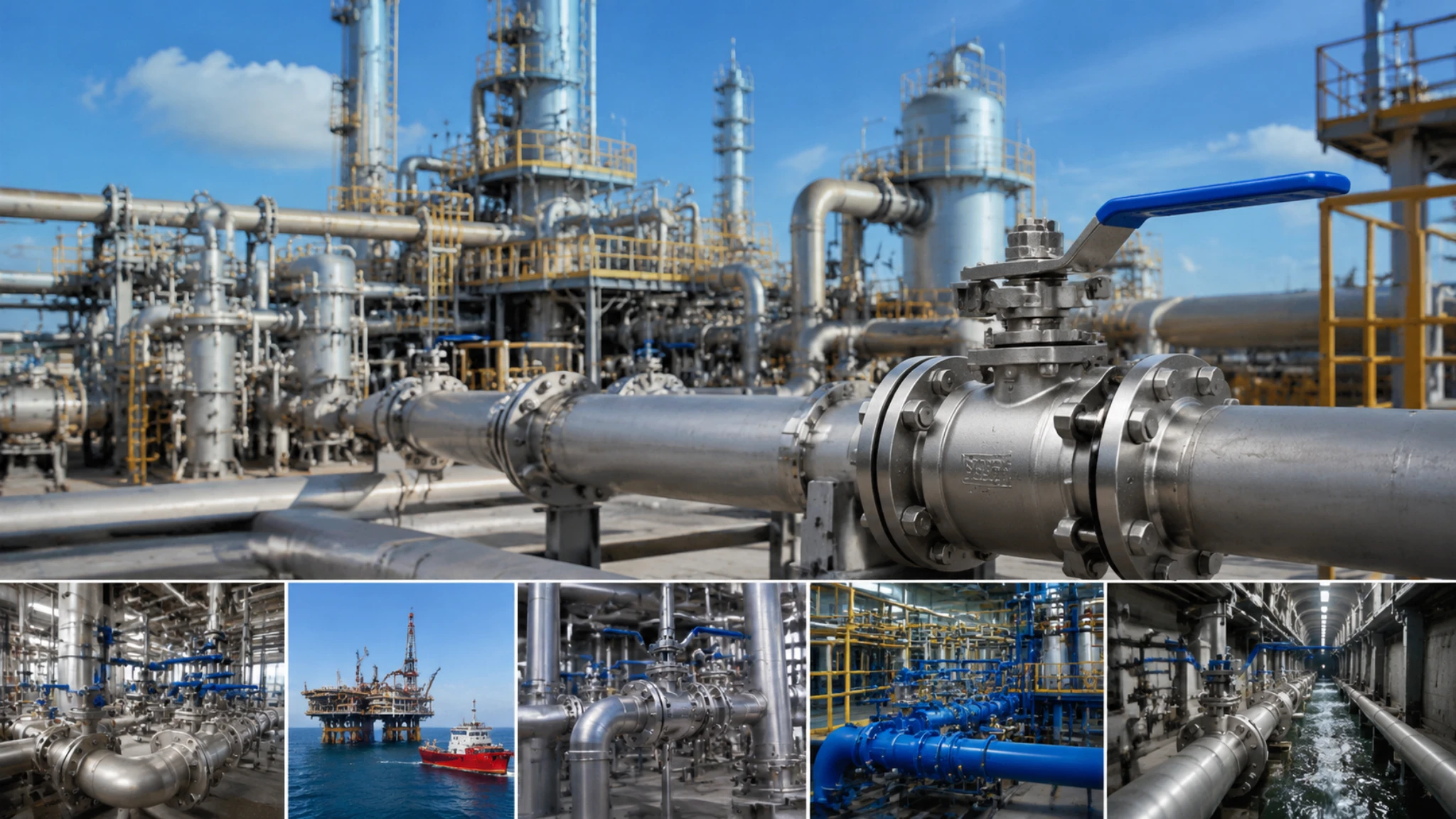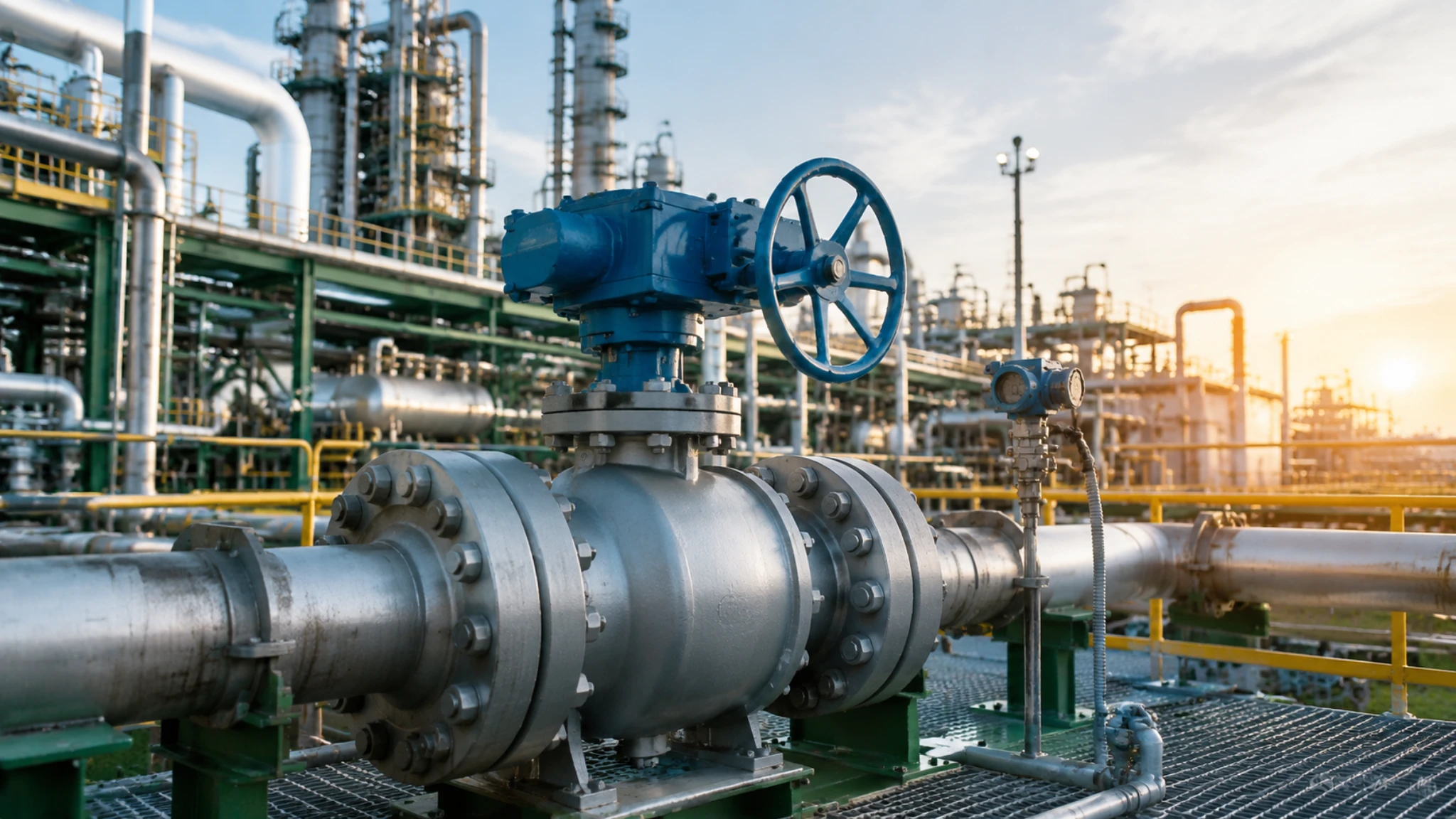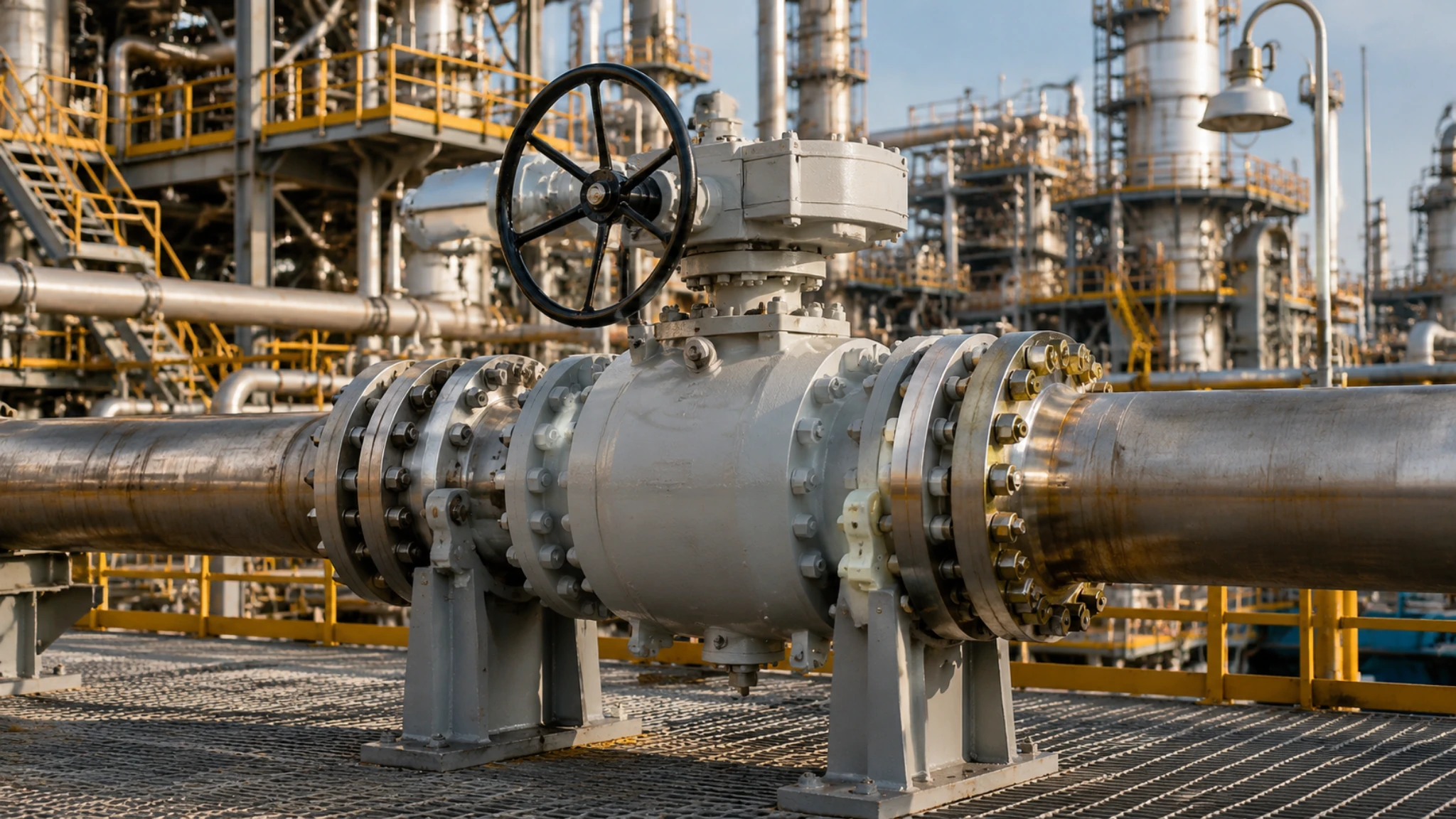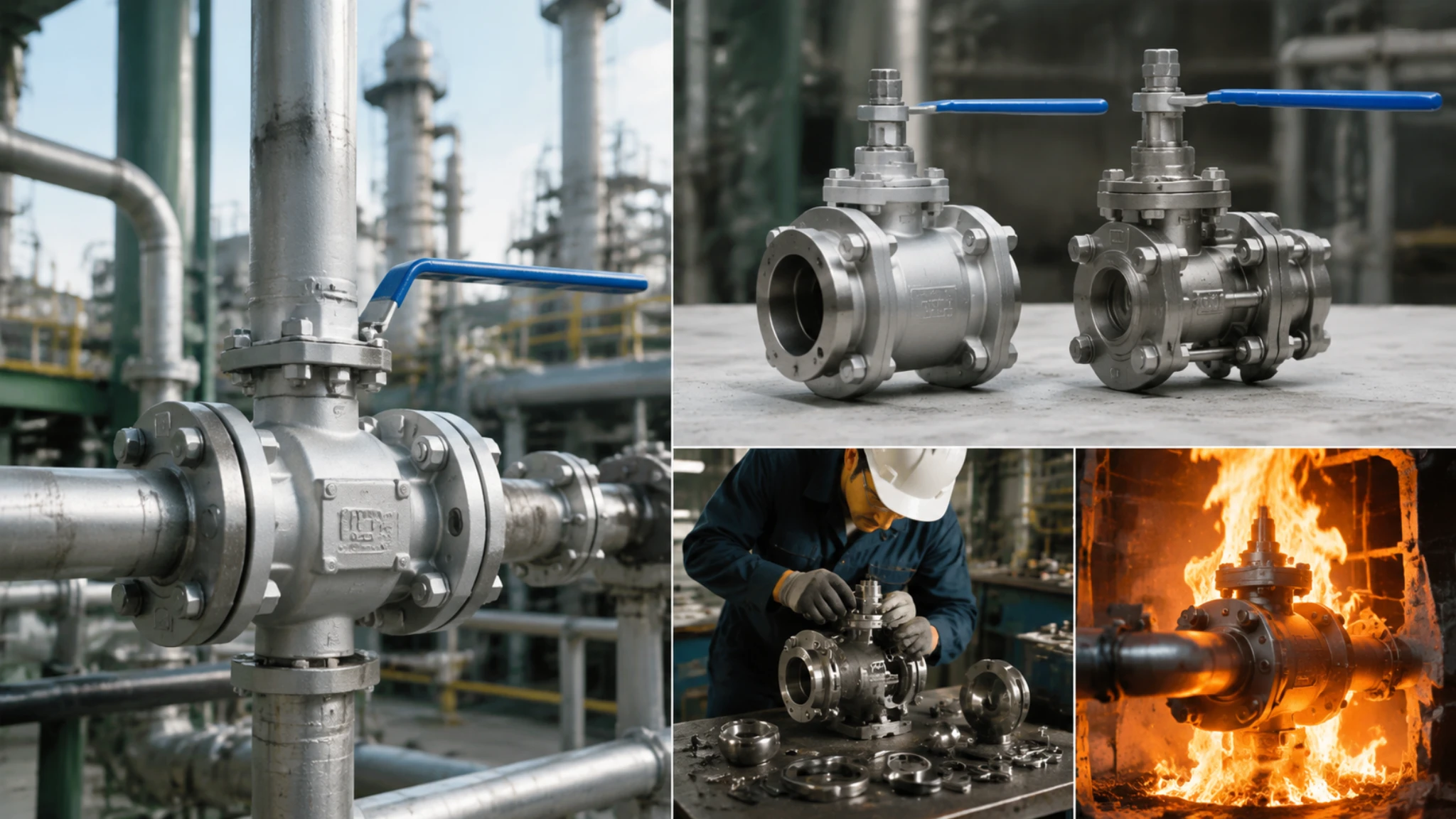
Fire-safe floating ball valve complies with API 607 standard, possesses fire-safe structure design, and after the sealing material is burned out, it can still maintain a leakage rate of ≤0.1% through the metal seal.
The valve body is equipped with an anti-static device (resistance ≤10Ω) to avoid static electricity accumulation triggering an explosion.
Suitable for petrochemical pipelines (pressure 1.6–6.4MPa, temperature -29~200℃).
Should regularly check sealing surface wear, every 6 months perform one opening and closing test, and ensure the grounding device is intact.
API 607
Sealing Compensation Principle
In an environment of 760 degrees Celsius to 980 degrees Celsius, the PTFE valve seat of an ordinary floating ball valve will begin to soften at around 327 degrees Celsius, and subsequently lose support force completely within a short 3 to 5 minutes. The metal sphere, losing constraint, driven by the pipeline internal pressure, occurs a physical displacement of 0.5 mm to 2 mm along the medium flow direction.
The spherical surface of the sphere after displacement will fit against the metal lip reserved in the valve body cavity. The mechanical processing precision of this metal lip is usually strictly limited between Ra 0.4 and Ra 0.8. When the plastic valve seat is burned out completely, the dry friction contact surface formed by the sphere and the metal lip becomes the boundary blocking the oil spray.
The design angle of this sealing surface is mostly a 30-degree to 45-degree bevel. Utilizing the pressing force of the medium pressure multiplied by the pressure area, the sphere is tightly pressed onto the metal base. In the API 607 fire test, this metal-to-metal contact must lower the leakage per inch of diameter per minute to below 400 milliliters.
- Valve seat material chooses RPTFE (reinforced polytetrafluoroethylene), its deformation resistance is more than 15% higher than ordinary PTFE.
- The metal secondary sealing lip undergoes hardening treatment, with hardness maintained between HRC 15 and 20, lower than the sphere’s HRC 30 hardness.
- Sphere roundness deviation is controlled within 0.01 mm, reducing small gaps for metal surface fit under fire conditions.
- The compensation spring behind the valve seat still needs to retain more than 50% of the elastic modulus at high temperatures to support the sphere in completing the initial displacement.
The seal at the valve stem part is undertaken by 98% purity flexible graphite packing. The temperature limit of this material is as high as 3000 degrees Celsius. In the early stage of a fire, the O-ring located at the bottom of the packing will carbonize and fail at 200 degrees Celsius. At this time, the graphite packing, under the load of the gland bolts, fills the fit gap of about 0.1 mm between the valve stem and the packing box.
To prevent bolt thermal relaxation at high temperature leading to packing gland loosening, the valve design adopts live-load disc springs. These spring components can still apply a constant radial sealing pressure to the graphite packing when the bolt elongation reaches 0.2%. The experimental limit indicator for external leakage is strictly controlled below 100 milliliters per inch per minute.
The connection between the valve body and valve bonnet adopts a gasket of 316 stainless steel belt and flexible graphite alternately wound. The initial thickness of 4.5 mm gasket is compressed to about 3.3 mm during installation. In a flame of 900 degrees Celsius, the graphite material undergoes volume expansion, filling micro-level grooves generated by metal thermal deformation, blocking the diffusion of the medium to the external environment.
- The valve stem anti-static device utilizes a 2 mm diameter stainless steel spring to ensure the resistance between the sphere, valve stem, and valve body is below 10 ohms.
- Valve body pressure-bearing wall thickness is additionally increased by 1 mm to 3 mm based on the ASME B16.34 standard to resist oxidative corrosion of the metal by flames.
- The valve stem neck is lengthened by more than 50 mm to extend the heat conduction path and protect manual or automatic actuators from being melted by high temperatures.
- The strength degradation curve of selected A105 carbon steel or F316 stainless steel at 800 degrees Celsius needs to be verified by third-party mechanical data.
During the fire burn process as long as 30 minutes, the internal pressure of the valve needs to be constant at 75% of the rated pressure. For Class 150 pressure pipelines, while the valve withstands nearly a thousand degrees of high temperature, it also has to withstand a fluid impact of about 1.5 MPa. The forced cold water spray condition after the experiment most tests the metal toughness.
The valve body must drop from nearly a thousand degrees to below 100 degrees Celsius within 5 minutes. Enormous thermal stress will cause inferior metals to produce micro-cracks, while certified valves need to undergo a 0.2 MPa low-pressure nitrogen re-inspection after cooling. The re-inspection requires that the internal leakage rate does not exceed 10% of the original standard value, thereby verifying the structural integrity of the metal secondary seal after extreme thermal shock.
At the bolt connection of the valve middle flange, the bolt material selection grade is ASTM A193 B7 or B8. A 30% tensile strength margin is reserved in design calculations to cope with the creep phenomenon occurring in bolts above 500 degrees Celsius.
- Under Class 150 pressure level, total leakage during the burning period for a 2-inch diameter valve is not permitted to exceed 800 milliliters.
- Valve seat design includes pressure relief function, preventing medium accumulated in the valve cavity from generating abnormal high-pressure burst when heated and vaporized.
- Contact width between metal lip and sphere is usually designed at 1 mm to 3 mm to obtain higher contact specific pressure per unit area.
Test Data Density
After the API 607 test bench starts the burner, flame sensors must real-time monitor the thermal field intensity of 760 degrees Celsius to 980 degrees Celsius within a close distance of 25 mm. K-type thermocouples used in the test process are distributed at the front, middle, and rear of the valve body, ensuring the heating surface coverage reaches 100%.
Temperature measuring block as a simulated heat capacity carrier, its size is a 38 mm square cube, must perceive constant heat of 650 degrees Celsius within 15 minutes. If the temperature rise curve lags behind this slope, the flame heat cannot penetrate the valve body wall thickness, leading to insufficient burning degree of the internal soft seal seat, and the test result will be judged invalid.
- Temperature block location: Placed 25 mm to 50 mm from the horizontal plane of the valve body to measure deep penetration heat.
- Flame monitoring: At least two sets of thermocouples are arranged, with data collection and automated storage every 2 minutes.
- Fuel control: Using propane or natural gas, controlling 30 minutes of continuous high temperature by adjusting the air mixture ratio.
- Pressure constant: The fluctuation range of the medium pressure in the test chamber is strictly forbidden to exceed 10% of the set value.
| Test Stage | Physical Indicator Requirements | Data Recording Frequency | Allowable Error Range |
|---|---|---|---|
| Burning stage | 760°C – 980°C | 30 seconds/time | +/- 5% |
| Cooling stage | Within 5 minutes drop to below 100°C | Real-time recording | Not to exceed 300 seconds |
| Low pressure test | 0.2 MPa lasts for 5 minutes | Single recording | +/- 0.02 MPa |
| Operation test | Open to fully open state | Single torque measurement | Need to record starting torque |
During the 30-minute heating period of the floating ball valve, the 1.5 MPa pressure in its cavity will continuously accumulate. Since the sealing seat disappears around 327 degrees Celsius, the 1 mm displacement generated by the sphere backward push is the key to achieving the metal secondary seal. At this time, the internal leakage volume collected by the condenser must be lower than 400 ml/in/min.
Calculated with a 4-inch diameter valve, the upper limit of allowable internal leakage per minute is 1600 milliliters. This value is quantified through the water displacement collection method. If the cumulative internal leakage during the 30-minute burning period exceeds 48 liters, the fire-safe structure is judged to have failed.
The collection of external leakage is even more stringent, because volatile gases around oil pipelines are extremely easy to be secondary ignited by external fire sources. The leakage at the valve stem packing and the middle flange gasket is calculated together, with its limit being 100 ml/in/min. For a 4-inch valve in a 900-degree Celsius fire field, the total overflow medium must not exceed 12 liters.
When the valve body material drops sharply from 900 degrees Celsius to 100 degrees Celsius, the metal crystal lattice will generate enormous internal stress. If A105 carbon steel or F316 stainless steel has casting defects, cracks visible to the naked eye will appear at this time, leading to the complete collapse of the shell sealing.
- Water cooling temperature difference: Instantaneous temperature difference is as high as 800 degrees Celsius or more, assessing metal toughness indicators.
- Spraying flow: Ensure a complete cooling water film is formed on the valve surface, covering 100% area of the full length.
- Re-pressure test: Low-pressure nitrogen detection of 0.2 MPa after cooling to test the residual performance of the metal secondary seal.
- Leakage contraction: The allowable value of internal leakage after cooling is reduced from 400 milliliters to 40 milliliters, a reduction ratio reaching 10 times.
Due to different thermal expansion coefficients of metal parts, the sphere and valve stem may undergo seizure after high temperature. API 607 requires that under rated pressure difference, the operation torque must not exceed 80% of the actuator’s rated output, ensuring that firefighters can manually cut off residual media after the disaster.
The graphite ring in the packing box will lose about 5% of its volume at high temperatures, which requires the live-load disc springs to reserve enough compensation stroke. If the total stroke of 4 disc springs is 8 mm, the remaining compression after the fire must be maintained above 2 mm.
Middle flange bolts will enter the creep zone above 500 degrees Celsius, and tensile strength drops from 700 MPa to around 200 MPa. Test data show that a qualified API 607 valve, after undergoing 30 minutes of burning, still needs its residual bolt pre-tightening force to maintain more than 30% of the initial value. This relies on the precise calculation of the bolt length-to-diameter ratio.
- Gasket thickness: The 4.5 mm metal spiral wound gasket provides 0.5 mm of elastic recovery force in a fire.
- Valve stem runout: Under high temperature, valve stem radial runout needs to be controlled within 0.05 mm to prevent packing side leakage.
- Sealing surface specific pressure: The contact specific pressure of the metal secondary sealing surface needs to reach more than 2.5 times of the medium pressure.
- Valve seat venting: The back of the valve seat is processed with a 0.5 mm width pressure relief groove to prevent cavity overpressure burst.
For Class 300 level valves under 3.8 MPa pressure, the pressing force of the sphere against the metal seat is about 1 time higher than that of Class 150 level. Although high pressure is beneficial for sealing, excessive pressing force will cause permanent plastic deformation of the metal lip, making opening after cooling difficult.
The fire-safe qualification of floating ball valves depends not only on the certificate number but also on verifying the test diameter, pressure level, and material coverage range behind the certificate. API 607 stipulates that one size passing the test can cover two sizes upward and all sizes downward in diameter range. For example, testing a 2-inch valve covers the range of 2 inches to 4 inches.
In the 10-ohm anti-static test, the 3 mm stainless steel spring at the valve stem must maintain conductive continuity before and after the fire. Smoke and carbides generated by the fire accumulate in the sphere gaps; if the spring force is insufficient, it will lead to the failure of the sphere’s suspended conductivity.
Leakage Limit Indicators
The graduated cylinder on the API 607 test bench precisely records every milliliter of overflowed water droplets, and these displaced water volumes correspond to the total amount of medium escaped inside the valve. During the 30-minute burning period of 980 degrees Celsius, the limit of internal leakage is strictly locked at 400 ml/in/min.
If testing a 6-inch diameter floating ball valve, the total allowable internal leakage during the burning period is as high as 72 liters. The measurement process is carried out through a condensing pipe connected at the outlet end, and the flowing out gas or liquid is guided to a container filled with cold water, calculating the volume using the water displacement collection method.
- Internal leakage upper limit during burning period: 400 ml/in/min.
- External leakage upper limit during burning period: 100 ml/in/min.
- Low pressure internal leakage upper limit after cooling: 40 ml/in/min.
- Low pressure external leakage upper limit after cooling: 20 ml/in/min.
Laboratory data show that most soft-seal valves will have a peak leakage at the 4th minute after the fire starts. At this time, the PTFE valve seat decomposes under heat to produce a retreat gap of about 0.3 mm, the sphere has not yet completely fitted the metal secondary seal, and instantaneous leakage may approach the limit edge.
When the sphere, pushed by 1.5 MPa pressure, moves 1.2 mm toward the outlet end and presses against the metal step, the leakage curve will tend to flatten. At this time, the contact surface width between metal and metal needs to be maintained at 1.5 mm to 2.5 mm.
The limit of external leakage is more conservative because overflowing petrochemical media will encourage the spread of the fire. The limit of 100 ml/in/min includes the sum of leakage from the valve stem packing and the middle flange gasket. For a 6-inch valve within 30 minutes, the total overflow medium is strictly prohibited from exceeding 18 liters.
At a high temperature of 900 degrees Celsius, the graphite packing at the valve stem part will undergo volume contraction of 3% to 5% due to trace oxidation. Testing instruments real-time monitor the radial offset of the valve stem; once the offset exceeds 0.08 mm, the original 100 ml limit will be broken within a few seconds, declaring the fire resistance of the whole machine substandard.
- Packing leakage ratio: Usually accounts for more than 70% of the total external leakage.
- Middle flange leakage ratio: Constrained by 316 stainless steel spiral wound gasket, accounting for about 30% or less.
- Valve body oxidation loss: The metal surface produces a 0.1 mm thick oxide layer at high temperature, but it is not counted in the leakage volume.
In actual testing, the pre-tightening force of middle flange bolts will be lost by more than half at 540 degrees Celsius. A qualified fire-safe ball valve needs to increase the bolt tensile strength redundancy to more than 3 times during the design stage to maintain a sealing specific pressure of no less than 20 MPa on the gasket surface.
As the 30-minute burning ends, a 5-minute forced cold water spray link begins. The valve body temperature drops sharply from 980 degrees Celsius to below 100 degrees Celsius, and the severe contraction of metal parts will lead to micro-level geometric distortion of the sealing pair. API 607 tightens the leakage standard by 10 times in this stage.
The test pressure for low pressure after cooling is only 0.2 MPa, simulating the risk of low-pressure leakage of residual media after the fire is extinguished. At this time, the internal leakage limit is reduced to 40 ml/in/min. For a 6-inch valve, the total leakage within 5 minutes needs to be controlled within 1.2 liters, which is a great challenge to the residual flatness of the metal sealing surface.
- Cooling rate: Temperature drop per second needs to reach 2.5 degrees Celsius to 3.5 degrees Celsius.
- Thermal stress crack monitoring: Visually observe whether stress cracks exceeding 0.5 mm appear on the valve body surface.
- Opening torque record: Manually open the valve after cooling, and record the number of Newton-meters required to break through the 0.2 MPa pressure difference.
Data show that about 15% of test failures occur at the instant of opening after cooling. Since the sphere and the metal seat underwent trace fusion welding at high temperatures, the opening torque will soar to 3 to 5 times of the normal state, causing the valve stem to twist, deform or break.
Under a rated pressure of 1.1 MPa or higher, the valve switches from fully closed to fully open, and the entire action needs to be completed within 10 seconds. This link does not measure leakage, but assesses whether the emergency response function of the valve after the disaster still exists.
For Class 300 pressure level valves, the experimental pressure needs to be maintained at around 3.8 MPa. In a high-pressure environment, the mechanical squeezing force of the sphere against the metal seat will reach more than 15,000 Newtons. Although high specific pressure helps reduce internal leakage, it will also cause scratches on Ra 0.4 level sealing surfaces, affecting subsequent reuse rate.
- A105 carbon steel valve: Strength drops rapidly at high temperatures; wall thickness needs to leave more than 2 mm of corrosion allowance.
- F316 stainless steel valve: Thermal expansion coefficient is large; unilateral clearance between sphere and valve cavity needs to be reserved at 0.15 mm.
- Gasket compression: Residual springback rate of the metal spiral wound gasket after fire needs to be maintained above 15%.
The design of the pressure relief hole plays an invisible role in leakage control. If the liquid accumulated in the valve cavity generates high pressure above 5 MPa due to thermal expansion, the relief hole must guide the excess pressure to the upstream to prevent the valve body from bursting at the thinnest 10 mm wall thickness.
In the API 607 data system, diameter coverage range is also an important limited indicator. Testing a 4-inch, Class 300 valve, its qualification can only cover downward to all diameters, and upward it can only cover up to 8 inches.
The valve stem anti-static spring must maintain a resistance value below 10 ohms in a 900-degree Celsius fire field. If the spring loses 80% of its elasticity due to annealing at high temperature, the conductive path between the sphere and the valve stem will be interrupted. This would lead to static electricity accumulation igniting the surrounding oil and gas mixture whose concentration reaches 5% during subsequent medium discharge.
Anti-static
Static Accumulation
When fluid washes in the pipeline at a speed of 3 meters to 5 meters per second, the sphere and the polytetrafluoroethylene valve seat friction frequently; this non-metallic material’s resistivity is extremely high, usually between 10 to the 14th power and 10 to the 18th power ohm·meters.
The sphere of the floating ball valve is sandwiched between two insulated valve seats. Due to processing tolerances and assembly requirements, there is often a tiny gap of 0.1 mm to 0.3 mm between the sphere and the metal valve body. This structure makes the sphere evolve into a capacitor for storing charges, with its capacitance value generally distributed between 50 and 100 picofarads.
If the potential difference accumulates to a certain degree, static electricity will penetrate the air layer to discharge to the valve stem or valve body. Calculations show that when the sphere voltage reaches 2000 volts, the discharge energy is about 0.2 millijoules. Through the following data, one can intuitively discover the threat of discharge energy to different gases:
- Hydrogen ignition energy only needs 0.017 millijoules;
- Ethylene gas ignition critical point is around 0.07 millijoules;
- Propane vapor ignition energy is usually near 0.25 millijoules;
- Benzene vapor under 0.2 millijoules electric spark will occur deflagration.
Even if the energy generated by charge accumulation is very tiny, it is already several times the ignition lower limit of the above gases. To export charges, valve engineers process a 5 mm diameter blind hole at the head of the valve stem, placing a stainless steel conductive ball and a compression spring. The spring usually chooses 1Cr18Ni9Ti material, ensuring stable elastic force can be provided under various pressures.
The spring compression amount is set at 20% to 30% of the free length, so that the positive pressure generated by the conductive ball on the sphere surface is maintained above 0.5 Newtons. This mechanical hard contact can grind off the oxide film formed on the sphere surface during operation.
According to the international common API 608 standard, the effectiveness of this anti-static structure must be verified through low-voltage DC testing. The test voltage is usually specified below 12 volts, requiring the measured resistance between the sphere and the valve body not to exceed 10 ohms. In some liquefied gas terminals with extremely high safety requirements, this resistance is even required to be controlled within 1 ohm.
- Detection points are set from the top of the sphere to the unpainted metal surface of the valve body flange;
- Valve opening and closing cycle testing 5000 times later still needs to maintain resistance compliance;
- Relative humidity of the test environment is suggested to be lower than 60% to prevent water vapor from interfering with measurement results;
- Conductive ball diameter is usually chosen as 3 mm or 5 mm to adapt to valve stems of different sizes.
Adding 15% carbon fiber or glass fiber into polytetrafluoroethylene to make an enhanced valve seat can significantly reduce its surface resistivity from 10 to the 17th power to 10 to the 10th power ohm·cm. This adjustment allows charges to start slowly dissipating the moment they are generated by friction, reducing the speed of charge accumulation.
If the sphere surface roughness Ra is greater than 0.8 microns, the charge density generated by friction will increase by about 15% compared to a smooth surface. Therefore, high-quality valves will polish the sphere to Ra 0.2 microns to 0.4 microns, and supplement it with hard chrome plating to increase the surface hardness to above HRC 55.
When the pipeline operating temperature rises from 25 degrees Celsius to 180 degrees Celsius, non-metallic valve seats will produce about 10% volume thermal expansion. This will cause the squeezing force between the sphere and the valve seat to increase, making the friction electrification phenomenon more frequent. The internal spring compensation structure provides a dynamic stroke of 1 mm to 1.5 mm during this process, ensuring that the conductive ball will not lose contact due to material thermal deformation.
Mechanical Conductive Construction
At the end of the valve stem near the sphere, a mechanical processing station will drill a blind hole with a diameter of 4.2 mm and a depth of 8 mm. Inside this hole is embedded a compression spring made of 316 stainless steel, its wire diameter is usually selected as 0.4 mm, and the total number of turns is maintained between 8 to 10.
Above the spring is a stainless steel ball with a diameter of 4 mm tightly pressed, relying on the pre-tightening force of the spring to make the steel ball protrude from the valve stem surface. When the valve stem is loaded into the narrow slot at the top of the sphere, the steel ball is compressed back into the hole and generates a continuous contact pressure between the sphere and the valve stem, with the pressure value controlled at 0.6 to 0.9 Newtons.
- Steel ball material: 316 stainless steel or 440C hardened stainless steel;
- Spring material: 1Cr18Ni9Ti or Inconel X-750 high-temperature alloy;
- Contact point pressure: Average 0.75 Newtons load per square millimeter;
- Surface roughness: Processing precision of the blind hole inner wall is controlled at Ra 1.6 microns.
Even if the medium forms a polymer film with a thickness of about 0.02 mm on the sphere surface, the high-speed rotating steel ball can penetrate this insulating film. Charges follow the sphere surface, enter the valve stem body through the steel ball, and complete the first-level conduction path.
At the step position where the valve stem contacts the valve body, a second set of symmetrical spring steel ball devices is similarly set. This set of steel balls is responsible for guiding the charges on the valve stem to the valve body. The valve body is connected to the pipeline system through flange bolts, finally leading the accumulated power into the grounding main line of the whole plant, with the total resistance measured as 6.5 ohms at an ambient temperature of 20 degrees Celsius.
To adapt to acidic working conditions with hydrogen sulfide content exceeding 500ppm, the spring material is usually upgraded to Inconel X-750 to prevent spring fracture due to stress corrosion. If the spring loses elasticity, the steel ball will not be able to closely fit the sphere surface, leading to the interruption of the static discharge path halfway.
The table below records the physical performance of different specifications of conductive components in continuous action experiments:
| Component Specification | Initial Resistance Value | Resistance after 10,000 cycles | Spring Pressure Decay Rate |
|---|---|---|---|
| 3mm steel ball / SS316 spring | 2.4 ohms | 5.8 ohms | 12% |
| 5mm steel ball / SS316 spring | 1.8 ohms | 3.2 ohms | 8% |
| 5mm steel ball / Inconel spring | 1.9 ohms | 2.5 ohms | 3% |
The fit clearance at the connection between the valve stem and the sphere is generally designed between 0.15 mm and 0.25 mm. In this narrow space, the protrusion height of the conductive steel ball must be precisely controlled. If the protrusion height exceeds 1.5 mm, interference during assembly will be too large, causing the valve stem to be unable to push into the sphere slot, or even scratching the chrome plating on the sphere surface.
The inner wall slope of the sphere slot is usually processed into a 45-degree chamfer, which helps the steel ball transition smoothly during valve opening and closing operations. Under 550-pound class pressure environment, tiny displacement generated by the sphere will squeeze the spring. The spring reserves 2 mm of movement space to ensure that the steel ball never detaches from the contact surface during the sphere floating process.
- Blind hole diameter tolerance: plus or minus 0.05 mm;
- Steel ball roundness error: not more than 0.005 mm;
- Spring free length: 12 mm to 15 mm;
- Contact resistance fluctuation: change during the whole process of opening and closing not exceeding 0.5 ohms.
The insulation resistance of ordinary silicone grease can reach 10 to the 12th power ohms. If it accumulates in large quantities in the sphere slot, it will increase contact resistance. Petrochemical grade valves usually use low-resistance lubricants containing conductive graphite powder or molybdenum disulfide to ensure that electron flow is not hindered while lubricating.
Under low-temperature working conditions, i.e., minus 46 degrees Celsius, spring materials will undergo cold brittleness phenomenon, and the elastic modulus changes by about 5%. At this time, the stability of the mechanical structure faces challenges, the hardness of the stainless steel conductive ball will increase slightly at low temperature, and the friction force of the mechanical contact surface increases. By adding a support mandrel inside the spring, this physical deformation can be effectively alleviated.
- Static test current: 1.0 Ampere;
- Dynamic resistance deviation: resistance remains stable when operation torque changes;
- Eliminate coating interference: no insulating Teflon coating on the valve stem sealing surface;
- Number of components: two sets of conductive pillars are suggested for DN50 and above specifications.
The graphite ring at the valve stem packing will produce debris after long-term use, and this dust may enter the spring blind hole, causing spring stuck. Design-wise, a 0.5 mm drain hole will be processed at the bottom of the blind hole, utilizing air pressure fluctuations during valve opening and closing to discharge impurities.
When the medium pressure in the pipeline reaches 10 MPa, the sphere moves downstream and tilts slightly. At this time, the contact point at the bottom of the valve stem will shift, and the stroke of the spring steel ball is adjusted accordingly. This dynamic compensation capability enables the floating ball valve to maintain the 12V low-voltage electrical continuity required by API 608 under various pressure loads.
If the plant environment humidity exceeds 85%, a trace water film may form on the contact surface of the steel ball and the sphere, accelerating electrochemical corrosion. Steel balls with surface nitriding treatment reach a hardness of HV 1100, which can resist this local corrosion. On high-frequency vibration pipelines, the natural frequency of the spring needs to avoid the fluid excitation frequency to prevent the steel ball from generating jump discharge.
For large-diameter floating ball valves exceeding 10 inches, the reliability of a single conductive point decreases. At this time, two sets of spring plunger systems will be installed at symmetrical positions on the valve stem. This redundant configuration further reduces the resistance value from the sphere to the ground to below 1 ohm, meeting the charge discharge speed requirements of extremely high flow rate (greater than 10 m/s) pipelines.
Standardized Electrical Testing
In a laboratory environment, the no-load voltage of the test power supply is set between 5 volts and 12 volts, and it is strictly forbidden to exceed this upper voltage limit. After the digital ohmmeter is connected to the loop, its range is usually adjusted to the 20-ohm position to ensure the resolution reaches 0.01 ohms. The API 608 standard clearly requires that the total loop resistance must remain below 10 ohms throughout the entire operation cycle to prevent static electricity from forming a potential difference inside the valve.
The first set of probes is pressed on the driving flat head at the top of the valve stem, and the second set of probes contacts the sphere surface. Since the sphere usually has a hard chrome coating, the probes need to avoid areas with severe wear and choose finely processed surfaces below Ra 0.4 microns. If the reading exceeds 10 ohms, it indicates poor contact between the conductive steel ball at the bottom of the valve stem and the sphere slot.
- Test voltage: DC 5V to 12V;
- Qualified resistance: less than or equal to 10 ohms;
- Measurement resolution: not lower than 0.1 ohms;
- Probe pressure: uniformly apply about 1.0 Newton load;
- Number of repetitions: take the average of 3 consecutive measurements.
The API 6D specification has supplementary regulations for the anti-static continuity of oil pipeline valves. For valves with a nominal diameter greater than DN50, it is required to perform 100% sampling inspection in factory inspection. If one valve in a batch has a resistance value exceeding the standard limit, all valves in that batch need to be disassembled and checked for spring pressure again.
Turning to the dynamic testing stage, the operator needs to slowly rotate the valve stem to make the sphere rotate from the 0-degree fully open position to the 90-degree fully closed position. In this 90-degree arc movement, the ohmmeter reading fluctuation should not exceed 0.5 ohms. Since the sphere will squeeze the valve seat when rotating, the friction torque generated may cause micron-level displacement of the sphere, and the test needs to confirm that the spring compensation mechanism can still maintain conductivity under this displacement.
When the medium pressure rises from 0.1 MPa to 10 MPa, the sphere will be pushed toward the outlet end, causing an asymmetric shift in the clearance between the valve stem and the sphere slot. To simulate this working condition, some high-standard laboratories will add lateral load testing. Measured data show that under 1.5 times rated pressure load, the resistance value of valves with dual conductive ball design is usually stable between 2.5 ohms to 4.2 ohms.
- Static resistance: measured value in the stationary state of the valve;
- Dynamic resistance: the highest resistance value recorded during rotation;
- Contact potential difference: voltage drop data under 1 ampere current;
- Environmental compensation: calibrated according to 20 degrees Celsius standard temperature.
The anti-corrosion coating on the valve body surface is an easily overlooked insulation point. When conducting the overall conduction test from the valve body to the ground, a paint layer of about 10 square millimeters at the back of the flange must be manually scraped off. After exposing the metal substrate, use a multimeter to measure the resistance from the flange to the grounding bolt to ensure that the resistance of this path is within 1 ohm.
When the relative humidity of the air exceeds 70%, a micro-thickness water film will form on the surface of non-metallic seals, which will produce false parallel conduction paths. Standard procedures require operation in environments with humidity lower than 60%, or use of an insulation resistance tester to exclude surface leakage current. If humidity cannot be reduced, the test points must be dried.
The table below compares the changes in conductivity of different material combinations before and after the API 607 fire test:
| Valve Seat Material | Initial Resistance (ohm) | Resistance after high temperature burning | Conductive Reliability Rating |
|---|---|---|---|
| Pure PTFE | 1.2 | 1.8 | Excellent |
| RPTFE (15% glass fiber) | 1.5 | 2.1 | Excellent |
| Nylon 1010 | 3.8 | 8.5 | Qualified |
| Polyetheretherketone (PEEK) | 2.4 | 3.2 | Excellent |
Since corrosive gases exist at petrochemical sites, the oxide layer on the surface of conductive components will thicken over time. In preventive maintenance every 6 months, the resistance of the valve bridging wire needs to be measured. This bridging wire uses multi-strand braided copper tape with a cross-sectional area of 4 square millimeters. If green verdigris oxide appears at its terminal connection, contact resistance may soar from 0.05 ohms to 50 ohms.
In the acceptance of large automated ball valves, the electrical isolation between the actuator and the valve body is also a monitoring indicator. The insulation resistance of pneumatic or electric actuators is usually required to be above 20 megohms, but the valve stem anti-static device must ensure that the actuator output shaft and the sphere are at equal potential. During testing, it is necessary to confirm that the potential difference is lower than 0.1 volts to prevent control current from mistakenly entering the pipeline.
- Probe material: suggested to use gold-plated contacts to reduce contact resistance;
- Wire length: test lead length controlled within 2 meters;
- Contact cleaning: use anhydrous ethanol to wipe metal measurement points;
- Recording requirements: keep original data of voltage, current, and resistance.
For ultra-low temperature ball valves at minus 46 degrees Celsius, the low-temperature hardening of the spring will lead to a positive pressure increase of more than 15%. Although the resistance value becomes smaller at this time, it will aggravate the scratching of the sphere coating by the steel ball. Test regulations stipulate that after returning to normal temperature from low temperature, it is necessary to check whether there are mechanical scratches with a depth exceeding 0.05 mm on the sphere slot and re-measure the resistance.
For large floating ball valves of DN300 and above, the sphere weight may exceed 50 kg. In a vertical installation position, the weight of the sphere will lead to uneven force on the valve stem, and the contact resistance of the spring steel ball may have periodic jumps. In factory acceptance, resistance comparisons under horizontal and vertical postures should be conducted separately, and the deviation rate must not exceed 20% of the measured value.
Petrochemical Pipelines
Working Condition Differences
The operating temperature of Liquefied Natural Gas (LNG) pipelines is maintained at around -162°C all year round. In this extremely low temperature environment, ordinary carbon steel will undergo a significant low-temperature brittle transition, and the toughness value drops sharply, causing the material to be as fragile as glass. Therefore, under low-temperature working conditions, floating ball valves must choose LC1, LC2, or LC3 low-temperature carbon steel, or directly use CF8M (316 stainless steel) material.
An extended bonnet needs to be added in the valve body design, and its length is usually set according to the ISO 28921 standard to ensure that the packing seal is close to the room temperature environment. This structure can prevent cold energy from conducting upward to cause valve stem packing icing failure. Valve seats often choose Kel-F (PCTFE) material treated with cryogenic treatment, which can still maintain 0.1MPa level airtightness at -196°C.
- Valve internals undergo -196°C liquid nitrogen immersion treatment for 4 to 6 hours.
- Valve stem sealing adopts multi-layer V-type polytetrafluoroethylene packing superposition.
- Bolts choose A320 L7 grade high-strength low-temperature alloy steel.
- Valve body surface does not undergo painting treatment to prevent paint peeling under low temperature from polluting the pipeline.
Turning to the atmospheric and vacuum distillation units of refineries, the inner wall of the pipeline faces hot oil above 350°C. In this environment, metal materials will produce creep phenomenon, that is, slow plastic deformation under constant stress. The sealing pair of floating ball valves no longer uses polymers and must be changed to metal-to-metal hard seals.
The sphere surface is sprayed with tungsten carbide or chromium carbide, and the coating hardness needs to reach above 60HRC, with thickness maintained between 0.15mm and 0.3mm. This process can resist the scouring of coke particles mixed in hot oil under high temperature. Inconel X-750 wave springs are installed behind the valve seat, which can provide constant sealing specific pressure even after expansion at 400°C.
The pressure of high-pressure natural gas gathering and transportation pipelines is usually between 6.3MPa and 10.2MPa. Gas molecules will penetrate into the molecular gaps of sealing surface materials at the microscopic level. When the pipeline is emergently depressurized due to an accident (Blowdown), and the external pressure drops from 10MPa to normal pressure instantly, the high-pressure gas remaining inside the sealing parts cannot be discharged, which will lead to a large number of bubbles or cracks with a diameter of about 1mm inside the sealing ring.
- Sealing rings choose anti-crude oil/anti-explosive decompression fluororubber with hardness above 90Shore A.
- Valve seat design adopts Single Piston Effect logic, convenient for cavity pressure relief.
- Roughness Ra of the valve flow passage inner wall reaches 3.2μm, reducing gas eddy current wear.
- Valve stem driving part is equipped with high-torque pneumatic actuator, and closing time is controlled within 2 seconds.
Hydrogen sulfide (H2S) will release hydrogen atoms in the presence of water, entering the interior of the metal crystal lattice to induce hydrogen-induced cracking (HIC). For floating ball valves under API 6D specifications, the nickel content of their valve body material needs to be controlled below 1%, and the hardness is strictly limited below the value of 22HRC.
The packing gland nut in an acidic environment needs to undergo Dacromet anti-corrosion treatment. Every pressure-bearing weld of the valve must undergo 100% magnetic particle testing (MT) to ensure that there are no tiny surface cracks. The layout of the valve seat pressure relief holes must avoid the main flow scouring area to prevent the acidic medium from generating local corrosion pits at the hole mouth.
- Valve body material needs to pass the SSC (sulfide stress cracking) test detection.
- Internals choose stainless steel 316 material and increase corrosion allowance by 1.5mm.
- Conductive carbon fiber is implanted at the seal to ensure that the anti-static resistance is constant at about 5Ω.
- Valve stem adopts anti-blow-out design, which does not shift even in 1.5 times overpressure state.
Gasoline and diesel run in pipelines at a flow rate of 4m/s, and the static electricity accumulation speed is extremely fast. The anti-static spring of the floating ball valve must choose HC-276 alloy with a fatigue life exceeding 1 million times. The pressing force of the contact surface between the spring and the sphere needs to be precisely calculated to prevent arc discharge caused by insufficient pressure.
Petrochemical pipelines on offshore platforms are in high salt spray and high humidity environments all year round. C5-M grade anti-corrosion coating is standard configuration, and the total dry film thickness usually reaches above 320μm. Exposed bolts and nuts of the valve must use 316 stainless steel or undergo hot-dip galvanizing treatment. The ball valve operating handle needs to be designed with a 360-degree adjustable direction to adapt to the extremely narrow maintenance space on the sea.
- Coating adhesion needs to pass the pull-off test above 5MPa.
- Valve bonnet connection uses 316 stainless steel + flexible graphite spiral wound gasket.
- Grease injection hole is added to the valve stem packing box, and anti-corrosion sealing grease is injected regularly.
- Valve nameplate adopts 304 stainless steel deep stamping process, with character depth no less than 0.5mm.
The shutdown maintenance cycle of petrochemical plants is as long as 48 months, which poses a long-term test to the low leakage performance of valves. Targeting Volatile Organic Compounds (VOC) emission monitoring, the valve stem seal of floating ball valves needs to pass API 622 certification, and the leakage amount should be maintained below 100ppm after 1510 cycles and 5 thermal cycles.
Abnormal pressure rise in the ball valve cavity (Cavity) is the main cause of sphere deformation. When the ambient temperature rises by 10°C, the liquid pressure in the closed cavity may rise by 1.5MPa. By drilling a 3mm balance hole on the upstream side of the sphere, or utilizing the “automatic pressure relief” structure of the valve seat, the abnormal pressure is guided to the upstream of the pipeline to protect the valve body from bursting.
In fire working conditions, even if the surrounding temperature rises to 900°C, the floating ball valve under API 607 standard can also stabilize the situation. After the soft seal is burned out, the fit clearance between the sphere and the valve body metal step will be limited to 0.05mm to 0.08mm. At this time, the metal contact surface completely relies on the medium pressure to fit, even if there are still tens of milliliters of leakage per minute, it can also prevent the fire from spreading along the pipeline to the deep part of the storage area.
Fire Test
The temperature at the petrochemical plant fire scene usually soars to above 800°C within 15 minutes. The API 607 test simulates the valve performance under this extreme heating state. Conventional polytetrafluoroethylene (PTFE) valve seats lose structural strength and start to flow at 327°C. Once the soft seal disappears, the floating ball valve must rely on the preset metal secondary seal to block the medium in the pipe.
The test requires the valve to be installed horizontally on the combustion rack, with the valve body cavity filled with water. Flame sensors are arranged within 25mm of the valve bonnet bolts and the middle of the valve body. The recorder grabs temperature data every 2 minutes. The combustion stage lasts for 30 minutes, at which time the sphere is pushed under medium pressure to tightly fit against the metal step at the rear end of the valve body.
- Test flame temperature: 761°C to 980°C.
- Ambient temperature monitoring point: 12.5mm from the valve surface.
- Test pressure: 75% of the system rated working pressure.
- Duration of burning: no less than 30 minutes.
- Data collection frequency: record thermocouple values every 120 seconds.
- Test medium: water (simulating liquid flow or static working conditions).
Leakage data during the cooling period is the core indicator for judging valve safety. API 607 divides leakage into internal leakage (sealing surface) and external leakage (packing and middle flange). For a 2-inch Class 300 ball valve, the external leakage amount during combustion must not exceed 100 ml per minute.
| Test Stage | Performance Indicator | Decision Standard (Taking 2″ valve as an example) |
|---|---|---|
| Burning period (30min) | Internal leakage (through valve seat) | ≤ 400 ml / (in·min) |
| Burning period (30min) | External leakage (through packing/gasket) | ≤ 100 ml / (in·min) |
| Cooling period (natural cooling) | Total external leakage | Must drop below 100ml within 5 minutes |
| Repressure test | Low pressure sealing (0.6MPa) | 300ml / (in·min) |
To maintain this sealing ability at high temperatures of 900°C, the packing box usually adopts flexible graphite rings. The upper temperature limit of graphite in a non-oxidizing environment can reach above 650°C. The valve middle flange gasket chooses a composite structure of 316L stainless steel belt and graphite winding. This combination can provide certain springback compensation when the metal expands due to heat, preventing large-scale spray leakage caused by bolt loosening.
The cooling phase (Cooldown Period) after fire extinguishing also hides risks. Materials produce cold contraction during sharp temperature drops. If the fit of the metal sealing pair cannot be reset after thermal deformation, secondary leakage will be inevitable. API 607 requires that after the valve naturally cools down to below 100°C, it must be pressurized to the rated pressure and undergo a 5-minute holding test.
In Class 600 (10.2MPa) grade pipelines, metal sealing protrusions of 0.05mm to 0.1mm need to be processed on the sphere surface. When PTFE melts, the sphere can bite on the metal seat by moving forward 0.3mm. This “break-type” sealing logic is extremely used in Emergency Shut Down (ESD) valves of Natural Gas terminals (LNG), with the failure rate requirement lower than 10 to the power of -5.
- Valve stem packing: choose a combination of 4 layers of flexible graphite rings and 2 layers of braided graphite rings.
- Valve seat design: equipped with a metal fire-safe lip (Fire-safe Lip) with a clearance of 0.2mm.
- Middle flange connection: bolt load needs to be calculated according to 1.2 times fire expansion stress.
- Sphere precision: roundness tolerance controlled within 0.01mm.
- Anti-static system: even at 800°C, internal conductive springs still need to maintain elasticity.
- Material traceability: each batch of carbon steel or stainless steel must provide high-temperature tensile test reports.
In petrochemical pipelines, for valves from 1/2 inch to 24 inches, the unit leakage limit increases linearly according to different sizes. For large-diameter valves, API 607 requires that the heating uniformity error during the test process must not exceed 5%. This puts extremely high requirements on the nozzle layout of the combustion chamber. Every blackened valve prototype is exchanged for extending 30 minutes of rescue time in refinery fires.
The API 607 standard has undergone multiple revisions since its release, and the current common version has a new definition for “operating capability”. The valve must be able to complete one full open-and-close cycle manually or through an actuator after fire cooling.