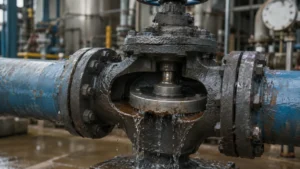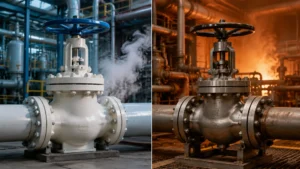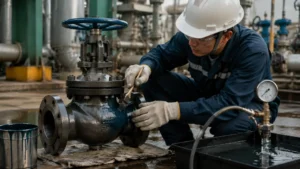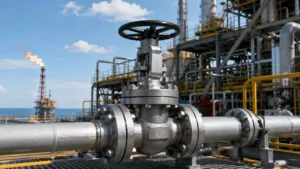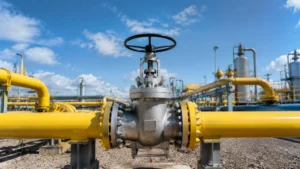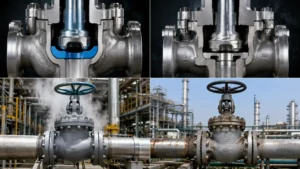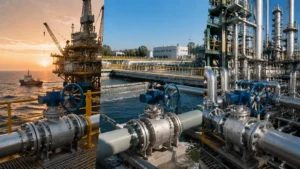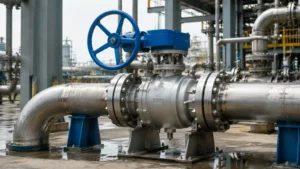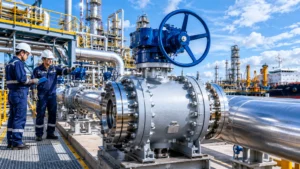
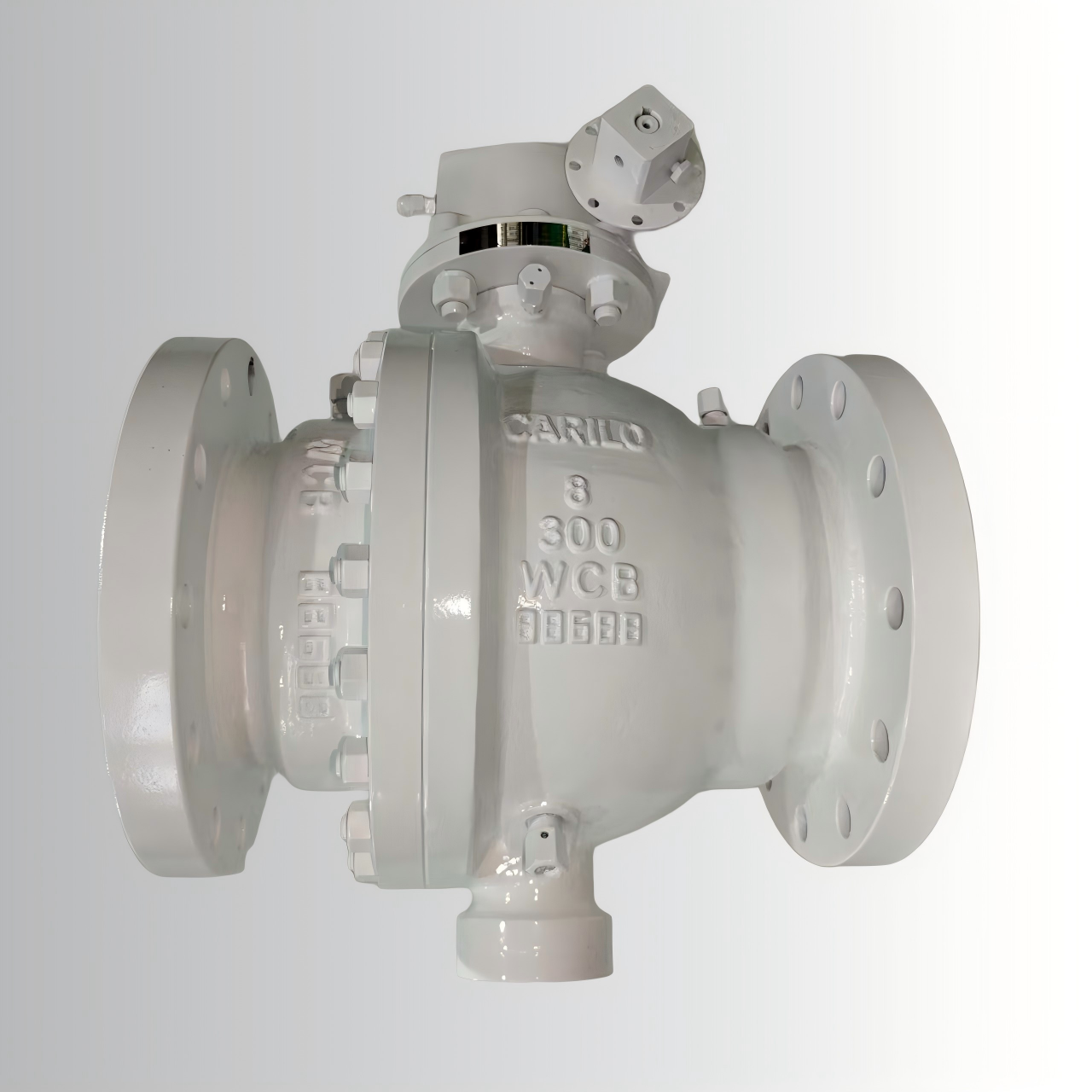
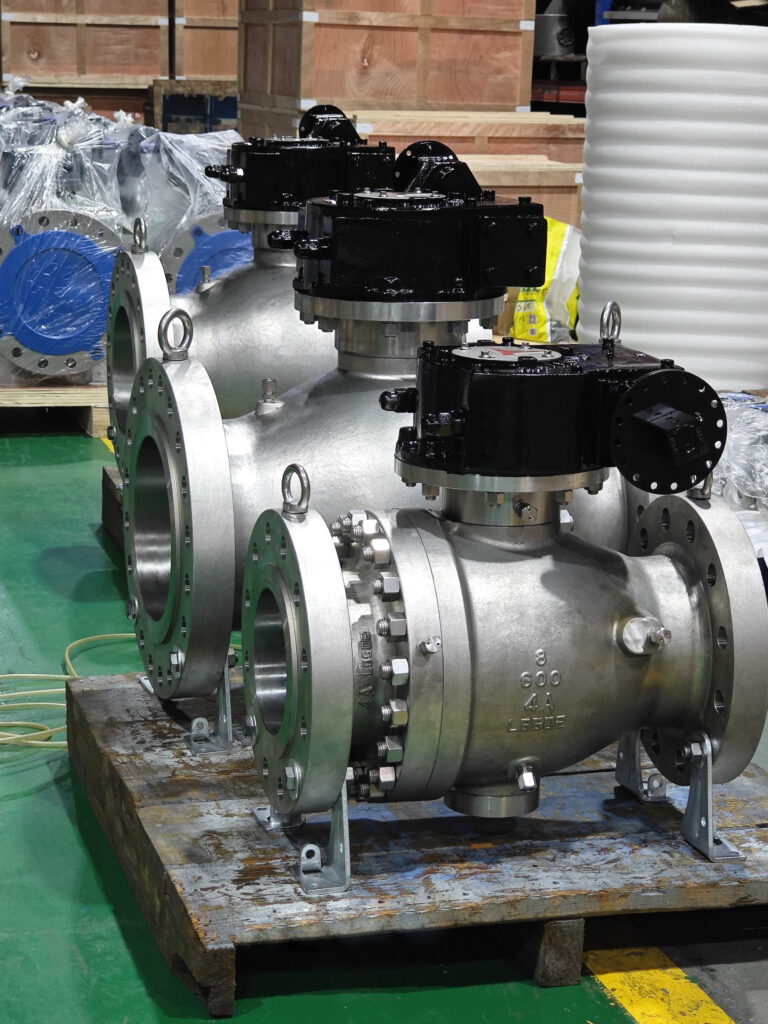
CARILO high-precision ball valves are fully engineered to API 6D and ASME B16.34 standards, specifically optimized for high-pressure flow regulation in upstream and downstream oil and gas operations. Utilizing ASTM A216 WCB or A351 CF8M investment casting bodies, these valves maintain structural integrity under extreme pressures up to Class 2500 (6,170 PSI) and temperatures ranging from -29°C to 425°C.
Our designs prioritize ISO 5208 Rate A zero-leakage performance and are API 607 Fire-Safe certified, ensuring failsafe operation in volatile petrochemical environments. To maximize project ROI, 100% of CARILO valves undergo rigorous shell and seat pressure testing per API 598 before dispatch. This stringent QA process ensures a 99.9% operational reliability rate, effectively reducing field maintenance downtime by 25% compared to standard industrial alternatives
Casting vs. Forged Structure
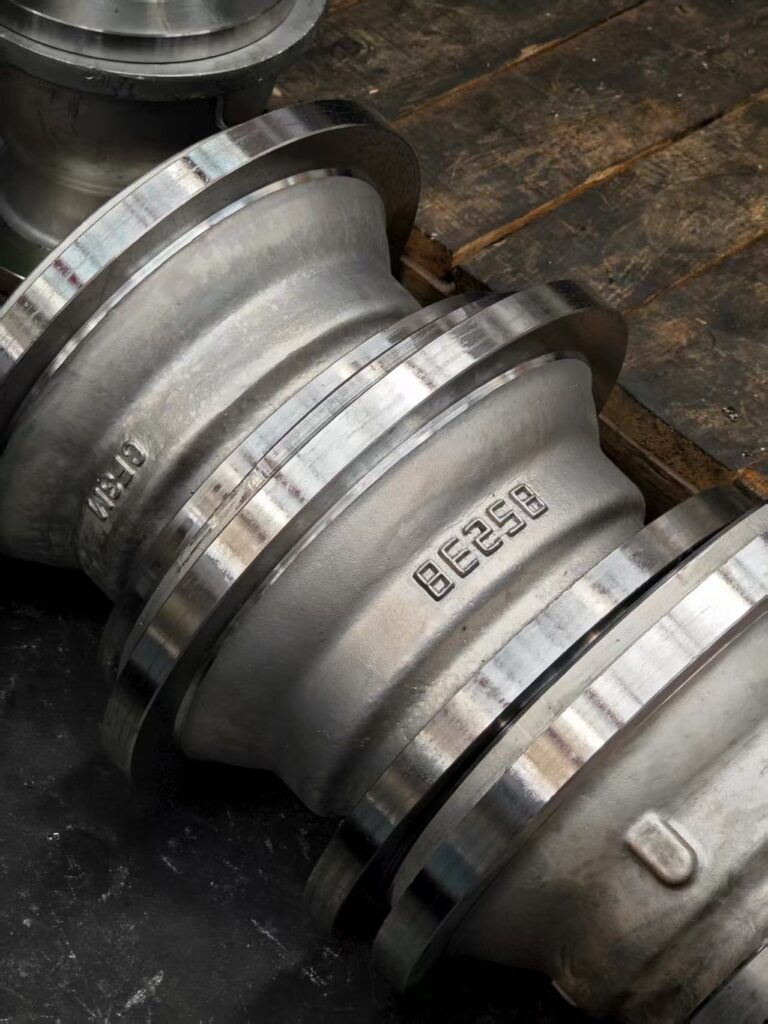
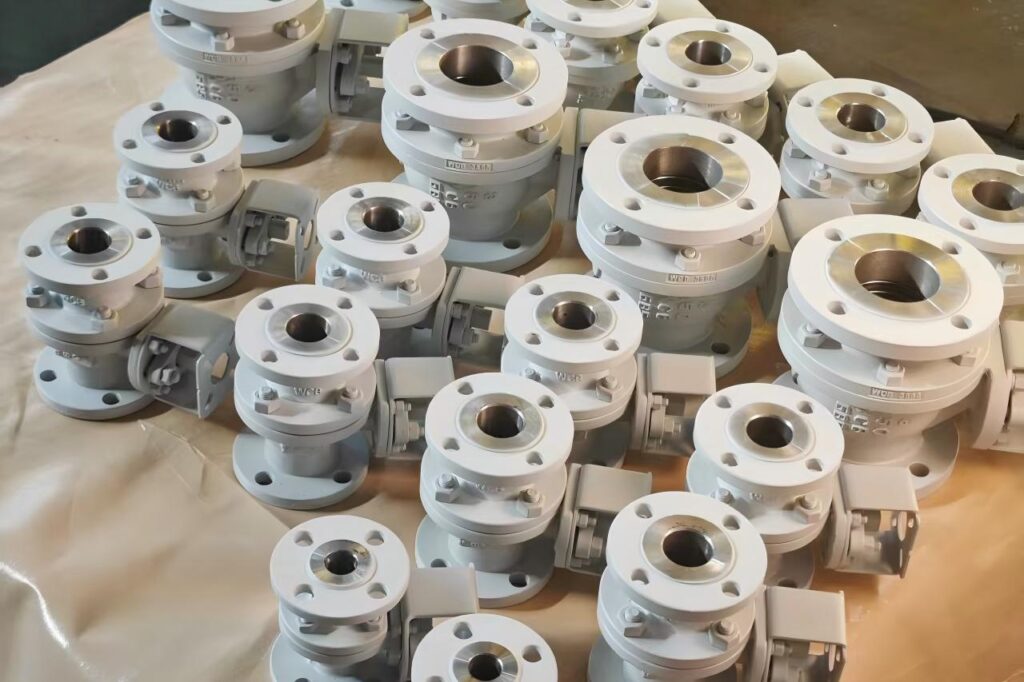
Manufactured using ASTM A216 WCB or A351 CF8M alloys, our casting ball valves offer superior design flexibility for complex internal geometries and larger bore sizes. By adhering to ASME B16.34 wall thickness standards, these valves provide a high-strength alternative to forged options, typically reducing procurement costs by 20-30% for Class 150 to Class 600 applications. The precision casting process ensures streamlined flow paths that minimize turbulence and pressure drop (ΔP). While forged valves are reserved for extreme high-pressure cycles, our casting series delivers the optimal balance of ASTM-certified reliability and scalability. For EPC contractors and global distributors, this represents a high-integrity solution that meets API 6D performance requirements while optimizing project CAPEX.
Material Options
CARILO casting ball valves are engineered in a diverse range of high-grade metallurgies, including ASTM A216 WCB, A351 CF8M, and Duplex A890 4A/5A. This material versatility ensures full compliance with NACE MR0175/ISO 15156 standards for sour gas and aggressive chemical environments. While WCB carbon steel provides high-strength economy for mid-range temperatures, our Duplex and Super Duplex alloys deliver a Pitting Resistance Equivalent Number (PREN) >35 for high-chloride service. To guarantee zero-defect casting integrity, we implement 100% Non-Destructive Testing (NDT), including Radiographic (RT) and Magnetic Particle (MT) inspections per ASME B16.34. By precision-matching metallurgy to specific pH and pressure profiles, we extend valve service life by 30-40% and significantly optimize project lifecycle costs.
Pressure & Temperature Range
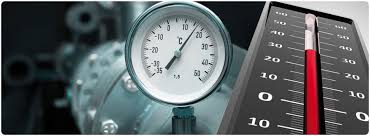
Compliant with ASME B16.34 and API 6D, our casting ball valves are engineered for rigorous service from Class 150 (PN20) to Class 600 (PN100). Utilizing ASTM A216 WCB or A351 CF8M with verified induction heat treatment, we guarantee mechanical stability across a wide thermal gradient from -29°C to 425°C (-20°F to 800°F). To ensure zero-leakage integrity, every valve undergoes 100% hydraulic shell testing at 1.5x design pressure and seat testing per API 598 (Rate A). For midstream and downstream infrastructure, our precision-cast series delivers ASTM-certified structural integrity with a 20-25% reduction in procurement CAPEX compared to forged alternatives. This represents a high-ROI solution for large-scale EPC projects that demand strict adherence to safety benchmarks and optimized lifecycle cost-efficiency.
Design Flexibility & Size Range
Utilizing advanced sand and investment casting, CARILO produces ball valves in a comprehensive range from NPS 2 to NPS 60 (DN50–DN1500). This process enables complex internal geometries that optimize Flow Coefficients (Cv) by up to 15% compared to standard forged configurations, effectively minimizing pressure drop (ΔP) in high-capacity pipelines. We maintain rigorous dimensional accuracy within ISO 8062 CT10-12 grades and ensure a surface finish of Ra 6.3–12.5 µm per MSS SP-55 standards. By adhering to ASME B16.34 wall thickness minimums and API 6D specifications, these valves provide high-integrity performance for refining and petrochemical facilities. For global EPC contractors, our precision-cast solutions offer a 10-15% reduction in total valve weight without compromising structural safety, significantly optimizing logistics and project CAPEX.
Applications in Oil, Gas & Chemicals
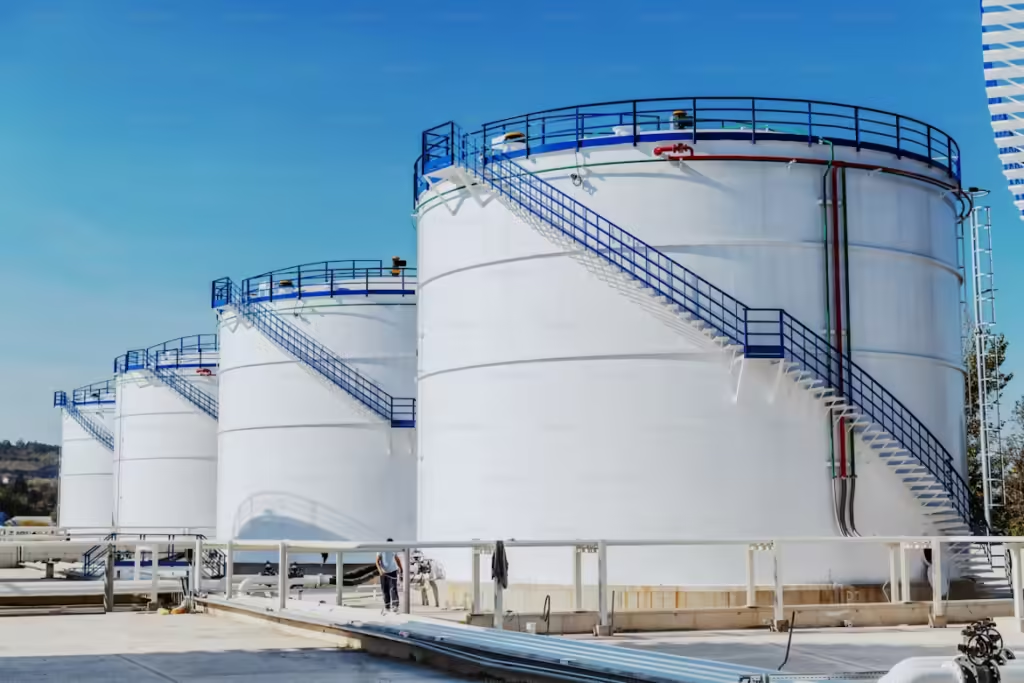
CARILO casting ball valves are engineered for mission-critical service across the hydrocarbon value chain, including API 6D pipeline transmission, ASTM-grade refinery units, and downstream petrochemical processing. Optimized for Class 150 to Class 600 (PN20–PN100) systems, these valves deliver API 598 Rate A (Zero-Leakage) shutoff in utility lines and midstream storage facilities. Utilizing NACE MR0175/ISO 15156 compliant metallurgy, our series effectively manages sour crude, natural gas liquids (NGLs), and high-pressure steam with a verified operational durability of 50,000+ cycles. For global EPC contractors and stockists, our precision-cast designs reduce procurement CAPEX by 20–30% while maintaining ISO 15848-1 fugitive emission control, ensuring an optimal balance of lifecycle reliability and project profitability in high-demand environments.

What to Look for When Buying an Industrial Ball Valve | sealing performance, material options, low maintenance
Industrial ball valve selection should target ANSI Class VI shutoff performance, with CF8M stainless steel as the preferred body material for PN64 high-pressure service. To reduce maintenance costs, specify an ISO 5211 direct-mount pad together

Which Industrial Ball Valve Material Is Best for Harsh Environments | stainless steel, carbon steel, chemical resistance
316 stainless steel ball valves outperform carbon steel in harsh environments. With 2%–3% molybdenum, they can withstand strong acid and alkali corrosion as well as temperatures up to 450°C. When selecting a valve, if the

What Is the Difference Between Full Port and Reduced Port Industrial Ball Valves | flow capacity, pressure loss, application fit
Full-port ball valves have a bore equal to the pipe I.D., delivering 100% flow capacity with extremely low pressure loss. They are ideal for applications that require pigging or the transfer of high-viscosity fluids. Reduced-port

Best Industrial Ball Valve Options for High-Pressure Applications | sealing performance, body strength, service life
For extreme high-pressure service, a forged steel F316L trunnion-mounted ball valve is the preferred choice to withstand ultimate pressures up to 10,000 PSI. The sealing system should use a PEEK seat paired with a tungsten

How to Select an Industrial Ball Valve for Corrosive Media | corrosion resistance, seat material, long-term reliability
When selecting a ball valve for corrosive media, the valve body should use Hastelloy C-276 to withstand strong acids above 50% concentration, while the seat should be made of PFA-lined material rated to 260°C to

Which Valve Fits Your Pipeline Better:Industrial Ball Valve vs Butterfly Valve? | pressure resistance, installation space, operating torque
Industrial ball valves can handle pressures of up to 1,000 bar, but they require high operating torque and take up more space. Butterfly valves save a great deal of installation space, and their operating torque

Industrial Ball Valve Applications in Oil and Gas Pipelines | high pressure, fire safe design, operational safety
Industrial ball valves for oil and gas pipelines can withstand pressures of up to 10,000 PSI. The handle must be turned smoothly through 90 degrees to prevent water hammer in the pipeline system. For operational

Key Factors to Consider Before Buying an Industrial Ball Valve | connection type, operating pressure, application media
For highly corrosive media, 316L is recommended with a PTFE seat rated to 200°C. Check the operating pressure carefully. If system pressure exceeds 10 MPa, threaded connections must be avoided and replaced with flanged connections

Common Industrial Ball Valve Failures and How to Prevent Them | leakage issues, seat wear, improper operation
Internal leakage in ball valves and seat wear are often caused by improper operation. To prevent this, the valve must always be rotated the full 90 degrees to the fully open or fully closed position.

How to Choose an Industrial Ball Valve for High-Pressure Applications | pressure rating, valve material, sealing performance
When selecting a high-pressure ball valve, prioritize Class 1500 to Class 2500 pressure ratings. The body material should be forged F316L steel to withstand extreme mechanical stress, and the sealing system must use high-pressure-resistant PEEK
Order & Payment
Most Popular Questions
Lorem ipsum dolor sit amet, consectetur adipiscing elit. Ut elit tellus, luctus nec ullamcorper mattis, pulvinar dapibus leo.
Casting ball valves offer superior design flexibility for complex internal geometries and larger bore sizes up to NPS 60. They typically reduce procurement CAPEX by 20-30% while maintaining API 6D structural integrity for Class 150-600 applications.
Our valves are engineered to ASME B16.34 and API 6D standards, with materials meeting NACE MR0175/ISO 15156 for sour gas service. Fire safety is certified to API 607, and fugitive emissions are strictly controlled per ISO 15848-1.
We utilize ASTM A216 WCB and A351 CF8M alloys with 100% Non-Destructive Testing (NDT), including Radiographic (RT) and Magnetic Particle (MT) inspections. This ensures a surface finish of Ra 6.3–12.5 µm per MSS SP-55 and minimizes porosity defects.
Designed for Class 150 to Class 600 ratings, our WCB valves operate reliably from -29°C to 425°C (-20°F to 800°F). Advanced normalizing and tempering heat treatments ensure grain refinement and thermal stability across diverse midstream and downstream environments.
Yes, our Duplex A890 alloys provide a PREN >35 for high-chloride service. Additionally, the precision casting process optimizes Flow Coefficients (Cv) by up to 15%, reducing pressure drop (ΔP) in high-capacity pipelines from DN50 to DN1500.
Every valve undergoes 100% hydraulic shell testing at 1.5x design pressure and seat testing per API 598 (Rate A). This guarantees zero-leakage performance and an operational durability exceeding 50,000+ cycles for mission-critical industrial projects.
Send us a message
If you have any questions or would like to book a session please contact us.