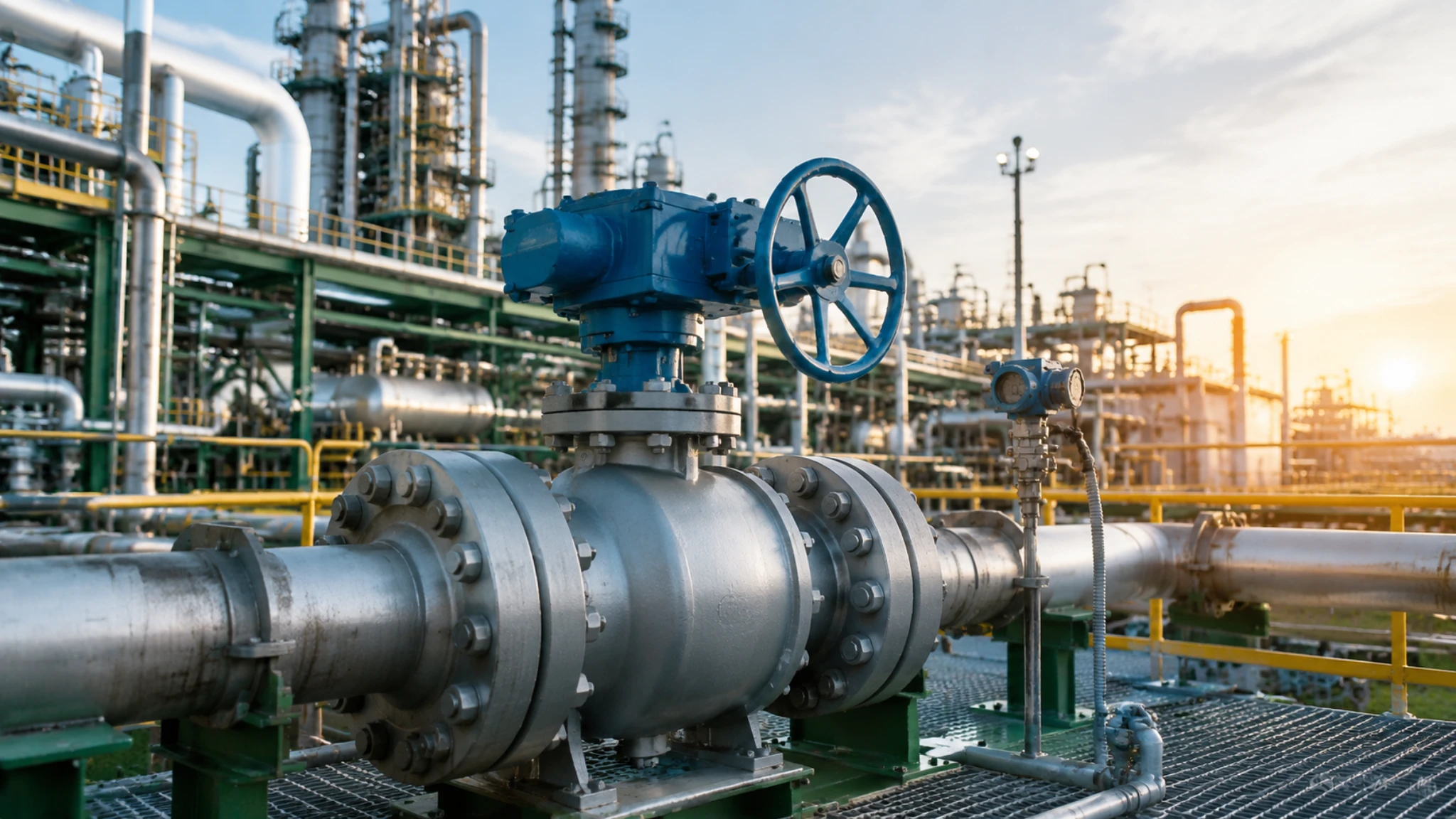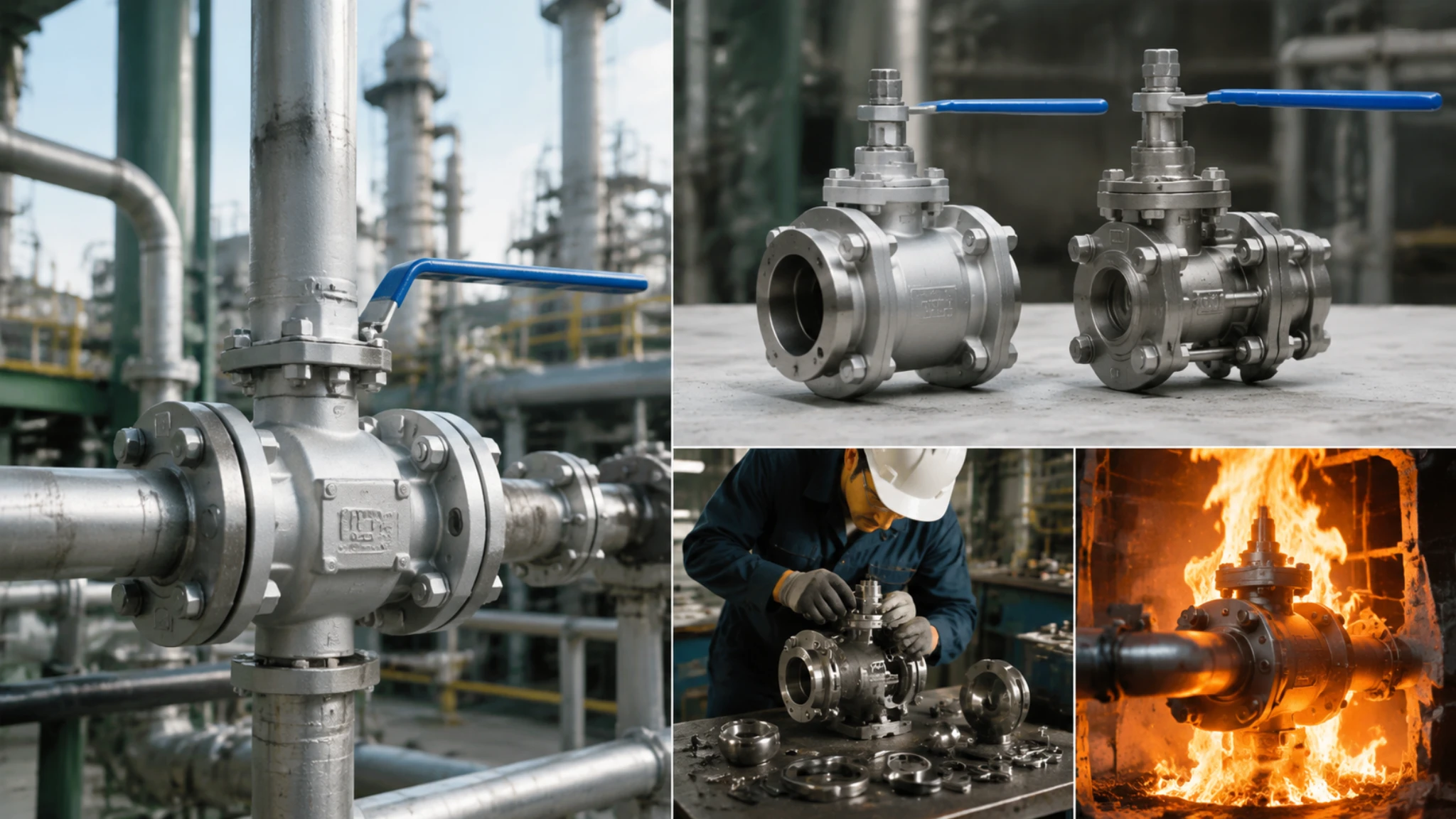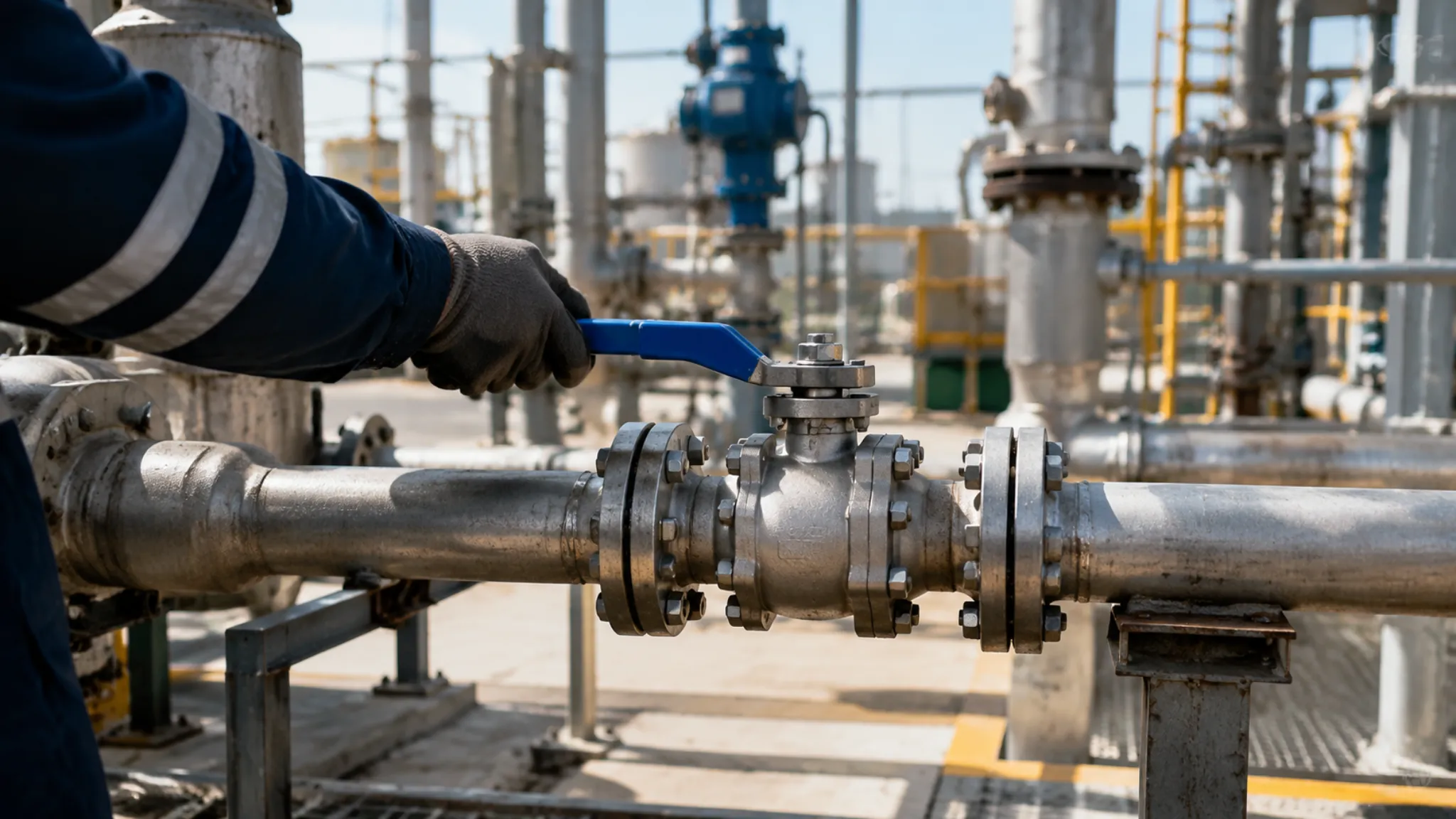
In 2017, a petrochemical plant in the Middle East ordered 300 valves for a new process unit. Gate, globe, check, and ball valves. Classes 150 through 900. Carbon steel and stainless. The procurement team sent the same RFQ to seven manufacturers, evaluated the quotes on price and lead time, and awarded to the lowest bidder. The valves arrived on schedule and passed visual receiving inspection. Six months into operation, the gate valves started sticking. The globe valves were leaking past the seats. The check valves were hammering on closure. None of them had failed catastrophically. They were just underperforming in ways that added up: higher maintenance costs, more frequent shutdowns, reduced throughput from valves that wouldn’t open fully. The root cause analysis found the same pattern across all three valve types: materials that met the minimum specification but had no margin, machining tolerances that were at the limit of what the drawings allowed, and testing that was done to the minimum API requirement with no additional verification. The valves were technically compliant. They were also functionally inadequate. The plant spent the next two years replacing them in batches, always during planned turnarounds because they couldn’t afford the downtime to do it all at once. Total cost of the cheap valves over five years: about 2.5 times what the best quote would have cost up front.
Choosing an industrial valve manufacturer is fundamentally different from choosing a valve. A valve is a product. A manufacturer is a relationship that will determine whether your valves work, whether they keep working, and what happens when they stop. The difference between a supplier and a partner shows up in the first problem you have, not in the first purchase order you place. Here’s what separates the two.
The difference between compliance and capability
Every industrial valve manufacturer lists their certifications. ISO 9001. API 6D. API 600. API 602. CE marking. The certificates look the same regardless of who issues them. But certification tells you the manufacturer has a documented process. It doesn’t tell you whether the process produces good valves.
An ISO 9001 certificate means the manufacturer has a quality management system with documented procedures for design, purchasing, production, inspection, and corrective action. The auditor verified that the procedures exist and are being followed at the time of the audit. But ISO 9001 audits are typically conducted once a year and sample a fraction of the production output. A manufacturer can pass an ISO audit with a 5% internal rejection rate, or they can pass with a 0.5% rejection rate. Both get the same certificate. The difference in quality between those two manufacturers is an order of magnitude, but the certificate doesn’t reveal it.
The real questions to ask about compliance go beyond the certificate. Here is what you should ask:
- What’s your internal rejection rate over the last twelve months?
- What are the top three reasons for rejection?
- How do you track rejection trends and what corrective actions have you implemented in the last year?
A manufacturer who can answer these questions with specific data – not general statements about “quality culture” – has a quality system that’s actually being used. A manufacturer who says they don’t track rejection rates, or that their rejection rate is zero, is either not measuring or not telling the truth.
API 6D certification is the baseline for pipeline valves. But API 6D allows a range of testing rigor. The standard requires a hydrostatic shell test at 1.5 times rated pressure and a seat test at 1.1 times rated pressure. It doesn’t specify whether the seat test is done with water or gas. It doesn’t require helium leak detection. It doesn’t require anti-static testing beyond design verification. A manufacturer who does the minimum API 6D testing and a manufacturer who adds gas seat testing, helium leak detection, and anti-static verification on every valve are both API 6D certified. The test reports will look different, and the valves will perform differently in service, but that difference isn’t captured by the certification alone. API 6D certified valve manufacturers who invest in testing beyond the minimum are typically the ones whose valves don’t come back on warranty claims.
Manufacturing depth: what they make vs what they buy
Industrial valve manufacturing is a supply chain game. The foundry pours the castings. The forge shop produces the forgings. The machine shop turns the raw castings and forgings into finished components. The assembly shop puts everything together and tests it. Most manufacturers operate the assembly and testing in-house and outsource the casting and forging to specialist suppliers. The quality of the finished valve depends as much on the casting and forging suppliers as on the final assembly.
A manufacturer with in-house foundry and forge capabilities controls the entire process from raw material to finished valve. They can verify the heat chemistry at the furnace, control the pouring temperature and cooling rate, and inspect the casting before it ever leaves their facility. They can trace every component back to a specific heat of steel, poured on a specific day, by a specific operator. The documentation chain is unbroken because nothing leaves their control.
A manufacturer who outsources casting and forging has to rely on their suppliers’ quality control. They receive the castings, do incoming inspection, and hope they didn’t miss anything. The inspection catches surface defects and dimensional errors. It doesn’t catch internal porosity unless they’re doing radiographic or ultrasonic inspection on every casting. Most manufacturers sample-inspect incoming castings. A 10% sampling rate will catch systemic problems. It won’t catch the one casting in ten that has an inclusion just below the surface at a critical stress concentration point.
This isn’t to say that outsourced manufacturing is inherently worse. Some of the best valve manufacturers in the world outsource their castings to specialist foundries that produce better castings than any valve manufacturer could make in-house. The key is whether the manufacturer audits their suppliers, verifies incoming material with PMI and dimensional inspection, and can trace every component back to its original heat. Industrial valve manufacturers with strong supplier quality programs produce valves that are just as good as vertically integrated manufacturers. The ones who treat their casting suppliers as interchangeable commodity vendors produce valves that fail at the casting defects that incoming inspection missed.
Testing that separates the real manufacturers from the box-movers
The difference between a manufacturer who builds valves and a trading company that buys and resells them is visible in the test bay. A real manufacturer has a dedicated test area with multiple test stations, calibrated pressure gauges with traceable calibration certificates, chart recorders that document pressure hold times, and a rejection area where failed valves are tagged and quarantined. A trading company has a single test pump in the corner, a pressure gauge with an expired calibration sticker, and a “100% pass rate” that’s statistically impossible.
The hydro test is the basic requirement. API 598 shell test at 1.5 times rated pressure, held for the specified duration based on valve size. The pressure gauge should be a calibrated gauge with a current sticker, and there should be at least two gauges of the same range so they can be cross-checked. A single gauge with no backup and no calibration record means the test data is unreliable.
The seat test is where the differences really show. For soft-seated valves in gas service, the standard is a pneumatic seat test at 0.4 to 0.7 MPa with zero visible bubbles over a minimum of 15 seconds. A bubble larger than 1mm diameter at the seat is a failure. The test requires a clean water bath, good lighting, and a patient inspector who watches every bubble. Manufacturers who rush this test pass valves that will leak in service because the leak is small enough to miss in a 15-second observation but large enough to matter over months of operation.
For critical service valves, helium leak detection is the gold standard. A mass spectrometer probe scans the seat and stem areas while the valve is pressurized with helium. The detection threshold is typically 50 parts per million, which is orders of magnitude more sensitive than a water bath bubble test. A valve that passes a nitrogen bubble test can still leak helium at a measurable rate because helium atoms are smaller than nitrogen molecules. Helium testing adds cost – the equipment is expensive, the helium is expensive, and the testing takes longer. But for valves in hydrogen service, toxic gas service, or any application where a small leak has large consequences, helium testing is worth the cost. Pressure testing specifications should include the test method, not just the test pressure, because the method determines what size leak is detectable.
Anti-static testing is the most commonly skipped test. API 608 requires electrical continuity between the ball, stem, and body with a resistance of less than 10 ohms. The test uses a milli-ohmmeter with probes on the ball, stem, and body. If the reading is above 10 ohms, the anti-static design isn’t working, and the valve could build up static charge and discharge into the process fluid. In hydrocarbon service, that’s an ignition source. The anti-static spring costs about three dollars. The test takes about 30 seconds per valve. Skipping it saves essentially nothing and creates a real safety hazard.
After-sales: the capability that determines your total cost
The purchase price of a valve is maybe 15-20% of its total lifecycle cost. Installation, maintenance, spare parts, and downtime make up the rest. A manufacturer who disappears after the invoice is paid has handed you the other 80% of the cost and walked away.
A real industrial valve partner has three after-sales capabilities that directly affect your operating costs.
- Technical support that can diagnose problems remotely. When a valve won’t close, a good manufacturer’s engineer can look at your actuator pressure readings, your stem torque data, and your process conditions, and tell you whether the problem is the seat, the stem packing, the actuator, or something in the pipeline that’s jammed the ball. They can do this in under an hour if they know their own products. If it takes three days and a site visit, they don’t know their own products well enough.
- Spare parts availability. A valve that was made five years ago and needs a seat kit should have that kit in stock. The manufacturer’s ERP system should have the original production drawings, the seat dimensions, the material specifications, and the assembly tolerances. They should be able to pull a seat kit from stock or machine one from the original drawings within 48 hours. A manufacturer who can’t produce spare parts for their own products from five years ago is not a manufacturer. They’re a reseller who doesn’t control their supply chain.
- Failure analysis. When a valve fails in service, a good manufacturer wants to know why. They’ll ask for the valve back, section the failed components, analyze the fracture surfaces, check the material chemistry, and produce a report that explains what happened and how to prevent it. They do this even when the failure isn’t clearly their fault, because every failure teaches them something about how their valves behave in the real world. A manufacturer who treats every warranty claim as an adversarial negotiation is not a partner. Long-term valve manufacturing partnerships are built on this kind of after-sales commitment, not on the price per unit in the initial quotation.
Geographic context: what it means to manufacture in China for global markets
China produces roughly 40% of the world’s industrial valves by volume. The advantages are well-known: lower labor costs, integrated supply chains for raw materials and components, and a manufacturing ecosystem that can produce everything from commodity gate valves to custom-engineered Class 2500 trunnion ball valves. The disadvantages are also well-known: quality variability, communication challenges across time zones and languages, and the difficulty of verifying what happens on a factory floor 6,000 miles away.
The manufacturers who succeed in global markets are the ones who’ve invested in the things that bridge the geographic gap. Technical documentation in fluent English. Engineers who can discuss your application on a video call at your convenience, not theirs. ERP systems that give you real-time visibility into your order status. Independent third-party inspection at the factory before shipment. Material traceability that follows EN 10204 Type 3.1 standards with signatures from accredited inspectors. These things cost money to build and maintain, and they’re the difference between a manufacturer who treats export as an afterthought and one who’s built their business around serving global customers.
The certification landscape adds another layer. API, ISO, and CE certifications from accredited bodies are the baseline. But some manufacturers hold certifications from specific end-user qualification programs – Shell MESC, Total GS, Aramco 9COM, ADNOC specifications – that require additional testing and factory audits beyond the standard industry certifications. A manufacturer who’s passed a Shell or Aramco factory audit has been scrutinized by engineers whose job is to find problems. Surviving that scrutiny is a stronger signal of manufacturing quality than any ISO certificate. API certified manufacturers with full testing documentation are a step above those who just have the certificate on the wall without the supporting data.
The factory visit: what to look for when you’re standing on the production floor
You can learn more about an industrial valve manufacturer in three hours on their factory floor than in three months of email exchanges. But only if you know where to look.
Start in receiving. Watch what happens when a truckload of castings arrives. Does someone do a dimensional check on a sample from each pallet? Do they use a handheld XRF spectrometer to verify the chemistry? Do they check the heat numbers against the mill certificates? If the castings go straight from the truck to the machine shop without inspection, the manufacturer is trusting their supplier’s quality control. That trust is misplaced often enough that you should be concerned.
Walk the machine shop. Look at the CNC machines. Are they clean? Is the coolant clear or does it look like coffee? Are the cutting tools organized or is the tool crib a pile of worn inserts? A clean, organized machine shop produces consistent parts. A dirty, disorganized one produces parts with dimensional variation because worn tools cut oversize and dirty coolant affects surface finish. Look at the machine screens. If you can see the tool offset values, check whether they’re making adjustments larger than 0.05mm. Consistent small adjustments mean the machine is holding tolerance and the operator is compensating for normal tool wear. Large adjustments mean something is drifting and the operator is chasing it.
Stop at the assembly area. Pick up a valve that’s been completed but not yet tested. Check the bolting. Are the flange bolts torqued with a calibrated torque wrench in a star pattern? Or does it look like someone ran them down with an impact gun? An impact gun has no torque control. The bolt preload variation from bolt to bolt can be 40% or more, and that variation translates directly into gasket leakage when the valve sees its first pressure cycle.
Go to the test bay. This is where the manufacturer proves they’re serious or proves they’re pretending. Look at the pressure gauges. Are there at least two gauges per test station, of the same range, with both reading within 1% of each other? Is there a chart recorder documenting the pressure hold time, or is someone watching a gauge and writing down the reading? A chart recorder can’t be fudged. A handwritten log can. Check the calibration stickers on every gauge, every torque wrench, every measuring instrument. If a sticker is expired, the data from that instrument is invalid, and every valve tested with it is of unknown quality.
Find the rejection area. Every good factory has one. Valves that failed hydro should be there with red tags listing the failure mode and the disposition. Valves that failed seat test should be there with the test pressure and leakage rate. If you can’t find the rejection area, ask to see it. If the manufacturer says they don’t have one because they don’t have rejections, they’re lying. A 1-3% rejection rate is normal for well-run industrial valve production. Zero rejections means zero real testing.
The small stuff that predicts big problems
The most reliable indicator of manufacturing quality isn’t the certifications on the wall. It’s the small details on the production floor that nobody thinks to hide because they don’t realize they matter.
- The condition of the pressure gauges. A gauge with a cracked face or a needle that doesn’t rest at zero when depressurized is a gauge that hasn’t been calibrated in years. The test results from that gauge are fiction.
- The organization of the tool crib. If torque wrenches are stored with the setting wound to zero – which protects the calibration spring – the manufacturer maintains their tools. If the wrenches are stored at whatever torque the last user set, the calibration springs are taking a set and the torque readings are drifting.
- The cleanliness of the assembly benches. If there’s metal swarf and grinding dust on the bench where valve internals are assembled, those particles are getting into the valve cavity and will score the ball and seats on the first cycle.
- The condition of the forklift. This sounds trivial. It’s not. A manufacturer who maintains their forklift – clean, no leaks, tires not bald, mast chains lubricated – maintains their production equipment with the same attitude. A manufacturer with a forklift that looks like it’s been in service since the factory opened and never seen a grease gun probably has the same attitude toward their CNC machines and test equipment.
- The bathroom. This is the oldest factory audit trick in the book and it works. If the employee bathroom is clean, stocked, and maintained, management cares about their workforce. If it’s filthy, management doesn’t, and workers who aren’t cared about don’t care about the quality of their output. I’ve walked out of factories after seeing the bathroom. Not because the bathroom itself matters. Because what the bathroom says about management matters a lot.
The decision that pays for itself
The petrochemical plant in the Middle East eventually replaced all 300 valves. The replacement cost was about 1.8 million dollars, spread over three planned turnarounds. The original saving from choosing the lowest bidder was about 400,000 dollars. The net cost of the decision was about 1.4 million dollars in excess of what buying from a better manufacturer would have cost from the start.
Industrial valve procurement is not a product purchase. It’s a relationship purchase. The valve is the easy part. The hard part – the part that determines whether you’re replacing valves at the next turnaround or running them for another decade – is what happens after the valves are installed. A manufacturer who answers the phone at 3 AM when your plant is down, who has the spare parts for a five-year-old valve in stock, and who treats your problem as their problem even when the warranty has technically expired – that’s not a supplier. That’s a partner. And that’s worth the premium, every time.