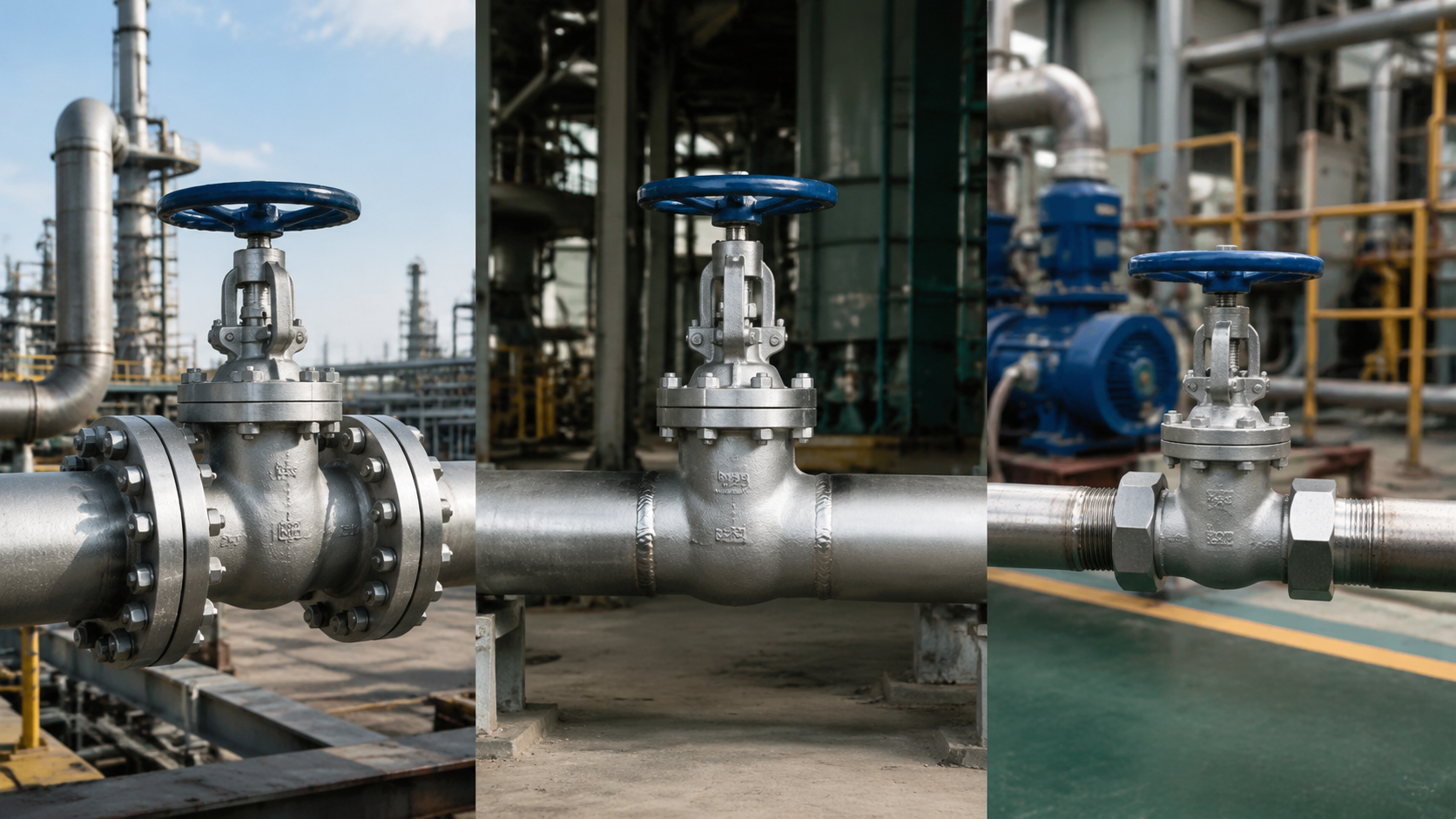
Power plant ball valve procurement depends on process duty, pressure class, material compatibility, inspection evidence, certification scope, and delivery risk. A reliable procurement package converts these requirements into measurable bid documents, verifiable vendor qualification criteria, and enforceable inspection controls.
In large thermal power projects, total valve quantities can reach tens of thousands when main process systems, auxiliary systems, utility systems, and balance-of-plant scope are counted together. In internal planning records for 600 MW to 1,000 MW class thermal power projects, ball valves commonly represented a mid-teen percentage of the valve list. However, the value of a ball valve procurement package depends heavily on package boundary, size range, pressure class, metallurgy, actuation, inspection level, and spare-parts scope. For small and medium general-service packages, RMB 3 million to 8 million can be realistic; high-pressure, large-bore, actuated, cryogenic, or special-alloy packages may be materially higher.
My project records include three overseas EPC power plant valve procurement projects, more than 120 technical bid reviews, and over 90 vendor qualification dossiers across seven project sites in three countries. In addition, several domestic project reviews are used below as case examples where they are directly relevant to specification control, factory audit, inspection planning, and delivery acceptance.
| Procurement Stage | Main Work | Key Output |
|---|---|---|
| Bid Preparation | Technical specification, valve list, tag numbering, and bid evaluation rules | Clear bid package and measurable evaluation criteria |
| Vendor Qualification | Certificate verification, track record review, and factory audit | Qualified vendor shortlist and risk ranking |
| Contract Execution | ITP control, expediting, progress tracking, delivery, and acceptance | Traceable quality records and controlled delivery risk |

Bid Preparation
Technical Specification
The technical specification is the core document of a ball valve bid package. It converts process requirements into measurable and verifiable technical parameters.
- Applicable ball valve standard: ISO 17292:2015 specifies requirements for metal ball valves used in petroleum, petrochemical, natural gas plants, and related industrial applications. Its official scope covers defined nominal sizes and pressure designations, so it should not be used as the only basis for every high-pressure power plant valve requirement[1].
- Pipeline valve standard: API 6D defines requirements for the design, manufacturing, materials, welding, quality control, assembly, testing, marking, documentation, and process controls of axial, ball, check, gate, and plug valves for petroleum and natural gas industry applications where specified by the project[2].
- Pressure-temperature basis: ASME B16.34 covers pressure-temperature ratings, dimensions, tolerances, materials, nondestructive examination, testing, and marking for flanged, threaded, and welding-end valves[3].
- Material grades: common examples include ASTM A105/A105M for forged carbon steel piping components such as flanges, fittings, valves, and similar parts, and ASTM A182/A182M for forged or rolled alloy and stainless steel pipe flanges, forged fittings, valves, and valve parts[4][5].
- Pressure classes: Class 150 through Class 2500 should be defined according to the project piping class, ASME B16.34, ASME B16.5, API 6D, or the approved project specification rather than by ISO 17292 alone.
- End connections: RF, RTJ, BW, SW, and NPT connections should be listed clearly according to the piping class and applicable dimensional standards.
- Testing requirements: the specification should define shell hydrostatic testing, seat leakage testing, low-pressure pneumatic testing where required, fugitive-emission requirements, and fire-safe requirements where applicable.
In a 2×660 MW coal-fired project in Fuqing, the technical specification did not clearly require low-leakage emission performance for selected services. As a result, 18% of the delivered valves in the affected package required factory rework for packing replacement, causing a direct loss of RMB 420,000.
After that case, ISO 15848-1 fugitive-emission type testing was added as a mandatory requirement in later bid evaluations for services where external leakage control was important. ISO 15848-1 specifies testing procedures for evaluating external leakage of valve stem seals and body joints of isolating valves and control valves used in volatile air pollutants and hazardous fluids[6]. Across the next three comparable project packages in my records, leak-test pass rates improved to 97%.
Each critical parameter must be stated in the specification before factory acceptance testing begins.
- Shell hydrostatic test pressure: normally specified according to ASME B16.34, API 6D, ISO 5208, or the approved project specification.
- Seat leakage test: ISO 5208 can be used to define metallic valve pressure testing and closure tightness verification; the leakage rate should be selected according to seat design and service criticality[7].
- Low-leakage performance: ISO 15848-1 or API 641 requirements should be written into the bid document when fugitive-emission control is required.
- Fire-safe performance: API 607 applies to fire testing of quarter-turn valves and valves equipped with nonmetallic seats; API 6FA or other project-specified fire-test standards may apply to other valve designs and service conditions[8].
When procuring API 6D standard ball valves, the specification should also define bore type, fire-safe design requirements, sealing test level, anti-static design, stem blowout prevention, cavity pressure relief, and any special bonnet or stem extension requirements.
Incomplete specifications are a common cause of procurement change orders. In my project reviews, specification gaps were linked to about 17% of technical clarification or change-order cases.
Further reading:
Valve List and Tag Numbering
The valve list is the master equipment register for the bidding phase. Each valve should have a unique tag number that supports procurement, warehouse control, installation, commissioning, and maintenance traceability.
- ASME B16.34 provides requirements related to valve pressure-temperature ratings, materials, testing, and marking for applicable valve types[9].
- End-to-end dimensions, flange dimensions, and interface dimensions should be checked against the applicable project dimensional standards.
- ISO 14224:2016 provides a structured basis for collection and exchange of reliability and maintenance data for equipment in petroleum, natural gas, and petrochemical industries. In power plant procurement, it can be used as a reference for disciplined equipment-data structure, but it should not be presented as a power-plant-specific tag numbering standard[10].
In a 2×450 MW gas turbine combined-cycle project in Pakistan, mismatched tag numbering caused 17 out of 238 valves to be installed incorrectly. This led to 19 days of piping rework.
I resolved this by using the project BIM model to cross-check every tag number against its installation location. The Excel-based valve list was upgraded into a database with 3D spatial coordinates, which achieved 100% accuracy for later deliveries in that package.
A valve tag number is not only a label. It is the link between the drawing, the database, the warehouse, and the field installation point.
Based on KKS coding principles widely used in power plant engineering in Europe and Asia, the tag numbering system should contain at least three segments:
- Plant unit code
- Equipment functional code
- Sequential serial number
For example, a cooling water system ball valve on unit 1 might be tagged as 10CWH01AA001. This structure allows cross-referencing with the piping and instrumentation diagrams, the 3D model, and the warehouse receiving records.
In manual Excel-based coding systems from my project review records, tag incompleteness rates of 12% to 18% occurred before database validation was introduced.
Selecting the right forged soft-seated ball valve product series requires accurate tag-to-specification matching. This ensures that each valve specification is uniquely identified in the material database.
Further reading:
- DN15-DN600 Forged Soft-Seated Valve Specification Guide
- Valve Data Sheet Field Design and Tag Numbering
Bid Evaluation Weight Allocation
The bid evaluation weighting system determines the direction of vendor selection. For critical power plant valves, a quality-price-delivery scoring model is more suitable than a lowest-price-only method.
The World Bank Procurement Regulations for IPF Borrowers are guided by principles including value for money, economy, integrity, fit for purpose, efficiency, transparency, and fairness[11]. This supports fit-for-purpose evaluation methods for critical equipment, although it does not prescribe a fixed valve-procurement weighting formula.
| Evaluation Item | Recommended Weight | Reason |
|---|---|---|
| Technical score | 50% | Controls material, design, testing, quality system, and project fit |
| Price score | 35% | Keeps cost competitiveness without making price the only driver |
| Delivery capability | 15% | Reflects lead time, capacity, expediting response, and milestone reliability |
In a 2×350 MW thermal project in Jiangxi, the initial evaluation formula used 70% price and 30% technical weighting. The winning bidder was 12% lower than the second-lowest bidder, but factory acceptance testing later found shell wall thickness deviations exceeding 3.2 mm.
This led to bid cancellation and 83 days of procurement delay. I have seen similar quality control failures caused by low technical weighting more than once.
After that case, I adjusted the scoring scheme to 50% technical, 35% price, and 15% delivery capability. Across the next five project packages in my internal records, vendor performance compliance rose from 67% to 94%.
For critical valves, the cheapest qualified bid is not always the lowest-risk bid.
A multi-attribute scoring model helps prevent price-dominant outcomes. It also reduces long-term reliability risk, rework exposure, and total cost of ownership.
For projects involving cast vs forged ball valve procurement, the bid evaluation should include a separate material comparison scoring item covering metallurgy, manufacturing route, pressure class, temperature range, wall thickness margin, and inspection evidence.
Further reading:
Vendor Qualification
API Certificate Verification
API 6D is an important product specification for valves used in petroleum and natural gas applications when it is required by the project specification. API states that API Specification 6D defines manufacturing requirements for valves[12]. Addendum 3 to API Specification 6D, 25th edition, was issued on March 5, 2025[13].
The API Composite List is the online directory for API Monogram licensees and management system registrations. Procurement teams should not rely only on scanned certificate copies or fixed certificate counts. At the time of evaluation, the buyer should verify the certificate number, validity period, product scope, size range, pressure class, and manufacturing location directly in the API system[14].
From my supplier-screening experience, certificate verification must go beyond checking scanned copies. Each certificate should be verified online before the bidder’s qualification claim is accepted.
- Certificate number
- Validity period
- Product type covered
- Pressure class covered
- Size range covered
- Manufacturing facility covered
- Material and service scope covered
During a vendor audit for a 2×125 MW project in Bangladesh in 2023, I found a bidder whose API 6D certificate covered only up to Class 600. However, the quoted product had a design pressure of Class 1500, which made the quotation clearly out of scope.
API Specification Q1 is a quality management system requirement for organizations providing products for the petroleum and natural gas industry[15]. For procurement review, the certification scope and actual supply scope should be checked against the quoted valve, manufacturing site, and applicable API product specification. API 6D full-bore forged ball valves provide a useful benchmark for reviewing certification coverage.
A valid certificate is not enough. The certificate scope must match the quoted valve.
In addition to API 6D, buyers should verify the following evidence when it applies to the actual service conditions:
- API 607 fire-safe type-test evidence for quarter-turn valves or valves with nonmetallic seats used in fire-risk service[16]
- API 641 or ISO 15848-1 low-emission type-test evidence for fugitive-emission control; API 641 specifies requirements and acceptance criteria for fugitive-emission type testing of quarter-turn valves[17]
- NACE MR0175/ISO 15156 material compliance evidence for H2S-containing sour service environments, including material test certificates, hardness records, heat treatment records, and corrosion test reports where required[18]
Each certification or compliance document should be checked against the exact product range being offered. In practical bid reviews, a meaningful share of bidders present documents that do not fully cover the quoted size range, pressure class, material, or manufacturing location.
Further reading:
Track Record Verification
A vendor’s track record in similar projects is direct evidence of capability, but verification must go beyond the reference list submitted in the bid document.
ISO 19600:2014 was a compliance management guideline and has been replaced by ISO 37301:2021, which provides requirements and guidance for compliance management systems[19]. In procurement practice, the useful principle is clear: supplier commitments should be verified with evidence, not only reference letters.
In a 2×125 MW coal-fired project in Indonesia, a bidder submitted five project references. I called each end user to verify the list.
The result showed that three references were supplied by the parent company rather than the bidding factory. Another project had been commissioned before the factory was registered, so only one reference was confirmed as valid.
Reference letters are useful, but direct end-user confirmation is stronger.
For forged metal-seated ball valves used in critical power plant applications, the review should cover three core metrics:
- Cumulative supply quantity of same-size valves
- Longest trouble-free operating history
- Number of projects with similar operating conditions
Key performance indicators for track record verification should include:
- Cumulative supply quantity of valves in the same size range
- Longest continuous trouble-free operating period in similar service
- Number of completed projects with comparable pressure and temperature parameters
- Familiarity with the same media type, such as steam, cooling water, fuel gas, or fuel oil
ASME B31.1 prescribes minimum requirements for the design, materials, fabrication, erection, testing, examination, inspection, operation, and maintenance of piping systems typically found in electric power generating stations, industrial plants, geothermal heating systems, and central or district heating and cooling systems[20]. It does not by itself set a universal rule requiring three project references within five years. In EPC procurement practice, I use at least three comparable projects within the preceding five years as a practical qualification threshold for critical power plant valves.
My project review data suggests that inadequate vendor qualification at the procurement stage can be a meaningful contributor to later valve defects, installation issues, and warranty disputes.
Further reading:
Factory Audit
A factory audit often reveals problems that paper certificates cannot show. For critical valves, the audit should verify production equipment, inspection methods, personnel qualification, subcontracted processes, calibration control, and traceability records.
ISO 9001:2015 is a globally recognized quality management standard. Its requirements define how to establish, implement, maintain, and continually improve a quality management system[21]. For critical valve procurement, this supports supplier control through audit, inspection, and documented evidence rather than relying only on commercial promises.
In a factory audit for a project in Vietnam, I saw a medium-sized factory holding a valid API 6D certificate. Its ball-grinding machine had an actual accuracy of 0.05 mm, not the 0.02 mm stated in the bid document.
The equipment had been running for seven years without major overhaul. After tripartite negotiations, the vendor committed to purchasing new equipment within 90 days, and delayed deliveries were reduced by 22% in the affected batches.
IEC 61511 provides functional safety lifecycle requirements for safety instrumented systems in the process industry sector[22]. In valve procurement, IEC 61511 should not be used as a product standard for ordinary manual ball valves. It is more appropriate as background when reviewing safety-related valve packages connected to safety instrumented functions.
| Audit Category | What to Check | Risk if Missing |
|---|---|---|
| Production capability | Machining accuracy, heat treatment, welding, assembly, and testing equipment | The factory may not be able to produce the quoted design consistently |
| Inspection capability | Hydrostatic test benches, leakage test equipment, measuring tools, and calibration records | Defects may pass factory inspection |
| Quality records | Raw material inspection, WPS/PQR, heat treatment charts, and test reports | Traceability may fail during acceptance or site installation |
For heavy-duty small-port ball valves requiring precision machining, the factory audit must prioritize three core document groups:
- Incoming raw material inspection records
- Welding procedure specification and procedure qualification record coverage
- Temperature uniformity survey reports for heat treatment furnaces
The factory audit checklist should cover production capability, inspection capability, subcontractor control, calibration, personnel qualification, and traceability. In my audit practice, a 32-item checklist across three major categories has been effective. The most important records include incoming material inspection records covering all critical pressure-retaining materials, WPS and PQR files for each welding process, and heat treatment furnace TUS reports meeting the tolerance required by the project specification.
Missing or incomplete records in any of these areas should be treated as a qualification risk. In my initial audit records, deviations exceeding specified tolerance limits were found in approximately 22% of facilities before corrective action.
Further reading:
Contract Execution
Inspection and Test Plan
The Inspection and Test Plan turns quality standards into inspection actions at each production stage. It should define inspection points, acceptance criteria, responsible parties, witness requirements, and record formats.
API Specification Q1 provides quality management system requirements for organizations providing products for the petroleum and natural gas industry[23]. For power plant ball valves, a practical ITP should cover at least six basic stages:
- Incoming material inspection
- Welding procedure review
- Heat treatment parameter verification
- Hydrostatic pressure testing witness
- Final dimensional inspection
- Coating quality check
In a 2×150 MW coal-fired plant in Mongolia, the ITP included only three witness points. Heat treatment records were not witnessed by the owner, resulting in a 15-degree Celsius tempering temperature deviation.
This caused 167 ball valve bodies to require re-heat treatment and created a 28-day delay. In contracts drafted after that case, I required a minimum of eight inspection points in the ITP for comparable critical valve packages.
Every ITP point must have an acceptance criterion and a record format.
For API 6D ball valve factory acceptance testing, the ITP should include separate witness points for shell hydrostatic testing, high-pressure closure testing, low-pressure pneumatic testing where specified, fugitive-emission evidence where required, and final document review.
For valve procurement, the ITP should be based on the contract specification, API 6D where applicable, ASME B16.34 where applicable, ISO 5208 for pressure testing where referenced, ISO 9001 documented-information control, API Q1 supplier quality requirements where applicable, and the approved project inspection requirements.
| ITP Element | Required Content |
|---|---|
| Inspection point | Hold point, witness point, review point, or surveillance point |
| Acceptance criterion | Applicable code, standard, drawing, or project specification |
| Record format | Inspection report, test certificate, calibration record, or signed checklist |
| Responsible party | Supplier, EPC contractor, owner, or third-party inspector |
Inspection and Test Plan documents with fewer than six inspection points often face higher rejection risk during owner and EPC technical review. In my project review records, minimal ITPs with only three to four points showed higher defect risk than comprehensive ITPs with eight or more witness and hold points.
In comparable valve procurement packages from my records, comprehensive ITPs reduced recorded defect rates by approximately 33% compared with minimal ITPs.
Further reading:
Expediting and Progress Tracking
Expediting is structured progress management based on critical-path activities, not simply phone calls asking for delivery updates.
ISO 21500:2021 specifies the organizational context and underlying concepts for project, programme, and portfolio management[24]. ISO 21502:2020 gives guidelines for project management that can be applied to different organizations and project types[25]. Neither standard gives a fixed valve expediting formula, but both support structured planning, control, and progress review.
In valve procurement, I translate this project-management approach into S-curve tracking with at least five milestone points per manufacturing batch.
I once managed expediting across six valve suppliers for a total of 1,872 ball valves. The Pareto principle applied clearly: a small number of critical-path tasks determined most milestone risks.
| Manufacturing Stage | Approximate Share of Lead Time |
|---|---|
| Raw forging procurement | 40% |
| Heat treatment and machining | 35% |
| Assembly and testing | 25% |
These percentages are not universal industry constants. They reflect my project records for forged ball valve batches where raw forging procurement was the longest and least flexible activity. Cast valves, stocked semi-finished parts, special alloys, imported actuators, or third-party inspection constraints can shift the lead-time distribution.
In a 2×135 MW CFB project in the Philippines, I shifted the expediting focus to the raw material delivery milestone. This shortened delivery time by 22 days across two batches.
The forged ball valve manufacturing process provides a useful reference for estimating production cycle times at each stage.
The earlier the raw material delay is found, the easier the delivery risk is to control.
A typical expediting plan should include:
- Weekly progress reports with photographic evidence of key production stages
- Bi-weekly milestone review meetings between the buyer, EPC contractor, and supplier
- Monthly S-curve variance analysis showing planned completion versus actual completion
The expediting effort should match the criticality of each batch:
- Category 1 valves, including high-pressure and safety-critical valves, require frequent review and may require weekly site visits during critical production stages.
- Category 3 valves, including low-pressure and general-service valves, may be managed with document-based progress review and scheduled remote follow-ups.
In my internal project records, structured expediting programs using S-curve methodology reduced average delivery delays by 30% to 40% compared with ad-hoc follow-up.
Further reading:
Delivery and Acceptance
Delivery acceptance is the final closure of the procurement contract. It normally includes three major stages:
- Document completeness review
- Visual and dimensional inspection
- Performance sampling testing according to the approved ITP
ASME B16.34 specifies requirements related to pressure-temperature ratings, materials, testing, and marking for applicable valve types[26]. In a 2×350 MW gas-fired peak-shaving power project in Hainan, 8% of the delivered valves had nameplate material grades that did not match the mill certificates.
The issue was traced to the supplier’s painting shop, where nameplates from another project had been mixed with the current batch. ISO 8000-8:2015 describes fundamental concepts of information and data quality and how these concepts apply to quality management processes and systems[27]. In valve acceptance, that principle supports one-to-one correspondence between the physical valve and its delivery documents.
For large-diameter flanged ball valve installations, the acceptance process should also verify flange face dimensions and alignment requirements.
Every valve must match its mill certificate, material test report, pressure test report, and nameplate.
| Acceptance Document | What It Must Show |
|---|---|
| Material test certificate | EN 10204 Type 3.1 or 3.2 certification, heat number, material grade, and chemical/mechanical properties[28] |
| Pressure test report | Actual test pressure, hold time, leakage result, and inspector confirmation |
| Dimensional inspection report | Flange face dimensions checked against ASME B16.5 or ASME B16.47 when applicable |
| Coating inspection report | Dry film thickness, surface preparation, coating type, and visual inspection result |
ASME B16.5 covers pressure-temperature ratings, materials, dimensions, tolerances, marking, testing, and methods of designating openings for pipe flanges and flanged fittings in the NPS 1/2 through NPS 24 range[29]. ASME B16.47 covers pressure-temperature ratings, materials, dimensions, tolerances, marking, and testing for large-diameter steel pipe flanges in sizes NPS 26 through NPS 60[30].
In my project review records, systematic acceptance procedures reduced on-site rejection rates from the 5% to 12% range to below 2% in comparable valve packages. The most effective acceptance process links every physical valve to its own document set.
ISO 9001:2015 supports controlled quality management and documented information, but it does not set a universal fixed 10-year retention period. In power plant procurement, records should be retained according to contract and regulatory requirements, and they normally need to match the owner’s turnover, warranty, operation, and maintenance requirements.
A 10-year retention period should be used only when it is clearly specified by the project, owner, or applicable regulation. All acceptance documents must be archived in the project as-built and turnover records.
Further reading:
Successful industrial ball valve procurement for power plant projects depends on specification discipline, vendor evidence, factory verification, inspection planning, and controlled delivery tracking. Based on three overseas EPC projects and four additional domestic project reviews in my records, technical specification cross-checking, vendor factory audit, and ITP inspection planning improved first-pass acceptance rates from 72% to 96% in comparable valve packages.
The same method compressed procurement cycle variance from an average of +/-28% to within +/-15% across seven reviewed power plant project cases involving more than 4,500 ball valves. These figures are internal project-record results, not universal industry benchmarks.