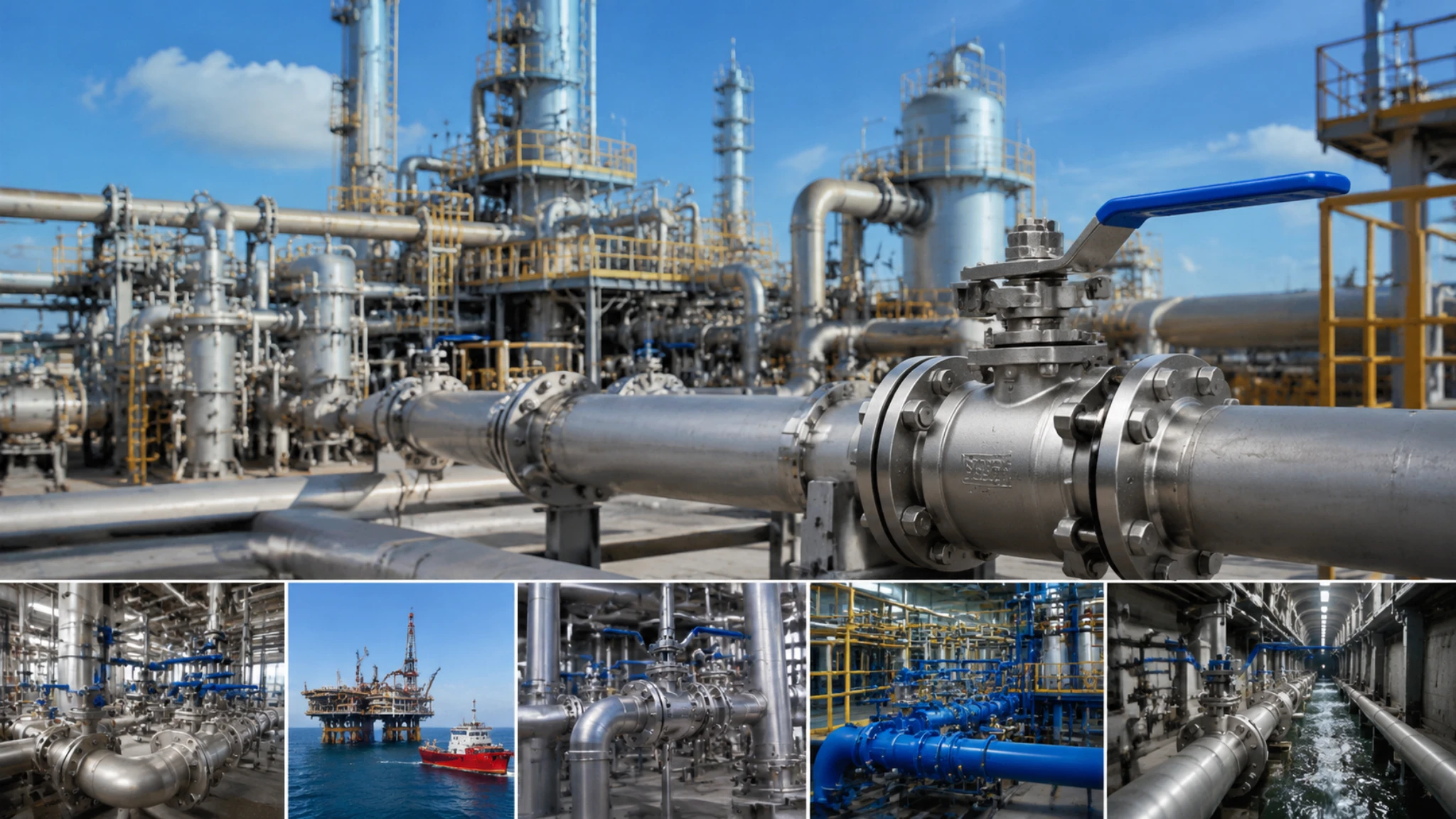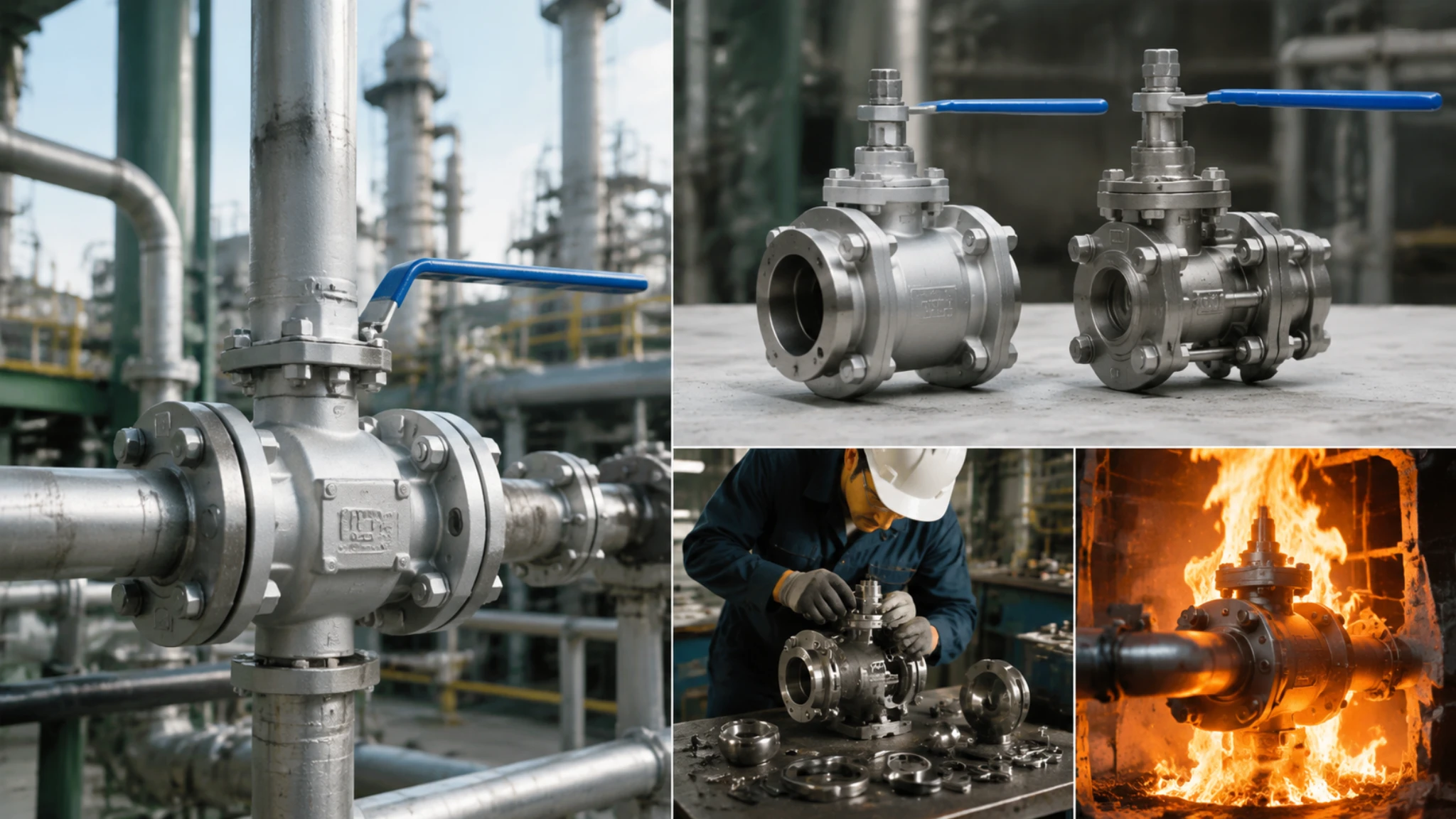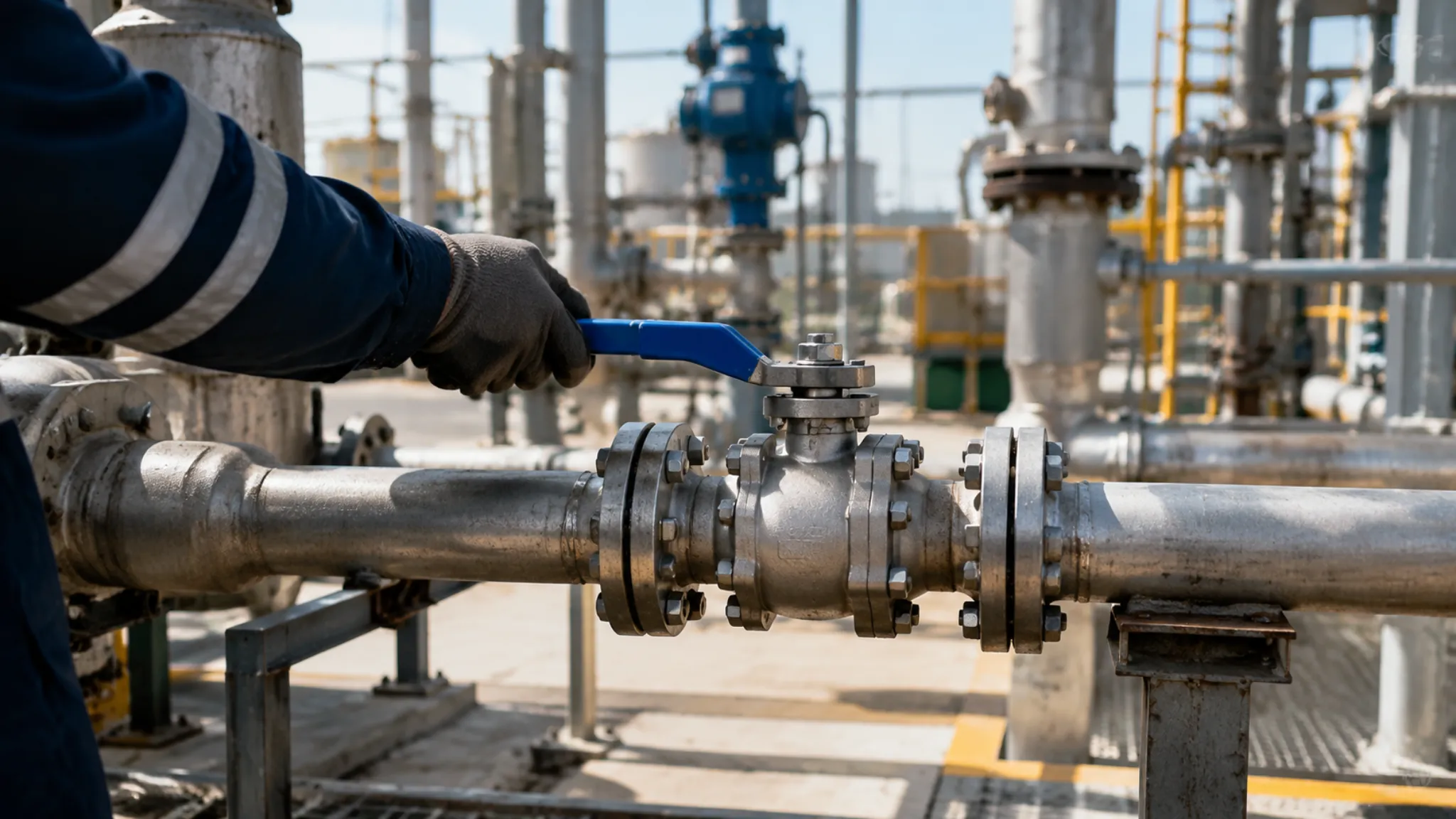
A project engineer at a chemical plant once showed me two quotes for 200 4-inch Class 300 ball valves. The full bore quote was 112,000 dollars. The reduced port quote was 87,000 dollars. A 25,000-dollar difference on one valve type alone. The plant had about 800 ball valves total across all sizes and classes. The engineer was applying reduced port everywhere except on the three lines that needed pigging and the two high-velocity gas lines where pressure drop mattered. Total saving across the project: roughly 85,000 dollars. Five years later, not one of those reduced port valves had caused a problem. The utility water valves, the instrument air valves, the lube oil valves – all running fine with reduced port. The money saved went toward upgrading the Class 900 isolation valves on the reactor feed lines from cast to forged bodies. That’s the right way to use reduced port.
Reduced port ball valves are not the cheap alternative to full bore. They’re the correct choice for the majority of industrial ball valve applications, and specifying full bore everywhere is engineering waste. Here’s what reduced port means, when it’s the right call, and how to avoid the applications where it’ll cost you far more than you saved.
What reduced port actually means
A reduced port ball valve has a ball opening diameter that’s one or two nominal pipe sizes smaller than the valve’s end connection size.
- A 4-inch reduced port valve typically has a ball opening equivalent to a 3-inch pipe.
- A 6-inch reduced port valve has a roughly 4-inch opening.
- A 12-inch reduced port valve has a 10-inch opening.
The standard reduction is one pipe size, though some manufacturers offer two-size reductions for larger valves where the cost saving is larger.
The reduced port design saves material in two places: the ball itself is smaller, which reduces the amount of metal in the most expensive machined component, and the body cavity can be smaller because it only has to accommodate the smaller ball. A 6-inch Class 300 reduced port valve with a 4-inch ball weighs about 15-20% less than the full bore version with a 6-inch ball. The cost saving comes from less raw material, less machining time on the ball and body, and a lighter finished product that costs less to ship.
The tradeoff is a permanent restriction in the flow path. When fluid enters the valve, it passes through the full-diameter end connection, then encounters the smaller ball opening. The flow accelerates through the restriction and then decelerates as it expands back into the downstream pipe. This acceleration and deceleration creates turbulence that dissipates energy as heat, which manifests as a pressure drop across the valve. For most applications, that pressure drop is too small to matter. For a few specific applications, it’s a deal-breaker. Reduced port ball valves are the standard specification for utility and secondary process services where the flow restriction is acceptable.
The math of the pressure drop
The pressure drop across a reduced port valve is predictable. For liquid service, the pressure drop is proportional to the velocity squared and inversely proportional to the port diameter.
- 6-inch valve with 4-inch reduced port, water at 10 ft/s: pressure drop ~0.3 to 0.5 psi.
- At 20 ft/s: pressure drop quadruples to 1.2 to 2.0 psi.
- Gas service (e.g. natural gas at 50 ft/s and 800 psi): pressure drop can be 3 to 8 psi.
Over a short pipe run with one valve, this is negligible. Over a 50-mile transmission line with valves every 5 miles, ten reduced port valves with 5 psi drop each adds 50 psi of cumulative pressure loss. That 50 psi translates to additional compression horsepower at the upstream station, which costs real money in fuel or electricity every hour the line operates. Pressure drop across reduced port valves becomes economically significant on long pipelines and high-velocity gas service, and insignificant on short process piping runs.
The Cv – the flow coefficient – quantifies this.
| Valve Type | Size | Cv |
|---|---|---|
| Full bore ball valve | 6-inch | About 2,500 |
| Reduced port version | 6-inch | About 1,000 |
The Cv is the flow rate in US gallons per minute of 60°F water that creates a 1 psi pressure drop. The higher the Cv, the lower the pressure drop for a given flow rate. The reduced port valve has 60% less flow capacity than the full bore version at the same pressure drop. Or, for the same flow rate, the reduced port valve creates about 2.5 times the pressure drop. The question is whether that matters for the specific application.
Where reduced port is the smart choice
For the vast majority of industrial ball valve applications, reduced port is the correct specification. The cost saving is real, the pressure drop is negligible, and there’s no operational penalty.
- Utility water systems. Cooling water, fire water, potable water, washdown water. These lines run at low velocity – typically 5 to 10 ft/s – and the pressure drop across a single reduced port valve is a fraction of a psi. A 6-inch reduced port valve on a cooling water line at 8 ft/s loses about 0.4 psi. The pump discharge pressure might be 60 psi. Nobody will ever notice that 0.4 psi.
- Instrument air and nitrogen. Clean, dry gases at moderate pressure – typically 80 to 120 psi. Flow rates are low. The valve is typically fully open or fully closed, never throttled. The pressure drop across a reduced port valve is negligible, and the cost saving on large instrument air headers with multiple isolation valves adds up fast.
- Lube oil and seal oil systems. Low-velocity liquid services where the valve is either open or closed and the flow rate is determined by pumps and orifices downstream. The pressure drop across the valve is a few tenths of a psi at most. Full bore adds cost and weight with no operational benefit.
- Steam condensate return. Low pressure, moderate temperature, and the valve cycles infrequently. Reduced port saves money and the pressure drop across the valve is irrelevant because the condensate is returning to a collection tank at essentially atmospheric pressure.
- Fuel gas to burners and pilots. Low flow rate, low pressure drop across the valve, and the gas pressure is regulated downstream at the burner anyway. A reduced port valve in this service performs identically to full bore at 20% lower cost.
The common thread: low to moderate flow velocity, no pigging requirement, and the pressure drop across a single valve is a tiny fraction of the system pressure.
These conditions describe most of the ball valves in a process plant, which is why reduced port is the default specification for utility and secondary process services at most engineering firms.
Where reduced port will cost you more than you saved
- Piggable pipelines. If the line runs pigs – cleaning pigs, batching pigs, or intelligent pigs – every valve must be full bore. A reduced port valve will stop a pig, and the cost of the shutdown to free it will be orders of magnitude more than the valve cost saving. There’s no debate on this one. If the line is pigged, full bore is mandatory. Full bore ball valves for pipeline pigging are non-negotiable regardless of the cost difference.
- High-velocity gas transmission. Natural gas pipelines operating at 30 to 60 ft/s with multiple valves along the line. The cumulative pressure drop from reduced port valves costs more in compression energy than the valves cost up front. Over a 30-year pipeline life, the energy cost of reduced port valves can be 5 to 10 times the valve cost saving. Full bore pays for itself through reduced operating cost.
- Slurry and solids-handling lines. Any fluid that contains solid particles – mining slurries, wastewater with grit, crude oil with sand – will erode the reduced port restriction faster than it would erode a full bore valve. The higher velocity through the restriction accelerates the particles, and particle erosion is roughly proportional to velocity cubed. Doubling the velocity through a reduced port increases the erosion rate by a factor of 8. The valve will fail at the port restriction long before it would have failed at the full pipe velocity. For slurry service, full bore is worth the cost specifically to avoid the accelerated erosion at the port restriction.
- Cavitation-prone liquids. If the liquid is near its vapor pressure and the pressure drop through the reduced port drops the local pressure below the vapor pressure, cavitation bubbles form and collapse downstream. The bubble collapse generates micro-jets that can pit the valve body and downstream piping. A full bore valve eliminates the pressure drop that triggers cavitation. For liquids operating near their vapor pressure, full bore is a cavitation prevention measure, not a flow convenience.
Reduced port and the floating ball design
Reduced port ball valves in floating ball designs have a unique advantage: the smaller ball reduces the pressure load on the ball, which reduces the stem operating torque.
- A 6-inch Class 300 floating valve with a full bore 6-inch ball at 600 psi sees about 17,000 pounds of force on the ball.
- The same valve with a reduced port 4-inch ball sees about 7,500 pounds of force.
- The reduced port version needs about 55% less stem torque to operate.
This can make the difference between a valve that’s easily operated by hand and one that needs a gear operator. This is why reduced port floating ball valves can extend the practical size range of the floating design. A full bore 6-inch Class 300 floating valve is marginal for manual operation. The reduced port version is comfortably within manual operating range. An 8-inch Class 150 floating valve with reduced port might be hand-operable, where the full bore version would need a gear operator. The reduced port design makes the floating ball configuration viable at sizes where full bore would require switching to a trunnion design or adding a gear operator. Reduced port floating ball valves in carbon steel and stainless cover the size range from NPS 1/2 to NPS 8 across Class 150 through 600.
For trunnion mounted valves, the torque difference between reduced port and full bore is smaller because the trunnion bearings carry the pressure load regardless of the ball diameter. The reduced port saves cost without a significant torque benefit. In trunnion designs, the choice between reduced port and full bore is purely about flow requirements and pigging capability, not about operability.
The two-size reduction: when the savings are real but so are the risks
Some manufacturers offer reduced port valves with a two-size reduction – an 8-inch valve with a 4-inch ball port instead of the standard 6-inch reduction. The material saving is larger, the weight saving is larger, and the cost saving can be 30-40% compared to full bore. But the velocity through the port is proportionally higher, and the pressure drop is larger.
A two-size reduction makes sense for on-off isolation in clean, low-velocity liquid service where the valve is either fully open or fully closed and the flow rate is low. Cooling water isolation valves are a good example.
A two-size reduction is a bad idea for any service where the flow velocity is high, the fluid contains solids, or the fluid is near its vapor pressure. The velocity doubling through a two-size reduction will accelerate erosion by a factor of 8 and can trigger cavitation in liquids that were safely above their vapor pressure at the full pipe velocity. For gas service, the pressure drop through a two-size reduction can be large enough to affect downstream equipment performance. I’ve seen a two-size reduction valve on a fuel gas line cause burner instability because the pressure drop at high fire was larger than the burner control valve could compensate for. The fix was replacing the two-size reduction valve with a standard one-size reduction valve. The cost of the replacement valve was about 1,200 dollars. The cost of the troubleshooting, burner instability, and process upset was about 15,000 dollars.
Specifying reduced port correctly
The specification should say “reduced port” or “standard port” and identify the port diameter or the Cv, not just trust the manufacturer’s default. Different manufacturers have different standard port reductions. One might use a one-size reduction, another might use a different reduction ratio. The only way to ensure the valve you get has the flow capacity you need is to specify the minimum port diameter or the minimum Cv.
For API 6D valves, the standard requires the manufacturer to state whether the valve is full bore or reduced bore and to provide the actual bore diameter. The valve nameplate should indicate the bore type. The test report should include the bore measurement. If a manufacturer can’t provide the bore diameter for a reduced port valve, they don’t have proper dimensional control of their machining process. API 6D reduced port ball valve manufacturers who document the actual bore diameter on every valve provide the traceability you need to verify that the valve meets the specification.
The chemical plant engineer who saved 85,000 dollars on reduced port valves understood the key principle: reduced port is not the cheap version of full bore. It’s the correct version for services that don’t need full bore. The services that need full bore – pigging, high-velocity gas, slurry, cavitation-prone liquids – are a small fraction of the total valve count in a typical process plant. Specifying full bore on the 90% of valves that don’t need it wastes money that could go toward upgrading the 10% where full bore and other performance upgrades actually matter. The smart specification applies full bore where it’s required and reduced port everywhere else. That’s not cutting corners. That’s engineering.