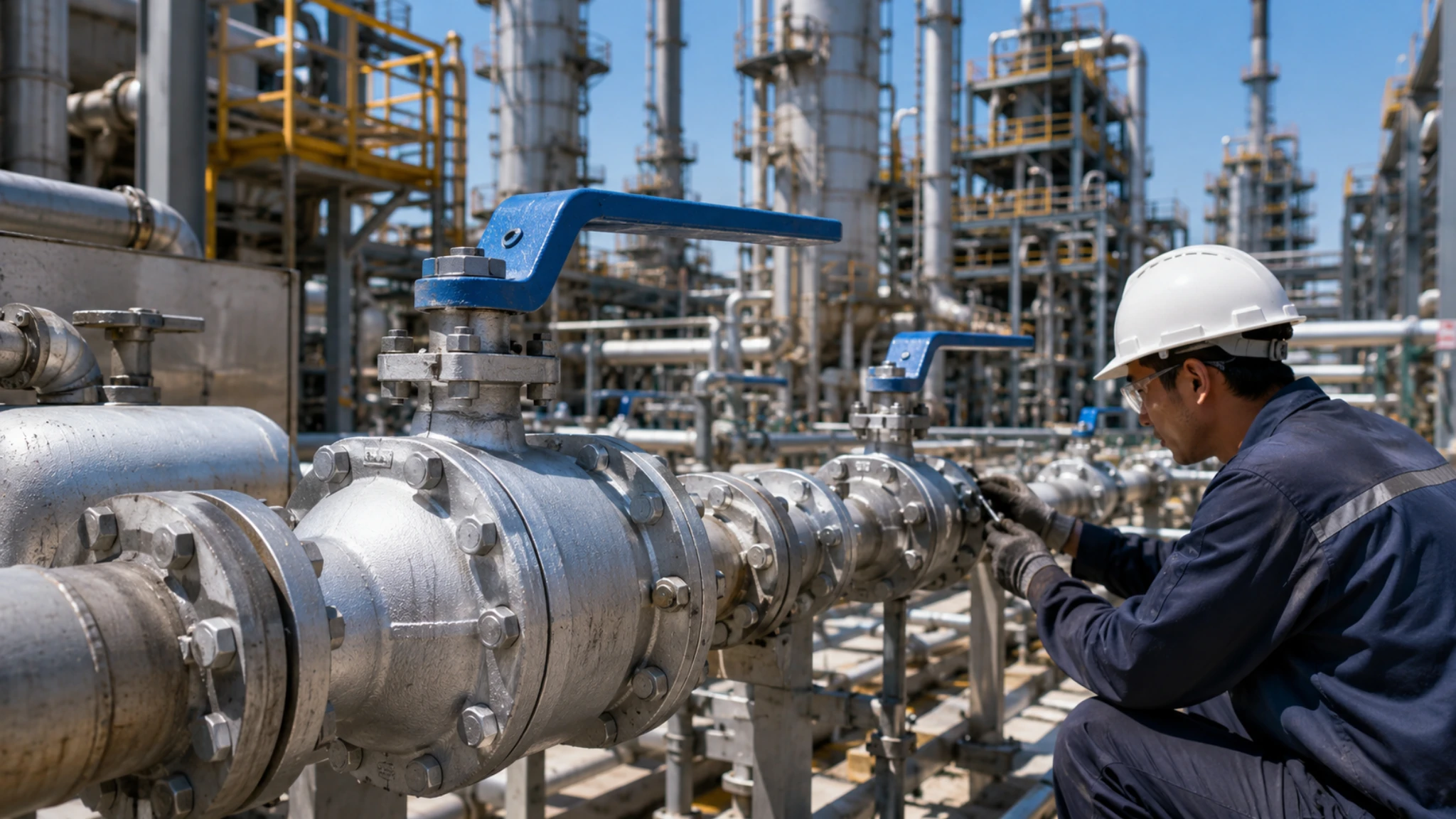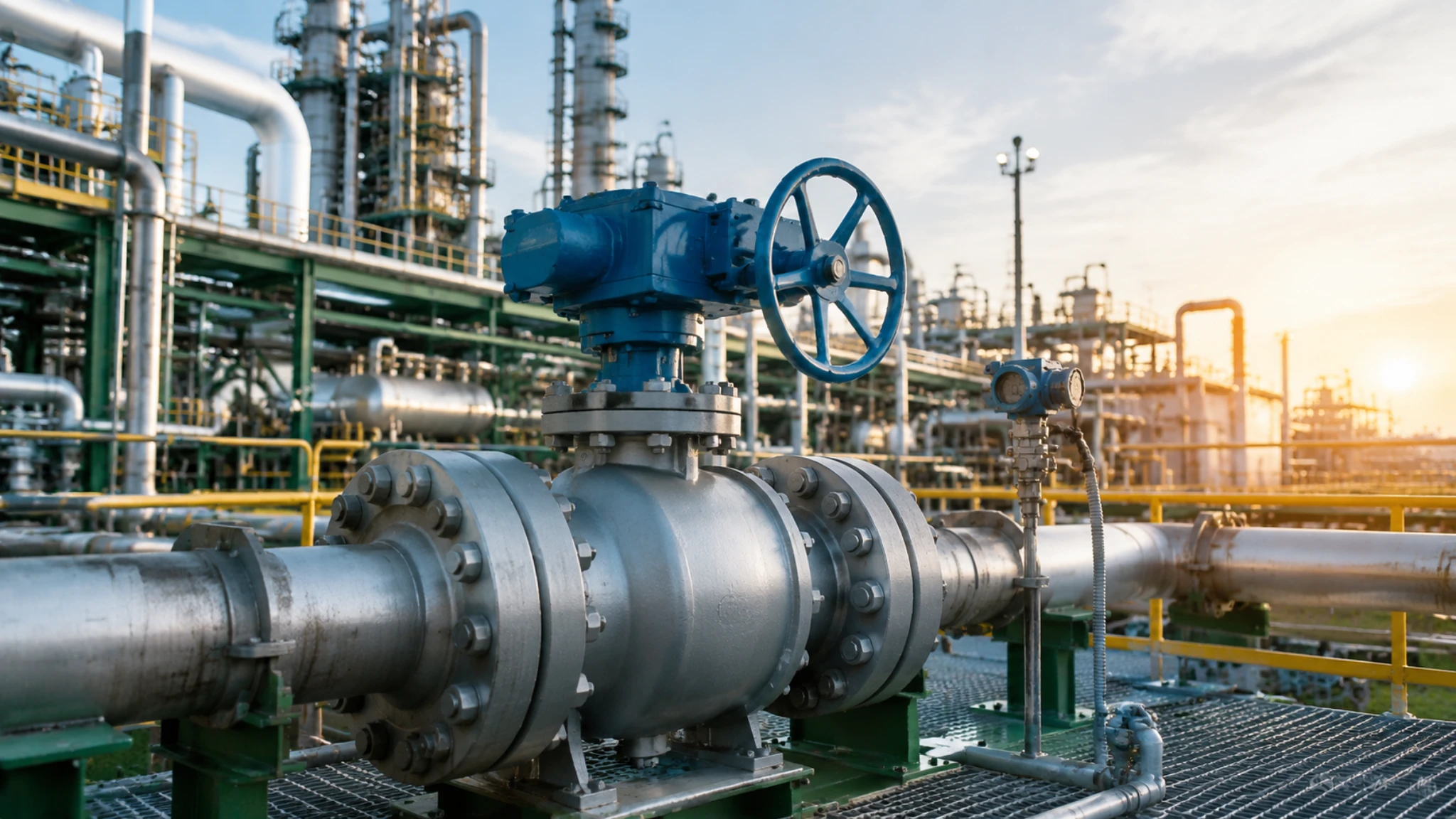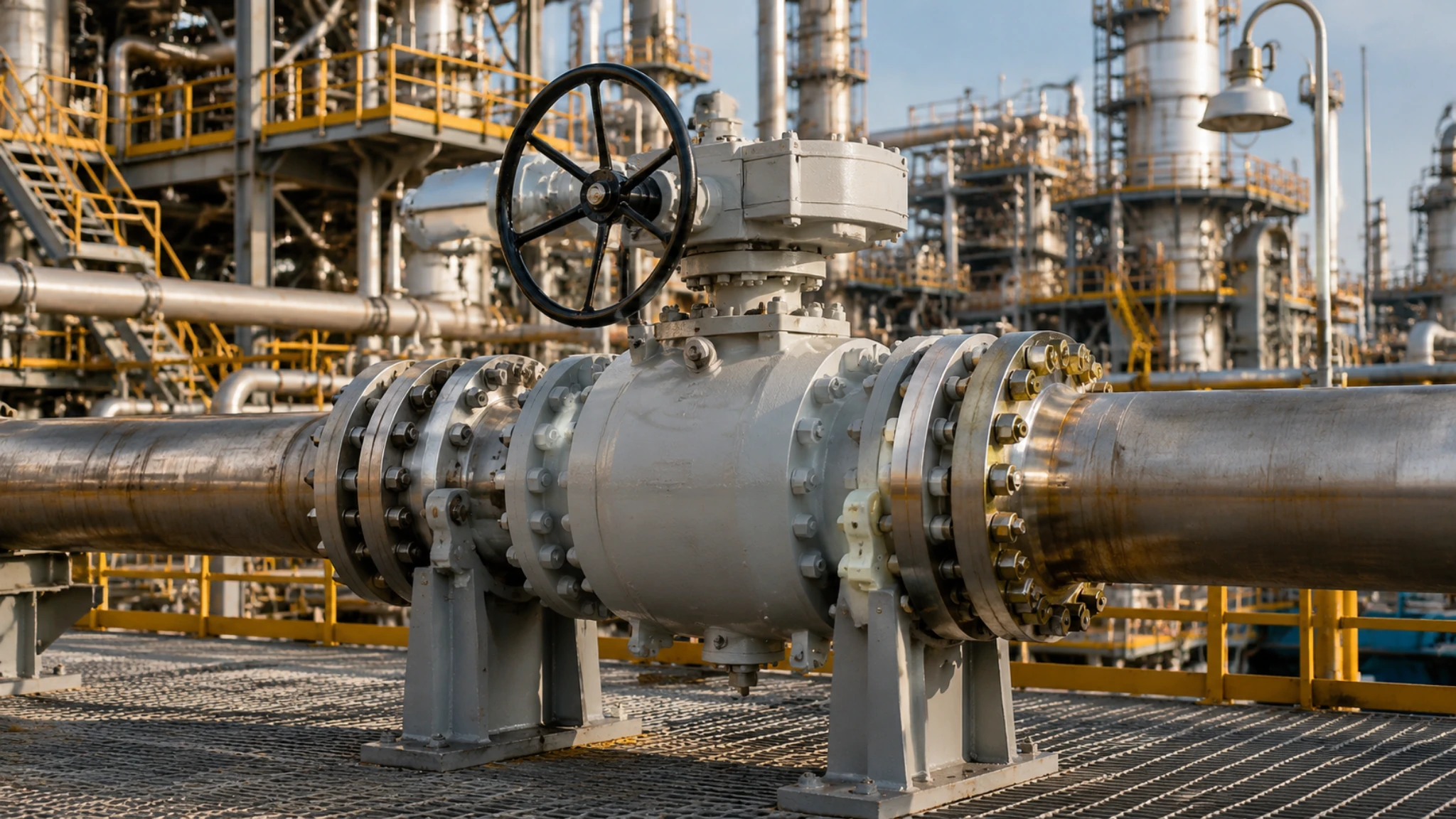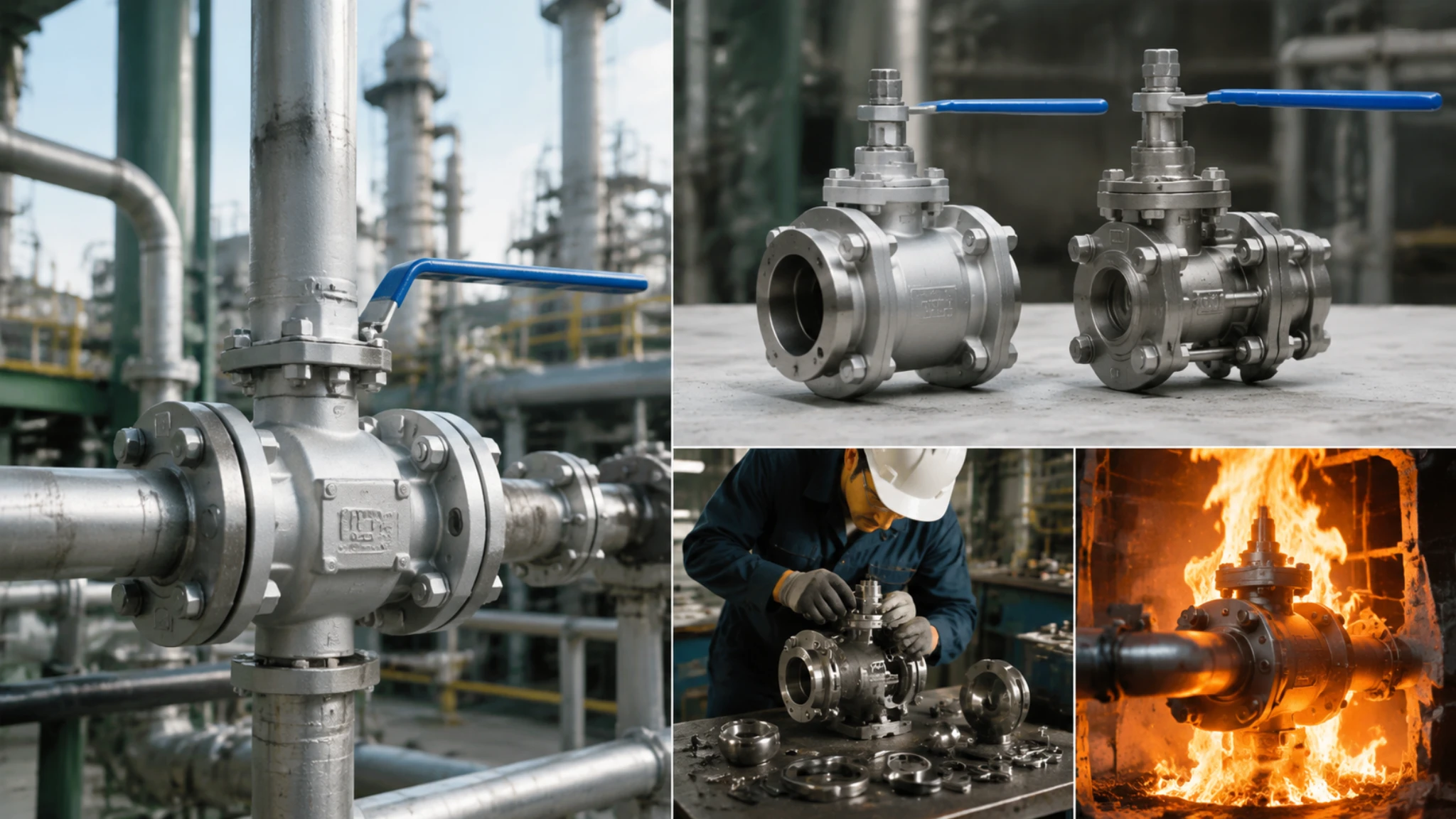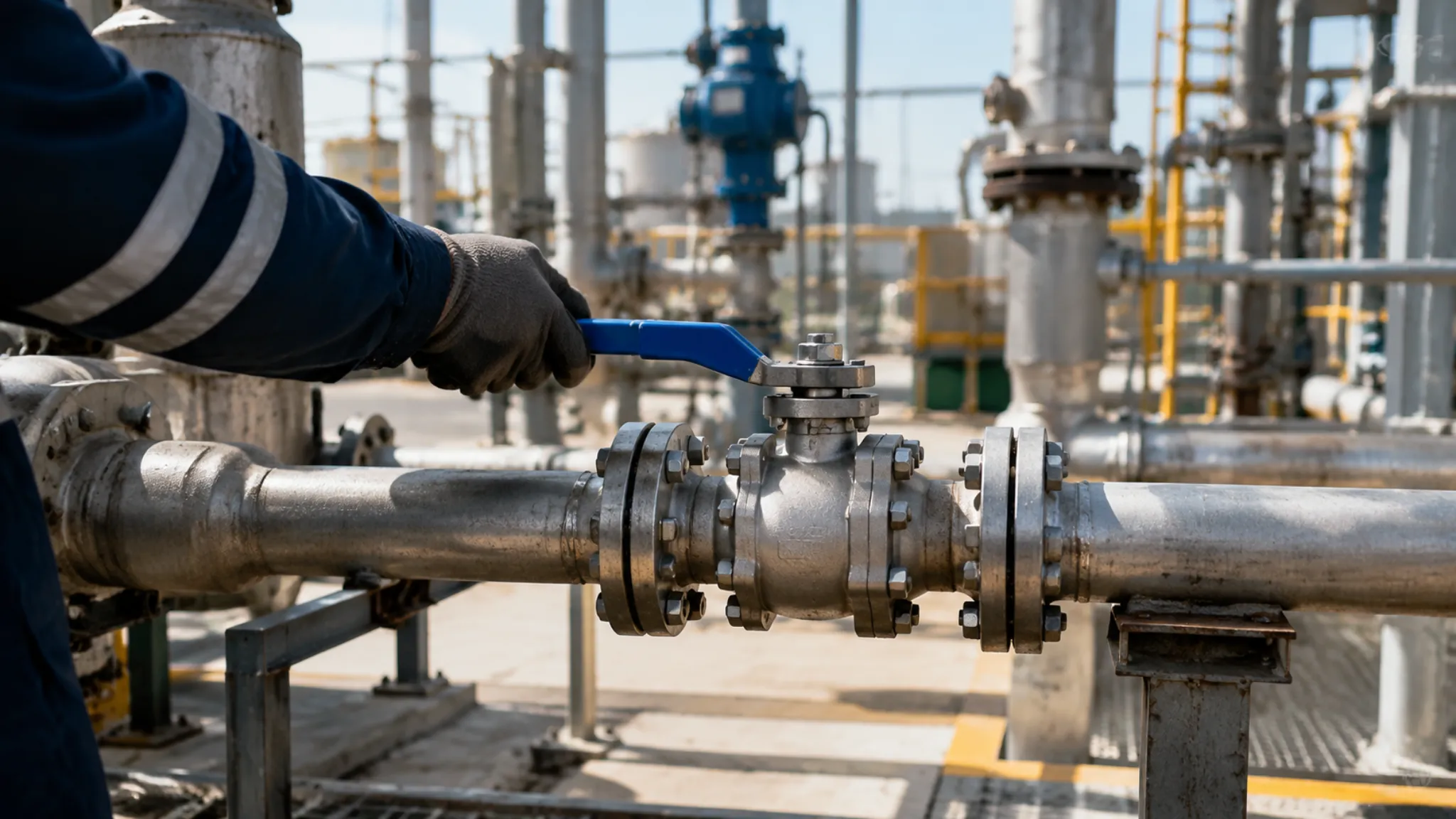
I once had a plant manager call me about a 3-inch floating ball valve on a steam condensate return line. The valve was PTFE-seated, Class 300, had been in service for about four years, and was leaking steam from the stem at maybe 20 drips per minute. He wanted to know if he should replace it with the same thing or upgrade. I asked two questions: what’s the actual operating temperature at the valve, and how many times a day does it cycle? Temperature was 195C. Cycles: about 40 per day, every day, for four years. Quick math: that’s roughly 58,000 cycles on a valve that was technically rated for the temperature but with PTFE seats that start cold-flowing above 180C under cyclic load. The valve had done its job for four years without a failure. That’s actually impressive. We replaced it with a PEEK-seated floating valve of the same size and class, set the packing to live-loaded with Belleville springs, and four years later it was still running with zero visible stem leakage. The valve cost about 380 dollars. The upgrade from PTFE to PEEK added about 90 dollars. Total cost difference over eight years of service: 90 dollars. Value of not having a steam leak in a crowded mechanical room: immeasurable.
Floating ball valves don’t get the engineering respect they deserve. They’re the workhorse of small-bore industrial piping. Simple design, low cost, reliable when applied within their limits. The problems happen when people use them outside those limits, which happens constantly because the limits aren’t always obvious from the datasheet. Here’s what a floating ball valve actually is, where it works, where it doesn’t, and how to not be the person who put a 10-inch floating valve on a 900 psi gas line.
How the floating ball design works
A floating ball valve has exactly three pressure-containing moving parts: the ball, and two seats. That’s it. The ball sits between the seats with no lower support. The stem passes through the top of the body and engages the ball through a rectangular or slotted drive. When the valve is closed and the line is pressurized, the upstream pressure pushes the ball downstream against the downstream seat, and that contact pressure creates the seal.
The simplicity is the genius. No trunnions. No bearings. No spring-loaded seat assemblies. The line pressure itself creates the sealing force. Higher pressure means tighter sealing, at least until the force exceeds what the seat material can handle. This self-energizing seal is why floating ball valves seal better at high pressure than at low pressure, which is the opposite of most valve designs.
But that simplicity also creates the design’s fundamental limitation. The entire pressure load on the ball is transmitted through the stem to the stem bearings. As the ball gets bigger, the surface area that pressure acts on grows with the square of the diameter. A 4-inch ball at 300 psi has about 3,800 pounds of force pushing it into the downstream seat. An 8-inch ball at 300 psi has about 15,000 pounds. A 10-inch ball at 600 psi has about 47,000 pounds. The stem has to transmit all of that as torque to rotate the ball against the friction of the loaded seat. At some point, the stem cross-section can’t handle it, and either the operator can’t turn the valve or the stem twists off at the drive connection.
This is why the practical limit for floating ball valves is about 6 to 8 inches and Class 600. Beyond that, the stem torque becomes unmanageable, and you need a trunnion design where the trunnion bearings take the pressure load instead of the stem.
Where floating ball valves are the right choice
Floating ball valves dominate small-bore industrial piping for good reasons:
- They’re cheaper than trunnion valves of the same size.
- They have fewer parts, which means fewer things that can fail.
- They seal tighter at high pressure because the line pressure increases the seat contact force.
- They’re available from stock at virtually any industrial valve supplier in sizes from 1/4 inch to 6 inches across all common pressure classes.
The sweet spot is NPS 1/2 to NPS 4 in Class 150 to Class 300. This covers the vast majority of process piping in refineries, chemical plants, power stations, and commercial HVAC. A 2-inch Class 300 floating ball valve with PTFE seats, carbon steel body, and stainless trim costs about 150 to 300 dollars in bulk quantities and will last 10 to 15 years in clean service. That’s a cost per year of service that’s hard to beat with any other valve type. Carbon steel vs stainless floating valve selection usually comes down to the process fluid: WCB carbon steel for hydrocarbons and non-corrosive water, CF8M 316 stainless for chemicals and seawater.
For on-off isolation in utility systems, floating ball valves are the default choice for a reason. Cooling water, instrument air, nitrogen purge, lube oil, fuel gas to burners. These services don’t need the zero-leakage of a trunnion valve’s spring-loaded seats, and they don’t need the torque margin that trunnion bearings provide. A properly sized floating ball valve in a utility application will outlive the plant if it’s cycled a few times a month and the process fluid is clean. I’ve pulled 30-year-old floating ball valves out of steam condensate service that still sealed bubble-tight because they’d been operated gently, never throttled, and the seats were replaced on a reasonable schedule.
For chemical injection and sampling systems, floating ball valves in 1/4-inch to 1-inch sizes are ubiquitous. The small ball diameter means low stem torque even at Class 600 or 800. The compact body fits into tight manifold spaces. And the availability of exotic materials like Hastelloy C276 and Monel 400 in small floating valve sizes means you can match the valve material to aggressive chemicals without paying for a custom-engineered trunnion valve in a size where nobody builds trunnion valves anyway. Floating ball valve manufacturers with ISO 9001 certified production lines produce these smaller sizes in high volumes with consistent quality.
Seat materials and the temperature wall
PTFE seats are standard on the vast majority of floating ball valves. PTFE has a friction coefficient of about 0.04 against polished stainless steel, which is why floating ball valves are so easy to operate. At 50 psi differential, the seat contact force is low, the friction is low, and a 2-inch floating valve turns with about two fingers on a 6-inch handle.
The problem with PTFE starts at about 150C. PTFE’s coefficient of thermal expansion is roughly ten times that of carbon steel. As temperature rises, the PTFE seat expands into the ball path. At 180C, a PTFE seat in a 3-inch valve can protrude about 0.3mm into the ball path. The ball starts scraping against the expanded seat instead of sliding smoothly. The operating torque goes up. Above 200C, PTFE begins to cold-flow under the seating load. The material extrudes out of the seat pocket, and the sealing surface deforms permanently. The valve might still operate, but it won’t seal, and replacing the seats requires disassembling the valve body.
The step up from PTFE is RTFE, which is PTFE with 15-25% glass fiber filler. The glass fibers increase compressive strength by about 30% and reduce thermal expansion by roughly half. RTFE seats are good to about 230C and handle higher pressure differentials than pure PTFE. The tradeoff is a slightly higher friction coefficient and marginally higher cost – typically about 50% more than PTFE seats for the same size.
PEEK is the premium polymer seat for floating ball valves. Continuous service to 260C, compressive strength around 8,500 psi at 100C compared to 900 psi for PTFE, and excellent chemical resistance. Soft seated vs metal seated selection in floating valves almost always favors soft seats unless the temperature exceeds 260C or the fluid carries abrasive solids, because soft seats provide the bubble-tight shutoff that makes floating ball valves so reliable in isolation service.
The catch with PEEK in floating valves is that the higher hardness means higher operating torque. A 3-inch floating valve with PEEK seats at 600 psi might require 30-40% more stem torque than the same valve with PTFE seats. If you’re replacing PTFE seats with PEEK, check that the existing actuator or gear operator has enough torque margin. I’ve seen people upgrade the seat material without checking the actuator sizing and end up with a valve that their pneumatic actuator couldn’t close against full line pressure. The fix was a larger actuator that cost more than the valve itself.
| Seat Material | Max Continuous Temp | Compressive Strength (at 100C) | Thermal Expansion (vs steel) | Relative Cost | Key Limitation |
|---|---|---|---|---|---|
| PTFE | ~180°C (cold flow onset) | ~900 psi | ~10x steel | Baseline | Cold flows under cyclic load above 180°C |
| RTFE (glass filled) | ~230°C | ~1,200 psi (30% higher) | ~5x steel | ~1.5x PTFE | Higher friction than PTFE |
| PEEK | ~260°C | ~8,500 psi | ~2-3x steel | ~2-3x PTFE | Higher torque; may need larger actuator |
When floating valves go wrong
The most common failure mode for floating ball valves isn’t a manufacturing defect. It’s throttling. A floating ball valve is designed for on-off service. Open. Closed. Ninety degrees. That’s it. When you crack the valve to 20 degrees open for flow control, the flow accelerates through the crescent-shaped opening between the ball and the seat, and the velocity goes from maybe 10 ft/s at full open to over 100 ft/s at partial open. The high-velocity jet erodes the seat material and, if the fluid carries particles, scores the ball surface.
A 3-inch floating valve used as a throttling valve on a steam line at 150 psi with 10% open position will destroy its PTFE seats in about two weeks of continuous operation.
The first sign is that the valve no longer shuts off completely. The second sign is that the stem starts leaking because the eroded seat debris has worked its way into the packing. By the time maintenance gets called, the ball is scored, both seats are shot, and the packing needs replacement. The repair cost is about 60% of a new valve. The lesson: if you need throttling, buy a globe valve or a V-port ball valve. Don’t use a standard floating ball valve as a poor man’s control valve.
Stem leakage is the second most common problem. Floating ball valves have a stem seal that’s typically a combination of PTFE or graphite packing rings compressed by a packing gland. The packing works fine when the stem is centered in the packing bore. But as the pressure load on the ball increases, the ball pushes harder against the downstream seat, and the stem sees a side load that tries to tip the ball. In a properly sized floating valve, this side load is within the design limits. In an oversized floating valve, the side load distorts the packing and creates a leak path. The fix isn’t more packing compression. It’s installing the correct valve type for the application – usually a trunnion valve if the size and pressure are beyond the floating design envelope. Ball valve maintenance for seat and stem issues identifies the specific inspection points that catch these problems before they become leaks.
Water hammer from rapid closure is a floating valve problem that gets overlooked. Because the operating torque is low at small sizes, an operator can close a 2-inch floating valve in about a quarter of a second with a flick of the wrist. If the line velocity is above 10 ft/s, that rapid closure creates a pressure spike that can be three to five times the normal line pressure. The valve itself usually survives. The piping and equipment upstream might not. I’ve seen a quick-close on a 3-inch cooling water line blow a gasket on a heat exchanger 40 feet upstream. The operator had no idea the valve closure caused it because the valve operated smoothly and nothing felt wrong. Gear operators on floating valves above 3 inches are worth the small cost premium specifically because they force the operator to close the valve slowly.
Forged vs cast bodies in floating valves
Floating ball valves come in both forged and cast body configurations, and the choice affects pressure capability more than most buyers realize.
- Forged bodies are made from a solid billet of steel that’s heated and mechanically worked under pressure. The forging process aligns the grain structure and eliminates internal voids. A forged A105 body of the same external dimensions as a cast WCB body will typically have 15-20% higher fatigue strength because the grain flow follows the contour of the body rather than being randomly oriented like in a casting. For Class 600 and above, forged bodies are the standard. API 6D forged floating ball valves in full bore configuration provide the cleanest flow path with the highest pressure integrity.
- Cast bodies are more economical for Class 150 and 300 in sizes above 2 inches. The casting process allows complex internal contours that would be expensive to machine from a forging. A good casting with proper heat treatment, radiographic inspection of critical areas, and PMI verification of the heat chemistry is perfectly adequate for standard industrial service. The quality of the casting matters a lot more than whether it’s cast or forged. A well-inspected WCB casting from a foundry that does 100% radiographic inspection on all pressure-containing castings above 2 inches is better than a forging from a manufacturer that doesn’t do any NDE on their forged bodies.
Reduced bore vs full bore is another configuration choice specific to floating valves. Reduced bore means the ball opening is one pipe size smaller than the end connections. A 2-inch reduced bore floating valve has a ball opening equivalent to a 1-1/2-inch pipe. This saves material cost, reduces weight, and lowers operating torque because the ball is smaller. Full bore means the ball opening matches the pipe ID, which eliminates the pressure drop across the valve and allows pigging. For most industrial applications, reduced bore is fine. If the valve is on a line that needs to be pigged, full bore is non-negotiable.
Anti-blowout stem: the safety feature you can’t see
All floating ball valves rated for industrial service should have an anti-blowout stem. This means the stem is inserted from inside the body, and the stem has a shoulder or collar that’s larger than the packing bore. If the packing gland fails completely, the stem shoulder prevents the stem from being ejected from the valve by line pressure.
A stem blowout is one of the few valve failure modes that can kill someone.
At 300 psi on a 2-inch valve, the stem cross-sectional area of about 0.2 square inches generates 60 pounds of ejection force. That’s not lethal. At 1,500 psi on a 3-inch valve with a 0.5-inch stem, the force is about 300 pounds. Still probably not lethal but definitely dangerous. At 3,700 psi on a 4-inch Class 1500 valve with a 0.75-inch stem, the force is about 1,600 pounds aimed at whoever is standing in front of the valve. That’s lethal. Anti-blowout stems are required by API 6D and API 608. If you’re buying floating ball valves for any application where the line pressure exceeds 150 psi, anti-blowout stem design should be on your mandatory requirement list.
The floating vs trunnion decision
Every time I’ve seen a floating ball valve fail prematurely, it was because someone specified a floating valve for an application that needed a trunnion valve. The reverse is less common because trunnion valves cost more, so nobody over-specifies them by accident.
The decision tree is straightforward:
- If your valve is 6 inches or smaller and Class 600 or below, a floating valve is almost always the right starting point. Exceptions: high-cycle applications (more than once per hour operating frequency) where the stem side-loading from the floating ball can accelerate packing wear, and dirty or scaling services where the floating ball can stick to the downstream seat after extended periods in one position.
- If your valve is above 6 inches, go trunnion. The stem torque on a floating valve above 8 inches becomes unmanageable without a large gear operator, and the side-loading on the stem packing guarantees leakage within a few hundred cycles.
- If your valve is Class 900 or above, go trunnion regardless of size. At 2,200 psi line pressure on a 4-inch floating valve, the force on the ball is about 27,000 pounds, and the stem sees a bending moment that will eventually cause packing leakage even if the valve cycles infrequently. Trunnion mounted ball valves start making economic sense at about Class 600 and NPS 6, and become the only viable option above Class 900 or NPS 8.
The cost difference between floating and trunnion at the crossover point is about 40-60% in favor of floating. At 6 inches and Class 300, that’s maybe 400 dollars difference per valve. At 8 inches and Class 600, it’s closer to 1,500 dollars. The question isn’t whether the trunnion valve costs more. It’s whether the floating valve will fail in service and cost more in downtime, repair, and replacement than the price difference. If the answer is yes, and it usually is above 6 inches or Class 600, buy the trunnion valve. API 6D pressure rating and material specifications apply to both floating and trunnion designs in the sizes where they overlap.
That plant manager with the steam condensate valve? He followed the PEEK seat recommendation and started doing annual packing inspections on all his floating valves. Three years later, he told me he’d cut his steam trap and valve maintenance budget by about 30% just by matching the seat material to the actual operating temperature and adding live-loaded packing to valves that cycled more than once a day. The most expensive floating ball valve is the one you have to fix every 18 months because someone saved 90 dollars on the seat material when the valve was originally purchased.