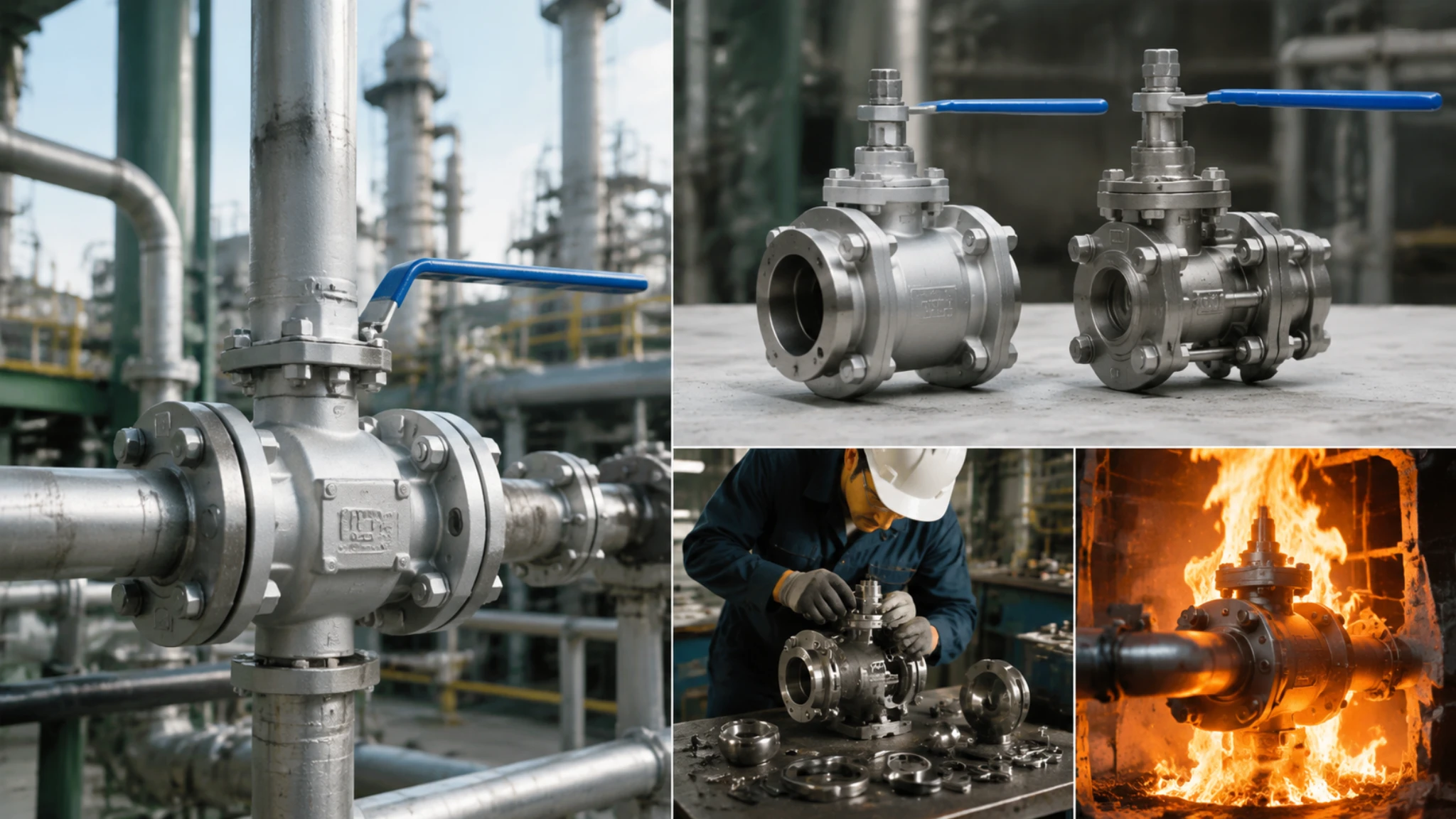
About six years ago, a procurement director at an EPC firm in Dubai showed me two ball valve quotes for a gas processing project. Both valves were API 6D certified, Class 600, 12‑inch, A105 forged body, PEEK seats. One manufacturer quoted $4,200 per valve. The other quoted $2,850. The procurement guy was leaning toward the cheaper one because “they have the same certifications on paper.” I told him to fly to both factories before signing. He didn’t.
Sixteen months later, three of those valves had seat leakage above API 598 limits. One had stem packing that was leaking process gas at about 18 mL per minute. The cost to replace the seats and repack the stems across the entire order was $47,000 in parts and labor. The production downtime was seven days at roughly $180,000 per day. The cheap valves cost $1.3 million more than the expensive ones would have.
This happens all the time. Two manufacturers claim the same certifications. The datasheets look identical. The pricing spread is 30 to 40 percent. And the decision gets made on price because nobody knows what else to look at. I’ve spent years auditing valve factories across China, India, and Southeast Asia, and I can tell you: the difference between a good ball valve manufacturer and a bad one isn’t visible on the quotation. It’s in the melt shop, the testing bay, and the way they handle problems after the invoice is paid.
This is what I wish every buyer had before they cut their first purchase order.
The certifications aren’t what you think they are
Every manufacturer’s website lists API 6D, API 608, ISO 9001, CE marking. The logos are at the bottom of every page. Buyers assume this means quality is guaranteed. It doesn’t. An ISO 9001 certificate means the manufacturer has a documented quality management system. It does not mean they follow it on every order. It does not mean they apply the same quality control rigor to export orders as they do to domestic ones. It doesn’t even mean they’re using the same material grades they list on the certificate.
I once watched a supplier use A105 carbon steel castings that were supposed to be WCB. The casting foundry had substituted the material because WCB was on backorder and A105 was available from stock. The chemical composition was close enough that a visual inspection would never catch it. But A105 is a forging grade, not a casting grade. The grain structure is completely different. Under cyclic pressure loading, cast A105 has about 40% lower fatigue life than proper WCB. The substitution wasn’t caught until a third‑party lab did PMI testing on a random sample from the batch. By then, twelve valves were already installed on a live pipeline in Qatar.
Real certification means API certified manufacturers who provide full EN 10204 3.1 material traceability. Not Type 2.1 self‑declarations. Type 3.1 means an independent inspector witnessed the chemical analysis and mechanical testing. Every heat number is traceable to the original mill certificate. Every pressure‑containing component has a paper trail. For sour service, you want PMI on every heat, not a sample, and the XRF gun reading should deviate from the mill cert by less than 0.1% on critical elements like chromium, molybdenum, and nickel.
Fire‑safe certification is another one buyers misunderstand. A manufacturer claiming “API 607 fire‑safe design” doesn’t mean they’ve actually fire‑tested your valve model. It means they have a certificate for a valve of similar design that passed the test. If your valve size, pressure class, or seat material differs from what was tested, the fire‑safe claim is an extrapolation, not a certification. The only way to be sure is to ask for the specific API 607 test report that matches your valve’s exact configuration: same size, same pressure class, same seat material, same body material. If they can’t produce it within 48 hours, they don’t have it.
Material traceability is the difference between a five‑year valve and a five‑minute disaster
The single most important thing that separates a serious API 6D ball valve manufacturer from a price‑driven supplier is what happens in the melt shop. I’ve spent more time than I want to think about standing in foundries watching molten steel get poured, and here’s what I’ve learned: if the manufacturer can’t tell you the exact chemical composition of the steel in your valve body, down to the parts‑per‑thousand level, you’re gambling.
A proper foundry takes a sample from every heat. The steel is brought to 1,550°C, a ladle sample is poured into a chill mold, and a spectrometer analyzes it within minutes. Carbon content above 0.30% on a WCB casting? The heat gets adjusted or scrapped. Nickel below 10.0% on 316 stainless (CF8M)? Same thing. Molybdenum below 2.0% on duplex? Rejected. The sample slug gets stamped with the heat number and archived for three years minimum. Every valve body cast from that heat carries the same number, traceable all the way back to that spectrometer reading.
When this system breaks down, you get the kind of failures that make incident reports. A 12‑inch Class 900 valve on a sour gas line in the Middle East failed catastrophically in 2019 because the body material was supposed to be NACE MR0175‑compliant WCB with hardness below HRC 22, but the actual casting measured HRC 28 at three points. The foundry had added scrap steel to the melt to reduce cost, introducing residual chromium that increased hardenability. The harder steel cracked under sulfide stress within eight months of commissioning. The valve body split along a casting inclusion that was visible on the fracture surface with the naked eye. Root cause: no spectrometer verification of the heat chemistry, no PMI on the finished casting, and no independent inspector on site.
For sour service, the HRC 22 limit in NACE MR0175 is not a suggestion. It’s a hard limit derived from decades of failure data showing that carbon steel above this hardness will crack when exposed to wet H₂S. If a manufacturer ships a sour‑service valve without hardness testing every pressure‑containing component and providing the reports, they’re not a serious manufacturer. They’re a risk.
How to audit a factory without being an engineer
You don’t need an engineering degree to tell whether a valve factory is the real deal. You need to know where to look and what questions make them uncomfortable.
- Start in the scrap yard. If the factory has one. A clean, organized scrap area with metals separated by grade means they track what goes in and what comes out. If scrap is piled in a mixed heap, they don’t track material flow, and they probably don’t track what goes into their castings either.
- Ask to see the spectrometer. Not the one on the shelf in the lab that’s covered in dust. The one on the production floor. Ask them to test a random component from your order lot right in front of you. Watch how fast they can do it. A technician who does this every day can set up the XRF gun, take three readings, average them, and hand you the results in under two minutes. If they fumble with the equipment or need to “find the right calibration,” they’re not using it regularly.
- Walk past the hydro test station. Look at the pressure gauges. Every hydro test rig should have at least two gauges of the same range—if both don’t read within 1% of each other, one of them is uncalibrated and the test results for every valve that went through that station are suspect. Check the calibration stickers. Gauges should be calibrated within the last six months. If you see a calibration sticker dated more than a year ago, the entire test station is suspect.
- Go to the assembly area and pick up a random valve that’s been completed. Look at the bolting. Are the flange bolts torqued in a star pattern with a calibrated torque wrench, or did someone hit them with an impact gun in a clockwise spiral? If it’s the impact gun, the bolt preload variation is going to be 30% or more from bolt to bolt, and that valve’s gasket will leak on the first thermal cycle.
- One more thing: ask to see the rejection records. Not the quality certificate. The pile of red‑tagged valves that failed inspection. Every good factory has a rejection area. If they claim a 100% pass rate, they’re either not testing properly or they’re lying. A rejection rate of 1‑3% is normal for a well‑run operation. Zero rejections means zero real testing.
The communication test that predicts everything
Before you place an order, send the manufacturer a technical question. Not “what’s your lead time” or “can you send a quote.” Send a real engineering question. Something like: “For a Class 600 trunnion ball valve in 12‑inch size with F51 duplex body and PEEK seats, what’s the maximum allowable stem torque at 200°C, and what’s your calculation method?”
How they respond tells you more than any factory audit. A good manufacturer has an engineer who can answer this in under eight hours, with the calculation sheet attached. A mediocre one forwards your question through three departments and gets back to you in three days with a vague answer. A bad one never answers the technical part and just quotes you the price.
Long‑term manufacturer partnerships depend on this kind of communication. If they can’t handle a technical question before you’re a customer, what happens when you have a real problem on site at 2 AM with a valve that’s leaking process fluid and a shutdown crew standing by at $800 an hour?
I’ve seen this in action. A plant in Germany had a 10‑inch Class 300 ball valve that wouldn’t fully close. The actuator was straining, the torque reading was climbing, and the DCS was showing 92% closed instead of 100%. They called the manufacturer at 9 PM local time, which was 4 AM in the manufacturer’s time zone. Someone picked up. The engineer on call asked them to check three things: the air supply pressure at the actuator regulator, the stem packing gland bolt torque, and the inlet pressure at the upstream gauge. Turned out the air supply had dropped to 3.5 bar when it needed to be 5.5 bar, so the actuator was only producing about 580 Nm instead of the required 900 Nm. They adjusted the regulator pressure and the valve closed fully. Total time from first call to resolved problem: 47 minutes. That’s what after‑sales support looks like when it’s real.
Testing that separates the serious manufacturers from the box‑movers
Every manufacturer says they test their valves. The question is what they test, how they test it, and whether you can watch.
| Test | What a good manufacturer does | What box‑movers skip |
|---|---|---|
| Hydrostatic shell test (API 598) | 1.5× rated pressure, chart recorder with red ink line showing stability | Single gauge, no chart, no pressure hold verification |
| High‑pressure seat closure test | Performed after shell test, with calibrated gauges | Often combined or omitted |
| Low‑pressure pneumatic seat test | Nitrogen at 0.6 MPa, zero visible bubbles over 15 seconds | Skip or use compressed air without proper measurement |
| Helium leak detection (for critical gas) | Mass spectrometer, alarm at 50 ppm | Only nitrogen bubble test, which can miss small leaks |
| Anti‑static test (API 608) | Electrical resistance <10 ohms between ball, stem, body | Missing anti‑static spring ($3 part) |
| Fire‑safe test (API 607) | 760°C furnace, 30 min at rated pressure, cold water quench, then low‑pressure leak test & stem operability | Only a logo on the brochure, no test furnace |
I’ve seen the aftermath of a static discharge inside a ball valve on a gasoline blending line. The fire was contained by the pipeline, but the valve internals were scorched and the seats were melted into a blob of carbonized PTFE. Total damage: about $85,000. The root cause was a missing anti‑static spring that should have cost about three dollars.
Manufacturers who invest in fire‑safe certification have a dedicated test furnace and a stack of test reports. Everyone else has a logo on their brochure.
Body construction: cast, forged, and when it matters
The manufacturing method for the valve body affects everything: pressure capability, fatigue life, lead time, and cost. Buyers who don’t understand the difference end up with the wrong body for their application.
- Cast bodies are the default for sizes above about 4 inches. Quality depends entirely on foundry control. A good casting has uniform wall thickness, no porosity above 2mm in critical areas, and proper heat treatment. A bad casting has inclusions, shrinkage porosity, and wall thickness variation of 15% or more.
- Forged bodies have a denser grain structure because the steel is mechanically worked under pressure. They typically have 15‑20% higher fatigue strength and better pressure integrity. But forged bodies max out at about 24 inches on most commercial presses, and they cost 25‑40% more than an equivalent cast body.
Cast vs forged body selection comes down to this: if your pressure class is above Class 600, or your service is cyclic, or your medium is hazardous, the forged body premium pays for itself. For Class 150 and 300 in non‑critical service, a properly inspected cast body is fine.
For trunnion mounted designs specifically, forged ball valves offer fire‑safe integrity that cast designs can’t match because the material density directly affects how well the body holds up when the soft seats burn away and the ball contacts the metal fire‑safe lip. A forged body with consistent density distributes the contact load evenly. A cast body with micro‑porosity can crack at the contact point during fire exposure.
The after‑sale litmus test
The real test of a manufacturer isn’t how they handle the order. It’s how they handle the problem.
Every manufacturer has a warranty period. Twelve months is standard. Eighteen months is good. What matters is what happens when something fails within that period. A serious manufacturer has an 8D problem‑solving process: they assemble a team, contain the problem, identify root cause, implement corrective action, and prevent recurrence. They produce a report within 72 hours. They don’t argue about whether the failure was their fault or the installation’s fault. They analyze first, assign responsibility later.
I’ve watched this play out in real time. A 12‑inch Class 900 forged steel trunnion valve on a Brazilian offshore platform started leaking at a flange connection after about 2,000 hours of operation—well within the 18‑month warranty. The manufacturer didn’t push back. They asked for photos of the leak location, the operating pressure and temperature history, and the bolt torque values at installation. Within 48 hours, they’d pulled the original heat treatment records for the flange material, re‑analyzed a retained sample from the same production batch on their spectrometer, and cross‑checked the chemical composition against the mill certificate. They found a 0.04% deviation in chromium content—within the specification tolerance, but at the low end. They decided the flange‑to‑body bolting should have been a grade higher for the actual operating conditions. They air‑freighted a replacement valve to Brazil at their own cost—$3,500 in shipping for an 850‑kilogram valve—and absorbed the full replacement cost. Total downtime for the platform: five days instead of what could have been four to six weeks if they’d disputed the claim.
That’s the difference between a manufacturer who sees warranty as a sales feature and one who sees it as a liability to be minimized. When you’re buying valves that go into process lines where a day of downtime costs six figures, the after‑sale capability is worth more than the upfront price difference.
The questions to ask before you sign the PO
After years of evaluating factories and cleaning up after bad purchasing decisions, here’s what I’d put on the must‑ask list before placing any industrial valve order above $25,000.
- Can we witness the hydro and pneumatic tests on our specific valves? Not a sample. Not last month’s test report. Our valves, with our serial numbers, while we watch. If the answer is no, that’s a red flag. Every serious manufacturer has a customer witness program. The ones who don’t want you watching have something to hide.
- What’s your material rejection rate over the last twelve months? A number between 1% and 3% is normal. Zero is not believable. Above 5% means they have systemic material sourcing problems.
- Show me your calibration records for the last two years. Pressure gauges, torque wrenches, spectrometers, micrometers. Everything that touches a quality measurement should have a calibration sticker and a record. If the records are incomplete or the stickers are expired, the quality data is invalid.
- What’s your spare parts policy? A solid manufacturer stocks spare parts for every model they’ve sold in the last ten years and can ship a seat kit within 48 hours of a request. If they need a PO revision and six weeks to find a seat kit for a valve they made three years ago, you’re going to be waiting on parts while your line is down. Ball valve maintenance and spare parts availability should be a manufacturing commitment, not an afterthought.
- Give me a recent 8D failure report. If they say they’ve never had a failure, they’re lying. If they produce a thorough report with root cause analysis, corrective actions, and verification steps, that’s exactly what you want to see. A manufacturer who knows how to investigate their own failures is a manufacturer who’ll handle your problems properly.
And one thing I always do that’s not on any checklist: call a former customer. Not a reference they gave you. Find someone in your industry who bought from them two or three years ago—LinkedIn and industry forums are good for this—and ask one question: “If you had a problem with a valve, how did they handle it?” The answer to that question is worth more than every certification and test report combined.
The procurement director in Dubai I mentioned at the start? After the valve failure fiasco, he changed his entire sourcing process. He started requiring witnessed testing on every order above $50,000. He built a vendor qualification checklist that weighted after‑sales response time and material traceability above price. And he never again bought a valve without flying someone to see the factory first. The last time we spoke, he told me his valve‑related downtime had dropped by about 80% over three years. The factory visits and test witnessing cost maybe $15,000 a year in travel. He was saving about $400,000 a year in avoided failures. The math on buying from the right manufacturer isn’t complicated. You just have to believe it before the cheap valves fail.