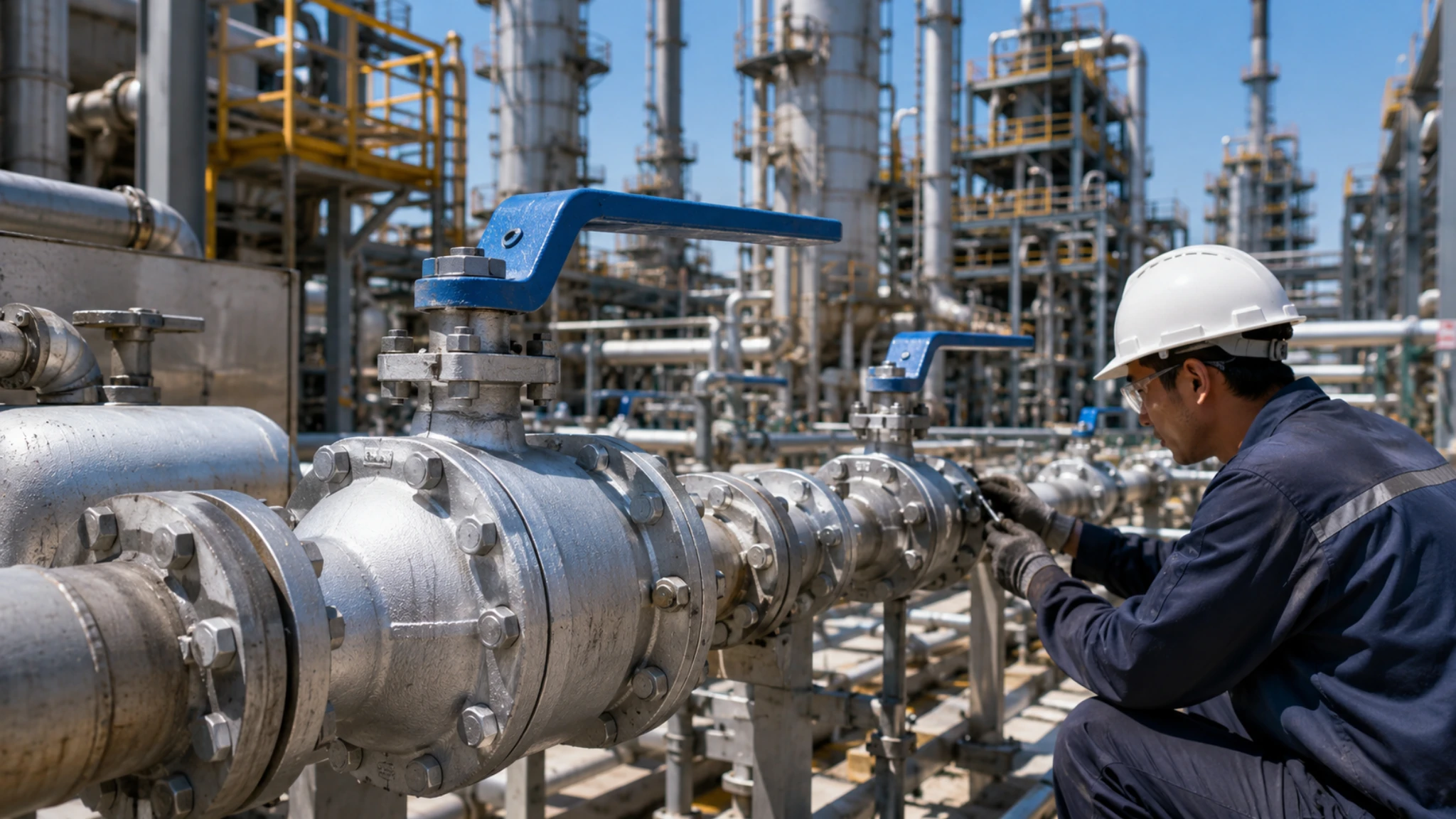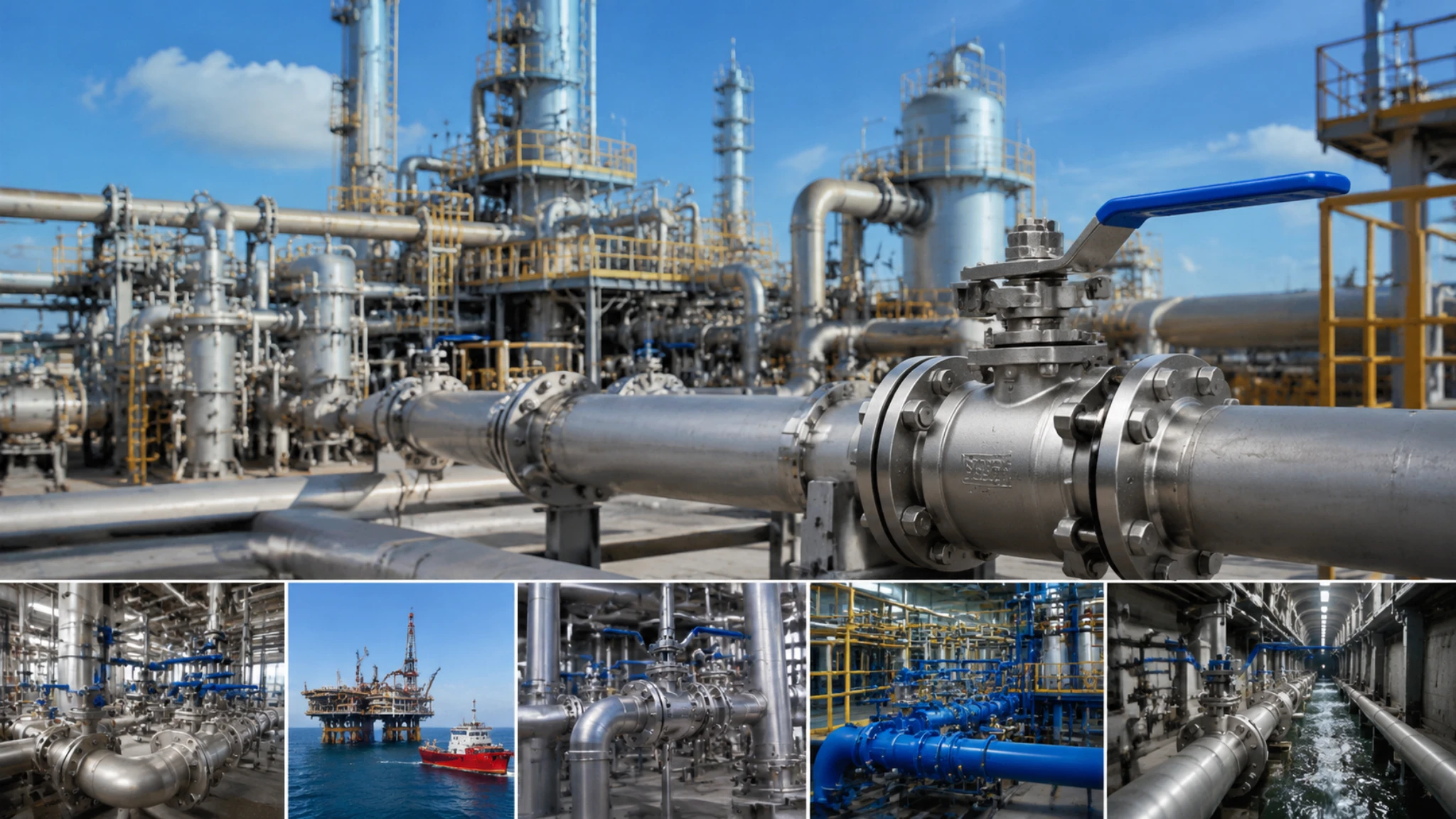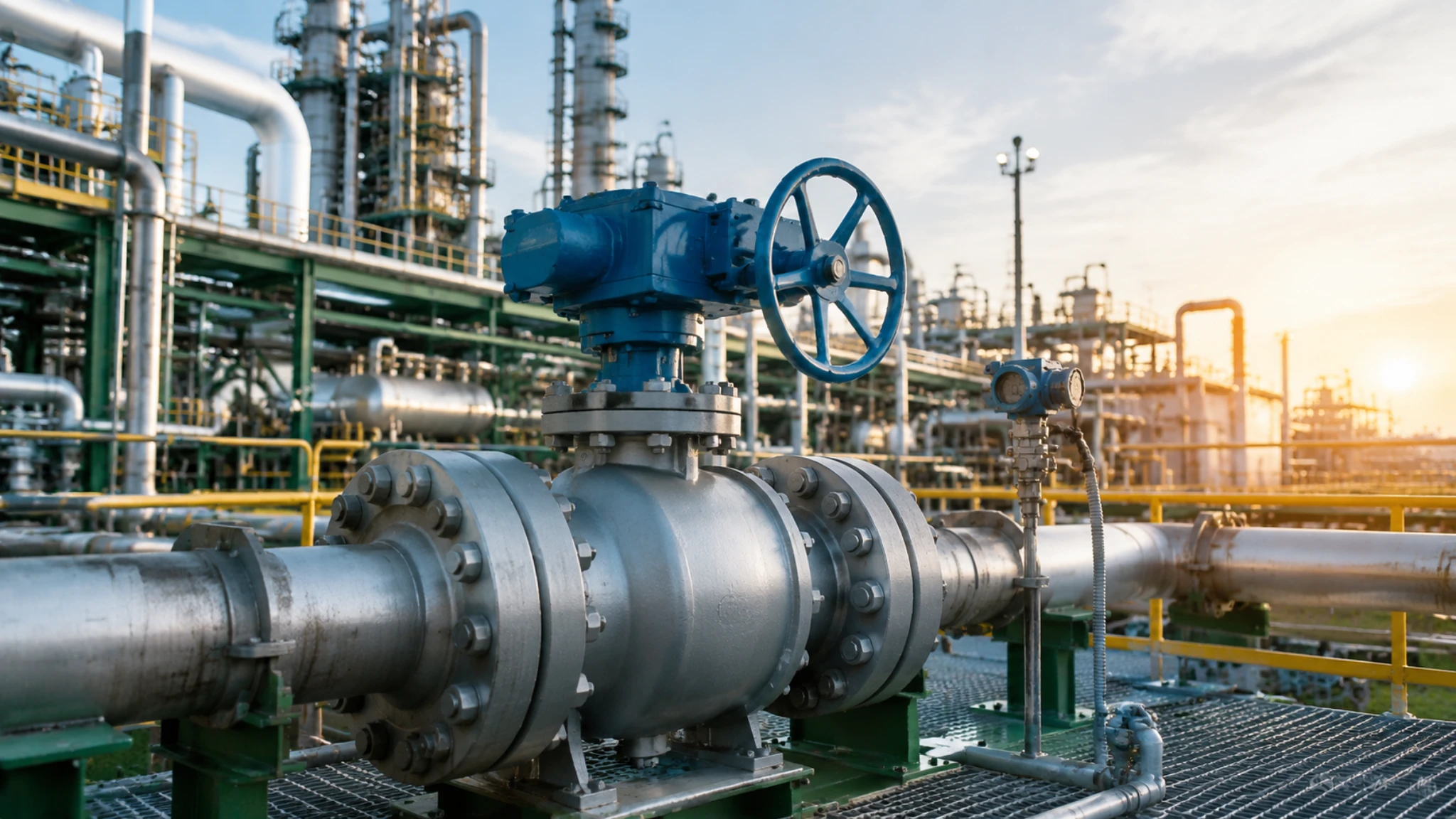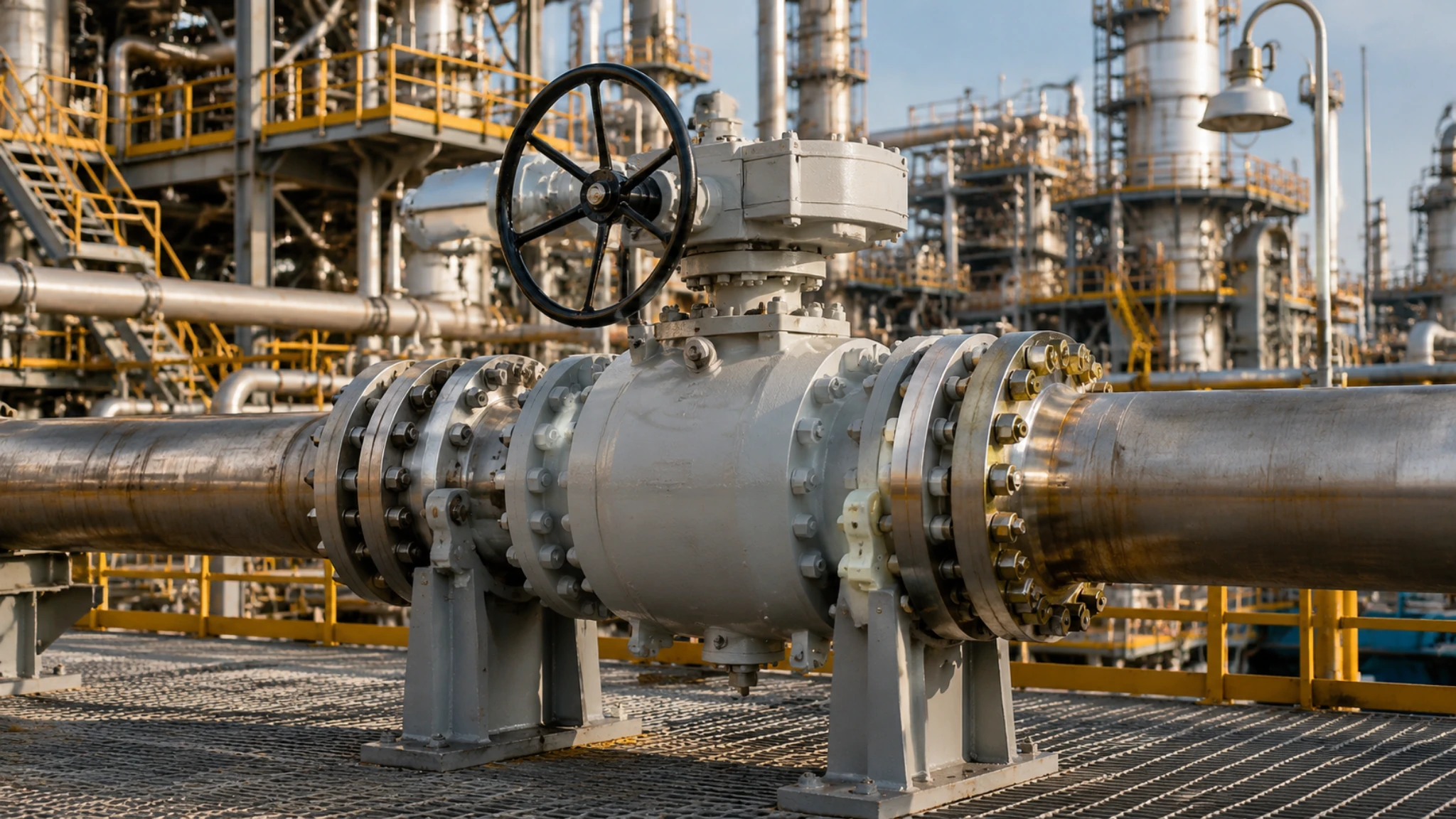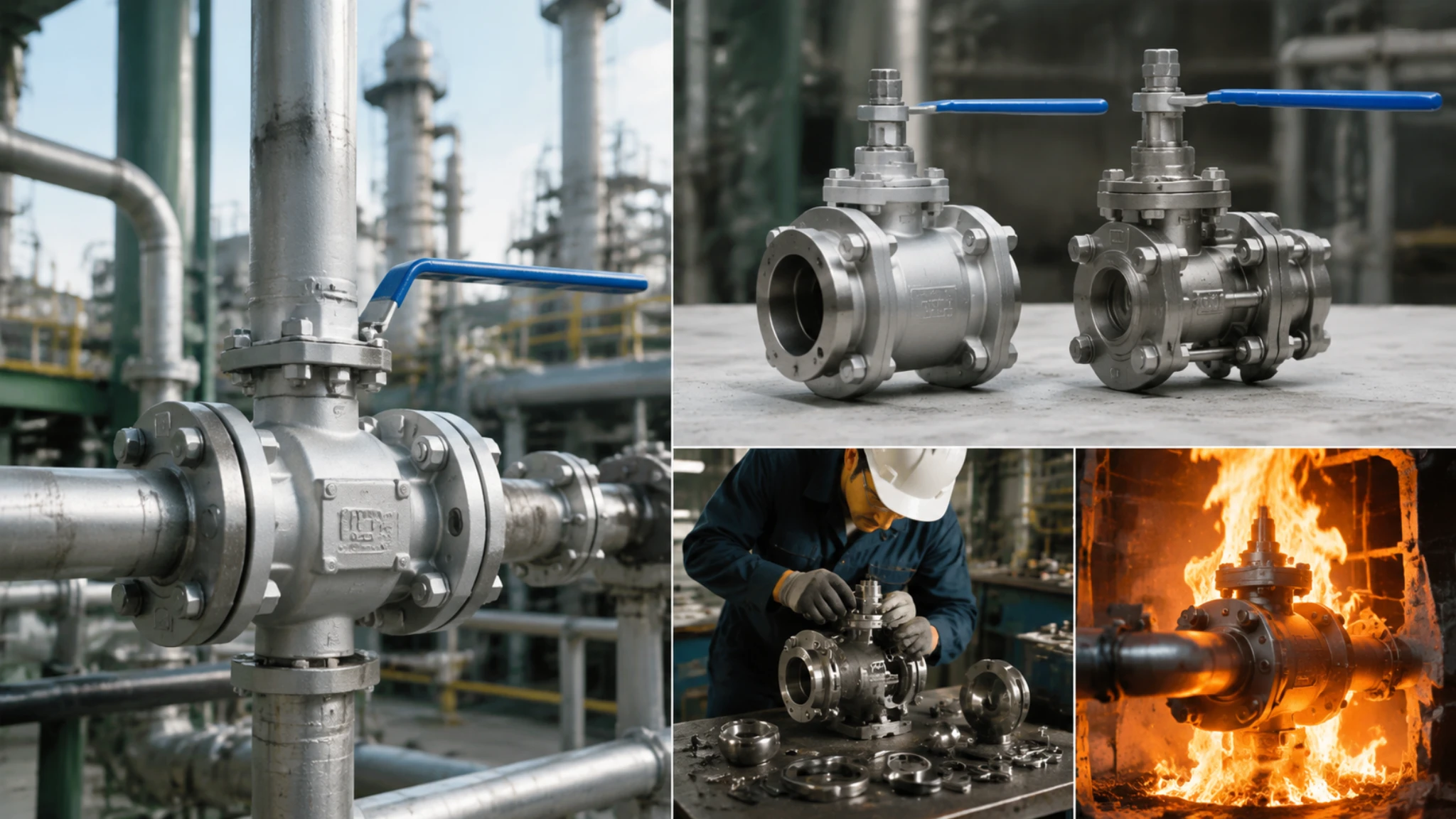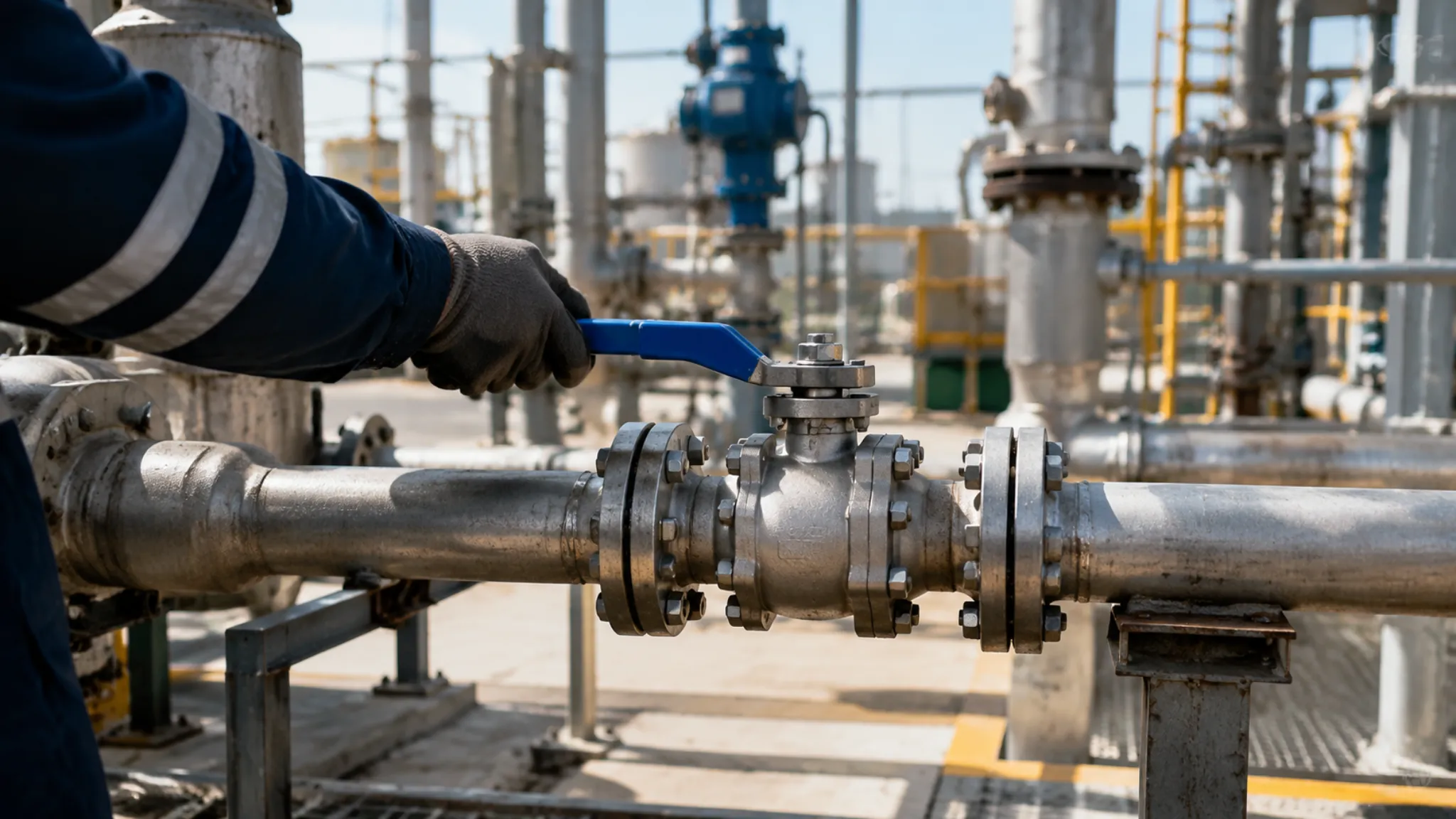
About eight years ago, a procurement manager at a refinery in Southeast Asia called me in a panic. They’d ordered twenty-four 8-inch Class 300 ball valves for a crude oil transfer line. The valves arrived on site, passed visual inspection, got bolted in, and the system was pressurized to 600 psi. Within 48 hours, three valves were leaking through the stem packing. By the end of the week, seven had seat leakage above the API 598 allowance of 10 mL/min per inch of nominal diameter. Total repair cost: 60,000 dollars. Lost production: 11 days.
Root cause: the valves had PTFE seats rated only to 180C, but the crude was running at 195C on startup. Nobody had checked the actual seat material temperature rating against the process conditions. The datasheet said “PTFE” and the buyer assumed that meant “good enough.” It wasn’t.
Industrial ball valves look simple. A sphere with a hole in it, rotated 90 degrees. Open. Closed. What could go wrong? The answer, I learned over years of seeing these things fail in the field, is: pretty much everything.
Material mismatch, wrong pressure class, improper installation, operating the valve as a throttle when it was never designed for it. Most failures aren’t manufacturing defects. They’re selection mistakes made months before the valve ever arrived on site.
This is what I wish someone had handed me when I started specifying ball valves for industrial applications. No theory. No marketing-speak. Just what breaks, why it breaks, and how to not be the person who bought the wrong valve.
If you need a quick reference for what you’re buying, API 6D ball valve specifications cover the core pressure and material data points you’ll need upfront. But if you want to understand the decisions that actually determine whether your valve lasts six months or fifteen years, keep reading.
The two valve architectures that matter (forget everything else)
Industrial ball valves come in hundreds of configurations, but for the purposes of not getting it wrong, there are really two architectures you need to understand: floating ball and trunnion mounted. Everything else is a variation.
- Floating ball valve – holds the ball between two seats with no lower support. The ball floats downstream under pressure, pressing against the downstream seat to create the seal. This works fine up to about 6 inches nominal bore and Class 600. Past that, the physics turn against you fast. At 10 MPa line pressure on an 8-inch valve, the ball exerts roughly 1,800 Nm of torque on the stem. That’s more than most manual operators can overcome without a cheater bar, and if someone grabs a cheater bar, you get a twisted stem and a valve that’s permanently jammed.
- Trunnion mounted ball valve – fixes the ball with upper and lower bearings (trunnions) so the ball doesn’t move under pressure. The seats are spring-loaded and press against the ball instead. This design scales up to 60 inches and Class 2500 without the torque problems. Operating torque at 10 MPa drops from over 1,800 Nm to under 650 Nm. Seat replacement cycles extend from about 8 months to over 60 months. If your application is above 6 inches or above Class 600, you’re in trunnion territory. There’s no debate about this. API 6D trunnion mounted ball valves are the standard for oil and gas pipelines above Class 600 for exactly this reason.
Port type is the other decision people get wrong.
- Full bore – the ball opening matches the pipe ID. No restriction. You can send a pig through it.
- Reduced bore – the ball opening is one pipe size smaller than the connection. Cheaper, lighter, but you get a pressure drop and can’t pig the line.
For crude oil, natural gas, and any line that needs pigging, full bore is non-negotiable. For water, low-pressure chemical transfer, and applications where pressure drop doesn’t matter, reduced bore saves money. Just don’t use it on a line that someone might want to pig later. I’ve seen that decision cost a plant a two-week shutdown because they couldn’t clean the line without cutting it open. Full bore forged ball valves exist specifically because this mistake gets made so often.
Material decisions that separate the five-year valve from the twenty-year valve
Body material is the easy part.
- Carbon steel ASTM A105 for most applications.
- Low-temp carbon steel LF2 if you’re below -29C.
- 316L stainless for chemical plants and anything corrosive.
- Duplex stainless F51 or super duplex F53 when you have chlorides and need higher strength.
- Inconel 625 or Hastelloy C276 for the really nasty stuff – sour gas, hydrofluoric acid, deep subsea.
Nobody gets the body material wrong because it’s on every datasheet.
The decision that actually determines service life is the seat material. And this is where I’ve watched more valves fail prematurely than anywhere else.
| Seat Material | Key Properties | Limitations / Gotchas |
|---|---|---|
| PTFE | Cheap, chemically inert, seals beautifully at room temperature. | Thermal expansion coefficient ~10x that of carbon steel. At 85C in a 6-inch valve, can protrude 0.45mm into the ball path. Cycle through desert temp swings (85C day / 10C night) 30 times → seat compression force drops 65%. Above 200C starts cold-flowing; by 260C structurally gone. The soft seated vs metal seated decision comes down to: if your temperature ever exceeds 200C, you don’t have a choice. |
| PEEK | Useable to 260C. Compressive strength 8,500 psi at 100C (vs 900 psi for pure PTFE). | Send 300C superheated steam through during line cleaning → surface crystallizes and fractures within five minutes. PEEK shards go downstream and jam flow meters. Fix: if you steam-clean, you need metal seats. |
| Metal Seated (tungsten carbide coatings, Stellite 6 overlays, chromium carbide) |
Operate at 500C, survive abrasive slurries at 25 m/s, last decades if maintained. Tungsten carbide coated ball with HVOF application at 800 m/s gives 0.2mm thick coating, HRC 70 hardness, porosity <1%. In silica sand slurry at 25 m/s, annual wear <0.01mm after 12 months. | Won’t provide bubble-tight shutoff in most cases – expect API 598 rate B or FCI 70-2 Class IV leakage, not Class VI zero-leakage. Tradeoff: metal-on-metal friction coefficient up to 0.4, tripling actuator size requirements. |
For body material choices specifically, carbon steel vs stainless steel WCB vs CF8M comparison covers the most common selection fork you’ll face. And if you’re in corrosive environments, duplex stainless, Inconel, and Hastelloy selection becomes critical because getting the material wrong in a sour gas application means replacing a 50,000-dollar valve, not a 500-dollar seat.
Pressure class and sizing: the math nobody does
Pressure class seems straightforward. Class 150, 300, 600, 900, 1500, 2500. Pick the one that matches your design pressure. Done.
Except it’s not that simple. The pressure-temperature relationship matters. A Class 300 carbon steel valve rated for 740 psi at 38C may only be rated for 655 psi at 200C and 550 psi at 370C, depending on the specific material group per ASME B16.34. I’ve watched people specify Class 300 valves for a 700 psi system at ambient temperature, bolt them in, then cook them at 300C during commissioning and wonder why they leak. Check the full pressure-temperature table for your material, not just the Class number on the nameplate.
Valve sizing for gas service needs Cv calculation. Cv is the flow rate in US gallons per minute of 60F water that will pass through the valve with a 1 psi pressure drop. For gas, the formula changes because you have to account for compressibility. A 4-inch full bore ball valve might have a Cv around 1,500. A reduced bore of the same line size might be 800. That’s not a small difference – it’s nearly half the flow capacity. If your system is designed around full bore Cv and someone substitutes reduced bore to save cost, you get a bottleneck that nobody catches until flow rates drop during production.
For critical gas applications, the pressure drop across a reduced bore valve can cause Joule-Thomson cooling. At 1,000 psi drop across a natural gas valve, the downstream temperature can fall 40–50F below upstream. If the valve body material isn’t rated for that temperature, the body can embrittle. This isn’t theoretical. It caused a catastrophic failure at a gas processing plant in Texas in 2012 because the valve was specified as Class 600 but the low-temp rating wasn’t checked against actual service minimums.
Standards you actually need to know (not the entire catalog)
There are dozens of valve standards. You don’t need to memorize them. You need to know which ones your application demands and what they guarantee.
- API 6D – the big one for pipeline valves. Covers design, manufacturing, materials, testing, inspection for ball, gate, plug, and check valves used in pipeline systems. An API 6D valve has passed hydrostatic shell testing at 1.5 times the rated pressure (for the material at 38C), held for a minimum duration based on valve size, with seat leakage at the high-pressure closure test limited to a specified rate. API 6D certified ball valve manufacturers cover Class 150 through 1500 with DBB and DIB configurations. If your application is pipeline service, API 6D is the minimum. Not optional.
- API 607 and API 6FA – fire-safe testing. A fire-safe valve has been tested by exposing it to a flame at a minimum of 760C for 30 minutes with the valve in the closed position and the line pressurized. After the burn, the valve is cooled and tested for external leakage and seat leakage. The valve doesn’t have to work after the fire. It has to not leak. That’s the difference between “fire-safe” and “fire-proof.” Nobody makes fire-proof. Fire-safe means the valve contains the media during a fire so you don’t add a fuel source to an already burning facility.
- ASME B16.34 – covers valve body wall thickness, pressure-temperature ratings, and material requirements. If your valve doesn’t meet B16.34 wall thickness minimums, you’ve got a time bomb. I checked a shipment of twelve Class 600 valves from a new supplier two years ago and found two with wall thickness 12% below the B16.34 minimum at a single measurement point. Both got rejected. The supplier had machined the body from undersized castings to save material cost. Ultrasound thickness measurement at a 10cm grid is not optional during incoming inspection.
- NACE MR0175 – the standard for sour service – any environment with H2S. It limits material hardness to HRC 22 maximum to prevent sulfide stress cracking. If you’re handling anything with H2S, every metallic component in the valve that contacts the process media must comply. Gaskets, bolting, trim, everything. I’ve seen a valve stem snap at the keyway because someone used a 17-4 PH stainless stem (hardness HRC 36) in a sour gas line. The stem failed at about 65% of its rated torque because H2S embrittlement reduced its fracture toughness by more than half.
The installation mistakes that kill valves before they’ve done any work
I mentioned the refinery story at the beginning. That was a material selection failure. But I’ve seen valves that were perfectly specified get destroyed during installation.
- The number one mistake: using ball valves as throttling devices. A ball valve is designed for on-off service. Open. Closed. That’s it. When you crack a standard ball valve to 15 degrees for flow control, the flow velocity through the crescent-shaped opening can hit 180 ft/s – 140 times the kinetic energy of the normal 15 ft/s through a fully open line. The PTFE seat lasts about 45 minutes under those conditions before it erodes into a U-shaped channel. I once walked into a plant where operators were using an 8-inch Class 300 ball valve as a control valve for propane at 420 psi with the valve held at 35 degrees open. In 72 hours, the PTFE seat was destroyed, the stainless steel ball was pitted with cavitation damage, and the stem packing was leaking propane at 15 mL/min. The valve cost 3,500 dollars. The seat replacement kit cost 800 dollars. The lost production? 175,000 dollars. All of that could have been avoided with a V-port control ball valve or a proper globe valve designed for throttling service.
- Installation bolt torque is another silent killer. Valve flange bolting needs even, progressive tightening in at least three passes: 30% of target torque first pass, 60% second pass, 100% final pass. Or better yet, use bolt tensioning with hydraulic bolt stretchers that measure elongation directly. I’ve seen gaskets blow out on startup because a contractor hit the bolts with an impact wrench in a clockwise spiral and called it done. The bolt preload variation was over 40% from bolt to bolt. The gasket compressed unevenly, and the first thermal cycle popped the flange open at the low-tension bolts. On-site installation positioning and post-installation checks make the difference between a five-minute bolt-up and a five-year leak-free joint.
- Valve orientation. Trunnion mounted ball valves with the stem horizontal? Fine. With the stem below the horizontal centerline? Fine. Stem down? Don’t do it unless the manufacturer explicitly approves it. Debris and sediment collect around the lower trunnion bearing and eventually jam the valve. I had a customer mount a 16-inch Class 900 trunnion valve stem-down in a horizontal line because the piping layout made the actuator clearance easier. Eighteen months later, the valve wouldn’t close completely because metal fines from the pipeline had packed into the lower bearing cavity. It took a 40,000-dollar crane lift and a three-day shutdown to flip it the right way.
Maintenance that actually prevents failure (not just the checklist)
Most valve maintenance programs are checklists that get pencil-whipped. The packing gets greased once a year whether it needs it or not. The valve gets stroked open-closed-open to verify it moves. Nobody looks at the stem for pitting, nobody measures seat leakage, and nobody checks the bolting torque unless there’s a visible drip. Then a valve fails, everyone acts surprised, and the root cause analysis finds that the valve was sending distress signals for six months that nobody was listening for.
Stem packing leaks are responsible for over 75% of fugitive emissions from industrial valve installations.
A properly torqued packing gland with live-loaded Belleville springs maintains consistent compression even as the packing settles. Without live loading, packing compression drops about 25% in the first 100 cycles just from normal seating. The fix isn’t more greasing. It’s live-loaded packing with graphite rings rated for the service temperature, installed with staggered scarf cuts at 120-degree offsets. Ball valve maintenance covering spare parts and troubleshooting walks through the packing, seat, and bolting checks that separate a maintenance program from a pencil-whipped form.
Seat leakage testing should be done every three to six months on critical service valves. API 598 specifies the acceptance criteria: for a metal-seated valve, seat leakage at the high-pressure closure test should not exceed the specified rate for the valve size and class. For a soft-seated valve in gas service, the expectation is zero visible bubbles during the test duration. If your maintenance program doesn’t include quantitative seat leakage measurement, you don’t have a maintenance program. You have a hope-based strategy.
For valves that sit in one position for months, partial stroke testing is the single best thing you can do. Move the valve 15 degrees off its seat and back every 30 days. This breaks up scale and sediment deposits on the ball and seat, redistributes packing lubricant, and verifies actuator function. In offshore platforms where I’ve implemented PST programs, the emergency shutdown valve failure rate dropped by about 60% compared to valves that only moved during annual testing.
When the valve fails anyway (and what to do about it)
Valves fail. Even good ones, properly specified and installed. The question is whether the failure is a nuisance or a disaster.
- Seat wear – accounts for about 65% of ball valve failure records in industrial service. Mechanism: erosion from particulates >50 microns at flow velocity >10 ft/s (expect seat life to drop roughly 70% compared to clean service), cavitation, or simple age. Upgrade path: PTFE → RPTFE → PEEK → Devlon V-API → tungsten carbide coated metal seats. Each step roughly doubles material cost and triples service life in abrasive conditions.
- Stem seal failures – about 25% of recorded failures. Graphite packing in oxidizing service above 400C can lose 22% of its cross-section within 6,000 hours as the carbon oxidizes. Telltale sign: increasing stem friction. If the valve takes noticeably more force to operate than six months ago, the packing is probably crystallizing. Replace it before it scores the stem. A stem with a 0.15mm groove from crystallized packing needs to be replaced or re-machined. You can’t pack around a scored stem and expect a seal.
- Catastrophic failures – stem blowout kills people. An anti-blowout stem has a shoulder machined into the stem larger than the packing bore, inserted from inside the body. Under pressure, the shoulder presses against the body, not the packing gland. API 6D requires this design. If you’re buying valves for a facility where people work near the piping, anti-blowout stems are not negotiable. I don’t care if it adds 10% to the valve cost. You can’t put a price on a stem that doesn’t become a projectile at 2,000 psi.
For a deeper dive into how failures happen and how to spot the warning signs before they become incidents, common industrial ball valve failures and prevention covers the stem, seat, and body failure modes with the specific diagnostic signs for each.
Picking a manufacturer who won’t make your life miserable
This is the hardest part of buying industrial valves, and the one where most procurement processes fail hardest. The datasheet only tells you what the manufacturer claims. It doesn’t tell you whether they actually do what they claim.
- Start with traceability. Every pressure-containing component should come with EN 10204 Type 3.1 material certification from an ISO 17025 accredited lab. Not Type 2.1 (manufacturer’s own declaration). Type 3.1 means an independent inspector verified the composition. For sour service, you want positive material identification on every heat, not just a sample. An XRF gun takes 30 seconds per component and catches material substitutions that heat certificates can miss.
- Next, ask about their testing. Not what standards they claim to follow. What they actually do on every valve that ships. Hydrostatic shell test at 1.5 times rated pressure? Table stakes. High-pressure gas seat test? Not everyone does it. Cryogenic testing if you’re buying for LNG? Most manufacturers don’t have the facility. Fugitive emission testing to ISO 15848-1? Only the serious ones do it routinely. Ask for a sample test report from a recent order of similar size and class. If they don’t have one or it takes them a week to find it, walk away.
- Visit the factory if the order is over 50,000 dollars. I don’t mean send a procurement agent. Send an engineer who understands valve manufacturing. Look at the CNC machines. Check whether castings are stored indoors or out in the yard rusting. Watch them do a hydro test on a random valve from your order lot, not one they’ve pre-selected. If they won’t let you witness testing, you have your answer.
- After-sales support matters more than the valve price over the long term. A manufacturer that stocks spare parts and can ship a seat kit within 48 hours of a request is worth a 15% premium over one that takes three weeks and needs a PO revision. I’ve seen a 15,000-dollar valve sit idle for three weeks waiting for an 800-dollar seat kit because the manufacturer didn’t stock spares for a five-year-old model. What matters in a long-term valve manufacturing partner goes beyond the initial quote: product consistency batch to batch, communication responsiveness when a problem happens, and spare parts availability over the valve’s service life.
- For body construction, understand whether you’re buying cast, forged, or fabricated. Cast bodies are most common for sizes above 4 inches. Forged bodies provide denser grain structure and better pressure integrity but cost more and max out around 24 inches for most forging presses. Fabricated bodies from plate are used for the largest sizes but require full penetration welds with 100% radiographic inspection. Cast vs forged valve body tradeoffs are worth understanding because the manufacturing method affects lead time, cost, and performance in ways the datasheet won’t tell you.
The short list of things that will save you from a valve disaster
I keep coming back to the same lessons because they cost the most money when ignored. Here’s what actually matters, distilled from years of forensic valve failure investigations.
- Match the seat material to the worst-case process condition, not the normal operating condition. The normal operating temperature is 150C but the steam-out procedure hits 300C? You need metal seats. The process fluid is clean but the pipeline commissioning flush sends mill scale and welding slag through the valve at 20 m/s? You need hardened trim, at least on the downstream side.
- Never use a standard ball valve as a throttling device. If you need flow control, buy a V-port ball valve or a globe valve. The money you save using a standard ball valve as a control valve disappears about a thousand times over in replacement seats, unplanned shutdowns, and process upsets. This is probably the single most expensive mistake in industrial valve applications and it’s completely avoidable.
- Live-loaded packing on any valve that cycles more than once a week. The additional cost over standard packing is maybe 200 dollars per valve. The alternative is fugitive emissions, stem scoring, and packing replacement every 12 to 18 months. The return on that 200 dollars is about 20 to 1 over a five-year service life.
- Partial stroke testing on safety-critical valves. A PST system costs roughly 3,000 to 5,000 dollars per valve. A single unplanned shutdown because an ESD valve failed to close on demand costs ten to a hundred times that. The math isn’t complicated.
- Buy from a manufacturer that provides full material traceability and batch testing reports. Not promises. Not “we’re ISO 9001 certified.” Actual EN 10204 3.1 certificates and hydro reports for your specific valve serial numbers. Industrial ball valve manufacturers who invest in the testing infrastructure to do this aren’t the cheapest. They’re the ones whose valves don’t end up in my failure investigation files.
That refinery I mentioned at the beginning? After the PTFE seat disaster, they replaced every valve in the hot crude service with PEEK-seated trunnion mounted ball valves from a manufacturer who provided full PMI and hydro reports for each valve. The replacement cost was 185,000 dollars. Five years later, they hadn’t replaced a single seat. Their maintenance manager told me it was the cheapest 185,000 dollars they’d ever spent, because the alternative was another 11-day shutdown and he’d calculated that each day of lost production cost 320,000 dollars. The math on getting the valve right the first time isn’t complicated either. It’s just that nobody wants to believe it until they’ve paid for the alternative.